
1952 Mercedes-Benz 300 SL
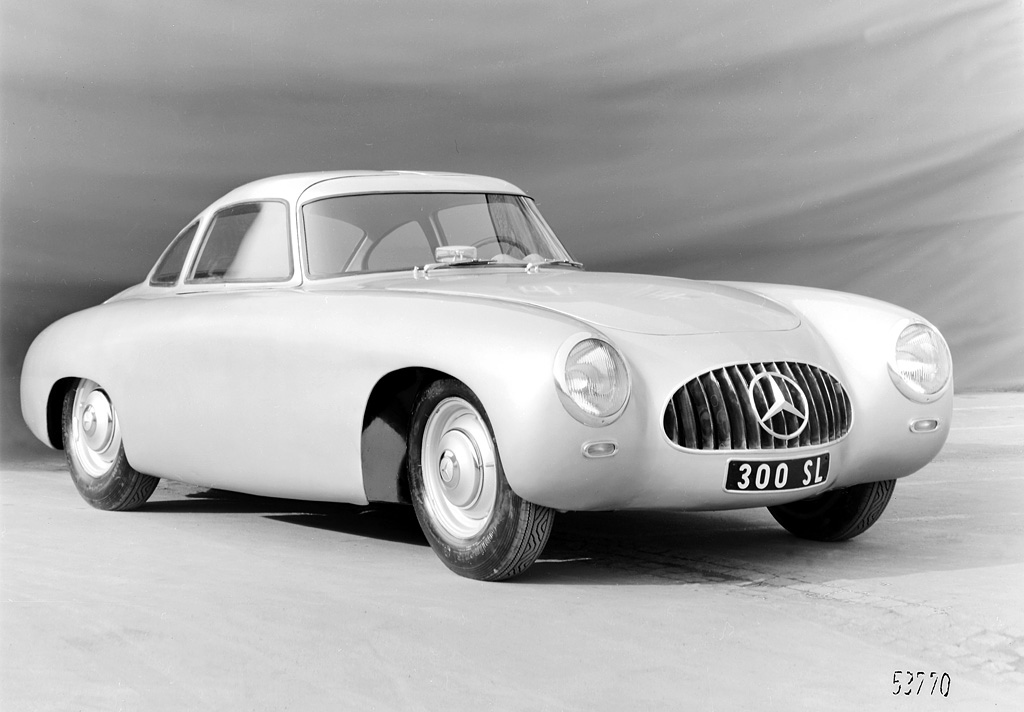
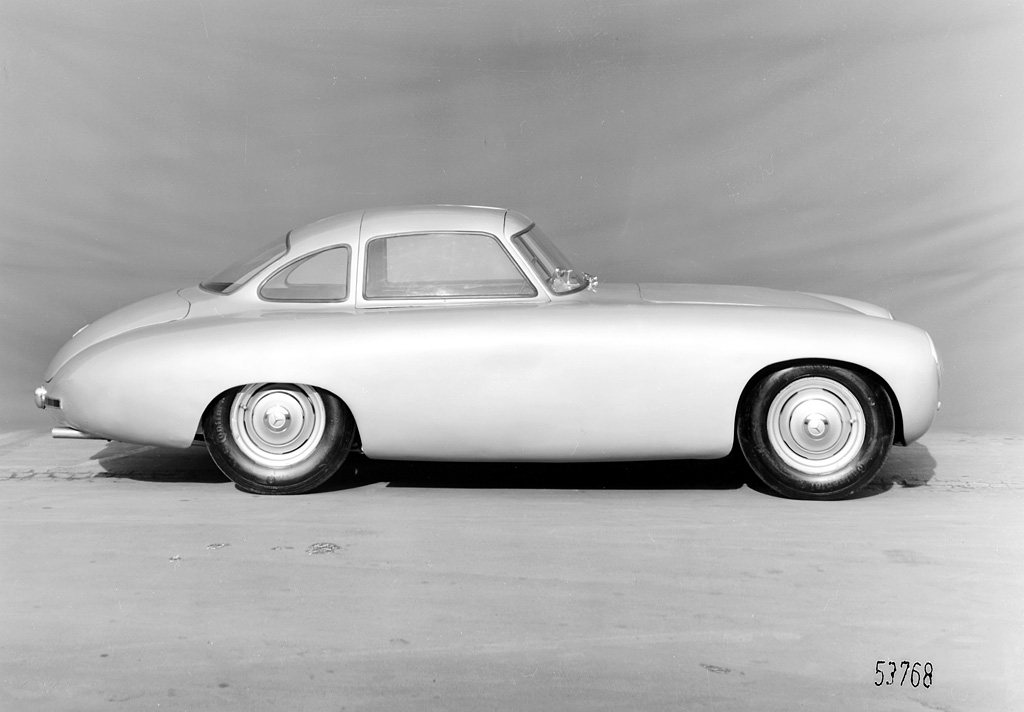
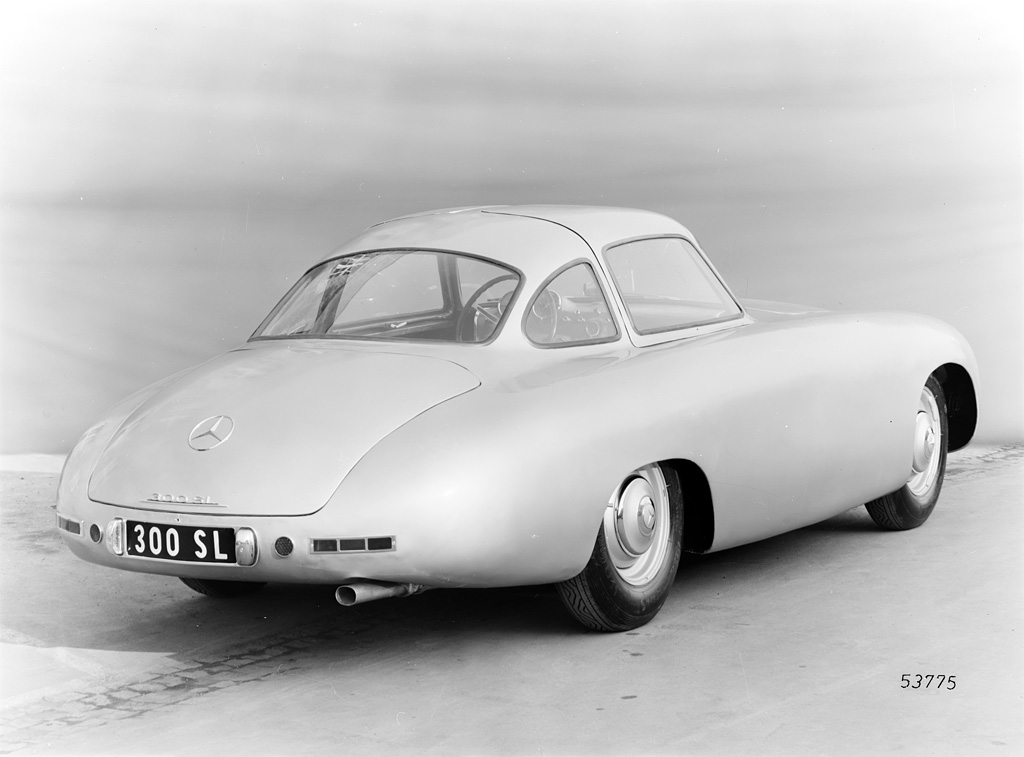
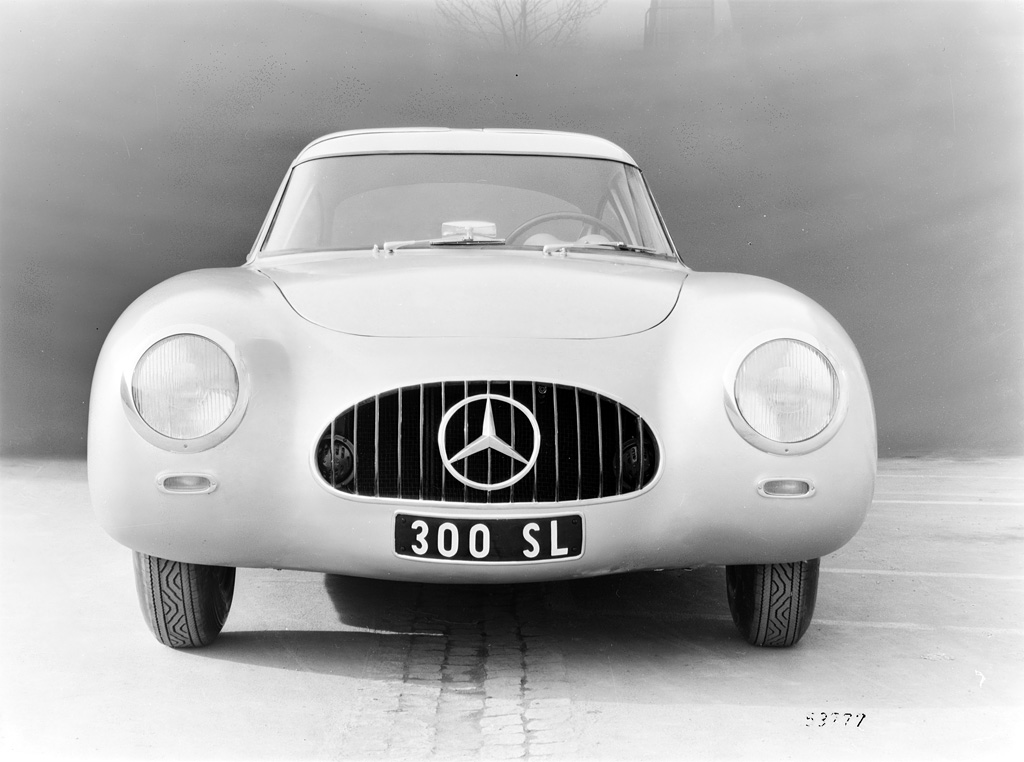
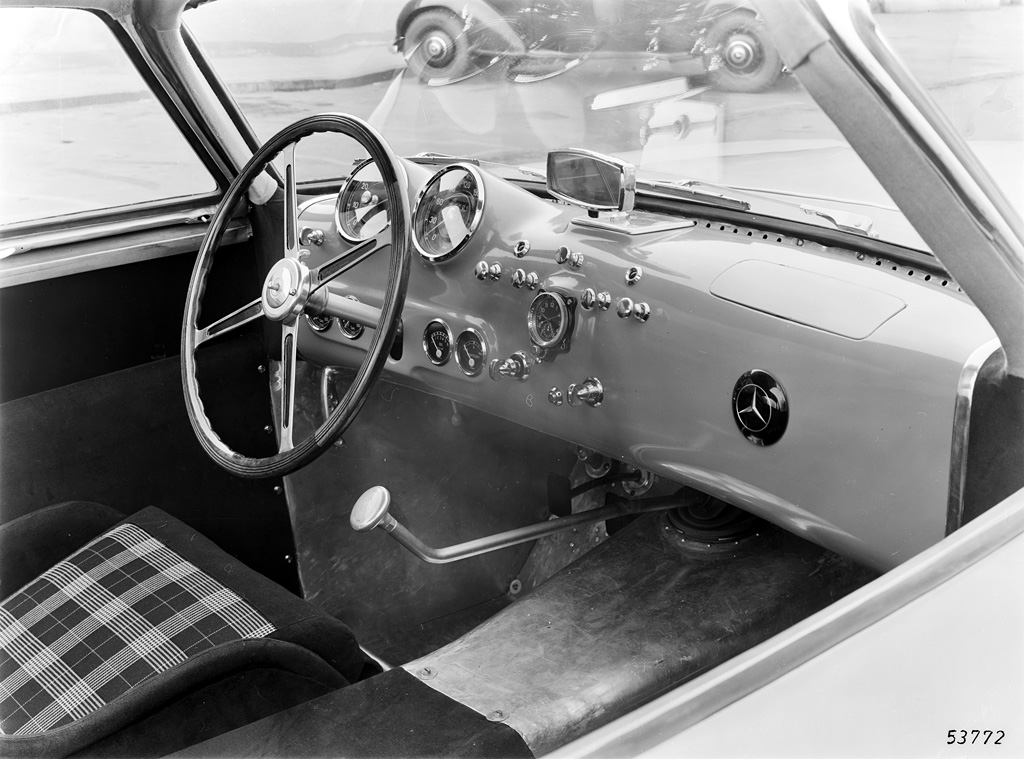
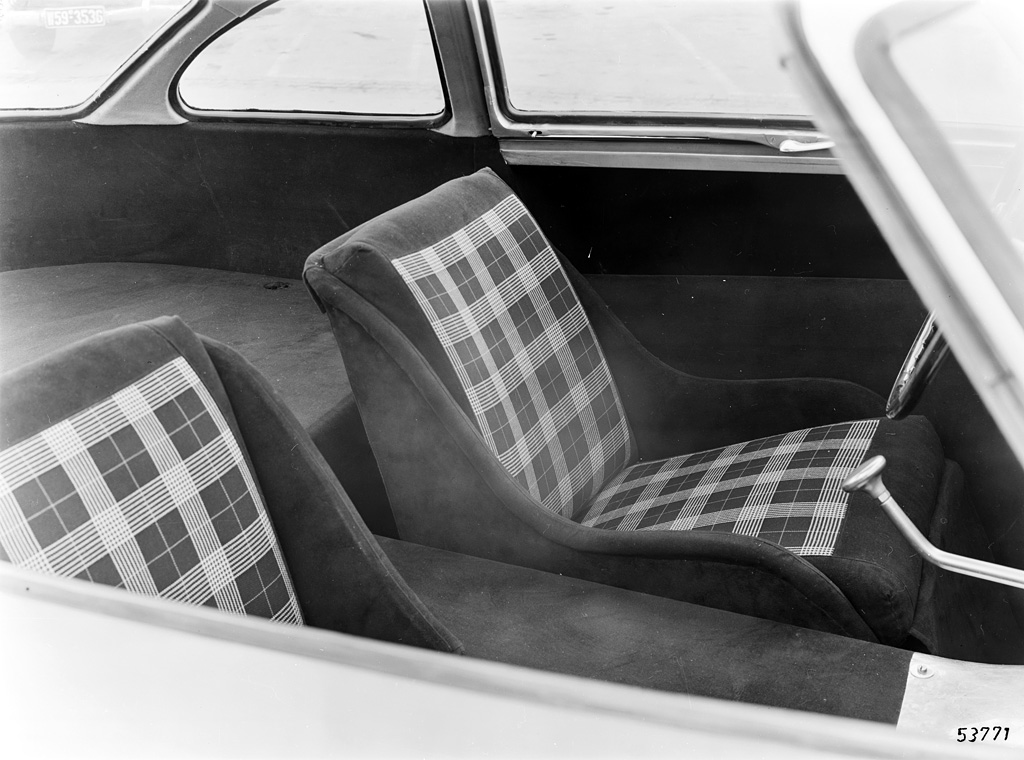
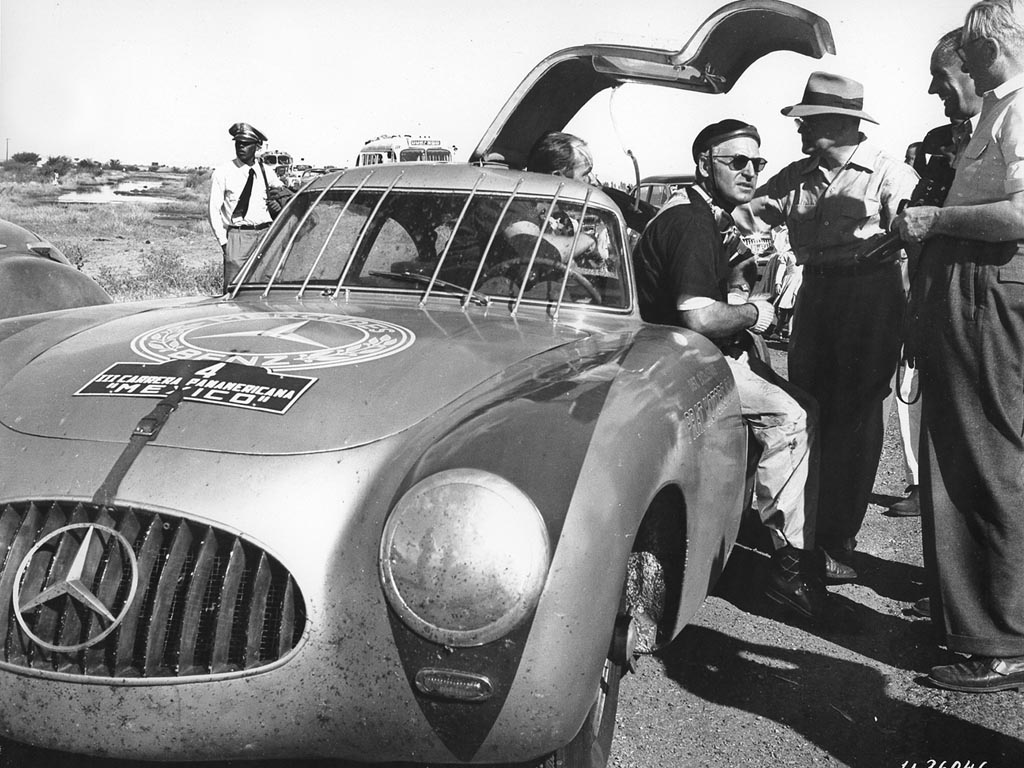
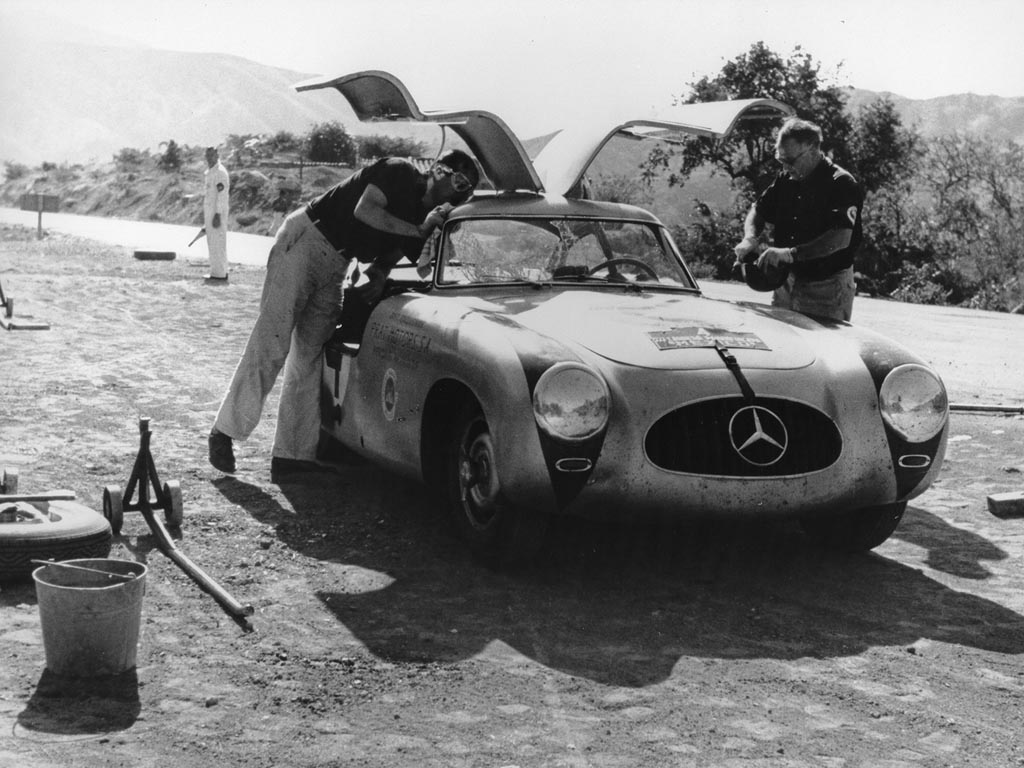
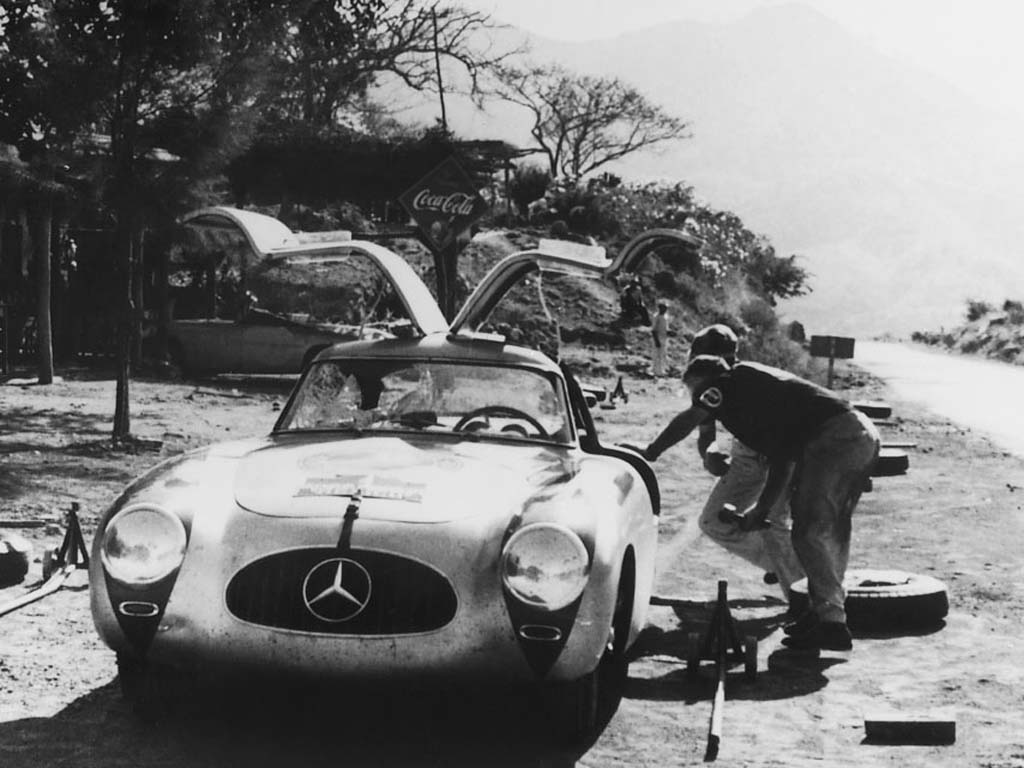
For the post-war racing effort, Mercedes-Benz returned with the 1952 300SL. The new car had trademark gullwing doors which were necessary due to the space-frame chassis.
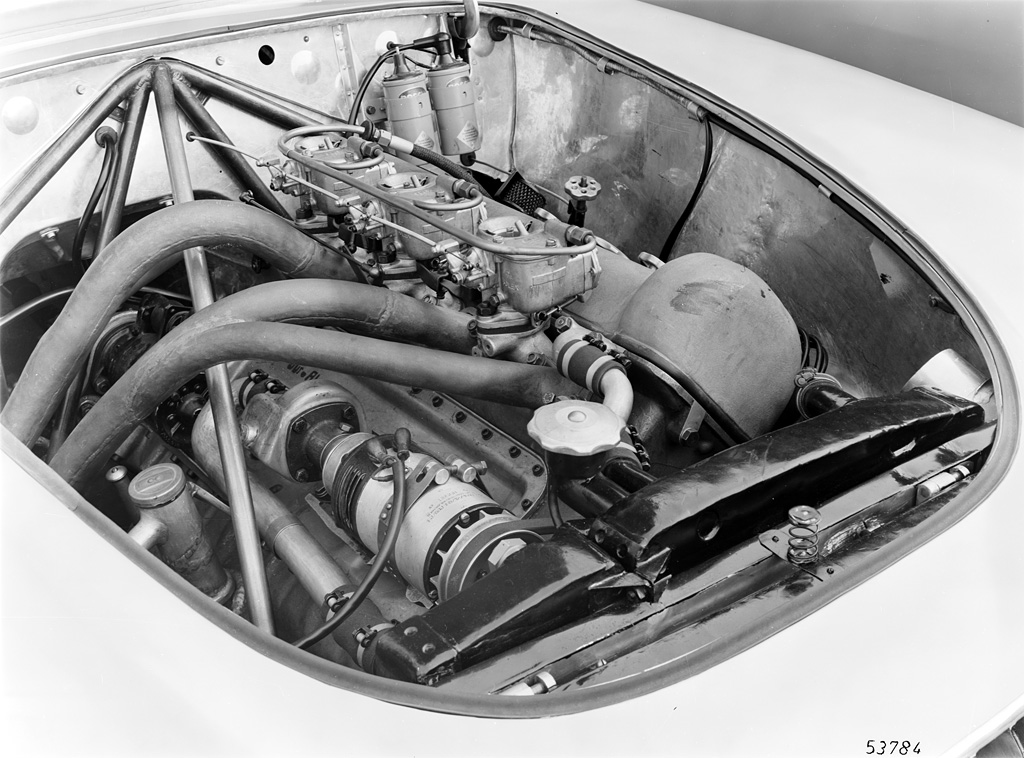
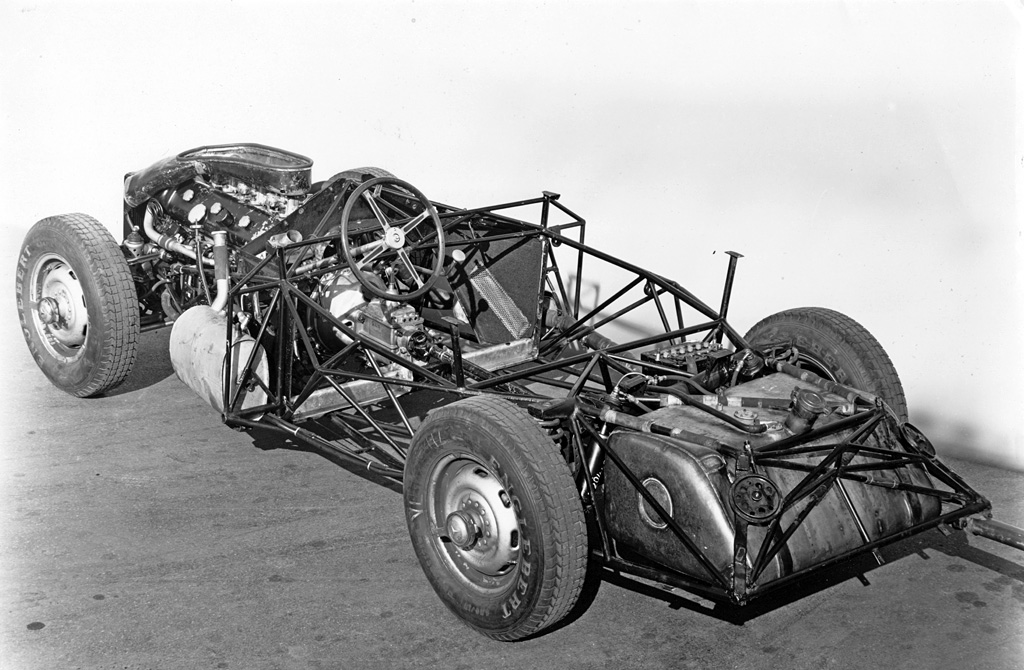
Rolf Uhlenhaut, the top Mercedes-Benz engineer, placed emphasis on lightweight construction and slippery aerodynamics during the development of the 300 Sport Leicht. Reducing weight, Uhlenhaut had a special tube-frame made for the car. This frame included small tubing arranged in a grid-type fashion. Many triangles were used in the design which made a torsionally stiff chassis.
The complex design of the chassis included two large bulkheads running down the side of the car. These grid-sections proved difficult as they occupied the inner quarter panels where normal doors would reside. This gave rise to the gullwing doors which would become a trademark feature of the 300SL up to 1955.
Untertürkheim and Sindelfingen were responsible for the designing the lightweight aluminum body. Thier results produced a low body, featuring integrated headlights and, more importantly, aerodynamically efficient lines. Thanks to the engine placement at 50 degrees, the front of the body was remarkably low and flat. This helped the SL achieve a phenomenal Cd value of 0.25.
The engine, was a further development of the M186 inline-6. It was placed at 50 degrees in the engine bay to reduce the overall height. Unique features included an oblique cylinder head arrangement and overhead camshafts.
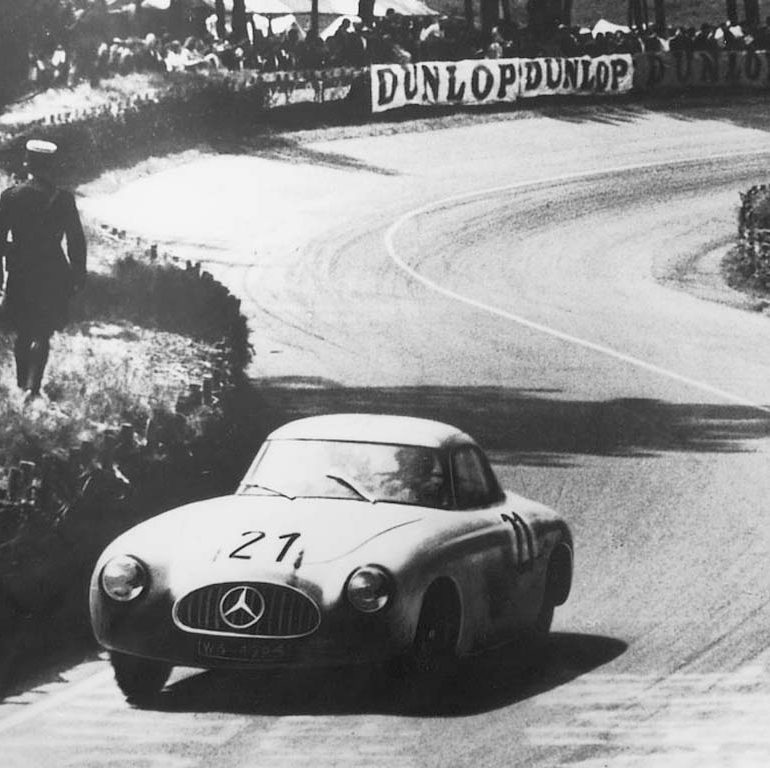
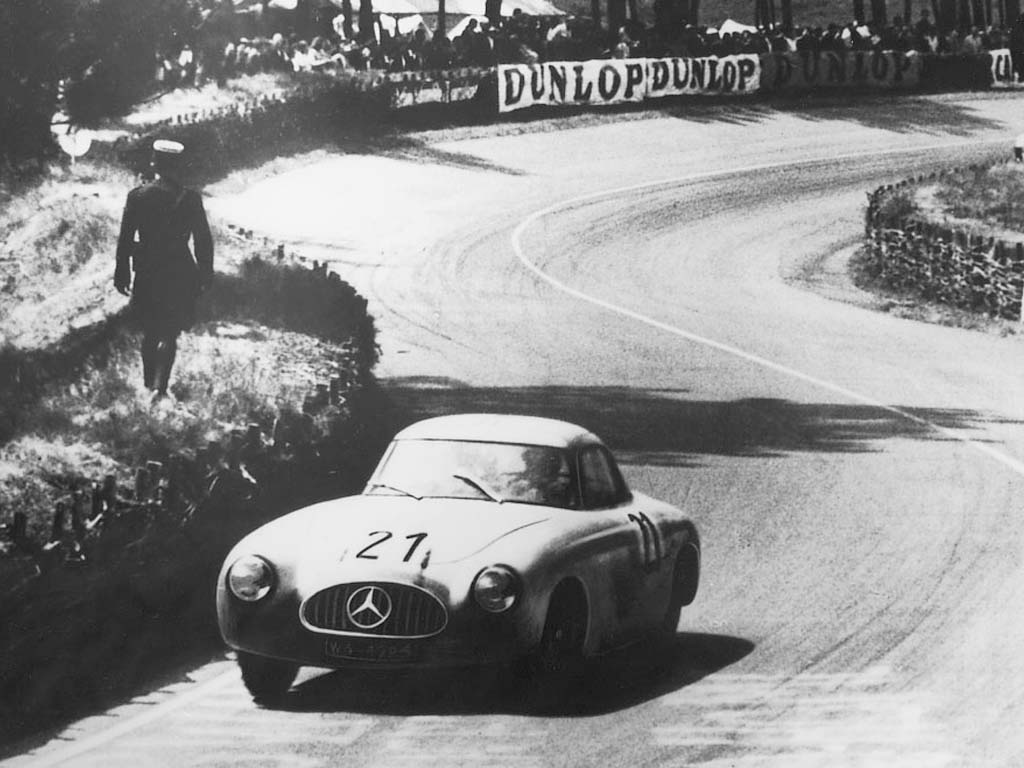
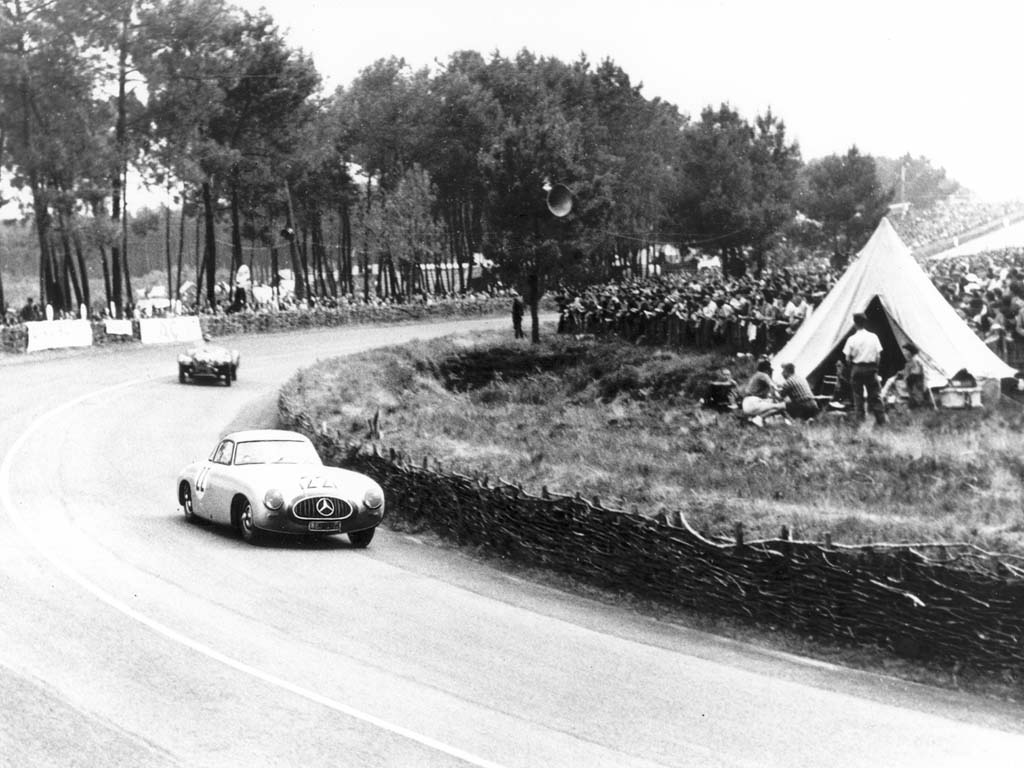
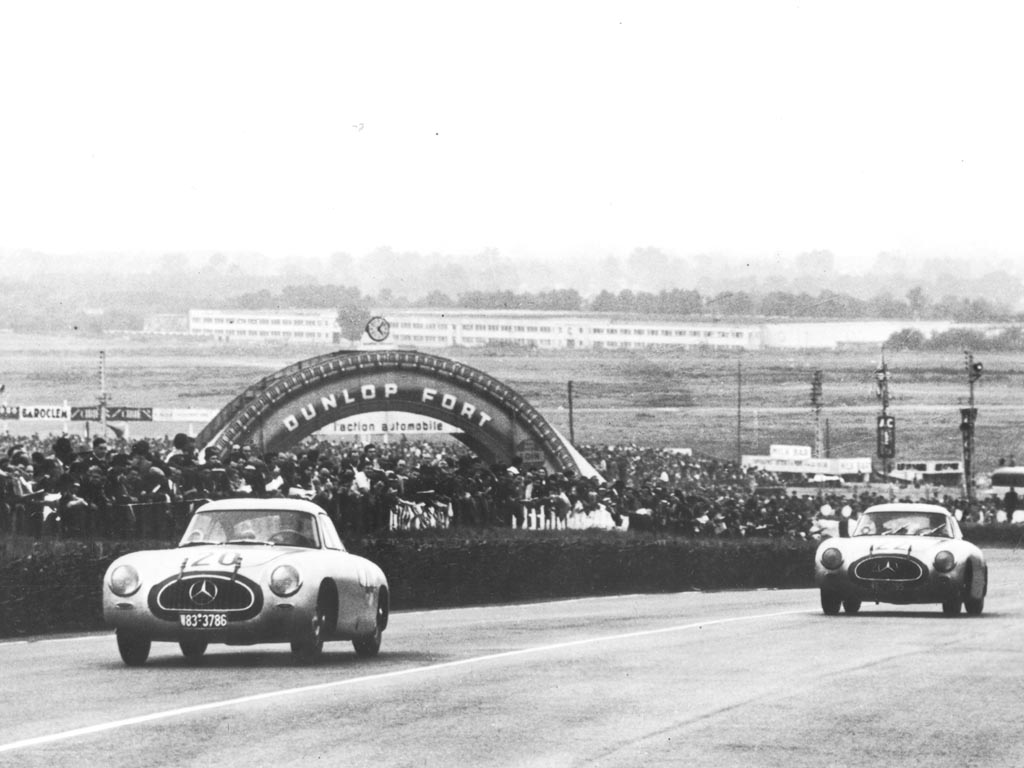
During the same year it was released, the 300SL scored top marks in international racing. Despite being an entirely new design, the SL cars showed remarkable stamina. The highlight of the Mercedes-Benz season came at the Vingt-Quatre Heures du Mans. At that event two SLs would take first and second overall ahead of the Ferrari 340 America Berlinetta. The winning team, with Hermann Lang and Fritz RieÃ, drove at record pace of 155.575 kilometers per hour.
At the 24 Hours of Le Mans the SL cars laid their legendary foundation. Mercedes-Benz, who previously had little history at sports car racing established themselves at the top of the sport.
In Detail
| tags | gullwing, 300sl, w194 |
| submitted by | Richard Owen |
| type | Racing Car |
| built at | Germany |
| engine | M194 Inline-6 |
| position | Front Longitudinal, 50 Degree Inclination To The Left |
| valvetrain | SOHC w/2 Valves per Cyl |
| fuel feed | 3 Solex Downdraft Carburetors |
| displacement | 2996 cc / 182.8 in³ |
| bore | 85 mm / 3.35 in |
| stroke | 88 mm / 3.46 in |
| compression | 8.0:1 |
| power | 130.5 kw / 175.0 bhp @ 5200 rpm |
| specific output | 58.41 bhp per litre |
| bhp/weight | 201.15 bhp per tonne |
| body / frame | Aluminum Body over Tubular Space Frame |
| driven wheels | RWD |
| front tires | 6.7×15 |
| rear tires | 6.7×15 |
| front brakes | Alloy Drums w/Hydraulic Assist |
| rear brakes | Alloy Drums w/Hydraulic Assist |
| steering | Recirculatin Ball |
| f suspension | Double Wishbones w/Coil Springs, Stabilizer Bar, Telescopic Shock Aborbers |
| r suspension | Swing Axle w/Coil Springs, Telescopic Shock Absorbers, ? |
| curb weight | 870 kg / 1918 lbs |
| wheelbase | 2400 mm / 94.5 in |
| front track | 1381 mm / 54.4 in |
| rear track | 1445 mm / 56.9 in |
| length | 4220 mm / 166.1 in |
| width | 1790 mm / 70.5 in |
| height | 1265 mm / 49.8 in |
| transmission | 4-Speed Manual |
| gear ratios | 3.33:1, 2.12:1, 1.50:1, 1.00:1 |
| top speed | ~240 kph / 149.1 mph |