
1954→1957 Maserati A6G/2000 Sport
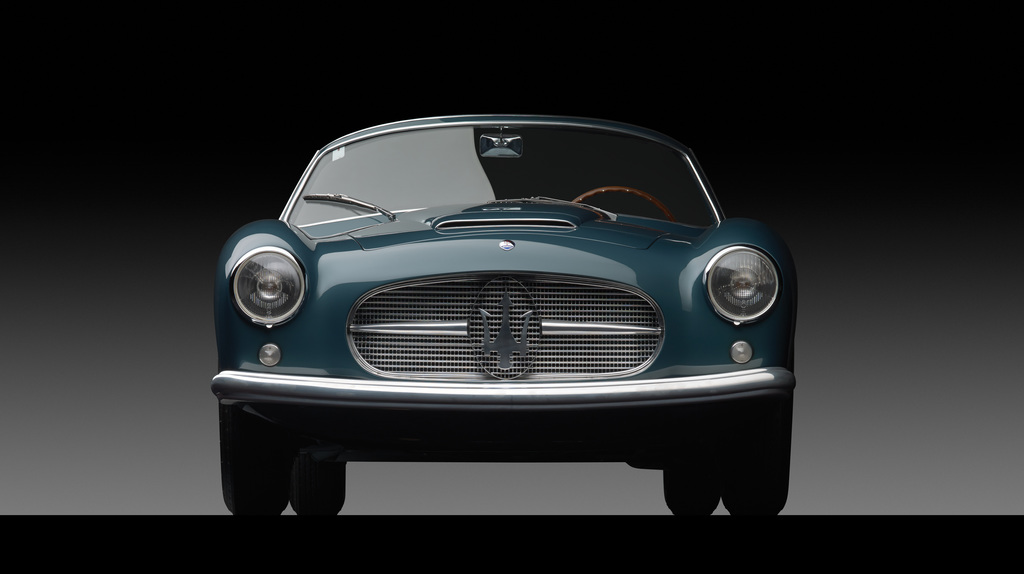
The A6G54 was Maserati’s only dual-purpose road/race car made in series production. After the A6GCS became a success on the racetrack, Maserati redesigned the model as a road-going sports car that was more suitable for increased production. Maserati expert Luigi Orsini called the model by its full name: the A6G54 2000 Sport. It was a high performance 2-litre sports chassis that was crafted into either sports tourer or racing car by the many Italian design houses.
Maserati invested little time and capital on A6G54 development by relying on existing designs and choosing to outsource all the bodywork. Thus, no two cars were alike and each reflected the first customer’s design preference. What they did have in common was a sporting pedigree from Maserati’s past.
Right before the all the Maserati brothers had pulled out of the company in 1947, leaving it to Commandatore Adolfo Orsi, they designed a bulletproof inline-6 engine which would eventually power the A6G54 in its definitive form. Initially, Maserati’s six was placed on a simple ladder-type tube frame with a 1.5-liter, inline-six engine producing 65 horsepower that was a low point for Maserati performance. By 1951, a two litre version of the A6 was released and featured some fancy custom bodies, but it took until 1954 to get the design right.
At that time Vittorio Bellentani was brought in to detune the A6GCS racing engine and make it suitable for GT driving. He tuned to the engine to provide a better power curve and fitted a normal wet-sump lubrication system specifically for the A6G54 2000. The twin-spark cylinder head with its 12 wire distributor was offered only as an option. It raised the ante to 190 horsepower in top form.
The chassis was built by Gilco and resembled the simple twin parallel tube design used on he first A6. Suspension upfront consisted of double wishbones with a rigid axle in rear. Steering and braking came from the A6GCS.
Second series A6G 2000 Sports were produced from 1954 until 1957. During that period sixty examples were created despite competition from Ferrari and Fiat with their 8V. As the specification of the A6G54 resembled a sporting nature, especially the Zagato-bodied models, some examples used a special competition cylinder heads. At the time, Maserati was campaigning their A6GCS leaving the A6G54 for the most part to private entrants.
Bodywork
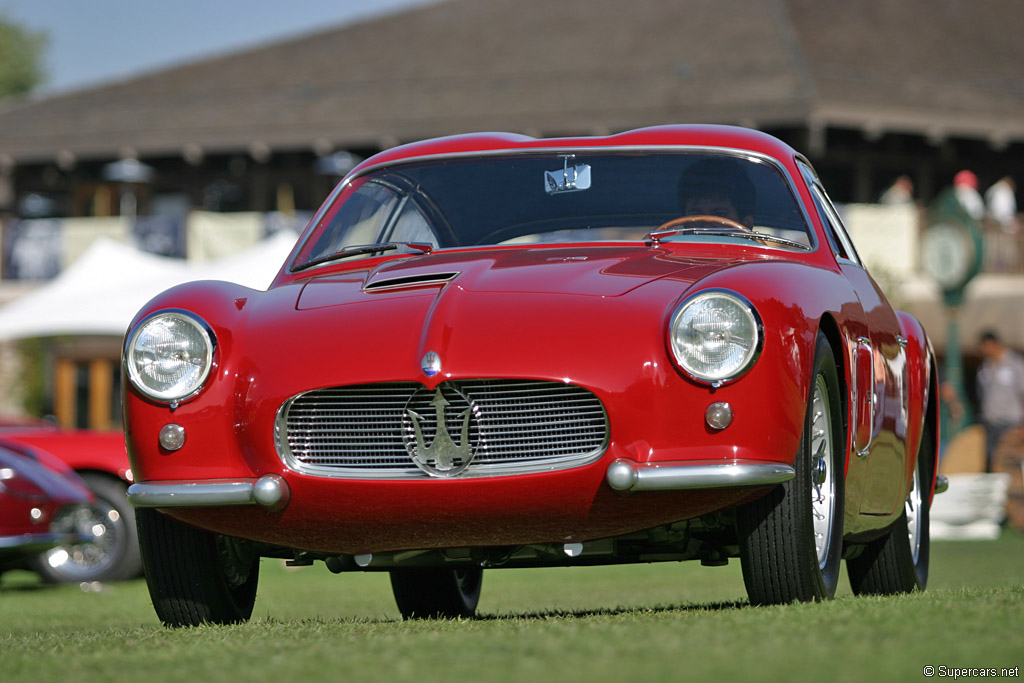
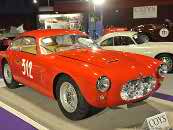
All the cars were sold as bare chassis to be fitted with bodies from some of the best Italian design houses. The most celebrated of these was Zagato’s purposeful coupe. Zagato’s treatment of the Maserati chassis was similar to the Fiat 8V coachwork from 1954 which was sculpted out of aluminum into a flowing shape. A total of nineteen Zagato Coupes were built and the first, chassis, #2013, was built as a one-of spider. These 20 or so Zagato coupes formed the first concrete relationship between the companies.
Of all the A6G2000s, the Zagato model was the most fit for racing. The methods used by Zagato ensured a lightweight construction. The body was formed, by hand, in aluminum with the Perspex windows all around. Total weight of the Zagato Berlinetta was 840kg (1852lbs). Each car had remarkable differences both inside and out. As an example chassis #2121 was the only A6 to receive the trademark Zagato double bubble roof.
Vignale and Frua made some wonderful examples on the A6G54 chassis the former making a series of striking two-tone spyders. But these lavish bodies and interiors took very long to complete, so Maserati turned to Allemano who made a series of pedestrian coupes that Maserati were listed in the official catalogue.
Eventually the Maserati took the responsibility of building their own bodies and series production of their first ‘in house’ grand tourer started with the 3500GT in 1957.
In Detail
| submitted by | Richard Owen |
| type | Series Production Car |
| production years | 1954 – 1957 |
| built at | Italy |
| production | 60 |
| engine | Twin Spark, Inline-6 |
| position | Front Longitudnal |
| aspiration | Natural |
| ignition | Marelli ST111DTEM Distributors w/Twin Spark |
| valvetrain | DOHC, 2 Valves / Cyl |
| fuel feed | Tripple Weber 40DCO3 Carburetors |
| displacement | 1985 cc / 121.1 in³ |
| bore | 76.5 mm / 3.01 in |
| stroke | 72 mm / 2.83 in |
| compression | 8.1:1 |
| engine designer | Vittorio Bellentani |
| power | 111.9 kw / 150.1 bhp @ 6000 rpm |
| specific output | 75.62 bhp per litre |
| bhp/weight | 178.69 bhp per tonne |
| redline | 7000 |
| body / frame | Custom Body over Steel Tube Chassis |
| driven wheels | Front Engine / RWD |
| wheel type | Spoked Wire Wheels |
| front tires | 6.60×16 Pirelli |
| rear tires | 6.60×16 Pirelli |
| front brakes | Drums |
| rear brakes | Drums |
| front wheels | F 40.6 x 11.4 cm / 16.0 x 4.5 in |
| rear wheels | R 40.6 x 11.4 cm / 16.0 x 4.5 in |
| steering | Worm & Sector |
| f suspension | Double Wishbones w/Coil Springs, Houdaille Shock Absrobers, Anti-Roll Bar |
| r suspension | Live Axe w/Radius Rods, Quarter Elliptic Springs, Houdaille Shock Absorbers, Anti-Roll Bar |
| curb weight | 840 kg / 1852 lbs |
| wheelbase | 2550 mm / 100.4 in |
| front track | 1360 mm / 53.5 in |
| rear track | 1220 mm / 48.0 in |
| length | 4090 mm / 161.0 in |
| width | 1530 mm / 60.2 in |
| height | 1320 mm / 52.0 in |
| transmission | 4-Speed Manual w/Synchromesh |
| tran clutch | Single Dry Disc |
| top speed | ~210 kph / 130.5 mph |
Chassis & Sales
Auction Sales History
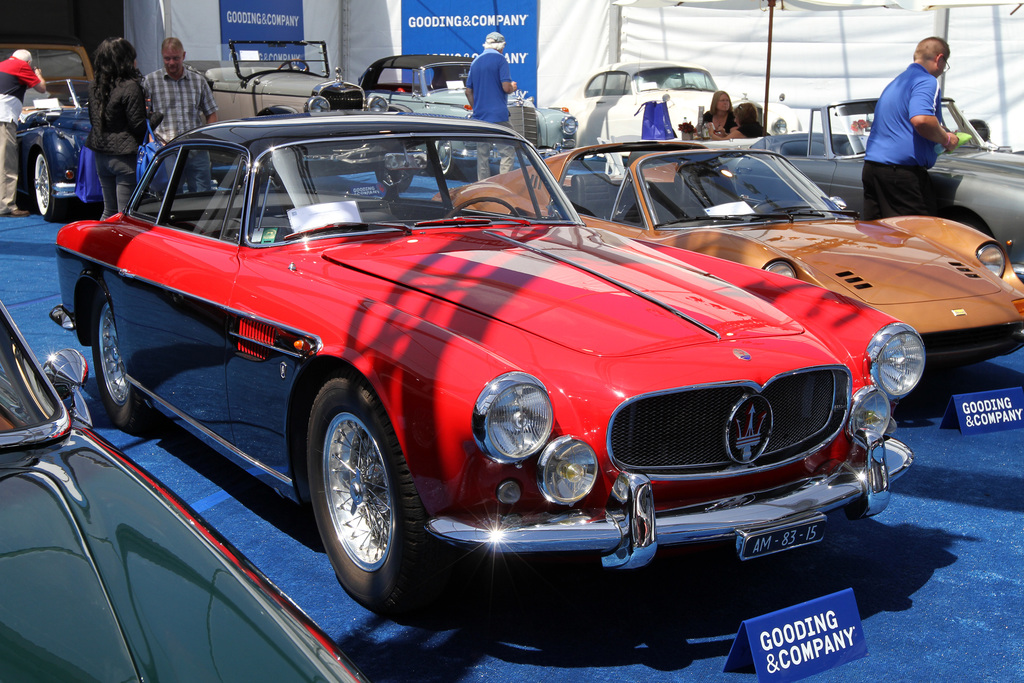
1956 Maserati A6G/2000 Coupe 2147 –
Auction Source: The Pebble Beach Auctions 2015 by Gooding and Company
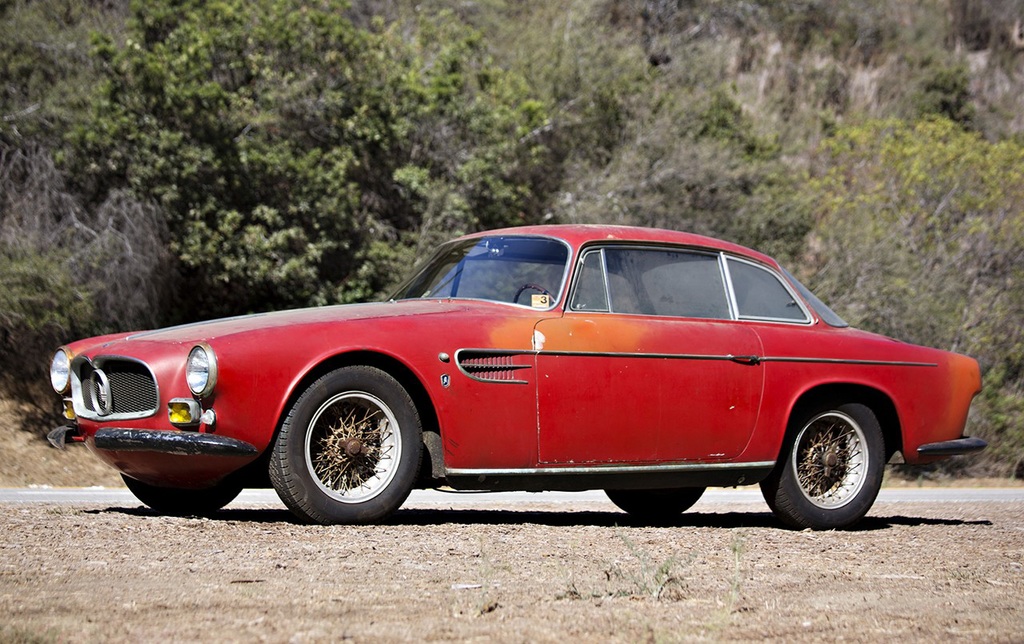
Auction Source: The Scottsdale Auctions 2015 by Gooding & Company
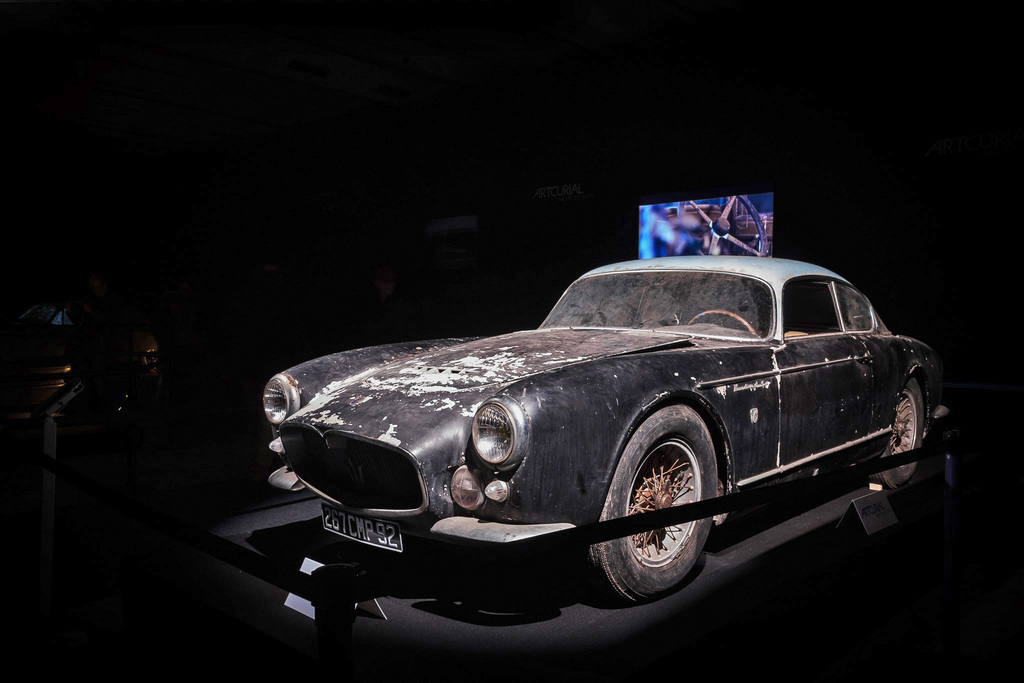
Auction Source: The Baillon Collection at Rétromobile
Auction Source: RM’s Art of the Automobile
Auction Source: 2013 Monterey Auction by RM Auctions
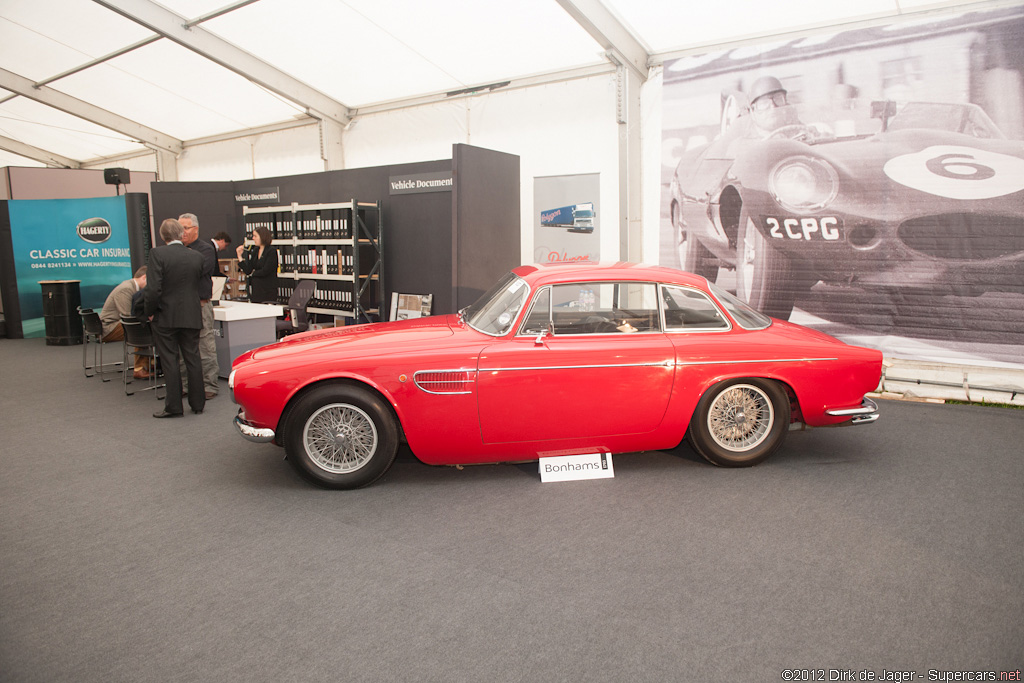
Auction Source: 2012 Goodwood Revival Sale by Bonhams
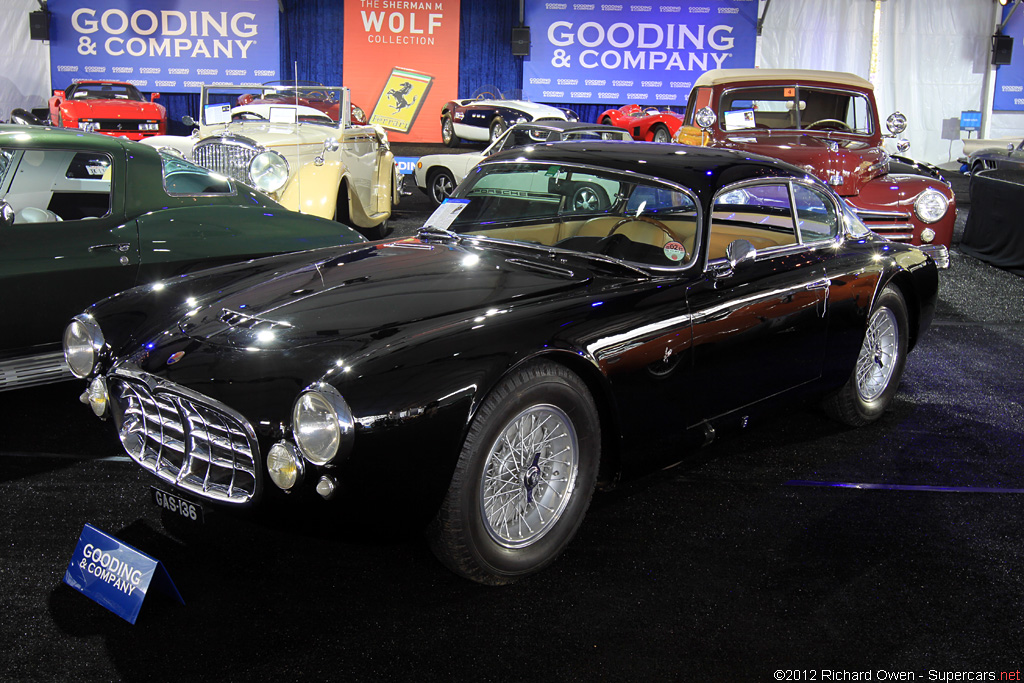
1955 Maserati A6G/2000 Frua Berlinetta 2114 – sold for $1,650,000 An Exceptionally Rare Frua-Bodied A6G/2000 Berlinetta. Glamorous Paris Show Car Pedigree. Beautifully Executed Bill McGrath Restoration. Presented in Outstanding Original Color Scheme. Best in Class and Grand Prix at Salon Privé. Successful Mille Miglia Storica Participant. Part of the Jay Kay Collection Since 2003. One of the Most Fascinating Italian Sports Cars of the 1950s.
Auction Source: 2012 Pebble Beach Auctions by Gooding & Company
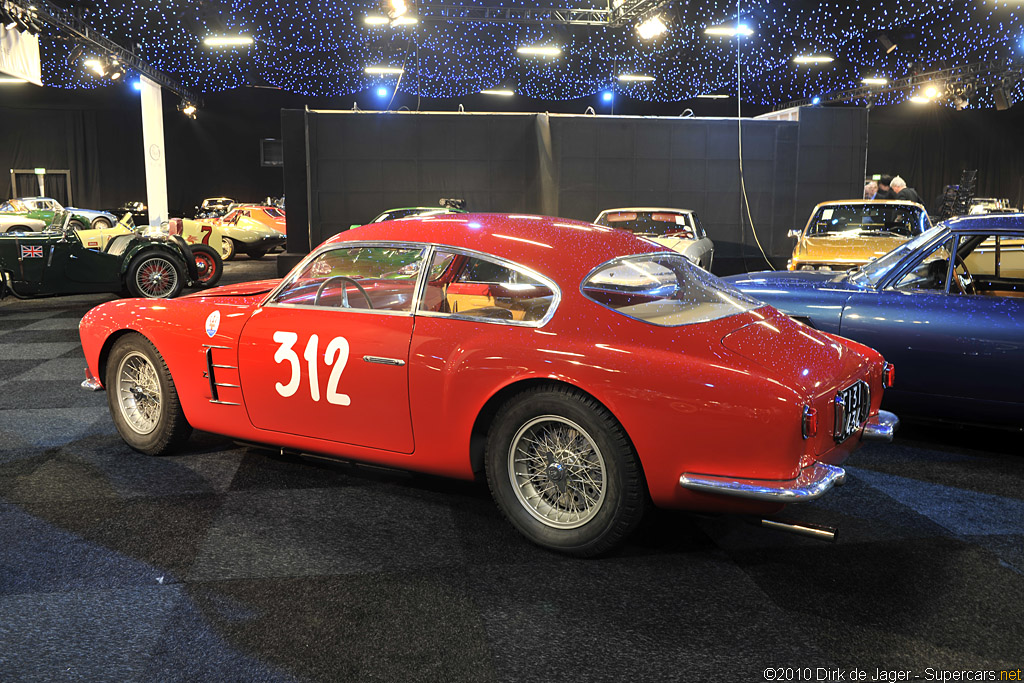
1956 Maserati A6G/2000 Competition Berlinetta –
Auction Source: 2010 Automobiles of London by RM Auction-
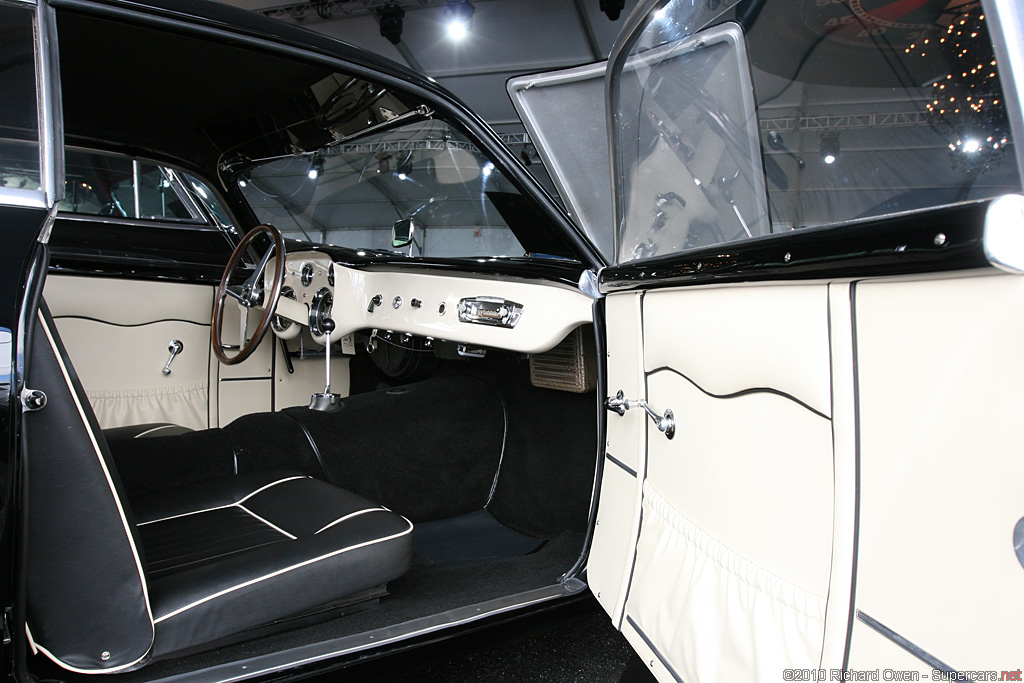
1955 Maserati A6G/54 Zagato Berlinetta 2105 –
Auction Source: 2010 Gooding & Company Pebble Beach Auction
Auction Source: Coy’s 2010 Legende et Passion Auction