

1963 Chevrolet Corvette Sting Ray ‘Split Window’
In its second generation (C2) the Corvette stood out just as much as it did when the radical project was launched in 1953. The car’s striking styling solidified it as an American icon, but left the competition department struggling to make amends.
Inspiration for the car’s styling came from the shortfin mako shark which was mounted in miniature in Bill Mitchell’s office. He was the head of GM Design and had concept cars designed by Larry Shinoda that became the XP-720 4-Seater and XP-755 Mako Shark. These provided a basis for the C2 corvette which was named the Sting Ray.
With his bold new direction, Bill Mitchell made moves with the Corvette that caused much dismay in Chevrolet’s competition department. Zora Arkus-Duntov, who was considered the savior of Corvette performance, had to work around the styling which less than ideal for racing.
When the Sting Ray was launched in 1963, the distinction between road and race cars was growing. Duntov did what he could with the road-gong design and created the Corvette Z06 which featured a competition upgrades that were good enough to immediately help race teams take the Sting Ray to the track. Success was initially limited to a few of the very first races until the much more purpose built Shelby Cobra came along and started winning everything.
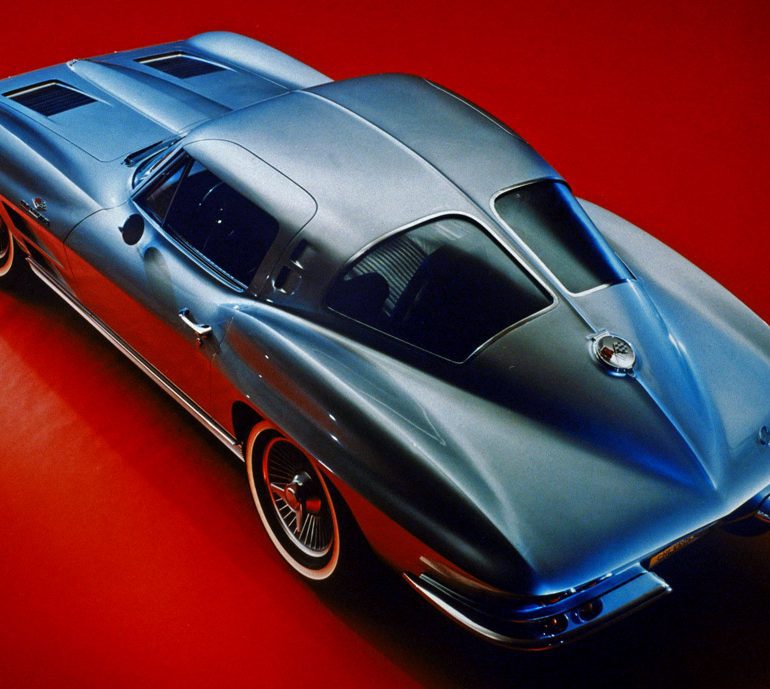
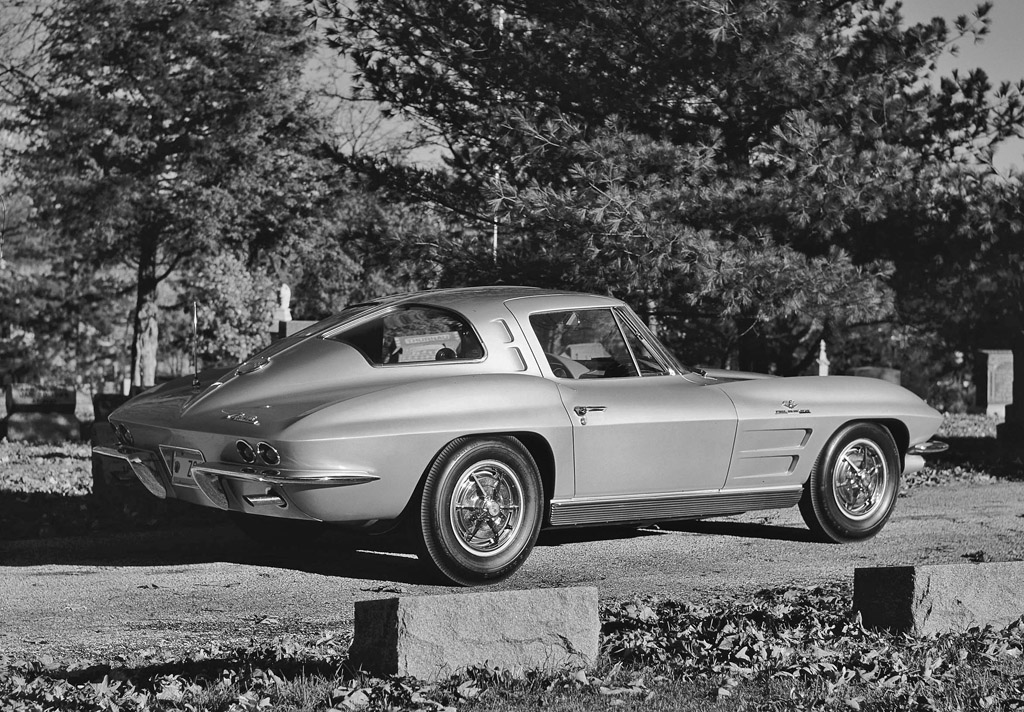
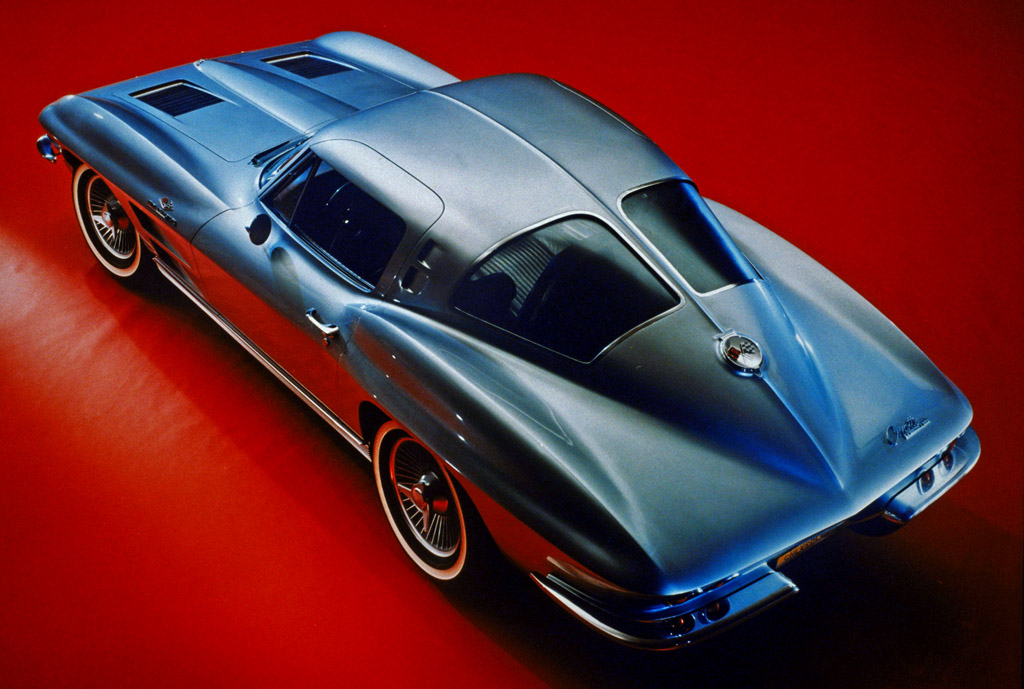
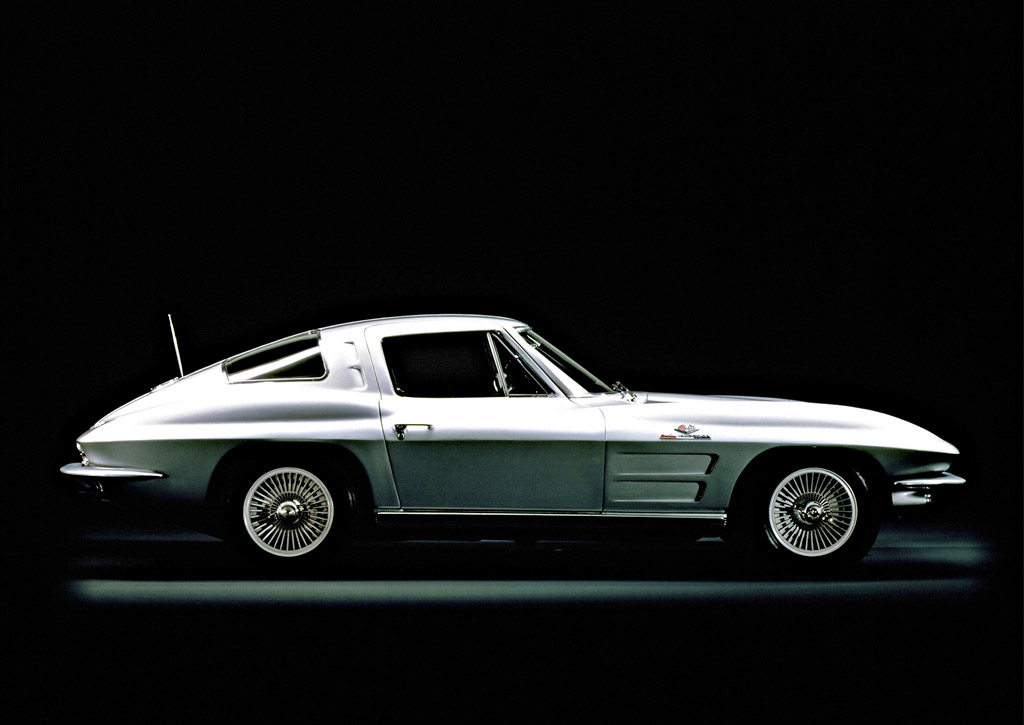
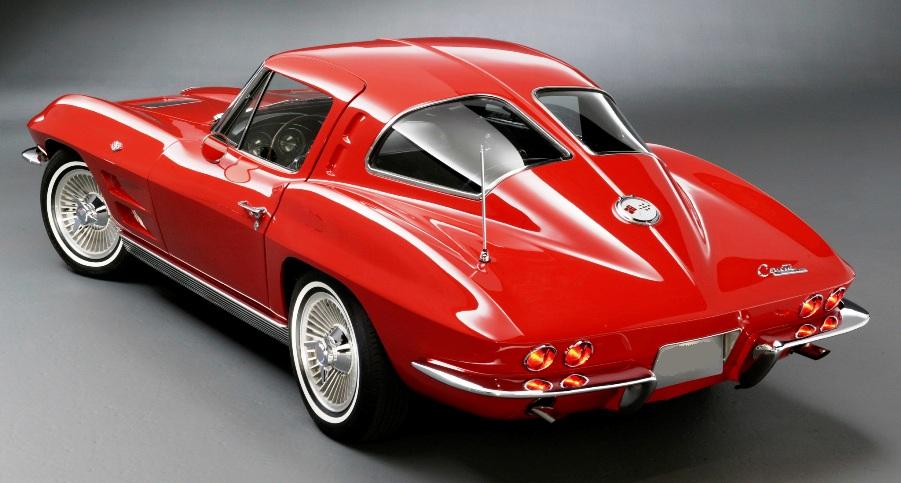
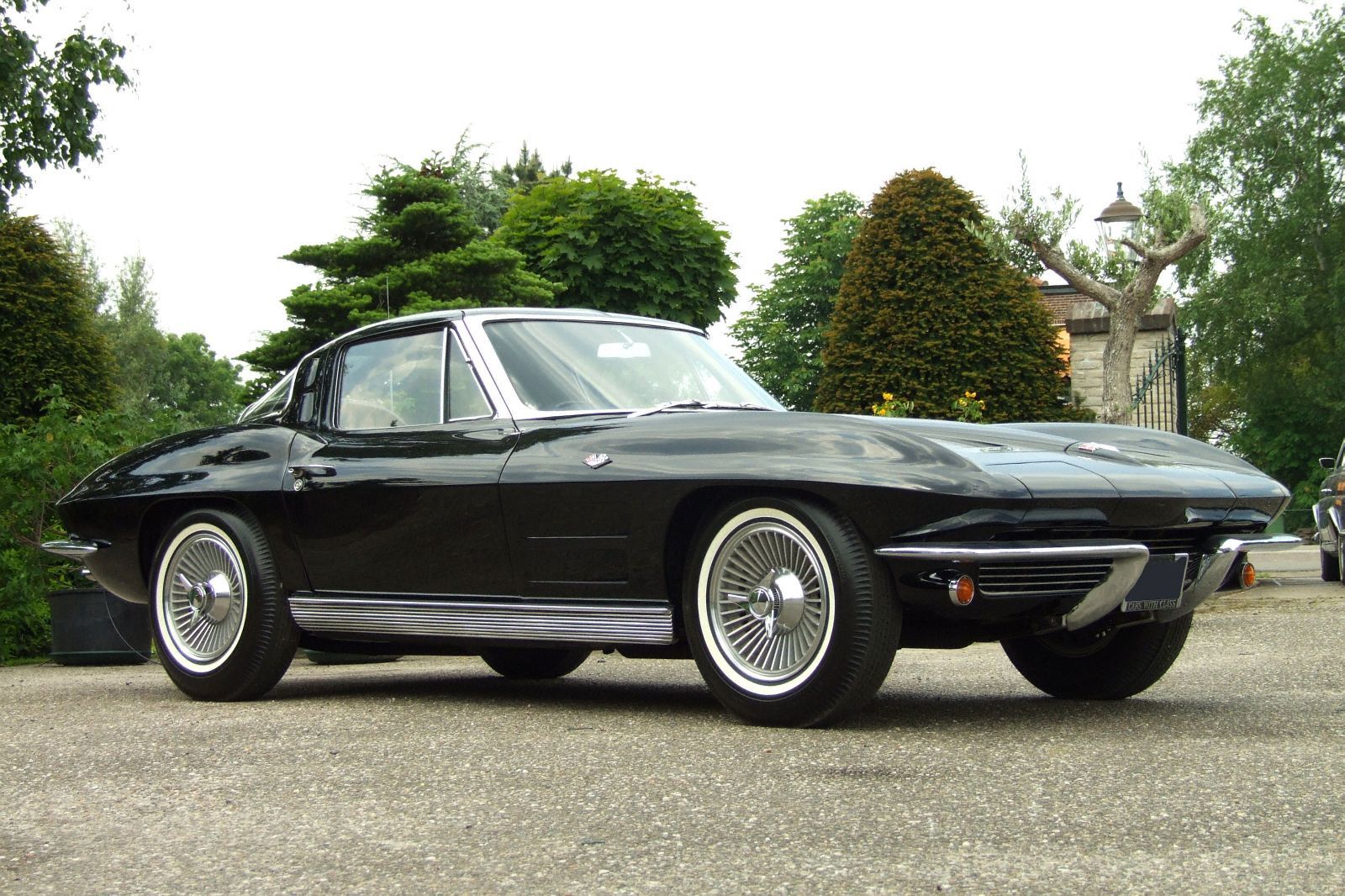
As a road car, Bill Mitchell’s design was an overwhelming success. For the first time, the Corvette was offered as a coupe and featured a split rear window that caught almost everyones attention. Realistically, this styling cue was a mistake as it impeded rearward vision and had to be later removed in 1964.
Both coupes and convertibles featured the same specification that included a fiberglass body supported by a steel ladder frame chassis. The rear end was upgraded by Duntov to include an independently sprung suspension by half shafts and a transverse leaf spring. This design was initially developed in the CERV I Concept. The front suspension was almost unchanged from the C1 generation, using unequal A-Arms and a standard anti-roll bar. Braking was provided by 11-inch drums which were replaced in 1965 with discs.
See full 1963 Chevrolet Corvette Sting Ray ‘Split Window’ Gallery
Almost all of the Sting Rays details could be optioned and some of the greatest-such as L88, Z06 or COPO427-became later known for their rarity and performance. Because so many engines, transmissions and differentials were available, most Corvettes had different performance potential. Less popular options included a leather interior, Kelsey-Hayes cast aluminum wheels, air conditioning and power brakes.
Like all Corvettes since 1955, the ’63 was powered by a V8 engine that steadily grew as the years progressed. The 327 was offered in four states of tune including a $480 fuel injected version that offered 360 bhp. These were attached to either a three-speed manual, Powerglide automatic or a Borg-Warner manual four-speed on request. Even the 360 bhp engine was virtually replaced in 1965 by the big block 396 Turbo Jet. Eventually, a 427 was offered, and produced around 600 bhp in 1967 with the potent L88 option.
With incredible style, brute power and a well appointed interior with power everything the Sting Ray was an instant success. It had a base price of $4,037 USD for the convertible and $4,257 for the coupe. Initial sales were tremendous and the St. Louis factory couldn’t keep up with demand. Production for 1963 alone was up 50 percent from the previous year at almost 22 000 units.
Sting Rays were produced up to 1967 when the third generation Corvette (C3) was released.
1963 Chevrolet Corvette Sting Ray ‘Split Window’ Gallery
See full 1963 Chevrolet Corvette Sting Ray ‘Split Window’ Gallery
See full 1963 Chevrolet Corvette Sting Ray ‘Split Window’ Gallery
In Detail
| type | Series Production Car |
| built at | St. Louis, Missouri, USA |
| price $ | $ 4,525 |
| engine | V8 |
| position | Front Longitudinal |
| aspiration | Natral |
| valvetrain | Pushrod OHV, 2 Valves per Cyl |
| fuel feed | Fuel Injection |
| displacement | 5359 cc / 327 in³ |
| bore | 101.6 mm / 4.00 in |
| stroke | 82.6 mm / 3.25 in |
| compression | 11.25:1 |
| power | 268.5 kw / 360.0 bhp @ 6000 rpm |
| specific output | 67.18 bhp per litre |
| bhp/weight | 251.92 bhp per tonne |
| torque | 477.25 nm / 352 ft lbs @ 4000 rpm |
| body / frame | Fibreglass over Steel Ladder-Type Frame |
| driven wheels | Front Engine / RWD |
| front tires | 6.70×15 |
| rear tires | 6.70×15 |
| front brakes | Cast-Iron Drums |
| rear brakes | Cast-Iron Drums |
| f suspension | A-Arms w/Coil Springs, Anti-Roll Bar, Tubular Shock Absorbers |
| r suspension | Half Shafts wLateral Struts, Radius Rods, Transverse Leaf Springs, Hydrualic Shock Absorbers |
| curb weight | 1429 kg / 3150 lbs |
| wheelbase | 2489 mm / 98 in |
| front track | 1430 mm / 56.3 in |
| rear track | 1448 mm / 57 in |
| length | 4453 mm / 175.3 in |
| width | 1768 mm / 69.6 in |
| height | 1265 mm / 49.8 in |
| transmission | 4-Speed |
| final drive | 3.70:1 |
| top speed | ~229 kph / 142.3 mph |
| 0 – 60 mph | ~5.9 seconds |
| 0 – 100 mph | ~14.5 seconds |
| 0 – 1/4 mile | ~14.5 seconds |
Auction Sales History
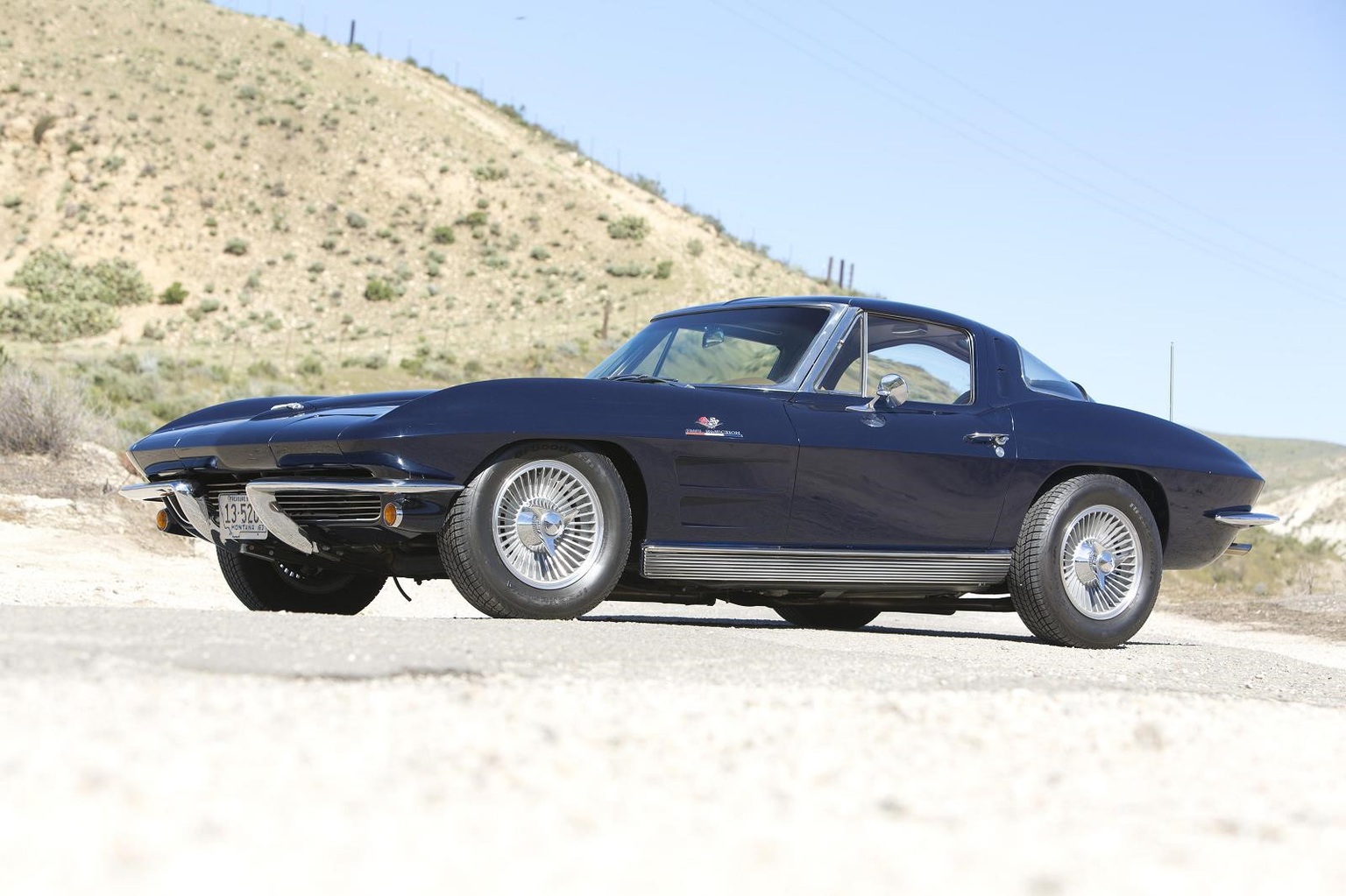
1963 Chevrolet Corvette 327/360HP Coupe 30837S105479 – sold for $209,000 Just 27,621 miles at the time of cataloging. From the collection of Tony Hart. Completed December 1962, and left the factory wearing 916A Daytona Blue paint over an 898A Saddle leather interior with optional L84 360 hp engine package, M20 four-speed manual transmission, P48 Kelsey Hayes knock-off aluminum wheels, A31 power windows, and N11 side exhausts. Despite its low mileage and orignality, Scott Marshall of Bountiful, Utah, performed a four-year, body-off restoration that encompassed some 1300 man-hours of labor and cost $33,000. Auction Source: 2015 Quail Lodge Auction by Bonhams
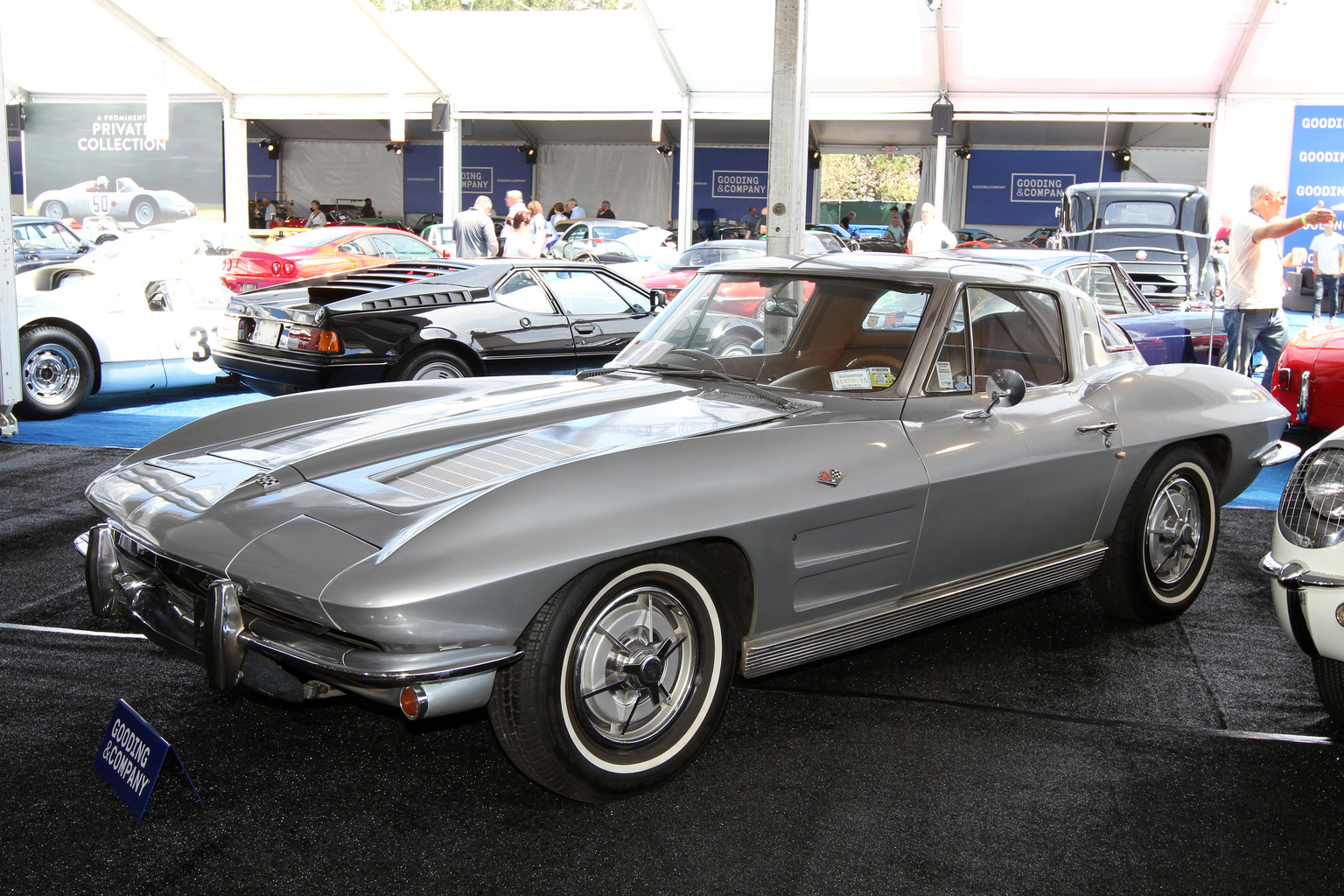
1963 Chevrolet Corvette 327/340 Coupe 30837S103503 – sold for $132,000 From the Peter Klutt Legendary Motorcar Collection. Only One Owner from New Until 2014. Highly Original, Time Warp Example. Carefully Owned and Maintained from New. Complete with Incredible Original Documents and Items. Certified by Al Grenning as Original Matching-Numbers Engine and Trim Tag. Auction Source: The Pebble Beach Auctions 2015 by Gooding and Company
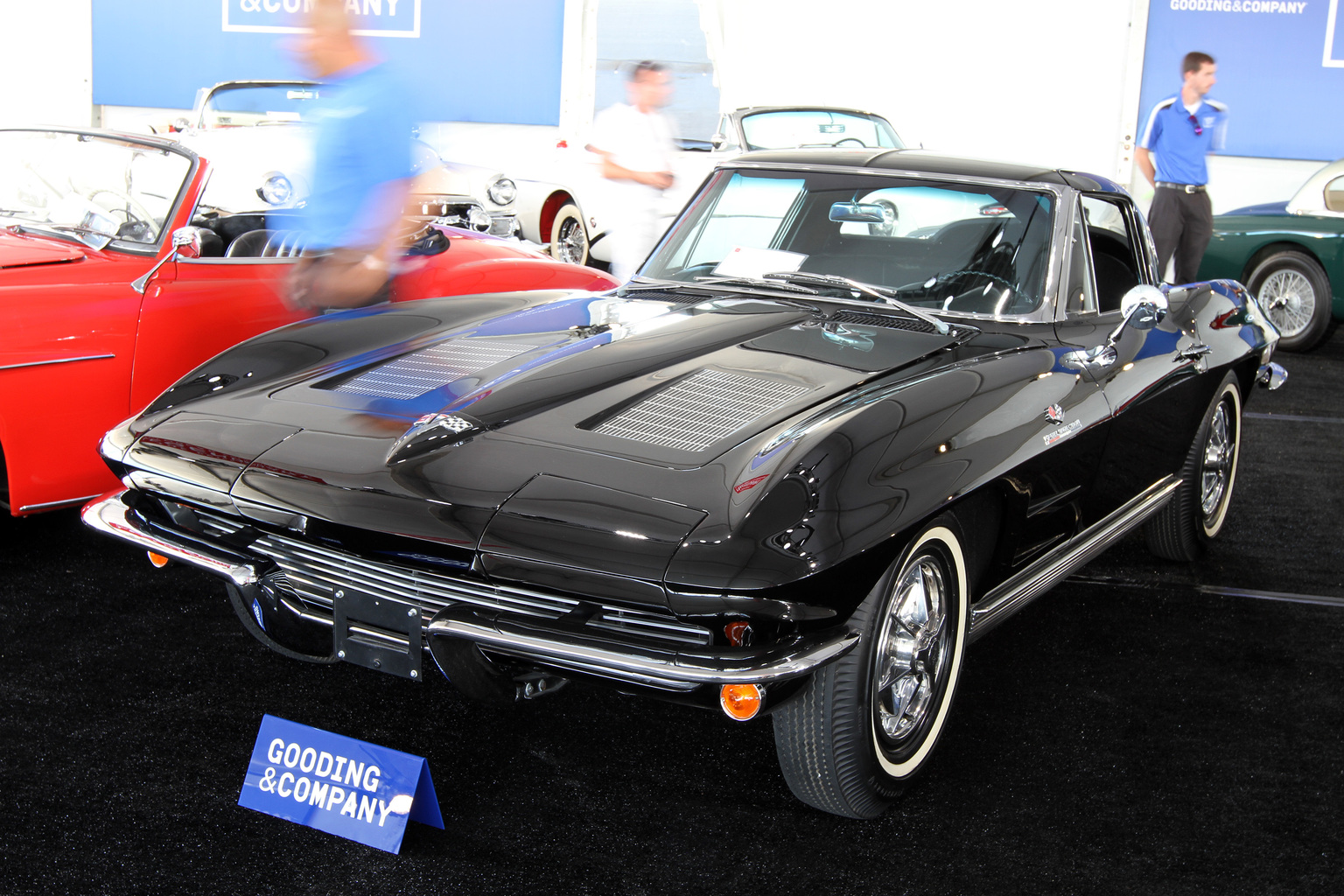
1963 Chevrolet Corvette 327/360 Fuel-Injected Coupe 30837S111122 – sold for $231,000 From the Peter Klutt Legendary Motorcar Collection. Iconic One-Year-Only Split-Window Corvette. Confirmed Factory-Original, Matching-Numbers “Fuelie” 327. Fascinating and Extraordinary Quantity of Photos and Records. Highly Detailed Body-Off-Frame Restoration in Desirable Color Scheme. Great Original Paperwork from Selling Dealer. Auction Source: The Pebble Beach Auctions 2015 by Gooding and Company
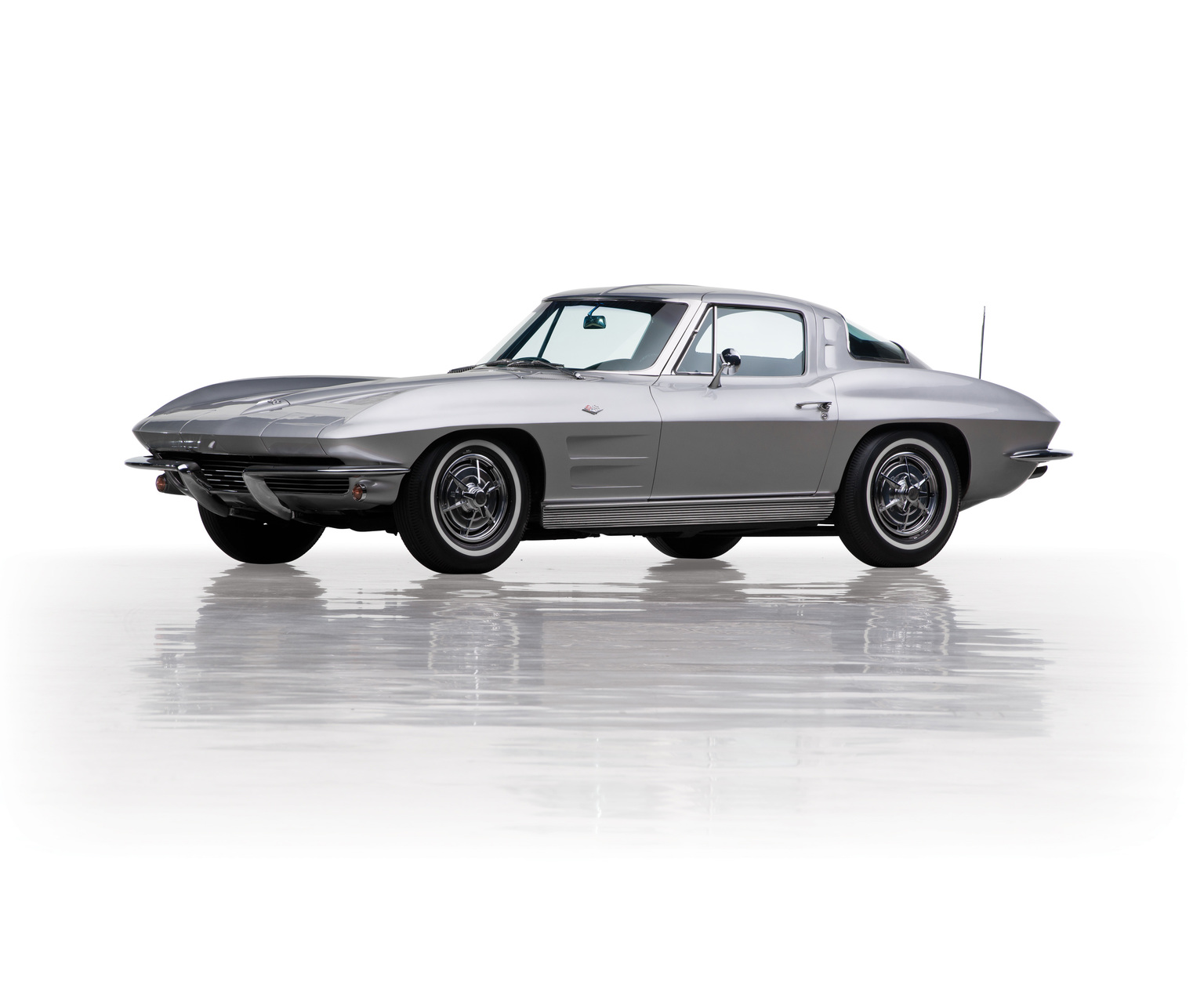
1963 Chevrolet Corvette Sting Ray ‘Split-Window’ Coupe 30837S116260 – sold for $253,000 Not only is this Corvette presented in completely original and unrestored condition, but it was also owned by a life-long enthusiast and very noteworthy figure in the Corvette world, Chip Miller. In the mid-1970s, Chip and fellow enthusiast Bill Miller started Corvettes at Carlisle, which has steadily grown into one of the largest Corvette-centric events on the planet. Chip had an eye for quality, and he eventually built a private collection that featured a number of Corvettes from throughout the model’s history; all of the examples are notable for their extremely low mileage and original condition. This Sting Ray was sold from his estate in 2006, subsequently being purchased by the Andrews’ for their own collection. In their possession, the car’s original condition has continued to be preserved and maintained, just as Chip would have wanted. Auction Source: Paul & Chris Andrews Collection by RM Sotheby’s
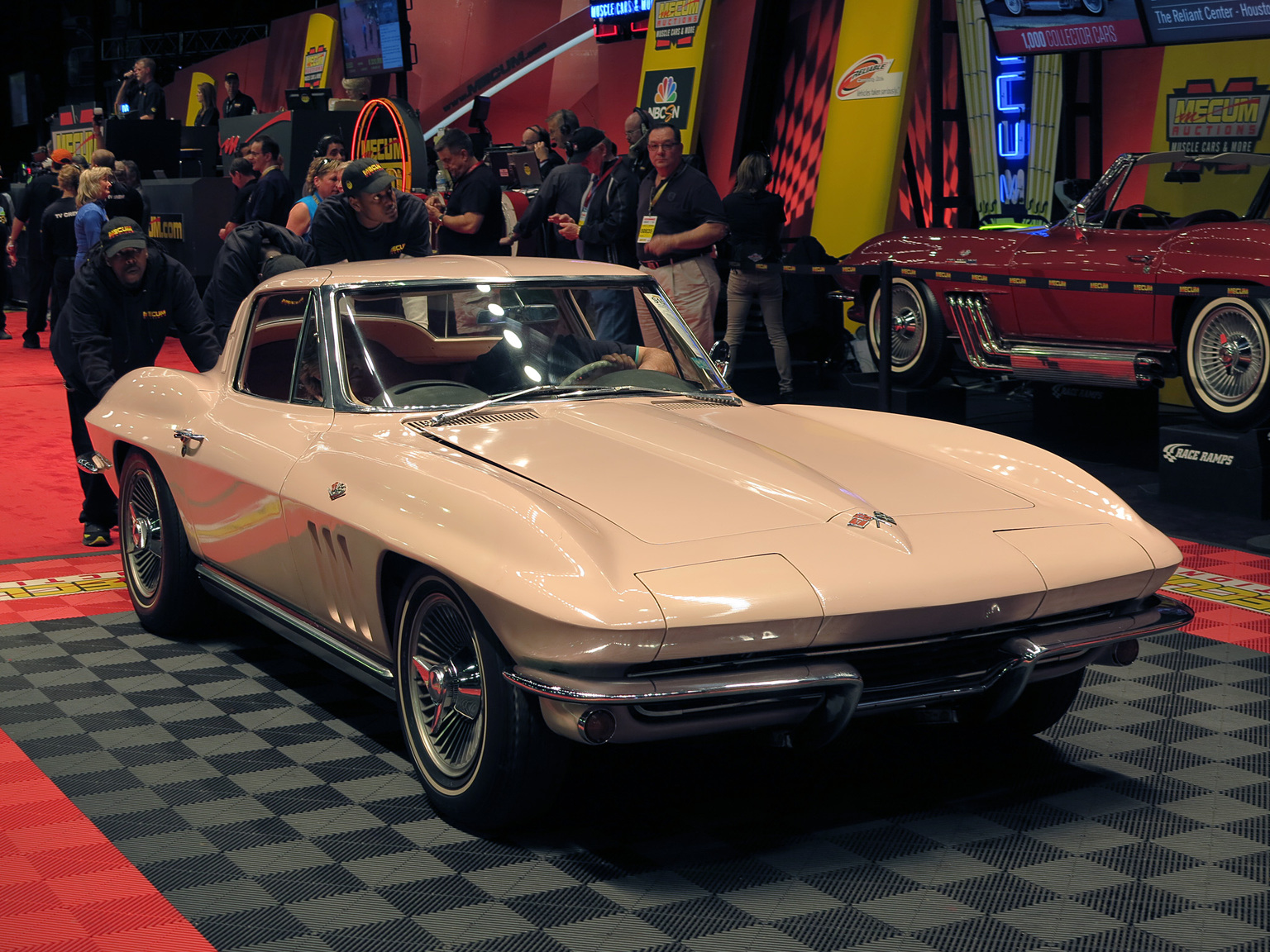
1963 Chevrolet Corvette 327/300 HP Styling Car – did not sell for $340,000 Mrs. Harley J. Earl’s Pink Pearl Corvette. Shop Order 10324, in direct sequence one number after Mr. Earl’s 1963 styling car. Unrestored with one repaint in the special Pink Pearl formula that Roger Dean Chevrolet obtained from General Motors. Complete known ownership since new. Custom Pink leather interior with White accents on the seats and door panels. 27,457 original miles. Air conditioning, knock-off wheels. Power steering and brakes. Auction Source: Kissimmee 2014, #WhereTheCarsAre by Mecum
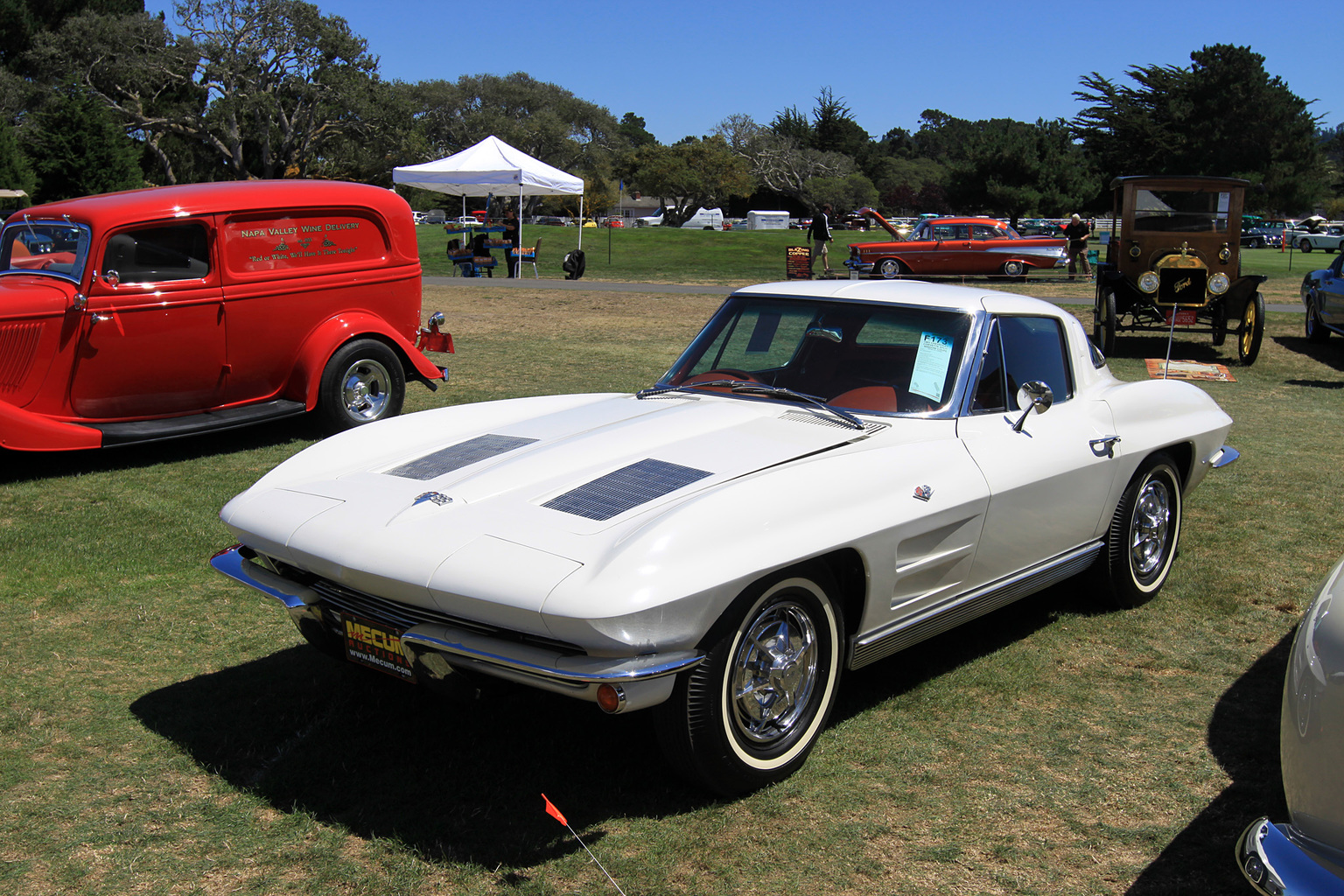
1963 Chevrolet Corvette Coupe L75 327/300HP – did not sell for $120,000 Original paint and interior. 1 of 278 produced with factory air conditioning. 327/300 HP engine. 4-speed manual transmission. Two owner car since new. Sold new at Rudolph Chevrolet in Phoenix, Arizona. Documented with the Corvette dealer’s copy, copy of the original title and registrations from new. Purchased new by George Beiswinger of Phoenix, Arizona. Sold in the mid 1980s to Bruce Bean of Burley, Idaho. Classic color combination, Ermine White with Red interior. 1963 was the first year for air conditioning and the option added $412.80, or 10% of the car’s price new. Auction Source: The Daytime Auction in Monterey by Mecum
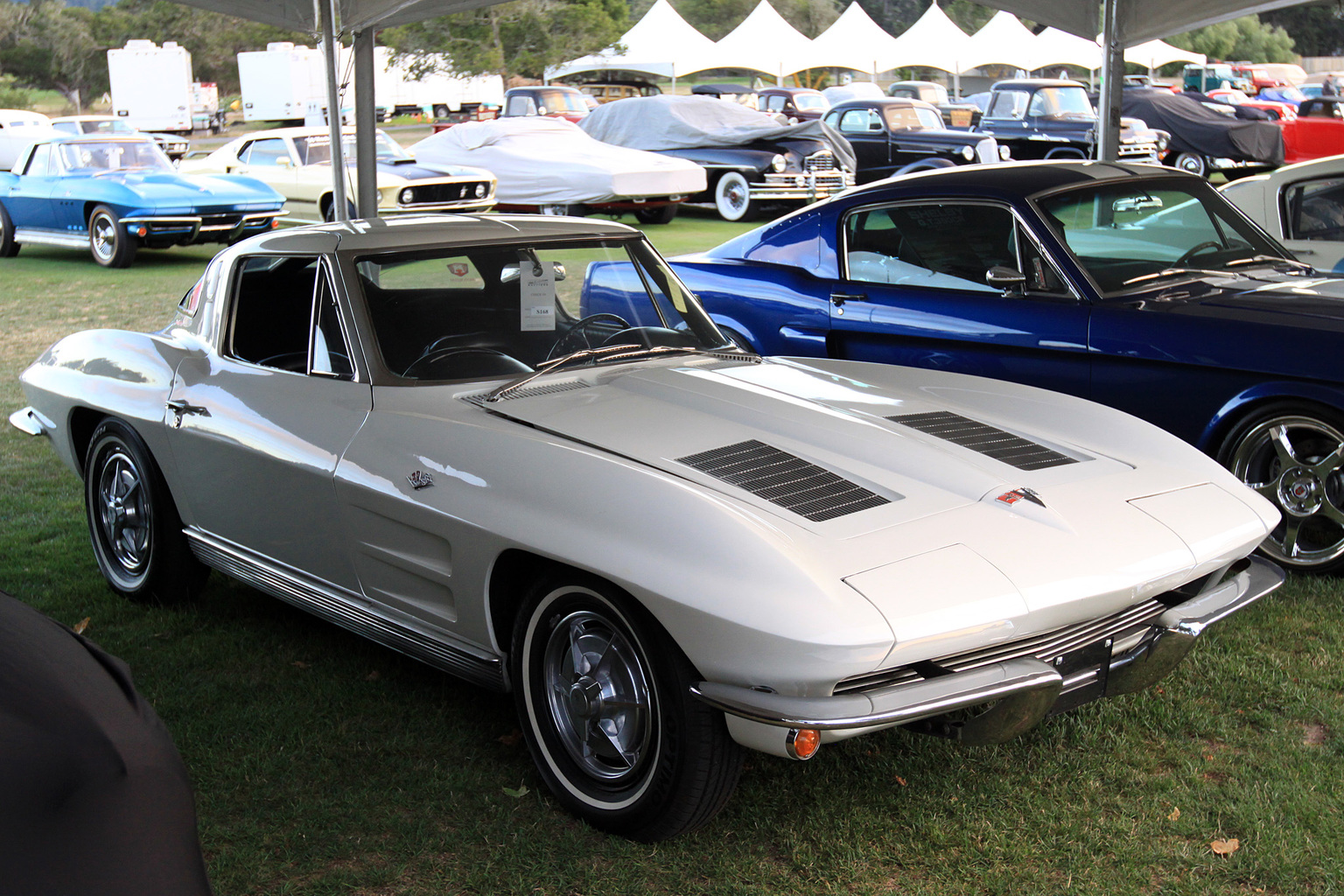
1963 Chevrolet Corvette Coupe L75 327/300 HP – sold for $78,000 Matching numbers 327 CI V-8 engine. Manual 4-speed transmission. Factory air conditioning. Mostly unrestored and well maintained. Original White color. Only production year of the Iconic split window coupe. Auction Source: The Daytime Auction in Monterey by Mecum
1963 Chevrolet Corvette Sting Ray Split-Window Race Car “7 11” 30837S102899 – did not sell for $325,000 Used on screen in Viva Las Vegas. Extensive Southern California race history. Z06 competition components installed in period. NCRS American Heritage Award certified. Auction Source: 2013 Monterey Auction by RM Auctions
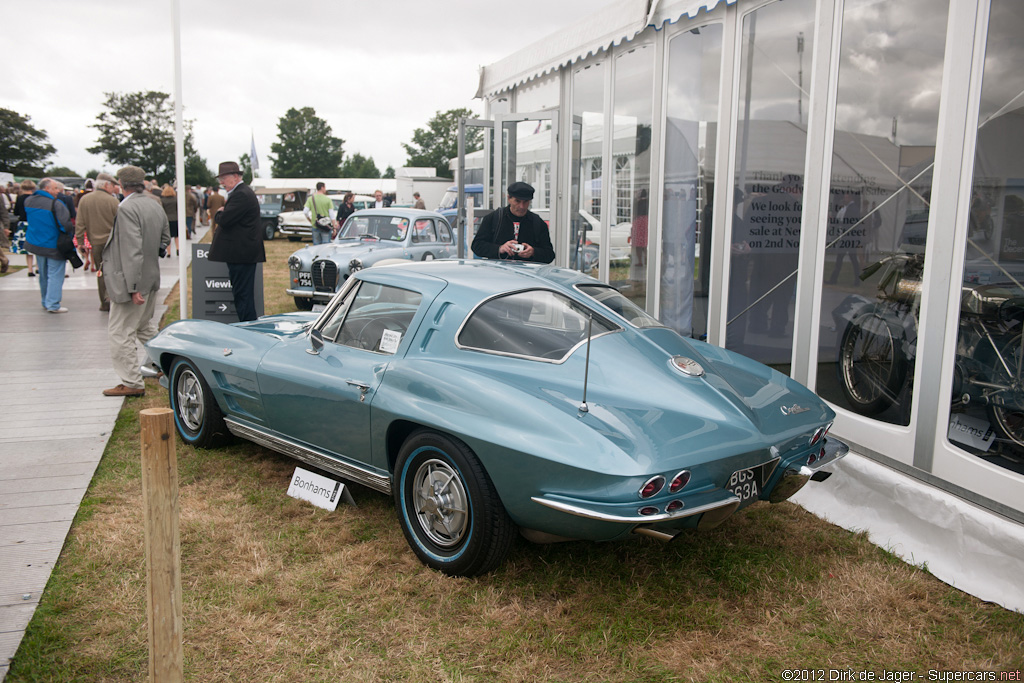
1963 Chevrolet Corvette Sting Ray Split Window Coupé – sold for €45,000 Left-hand drive, as were all Corvettes at this time, this first-year Sting Ray was first registered in the UK on 13th July 1989 and was acquired by the current vendor in November 2002. The accompanying Swansea V5C document states that there have been three former keepers since date of first registration in this country, the immediately preceding being Mr David McMillan of Romford, Essex who acquired the car in February 2000. Finished in blue with matching leather interior, ‘BGS 863A’ currently displays a total of 73,315 kilometres on the odometer and is described as in generally good condition. The car is offered with Corvette owners guide, current MoT certificate and Swansea V5C registration document. Auction Source: 2012 Goodwood Revival Sale by Bonhams
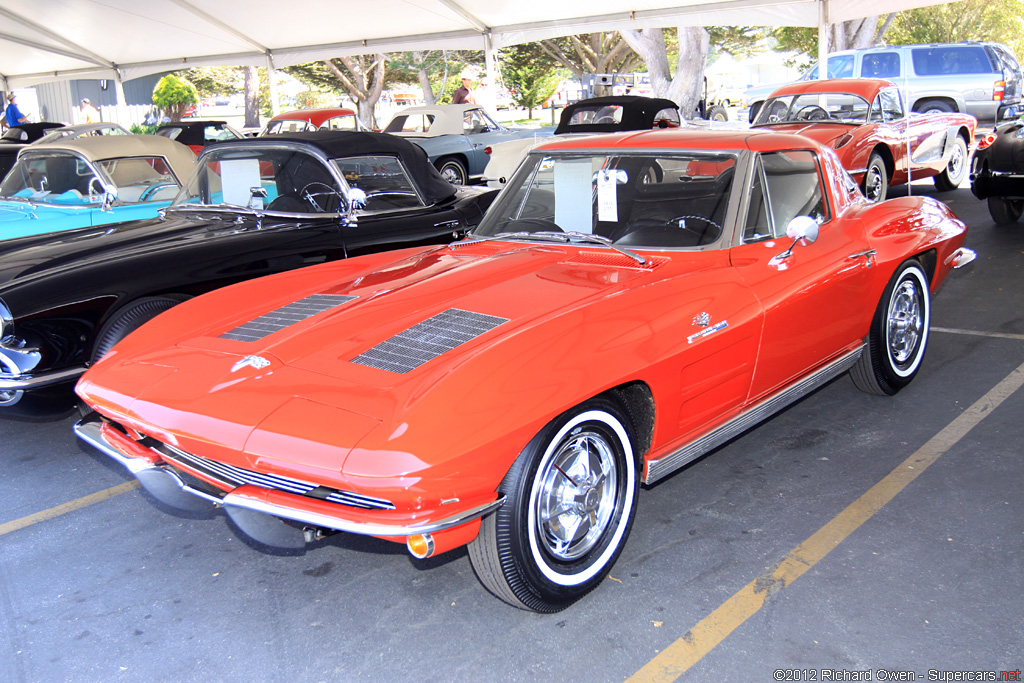
1963 Chevrolet Corvette Split Window Coupe 327/360 HP – sold for $102,500 Factory original engine, fuel injection, transmission and rear end. 50% original paint. Known in the Corvette Community for the past 50 years. Preserved to much of it’s originalty. Believed to have had 3 owners. Original Black Plate bought in San Francisco and issue plate # AAA. Riverside Red with Tuxedo Black interior. Matching Numbers. Auction Source: 2012 Daytime Auction by Mecum
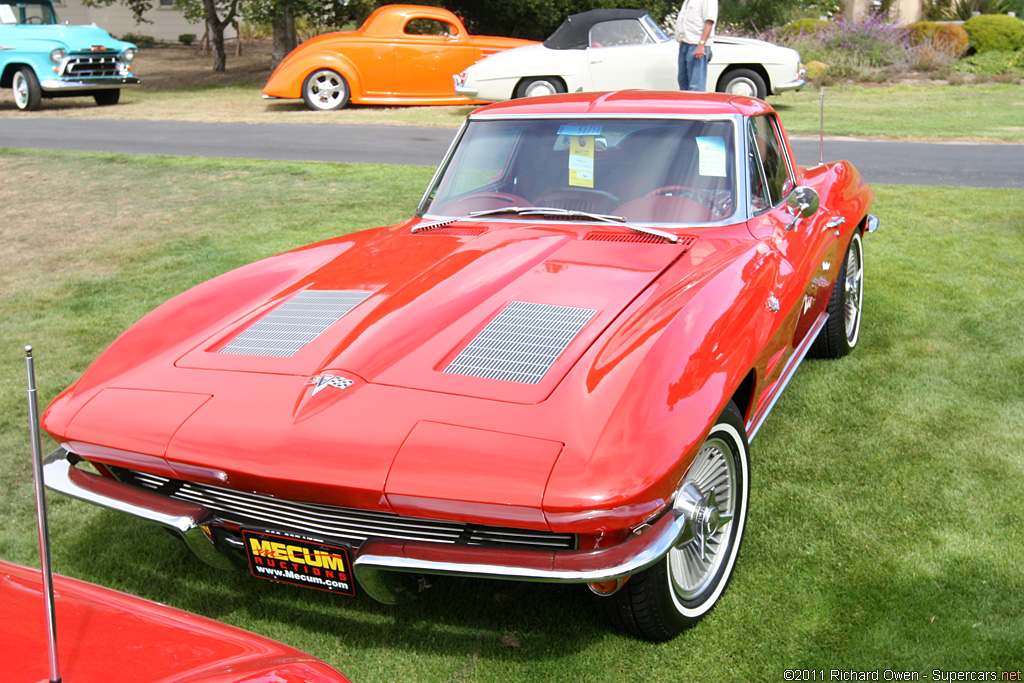
1963 Chevrolet Corvette Split Window Coupe 327/340 HP – sold for $68,000 Matching numbers. Frame-up restoration with receipts. Reproduction knock-off wheels. Trim Tag shows Sebring Silver with Red interior. Very rare desirable color combination. Drives like new. Very correct mechanical restoration. Auction Source: 2011 Monterey Daytime Auction by Mecum
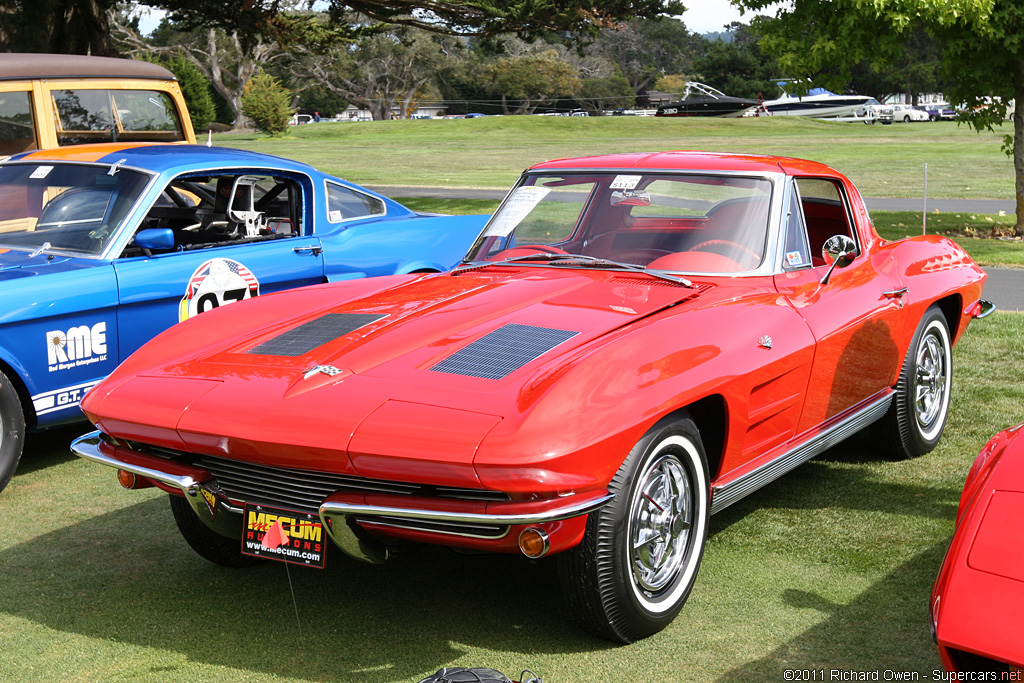
1963 Chevrolet Corvette Split Window Coupe 327/340 HP – sold for $75,000 Rare and eminently desirable, this 1963 Chevrolet Corvette Sting Ray split window coupe has undergone an award-winning nut and bolt body-off restoration, one that has already earned it the Chevy Vettefest Gold Spinner Award. Based on a rust-free example with just 54,000 miles, the car is correct down to such details as the bond seams and fender lips, hoses and clamps, ignition shielding and frame and suspension details, all rendered to factory specifications. The original matching numbers 327/340 HP engine and 4-speed transmission are also correctly detailed. Finished in glorious Riverside Red, this is every split-window lover’s dream machine. Auction Source: 2011 Monterey Daytime Auction by Mecum
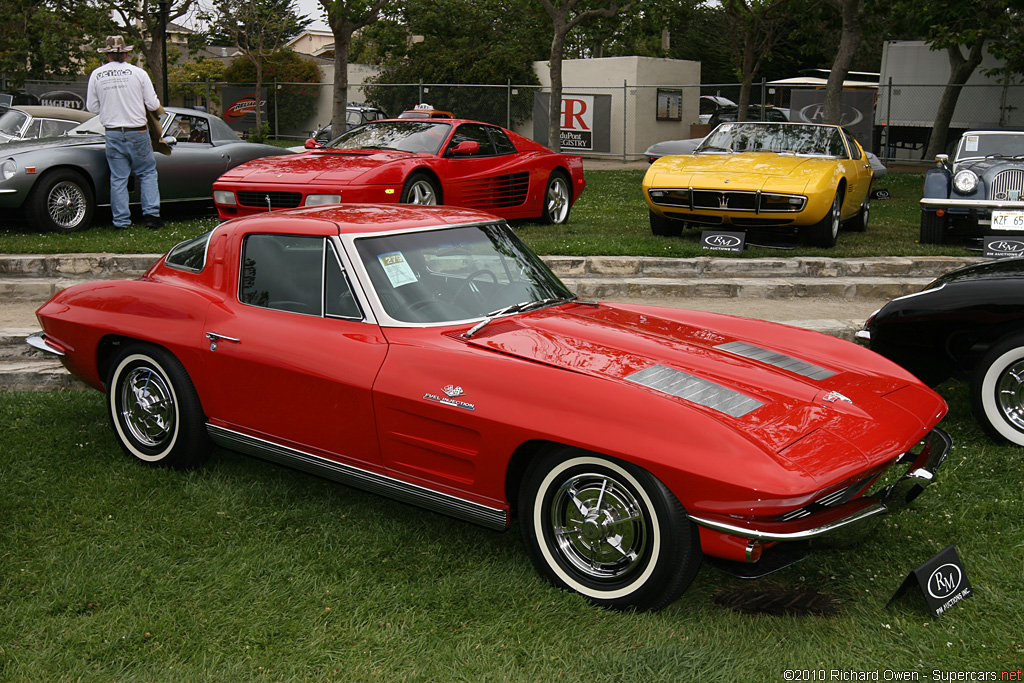
1963 Chevrolet Corvette Fuel-Injected “Split Window” Coupe – sold for $132,000 This Riverside Red fuel-injected example received a cost-no-object, “nut and bolt” restoration by Glenn Vaughn Restorations and remains in high-point condition. The engine is a correct, later-1963 matching-numbers block mated to a Muncie M21 four-speed transmission. Other features include a black interior, a G81 Posi-Traction rear end, a U65 Signal-seeking AM radio, A01 Soft Ray tinted glass, an original-type Delco battery and a set of period-style whitewall tires. Auction Source: RM Auctions’ 2010 Sports & Classics of Monterey
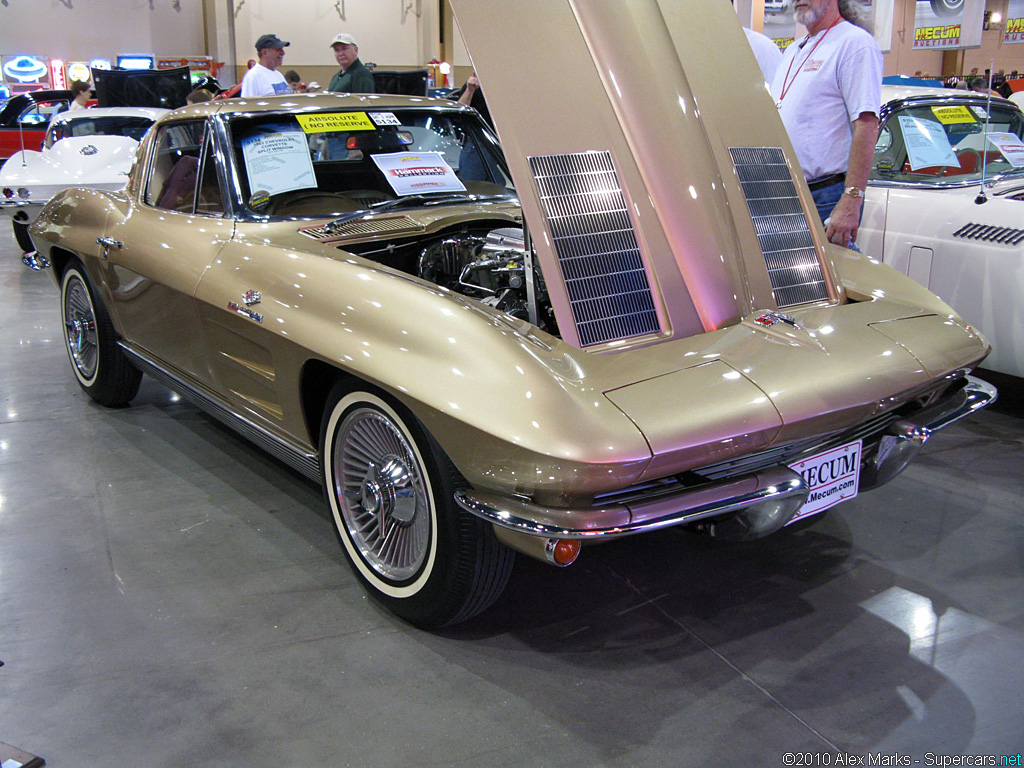
1963 Chevrolet Corvette Split Window 327/360 HP – sold for $115,000 No detail, no matter how small, was left untouched in the frame-off restoration of this expertly finished 1963 Corvette Sting Ray split-window coupe. Its code 934 Saddle Tan metallic paint and Saddle leather interior are a particularly rare combination, especially in concert with the most desirable powertrain in the first-year Sting Ray, Chevy’s high-winding, Rochester fuel injected 327/360 HP smallblock coupled to an optional close ratio Muncie 4-speed and 3.70 Positraction rear end. Power windows, an AM/FM radio and period-correct Goodrich Whitewalls on knock-off aluminum wheels complete this rare jewel. Auction Source: 2010 Mecum Kissimmee, FL Auction