
1950→1953 Aston Martin DB2
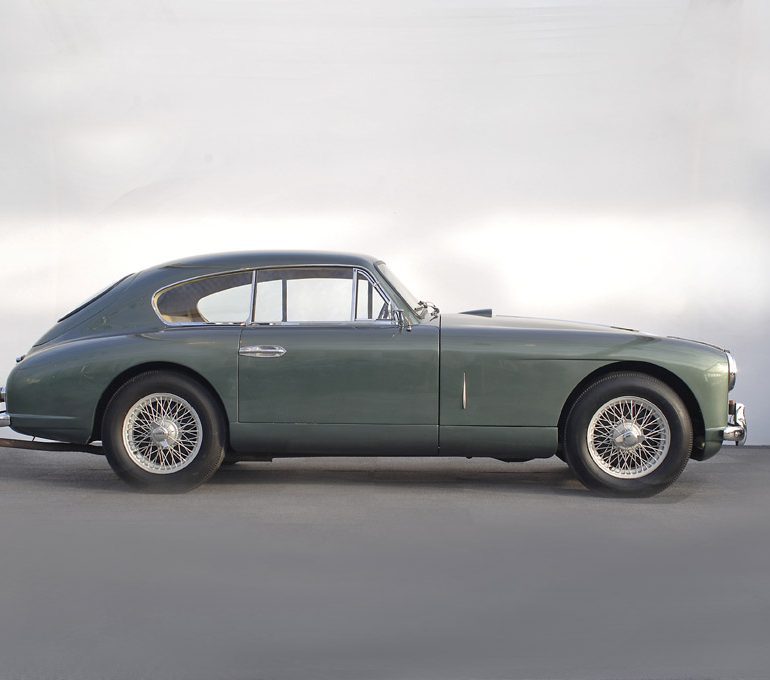
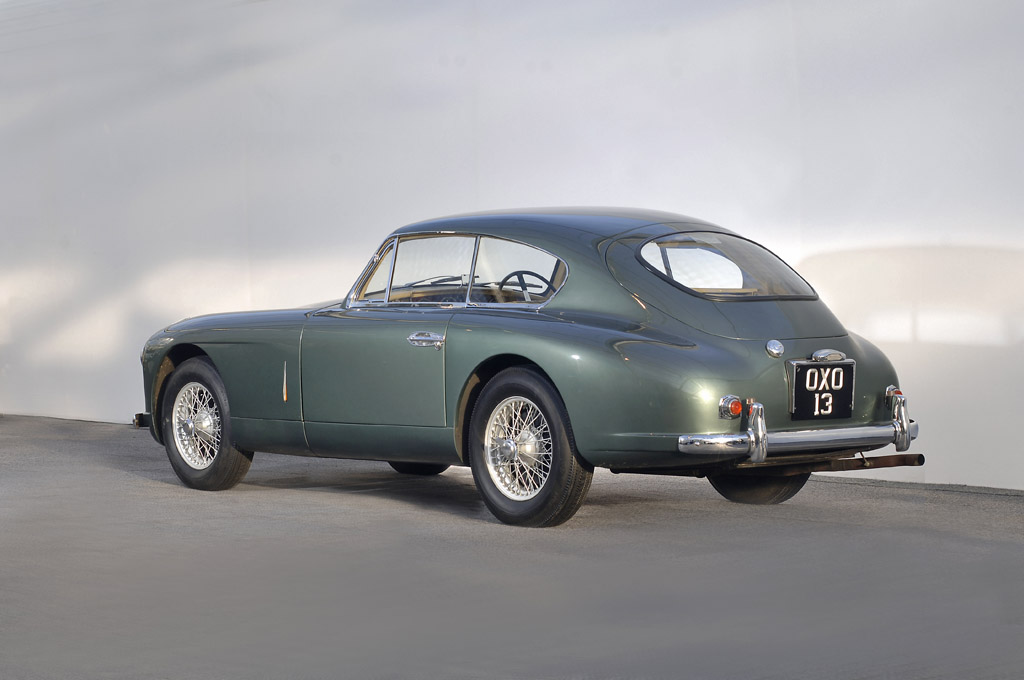
Aston Martin’s first successful post-war production car was the DB2. It used engineering principles from both Aston Martin and Lagonda after David Brown purchased both companies in 1947. It became the first successful David Brown Aston Martin and set a trend for many more incredible cars.
Equiped with an impressive list of features, the Aston Martin could be considered the best British sports car available in 1950. Laurence Pomeroy wrote for Motor in October 1950 “It would appear that every so often the gods pass over some works or another and with an inclination of the head inspire the production of a car with outstanding virtues. The Aston Martin DB2 stands worthy in the pedigree of real motor cars stretching back through the 4 ½ Bentley to the 30/98 Vauxhall.”
Engineering for the DB2 was first set out with the 2-Litre Sports Aston Martin’s first post-war sports car. It had a tubular steel chassis and distinctive two-seat tourer body designed by Frank Freeley. Engineer Ted Cutting shortened the this chassis and fitted Lagonda’s highly acclaimed 2.3 liter engine. A highlight was the four-wheel coil-spring suspension and a well braced chassis with triangulation and upper side-rails.
Some of the very first DB2s were prepared for the track. Three interim models were entered for the first post-war 24 hours of LeMans in 1949. Unfortunately, disaster struck, and a fatal crash that killed works driver Pierre Marechal. Soon after LeMans race, a production DB2 was launched at the New York Motor show.
Production versions were very similar to the works racing cars which had a Lagonda 2.6 liter engine, an improved DB1 space frame, stressed aluminum bodywork and the same overall appearance.
During its release at the 1950 New York motor show, the DB2 offered performance of a Lemans race car with the comforts of a highway tourer. The only car British car offering similar performance during that period was the affordable Jaguar XK120. This caught the attention of visitors to the show and 100 cars were ordered during the car’s launch.
Phil Hill tested one of the cars and said “the Aston handles as well as any sports car I’ve driven, far better than any passenger car…the DB2 handles like a dream and is a lot of fun to drive.”
During a three year production run DB2s sold as fast as Aston Martin could produce them. A total of 339 coupes and 102 drop head were manufactured. In later years, Aston offered a more potent Vantage version and the DB2/4, a longer more spacious car which had a boot and two rear seats.
The DB2, in all its forms, was replaced by the DB4 launched in 1959. Leading up to the DB4, the DB2 was enlarged into the DB2/4 and Drophead Coupés were offered on all examples.
Story by Richard Owen
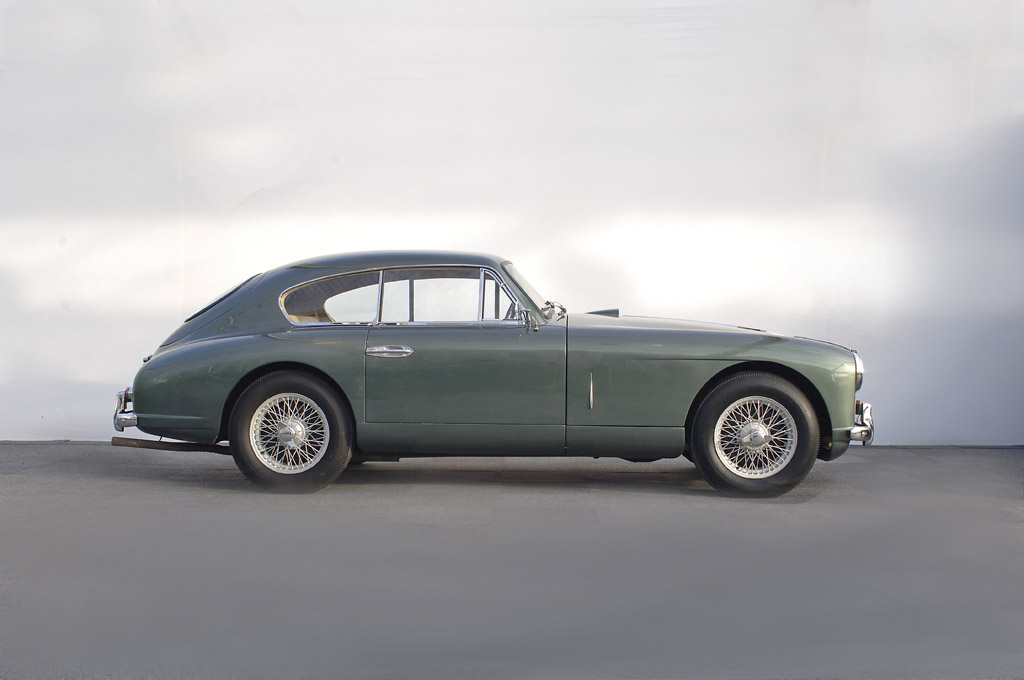
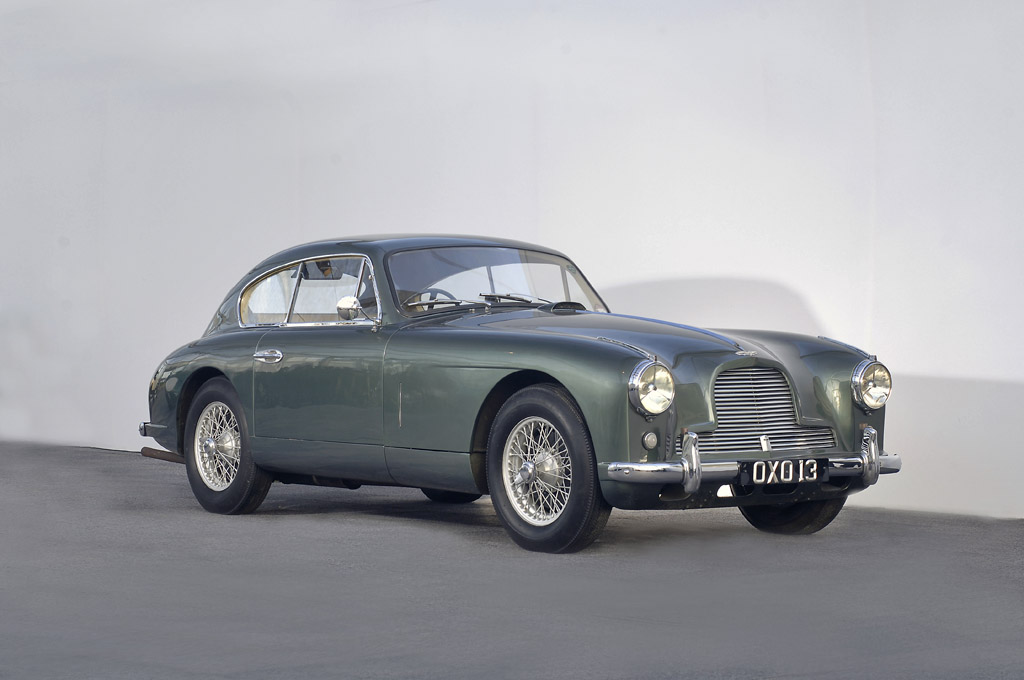
In Detail
| submitted by | Richard Owen |
| type | Series Production Car |
| production years | 1950 – 1953 |
| released at | 1950 New York Motor Show |
| built at | Feltham, England |
| body stylist | Frank Freeley |
| coachbuilder | Tickford Coachbuilding |
| engineers | Ted Cutting |
| price £/td> | £1,915 |
| engine | Water Cooled, Cast Iron, Inline-6 |
| position | Front Longitudinal |
| aspiration | Natural |
| valvetrain | DOHC 2 Valves / Cyl |
| fuel feed | Twin SU Carburettors |
| displacement | 2580 cc / 157.4 in³ |
| bore | 78 mm / 3.07 in |
| stroke | 90 mm / 3.54 in |
| compression | 6.5:1 |
| power | 93.2 kw / 105 bhp @ 5000 rpm |
| specific output | 40.7 bhp per litre |
| bhp/weight | 92.59 bhp per tonne |
| torque | 169.48 nm / 125.0 ft lbs @ 3100 rpm |
| body / frame | Aluminum over Tubular Steel Spaceframe Chassis |
| driven wheels | Front Engine / RWD |
| front tires | 5.75×16 |
| rear tires | 6.00×16 |
| front brakes | Girling Hydrualic Drums |
| rear brakes | Girling Hydrualic Drums |
| steering | Worm & Roller |
| f suspension | Trailing Arms w/Shock Absorbers, Coil Springs, Anti-roll Bar |
| r suspension | Live Axle w/Coil Springs, Radius Arms, Panhard Rod. |
| curb weight | 1134 kg / 2500 lbs |
| wheelbase | 2515 mm / 99.0 in |
| front track | 1372 mm / 54.0 in |
| rear track | 1372 mm / 54.0 in |
| length | 4299 mm / 169.3 in |
| width | 1651 mm / 65.0 in |
| height | 1359 mm / 53.5 in |
| transmission | David Brown 4-Speed Manual |
| gear ratios | 2.92:1, 1.98:1, 1.33:1, 1.00:1 |
| final drive | 3.77:1 |
| top speed | ~177.0 kph / 110.0 mph |
| 0 – 60 mph | ~11.0 seconds |
Auction Sales History
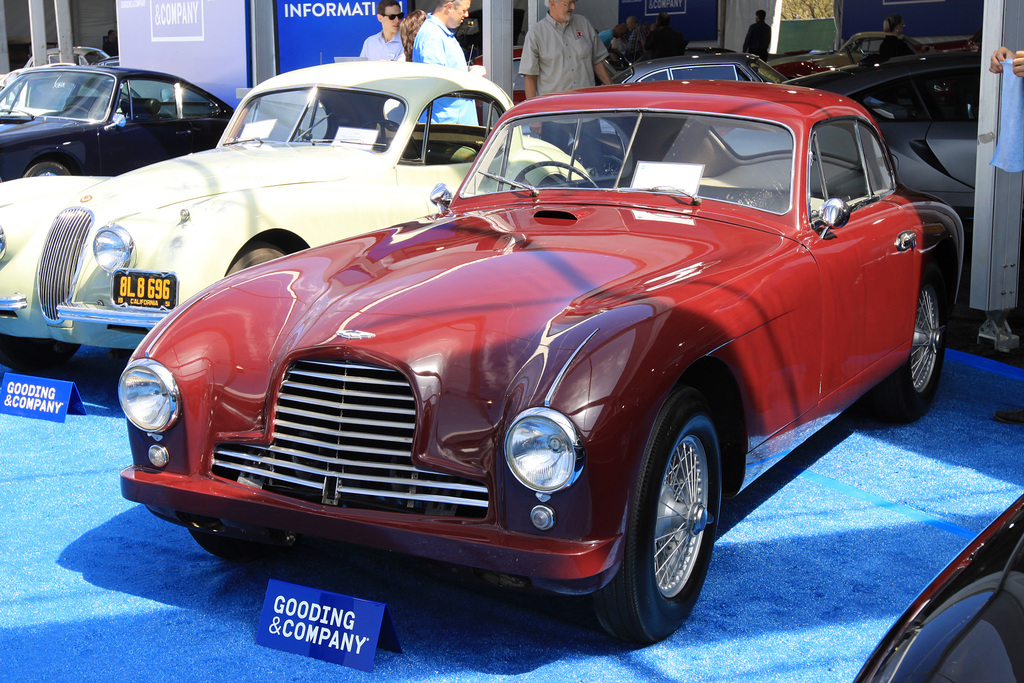
Auction Source: 2014 Pebble Beach Auctions by Gooding & Company
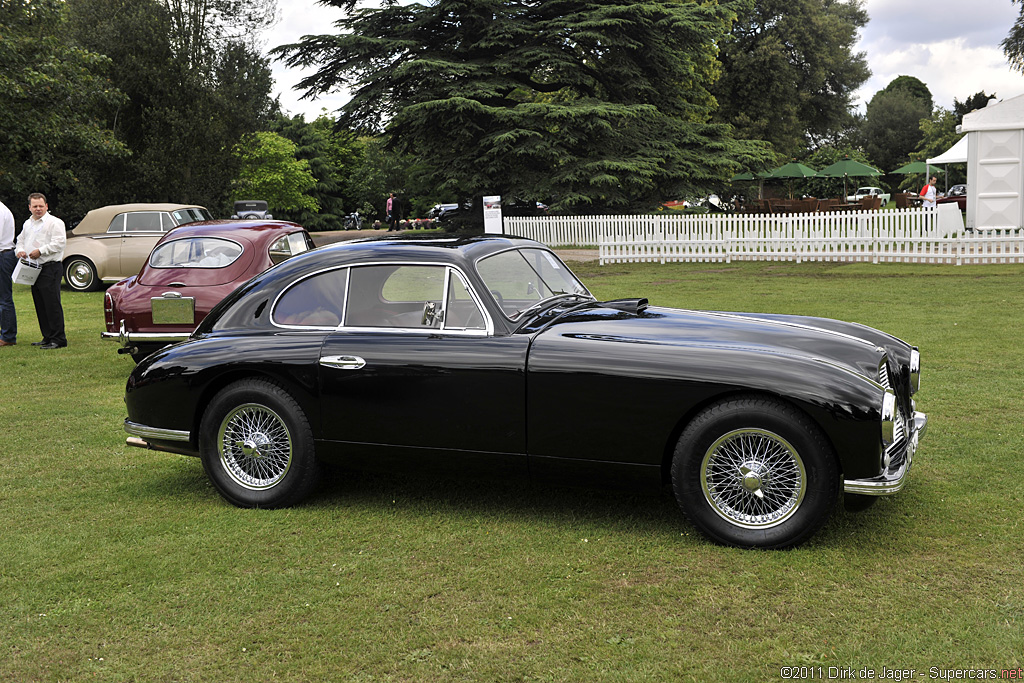
1953 Aston Martin DB2 Saloon LML/50/393 –
Auction Source: 2011 Salon Privé Auction by RM
1953 Aston Martin DB2 Coupé LML/50/213 –
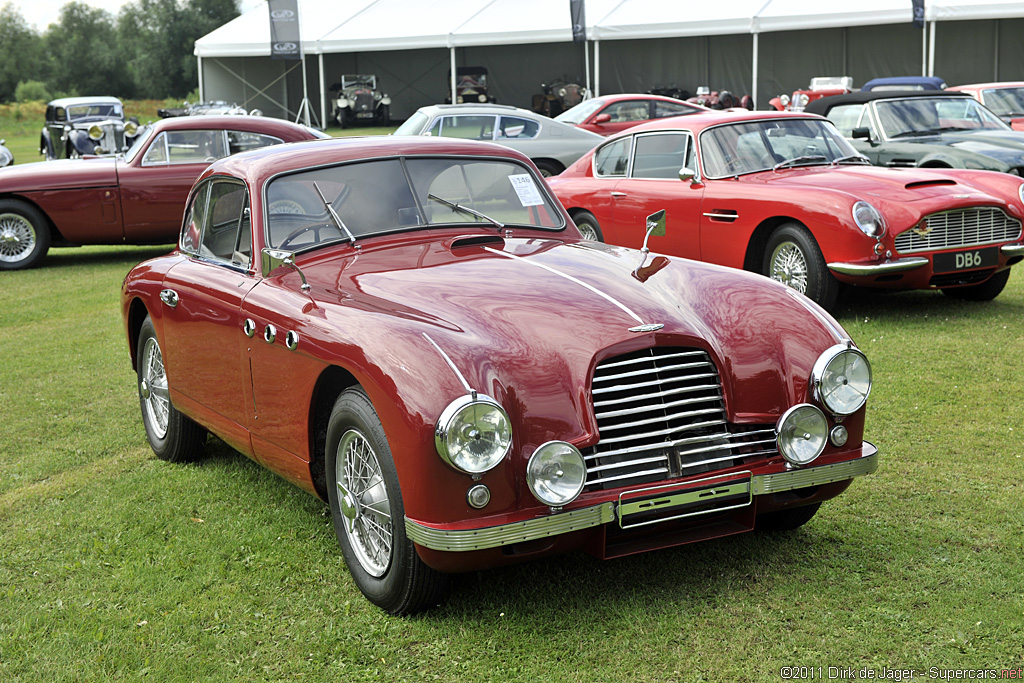
The late-production, original right-hand drive 1953 DB2 Coupé offered here, chassis LML/50/213, is powered by its original matching-numbers engine, VB6B/50/1115. Finished in Peony Red, the car retains the original grey-piped burgundy seats, which display a lovely patina. Interestingly, the DB2 is fitted with a set of chrome-trimmed cooling ‘portholes’ on both sides of the bonnet, quite reminiscent of those used by Vignale in period on its own coachbuilt Ferrari bodies. The exterior paintwork is very presentable, and with the exception of some imperfections noted in the window trim, the chrome is excellent. The original trafficators are not presently connected, but a set of Lucas auxiliary rear directional signals is fitted to the car. A correct set of silver-painted 60-spoke wire wheels complements the classic lines of this very fine first-generation DB2. This car is complete with a copy of the original build sheet and works service history from new through August 1964. All in all, this is a wonderful Aston Martin, ideal not only for the marque purist but also the novice grand touring enthusiast in search of a sporting yet comfortable event car.
Auction Source: 2011 Salon Privé Auction by RM
1951 Aston Martin DB2 Coupé LML/50/88 –
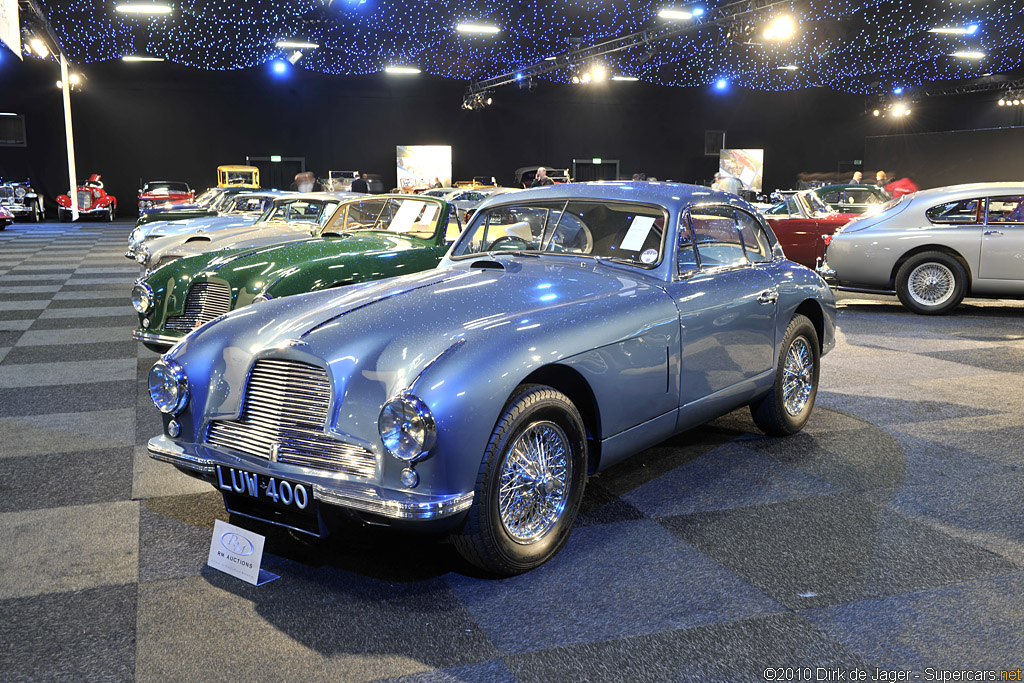
A very early-production car; the 15th DB2 sold new in the UK. First owned by Lord Brabazon. Painstakingly restored in early 1990s. A multiple concours winner and participant in the 1993 DB2 reunion.
Auction Source: 2010 Automobiles of London by RM Auctions