
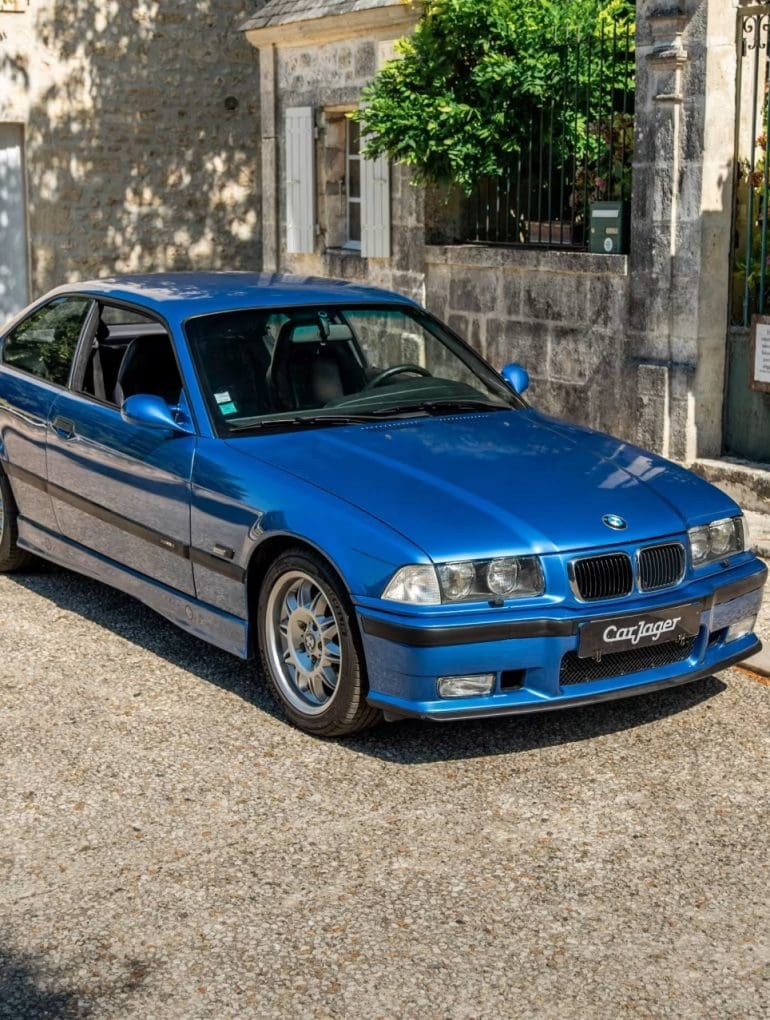

Paris Motor Show, October 1992. BMW unveiled the M3 E36, the second-generation M3 and a revolutionary departure establishing new performance car philosophy. For the first time in M3 history, the engine was a naturally aspirated inline-six rather than the legendary four-cylinder that defined the E30. The 3.0-liter S50B30 produced 286 horsepower at 7,000 rpm and 236 lb-ft of torque at 3,600 rpm in European specification, delivering silky high-revving character alongside mechanical sophistication reflecting BMW’s engineering excellence. This was Munich’s statement that the M3 could evolve without compromising its authentic character: the new engine provided greater refinement, more accessible power delivery, and the potential for evolutionary development extending production capability across multiple platforms.
The E36 M3 could accelerate from 0 to 60 mph in approximately 5.8 seconds while achieving 155 mph, establishing credentials matching contemporary supercars through mechanical sophistication rather than forced induction complexity. Production ran from October 1992 through 1999, with approximately 71,244 examples built globally including coupes, convertibles, and sedans, establishing the E36 M3 as one of the most successful performance cars of the 1990s.
Background and Origins
The E36 M3’s development began with recognition that the legendary E30 M3, despite extraordinary competition success, required fundamental evolution. The original four-cylinder, while brilliant engineering, represented the practical limits of naturally aspirated technology applied to compact displacement. Rather than pursue turbocharging or supercharging solutions, BMW’s engineers committed to exploring six-cylinder possibilities, believing that mechanical refinement and sophisticated engineering could deliver superiority over forced-induction alternatives.
The fundamental decision was transformative: the new engine would feature dual overhead camshafts, 24 valves across six cylinders, and sophisticated variable valve timing—establishing the most advanced naturally aspirated architecture BMW had yet attempted. The 3.0-liter engine designated S50B30 derived from the M50TU platform used in standard E36 models, but BMW Motorsport comprehensively revised the design with increased displacement, modified intake incorporating individual throttle bodies, and the revolutionary single-VANOS variable valve timing system controlling intake cam timing.
The design brief also emphasized that the M3 should become more accessible than the E30. Where the earlier car was deliberately uncompromising, the E36 would maintain racing credentials while providing greater everyday practicality. Initially available exclusively as a coupe beginning October 1992, BMW recognized customer demand warranted additional body styles, introducing the convertible and sedan variants in 1994. This positioning proved transformative, establishing the M3 as a performance icon spanning multiple customer preferences.
Design and Engineering
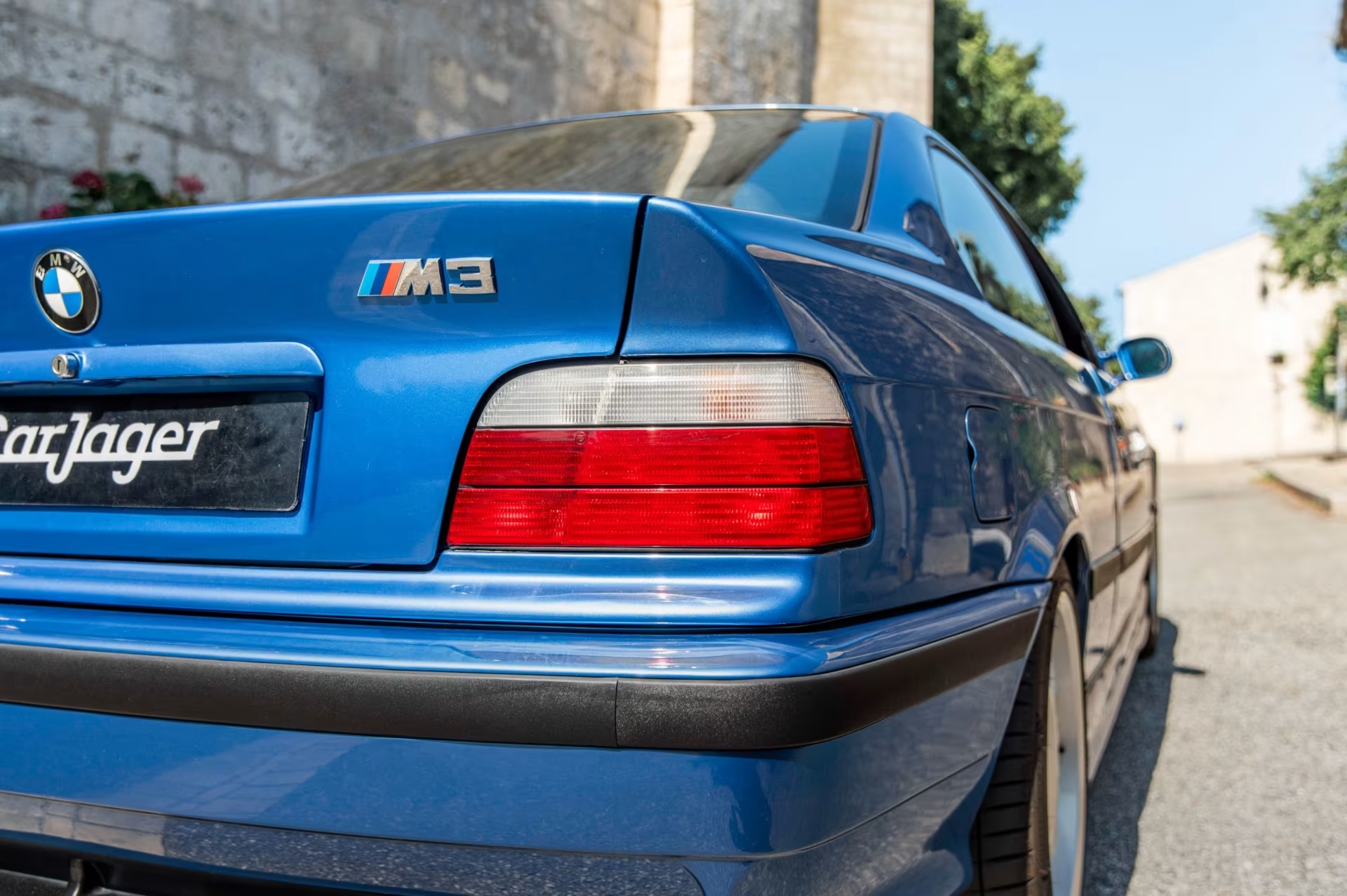
The E36 M3 utilized the E36 platform but received comprehensive mechanical optimization. Suspension featured MacPherson struts with L-shaped control arms at the front and a sophisticated multi-link “Central Link” axle arrangement at the rear, the geometry meticulously tuned for responsive handling while maintaining refinement expected from a practical daily-driver coupe. Anti-roll bars were significantly stiffer than standard models, improving cornering response without excessive harshness compromising ride quality.
Braking was by ventilated discs with single-piston floating calipers front and rear, providing powerful stopping power adequate for the M3’s acceleration. Anti-lock braking was standard, representing cutting-edge technology preventing wheel lockup during emergency braking while allowing impressive pressure modulation for performance driving.
The S50B30 naturally aspirated inline-six displaced 2,990cc with the single-VANOS variable valve timing system controlling intake camshaft timing, representing significant innovation for road-car application. Individual throttle bodies for each cylinder provided meticulous cylinder-by-cylinder mixture preparation, while dual overhead camshafts controlled four valves per cylinder. With a compression ratio of 10.5:1, the engine delivered remarkable naturally aspirated performance: 286 horsepower at 7,000 rpm and 236 lb-ft of torque at 3,600 rpm.
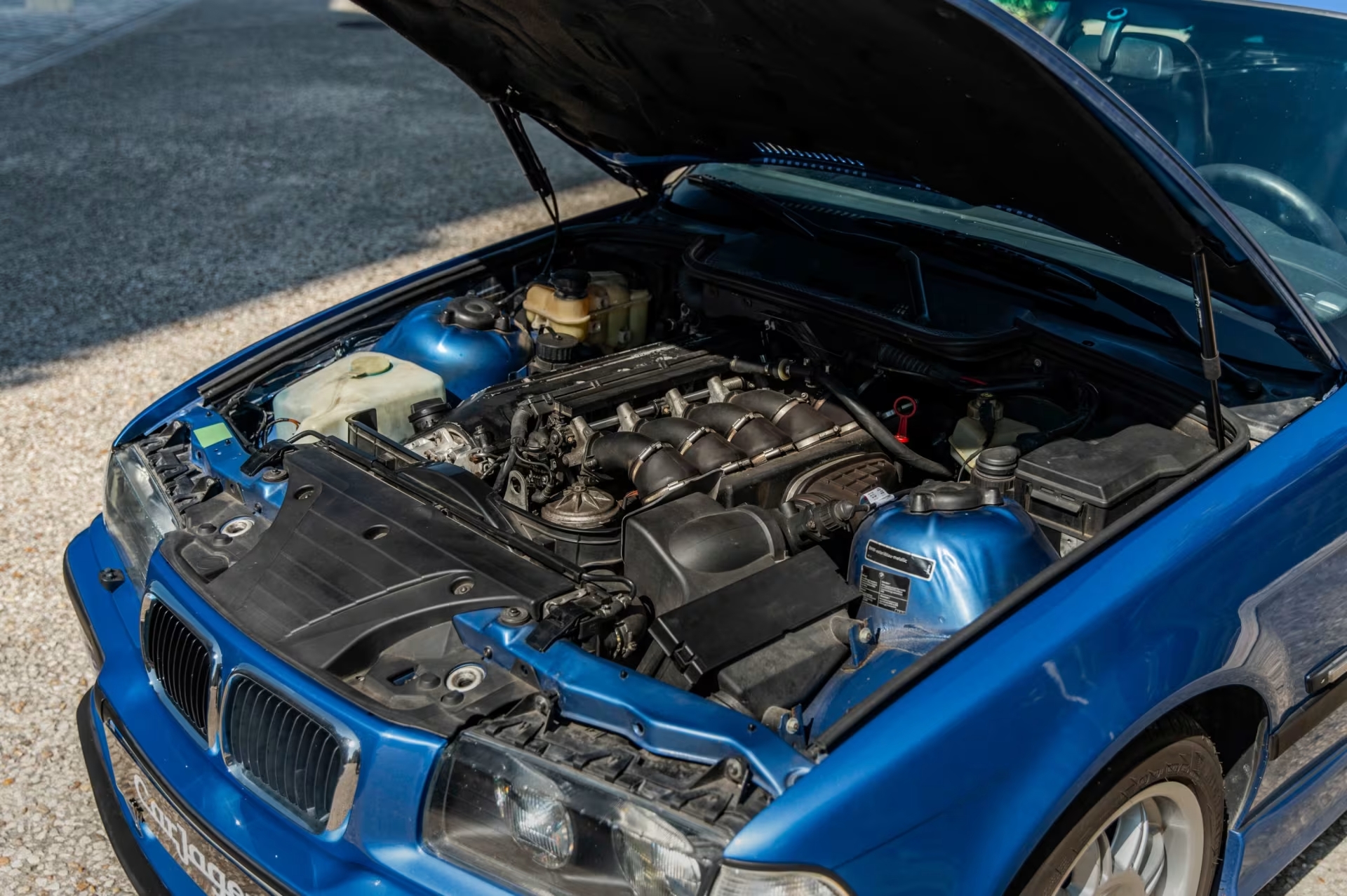
The power delivery was distinctly high-revving in character, with peak torque arriving at moderate engine speeds while continuing through the 7,000 rpm limit. This established linear power delivery encouraging drivers to exploit the full rev range through disciplined gearbox work rather than relying on early boost surge. The five-speed manual transmission featured close-ratio spacing optimized for spirited driving, with the limited-slip differential managing torque delivery effectively.
By late 1995, the S50B32 variant increased displacement to 3.2 liters, producing 321 horsepower and introducing Double-VANOS—variable control over both intake and exhaust camshafts—providing the platform for evolutionary development extending M3 capabilities. Late-production models received six-speed manual transmissions, improving acceleration while enabling genuinely relaxed highway cruising.
Styling
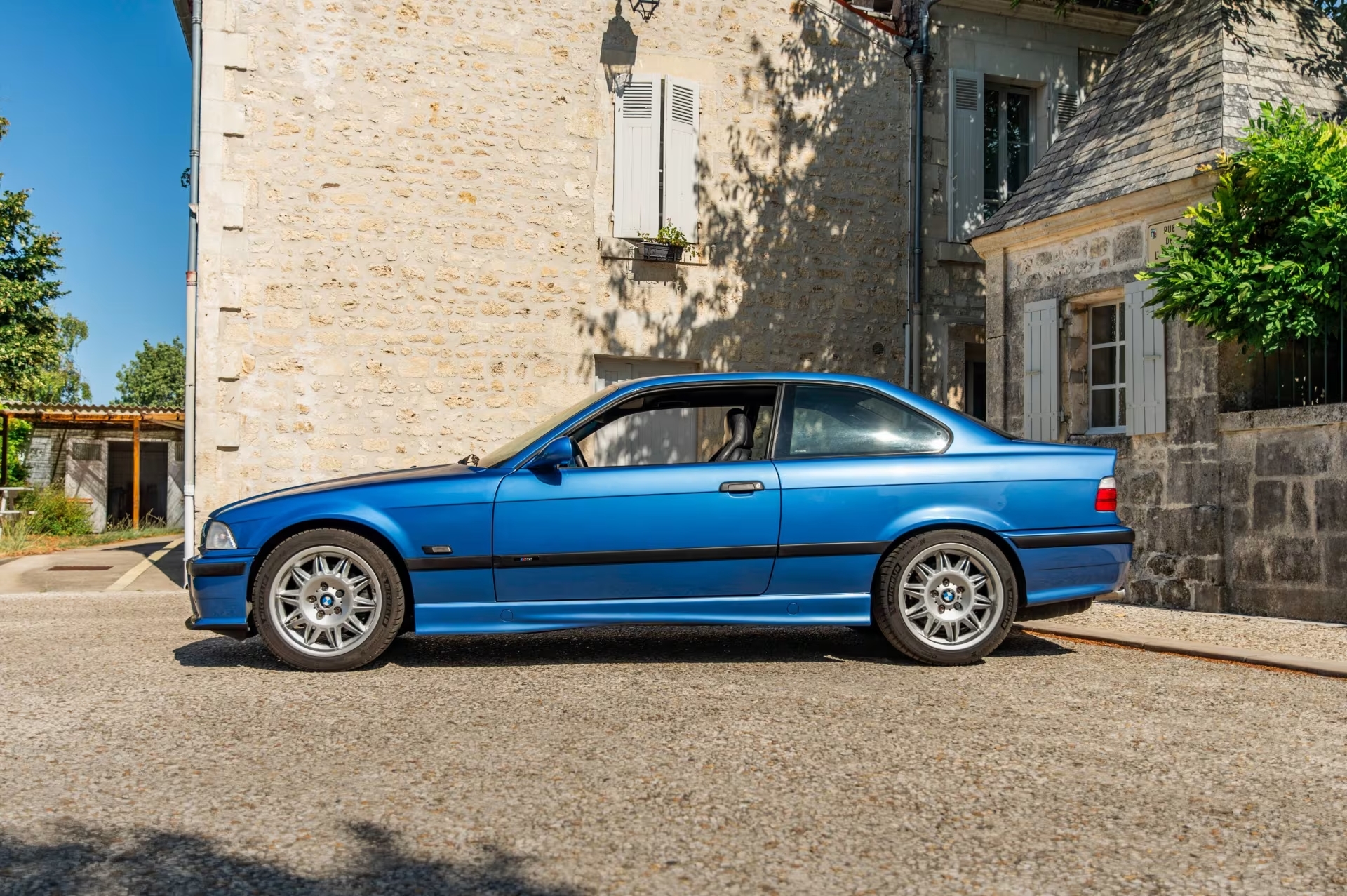
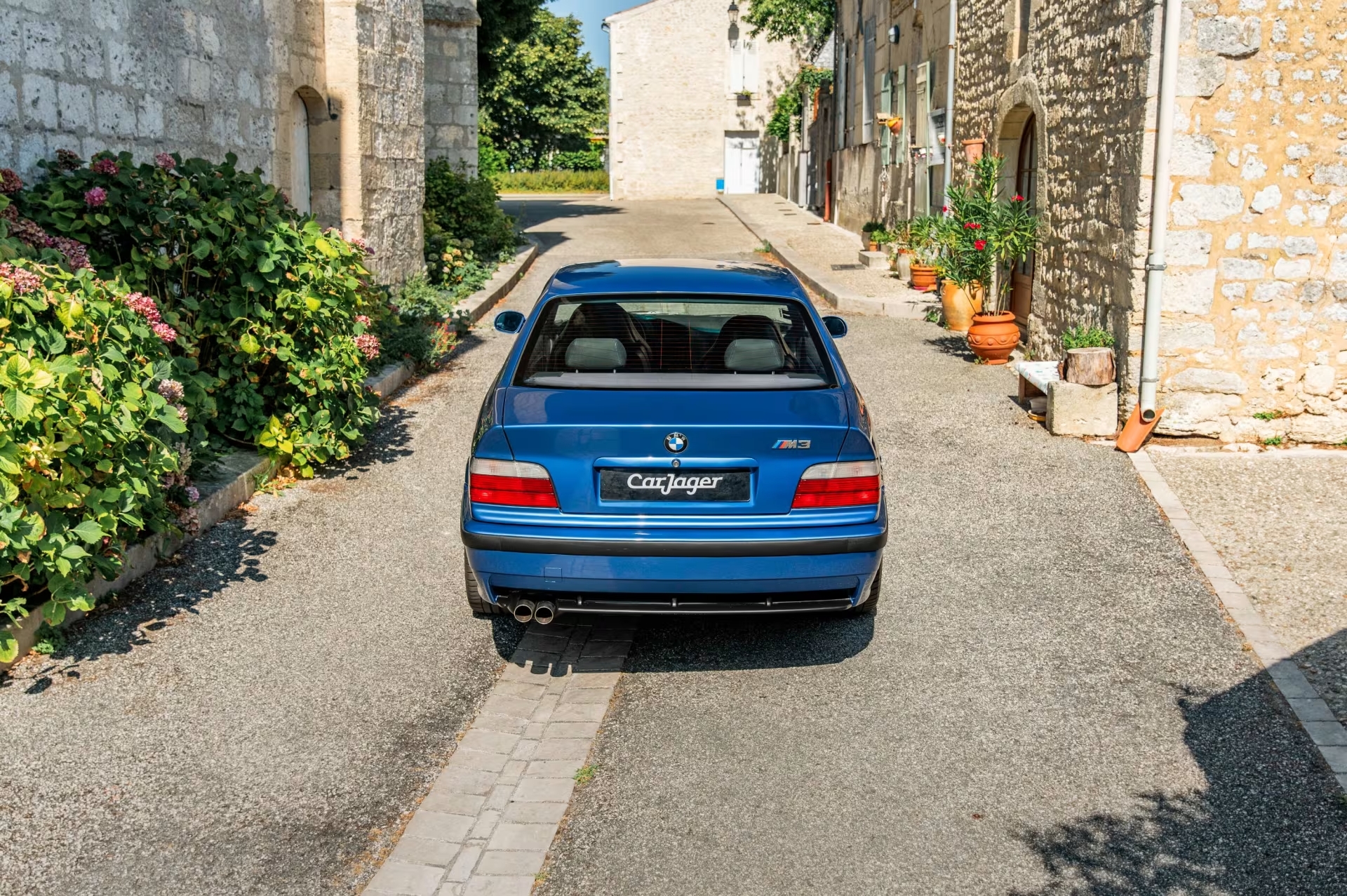
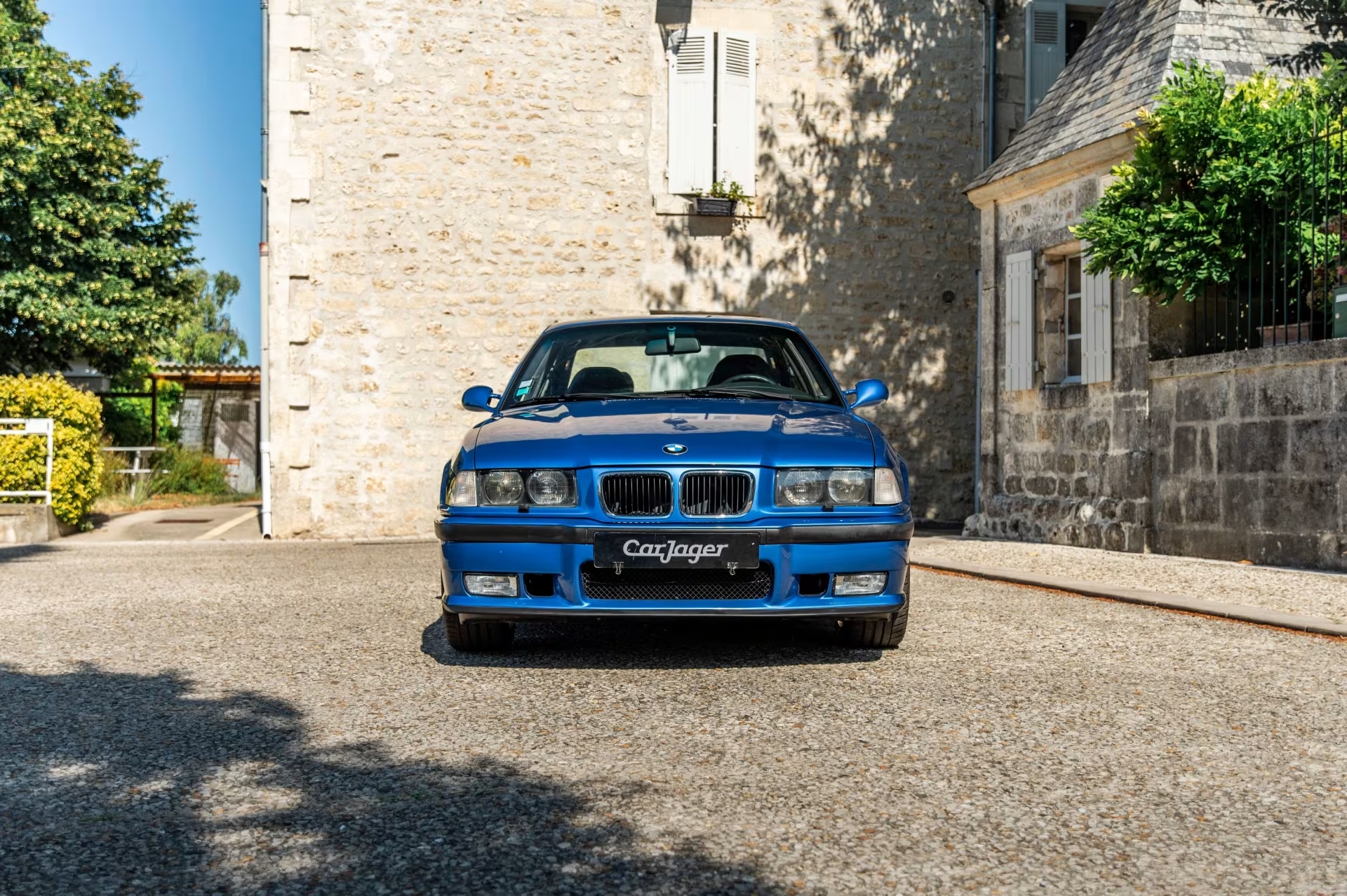
The E36 M3 received cosmetic differentiations from standard 3-Series models emphasizing its performance mission without theatrical aggression. Distinctive bumpers incorporated modified air intake designs for improved cooling efficiency. Side sills featured aerodynamic refinement, while rear-view mirrors were redesigned specifically for the M3. Remarkably, the car lacked aggressive rear wings or large spoilers—the entire design philosophy emphasized that genuine performance didn’t require visual drama.
The overall appearance suggested understated performance: informed observers recognized M3 status through subtle proportional refinements rather than obvious visual cues. Most examples were finished in traditional German colors: Alpine White, Black Sapphire Metallic, or deep metallic blues celebrating BMW’s performance heritage through restrained elegance.
Interior
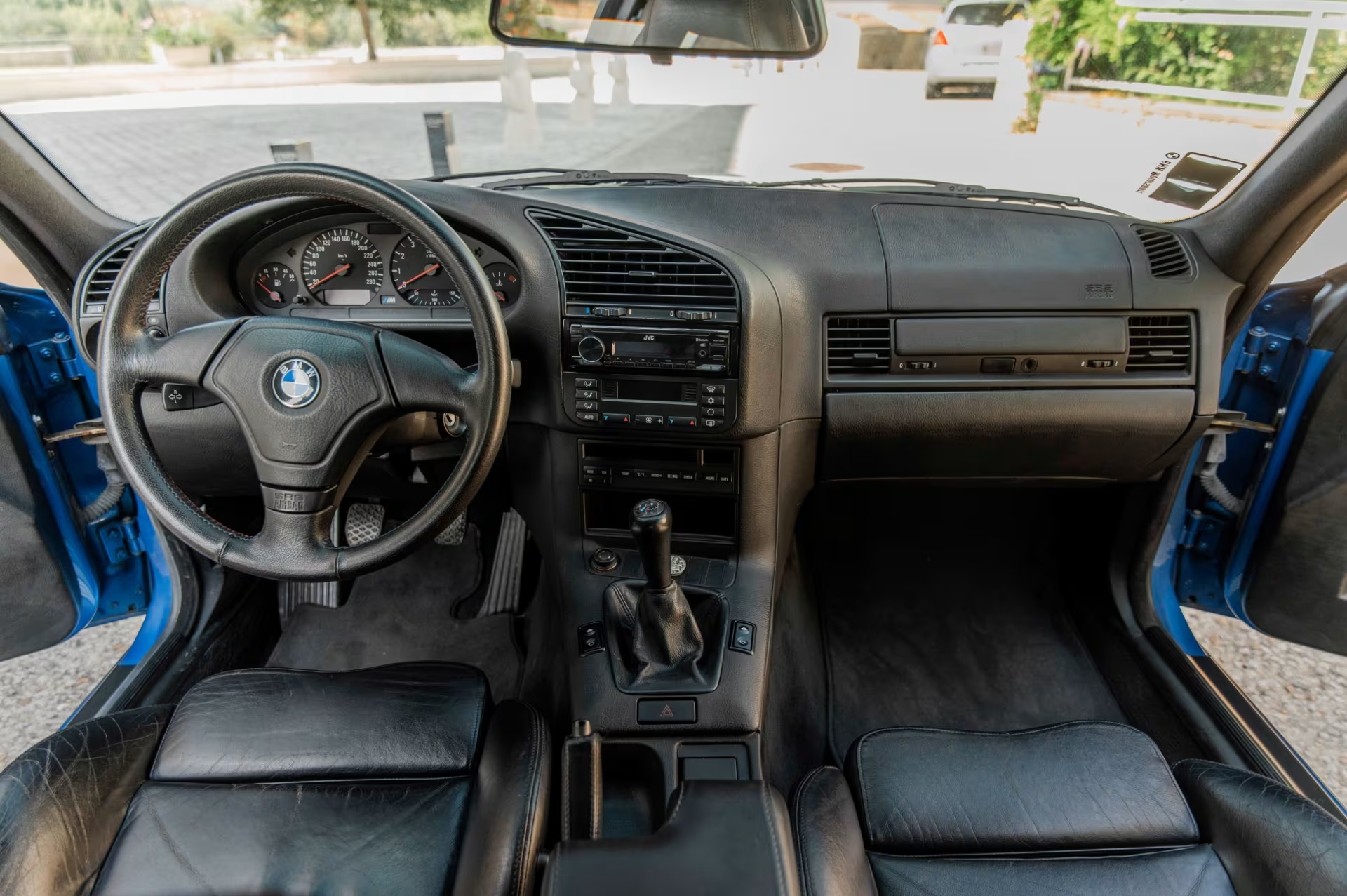
The cabin emphasized driver engagement combined with practical comfort. High-bolstered sport seats provided excellent lateral support during aggressive driving while maintaining comfort for extended road journeys. The driving position was commanding and perfectly balanced, with all controls falling naturally to hand. The instrument binnacle featured comprehensive gauges displaying engine parameters essential for exploiting the naturally aspirated engine’s full potential.
Standard equipment included climate control, power steering, and quality interior appointments reflecting BMW’s commitment to refined daily usability despite the car’s performance orientation. The overall atmosphere balanced racing-derived functionality with genuine luxury appropriate for ownership by performance-oriented enthusiasts.
Specifications
- Engine: BMW S50B30 naturally aspirated inline-six, 2,990cc, DOHC, four valves per cylinder, single-VANOS variable intake timing (3.0L) / BMW S50B32, 3,200cc, Double-VANOS (3.2L)
- Power: 286 PS / 282 hp (European, 3.0L) at 7,000 rpm; 240 hp (US spec) at 6,000 rpm; 321 PS / 317 hp (European, 3.2L) at 7,000 rpm
- Torque: 236 lb-ft / 320 N·m at 3,600 rpm (3.0L European)
- Transmission: Five-speed manual (1992-1995), six-speed manual (1996+), optional five-speed automatic (US spec 1995+)
- Chassis: Steel monocoque, 2,700mm wheelbase
- Suspension: MacPherson struts with L-shaped control arms (front), multi-link Central Link axle (rear), coil springs
- Brakes: Ventilated discs, single-piston floating calipers (front and rear), ABS
- Wheels: 17-inch alloy, performance tires
- Weight: 1,460 kg / 3,219 lbs (coupe)
- Performance: 155 mph / 250 km/h top speed (European), 0-60 mph in 5.8 seconds
Production and Legacy
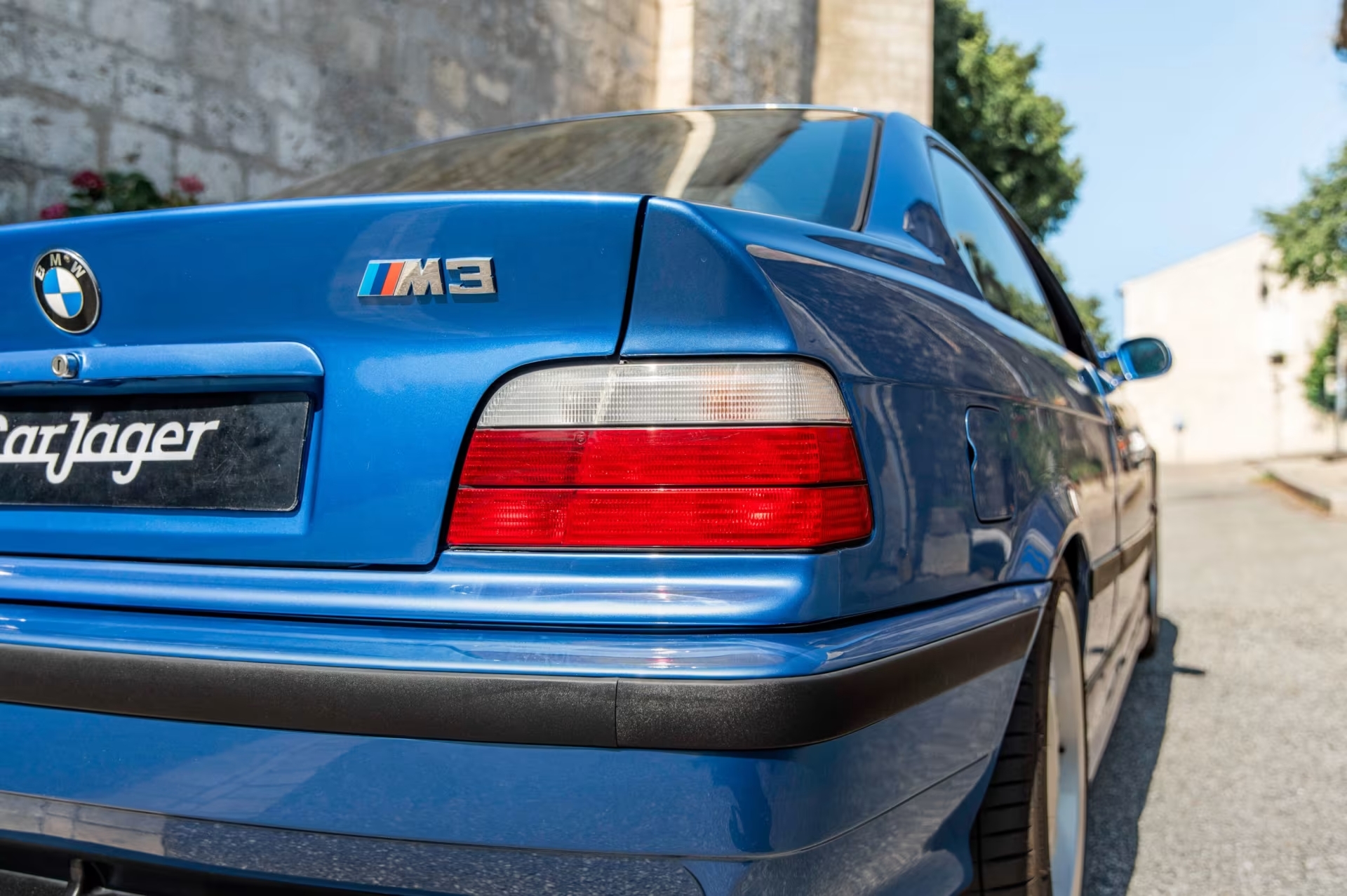
BMW built approximately 71,244 E36 M3 examples between October 1992 and 1999 at Regensburg factory, with additional examples assembled at Rosslyn in South Africa for right-hand-drive markets. The extended production run across multiple platforms—coupe (discontinued late 1998), convertible (discontinued December 1999), and sedan (discontinued December 1997)—reflected sustained customer demand despite premium pricing and genuine performance requirements.
Special editions emerged throughout production, most notably the limited-edition M3 GT (356 examples built in 1994-1995) featuring upgraded S50B30 engine producing 295 horsepower, and the M3 Lightweight—available for competition—which achieved legendary status through extreme weight reduction and track-focused engineering.
The E36 M3 proved that naturally aspirated six-cylinder engines could deliver superb performance while maintaining daily-driving practicality. The combination of mechanical sophistication, responsive handling, and refined character established templates influencing performance car development for decades.
Today, E36 M3 examples command strong collector appreciation reflecting their legendary status and engineering achievement. The combination of inline-six heritage, variable valve timing innovation, and genuine performance credentials ensures lasting appeal among serious enthusiasts.
The BMW M3 E36 represented Munich at its most accomplished, proving that evolutionary engineering and mechanical refinement could create something genuinely transcendent. It remains one of BMW’s greatest achievements, establishing the M3 as a legend spanning generations.