
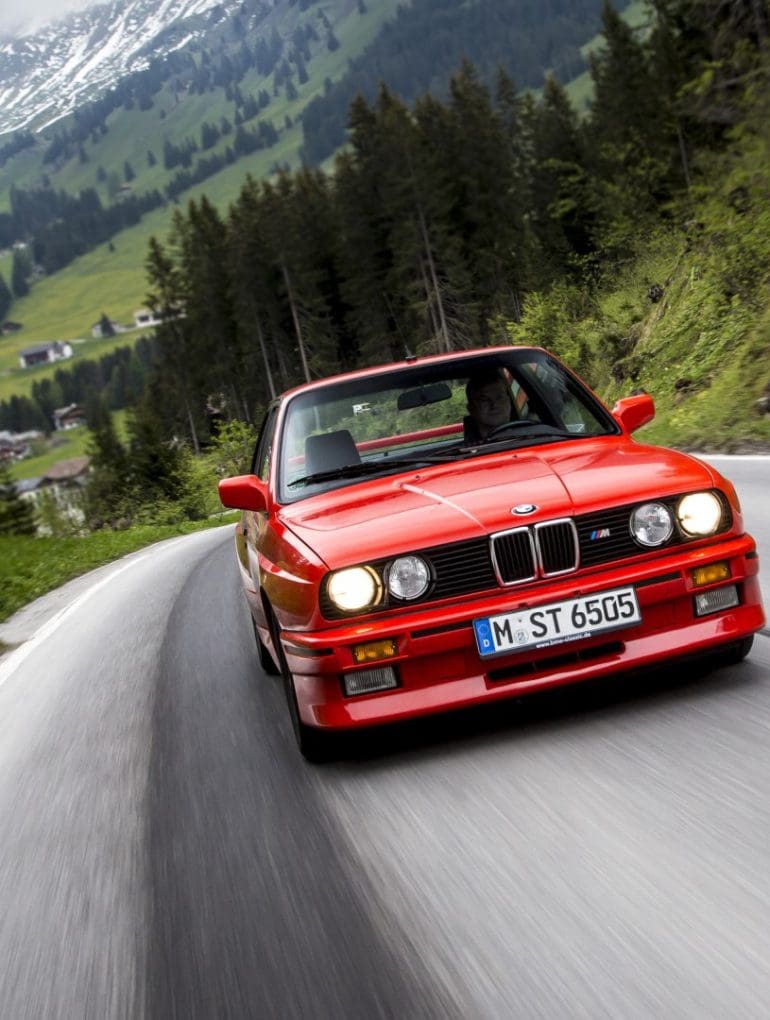

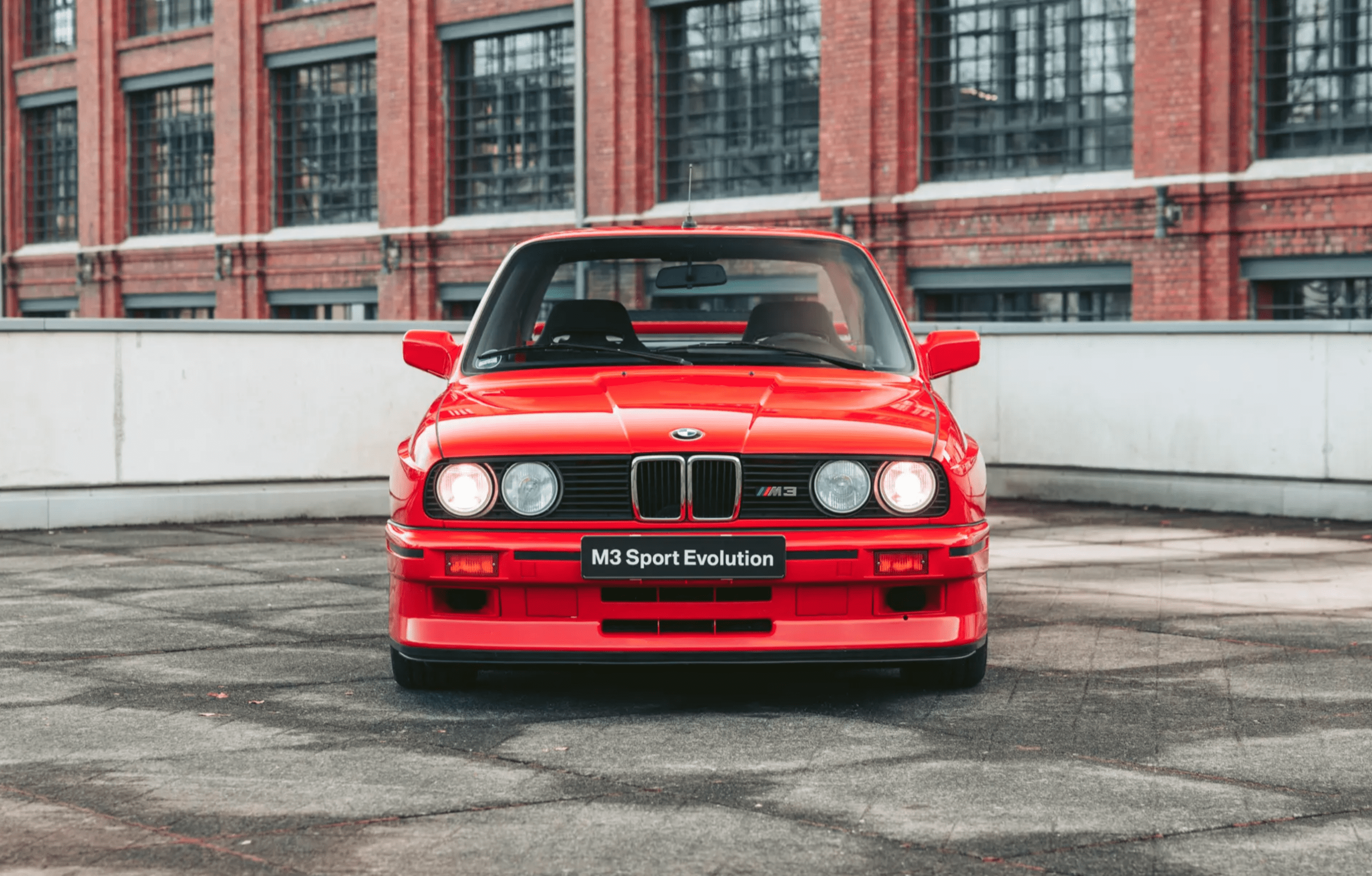
Munich, 1990. BMW Motorsport unveiled the M3 Sport Evolution, the final and most advanced expression of the legendary E30 M3 homologation special that had dominated touring car racing throughout the late 1980s. The “Evolution” designation (also called Evo III) signified fundamental engineering changes from earlier variants developed since the original M3’s 1986 debut. The engine was enlarged from 2.3 liters to 2.5 liters through a stroked crankshaft modification, producing 238 horsepower at 7,000 rpm and 240 N·m of torque at 4,750 rpm. This was the most powerful E30 M3 ever built, developed directly from touring car racing experience to maximize performance within naturally aspirated four-cylinder constraints. Limited to just 600 examples, the Sport Evolution represented the pinnacle of first-generation M3 engineering before the E36 generation arrived. This was BMW Motorsport at its most focused, proving that lightweight construction, high-revving naturally aspirated engines, and sophisticated suspension geometry could deliver genuine supercar performance from a practical four-seat sedan platform. Production continued through 1990 and early 1991, establishing the Sport Evolution as the rarest and most coveted E30 M3 variant ever created.
Background and Origins

The original BMW M3 debuted in 1986 as a homologation special meeting Group A touring car racing requirements. Designed by BMW Motorsport under technical director Paul Rosche, the first M3 produced 200 horsepower from a 2.3-liter naturally aspirated four-cylinder engine derived from the M10 block with M88/M1 cylinder head architecture. Throughout production between 1987 and 1991, BMW progressively evolved the platform with multiple limited-edition variants addressing specific racing program needs and competitive demands.
The Evolution line progression was methodical and purposeful. The 1987 Evolution I introduced revised suspension geometry and aerodynamic refinements while maintaining 200 horsepower. The 1988 Evolution II increased power to 220 horsepower through revised engine management and breathing optimization. Simultaneously, special editions including the Europameister and Cecotto variants celebrated racing achievements with unique specifications. Throughout these iterations, BMW Motorsport pursued naturally aspirated refinement rather than forced induction, deliberately emphasizing high-revving character and precise throttle response over outright displacement.
Development of the 1990 Sport Evolution began with recognition that additional power was necessary for sustained competition against evolving rivals. Rather than add turbochargers, engineers stroked the proven S14 engine, increasing displacement to 2,467cc while maintaining the established 92mm bore diameter. This conservative approach extended the engine’s naturally aspirated character while substantially improving low-to-mid-range torque delivery and overall responsiveness. The result was 238 horsepower at 7,000 rpm, representing the absolute technical peak of S14 development. Production was deliberately limited to approximately 600 units worldwide, emphasizing the model’s exclusivity, manufacturing commitment, and racing pedigree.
Design and Engineering

The M3 was based on the E30 platform with a 2,661mm wheelbase, but the Sport Evolution received substantially revised bodywork optimizing aerodynamic efficiency for both road and circuit use. Widened fenders accommodated a significantly broader track, improving weight distribution and cornering stability characteristics. Boxed fender extensions and strengthened structural reinforcement throughout the platform created a genuinely focused competition machine while maintaining practical usability.
Suspension geometry was comprehensively revised from the standard E30. The Sport Evolution featured significantly stiffer spring rates, extensively revised damping characteristics, and modified anti-roll bars front and rear. Lower ride height improved aerodynamic efficiency while maintaining adequate suspension travel for demanding driving. The suspension tuning was optimized for precise wheel control and minimal body roll during aggressive cornering, creating capabilities far exceeding normal sports sedan standards.
Braking was by ventilated discs with four-piston calipers front and two-piston rear, providing powerful stopping power adequate for the Sport Evolution’s extraordinary performance potential. The system was specifically engineered for extended high-performance driving without fade characteristics, addressing the demanding requirements of racing applications.
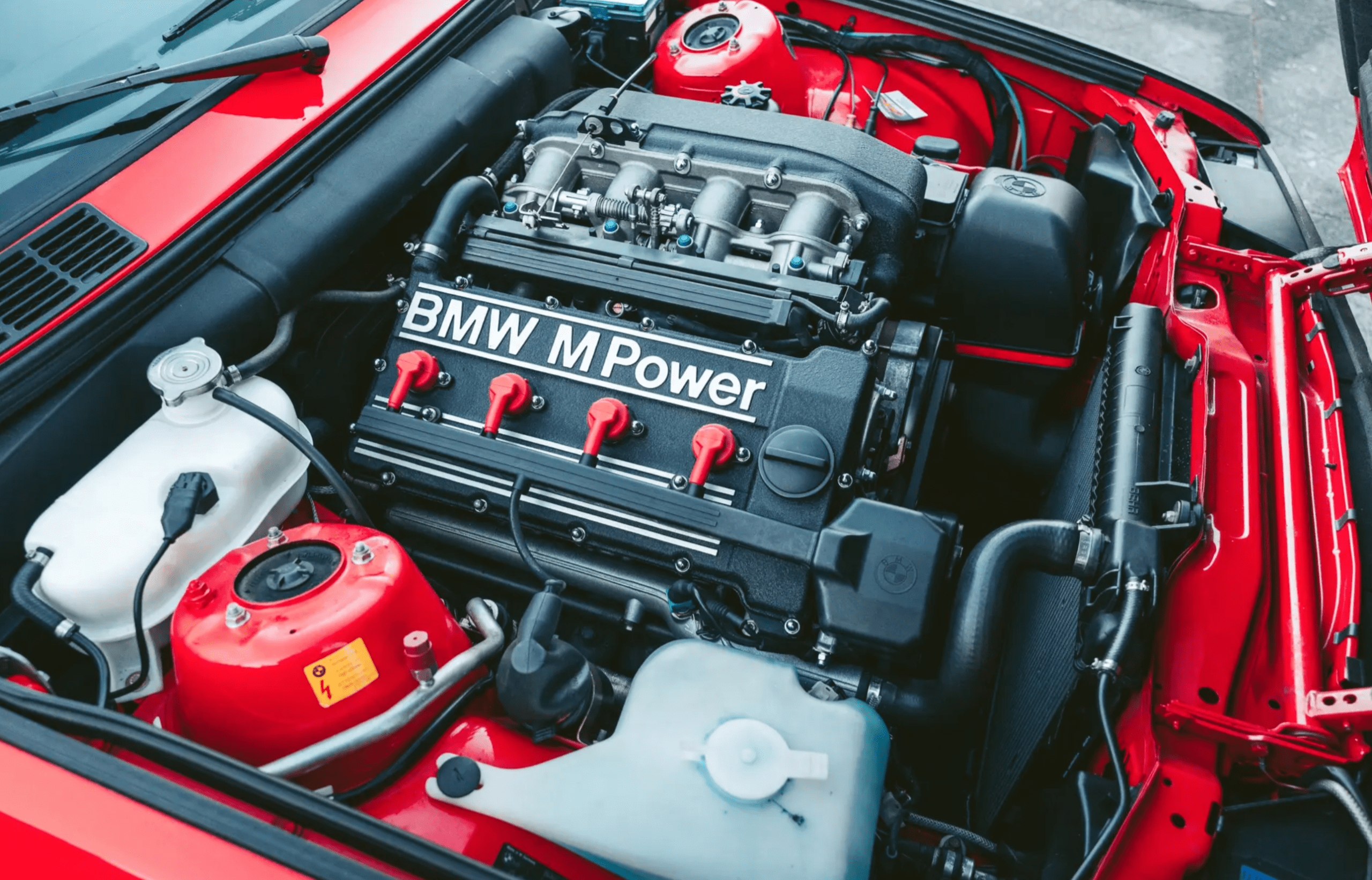
The S14 engine in Sport Evolution specification represented the absolute pinnacle of naturally aspirated four-cylinder development. Displacing 2,467cc through the stroked crankshaft modification, the all-aluminum engine featured dual overhead camshafts per bank controlling four valves per cylinder with meticulous precision. With a 10.5:1 compression ratio and sophisticated Bosch fuel injection with electronic engine management, output was 238 horsepower at 7,000 rpm and 240 N·m of torque at 4,750 rpm. The power delivery emphasized high-revving character, with peak torque arriving relatively late in the rev range, rewarding disciplined drivers who worked through the gears aggressively. The engine required working to access full performance potential, differentiating it dramatically from turbocharged competitors.
Transmission was a five-speed Getrag manual with close ratios specifically optimized for competitive driving. The shift action was mechanical and precise, providing direct feedback accompanying every gear selection. A limited-slip differential with adjustable lock percentage distributed power effectively, improving traction during acceleration while maintaining the controllable handling balance that defined the M3.
Styling
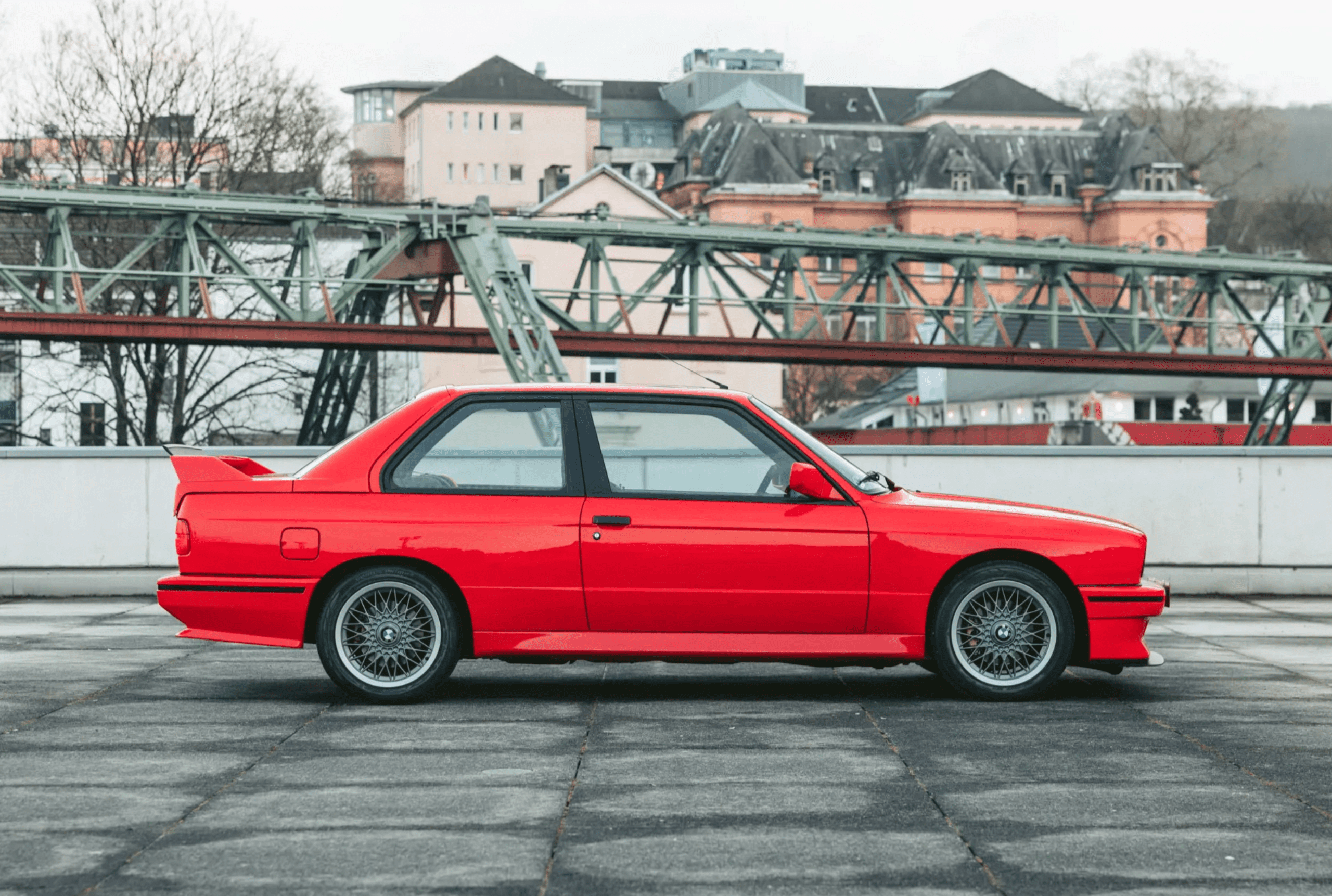
The Sport Evolution featured subtle yet purposeful styling modifications distinguishing it from earlier M3 variants. Enlarged front bumper openings improved cooling airflow to enlarged radiators while maintaining integrated aerodynamic efficiency. Side skirts featured revised proportions optimizing underbody flow characteristics. At the rear, an adjustable multi-position rear spoiler provided drivers with genuine tuning options for different racing venues and conditions.
The overall appearance remained true to Claus Luthe’s original E30 design language, with M modifications enhancing rather than replacing fundamental proportions. The understated approach contrasted dramatically with contemporary rivals like the Mercedes 190 E 2.3-16, which pursued more theatrical styling expressions. The M3’s restrained design philosophy proved remarkably timeless, remaining visually contemporary decades after production concluded.
Interior
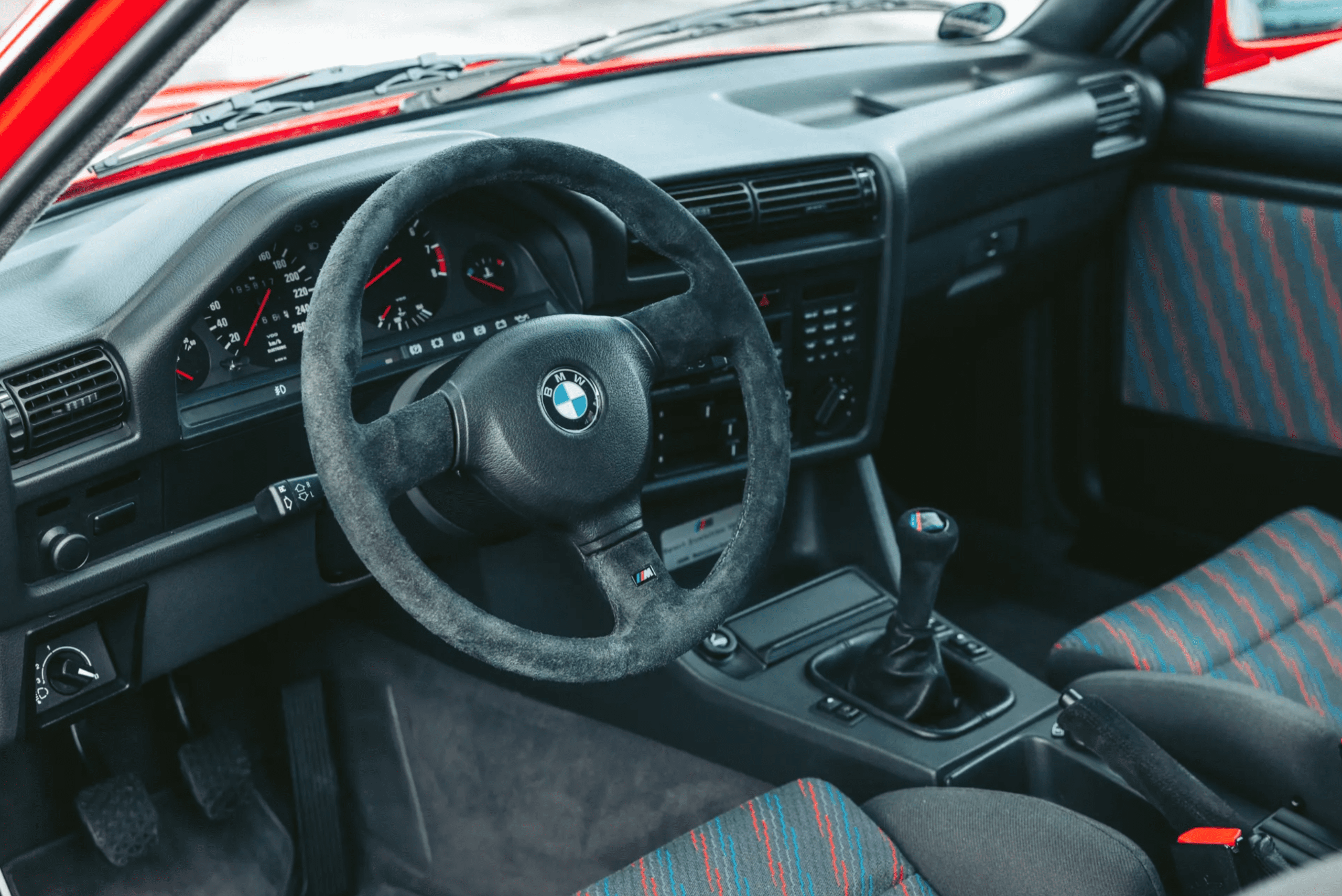
The cabin featured Recaro sport seats with aggressive bolstering, providing excellent lateral support during spirited driving on circuits and demanding roads. An on-board computer displayed fuel consumption and driving efficiency data, reflecting the era’s emerging electronic capabilities. Standard equipment included electric sliding sunroof, electric windows, and central locking. Red seat belts on many examples added subtle sporting character. The overall atmosphere reflected the car’s racing-derived mission and competition pedigree.
Specifications
- Engine: S14 naturally aspirated inline four, 2,467cc, DOHC per bank, four valves per cylinder
- Power: 238 PS / 235 bhp / 175 kW at 7,000 rpm
- Torque: 240 N·m / 177 lb-ft at 4,750 rpm
- Transmission: Five-speed Getrag manual, limited-slip differential
- Chassis: Steel monocoque, 2,661mm wheelbase
- Suspension: Double wishbones (front and rear), coil springs, telescopic dampers
- Brakes: Ventilated discs all round, four-piston calipers (front), two-piston (rear)
- Wheels: BBS alloy
- Weight: 1,200 kg (2,646 lbs)
- Performance: 154 mph / 248 km/h top speed, 0-60 mph in 6.2 seconds, 0-100 km/h in 6.5 seconds
Production and Legacy
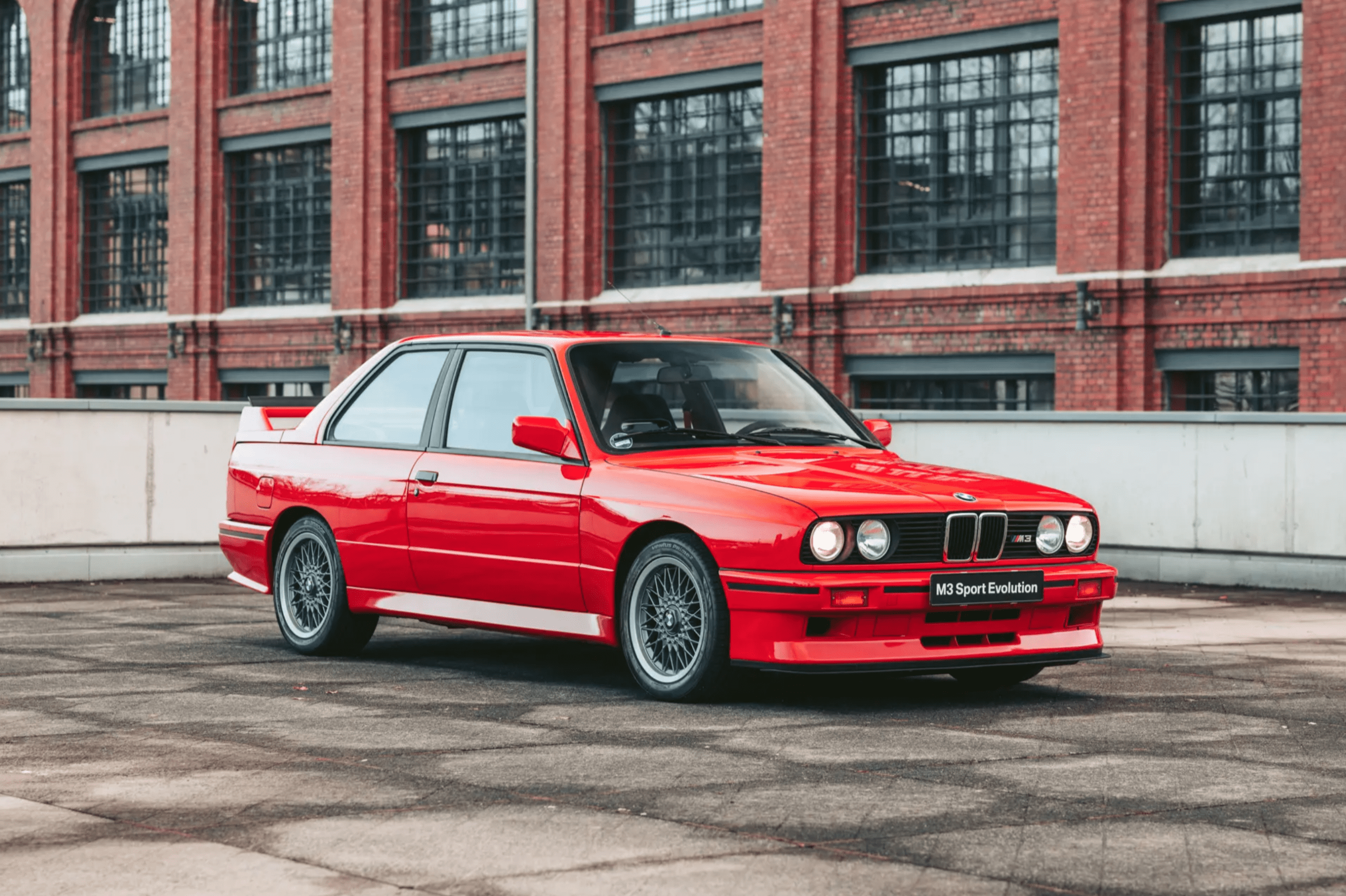
BMW built approximately 600 Sport Evolution examples in 1990 and early 1991, making it the rarest E30 M3 variant by significant margin. Each car was hand-assembled by BMW Motorsport GmbH at the Garching facility, the same location where M5 and earlier M3 variants were produced with meticulous attention to detail. Total E30 M3 production across all variants reached approximately 17,970 examples between 1987 and 1991, establishing the M3 as BMW’s most successful performance model of that generation.
The M3 established legendary status through touring car racing dominance and exceptional real-world performance capability. It fundamentally rewrote expectations for compact sports sedans, proving that practical four-seat cars could deliver supercar-level performance through intelligent engineering rather than displacement or forced induction alone.
Today, Sport Evolution examples command substantial premium prices reflecting their rarity and historical significance. The combination of limited production, naturally aspirated heritage, and proven engineering excellence has created iconic status among serious collectors and enthusiasts worldwide.
The BMW M3 E30 Sport Evolution represented Motorsport GmbH at its most focused and ambitious, celebrating naturally aspirated performance and lightweight design philosophy. It remains one of BMW’s greatest achievements, a masterpiece establishing the M3 as a legendary performance nameplate that continues to influence high-performance cars today.