

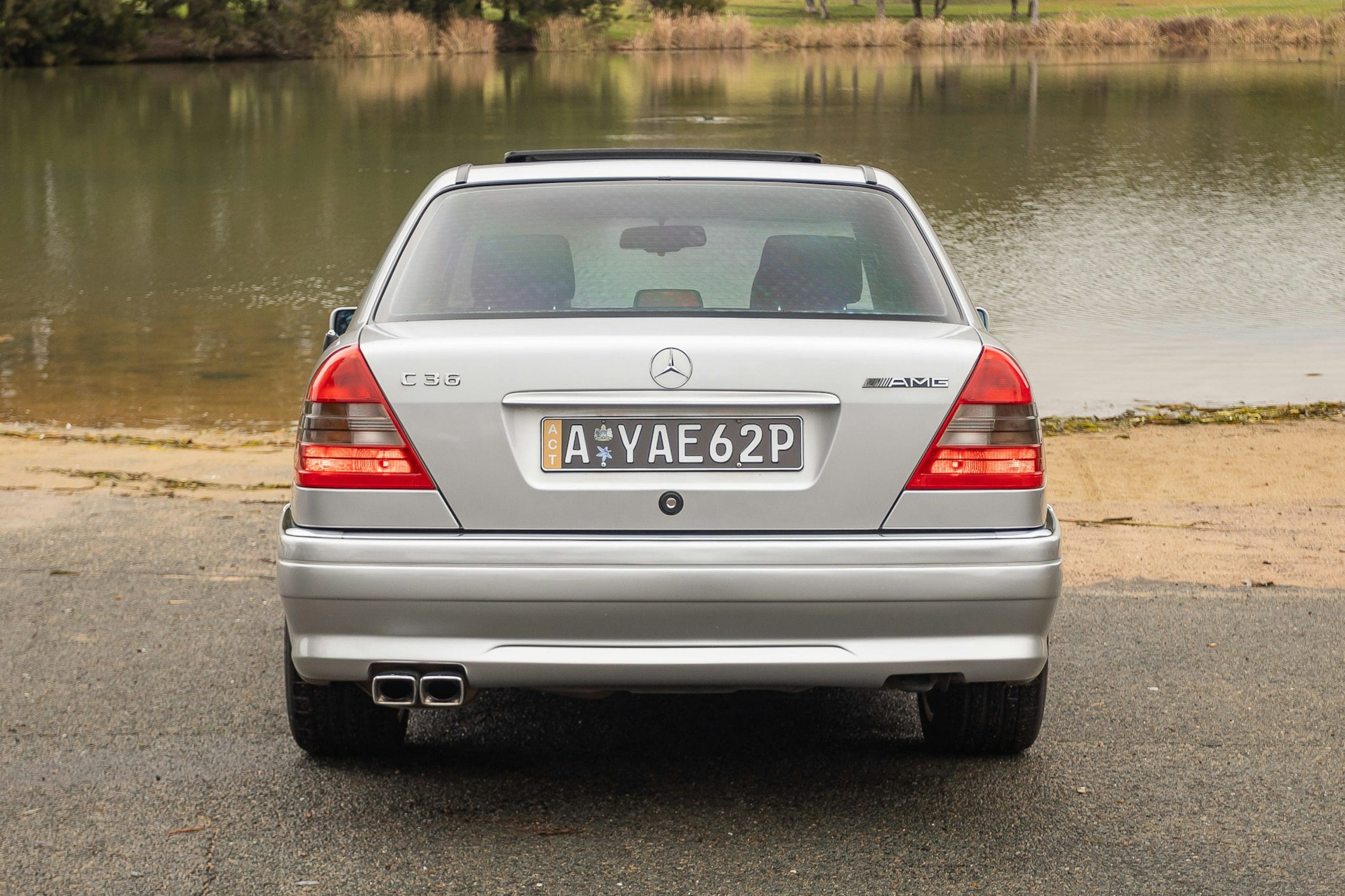
Frankfurt Motor Show, September 1993. Mercedes-Benz unveiled the C36 AMG, marking a watershed moment in automotive history when Stuttgart and Affalterbach officially merged their destinies. This was the first Aston Martin AMG model developed jointly with Mercedes-Benz from pre-production conception, establishing a partnership that would define high-performance compact sedans for decades to come. The 3.6-liter naturally aspirated inline-six produced 276 horsepower at 5,750 rpm and 284 lb-ft of torque, delivering 155 mph capability while maintaining the practical four-door sedan packaging that made Mercedes sedans accessible daily drivers. This was AMG’s transformation from independent tuning house into Stuttgart’s official performance arm, proving that a compact sedan could rival sports cars through meticulous engineering and naturally aspirated refinement. Production began in January 1994, with approximately 5,221 examples built through June 1997, establishing the C36 AMG as the first high-volume AMG model and the car that fundamentally changed performance sedan development forever.
Background and Origins
For decades, AMG had operated as an independent tuning company in Affalterbach, crafting bespoke high-performance Mercedes models for discerning customers. Throughout the 1980s, the relationship between Mercedes and AMG deepened, with AMG becoming the official Mercedes representative in Deutsche Tourenwagen Meisterschaft (DTM) racing. In 1989, Mercedes officially contracted with AMG for racing program development. By 1990, a formal agreement established Mercedes-AMG collaboration on high-performance road car development with all vehicles sold and serviced through Mercedes’ dealer network.
When the W202 generation C-Class debuted in 1993, Mercedes management recognized an extraordinary opportunity. Rather than simply applying AMG tuning to completed cars, Stuttgart invited Affalterbach to participate in preliminary design stages. This revolutionary approach—collaborating before production tooling was finalized—established the template for future Mercedes-AMG models. The C36 AMG became the first production car wearing both Mercedes-Benz and AMG badges simultaneously, signifying complete integration between the two companies.
Engine development involved comprehensive redesign of the M104 inline-six architecture. Engineers enlarged displacement from 3.0 liters to 3.6 liters through a stroked crankshaft modification while maintaining the established bore diameter. Revised intake manifolds, optimized fuel injection calibration, and sophisticated engine management systems contributed to the increased output. The compression ratio was elevated to 10.5:1, allowing more aggressive tuning while maintaining compatibility with standard premium fuel. The naturally aspirated approach reflected AMG philosophy—mechanical authenticity emphasized over forced-induction convenience.
Design and Engineering
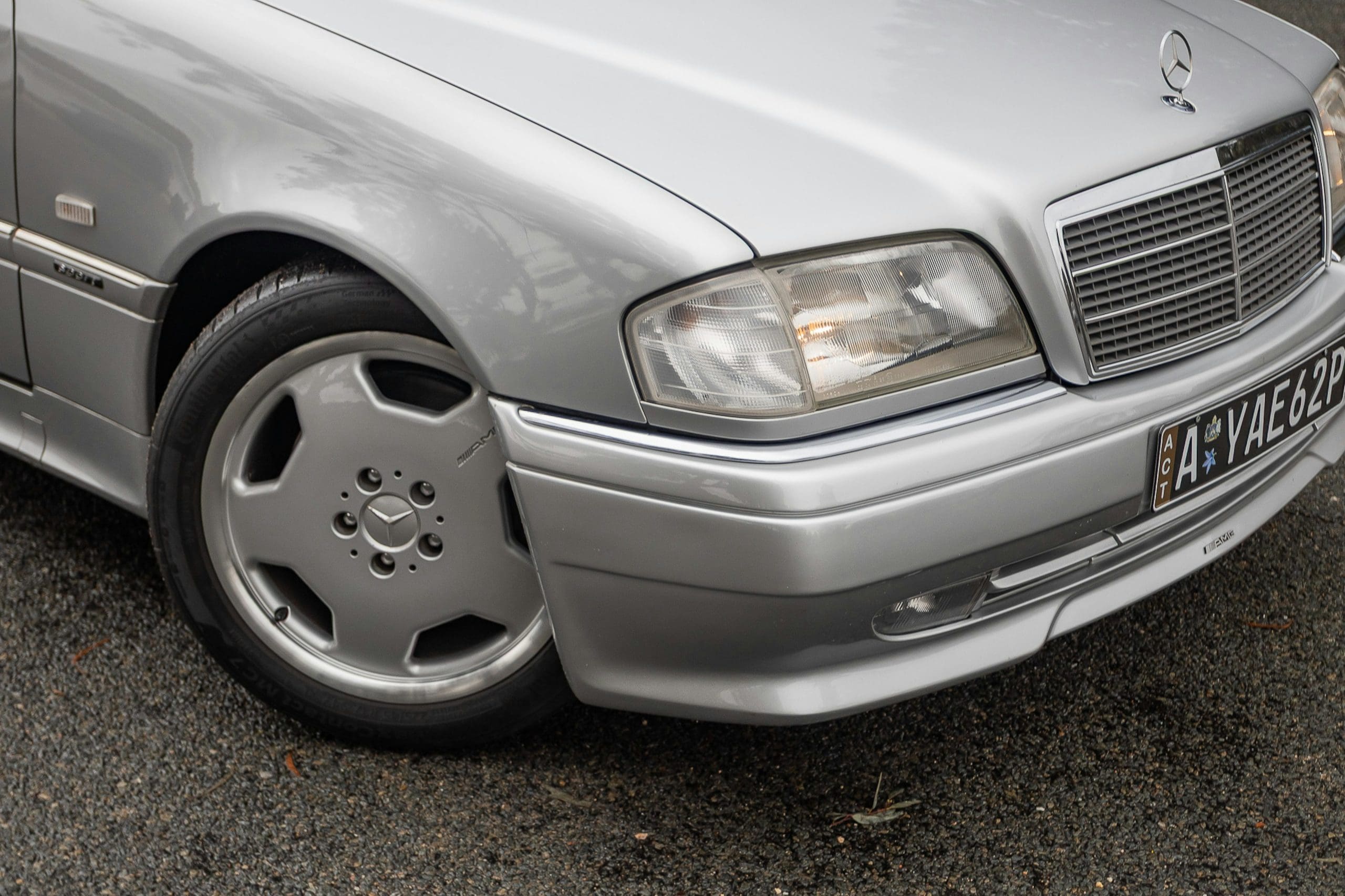
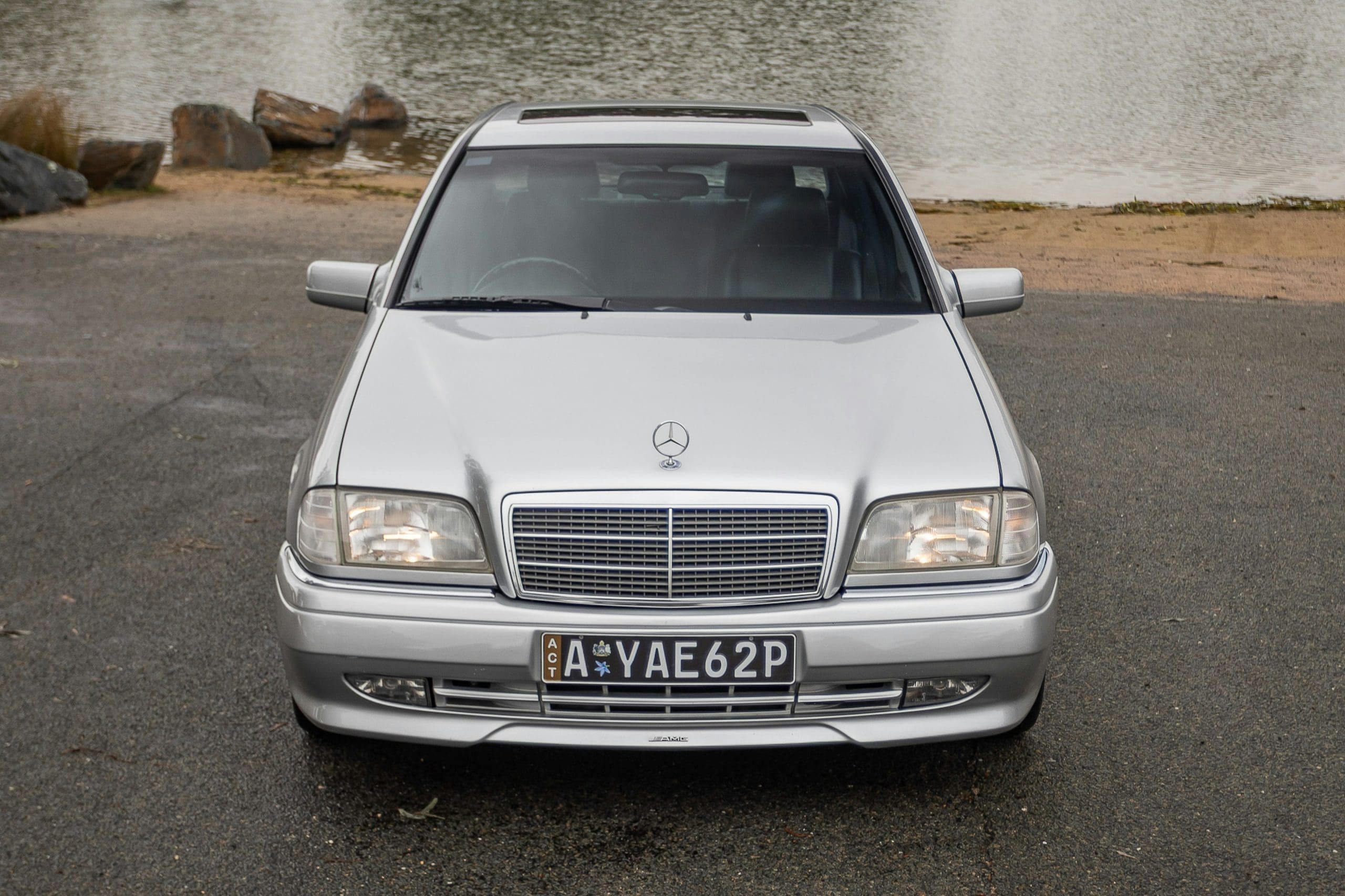
The C36 AMG utilized the W202 platform with 2,810mm wheelbase, benefiting from proven monocoque construction and independent suspension geometry. Rather than dramatic cosmetic modifications, the C36 AMG emphasized functional enhancement. AMG-specific front and rear bumpers provided subtle visual distinction while incorporating improved brake cooling ducts. Side skirts were added without excessive flaring, allowing standard door lines while suggesting performance intent. The overall appearance emphasized understated sophistication rather than theatrical aggression, reflecting Mercedes’ design philosophy.
Suspension incorporated revised spring rates and damping calibration optimized for the C36’s additional power. The geometry remained fundamentally identical to standard C-Class but with adjusted anti-roll bar stiffness improving cornering response. The result was engaging handling balanced against the ride comfort expected from a daily-driver sedan. Four-piston calipers and ventilated disc brakes provided stopping power adequate for the C36’s modest acceleration capabilities.
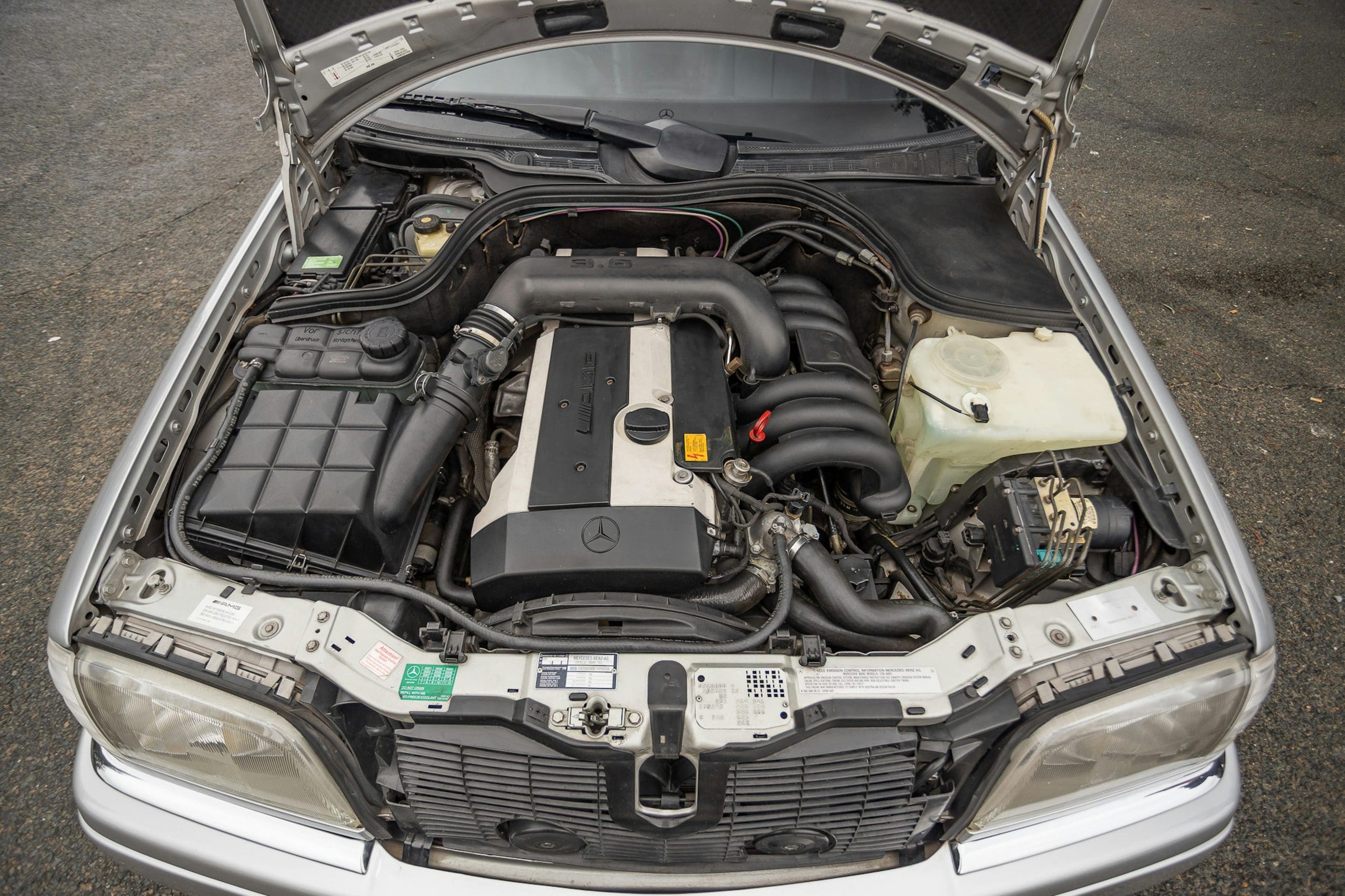
The M104 E 36 AMG engine displaced 3,606cc with a 91mm bore and 92.4mm stroke. Dual overhead camshafts per bank controlled four valves per cylinder, with the intake camshaft featuring continuously variable timing optimizing breathing across the rev range. With 10.5:1 compression and multi-point fuel injection, output was 276 horsepower at 5,750 rpm and 284 lb-ft of torque across the 4,000-4,750 rpm plateau. The power delivery was linear and progressive, emphasizing the engine’s naturally aspirated character. Unlike contemporary turbocharged competitors, the C36 delivered consistent acceleration without turbo-lag inducement.
Transmission was initially a four-speed automatic, later upgraded to five-speed units. The electronic management system featured smooth gear transitions and Sport programming enabling aggressive shift dynamics when demanded. For the final production years, Siemens ME engine management replaced earlier systems alongside standard ASR traction control providing wheelspin management without compromising driver engagement.
Styling
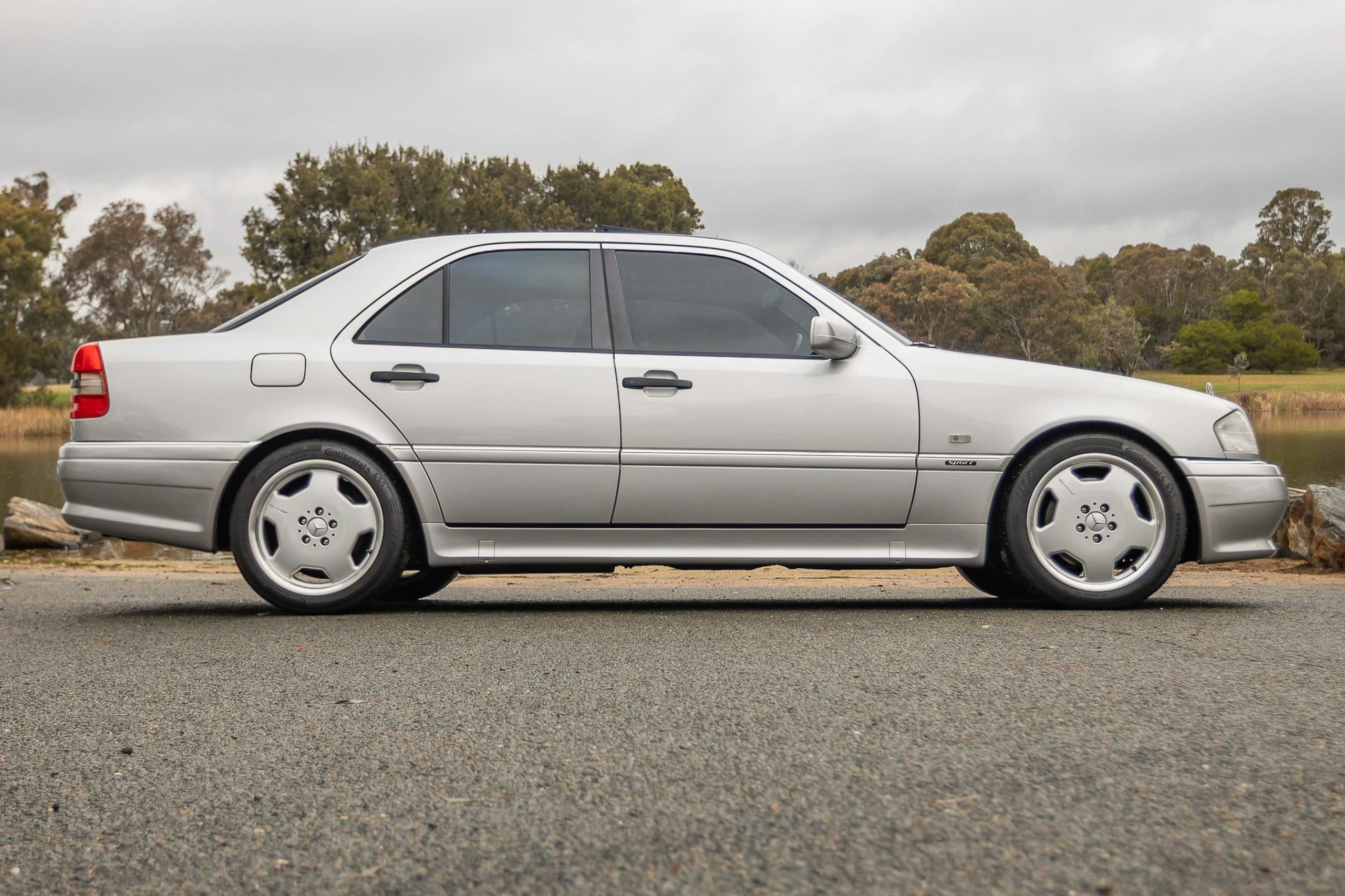
The W202 platform inherently featured attractive proportions, with Olivier Boulay’s design emphasizing elegant simplicity. The C36 AMG retained these proportions while applying subtle distinguishing elements. The front bumper was distinctive without excessive aggression, incorporating functional air ducts feeding cooling systems. At the rear, aerodynamic refinements included a subtle diffuser integration and integrated spoiler providing genuine downforce benefit. The overall appearance suggested performance through engineering subtlety rather than theatrical styling.
Standard C36 AMG wheels were distinctive AMG Monoblock designs featuring attractive polished finishes, emphasizing the car’s engineering credentials. Most examples wore metallic silver, deep blue, or black finishes, classic Mercedes colors reflecting conservative brand philosophy.
Interior
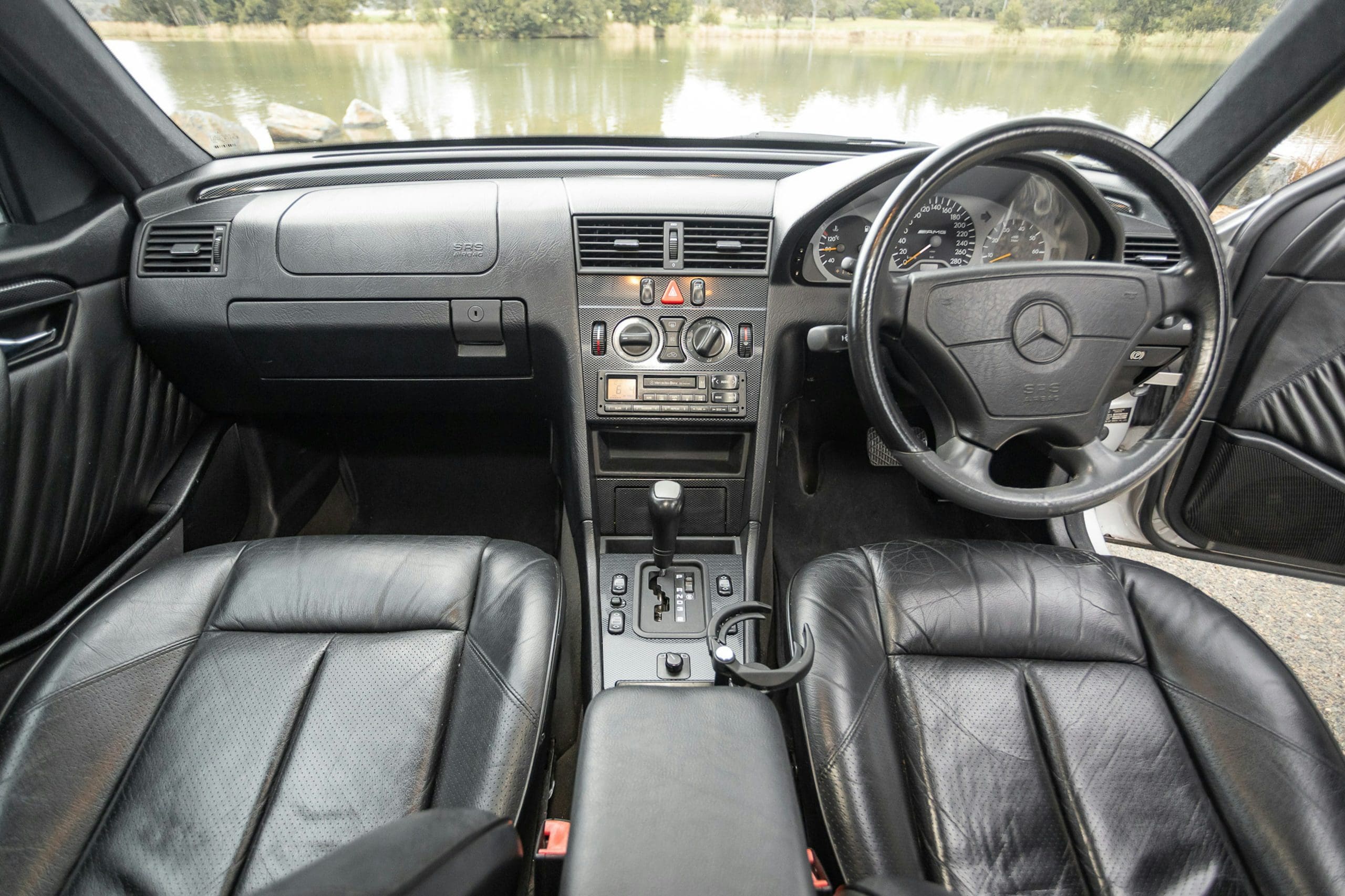
The interior emphasized functional luxury appropriate for a daily-driver sedan. Electrically adjustable sport seats covered in high-quality leather provided supportive seating alongside genuine comfort for extended driving. The driving position was commanding yet comfortable, with excellent visibility and ergonomic control placement. Climate control, cruise control, and power windows were standard, reflecting the C36’s practical mission balancing performance with genuine usability.
Specifications
- Engine: M104 E 36 AMG inline six, 3,606cc, DOHC per bank, four valves per cylinder
- Power: 276 hp / 280 PS at 5,750 rpm
- Torque: 284 lb-ft / 385 N·m at 4,000-4,750 rpm
- Transmission: Four-speed automatic (early), five-speed automatic (later)
- Chassis: Steel monocoque, 2,810mm wheelbase
- Suspension: Independent double wishbones (front and rear), coil springs
- Brakes: Ventilated discs, four-piston calipers (front and rear), ABS
- Wheels: 17-inch AMG Monoblock alloy, performance tires
- Weight: 1,560 kg curb weight
- Performance: 155 mph top speed, 0-60 mph in 5.9 seconds
Racing History
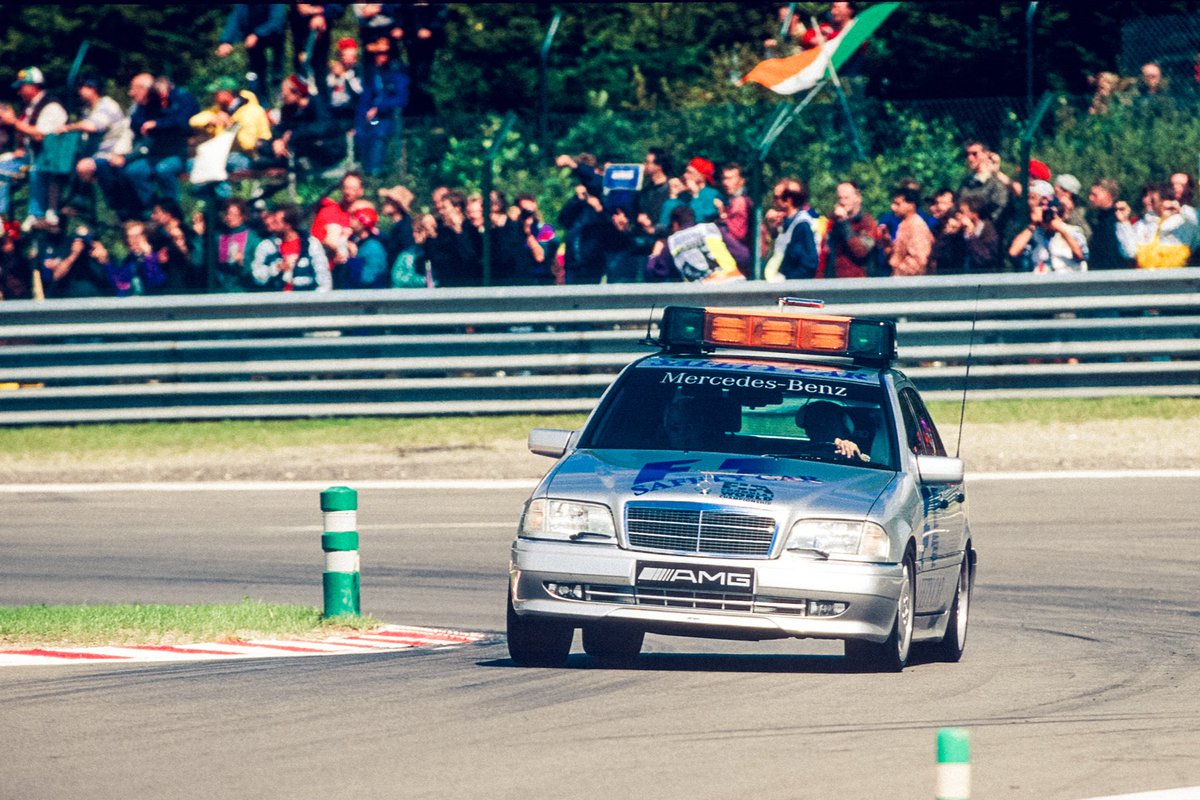
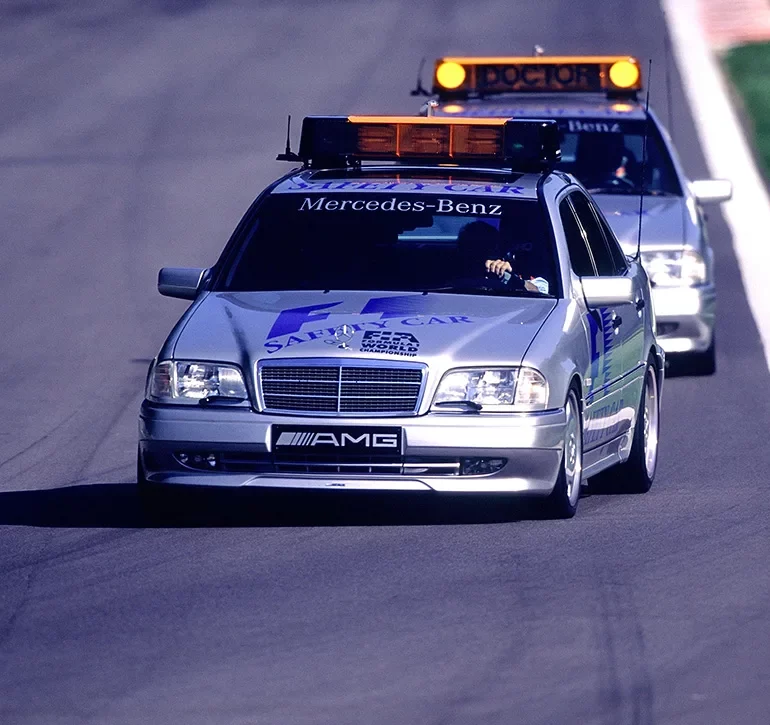
The C36 AMG achieved global recognition serving as the official Formula 1 safety car during the 1996 and 1997 seasons. This high-profile role placed the car at the heart of motorsport’s most prestigious competition, providing visibility that no advertising campaign could match. The C36’s reliability and performance characteristics made it ideally suited for safety car duties, requiring both responsive acceleration for controlled pace-car responsibilities and sophisticated braking for emergency situations. The association with Formula 1 established the C36 AMG as a genuinely high-performance machine, elevating brand prestige and customer desirability simultaneously. This factory competition involvement signified Mercedes’ commitment to high-performance engineering development.
Production and Legacy
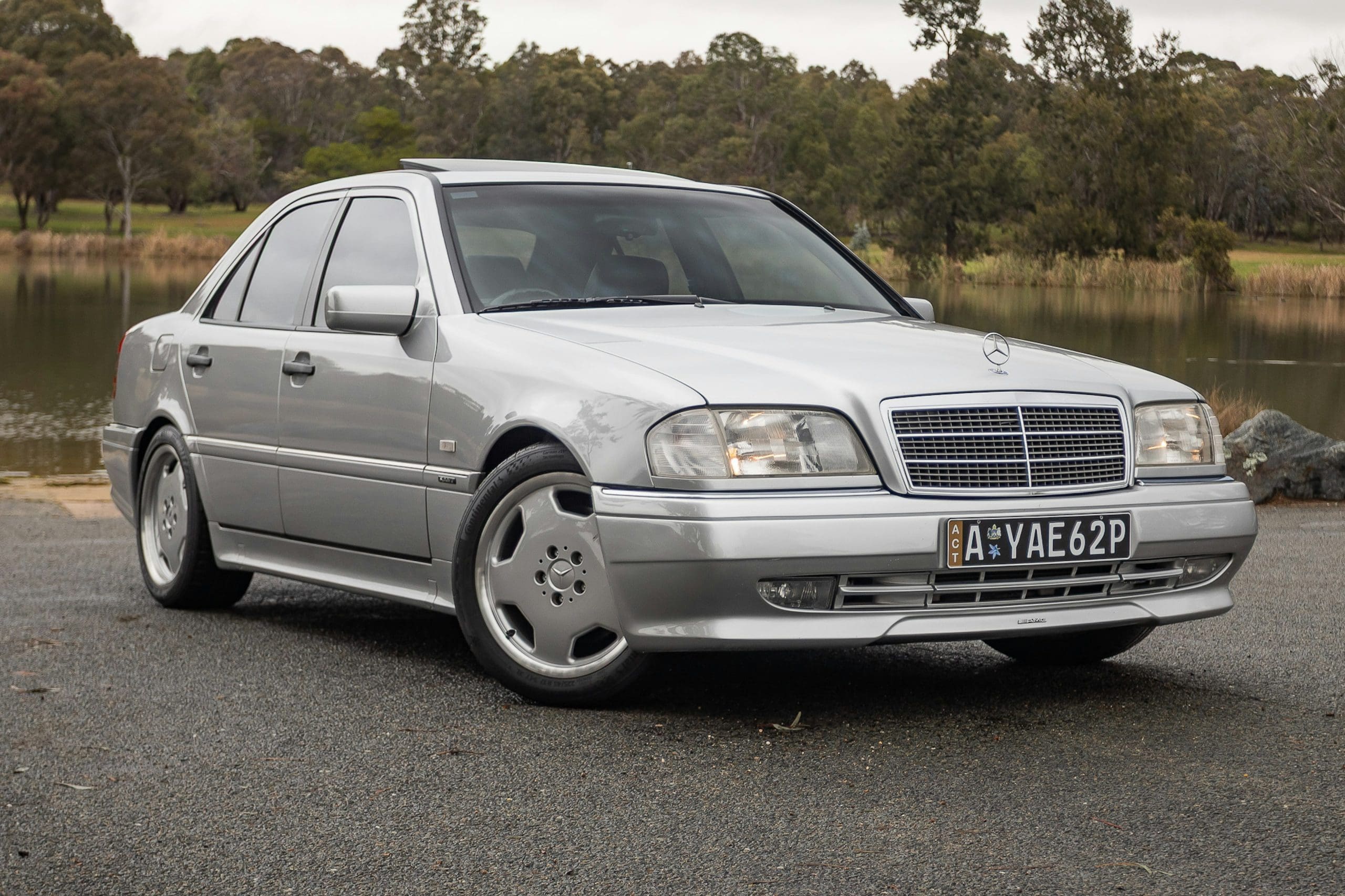
Mercedes produced 5,221 C36 AMG examples between January 1994 and June 1997, with the model achieving widespread recognition through its use as the Formula 1 safety car during the 1996 and 1997 seasons. The extended production run and factory status established AMG as Mercedes’ official high-performance division. Later production variants received improved electrical systems, refined interior trim, and upgraded engine management systems reflecting continuous development commitment.
The C36 AMG proved that compact sedans could deliver engaging performance while maintaining practical daily usability. The naturally aspirated inline-six established characteristics that influenced Mercedes-AMG development for decades, demonstrating that forced induction wasn’t mandatory for compelling performance.
Today, C36 AMG examples are increasingly appreciated by collectors recognizing the car’s historical significance and genuine engineering excellence. The combination of hand-built quality, Mercedes-AMG heritage, and naturally aspirated character has established lasting appeal.
The Mercedes-Benz C36 AMG represented the beginning of a legendary partnership, proving that performance and practicality could coexist within a modest four-door sedan. It remains one of Mercedes’ greatest achievements, a naturally aspirated masterpiece establishing AMG as the ultimate expression of high-performance engineering excellence.