
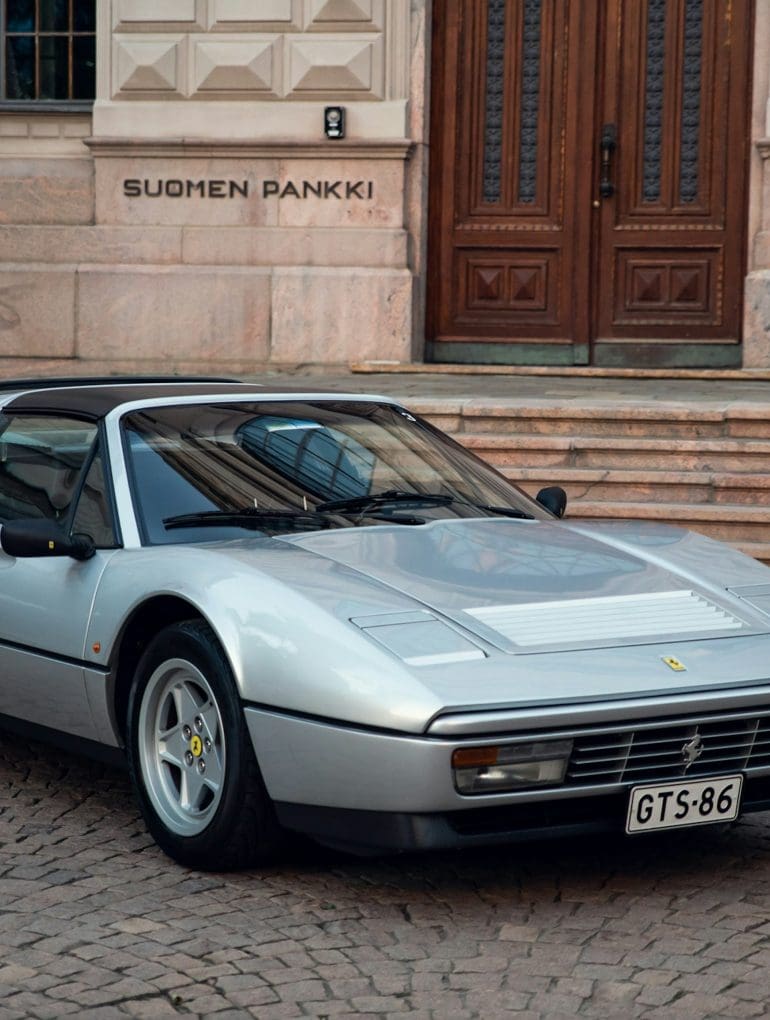

Maranello, 1986. Ferrari introduced the GTS Turbo, a turbocharged convertible celebrating that forced induction engineering could deliver 328-class performance through practical 2.0-liter displacement and Italian tax regulation compliance. The GTS Turbo and its fixed-roof sibling, the GTB Turbo, represented the turbocharged counterpart to the newly introduced 328, utilizing the updated 328 body, chassis and running gear while retaining a smaller turbocharged 2.0-liter V8. The designation succeeded the earlier 208 GTB/GTS Turbo, dropping the “208” prefix entirely to reflect the new 328 platform foundation. The 2.0-liter turbocharged V8 produced 254 PS (250 horsepower) at 6,500 rpm and 328 N·m (242 lb-ft) of torque at 4,100 rpm, delivering 253 km/h (157 mph) capability from a mid-engine targa-top architecture weighing approximately 1,275 kilograms.
This was Maranello celebrating that intelligent forced induction combined with lightweight construction could establish genuine performance within practical grand touring parameters while satisfying Italy’s displacement-based tax structure that imposed 38 percent VAT on cars over 2.0 liters versus 18 percent for smaller vehicles. The GTS Turbo could accelerate from 0-100 km/h in 6.3 seconds according to factory claims, establishing performance surprisingly close to the naturally aspirated 328 despite significantly reduced displacement. Production ran from 1986 through 1989, with 828 examples built as an Italian-market focused model, establishing the GTS Turbo as one of Ferrari’s most practical and accessible turbocharged road cars.
Background and Origins
The GTS Turbo emerged from Ferrari’s recognition that Italy’s displacement-based tax regime created an opportunity to offer near-328 performance while avoiding the higher tax burden imposed on cars exceeding 2.0 liters. Rather than develop an entirely new platform, management determined that substantially improving the turbocharged 2.0-liter engine technology proven in the earlier 208 Turbo and applying it to a 328-derived body and chassis would deliver performance surprisingly close to the naturally aspirated 328 while maintaining favorable Italian tax positioning. The project represented practical vision celebrating that intelligent engineering could deliver meaningful performance within regulatory constraints while maintaining authentic Ferrari character and driving engagement.
Development built directly on the turbocharged 2.0-liter F106 N engine used in the 208 Turbo, incorporating significant mechanical improvements. The new IHI turbocharger, Behr air-to-air intercooler and revised Marelli electronic ignition represented substantial advances over the earlier 208 Turbo’s carburetor-fed induction system. The engine retained the Bosch K-Jetronic mechanical fuel injection from its predecessor but received more sophisticated electronic management and cooling integration establishing smooth power delivery across the rev range. Under the direction of chief powertrain engineer Nicola Materazzi, the team developed the intercooled 2.0-liter V8 as a testbed for forced induction technology that would directly influence Ferrari’s subsequent high-performance development programs.
Design and Engineering
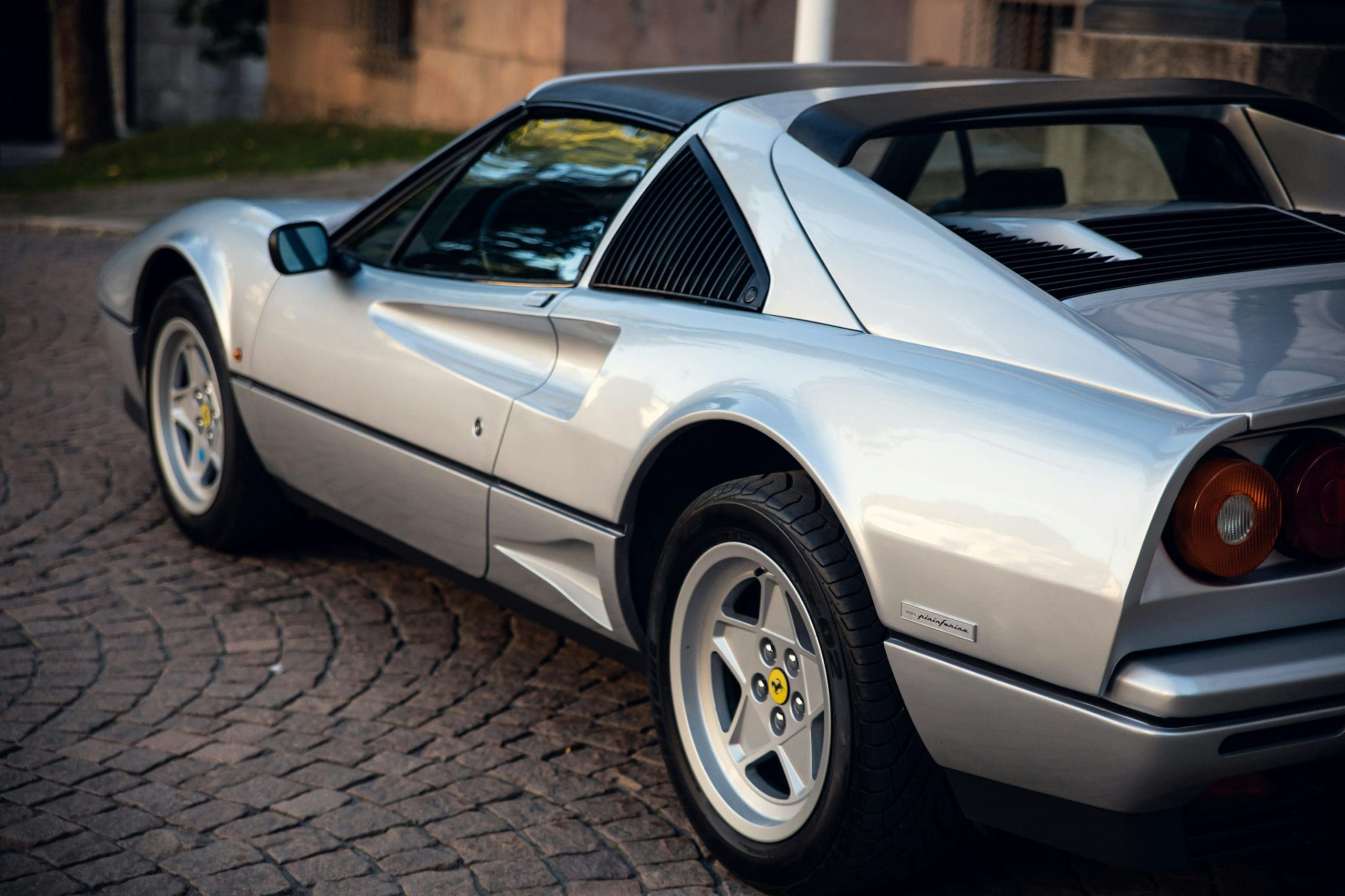
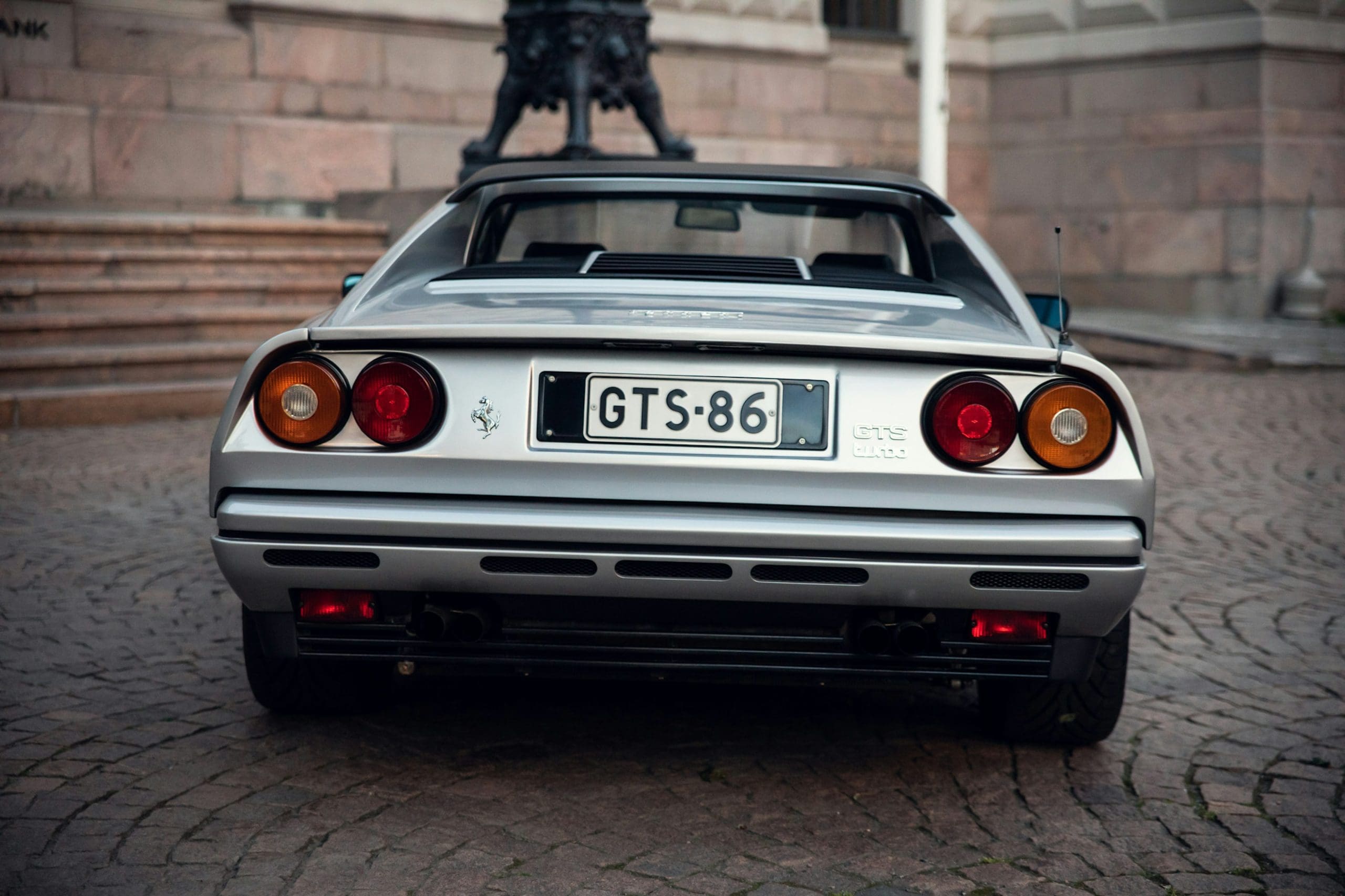
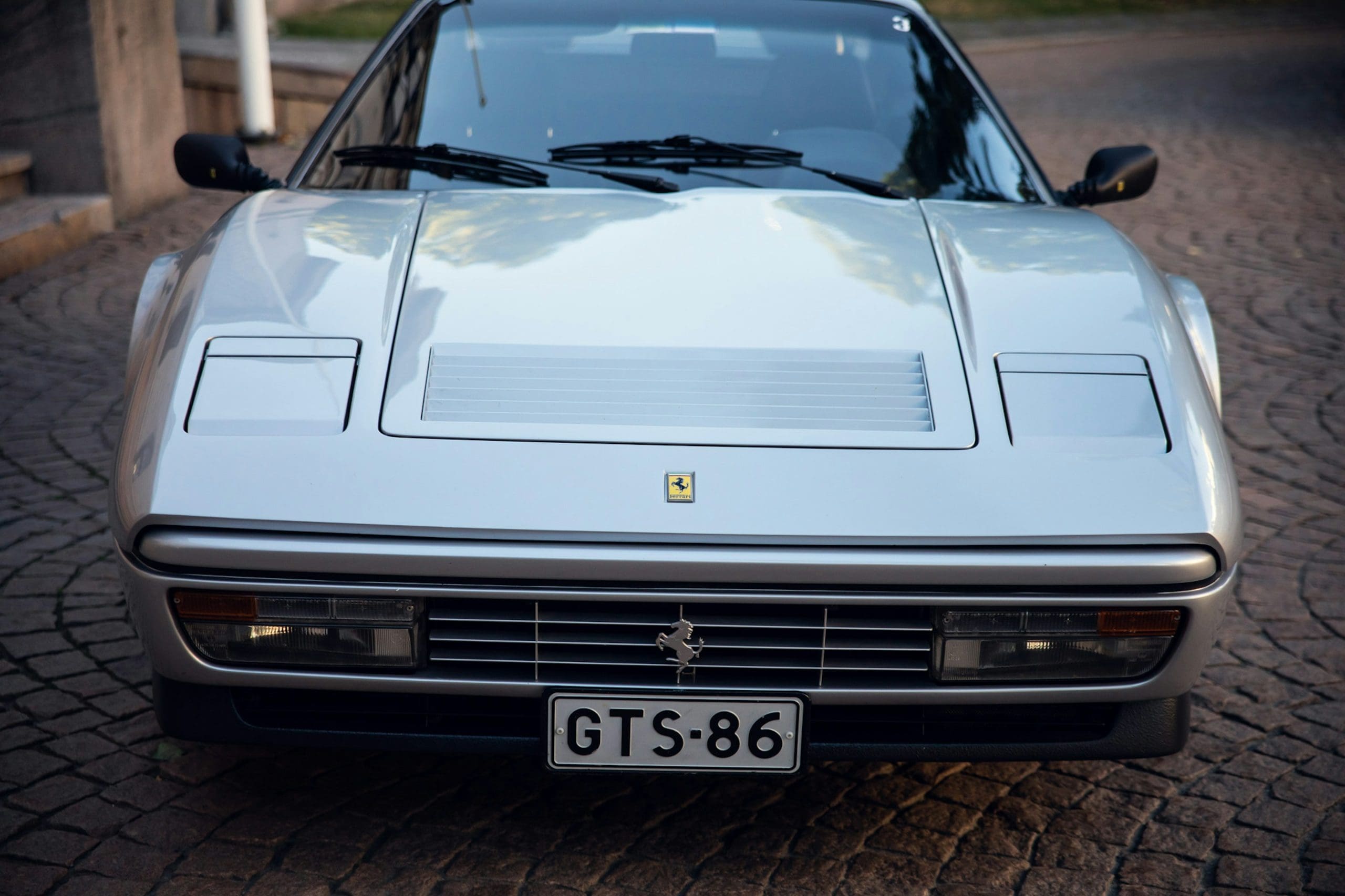
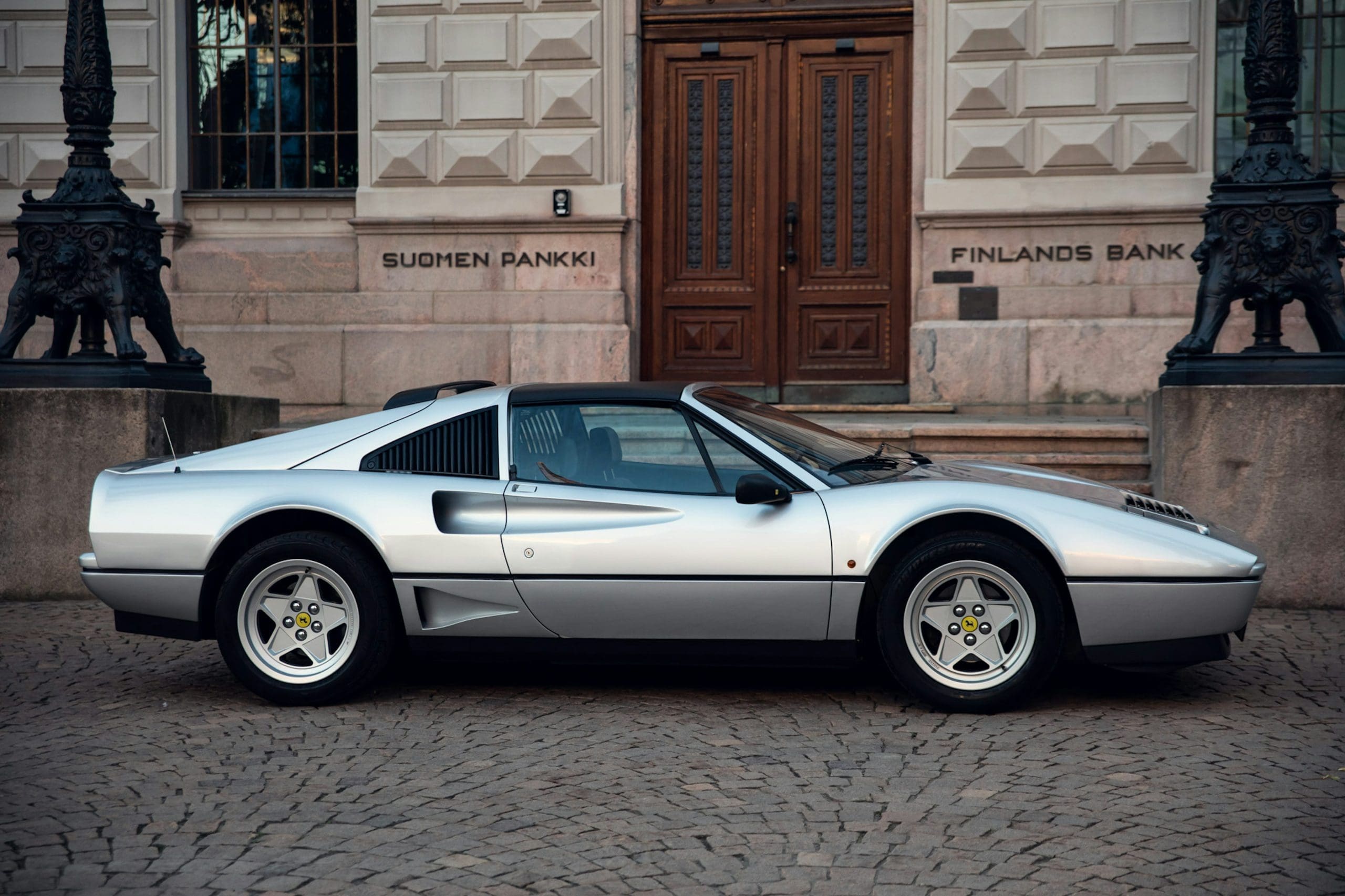
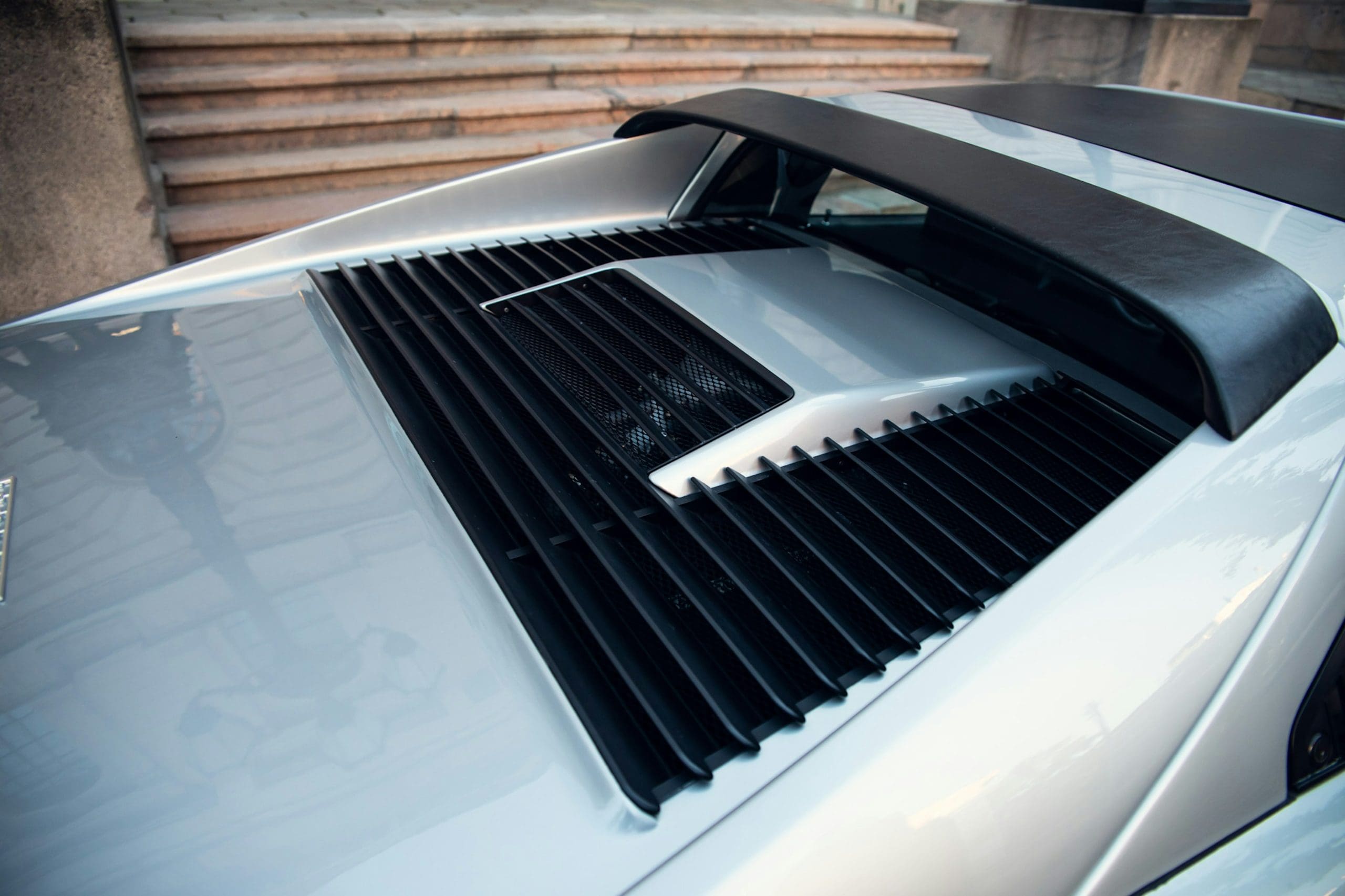
The GTS Turbo retained Pininfarina’s elegant proportions established by the 328 GTB/GTS but maintained the distinctive targa-top configuration defining the open-air driving experience. The body styling incorporated all latest aerodynamic and ergonomic improvements integrated into the contemporary 328 series, including optimized cooling treatment and refined air intakes. The mid-engine architecture established the compact, low-slung proportions characteristic of the 308/328 family, with the targa roof defining the GTS profile. The removable targa roof panel provided open-air capability for performance driving while maintaining structural rigidity. The overall proportions suggested that performance required practical engineering rather than theatrical styling drama.
The chassis employed independent double-wishbone suspension front and rear with coil springs and hydraulic dampers, the geometry optimized for balanced handling combining responsive performance with high-speed stability. Anti-roll bars provided cornering control calibrated for both circuit performance and practical road use. Braking was by ventilated discs measuring 282 millimeters front and 280 millimeters rear, providing adequate stopping power for the turbocharged acceleration. Rack-and-pinion steering provided direct feedback and engaging control characteristics reflecting performance-first engineering philosophy.
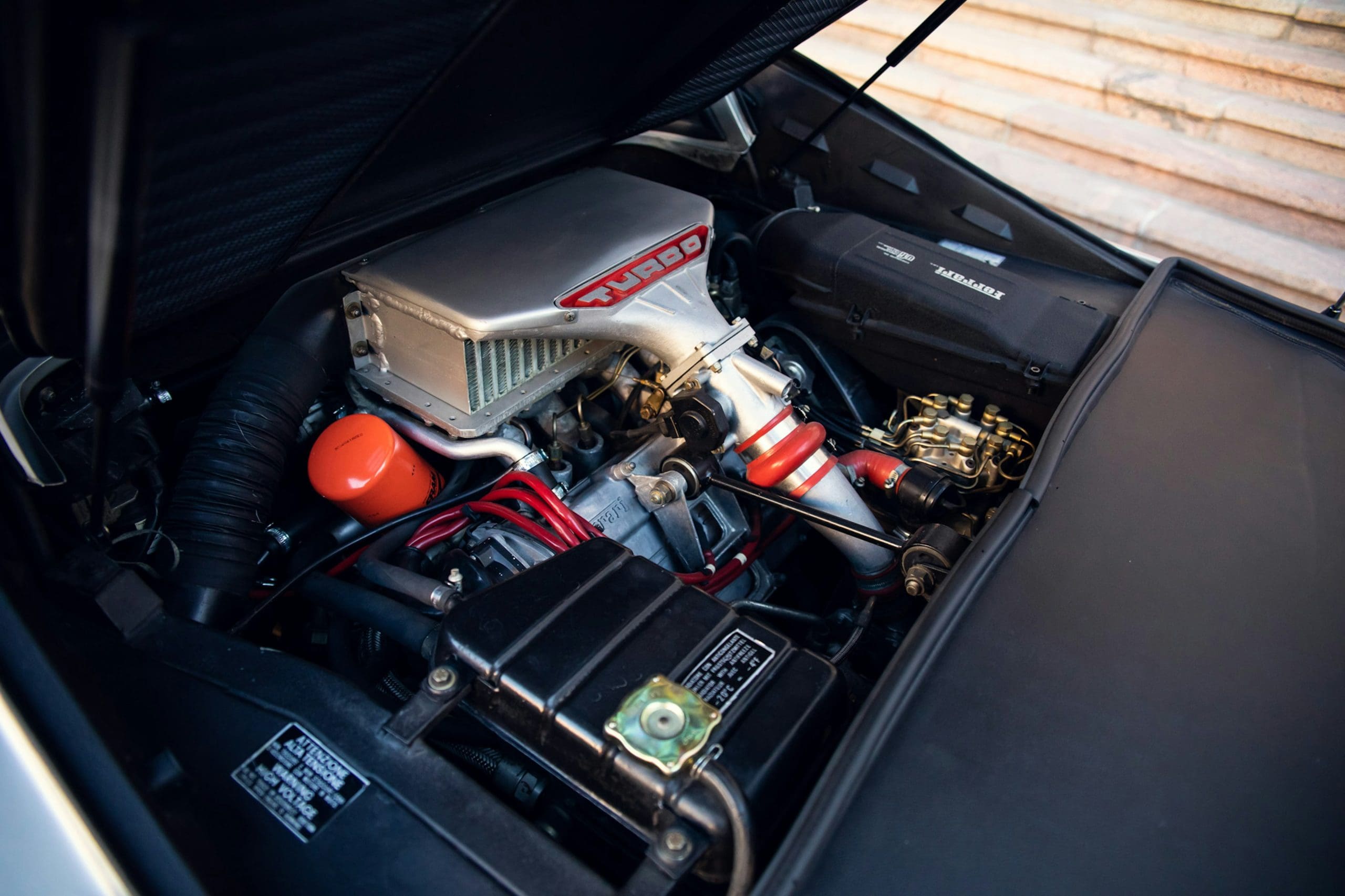
The mid-mounted 2.0-liter F106 N turbocharged V8 represented Ferrari’s practical application of forced induction engineering, displacing 1,991 cubic centimeters with 16 total valves operated by dual overhead camshafts, featuring two valves per cylinder. Unlike the 328’s four-valve-per-cylinder Quattrovalvole engine, the Turbo retained the two-valve head setup derived from the earlier 208 Turbo, but with substantially revised induction architecture. The engine featured an IHI turbocharger operating at 1.05 bar boost pressure with Behr air-to-air intercooling, a significant upgrade establishing smooth power delivery. With 7.0:1 compression ratio and Marelli MED 807 A electronic ignition management, output reached 254 PS (250 horsepower) at 6,500 rpm and 328 N·m (242 lb-ft) of torque at 4,100 rpm. This represented practical turbocharged performance celebrating mechanical sophistication and reliability superior to earlier non-intercooled designs.
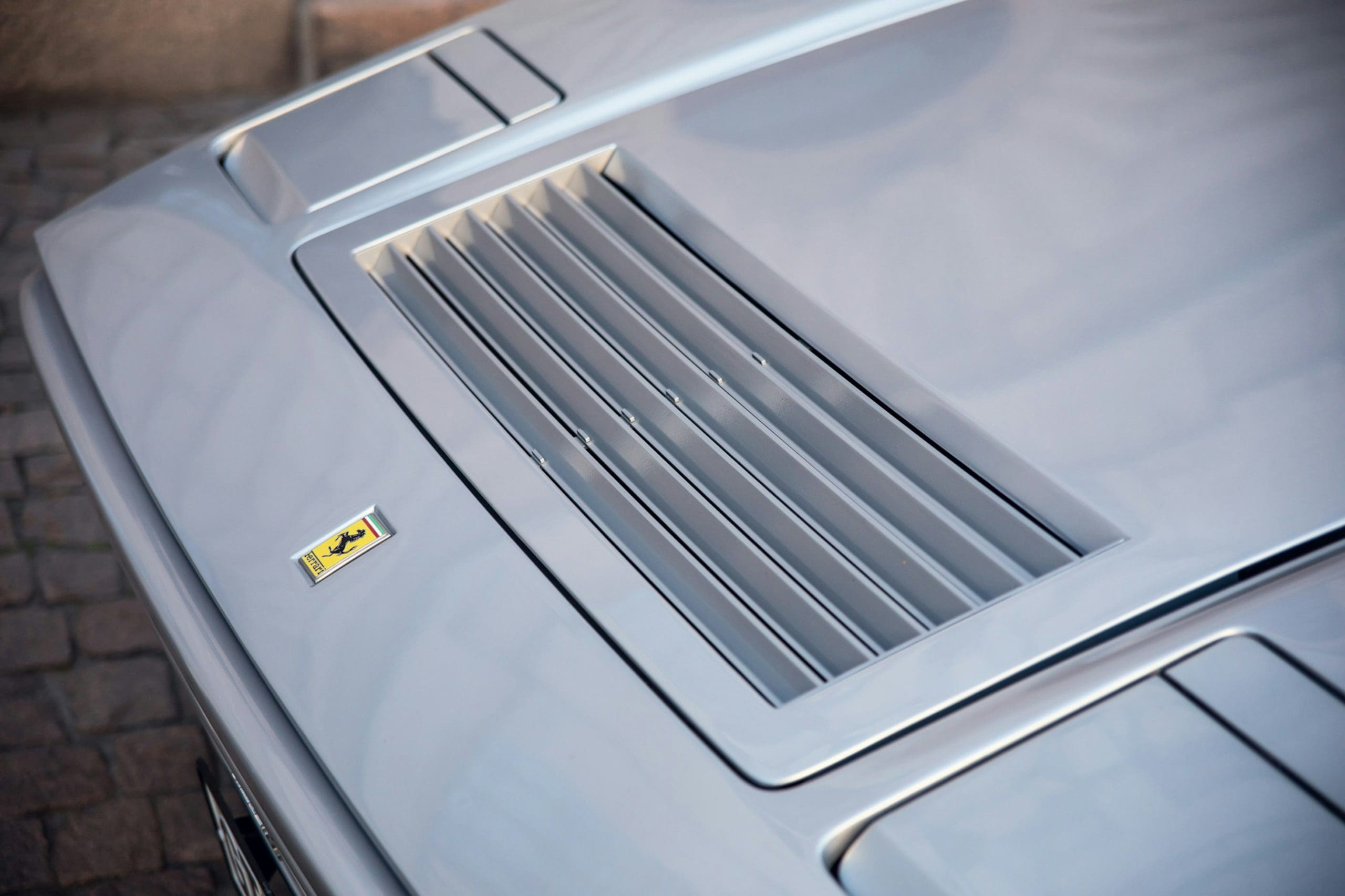
The power delivery was distinctly turbocharged in character, with smooth boost arrival and responsive torque delivery establishing engaging acceleration across the rev range. The five-speed manual transmission featured fully synchronized engagement appropriate for responsive performance driving. A ZF limited-slip differential improved traction under acceleration. This emphasis on mechanical directness reflected Ferrari philosophy celebrating driver connection and engineering authenticity.
Weight management achieved through aluminum body panels and steel body/chassis structure with tubular rear subframe established the GTS Turbo at approximately 1,275 kilograms, establishing a power-to-weight ratio of approximately 5.0 kilograms per horsepower. This efficient engineering enabled competitive performance matching naturally aspirated 328 models while maintaining practical accessibility and Italian tax compliance.
Styling
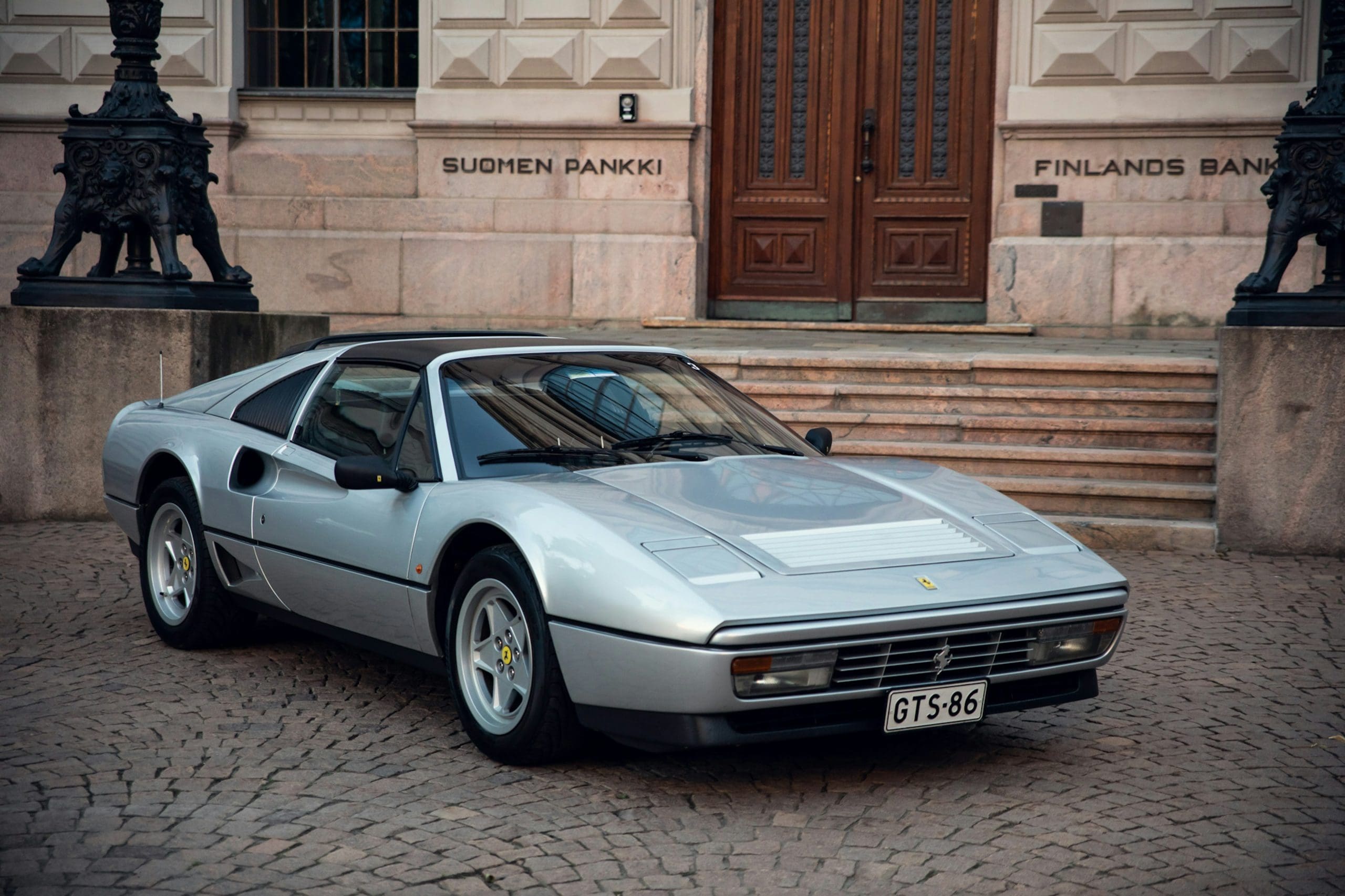
Pininfarina’s proportions created visual elegance immediately recognizable as the 328 family member. The sleek profile with the removable targa roof suggested practicality and performance through refined proportion rather than aggressive styling. The mid-engine layout retained the compact silhouette characteristic of the 308/328 family. Most examples were finished in traditional Ferrari colors: Rosso Corsa red celebrating racing heritage, elegant blacks and silvers reflecting understated performance philosophy, or distinctive metallic finishes expressing individual character.
Interior
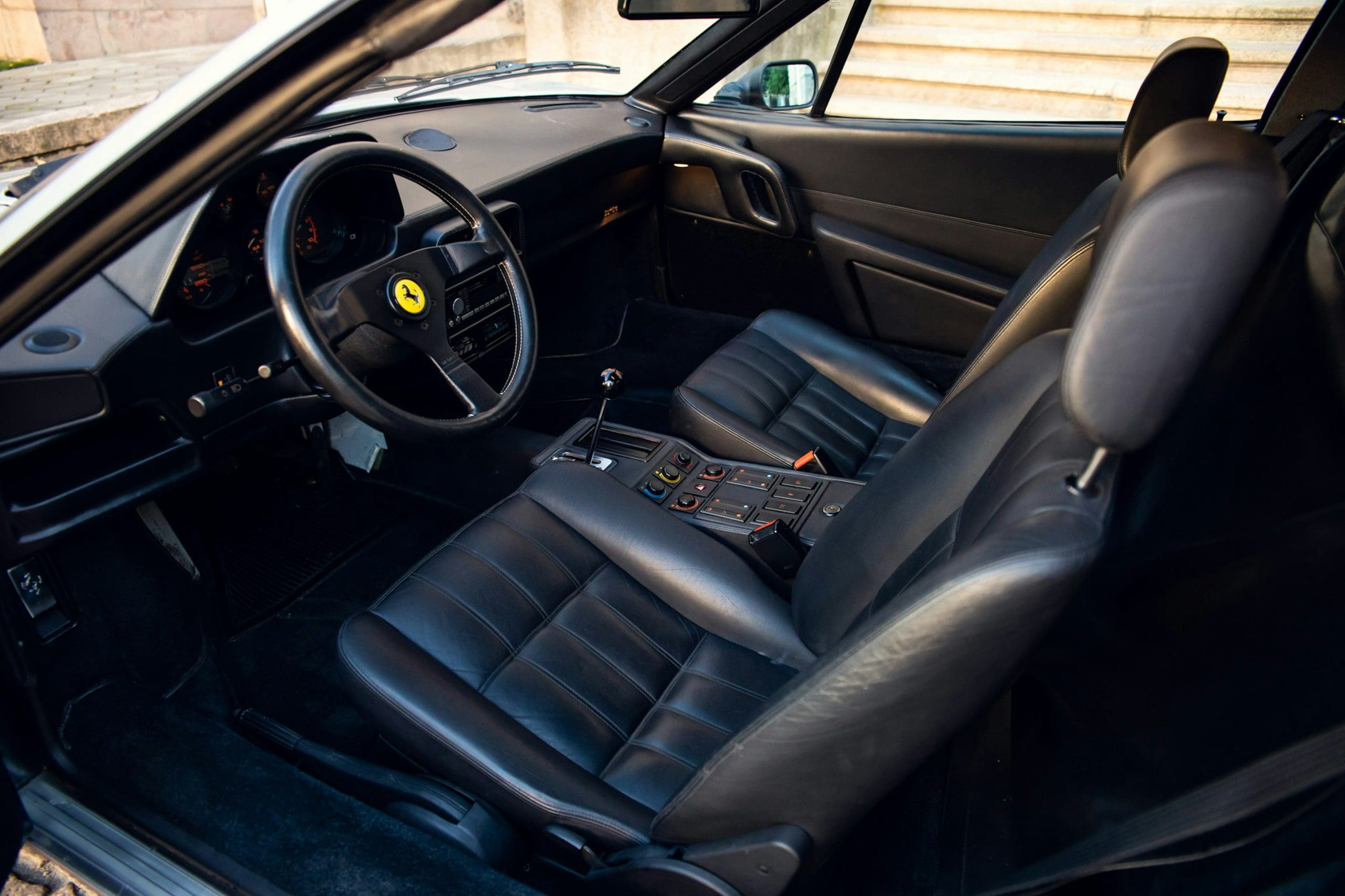
The cabin emphasized driving engagement combined with practical appointments. Leather seating provided support during spirited driving while maintaining comfort for extended grand touring journeys. The instrumentation included speedometer, tachometer, boost-pressure gauge, oil pressure gauge, water temperature gauge and fuel level indicator. Air conditioning, leather trim and quality audio systems provided contemporary convenience.
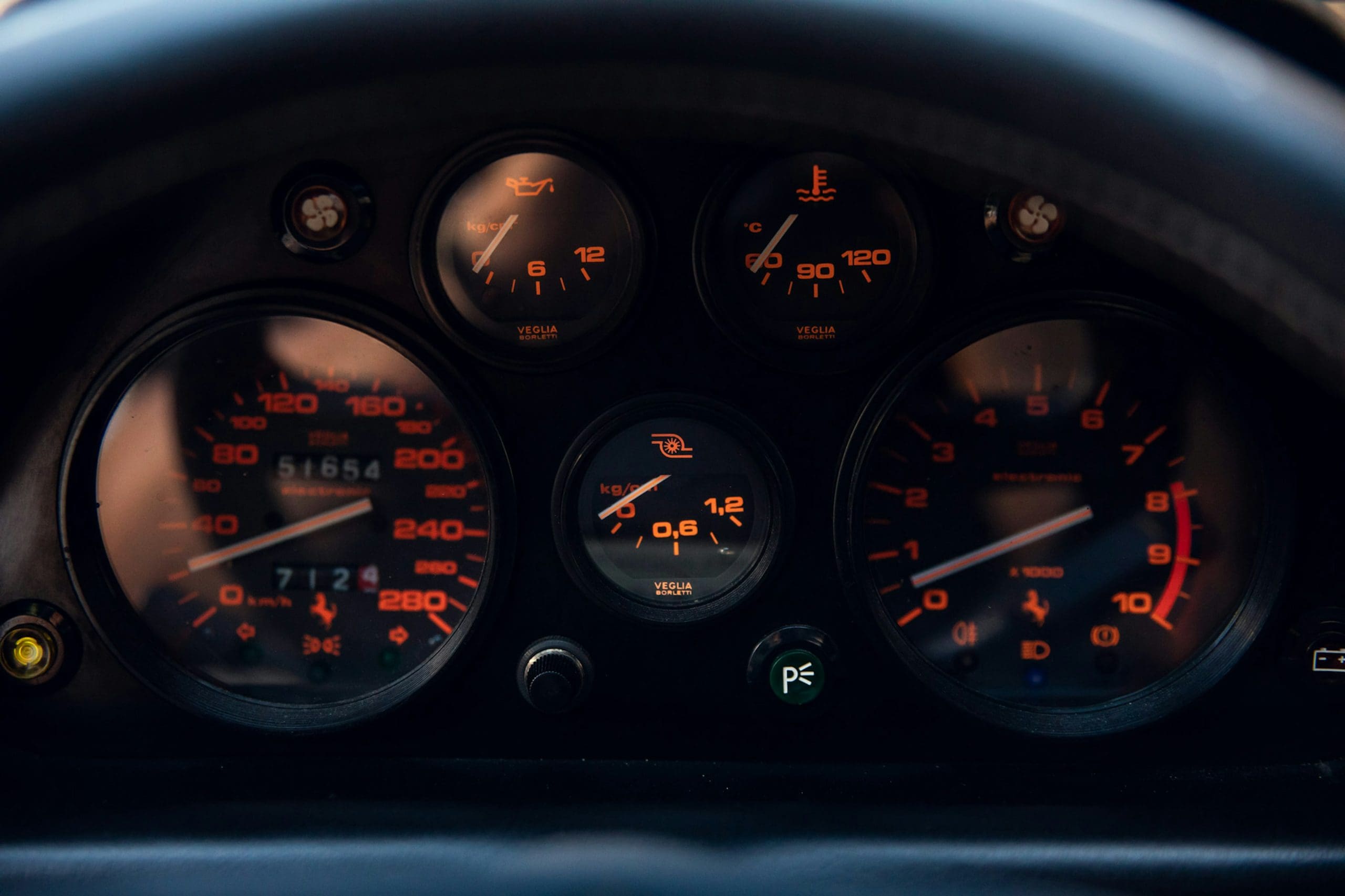
The overall atmosphere balanced performance-focused engineering with practical automotive refinement appropriate for extended driving.
Specifications
- Engine: Ferrari F106 N turbocharged 90-degree V8, 1,991cc, DOHC, two valves per cylinder
- Induction: IHI turbocharger, Behr air-to-air intercooler, 1.05 bar boost pressure
- Fuel system: Bosch K-Jetronic mechanical fuel injection
- Ignition: Marelli MED 807 A electronic ignition
- Compression ratio: 7.0:1
- Power: 254 PS / 250 hp at 6,500 rpm
- Torque: 328 N·m / 242 lb-ft at 4,100 rpm
- Transmission: Five-speed manual, rear-wheel drive
- Differential: ZF limited-slip
- Chassis: Steel body/chassis structure with tubular rear subframe
- Wheelbase: 2,350 mm
- Suspension: Independent double wishbones (front and rear), coil springs, hydraulic dampers, front and rear anti-roll bars
- Brakes: Ventilated discs, 282 mm front / 280 mm rear
- Wheels/Tires: 16-inch alloy wheels, 205/55 VR16 front and 225/55 VR16 rear
- Weight: Approximately 1,275 kg / 2,811 lbs
- Top speed: 253 km/h / 157 mph
- 0-100 km/h: 6.3 seconds (factory claim)
Production and Legacy
Production ran from 1986 until 1989, with 828 GTS Turbo examples built over the model’s three-year production run in the chassis range 63739 to 83148. Each car received meticulous assembly reflecting Ferrari’s manufacturing standards. Production remained concentrated in the Italian market, where the tax advantages on sub-2.0-liter engines created favorable conditions for the turbocharged format. The extended production run reflected sustained customer demand for performance combined with practical accessibility and regulatory compliance.
The GTS Turbo proved that turbocharged engineering combined with lightweight construction could deliver performance matching larger naturally aspirated engines within practical grand touring parameters. The combination of forced-induction character, mechanical authenticity, and Italian market positioning established lasting appeal among Ferrari enthusiasts valuing practical performance and driving engagement.
Today, GTS Turbo examples command growing collector appreciation reflecting their unique market positioning and turbocharged heritage. The combination of turbocharged V8 performance, targa-top versatility, and authentic Ferrari character ensures lasting appeal among collectors valuing mechanical authenticity and practical grand touring capability.
The Ferrari GTS Turbo represented Maranello at its most pragmatic, proving that intelligent forced induction could deliver meaningful performance within regulatory constraints. It remains an important chapter in Ferrari’s performance heritage, establishing an enduring legacy within the 308/328 lineage and demonstrating that tax-efficient engineering could achieve extraordinary results.