
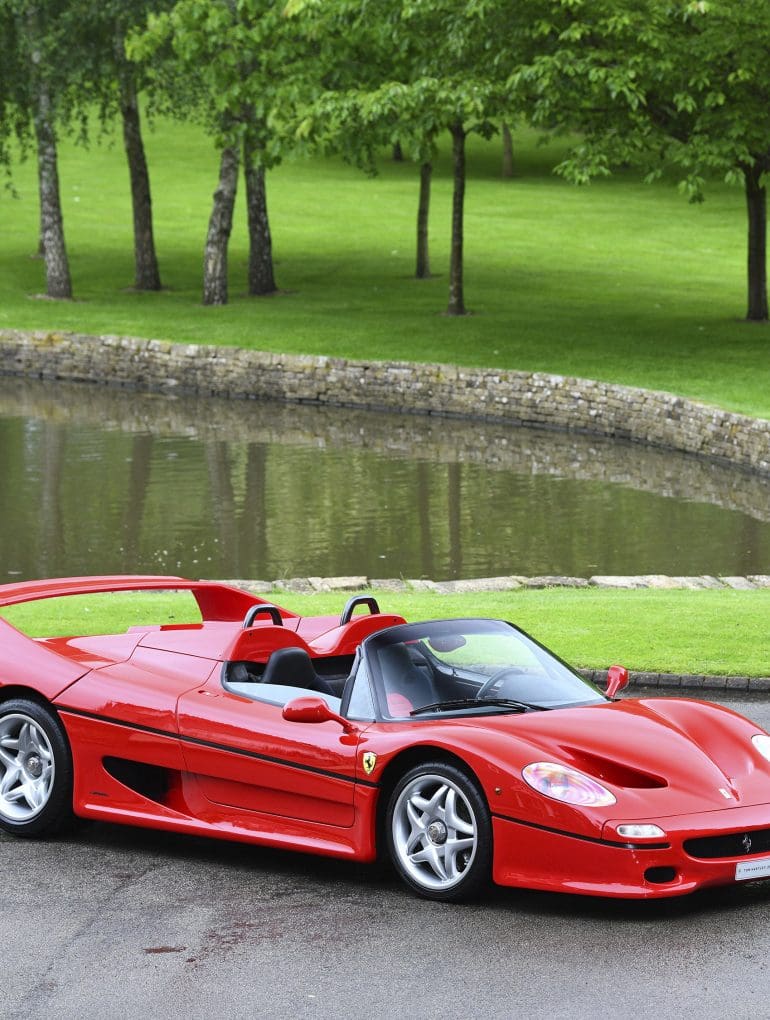

Geneva Motor Show, March 1995. Ferrari unveiled the F50, a mid-engine masterpiece celebrating the legendary Italian marque’s fiftieth anniversary while establishing itself as arguably the purest road-going supercar ever created. The designation “F50” honored both Ferrari’s anniversary and the naturally aspirated 4.7-liter V12 engine derived directly from the 1990 Formula 1 car, representing Formula 1 technology transplanted into street-legal form. Producing 520 horsepower at 8,500 rpm and 347 lb-ft of torque, the F50 could achieve 202 mph while delivering 0-60 mph in 3.8 seconds through mechanical precision and lightweight construction.
This was Ferrari’s ultimate statement: a car without power steering, without power-assisted braking, without ABS, without any electronic safeguards, designed exclusively for drivers capable of commanding extraordinary machinery. The carbon-fiber monocoque chassis, aerospace-grade construction, and uncompromising engineering philosophy created something genuinely unparalleled in automotive history. Production ran from 1995 through 1997, with exactly 349 examples built at Maranello, establishing the F50 as one of the rarest and most exclusive supercars ever produced.
Background and Origins
The decision to develop the F50 emerged from Ferrari’s commitment to competing in IMSA racing. When Ferrari entered the 1994 IMSA World Sports Car Championship with the 333 SP, regulations prohibited turbocharged engines, fundamentally altering Ferrari’s supercar direction. Rather than develop a new engine specifically for racing while maintaining the turbocharged F40 as the road car, Ferrari management recognized an extraordinary opportunity: create a successor to the F40 powered by a naturally aspirated V12 derived directly from racing requirements.
The engine development began with Ferrari’s proven 3.5-liter cast-iron V12 foundation used in early 1990s Formula 1 cars. Engineers enlarged displacement to 4.7 liters through increased bore and stroke, creating something completely unprecedented. Five valves per cylinder—three intake, two exhaust—maximized breathing efficiency at extreme rev ranges. Titanium alloy con-rods and forged aluminum Mahle pistons minimized reciprocating weight. An 11.3:1 compression ratio maximized output without compromising reliability. The result was 109.2 horsepower per liter, the highest output achieved by any naturally aspirated production engine in the world at the time.
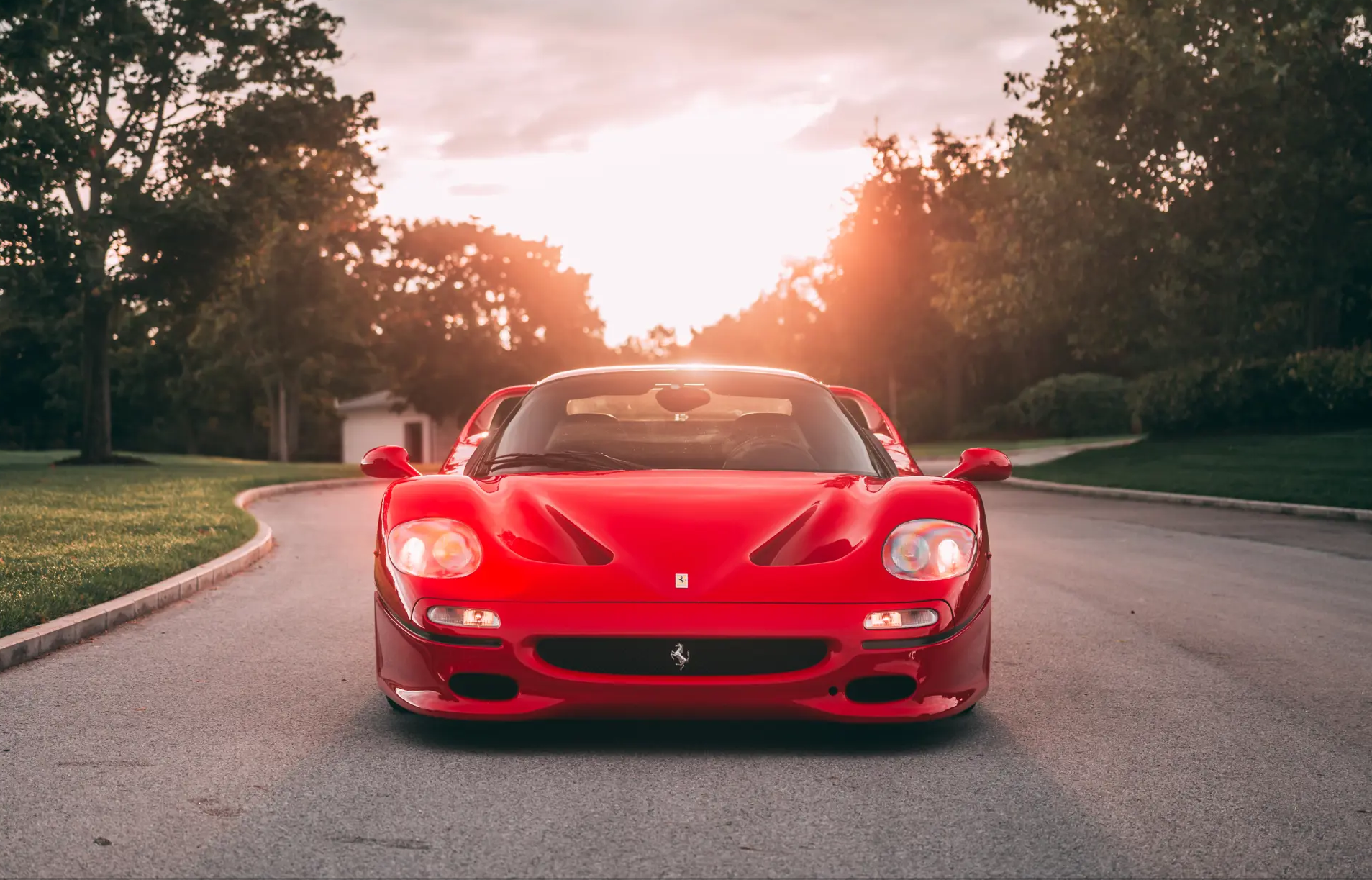
Designing the F50’s body fell to Pininfarina, with Pietro Camardella and Lorenzo Ramaciotti directing efforts. Rather than create something fundamentally new, they evolved the 1989 Mythos concept, incorporating contemporary Formula 1 aerodynamic principles. The result was a car that looked precisely what it was: a street-legal racing machine.
Design and Engineering
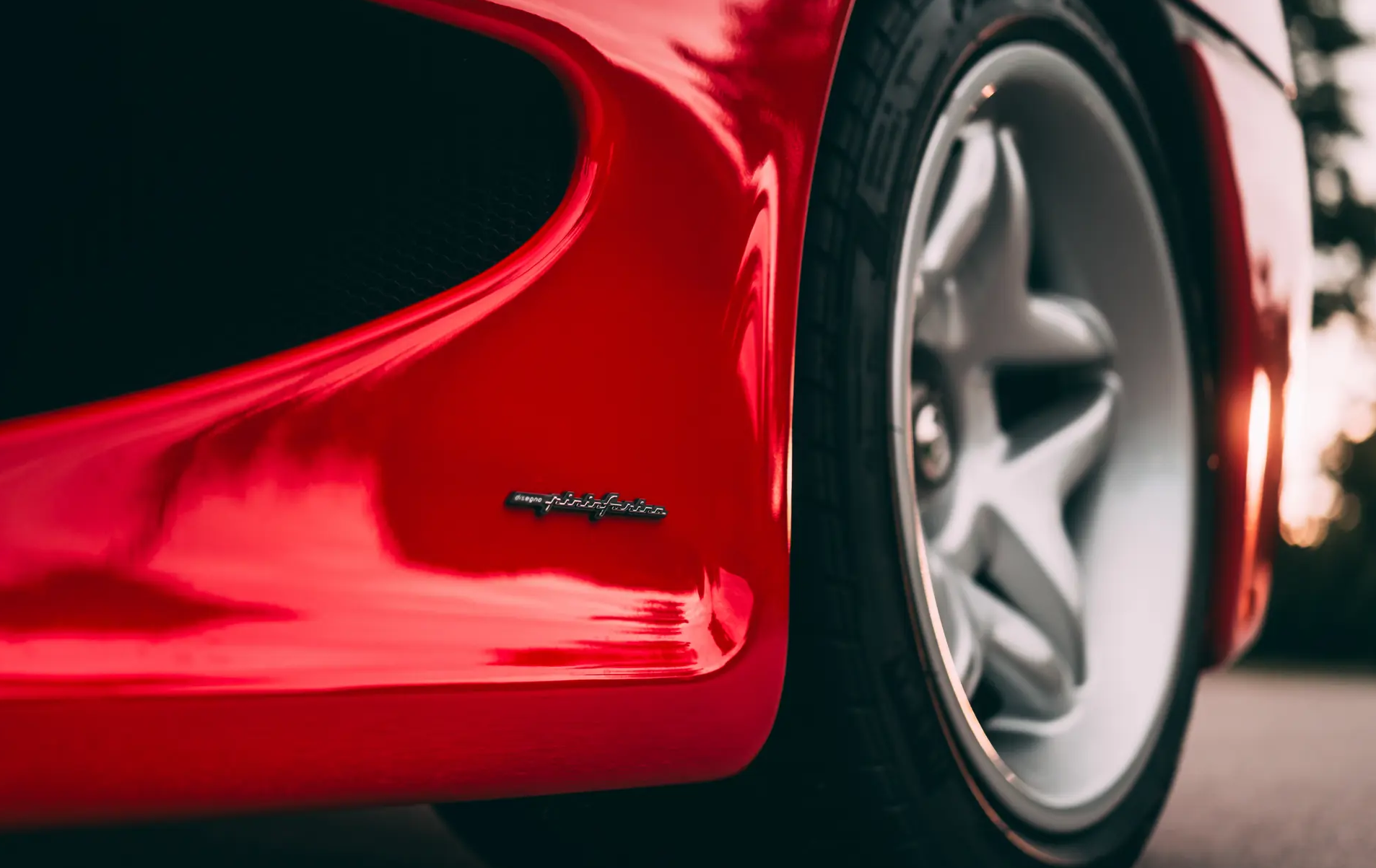
The F50’s most revolutionary aspect was its carbon-fiber monocoque chassis, a construction approach borrowed directly from Formula 1 practice. Hand-laid composite construction achieved extraordinary rigidity while maintaining a bare chassis weight of just 1,230 kilograms. The aeronautical rubber fuel tank was integrated into the monocoque structure, minimizing additional weight. The engine itself was semi-stressed, serving as a load-bearing component supporting the transaxle rear suspension assembly—sophisticated engineering that reflected racing principles scaled for road use.
The suspension employed pushrod systems typically reserved for formula cars, with sophisticated independent double wishbones front and rear. Coil springs and manually-adjustable dampers allowed drivers to fine-tune handling balance for different conditions. The geometry prioritized engaging feedback and direct response rather than artificial comfort, with the steering completely mechanical—no power assistance whatsoever. Anti-roll bars provided cornering control without excessive harshness.
Braking was handled by ventilated disc calipers measuring 370mm front and 330mm rear, featuring a separate mechanically-operated rear brake system. Remarkably, ABS was deliberately absent, a decision reflecting Ferrari’s philosophy that driver skill mattered more than electronic intervention. The brake feel was immediate and direct, with zero assistance—another characteristic separating the F50 from contemporary rivals.
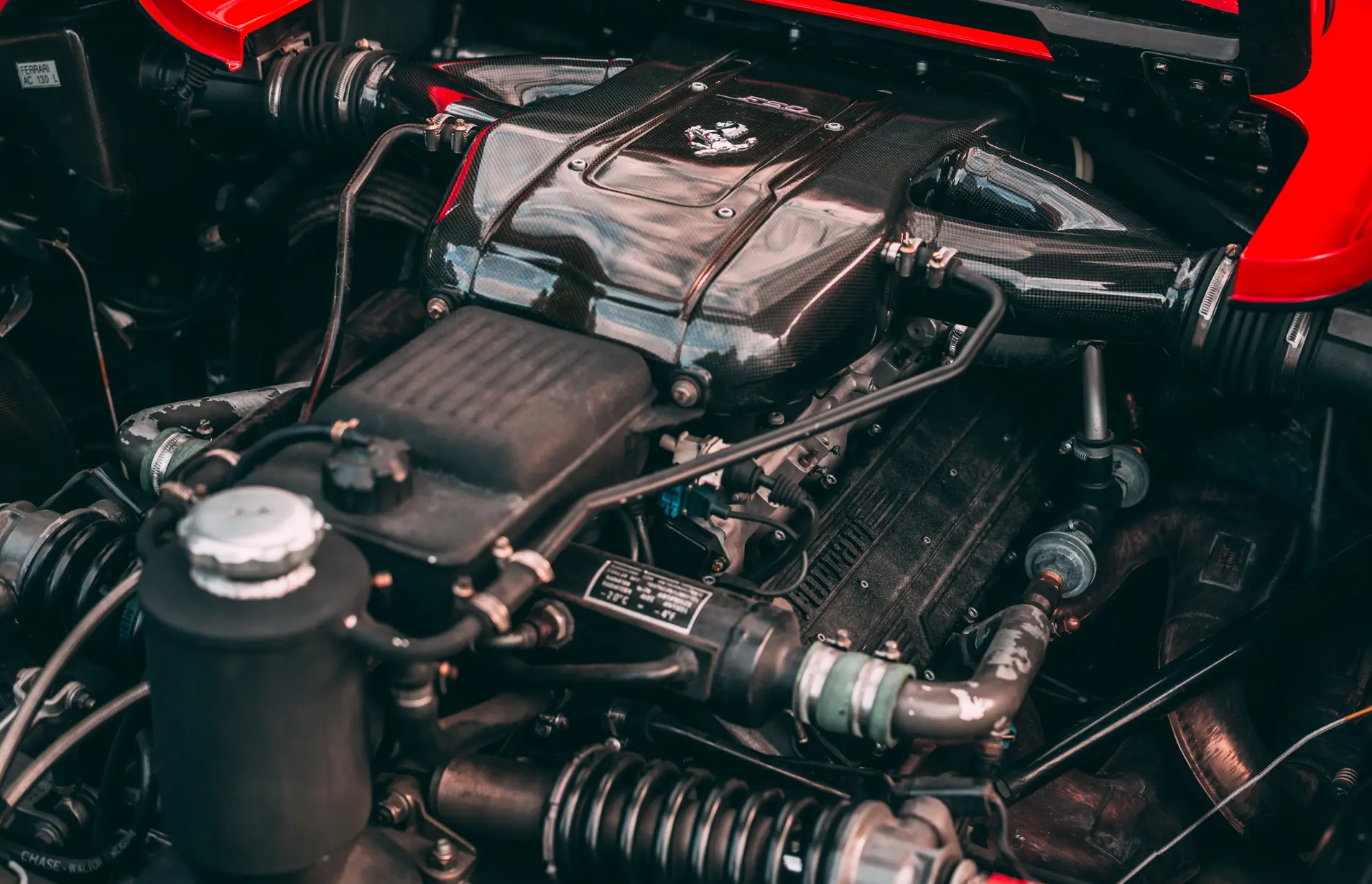
The 4.7-liter V12 naturally aspirated engine represented the absolute zenith of non-turbocharged performance. Displacing 4,698cc through a 85mm bore and 69mm stroke, the all-aluminum engine featured double overhead camshafts per bank controlling the sophisticated five-valve arrangement. With sophisticated Bosch Motronic M2.7 fuel injection and ignition management, output was 520 horsepower at 8,500 rpm and 347 lb-ft of torque at 6,500 rpm. The engine revved to 8,000 rpm with terrifying rapidity, creating an intoxicating mechanical symphony as drivers explored the extreme upper rev range. This wasn’t turbocharged aggression—this was pure naturally aspirated high-revving intensity, requiring skill and aggression to fully exploit the engine’s potential.
The six-speed manual transmission featured a traditional gate shifter with mechanical precision and direct engagement. Limited-slip differential ensured power delivery to both rear wheels, distributing forces effectively during acceleration and cornering. The overall drivetrain philosophy emphasized mechanical directness over electronic mediation.
Styling
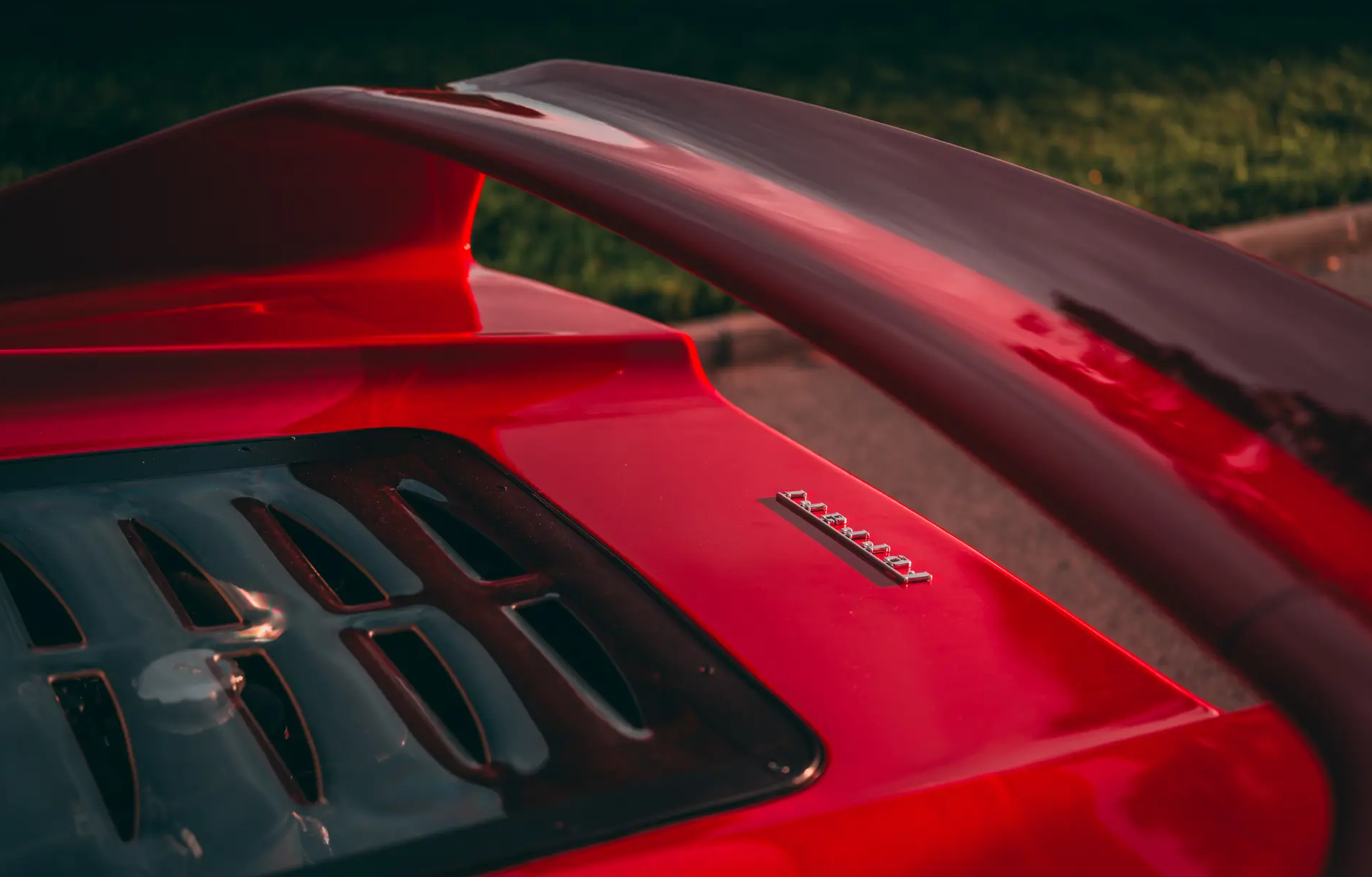
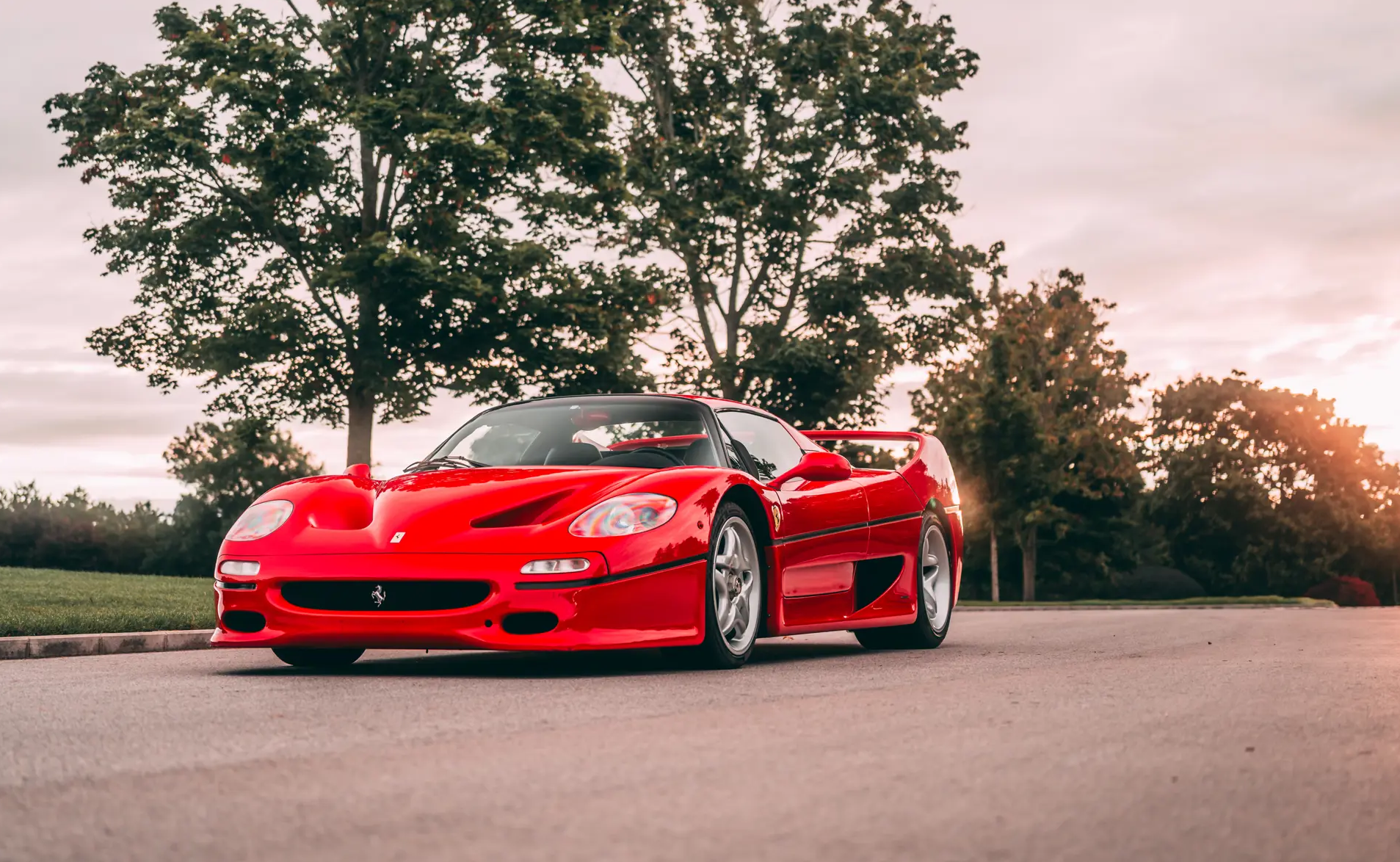
Pininfarina’s design embodied form following function. The long hood accommodated the longitudinally-mounted V12 while establishing classic Ferrari proportions. The windshield was large and steeply raked, emphasizing the cockpit’s forward positioning. Air intakes incorporated throughout the body facilitated cooling for the rear-mounted engine, with functional ducts integrated seamlessly into the overall design. Large side scoops channeled cooling air, serving both practical and aesthetic purposes.
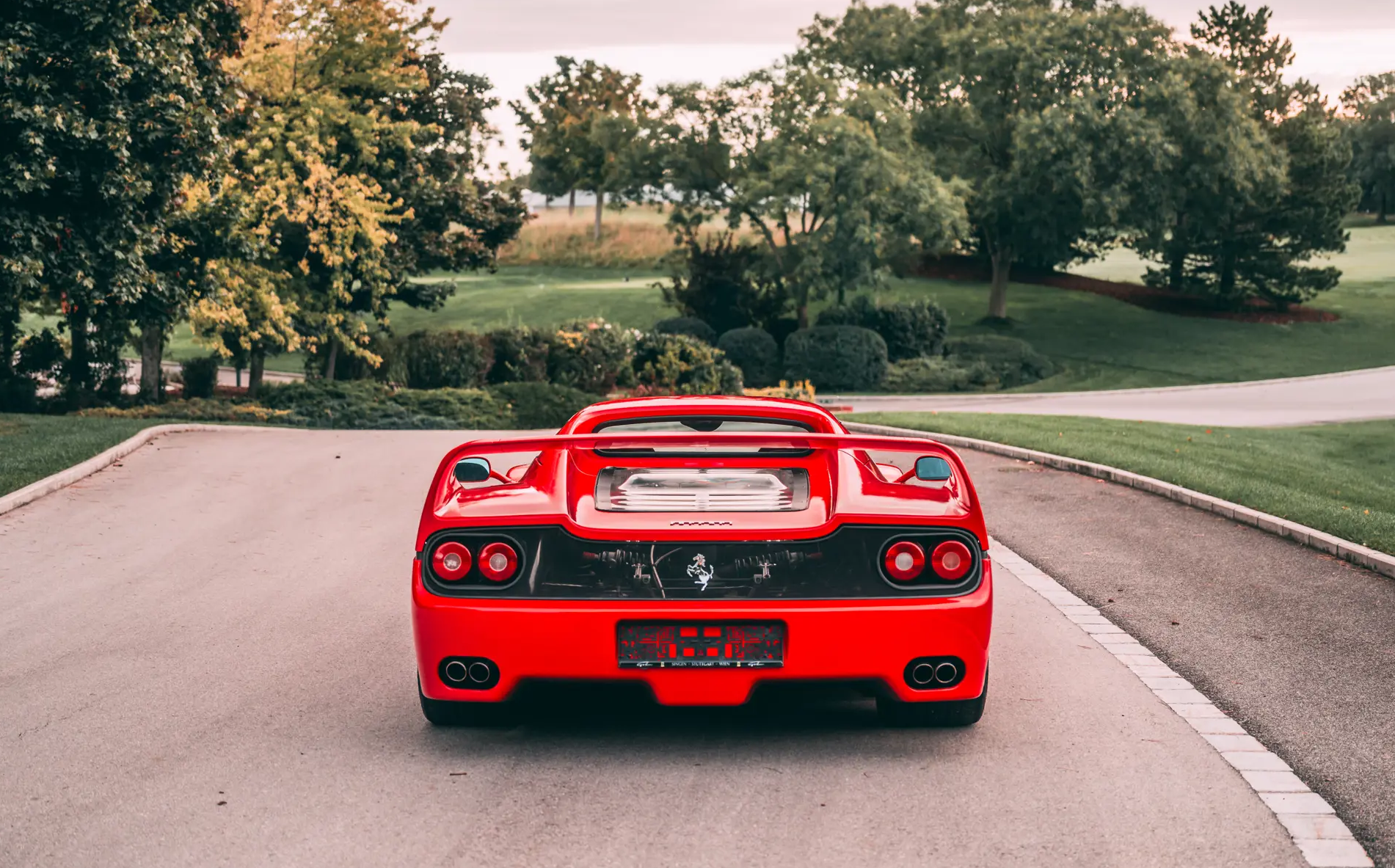
The targa-top architecture featured a removable carbon-fiber panel allowing open-air driving, while the fixed rollbar provided security during extreme maneuvers. The rear deck was dramatically sculpted, featuring extensive aerodynamic development including an integrated diffuser and large rear wing providing substantial downforce at speed. The overall appearance suggested nothing but performance—purposeful, aggressive, completely uncompromised.
The F50 was offered in five colors: two shades of Rosso Corsa red, yellow, black, and silver. Each represented classic Ferrari tradition, with the majority delivered in distinctive red finishing celebrating the brand’s racing heritage.
Interior
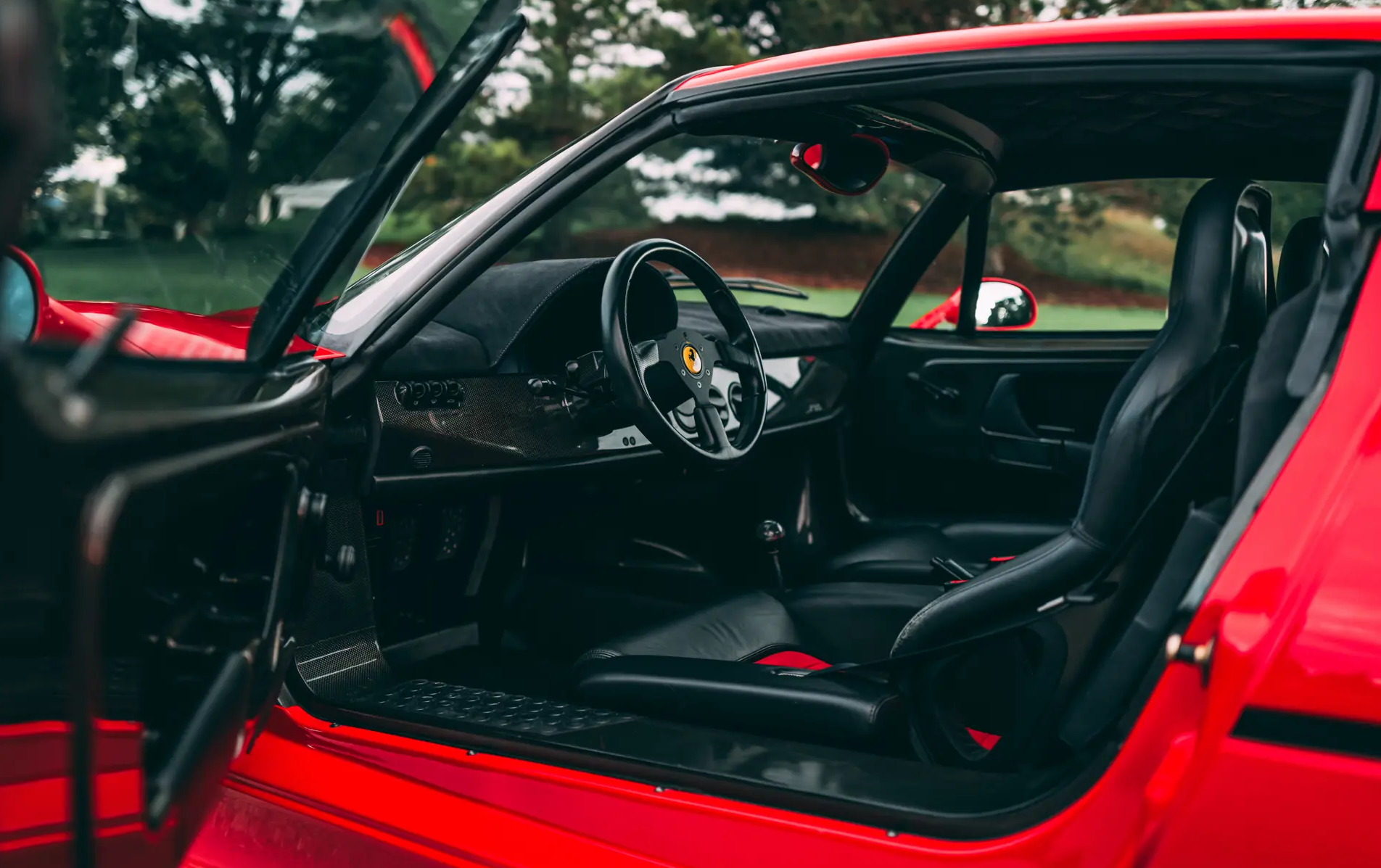
The interior reflected racing priorities. Spartan wouldn’t adequately describe the cabin—essentially no sound deadening, no carpeting beyond essential elements, minimal trim beyond what safety regulations demanded. Alcantara-wrapped racing seats provided excellent lateral support during aggressive cornering while offering reasonable comfort for extended driving. The driving position was commanding and slightly rearward, optimizing weight distribution while providing excellent visibility.
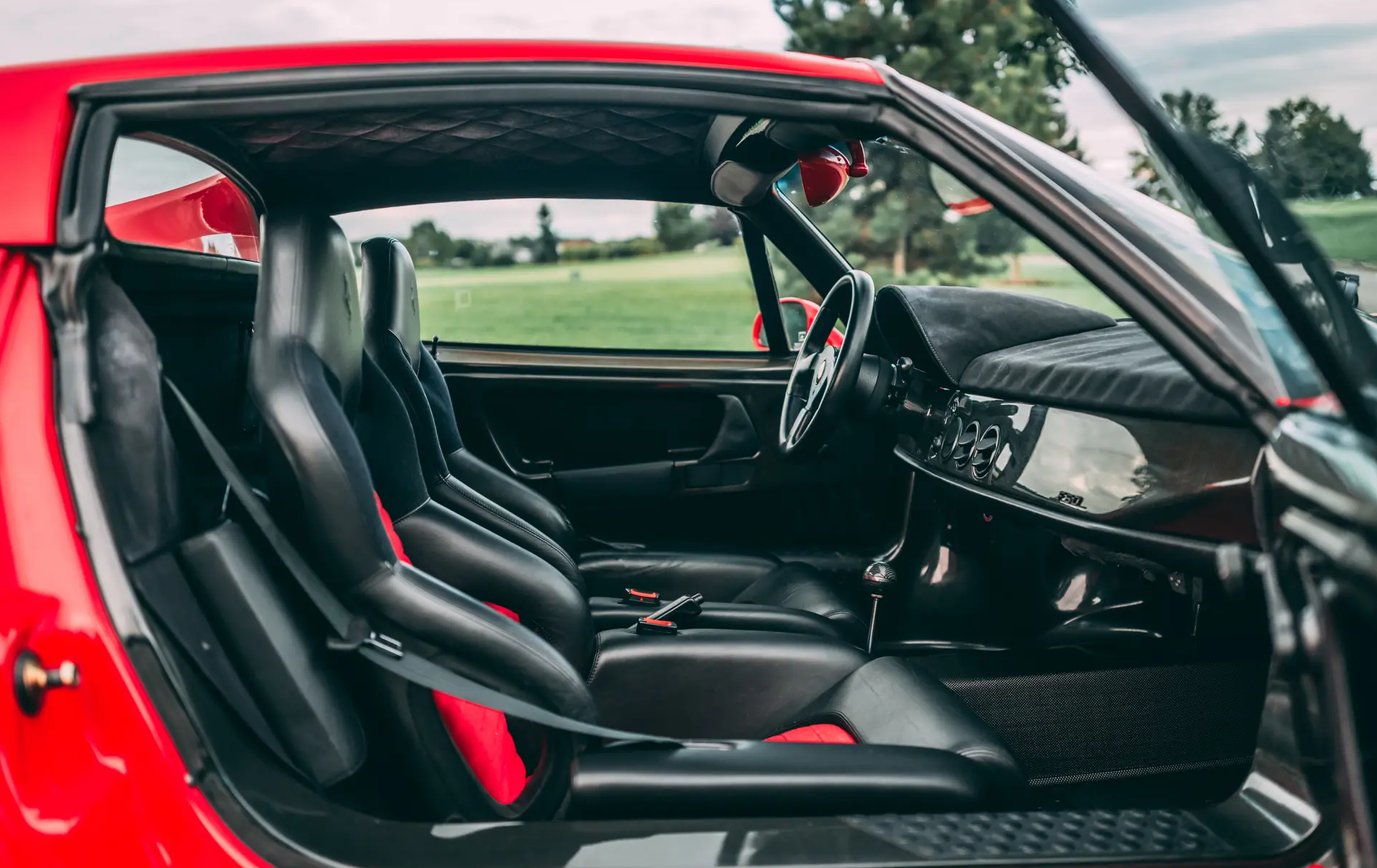
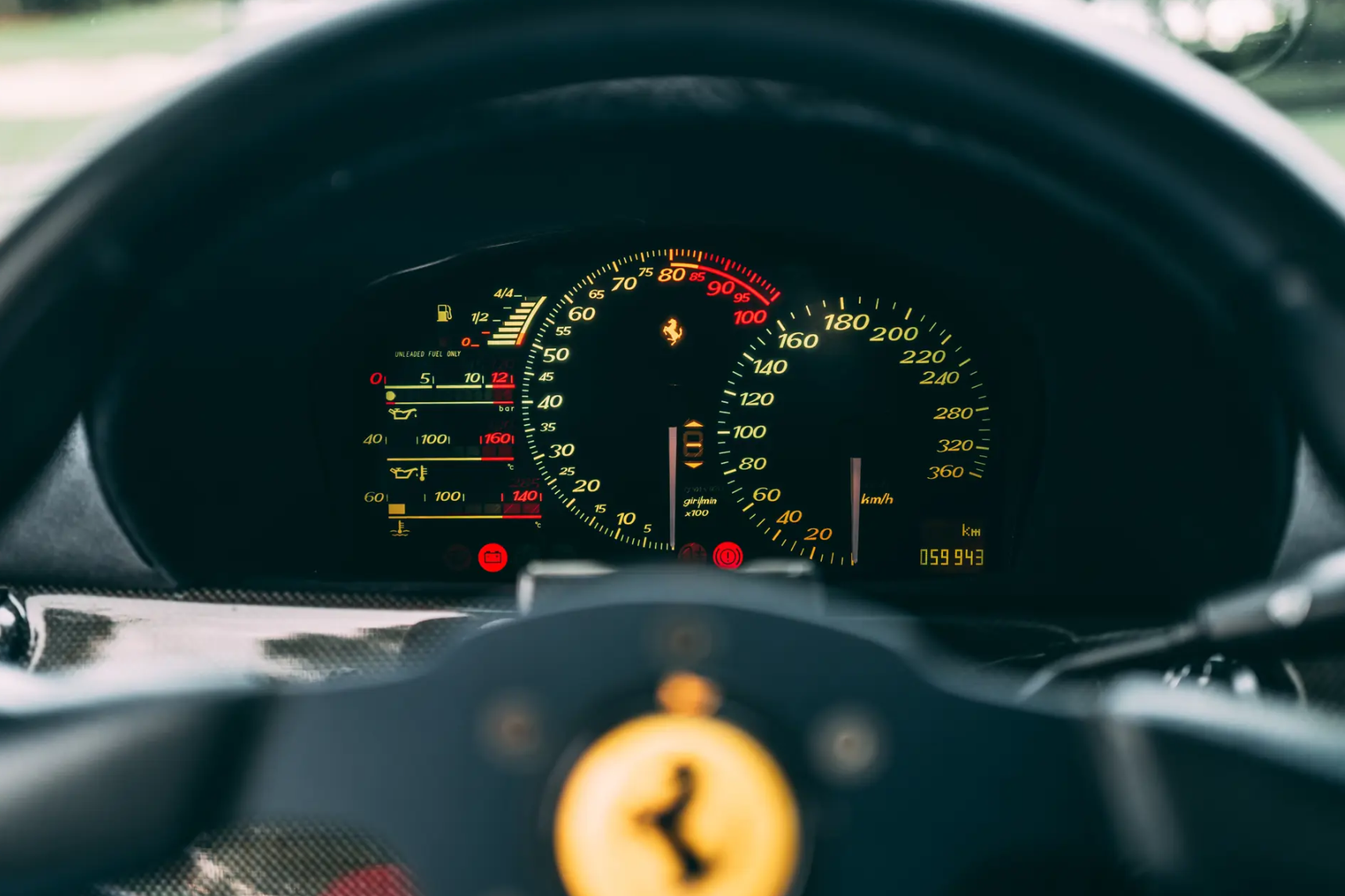
The instrument panel featured a large tachometer with red line at 8,000 rpm, complemented by essential gauges displaying fuel consumption, oil temperature, and engine parameters. A prominent fire extinguisher was mounted within driver reach. The steering wheel was small-diameter and purely mechanical, with no horn integrated into the rim itself—another characteristic emphasizing that the F50 was fundamentally a race car wearing road-legal credentials.
Specifications
- Engine: V12 naturally aspirated, 4,698cc, 65-degree, DOHC per bank, five valves per cylinder
- Power: 520 hp / 512 PS at 8,500 rpm
- Torque: 347 lb-ft / 470 N·m at 6,500 rpm
- Transmission: Six-speed manual, rear-wheel drive
- Chassis: Carbon-fiber monocoque with aluminum subframes, 2,580mm wheelbase
- Suspension: Independent pushrod double wishbones (front and rear), coil springs
- Brakes: Ventilated discs 370mm (front and rear), separate mechanical rear brake system
- Wheels: 19-inch BBS alloy, performance tires
- Weight: 1,230 kg dry / 1,380 kg curb weight
- Performance: 202 mph top speed, 0-60 mph in 3.8 seconds, 0-100 mph in 9.2 seconds
Production and Legacy
Ferrari hand-assembled exactly 349 F50 examples at Maranello between March 1995 and July 1997. Each car received meticulous individual construction reflecting Ferrari’s manufacturing standards. The limited production run reflected Ferrari’s deliberate exclusivity strategy, ensuring the F50 remained genuinely elite. One car fewer than Ferrari estimated they could sell, the F50 established immediate collectibility.
The F50 proved that naturally aspirated engines could deliver supercar-competitive performance without forced induction. It demonstrated that mechanical simplicity and driver skill mattered more than electronic mediation. The combination of Formula 1-derived technology, ultra-lightweight construction, and uncompromising engineering created something genuinely revolutionary.
Today, F50 examples command extraordinary prices, with top-condition cars fetching $5.5-7 million USD, establishing the F50 as one of the most valuable production cars ever built. The combination of rarity, mechanical purity, and authentic racing heritage ensures legendary status among serious collectors.
The Ferrari F50 represented Maranello at its most ambitious, proving that bringing Formula 1 technology to the road could create something transcendent. It remains one of the greatest supercars ever built, a naturally aspirated masterpiece celebrating mechanical perfection and uncompromising performance without electronic assistance or driver aids.