

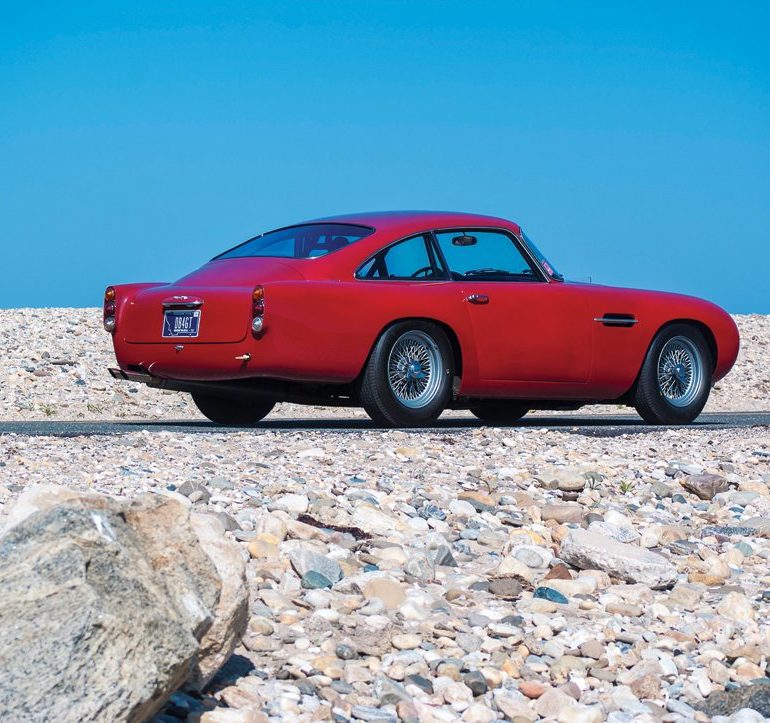
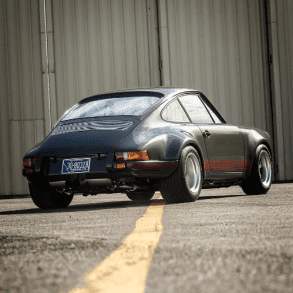
There are only a few cars that can be considered “Holy Grail” machines. The Ferrari 250 Short Wheel Base, the 1973 Porsche Carrera RS, the 8C Alfa Romeo and the subject of this drive, the Aston Martin DB4 GT.
When Aston Martin debuted the DB4 at the 1958 Paris Salon, it was a totally new car from the ground up. The chassis, designed by Harold Beech, was clothed in the Superleggera bodywork of premier Carrozzeria Touring of Milan. An alloy twin-cam, 3.7-liter, straight-6 engine, four-wheel disc brakes, independent front suspension and a live rear axle located by trailing arms and a Watts linkage completed the package.
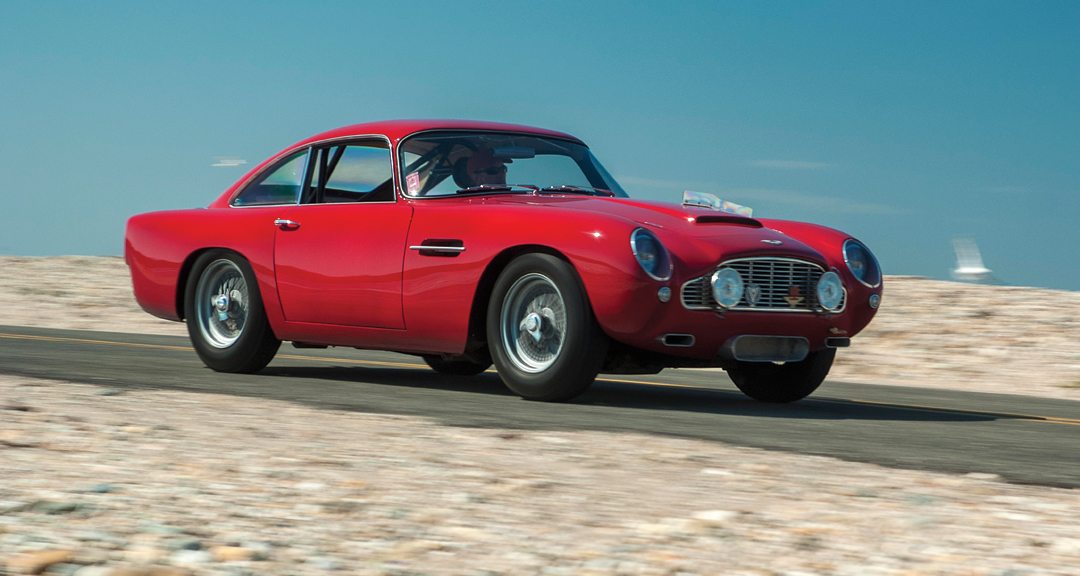
 The competition version the DB4 GT came into the public eye at the London Motor Show in September of 1959. Making it shorter by five inches and lighter by 178 pounds increased its overall performance.
The engine, highly modified from DB4 trim, had a high-compression (9:1) twin-plug head and triple 45 DCOE Weber carburetors, good for 302 bhp at 6000 rpm. That was an increase of 62 bhp over the standard DB4, and made the DB4 GT the most powerful car of the day. Girling four-wheel disc brakes were standard equipment to help bring the DB4 GT to a halt.
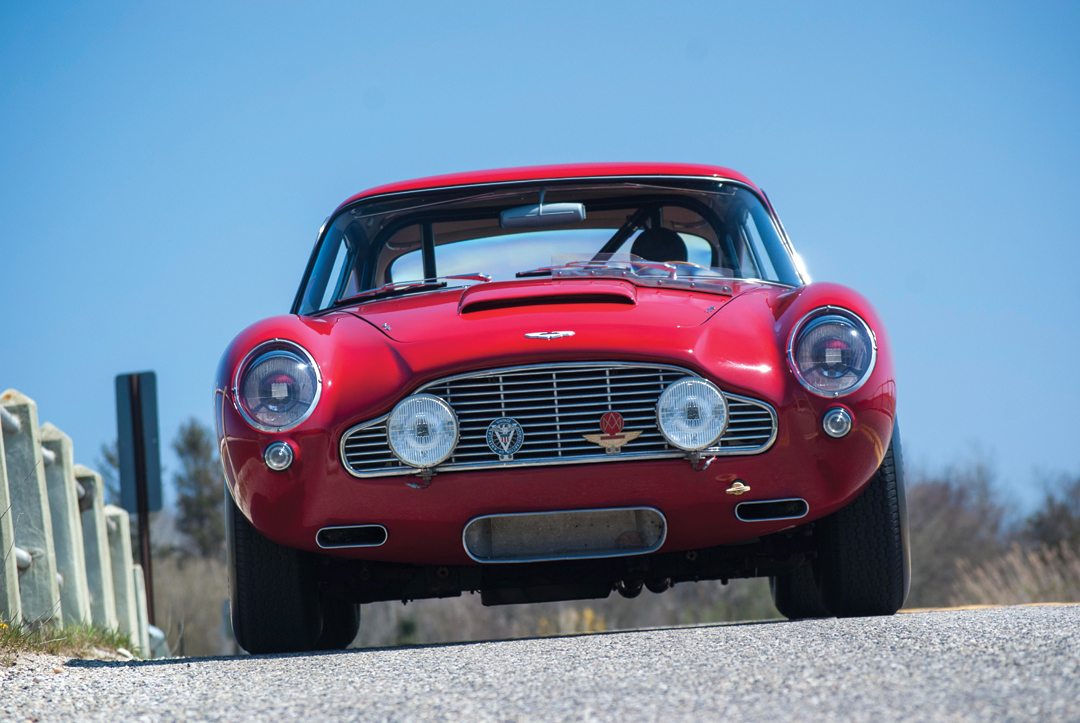
Outwardly, the differences to the DB4 were the shorter wheelbase, enclosed headlights that would later be standard on the DB5 and the use of plexiglass in the side and rear windows for extra weight savings. The rear fenders sported quick release fillers going to a 36-gallon fuel tank in the trunk that took up most of the space, save for the spare tire. Something you can’t see was the use of 18-gauge aluminum to help with the weight savings.
DB4GT #0175/L was the last built and sold by the Newport Pagnell factory—the final 19 chassis after were given Zagato-designed bodies.
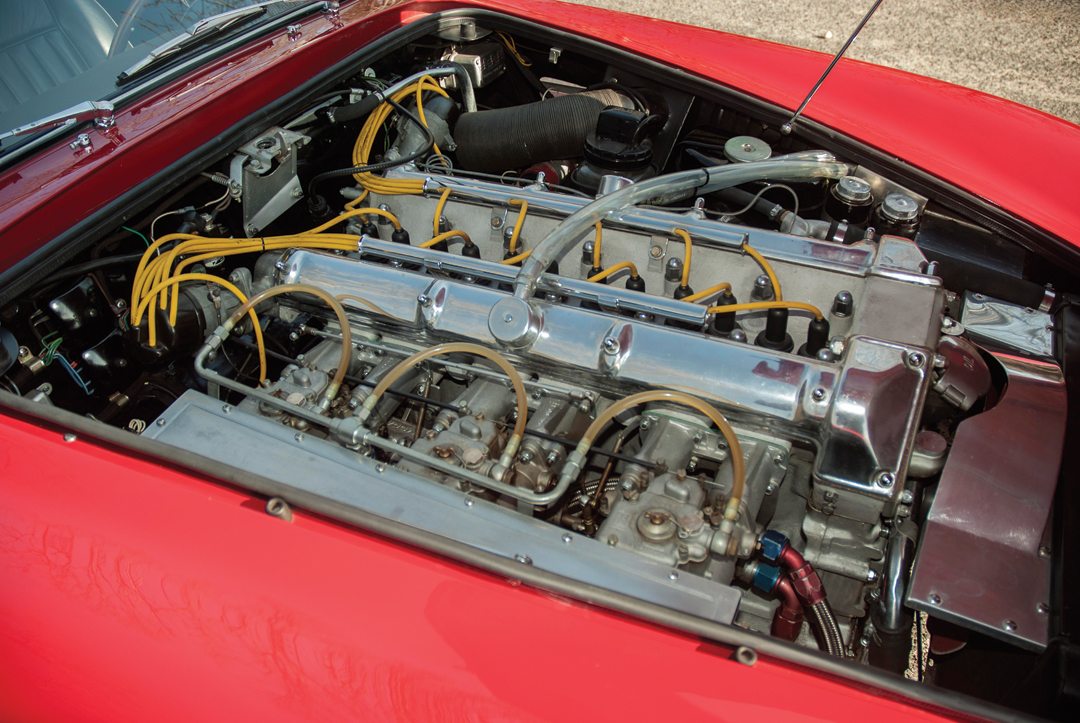 After leaving the factory this Aston commenced its world tour. It spent the first few years of its life in Switzerland, in the hands of A. G. Medawar. In the late ’60s it moved on to Beirut, Lebanon, to a Mr. R.S. Simpson who later shipped the car back to Holland and then in 1976 sold it on to Charlie Turner of Atlanta, Georgia. It then moved to California, into the ownership of Lt. Col. Boone Crowe, who entered the Aston in a number of vintage racing events, including the Monterey Historics At his last visit to Laguna Seca, however, Crowe had a nasty shunt and damaged the nose of the car, so after that the Aston was put into storage. With the death of Lt. Col. Crowe, his widow sent the car to a shop in Utah for restoration, but the job was never completed.
With the car still in pieces, it was sold to Jack Boxstrom who entrusted a complete restoration and race prep to Robert and John Clerk of Pompano Beach, Florida. To the Clerk’s credit, the Aston went on to win events at Laguna Seca, Watkins Glen, Road Atlanta and Lime Rock Park. In 1997 the car again changed hands, as Richard Sirota became the new caretaker of #0175/L. Sirota took the car on several road rallies in Colorado and New England, but two years later it was sold to a Mr. J. Cordner who kept it until 2006, selling it on to Alex Papakriakau of Scottsdale, Arizona.
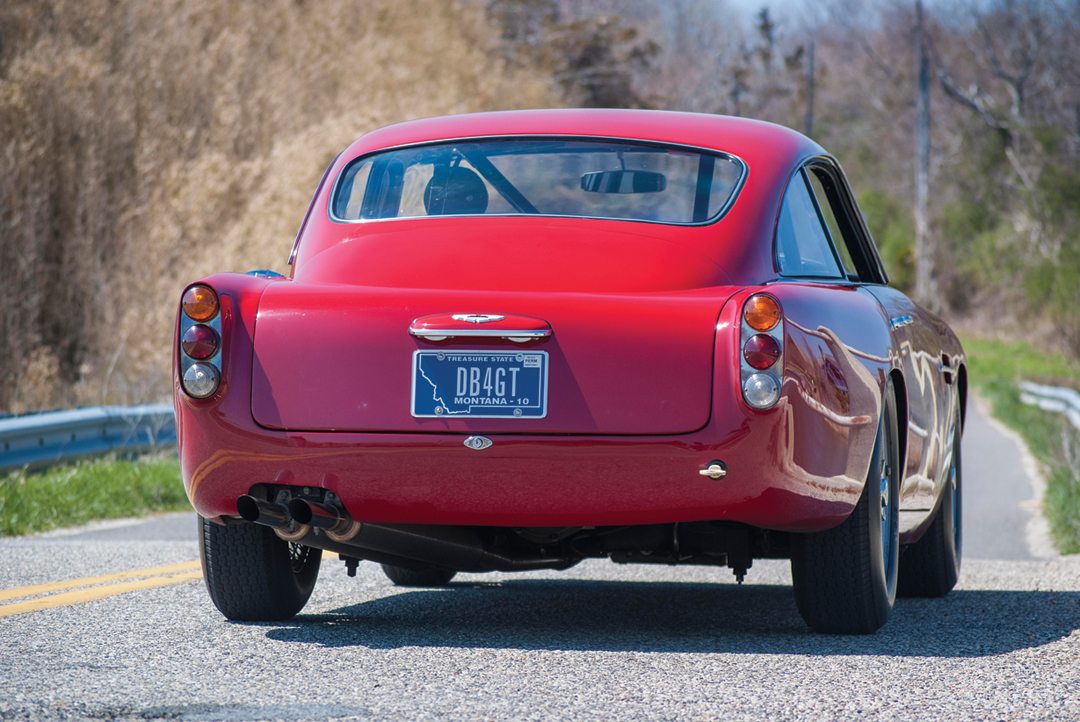 Fast forward to January 2010, with his DB6 in the shop for restoration after a mishap during an Aston Martin club rally in upstate New York, Andy Greenberg is at home recovering from some restoration of his own. He is catching up on his reading, when something catches his eye in the RM Scottsdale Auction catalog: A matching-numbers 1963 DB4GT, and not just any DB4GT, but the last standard-bodied GT produced, with factory left-hand drive, 1 of 30, and on further reading a car that is believed to be an undocumented Aston Martin factory-built “lightweight.”
Being at home in New York with the auction in progress in Arizona, Andy starts burning up the phone lines to a previous owner who is at the auction, Specialist Don Rose and John Clerk. He knew the car had been prepared for Jack Boxstrom, a well known Aston racer, by one of the top shops specializing in the marque, Jon & Robert Clerk. That was a winning formula for Andy, but was it still the same, had the car been messed with? After getting positive reports back from all the specialists, it was time to make the leap. He contacted RM and got himself into the game.
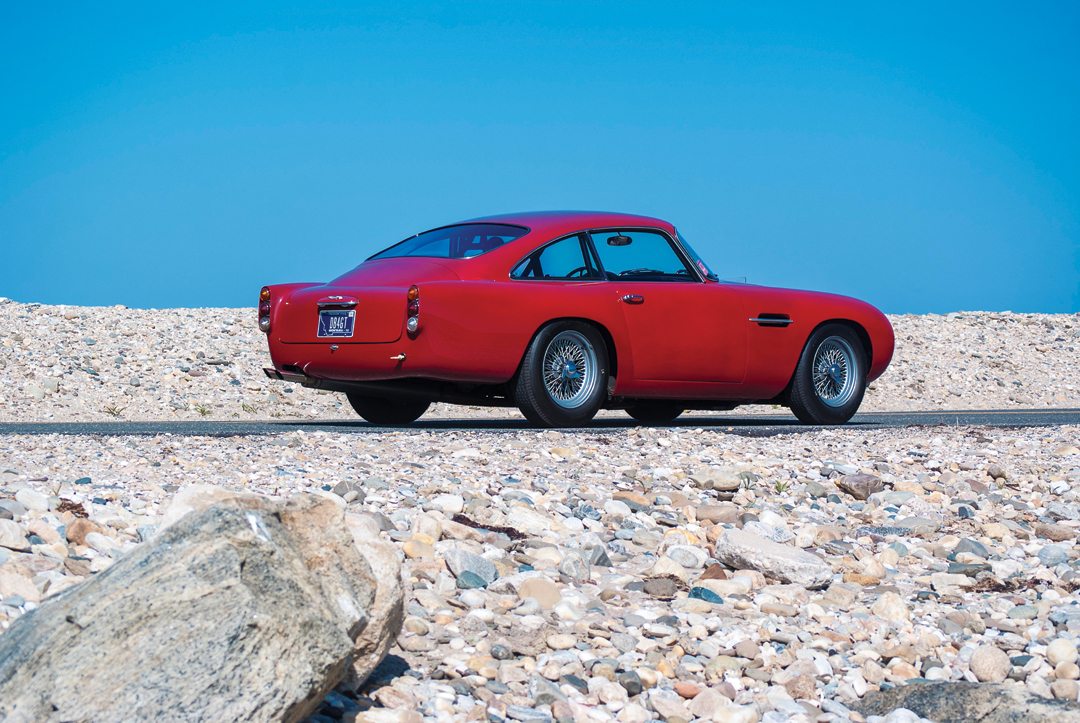 He was told the auction house would set it up so he could bid online, but that was not how Andy wanted to play it. He told RM, “Here is the price I am comfortable paying, have someone be my proxy, call and wake me if I’m the winning bid, I’m going to sleep.” The phone call came, the car was his. The next day another call came. “Do you want to sell the car, we have someone willing to pay you $100,000.00 over your final bid.” Andy only had to think for a moment. The answer was “no.”
Of the 75 “standard” DB4 GTs, five are known (AMOC register) to have full factory lightweight construction, taking an additional 175 pounds off the car, and while 0175/L may be one, it is not known or indicated in the register. However, close expert examination of the factory features on the car—like additional use of aluminum alloy—are pretty suggestive of the genesis of this DB4 GT. The registry lists “at least five, 0124/R,0125/R, 0151/R, 0167/R and 0167/L, as lightweight cars.” They clearly consider the existence of additional, non-documented, lightweights a very real possibility.
 On the Road
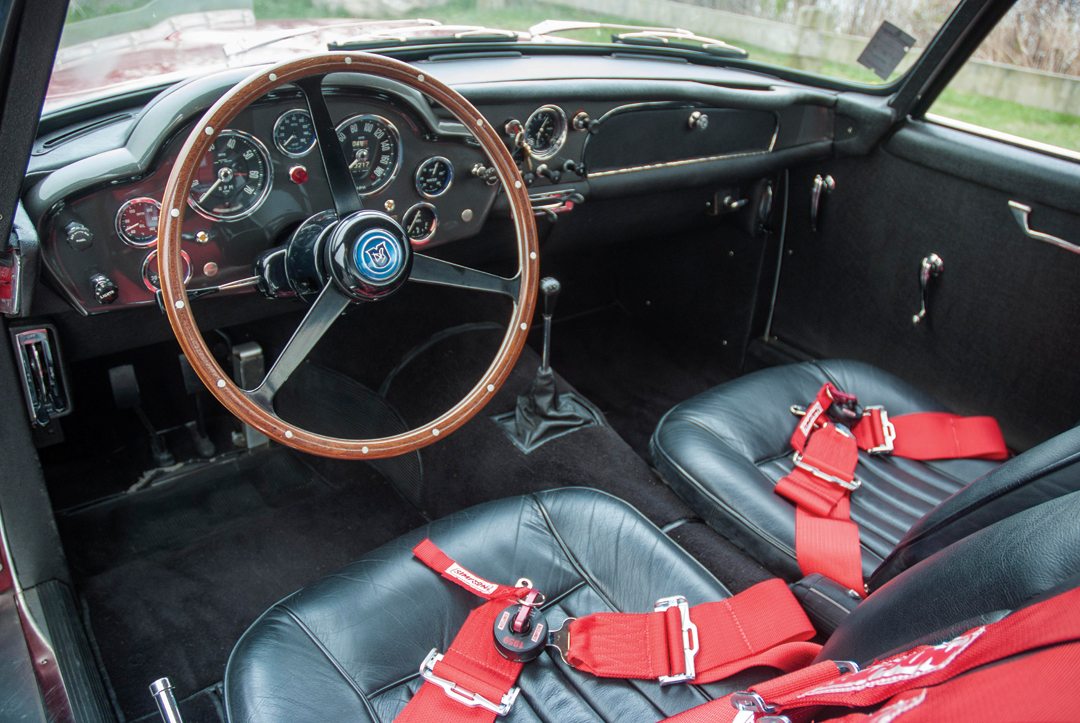
After a day of driving around Eastern Long Island from Bridgehampton to Shelter Island and all the way out to Montauk point for photography, I feel as good as when we started the day. This car does not beat you up, I’m not just taking into consideration that it’s a 50-year-old car with some race preparation, it’s a comfortable car period. The GT is not a stripped-out shell,it has that wonderful Aston Martin interior made up of leather, wood and wool carpet. It’s a great place to spend an afternoon. The suspension is firm, but not at the expense of your back. The only time you notice is if the road gets really bad.
There is something about the interior of a British car, it has a special personality all its own, the smell and feel are very unique, but that doesn’t mean take off your shoes before you get in. Andy and I enjoyed our turkey sandwiches in the GT on the ferry ride over to Shelter Island, but not too many owners would allow an impromptu picnic in their million-dollar-plus car. So you can tell this is not some trailer queen; this car gets used.
Driving the backroads of Long Island, the GT is very well behaved, driving along at slow speeds like any modern road-going car with no lumpy cam, no harsh clutch and the water temperature never gave any cause for concern. The car never misses a beat!
Now in the driver’s seat and getting used to my surroundings, the three-spoke wood-rimmed steering wheel falls right to hand. Tach to the left, speedometer to the right, with the oil temperature between them. Gauges for oil pressure, amps and water temperature are spread out around them. Bring your right hand off the wheel, and the shift lever for the David Brown gearbox is in your hand. The most disconcerting thing about this car is it has no side mirrors. Andy was told, “you don’t want to cut into that beautiful metal.” Luckily the rear-view mirror is of a good size, so with a careful look over my left shoulder I find first and head off. As I said, the Aston is happy to lope around at low speeds with no problem, but push on the accelerator and it leaps forward with a snap as the tach looks like it wants to go around again. There is plenty of torque that pushes you back into your seat, but the Aston is not high-strung or twitchy, it goes right where you point it with no fuss. That has a lot to do with the stiffer springs and thicker front anti-roll bar, and it instills a great deal of confidence in the driver, even when running on bias-ply Dunlop Ls. The DB4 GT can be driven to the track, flogged around in competition and then quietly driven home, and it’s happy doing both, but I am sure the driver would rather be pushing a bit harder.
— Sean Smith
Driven Classics at a Glance:
SPECIFICATIONS
Aston Martin DB4 GT
Production: 75
Wheelbase: 93 inches
Length: 171.7 inches
Width: 66 inches
Front Track: 54 inches
Rear Track: 54 inches
Height : 47 inches
Weight: 2800 pounds
Brakes: Girling discs, x-in (F), x-in (R)
Engine: DOHC inline-6
Bore x Stroke: 92-mm x 92-mm
Compression Ratio: 9.1:1
Induction: Triple Weber 45 DCOE carburetors
Power: 302-hp @ 6,000 rpm
Torque: 270-lb-ft @ 5,000 rpm
Transmission: 4-speed manual
PERFORMANCE
Top Speed: 152 mph
0-60 mph: 6.2-sec
Average fuel consumption:
Does it really matter?
VALUATION
Price at launch: £4,534
Excellent: $1.85 million
Good: $1.65 million
Average: $1.35 million
Poor: $1.20 million