
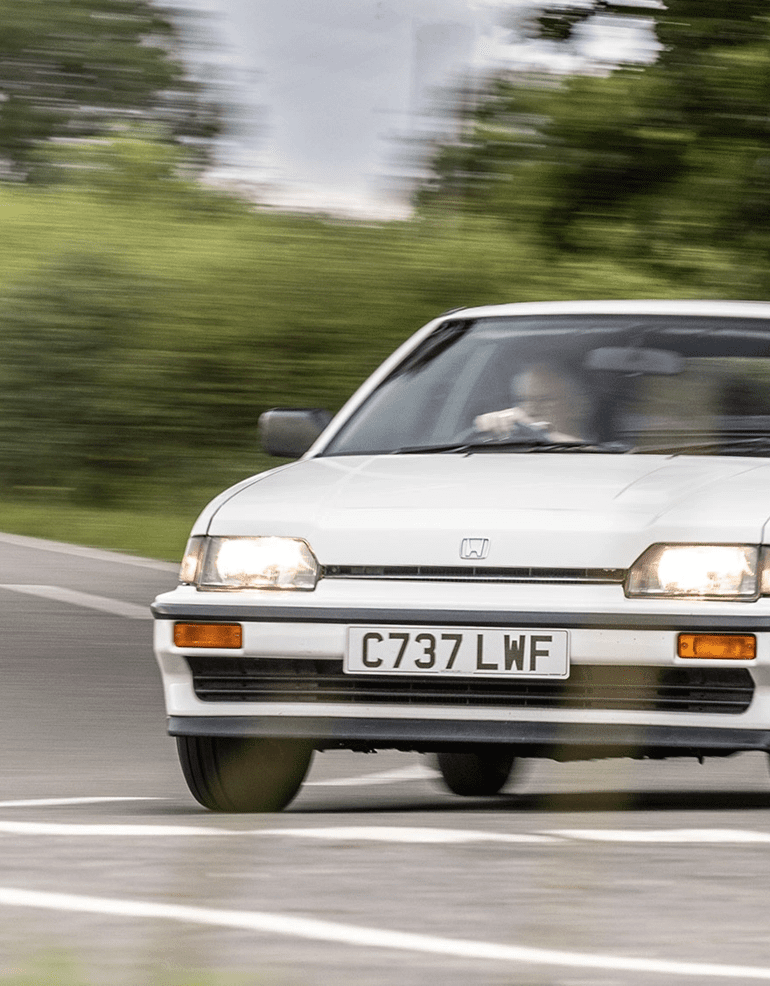

Tokyo, July 1983. Honda introduced the CR-X, a lightweight two-seat coupe based on the third-generation Civic platform. The name stood for Civic Renaissance Experimental, though Honda marketed it simply as CR-X. Two versions were offered: a fuel-sipping 1.3-liter economy model achieving over 50 mpg, and a sportier 1.5-liter Si variant with 91 horsepower.
Weighing just 880 kilograms, both delivered remarkable driving dynamics thanks to double-wishbone suspension and near-perfect weight distribution. The wedge-shaped design was pure 1980s optimism. Production ran until 1987, with over 370,000 built worldwide. The CR-X proved efficiency and fun weren’t mutually exclusive.
Background and Origins
The early 1980s were defined by fuel economy concerns following the 1979 oil crisis. Manufacturers scrambled to build smaller, lighter, more efficient vehicles. Honda had already established itself as an efficiency leader with the Civic CVCC, but chief engineer Tadashi Kume wanted something more exciting. A lightweight sports coupe that could achieve remarkable fuel economy while still delivering genuine driving pleasure.
Development began in 1981 using the third-generation Civic platform. The brief was straightforward: create a two-seat coupe weighing less than 900 kilograms, offering exceptional aerodynamics, and packaging Honda’s latest engine technology. The team studied successful lightweight sports cars like the Lotus Elan and Porsche 914, seeking to understand how they balanced efficiency with performance.
The result was the CR-X, which debuted at Tokyo in October 1983. Japanese models went on sale immediately, with US deliveries beginning in March 1984 as a 1985 model year vehicle. European markets received the car in late 1984, badged as the CRX without the hyphen.
Design and Engineering
The CR-X was based on a shortened Civic platform with a 2,200mm wheelbase, some 250mm shorter than the Civic sedan. The unibody structure was conventional pressed steel, but Honda engineers obsessed over weight reduction. Thinner glass, lightweight seats, minimal sound deadening, and simplified trim kept curb weight to 880 kilograms.
Suspension was Honda’s sophisticated double-wishbone setup at all four corners, a remarkable feature for an economy car. The geometry provided excellent camber control during cornering, allowing the CR-X to generate impressive grip from modest tires. MacPherson struts would have been cheaper, but Honda prioritized handling over cost.
Braking was by front disc and rear drum, with power assist standard on Si models. The steering was unassisted rack-and-pinion, requiring effort at parking speeds but providing excellent feedback at speed. The quick 2.9-turn lock-to-lock ratio made the CR-X feel eager and responsive.
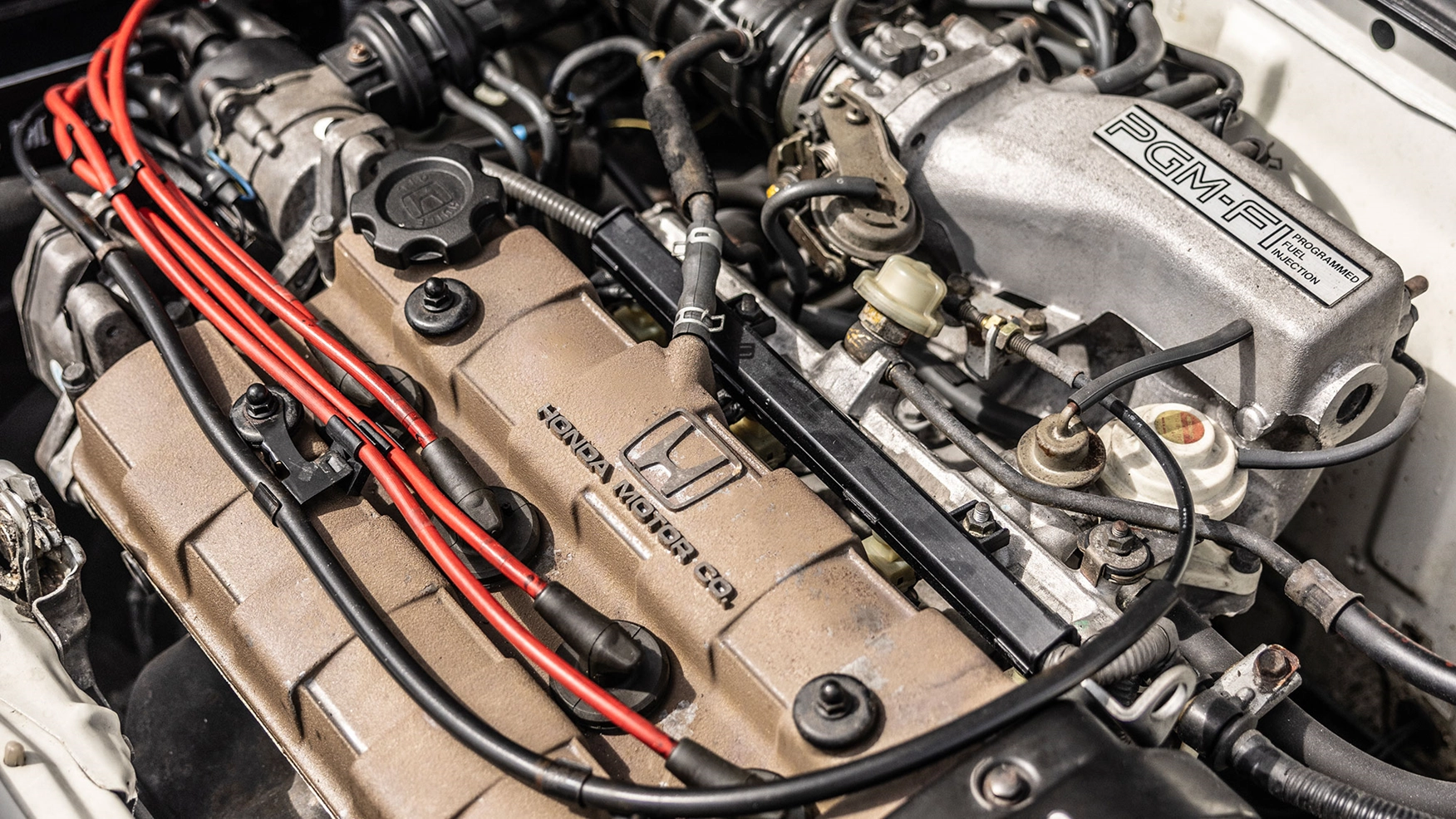
Two engines were offered. The base 1.3-liter EM1 displaced 1,342cc and produced 60 horsepower at 5,000 rpm in US spec, though Japanese models made 82 horsepower. The sportier 1.5-liter EW1 displaced 1,488cc and produced 91 horsepower at 6,500 rpm with fuel injection. Both were SOHC inline fours with 12-valve heads, two intake valves and one exhaust valve per cylinder.
Transmission choices included a five-speed manual or three-speed automatic. The manual was standard on Si models, with close ratios and a satisfying mechanical shift action. Final drive was 4.25:1 on Si models, 3.75:1 on base cars.
Styling
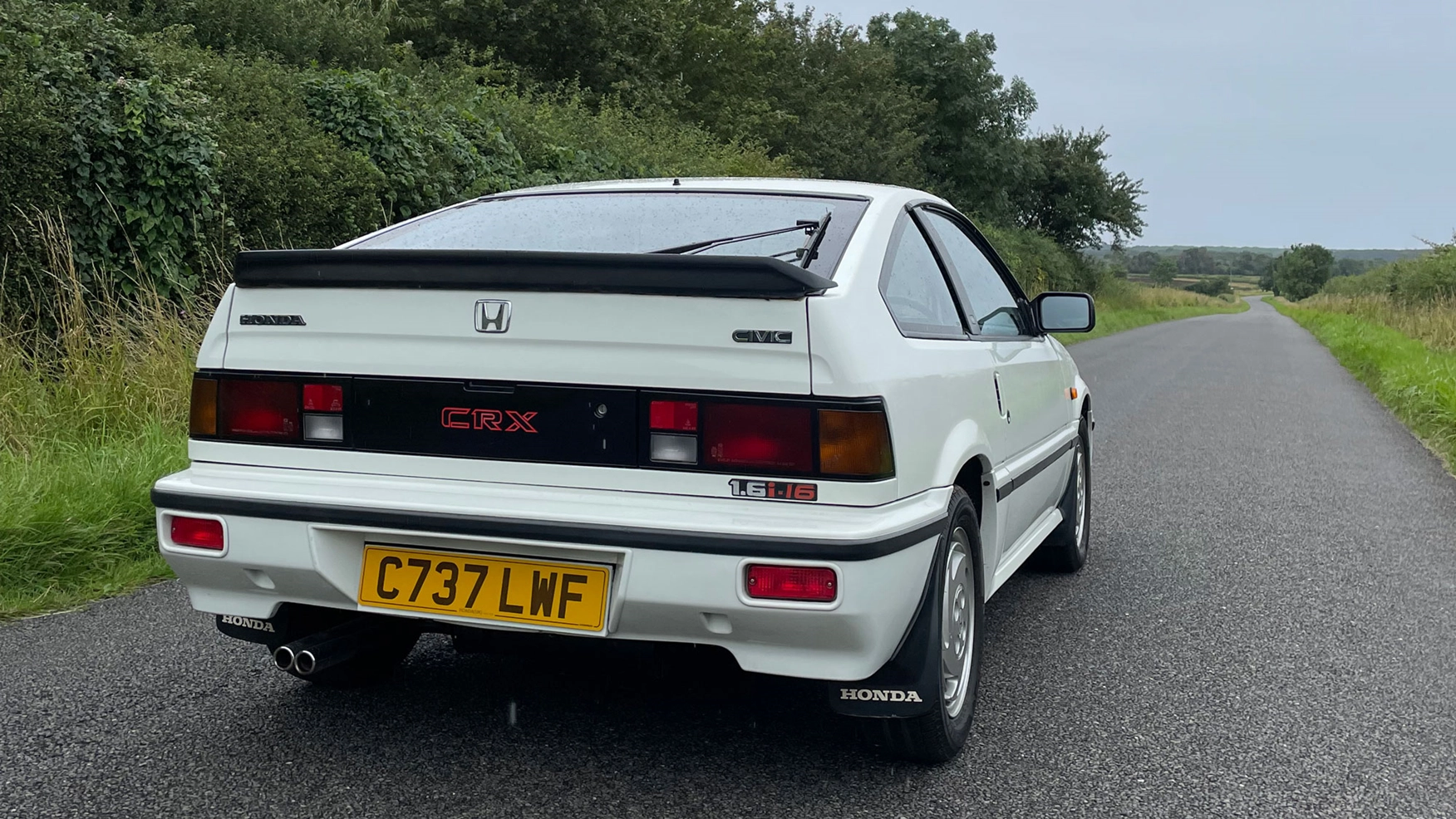
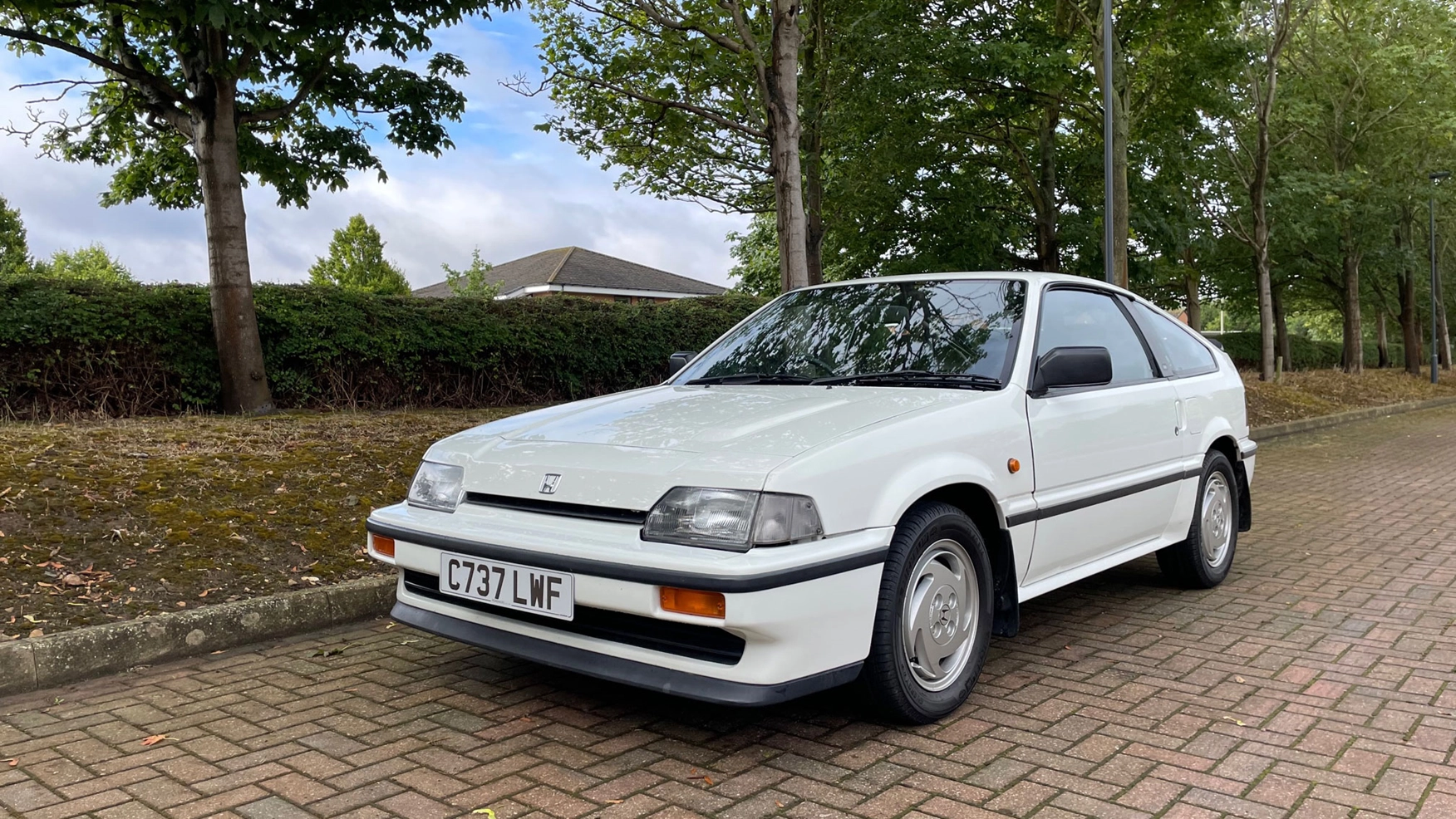
The CR-X’s design came from Honda’s in-house team led by Hiroshi Kizawa. The wedge profile was pure 1980s, with a steeply raked windscreen, high tail, and minimal overhangs. Flush-mounted headlights and a black plastic grille kept the nose clean. The signature feature was the large glass hatch, providing excellent visibility and practical cargo space despite the two-seat layout.
Side profile was dominated by a rising beltline and pronounced rear haunches. Small windows behind the doors admitted additional light while breaking up the expanse of sheet metal. The rear featured wrap-around taillights and a subtle integrated spoiler.
Aerodynamics were exceptional for the era, with a drag coefficient of 0.32. Honda engineers spent considerable time in the wind tunnel, refining details to maximize efficiency. The result was a car that sliced through air with minimal resistance.
Standard wheels were 13-inch steel units wearing 165/70 R13 tires. Si models received alloy wheels with wider 185/60 R13 rubber. Color choices included white, red, silver, and black, with two-tone options available in some markets.
Interior
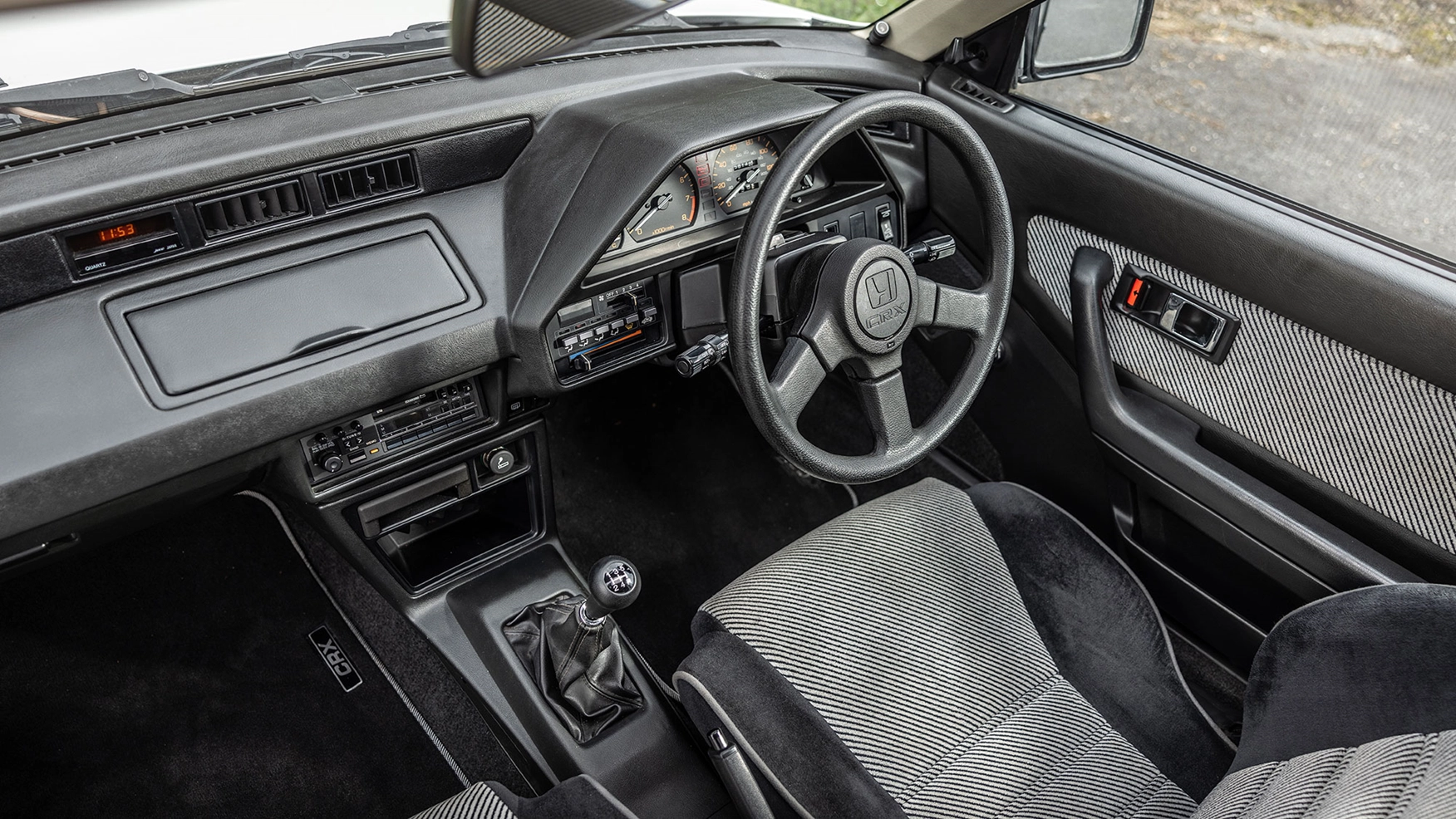
The cabin was simple and functional. Cloth bucket seats provided adequate support with minimal bolstering. The dashboard was a straightforward design with analog gauges including speedometer, tachometer on Si models, fuel, and temperature. Switchgear was basic but well-damped, with rotary controls for climate and fan speed.
A three-spoke steering wheel faced the driver, small-diameter and perfectly positioned. The gear lever sprouted from the floor with a short throw and direct action. Behind the seats was a surprisingly large cargo area accessed through the rear hatch, making the CR-X far more practical than traditional two-seat sports cars.
Equipment was spartan. Base models lacked a tachometer, passenger mirror, and radio. Si models added these features plus better seats and improved trim. Air conditioning was optional across the range. The focus was weight reduction and cost control rather than luxury.
Specifications
- Engine: EW1 inline four, 1,488cc (74mm x 86.5mm), SOHC, 12-valve, fuel injection (Si model)
- Power: 91 bhp at 6,500 rpm
- Torque: 93 lb-ft at 5,000 rpm
- Transmission: Five-speed manual, 4.25:1 final drive
- Chassis: Steel unibody, 2,200mm wheelbase
- Suspension: Double wishbones (front and rear)
- Brakes: Vented discs (front), drums (rear)
- Wheels: 13-inch steel or alloy, 165/70 R13 or 185/60 R13
- Weight: 880 kg
- Performance: 108 mph top speed, 0-60 mph in 9.2 seconds (Si)
Competition History
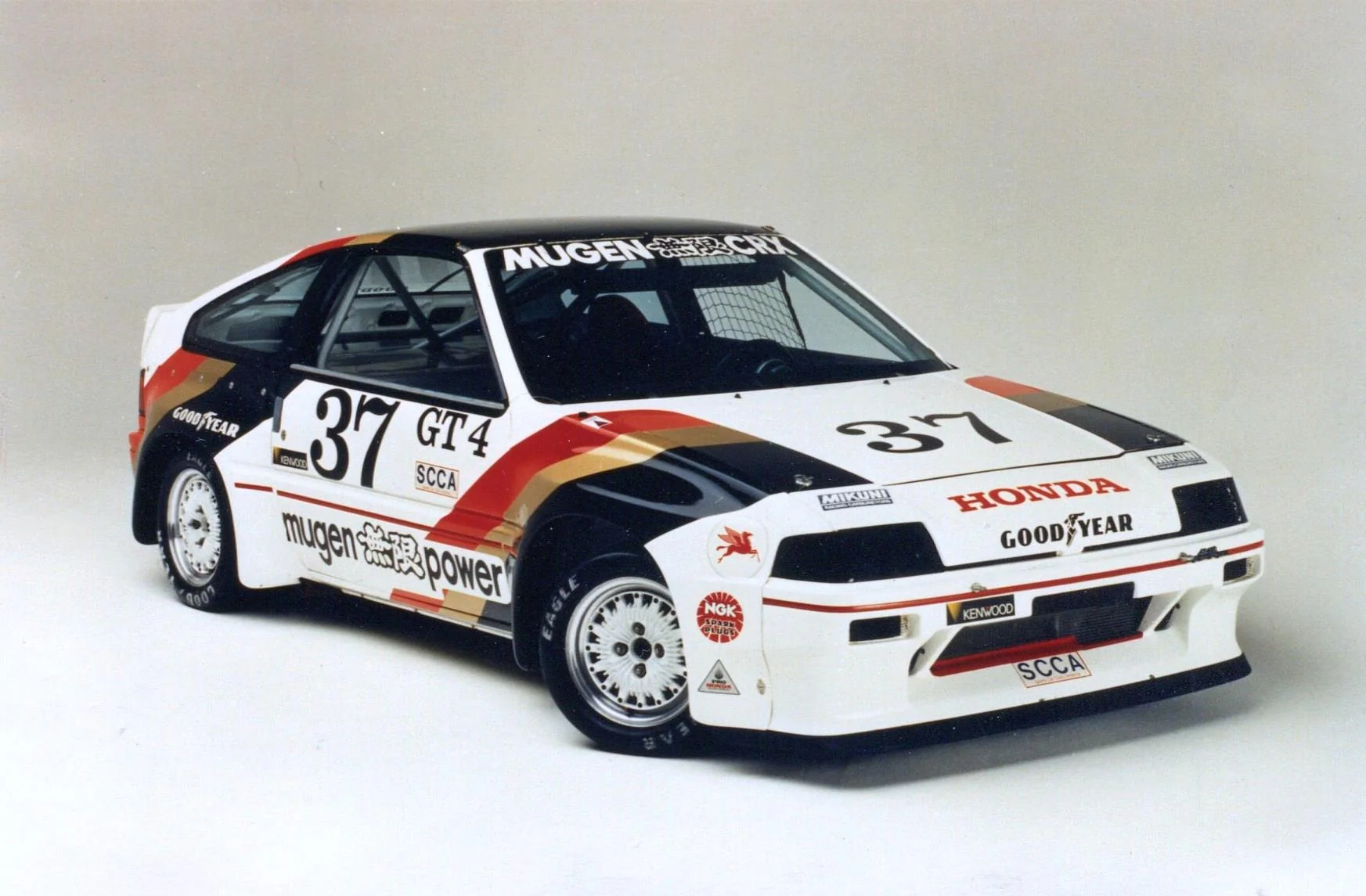
The CR-X became a dominant force in SCCA Showroom Stock racing throughout the mid-1980s. Its combination of light weight, excellent handling, and reliability made it nearly unbeatable in its class. Privateer entries filled grids across North America, with the CR-X often outpacing more powerful competitors on technical circuits.
In autocross and Solo II competition, the CR-X was similarly successful. The short wheelbase and quick steering made it ideal for tight courses where agility mattered more than power. Numerous regional and national championships were won by CR-X drivers throughout the late 1980s.
Production and Legacy
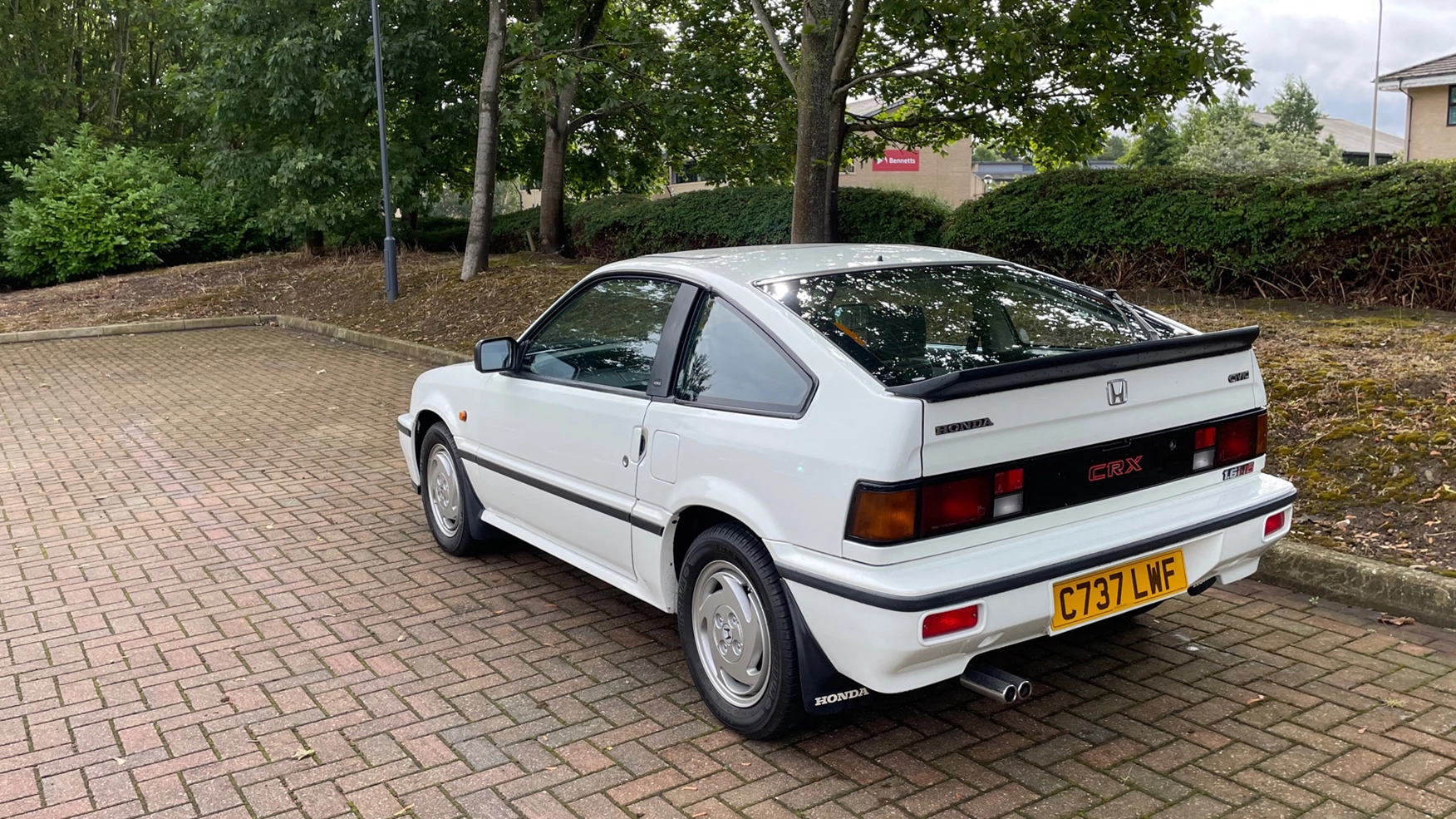
Honda built 370,000 first-generation CR-X models between 1983 and 1987 at the Suzuka plant. The majority went to the US market, where the combination of fuel efficiency and sporty driving dynamics found eager buyers. Japanese and European sales were strong but smaller in total volume.
The CR-X achieved something remarkable. It proved that lightweight sports cars didn’t need powerful engines or expensive construction to deliver engaging performance. The double-wishbone suspension and careful weight distribution created handling that embarrassed cars costing twice as much.
The base 1.3-liter model achieved over 50 mpg in real-world driving, making it one of the most efficient non-hybrid vehicles available. The Si variant sacrificed some economy for performance but still returned over 35 mpg while providing genuine driving pleasure.
Today, clean first-generation CR-X examples are increasingly sought after as enthusiasts recognize them as the purest expression of Honda’s lightweight sports car philosophy. The second generation that followed in 1988 was heavier and more refined, losing some of the original’s sharp character. The first-generation CR-X remains the benchmark, a reminder that fun doesn’t require horsepower when engineering is executed with precision and purpose.