
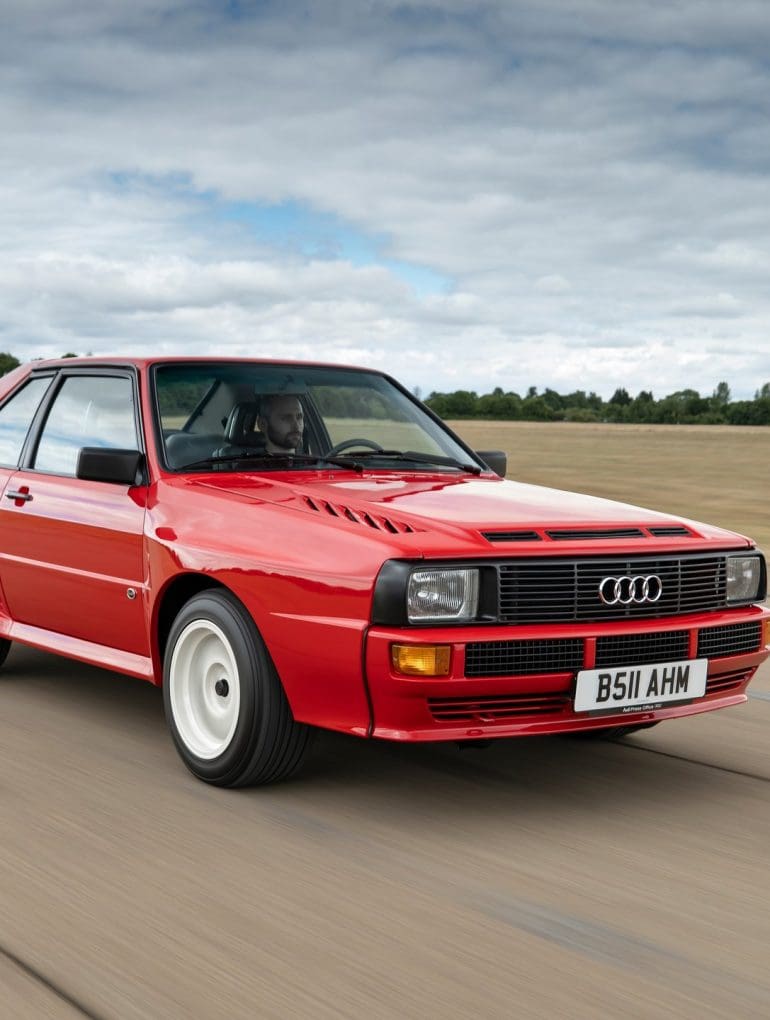

Frankfurt, September 1983. Audi unveiled the Sport Quattro, a shortened, lightened, more powerful version of the Quattro Coupe built specifically for Group B rally homologation. The wheelbase shrank by 320mm to just 2,224mm. Weight dropped to 1,300 kilograms through extensive use of aluminum and Kevlar. The turbocharged inline five grew to 2.1 liters, producing 306 horsepower in road trim. Only 224 examples were required for homologation.
Audi built exactly 214, making the Sport Quattro among the rarest production cars of the 1980s. This was Audi’s ultimate weapon for the most dangerous era of rallying, a street-legal race car that redefined what homologation specials could be.
Background and Origins
The original Quattro Coupe debuted in 1980, revolutionizing rallying with its permanent four-wheel drive system. By 1983, Audi dominated the World Rally Championship, but competition was intensifying. Lancia’s 037, Peugeot’s 205 T16, and other purpose-built Group B machines threatened Audi’s supremacy. The standard Quattro’s long wheelbase and relatively heavy weight were becoming liabilities on tight, technical stages.
Audi Sport GmbH, the company’s motorsport division, proposed a solution. Shorten the wheelbase dramatically, strip out unnecessary weight, and increase engine displacement to maximize turbo boost potential. The result would be homologated for Group B, allowing unlimited development for competition. FIA regulations required 200 road cars for homologation. Audi committed to building 224.
Development began in early 1983 under Roland Gumpert, head of Audi Sport. Engineers cut 320mm from the wheelbase by sectioning the floorpan ahead of the B-pillar. The entire body was redesigned with aggressive aerodynamics. Weight reduction became an obsession, with aluminum and composite materials replacing steel wherever possible.
The Sport Quattro debuted at Frankfurt in September 1983, with deliveries beginning in early 1984. Production ended in late 1985 after exactly 214 examples were completed, ten fewer than initially planned. The FIA accepted the shortfall, granting homologation anyway.
Design and Engineering
The Sport Quattro’s structure was based on the standard Quattro’s steel monocoque, but extensively modified. The 320mm wheelbase reduction came entirely from shortening the cabin area, creating a more compact, aggressive stance. Aluminum hood, fenders, and doors saved approximately 60 kilograms. The rear hatch and bumpers were Kevlar composite. Sound deadening was eliminated. Weight dropped from 1,450 kilograms to 1,300 kilograms.
Suspension remained MacPherson struts at all four corners, but with revised geometry to suit the shorter wheelbase. Spring rates increased substantially, while dampers were revalved for competition-ready response. The track widened slightly through flared wheel arches accommodating wider rubber.
Braking was by massive vented discs all around: 312mm front, 280mm rear, with four-piston calipers. The system was biased heavily toward the front, reflecting the car’s forward weight distribution.
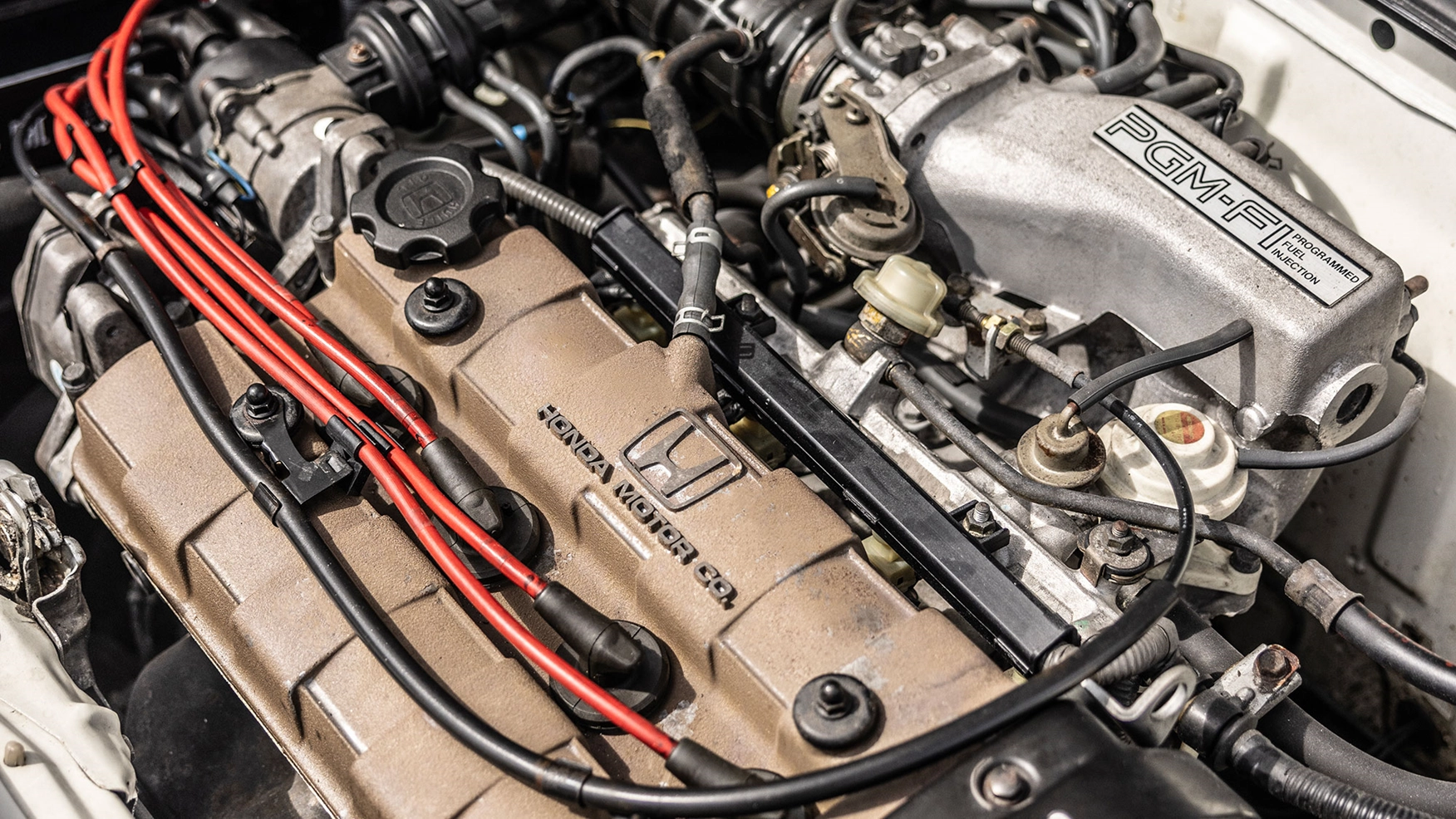
The engine was Audi’s legendary inline five, now displacing 2,133cc rather than the standard 2,144cc. The bore shrank slightly to 79.5mm while stroke remained 86.4mm, a detail required for homologation purposes. The aluminum block featured a KKK K26 turbocharger with air-to-air intercooler. Bosch fuel injection and electronic boost control managed the induction system.
In road specification, output was 306 horsepower at 6,700 rpm and 258 lb-ft at 3,700 rpm. Boost pressure was limited to approximately 1.3 bar. Competition versions ran up to 2.5 bar, producing over 450 horsepower in rally trim and exceeding 600 horsepower for Pikes Peak hillclimb.
Transmission was Audi’s quattro permanent four-wheel drive with a manually locking center differential. The standard five-speed gearbox was carried over, though competition cars received sequential six-speed units. Final drive was 3.89:1.
Styling
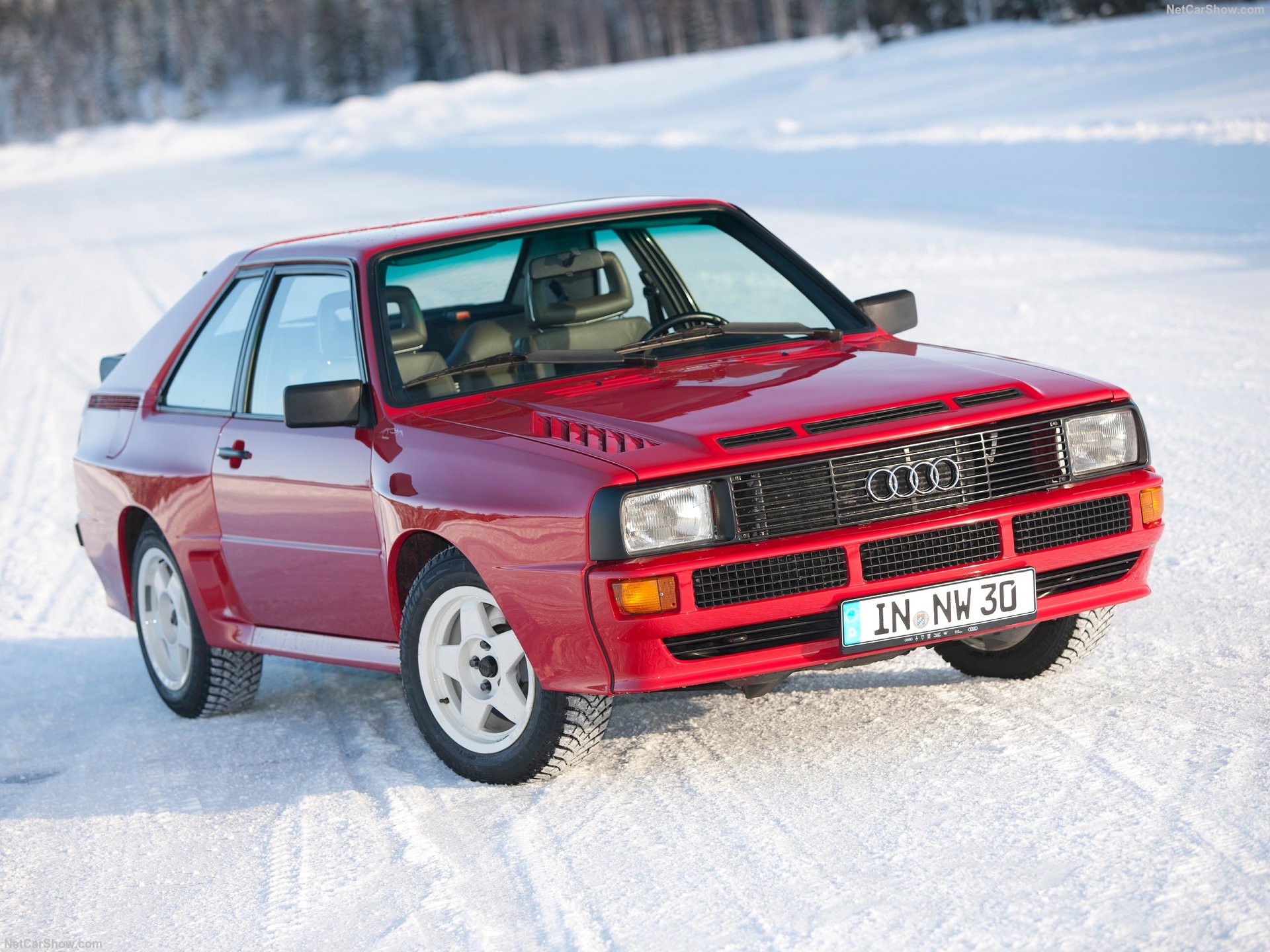
The Sport Quattro’s appearance was dramatically different from the standard car. The shortened wheelbase created stubby, aggressive proportions. Massively flared wheel arches covered wider tracks, giving the car a planted, purposeful stance. The front featured a deeper chin spoiler with additional cooling ducts. Rectangular headlights replaced the standard car’s round units.
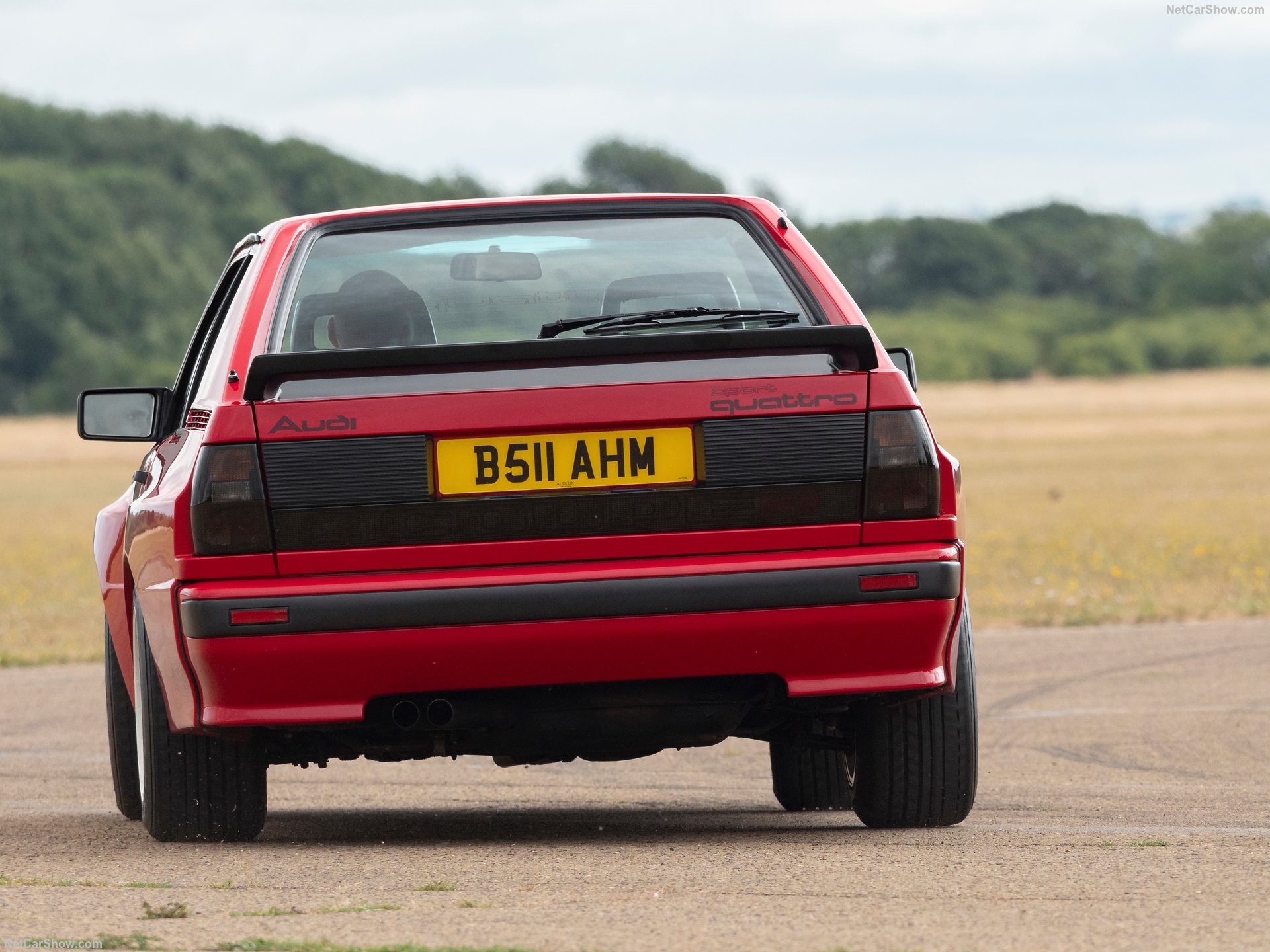
The hood gained a large functional scoop feeding the intercooler. Side profile was dominated by those enormous fender flares and a distinctive crease running from headlight to tail. At the rear, a tall adjustable spoiler sat atop the Kevlar hatch, providing genuine downforce at speed.
Body panels were a mix of aluminum and Kevlar composite, unpainted on some early examples to save weight. Most production cars were finished in Alpine White with red and black Sport Quattro graphics, though a handful received custom colors. Fuchs forged aluminum wheels measuring 8×15 inches wore 215/50 VR15 Pirelli P7 tires.
Interior
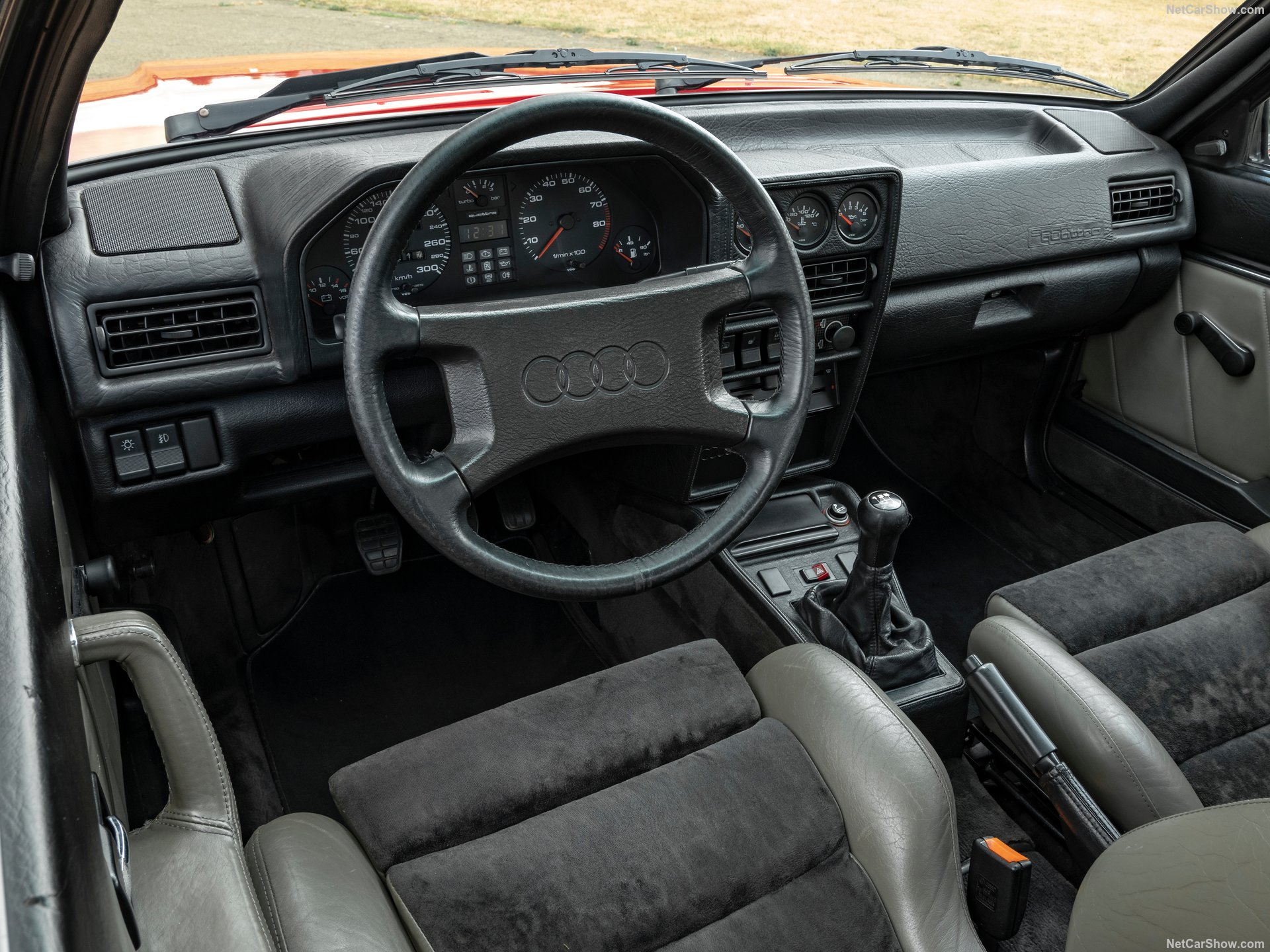
The cabin was stripped to essentials. Recaro sport seats trimmed in cloth provided aggressive bolstering with minimal padding. The dashboard retained the standard Quattro’s layout but lost several convenience features. A large VDO tachometer redlined at 7,000 rpm, flanked by speedometer and auxiliary gauges for boost pressure, oil temperature, and voltmeter.
A thick-rimmed steering wheel faced the driver, its small diameter suited to quick inputs on rally stages. The gear lever sprouted from a reinforced transmission tunnel, its short throw and mechanical precision reflecting the car’s competition focus. Rear seats were deleted entirely, replaced by a carpeted storage area and diagonal cross-brace.
Switchgear was minimal. Electric windows and central locking were standard, but air conditioning was deleted. Sound insulation was nonexistent, allowing the turbocharged five-cylinder to dominate the auditory experience. The overall effect was purposeful and uncompromising, a race car with number plates.
Specifications
- Engine: Inline five, 2,133cc (79.5mm x 86.4mm), SOHC, two valves per cylinder, KKK K26 turbocharger
- Power: 306 bhp at 6,700 rpm
- Torque: 258 lb-ft at 3,700 rpm
- Transmission: Five-speed manual, quattro AWD with locking center differential, 3.89:1 final drive
- Chassis: Steel monocoque, 2,224mm wheelbase
- Suspension: MacPherson struts (front and rear)
- Brakes: Vented discs 312mm (front), vented discs 280mm (rear)
- Wheels: Fuchs 8×15-inch forged aluminum, 215/50 VR15 Pirelli P7
- Weight: 1,300 kg
- Performance: 155 mph top speed, 0-60 mph in 4.8 seconds
Competition History
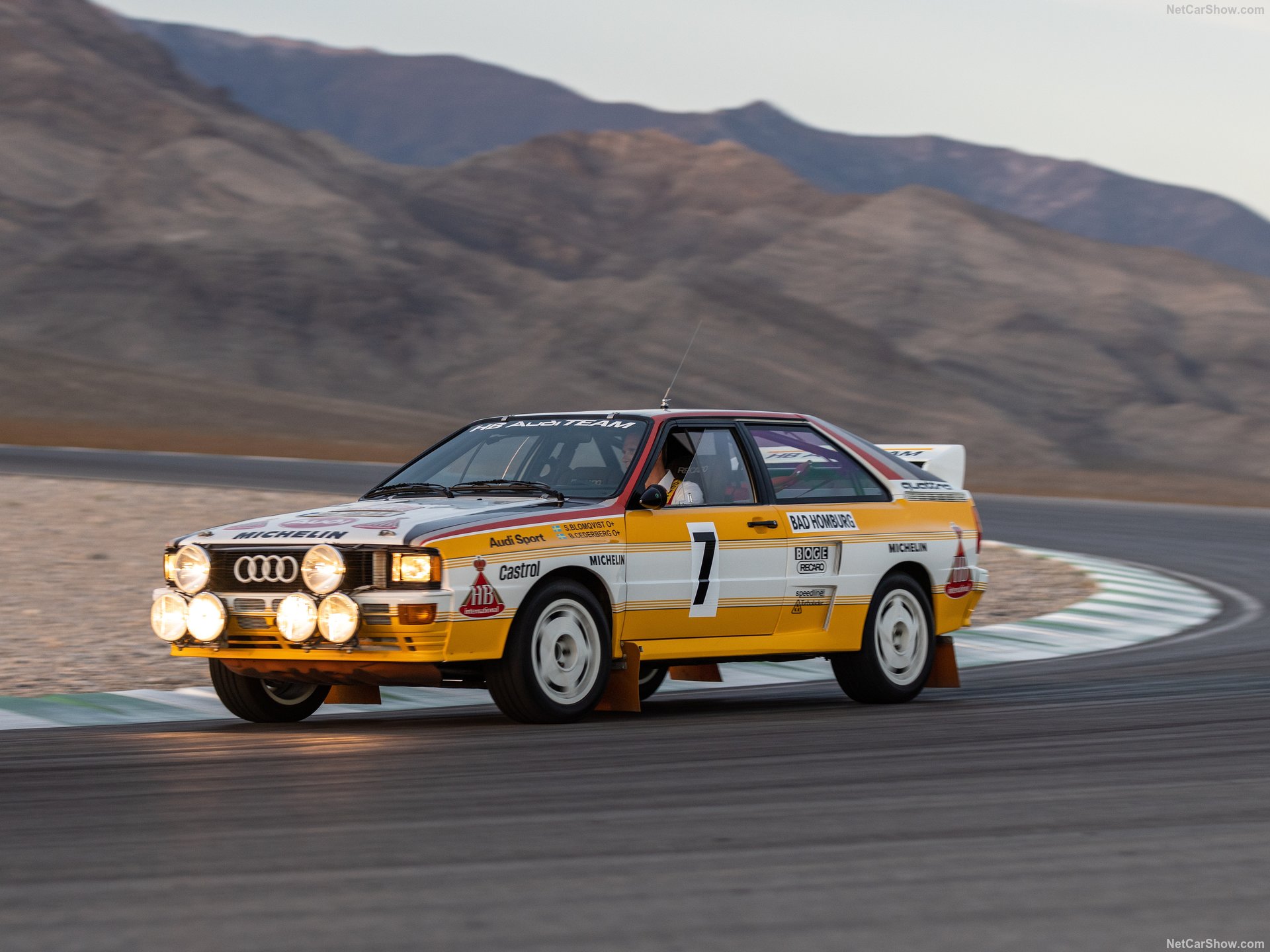
The Sport Quattro dominated Group B rallying during its brief competition life. Hannu Mikkola drove one to victory at the 1983 1000 Lakes Rally in Finland before the car was officially homologated. Stig Blomqvist won the 1984 Swedish Rally and went on to claim the World Rally Championship that year.
Walter Röhrl achieved perhaps the most famous Sport Quattro victory at the 1985 Pikes Peak International Hill Climb, setting a record time of 10:47.85 in a specially prepared 600-horsepower variant. His performance remains legendary, demonstrating the Sport Quattro’s ultimate potential.
However, the car’s competition career was tragically brief. Group B was banned after the 1986 season following a series of fatal accidents. The Sport Quattro’s development was cut short just as it reached peak competitiveness.
Production and Legacy
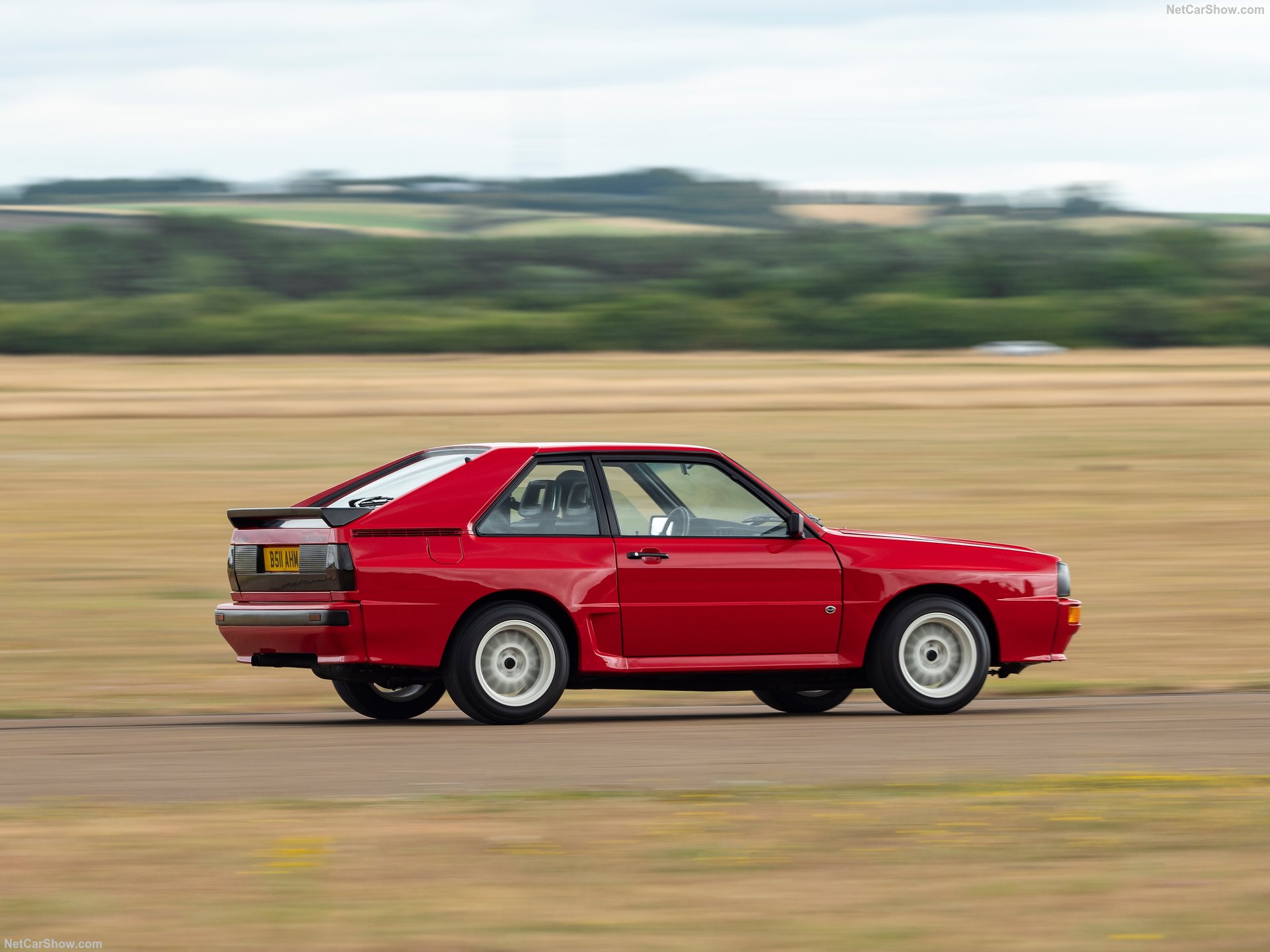
Audi built exactly 214 Sport Quattros between early 1984 and late 1985 at the Ingolstadt factory. Each car was hand-assembled with meticulous attention to detail. The original plan called for 224 units, but production ended at 214. Approximately 160 went to private customers, with the remainder retained for competition, development, or promotional use.
The Sport Quattro represented the peak of Group B homologation specials, a street-legal race car built with minimal compromise. Its influence on Audi’s performance division was profound, establishing the template for every RS model that followed. The combination of turbocharged power, quattro all-wheel drive, and lightweight construction became Audi Sport’s signature.
Today, surviving Sport Quattros are extraordinarily valuable, regularly fetching seven figures at auction. They represent the most dangerous and exciting era of rallying, when manufacturers built genuinely extreme machines for public sale. The Sport Quattro remains the ultimate expression of Audi’s quattro philosophy, a reminder of when homologation requirements created some of the most thrilling cars ever built.