
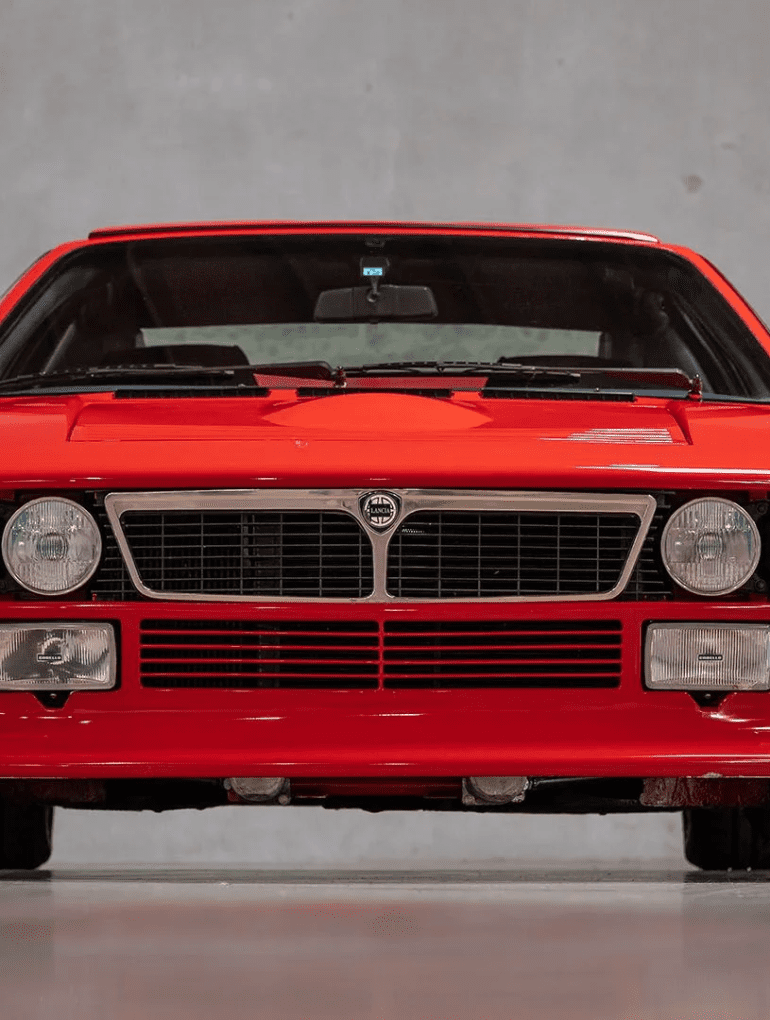

Turin, September 1982. Lancia unveiled the Rally 037, a mid-engined Group B homologation special designed to reclaim the World Rally Championship from Audi’s quattro. While competitors embraced four-wheel drive, Lancia’s engineers bet on lightweight rear-wheel drive, superior power-to-weight ratio, and decades of rallying experience. The road-going Stradale featured a supercharged and turbocharged 2.0-liter inline four producing 205 horsepower, mounted amidships in a tubular steel chassis clothed in Pininfarina bodywork. Exactly 200 examples were required for homologation. Lancia built 207, making the 037 Stradale among the rarest Italian exotics of the 1980s. It became the last rear-wheel drive car to win the World Rally Championship in 1983.
Background and Origins
Lancia dominated rallying throughout the 1970s with the Stratos, winning three consecutive World Rally Championships between 1974 and 1976. By 1980, the Stratos was obsolete and Lancia had nothing competitive to replace it. The Beta Montecarlo provided the basis for a new challenger, but Audi’s quattro had revolutionized the sport with permanent four-wheel drive. Lancia needed something extraordinary.
Abarth, Lancia’s competition division, began development in 1980 under engineer Sergio Limone. Rather than follow Audi into four-wheel drive, Limone doubled down on rear-drive. His reasoning was simple: four-wheel drive added weight and complexity. A lighter, more powerful rear-drive car could still win on tarmac rallies where traction wasn’t constantly compromised. The team would build the lightest, most powerful Group B car possible.
The project designation was SE037, later simplified to Rally 037. The name referenced both the Abarth SE030 prototype and the car’s internal development code. Pininfarina designed the bodywork, creating dramatic wedge styling that prioritized aerodynamics over beauty. Abarth handled chassis engineering and powertrain development.
The prototype debuted at Turin in October 1982, with homologation completed in early 1982 after 207 Stradale road cars were built. Competition versions began rallying immediately, with Walter Röhrl driving one to victory at the 1982 Rally Costa Smeralda.
Design and Engineering
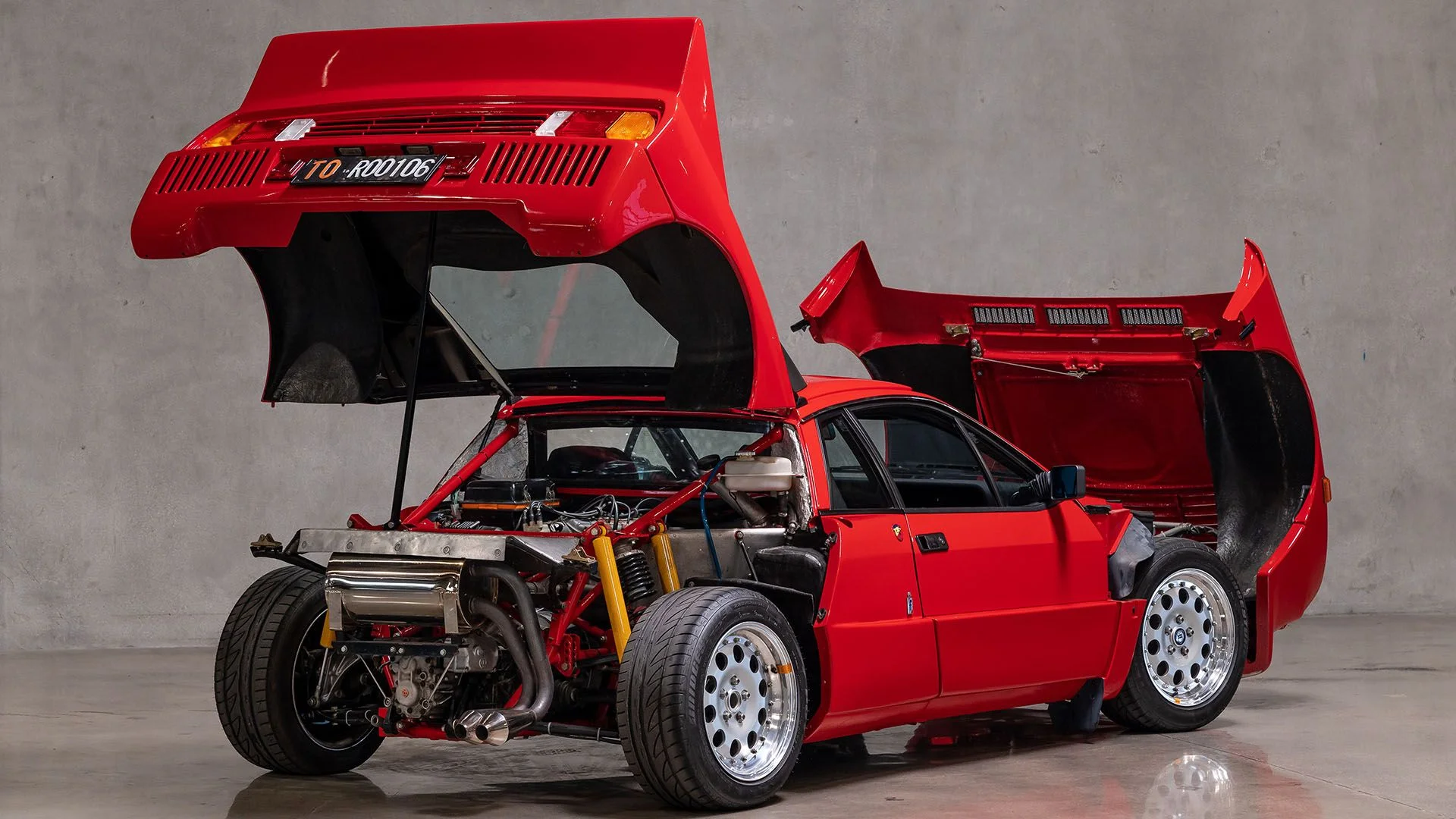
The 037’s structure was a tubular steel spaceframe designed by Abarth engineers. Large-diameter tubes created a rigid central cell, with smaller-section tubing supporting the suspension pickup points and body panels. The 2,450mm wheelbase positioned the engine entirely behind the seats, creating a mid-engine layout with rearward weight bias.
Suspension was unequal-length double wishbones at all four corners with coil springs over dampers. The geometry was optimized for rough rally stages rather than smooth tarmac, with significant suspension travel and carefully tuned compliance. An anti-roll bar at the front helped balance the chassis. The ride height was adjustable for different rally conditions.
Braking was by ventilated discs all around, measuring 278mm front and rear with four-piston Brembo calipers. The system featured an adjustable bias allowing drivers to tune brake balance for different surfaces. No ABS was fitted, as rally regulations prohibited electronic aids.
The engine was Lancia’s Type 232 inline four, based on the Beta Montecarlo’s 2.0-liter unit but extensively modified by Abarth. The aluminum block featured a strengthened crankshaft, forged pistons, and reinforced connecting rods. The DOHC head incorporated larger valves and revised camshaft profiles. Displacement was 1,995cc with an 84mm bore and 90mm stroke.
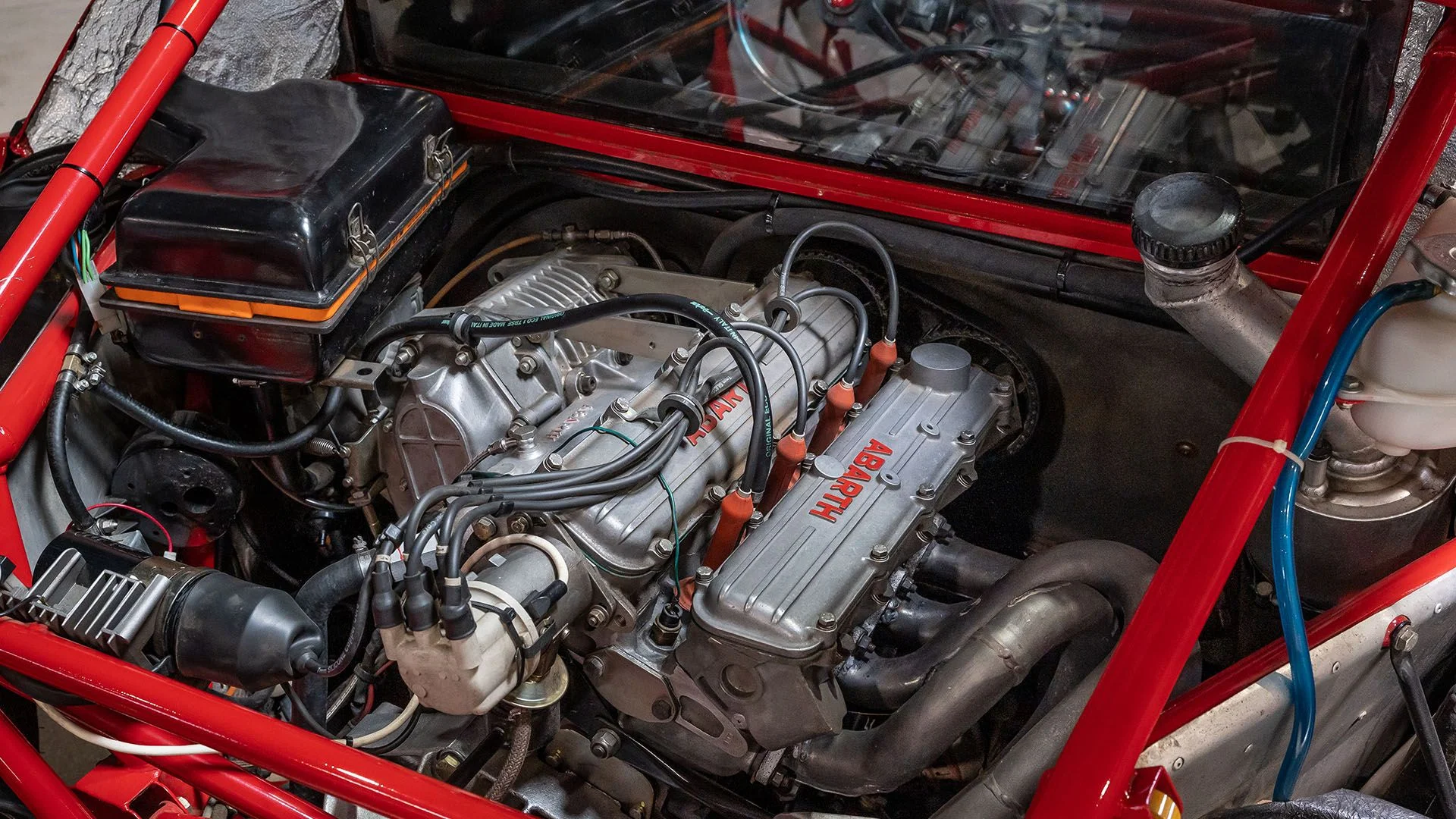
The remarkable feature was the forced induction system. A volumetric Roots-type supercharger provided immediate boost from low revs, while a Garrett turbocharger delivered high-rpm power. This twin-charging arrangement eliminated turbo lag while maximizing top-end output. Bosch fuel injection metered the fuel delivery. The compression ratio was lowered to 7.5:1 to accommodate the boost.
In the Stradale specification, output was 205 horsepower at 7,000 rpm and 166 lb-ft at 4,500 rpm. Competition versions produced over 300 horsepower in Group B trim, with some later evolutions exceeding 450 horsepower.
Transmission was a ZF five-speed manual driving the rear wheels through a limited-slip differential. Final drive was 4.1:1. The gearbox featured dog-ring engagement for competition use, creating a distinctive mechanical clatter during shifts.
Styling
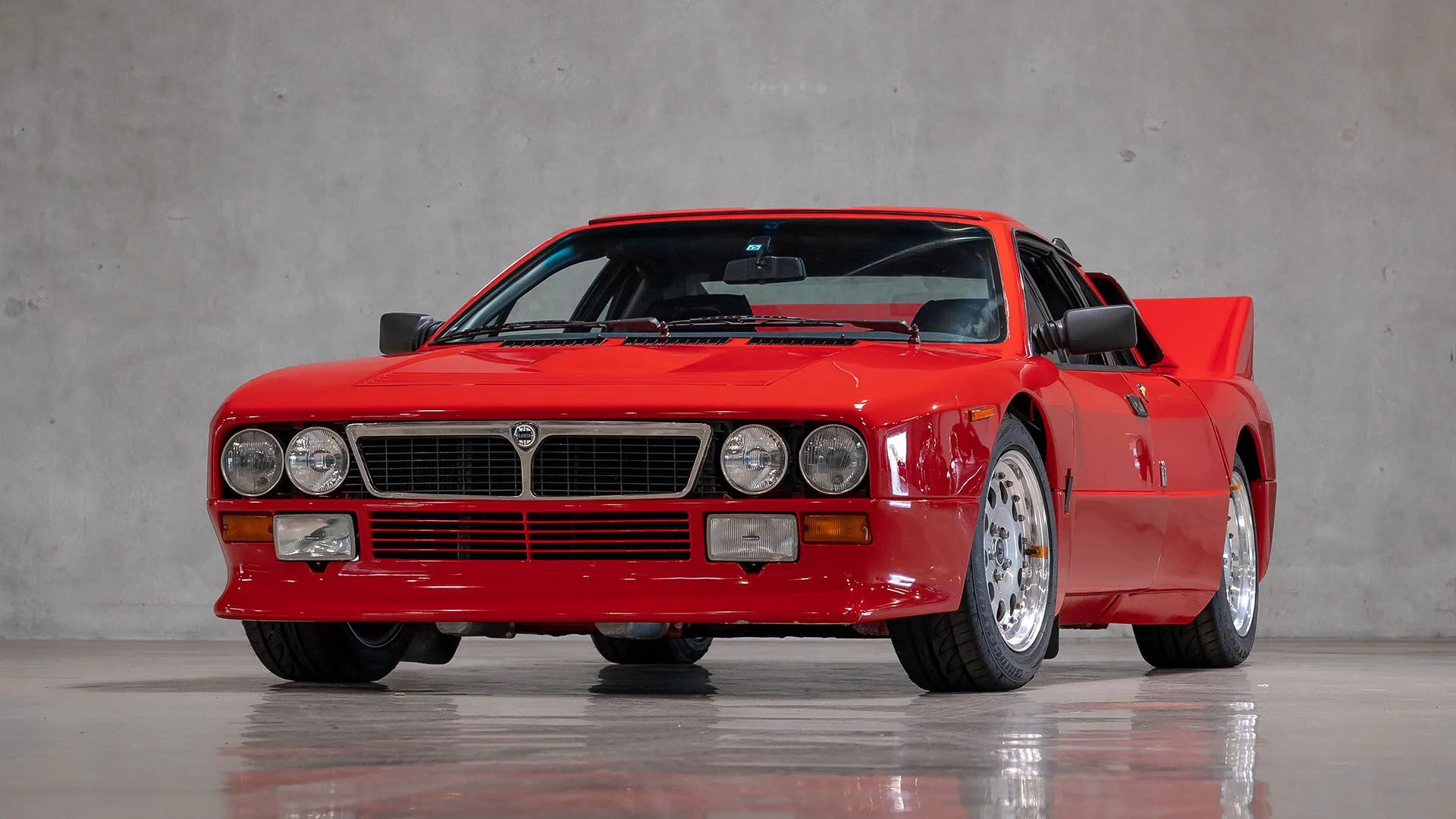
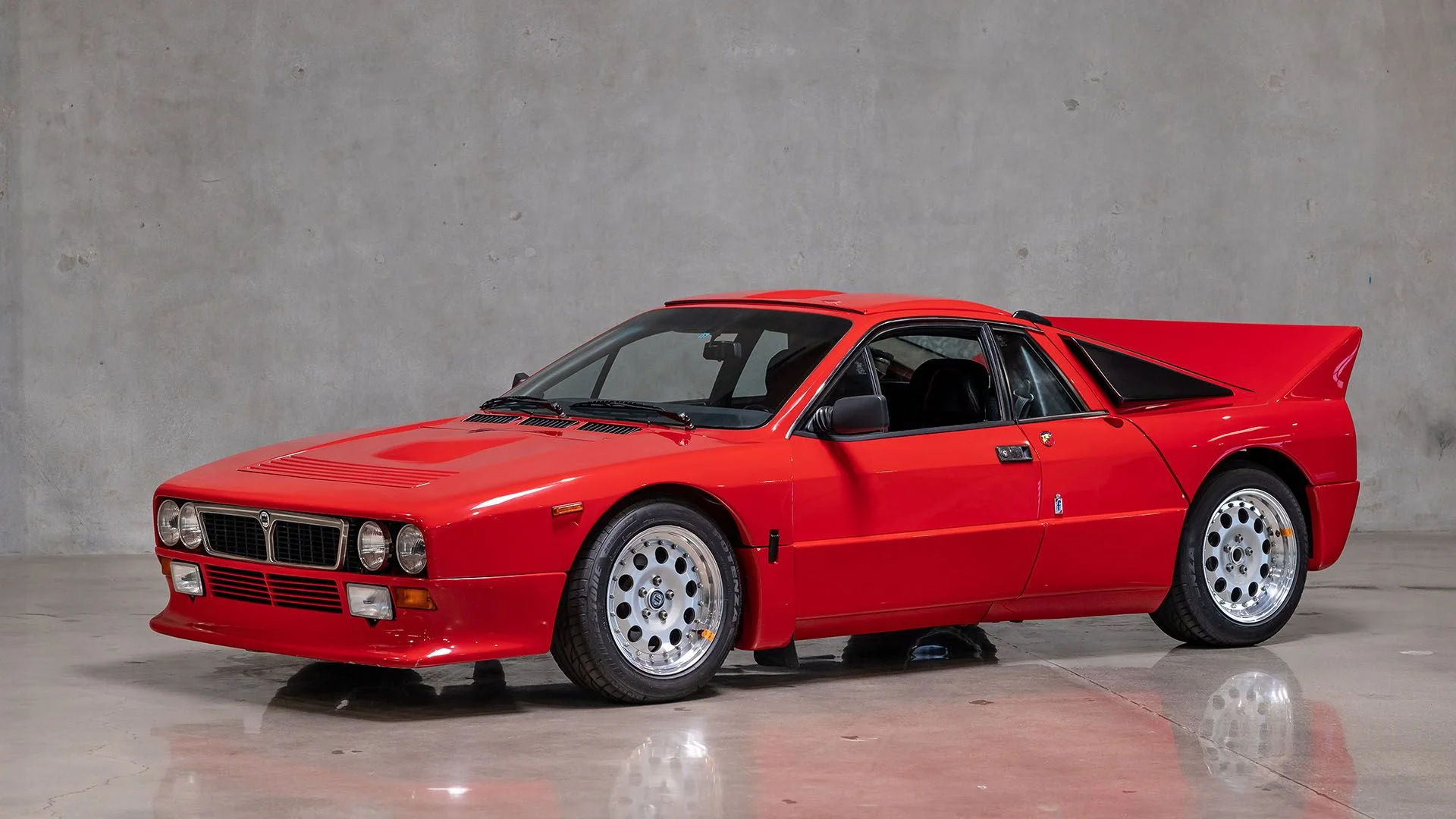
Pininfarina’s design was pure function over form. The wedge profile featured a low nose, high tail, and aggressive angles everywhere. Pop-up headlights kept the front end clean when retracted. Massive NACA ducts on the hood fed the intercoolers, while additional vents perforated the front fenders and doors.
The side profile was dominated by pronounced rear fender flares covering wide rear tires. A distinctive crease ran from headlight to tail, dividing the body visually. Small quarter windows behind the doors provided minimal rearward visibility. At the rear, a tall adjustable spoiler sat atop the fastback roofline, providing genuine downforce at rally speeds.
Body panels were composite materials: fiberglass for non-structural surfaces, Kevlar for areas requiring additional strength. The entire rear clamshell hinged upward, revealing the engine bay and providing access for service. Panel gaps were wide, reflecting the car’s competition focus rather than show-car precision.
Most Stradale examples were finished in white or red with Martini Racing stripes. The aggressive stance came from 7×15-inch front and 9×15-inch rear Speedline alloy wheels wearing Pirelli P7 tires measuring 205/55 VR15 front and 240/55 VR15 rear.
Interior
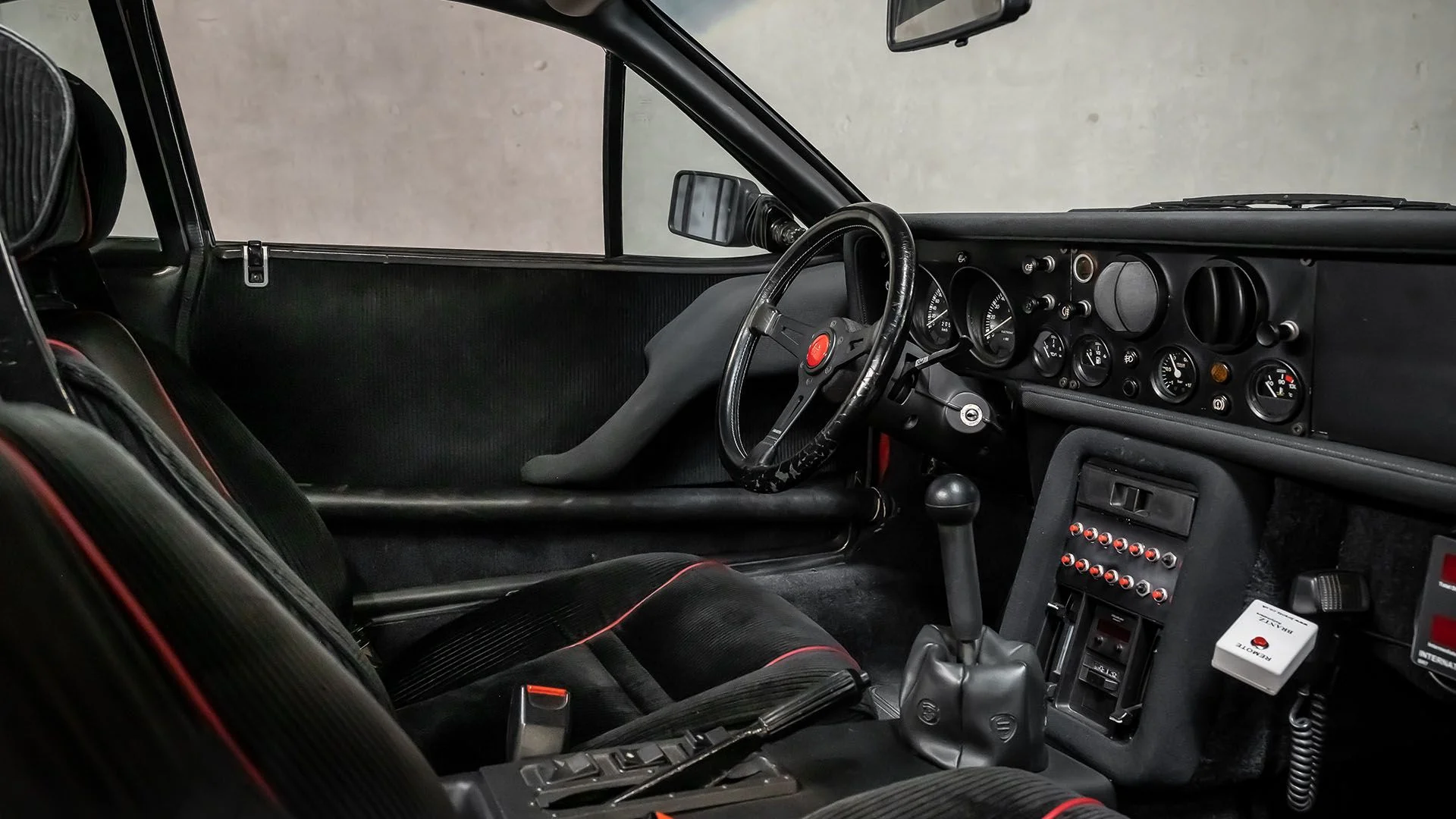
The cabin was stripped to essentials. Cloth-covered bucket seats provided aggressive bolstering with minimal padding. The dashboard was a simple molded panel housing Veglia instruments, including a large tachometer redlined at 7,500 rpm, speedometer, and auxiliary gauges for boost pressure, oil pressure, water temperature, and fuel.
A leather-wrapped steering wheel faced the driver, its small diameter suited to quick inputs. The gear lever sprouted from the transmission tunnel with an exposed linkage; each shift was accompanied by mechanical noises from the dog-ring gearbox. Switchgear was minimal, controlling lights, wipers, and basic ventilation.
There was no radio, no air conditioning, and minimal sound insulation. The rear bulkhead separated the cabin from the engine bay, though the supercharger whine and turbo whistle penetrated easily. Carpeting was thin, trim was basic, and the overall atmosphere was purposeful rather than luxurious. This was a homologation special built to satisfy regulations, not coddle owners.
Specifications
- Engine: Type 232 inline four, 1,995cc (84mm x 90mm), DOHC, four valves per cylinder, Roots supercharger and Garrett turbocharger
- Power: 205 bhp at 7,000 rpm
- Torque: 166 lb-ft at 4,500 rpm
- Transmission: ZF five-speed manual, 4.1:1 final drive
- Chassis: Tubular steel spaceframe, 2,450mm wheelbase
- Suspension: Double wishbones (front and rear)
- Brakes: Vented discs 278mm (front and rear), Brembo calipers
- Wheels: Speedline 7×15 front, 9×15 rear, Pirelli P7 205/55 VR15 (front), 240/55 VR15 (rear)
- Weight: 1,170 kg
- Performance: 137 mph top speed, 0-60 mph in 6.0 seconds
Competition History
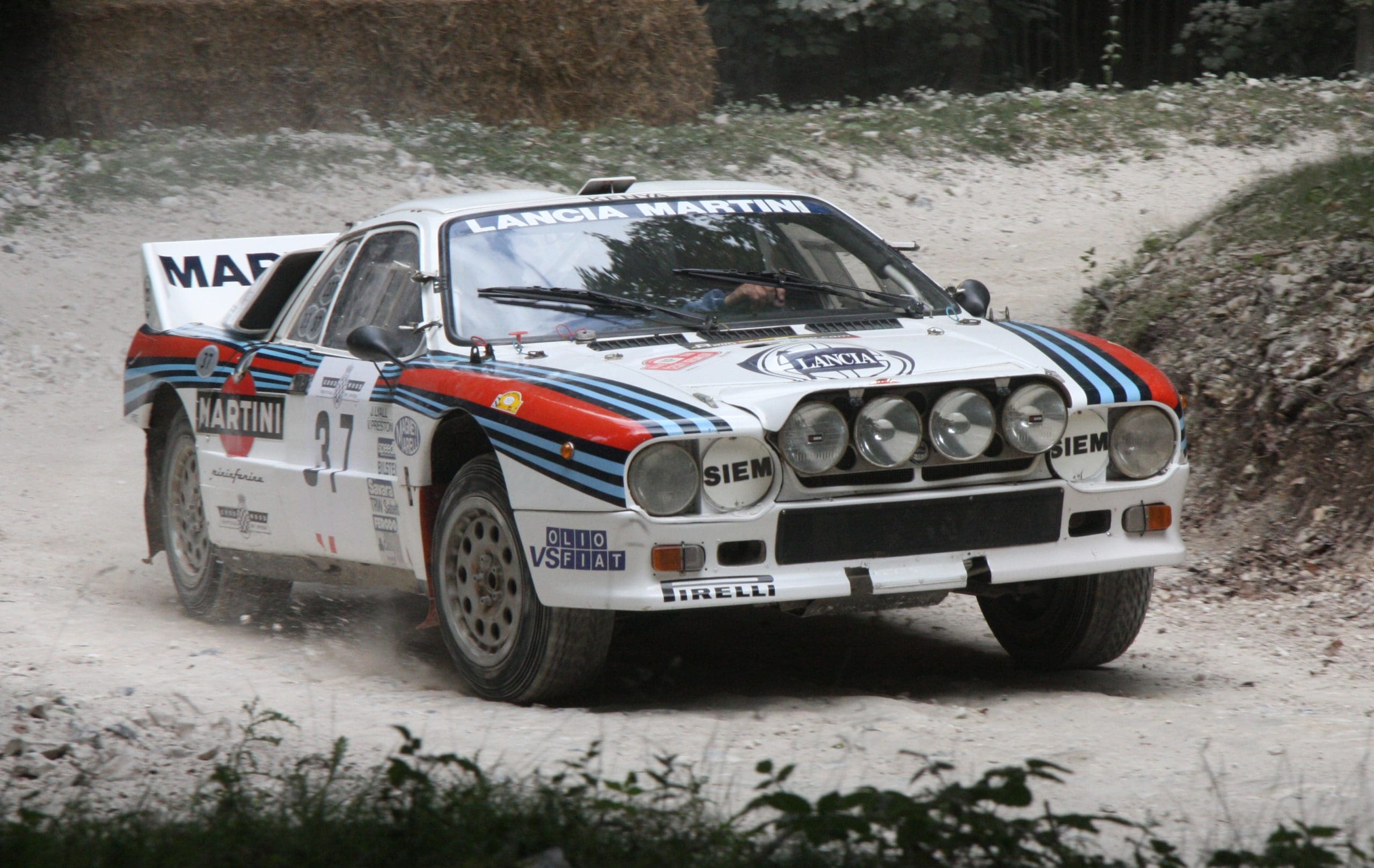
The Rally 037 achieved exactly what Lancia intended, winning the 1983 World Rally Championship for Makes with Walter Röhrl and Markku Alén sharing driving duties. Röhrl won the Monte Carlo Rally and Sanremo Rally, while Alén took victories in Portugal and Argentina. The combination proved that rear-wheel drive could still compete against four-wheel drive on tarmac-heavy events.
However, 1983 was the 037’s only championship. By 1984, Audi’s Sport Quattro and Peugeot’s 205 T16 with their four-wheel drive systems dominated on all surfaces. The 037 remained competitive on pure tarmac events but couldn’t match AWD rivals on gravel or snow. Lancia’s response was the Delta S4 with four-wheel drive, relegating the 037 to privateer entries.
The 037 became the last rear-wheel drive car to win the World Rally Championship, a record that still stands today and likely will forever.
Production and Legacy
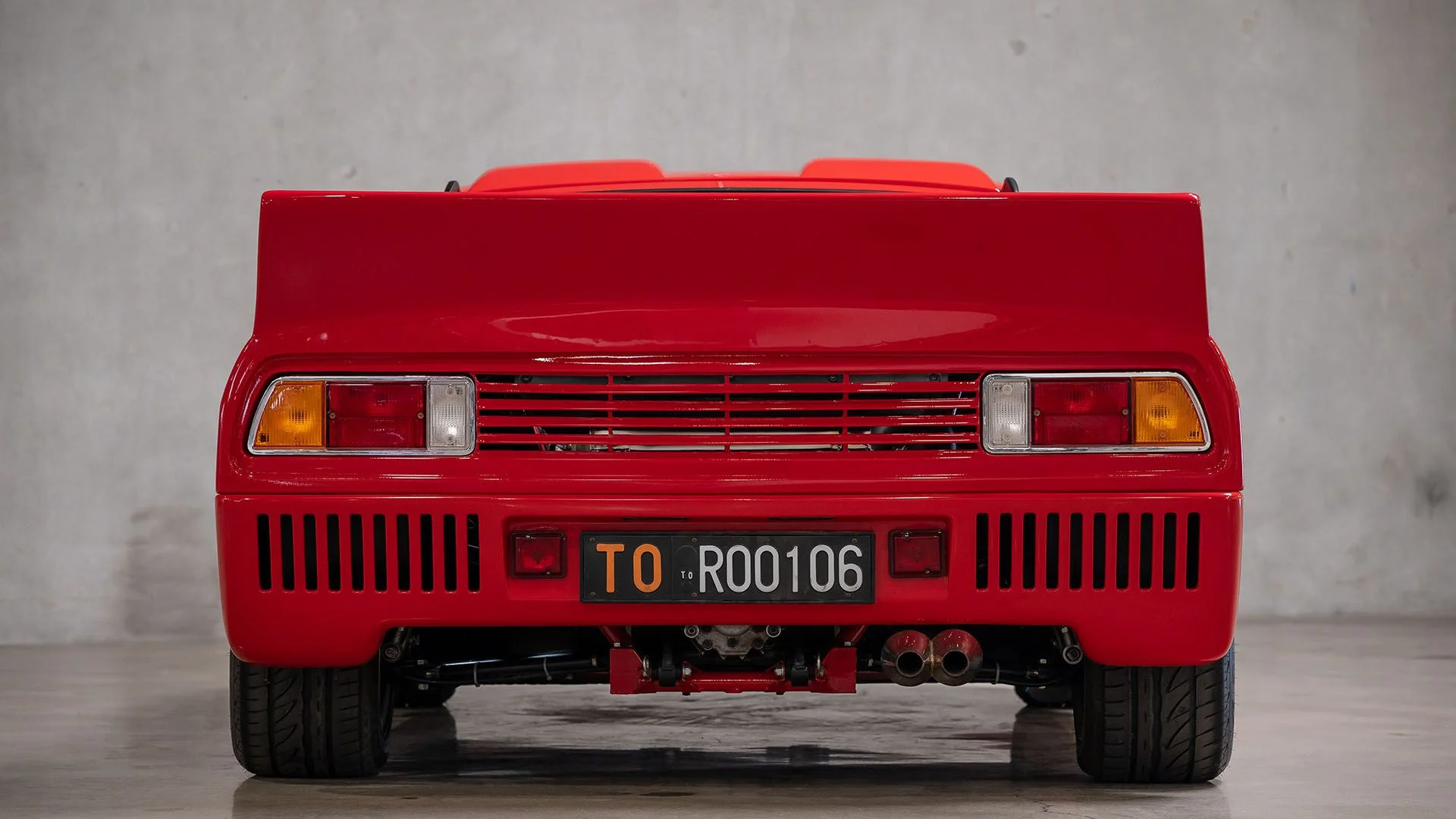
Lancia built exactly 207 Rally 037 Stradale examples during 1982 and early 1983 at the Abarth facility in Turin. Each car was hand-assembled over several weeks, with meticulous attention to detail ensuring competition-ready quality. The majority went to wealthy enthusiasts and collectors, though some were purchased by privateer rally teams.
The 037 represented the peak of rear-wheel drive rally car development, the ultimate expression of a philosophy about to be rendered obsolete by four-wheel drive. It proved that lightweight construction and superior power-to-weight ratio could still compete against technological advantages, at least on certain surfaces.
Today, surviving 037 Stradale examples are extraordinarily valuable, regularly fetching seven figures at auction. They represent the end of an era, the last gasp of rear-drive rally supremacy before four-wheel drive became mandatory for top-level competition. The 037 remains one of the most dramatic and uncompromising homologation specials ever built, a street-legal rally car that sacrificed everything for competition success.