
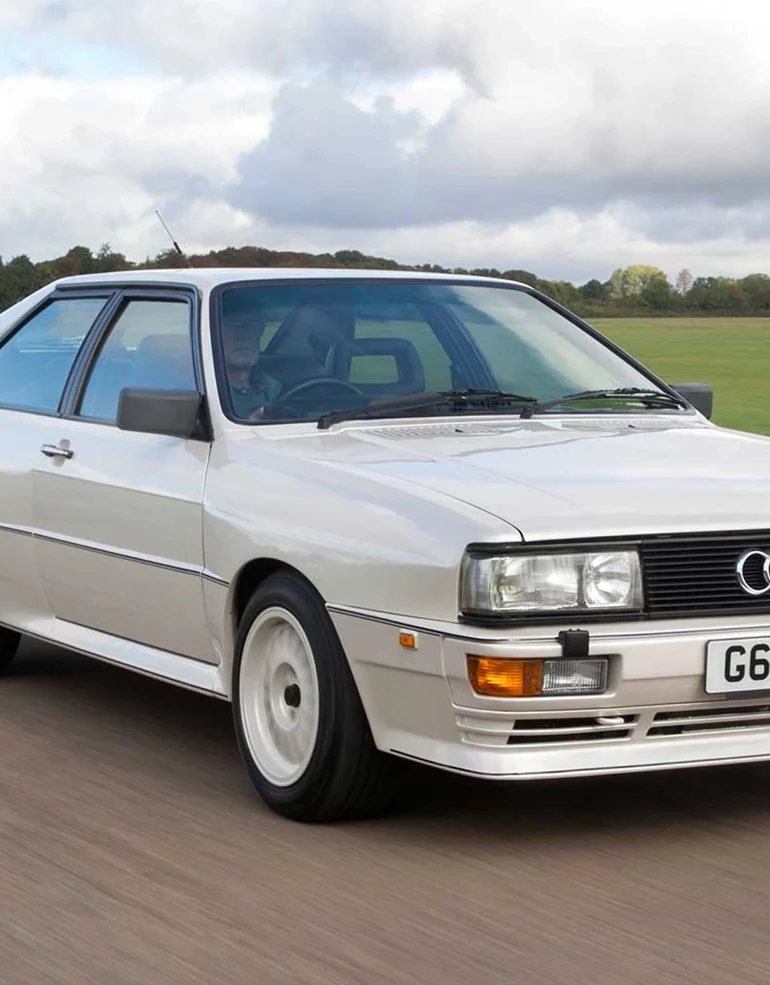

Geneva Motor Show, March 1980. Audi unveiled the Quattro, a revolutionary production sports car that fundamentally transformed automotive performance philosophy and established all-wheel-drive technology as legitimate performance strategy. The designation “UR Quattro” referenced “Ur”—the original—distinguishing this foundational model from subsequent evolutionary variants. The 2.1-liter turbocharged inline-five produced 200 PS (197 horsepower) at 5,500 rpm and 210 lb-ft of torque at 3,500 rpm, delivering 135 mph capability through full-time all-wheel-drive distribution establishing traction and handling balance unprecedented in production automobiles.
This was Ingolstadt’s declaration that intelligent engineering could establish genuine performance through mechanical sophistication and innovative drivetrain philosophy rather than displacement excess. The Quattro achieved 0-60 mph in approximately 6.7-7.0 seconds, establishing it as genuinely competitive with contemporary performance cars while exploiting superior traction in varied weather conditions. Production ran from 1980 through 1991, with 11,452 examples hand-built at Ingolstadt, establishing the UR Quattro as one of the most significant and influential production sports cars ever created.
Background and Origins
The Quattro’s development originated from extraordinary vision when Audi engineers recognized that the Volkswagen Iltis military vehicle’s full-time all-wheel-drive system possessed genuine performance potential for production sports cars. Chassis engineer Jörg Bensinger, after testing the Iltis, pitched the concept to management, recognizing that all-wheel-drive traction could establish handling balance superior to rear-wheel-drive alternatives. Rather than pursue conventional architecture, management committed to comprehensive platform development establishing Audi’s technological leadership through innovative drivetrain engineering.
The project developed under Ferdinand Piëch’s technical direction, with British designer Martin Smith creating the iconic exterior styling. Bensinger created a prototype from a two-door Audi 80 platform, grafting the VW Iltis drivetrain and developing Audi’s comprehensive all-wheel-drive system. Testing demonstrated that all-wheel-drive traction could establish handling characteristics genuinely superior to rear-wheel-drive alternatives, a revelation prompting management commitment to production development.
The Quattro name reflected this revolutionary philosophy: “quattro” simply meaning “four” in Italian, emphasizing that four-wheel-drive was the central innovation rather than conventional performance metrics. This naming convention reflected Audi’s conviction that drivetrain sophistication, not displacement, would define automotive performance’s future.
Design and Engineering
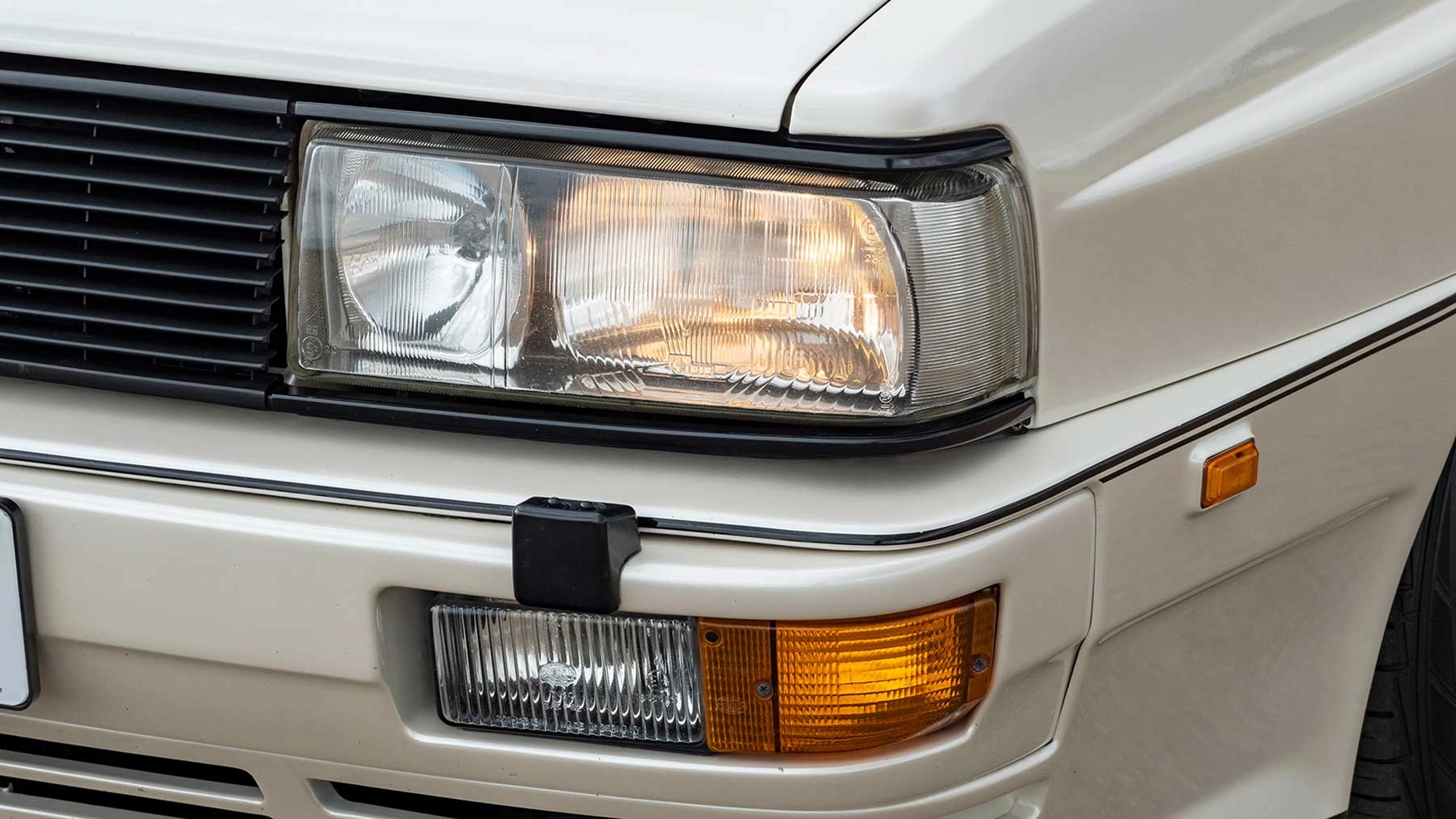
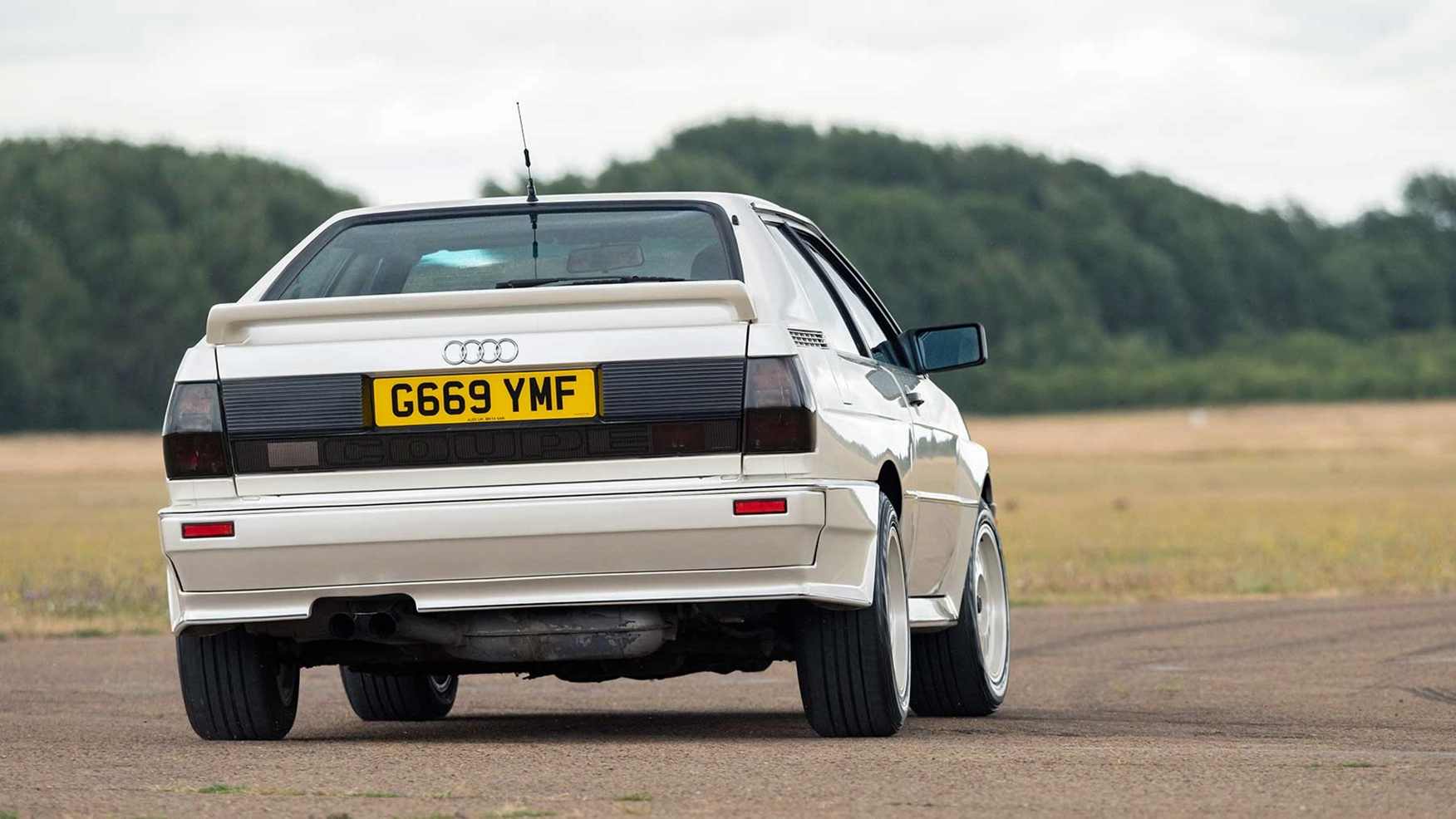
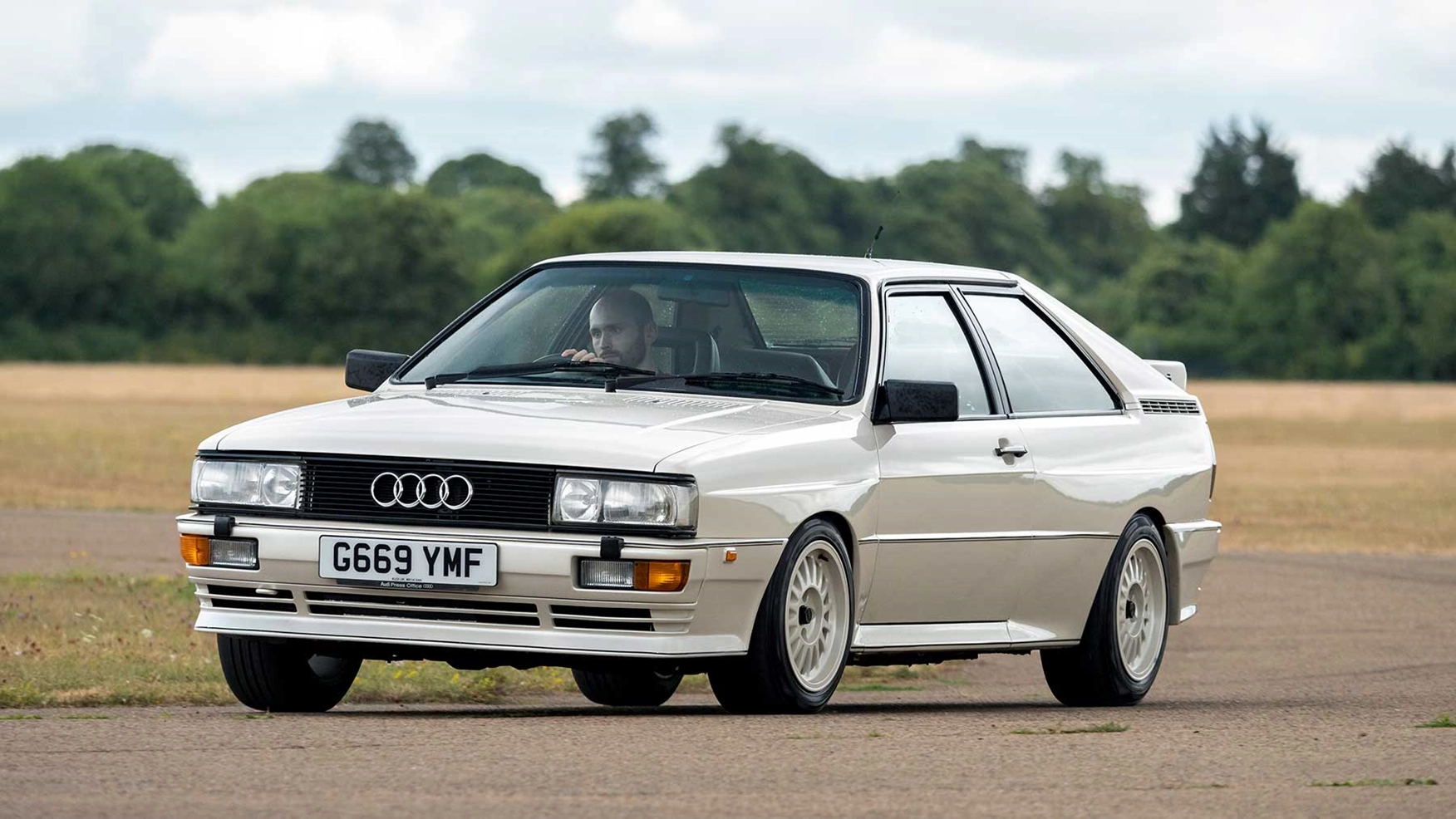
Designer Martin Smith created the iconic boxy proportions that would define the Quattro’s visual identity for 11 years of production. The angular design, rather than appearing dated, suggested purposeful engineering through clean lines and practical form. The hood featured subtle venting providing engine bay cooling, while integrated driving lights and minimal bumper treatment emphasized mechanical authenticity. Smith’s signature design element—boldly squared wheel arches—became instantly recognizable, establishing visual distinctiveness that endured throughout the production run.
The chassis employed independent MacPherson struts front and rear, an innovative engineering solution where the rear suspension utilized an inverted front strut layout to maximize packaging efficiency and reduce tooling costs. Coil springs and sophisticated dampers provided responsive handling while maintaining practical daily usability. Anti-roll bars provided cornering control without excessive harshness.
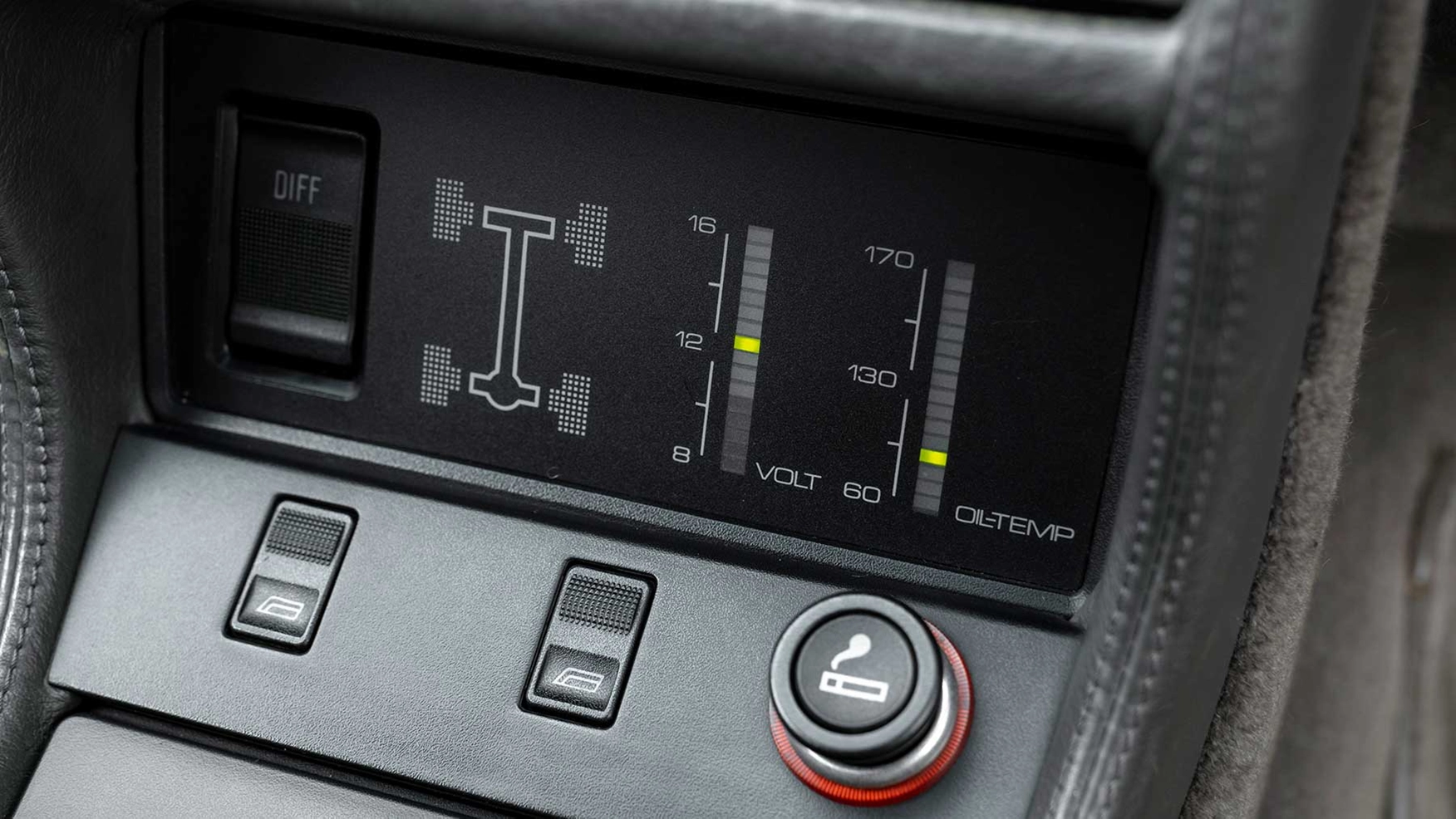
The all-wheel-drive system represented the true innovation. Early models (1980-1987) featured a manually lockable center differential engaged through vacuum-actuated switches mounted on the center console, allowing drivers to manually engage permanent all-wheel-drive traction when required. This approach provided traction benefits while maintaining efficiency during normal driving. In 1987 (1988 model year), Audi introduced the mechanical Torsen center differential, establishing continuous intelligent torque distribution without requiring driver intervention—a revolutionary advancement establishing all-wheel-drive as genuine performance technology rather than traction aid.
Braking was by ventilated discs with multi-piston calipers providing adequate stopping power for the turbocharged acceleration. The five-speed manual transmission featured straightforward engagement with the all-wheel-drive system managing power distribution through sophisticated mechanical engineering.
The 2.1-liter turbocharged inline-five displaced 2,144 cubic centimeters with a single overhead camshaft controlling two valves per cylinder. The KKK turbocharger, paired with an innovative intercooler, provided efficient boost delivery across practical driving scenarios. With Bosch K-Jetronic fuel injection and 7.0:1 compression ratio, output reached 200 PS (197 horsepower) at 5,500 rpm and 210 lb-ft of torque at 3,500 rpm.
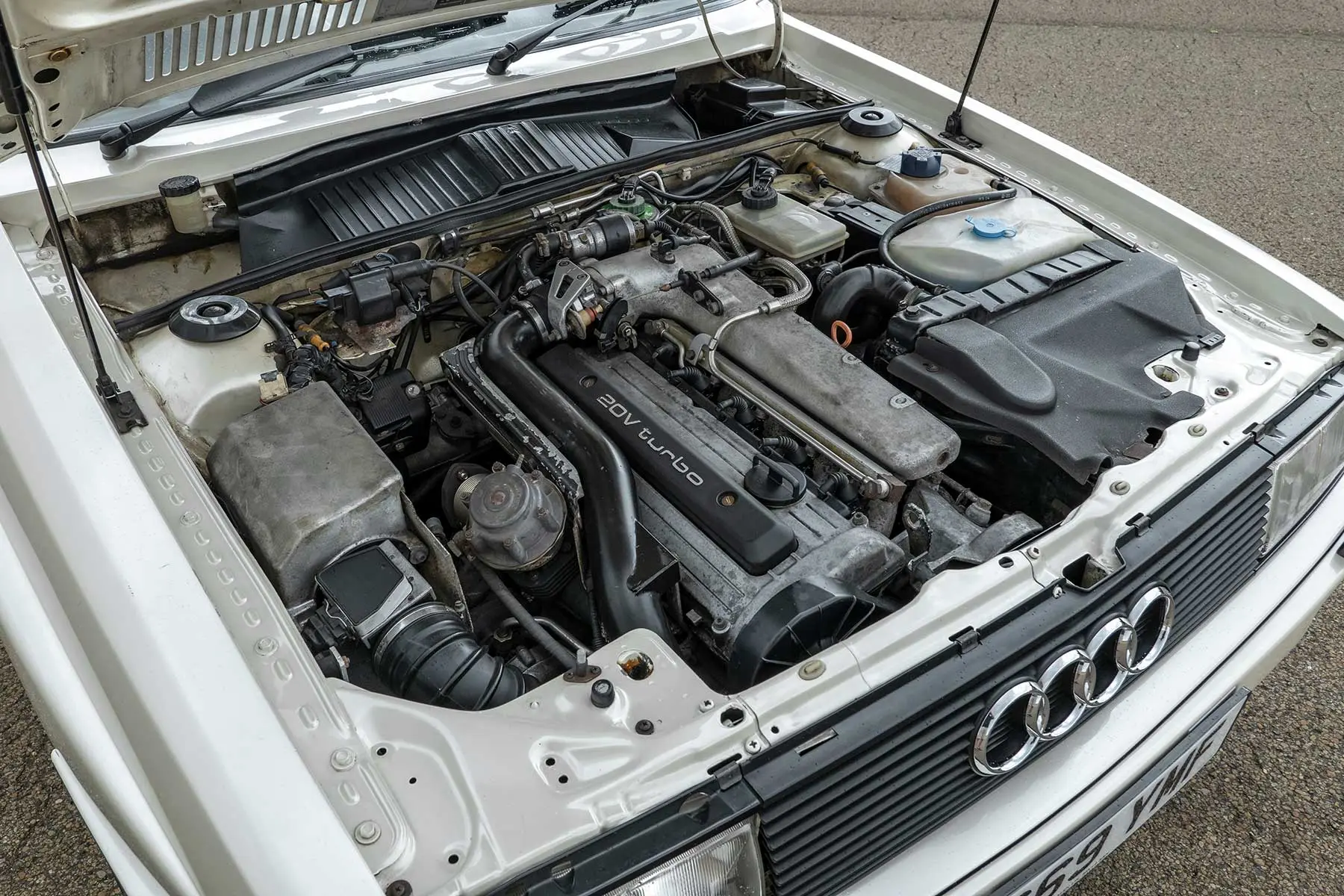
Evolution occurred during production: in 1987, the engine displacement increased to 2.2 liters while maintaining 200 PS output, providing superior torque availability at lower engine speeds. The 1989 final evolution introduced a 2.2-liter dual-overhead-camshaft 20-valve turbocharged configuration producing 220 PS (217 horsepower) at 6,200 rpm and 228 lb-ft of torque at 5,000 rpm. This upgrade maintained turbocharged forced induction while optimizing breathing efficiency through the revised cylinder head architecture.
Weight remained approximately 1,290 to 1,350 kilograms depending on equipment and variant. Acceleration from 0-60 mph required approximately 6.7 to 7.1 seconds depending on specification, with top speed reaching 135 mph on early models and 141 mph on final 20-valve iterations. The Quattro’s true performance advantage emerged in demanding conditions: its all-wheel-drive system provided traction and stability unattainable by rear-wheel-drive competitors, establishing it as genuine all-weather performance machine.
Styling
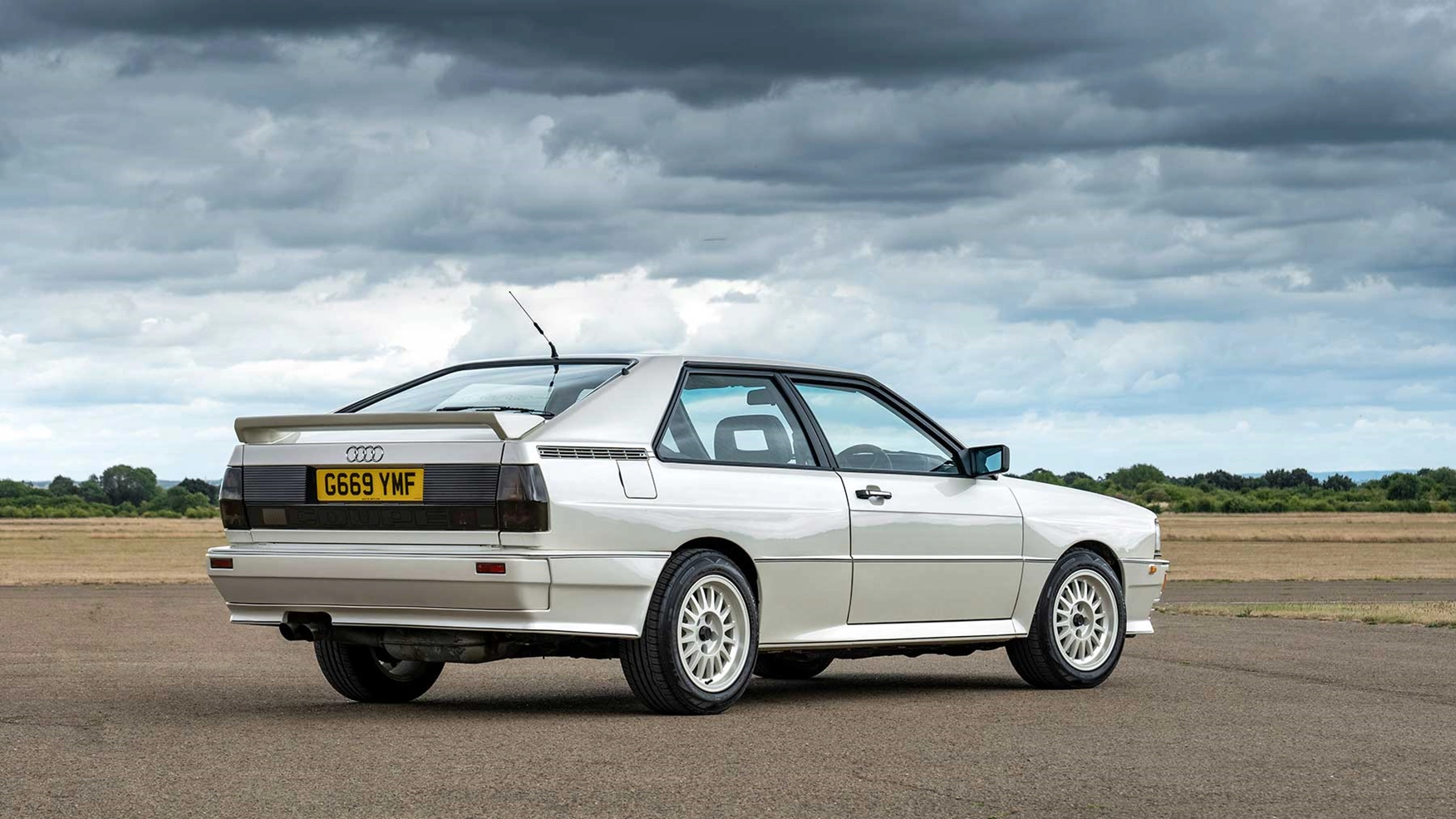
Martin Smith’s design created proportions reflecting functional purpose rather than theatrical aggression. The boxy silhouette, while angular, suggested that genuine performance required no styling drama. The low roofline, efficient proportions, and practical design emphasized that this vehicle prioritized engineering authenticity over visual spectacle. The boldly squared wheel arches became iconic design elements, instantly recognizable across the model’s 11-year production run.
Most examples were finished in traditional German performance colors: Alpine White, Black Metallic, or elegant silvers celebrating Audi’s engineering heritage through understated elegance. The straightforward design language remained consistent throughout production, reflecting that evolutionary mechanical development required no continuous visual revisions.
Interior
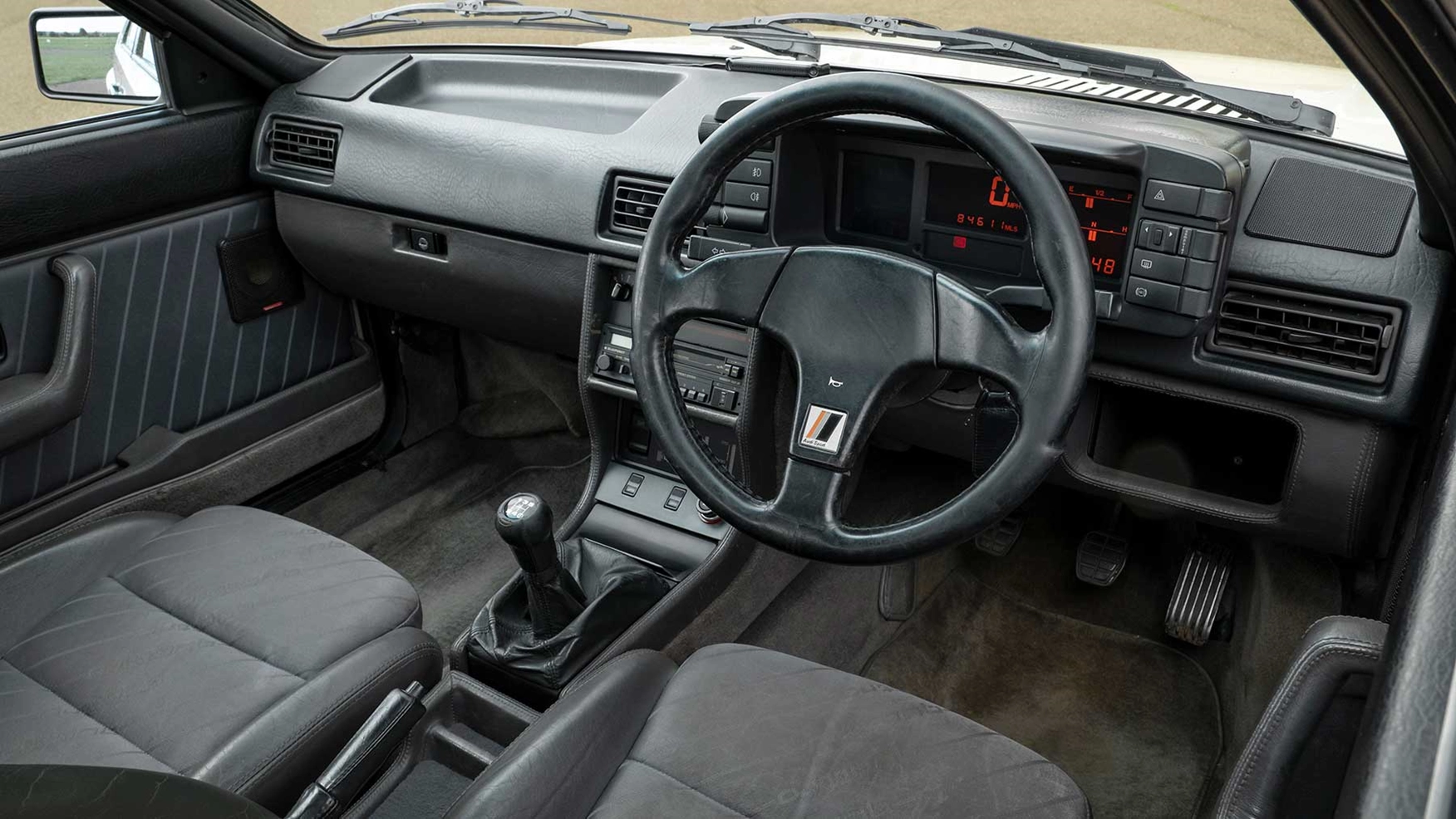
The cabin emphasized driver engagement combined with practical comfort reflecting Audi’s quality standards. Supportive sport seats provided excellent lateral support during aggressive driving while maintaining comfort for extended journeys. The driving position was commanding and well-balanced, with all controls falling naturally to hand. The center console featured vacuum-actuated differential locking switches on early models, providing driver control over all-wheel-drive engagement.
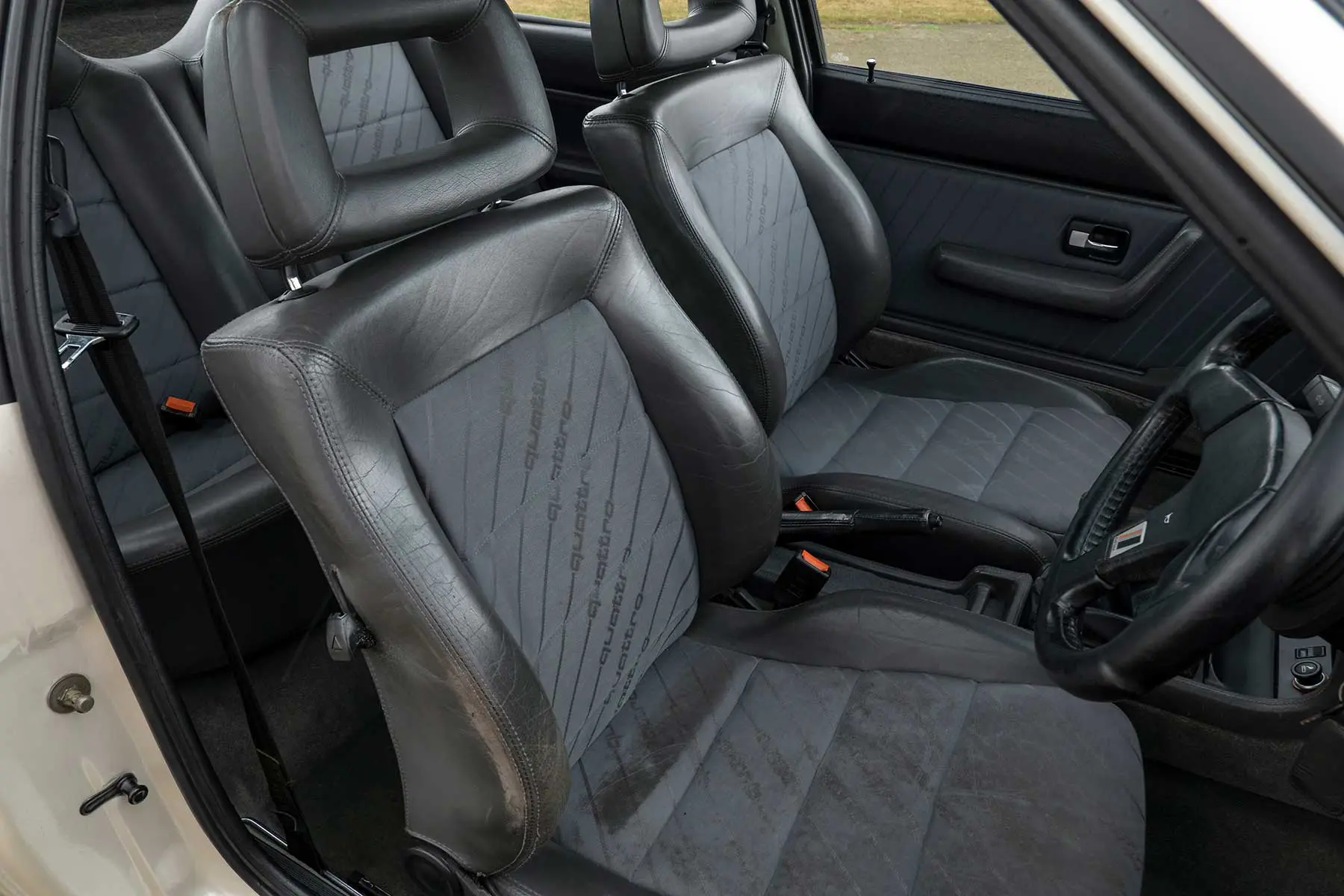
Comprehensive instrumentation displayed essential engine parameters necessary for exploiting the turbocharged engine’s capabilities. Standard equipment included functional climate control and quality audio systems reflecting contemporary luxury standards. The overall atmosphere balanced performance-focused engineering with genuine automotive refinement appropriate for customers pursuing authentic sporting credentials.
Specifications
- Engine: Audi inline-five turbocharged with KKK turbocharger and intercooler, 2,144cc initially (1980-1987), 2,226cc (1987-1991)
- Power: 200 PS / 197 hp at 5,500 rpm (initial and mid-production); 220 PS / 217 hp at 6,200 rpm (1989-1991 turbocharged 20-valve)
- Torque: 210 lb-ft / 285 N·m at 3,500 rpm (initial); 228 lb-ft / 305 N·m at 5,000 rpm (final variant)
- Transmission: Five-speed manual, full-time all-wheel drive with manual locking differential (early) or Torsen center differential (1987+)
- Chassis: Steel monocoque based on Audi 80 platform, 2,524mm wheelbase
- Suspension: Independent MacPherson struts (front and rear with inverted rear configuration), coil springs
- Brakes: Ventilated discs, multi-piston calipers, ABS on later models
- Wheels: 15-inch alloy initially, 16-inch optional on later production
- Weight: 1,290-1,350 kg / 2,844-2,976 lbs depending on specification
- Performance: 135-141 mph top speed, 0-60 mph in 6.7-7.1 seconds
Production and Legacy
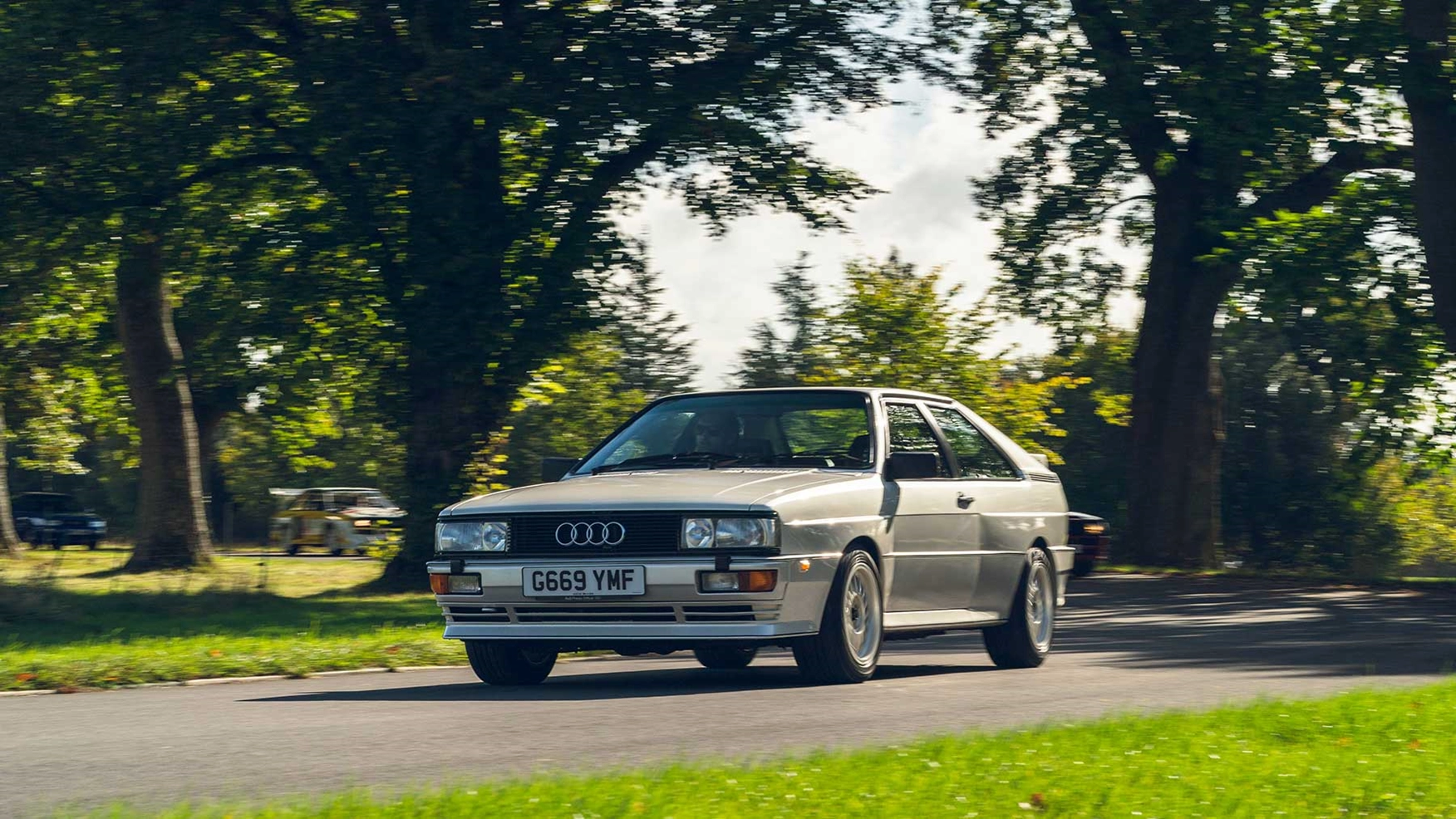
Audi hand-assembled 11,452 examples at Ingolstadt between 1980 and 1991 on dedicated production line N2 utilizing partial hand-assembly techniques. The extended 11-year production run reflected consistent customer demand despite introduction of the Sport Quattro (1984)—a shorter, lighter, more powerful homologation special producing 302 horsepower for Group B rallying. Each car received meticulous assembly reflecting Audi’s manufacturing standards.
The UR Quattro proved that full-time all-wheel-drive could establish genuine performance credentials through traction and handling balance superior to conventional rear-wheel-drive alternatives. The combination of turbocharged efficiency, innovative drivetrain engineering, and practical accommodation established templates influencing performance car development for decades.
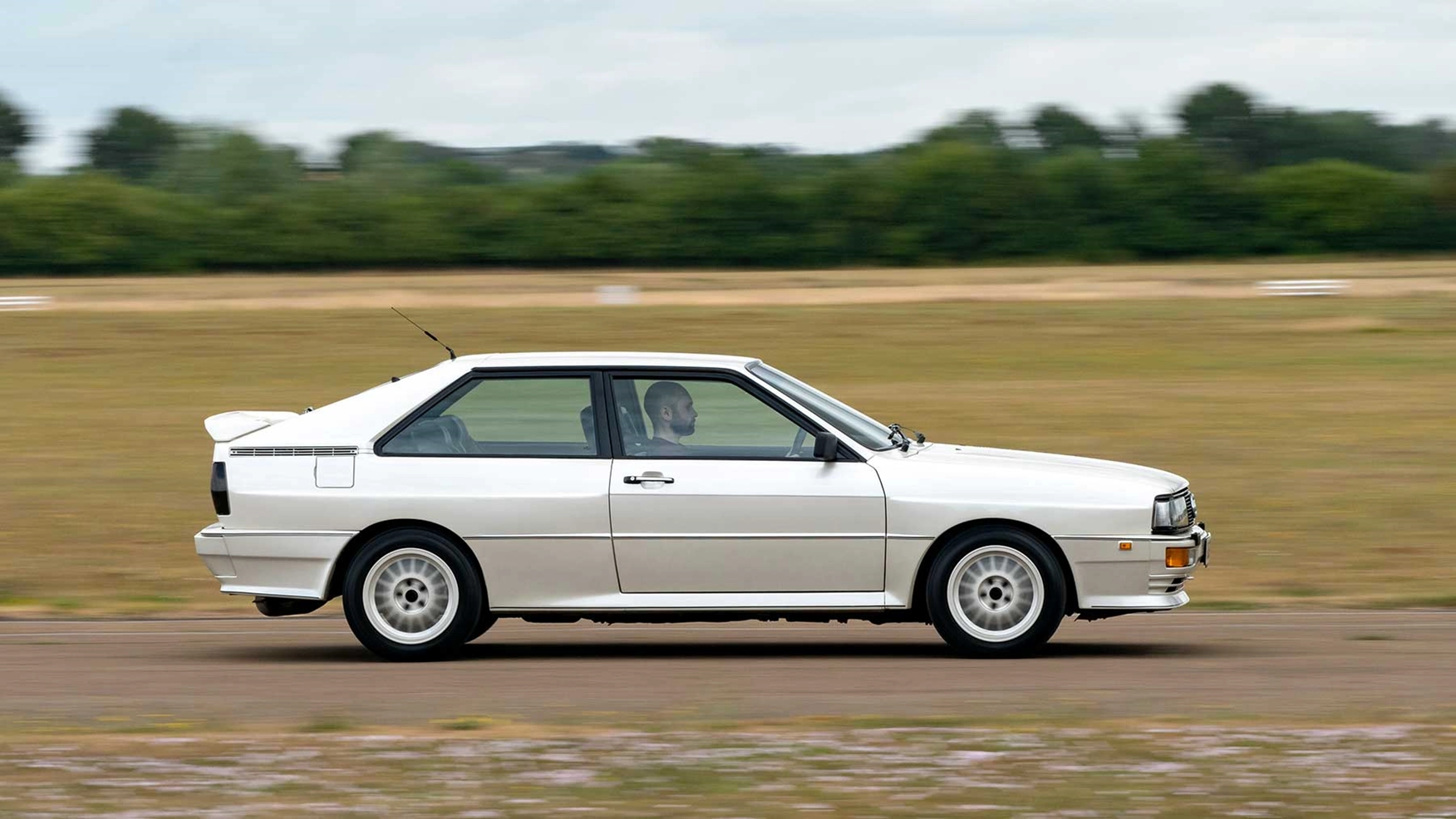
Today, UR Quattro examples command strong collector appreciation reflecting their legendary status and historical significance. The revolutionary all-wheel-drive implementation and automotive authenticity ensure lasting appeal among serious enthusiasts.
The Audi UR Quattro represented Ingolstadt at its most accomplished, proving that mechanical innovation and engineering excellence could transform automotive fundamentals. It remains one of the most significant sports cars ever created, establishing Audi’s performance legacy.