

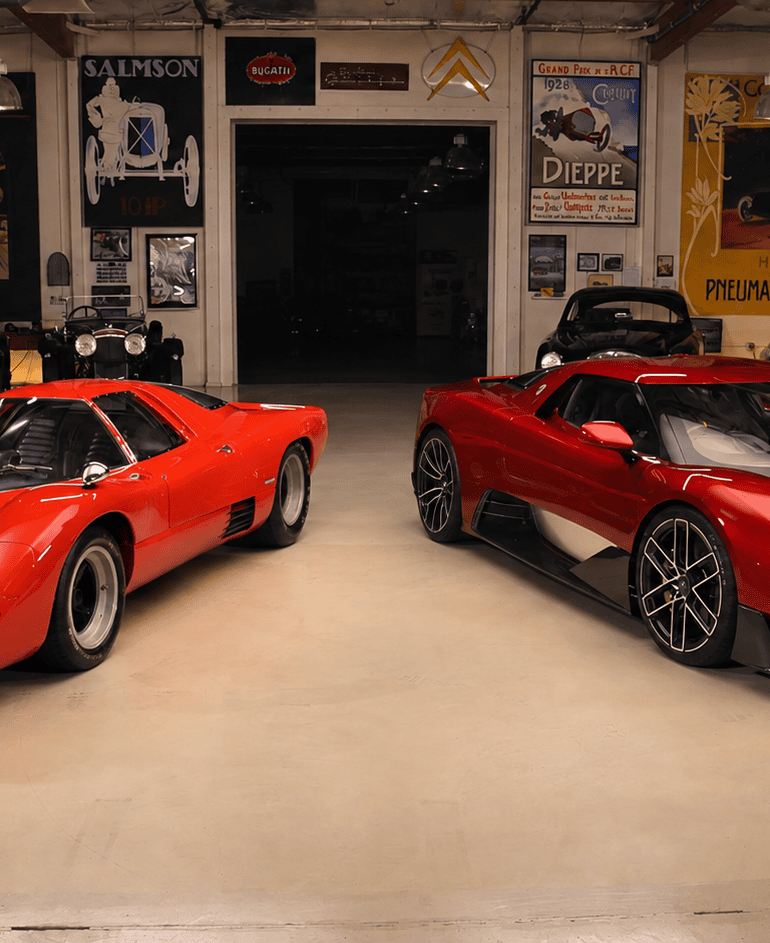
Jay Leno explores the legacy of Bruce McLaren’s personal 1969 M6 GT, an uncompromising road-going sports car that embodied the founder’s ambition to bring racing technology directly to public roads. Joined by McLaren Chief Design Officer Kemal Curic, Leno examines the original car’s engineering, its significance in the company’s history, and the philosophy behind the McL 6GT concept, which previews a limited-production model scheduled for 2028.
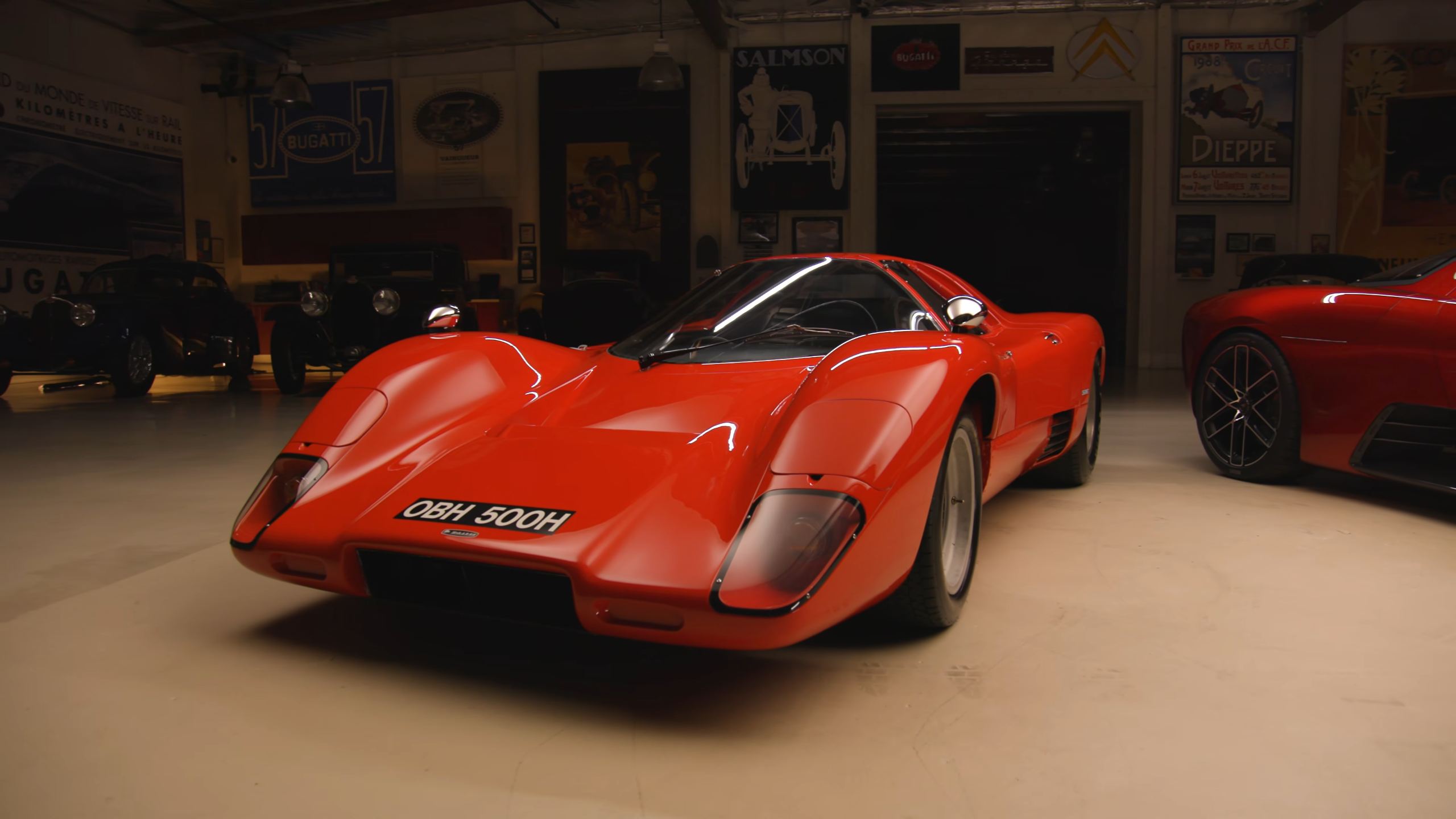
The M6 GT emerged from the success of McLaren’s M6A Can-Am racer, which won five of six races during the 1967 season. Bruce McLaren envisioned adapting the competition car for road use, creating a lightweight, high-performance machine without sacrificing its motorsport character. The resulting M6 GT combined a 5.7-liter Chevrolet 350 V8 producing approximately 370 horsepower with a ZF transaxle and a weight of around 800 kilograms. Its acceleration, reportedly reaching 60 mph in approximately four seconds, was exceptional for the period.
Designed to extend beyond the racetrack, the M6 GT reflected McLaren’s practical approach to performance. Its creator reportedly drove it to racing events and used it for everyday journeys, including grocery shopping. Although he intended to produce several hundred examples, his death in 1970 brought the project to an end. Only two cars were built, according to the discussion, making the M6 GT a significant expression of his original vision.
McL 6GT Concept: A Modern Interpretation of McLaren’s Heritage
The McL 6GT translates the original car’s philosophy into a contemporary performance package rather than simply reproducing its styling. Its concept features a twin-turbocharged V8, a carbon-fiber structure, and a conventional six-speed manual transmission. An exposed titanium shift linkage emphasizes the mechanical connection between driver and machine, distinguishing the concept from the dual-clutch transmissions commonly associated with modern high-performance McLarens.

McLaren plans to introduce the production model in 2028, with output strictly limited to 500 units. Final horsepower and weight figures have not yet been announced. The carbon-fiber construction reflects the company’s longstanding commitment to reducing mass, an engineering principle central to both the original M6 GT and the McLaren F1.
Design Details Connect Past and Present
Curic highlights several heritage-inspired features that connect the concept to Bruce McLaren’s legacy. These include the Speedy Kiwi emblem, a stripe referencing the founder, and a shield commemorating Muriwai Beach, associated with his early racing achievements.
The exterior combines pronounced front fenders, sculpted bodywork, distinctive quad headlamps with integrated air intakes, and racetrack-inspired rear lighting. Functional aerodynamic channels and an underbody diffuser help manage airflow without relying on prominent external wings. The result aims to preserve the original car’s purposeful proportions while meeting contemporary engineering and regulatory requirements.
Inside, the concept adopts a driver-focused layout with a minimalist steering wheel, exposed carbon-fiber structure, and mechanical shift components. These details reinforce the emphasis on tactile interaction and purposeful design rather than unnecessary complexity.
Jay Leno Drives the 1969 M6 GT
Leno’s drive reveals the physical demands of the original M6 GT’s analogue engineering. Heavy steering, a demanding clutch, and the absence of modern driver-assistance systems require considerable effort and mechanical awareness. High ambient temperatures in Los Angeles also limit the drive, highlighting the practical challenges of operating a competition-derived vehicle in everyday conditions.
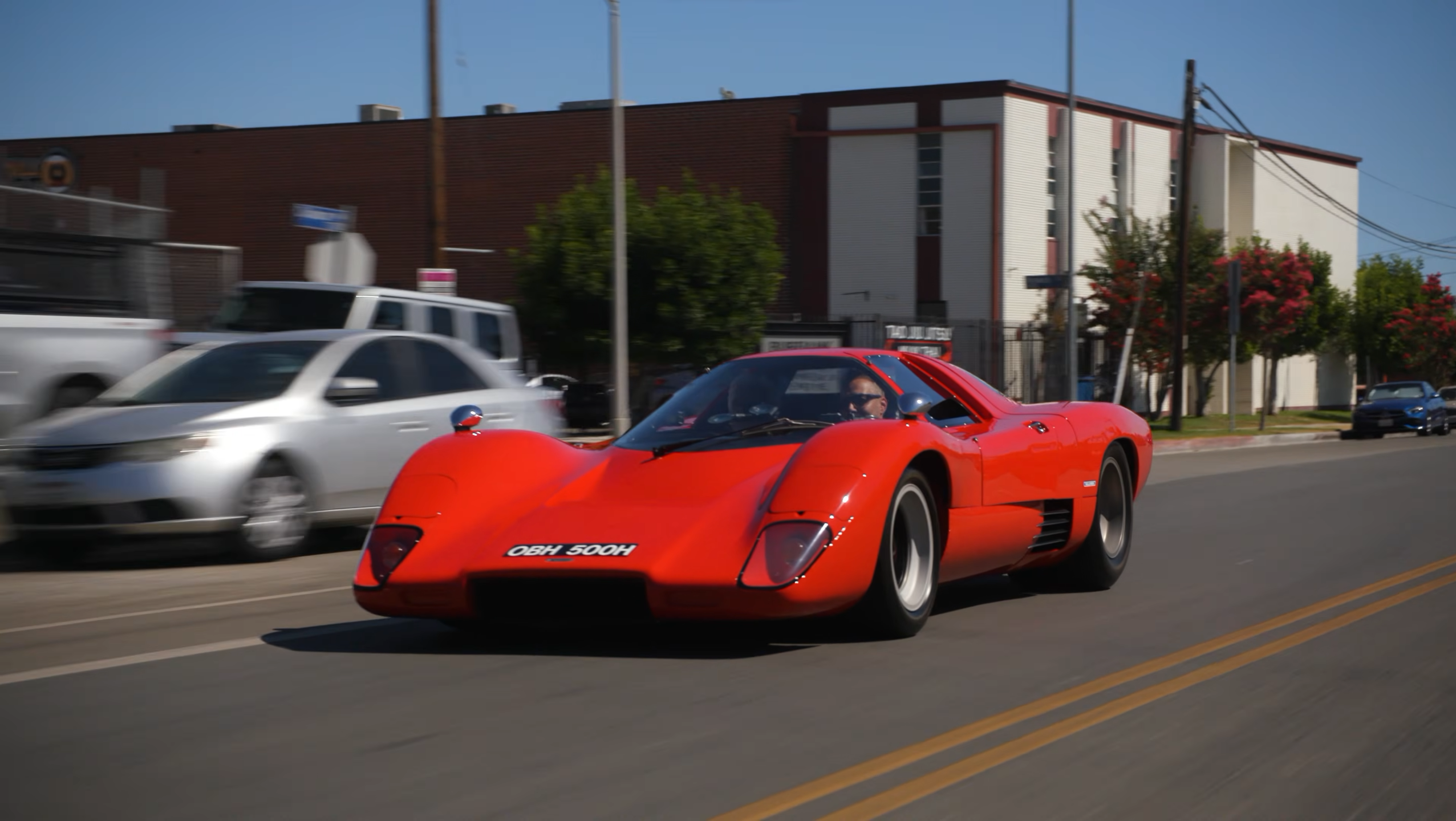
Despite those demands, the experience illustrates the appeal of a car that places the driver directly in control. Its Chevrolet V8, manual gearbox, and lightweight construction deliver a distinctly mechanical character that contrasts with the electronic systems governing many contemporary supercars.
McLaren’s Continuing Commitment to Driver Engagement
The discussion extends beyond the two cars to consider McLaren’s engineering philosophy, the minimalist approach associated with the McLaren F1, and the influence of regulations on sports-car design. Leno also reflects on the evolution of mid-engine performance cars and the importance of mechanical sympathy, recalling racing legend Phil Hill’s exceptional ability to preserve machinery.
Together, the original M6 GT and its modern successor demonstrate how McLaren intends to carry Bruce McLaren’s vision into a new era. By combining lightweight construction, a manual transmission, and purposeful design, the McL 6GT seeks to preserve the direct, involving driving experience that made its predecessor distinctive.
Source: Jay Leno’s Garage