
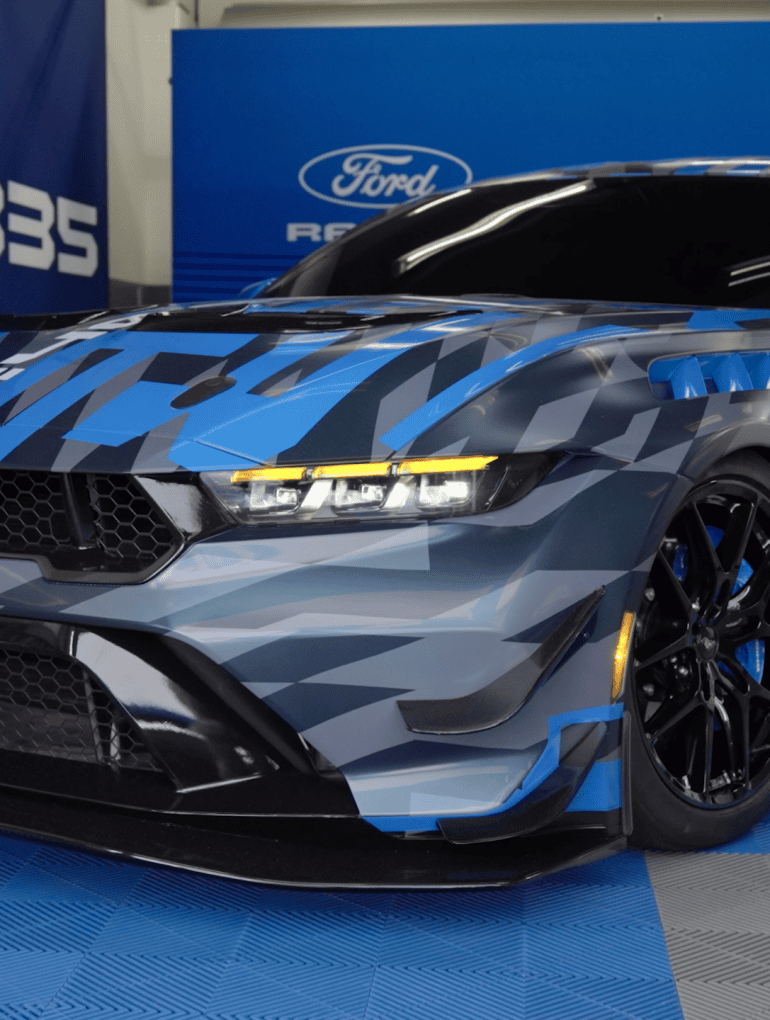
The Ford Mustang GTD Competition represents a more aggressive evolution of the already formidable GTD, developed in response to the Chevrolet Corvette ZR1X eclipsing the standard GTD’s Nürburgring performance by roughly three seconds. Rather than accepting the setback, Ford engineers used it as motivation to further optimize power, aerodynamics, grip, and weight in pursuit of another record at Germany’s demanding Nordschleife.
At the heart of the Competition is the same 5.2-liter supercharged V8 used in the standard GTD, but Ford has applied additional tuning and supercharger revisions to increase output beyond the GTD’s 815-horsepower rating. The final figure remains subject to confirmation, but Ford CEO Jim Farley indicated that the Competition’s powertrain is still being refined as part of a broader performance package.
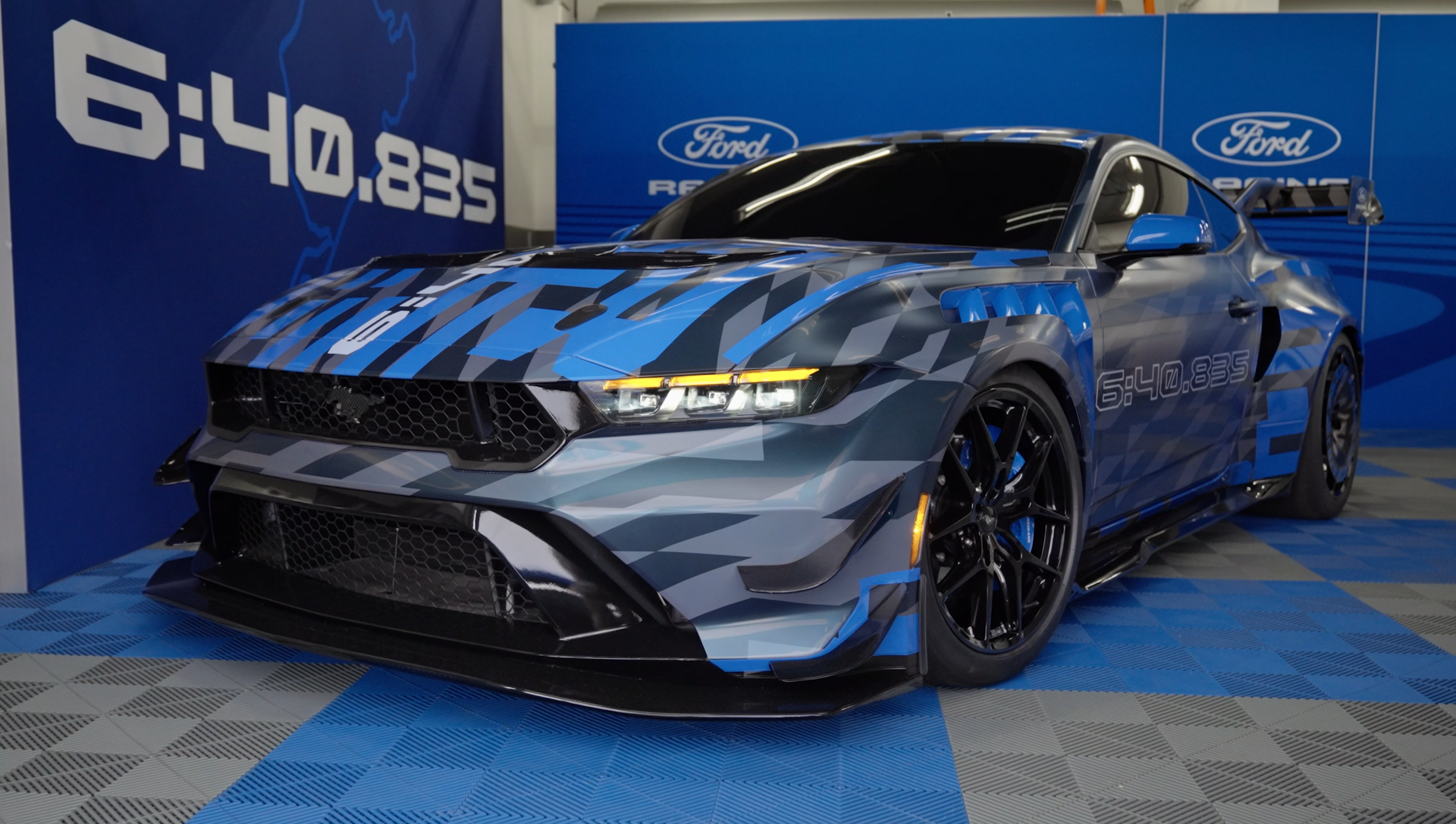
Aerodynamic development is equally important. The car gains additional front dive planes, redesigned rear-wing elements, and distinctive carbon-fiber aerodiscs covering the rear wheels. These changes are engineered to generate substantially greater downforce without creating a corresponding increase in drag. The Competition also uses exceptionally aggressive road-legal tires developed for the Nürburgring record attempt, providing grip approaching that of racing slicks.
Weight reduction is another major component of the package. Ford has targeted the GTD’s approximately 1,970-kilogram curb weight through magnesium wheels and lighter dampers, while the production Competition is expected to feature carbon-fiber bucket seats. Beyond reducing mass, those seats should provide significantly greater lateral support than the standard GTD’s more comfort-oriented Recaros.
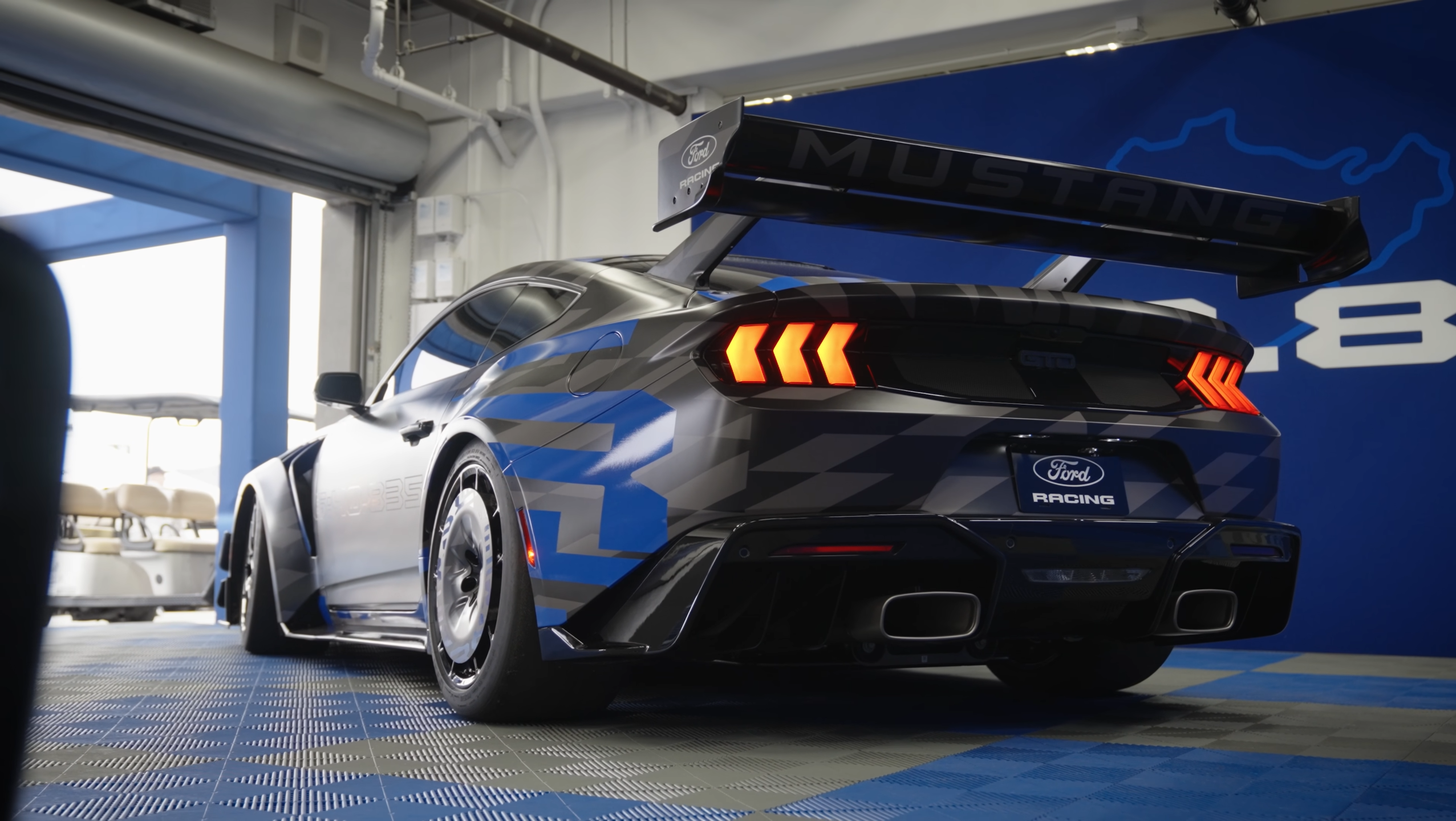
The results were demonstrated at the Nürburgring, where driver Dirk Müller recorded a remarkable 6:40.835 lap. That performance cut more than 12 seconds from the standard GTD’s previous time of 6:52 and restored the Mustang’s position as the fastest American production car around the circuit.
For Farley, however, the GTD Competition is about more than a leaderboard. He views motorsport as an engineering laboratory whose lessons should filter into Ford’s broader production portfolio. From Mustang and Raptor to the company’s expanding rally ambitions in Europe, Ford intends to use racing-derived development to improve real-world road vehicles rather than treating motorsport purely as marketing.
Source: Top Gear