
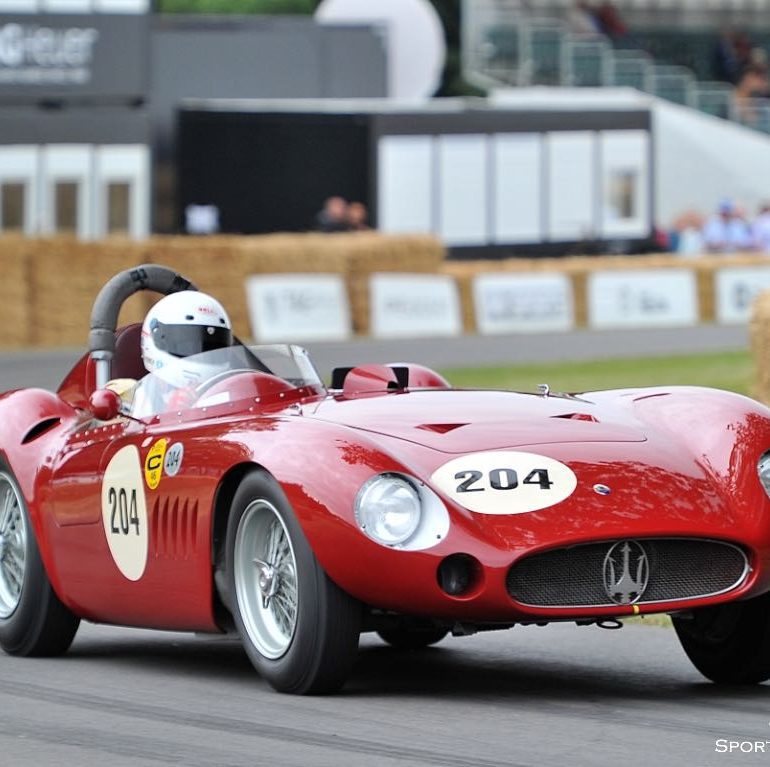
1955→1959 Maserati 300S
Between 1955 and 1959, twenty-six 300S Maserati cars were built with three versions of increasing sophistication. By then, Maserati had a car which was competitive with the best sports racing cars of its class and for many drivers, such as Stirling Moss, it was considered a favorite. Straight-six racing engines were popular with Maserati from the early 1950s.
For the 1956 and 1957 World Sportscar Championship Maserati produced the striking 300S which rivaled Ferrari Monzas, Jaguar D-Type and Mercedes-Benz SLRs.
Maserati engineer Vittorio Ballantrani prepared the 300S as a replacement to the A6GCS series. The initial idea was to use an engine similar to the successful Maserati 250F Grand Prix car in a A6G-like sports car chassis, but both elements required significant modifications.
As early as 1954, a 2.5-litre version of the 250F engine was tested in an A6GCS chassis. Called the 250S, it wasn’t on pace, so larger versions were made, including the 280S. The ultimate version was the 3.0-liter 300S. These engines retained the 250F cylinder head, but the 300S used a new block which used a larger bore and stroke. This head supported twin-overhead camshafts, that allowed hemispherical combustion chambers. Other engine details included Vandervell bearings, an aluminum alloy block and Weber carburetors.
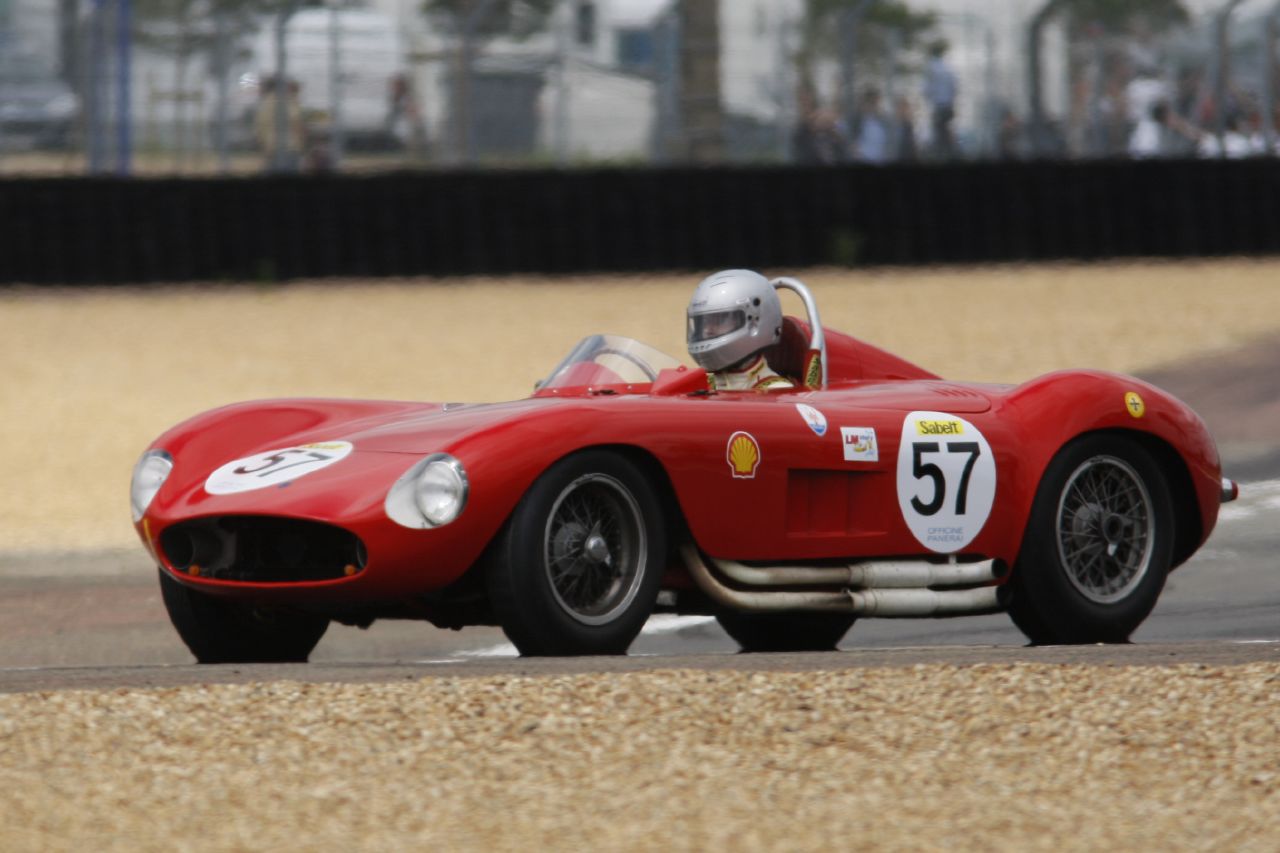
The first few chassis were designed and manufactured by Maserati’s racing departments. Later upgraded versions were supplied by Gilco. Both used a de Dion-type tube axle in the rear. The rear of the car was cramped with a 4-speed transaxle that was covered by a single transverse leaf spring. The front featured a more conventional layout including double wishbones with an anti-roll bar.
Similar to the 250F, aluminum finned drums were fitted and some cars were later upgraded with the larger Maserati 450S versions.
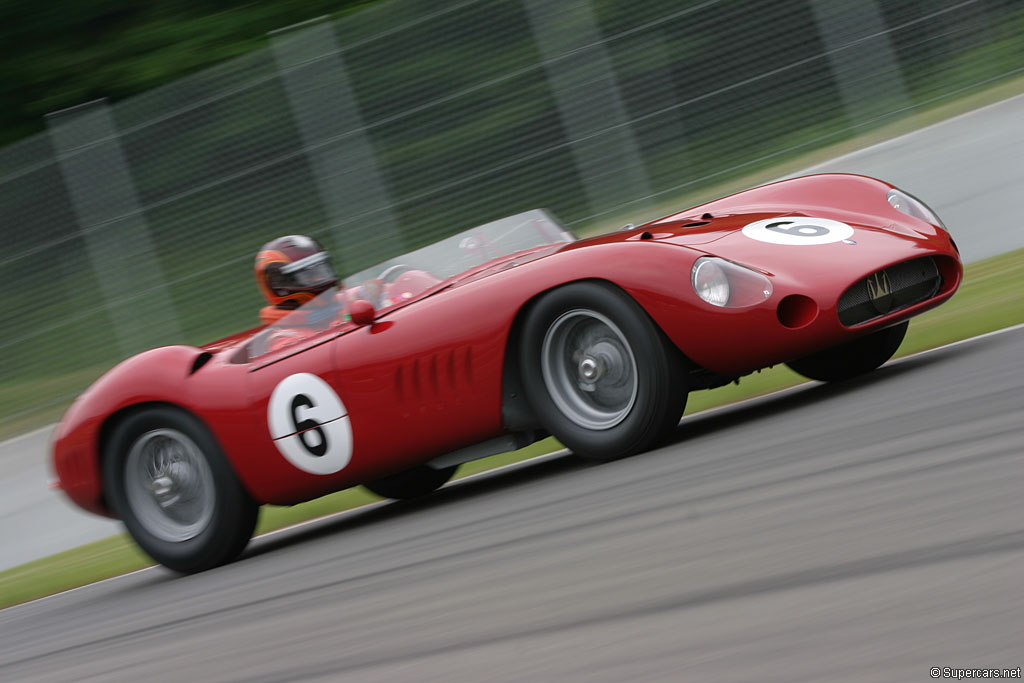
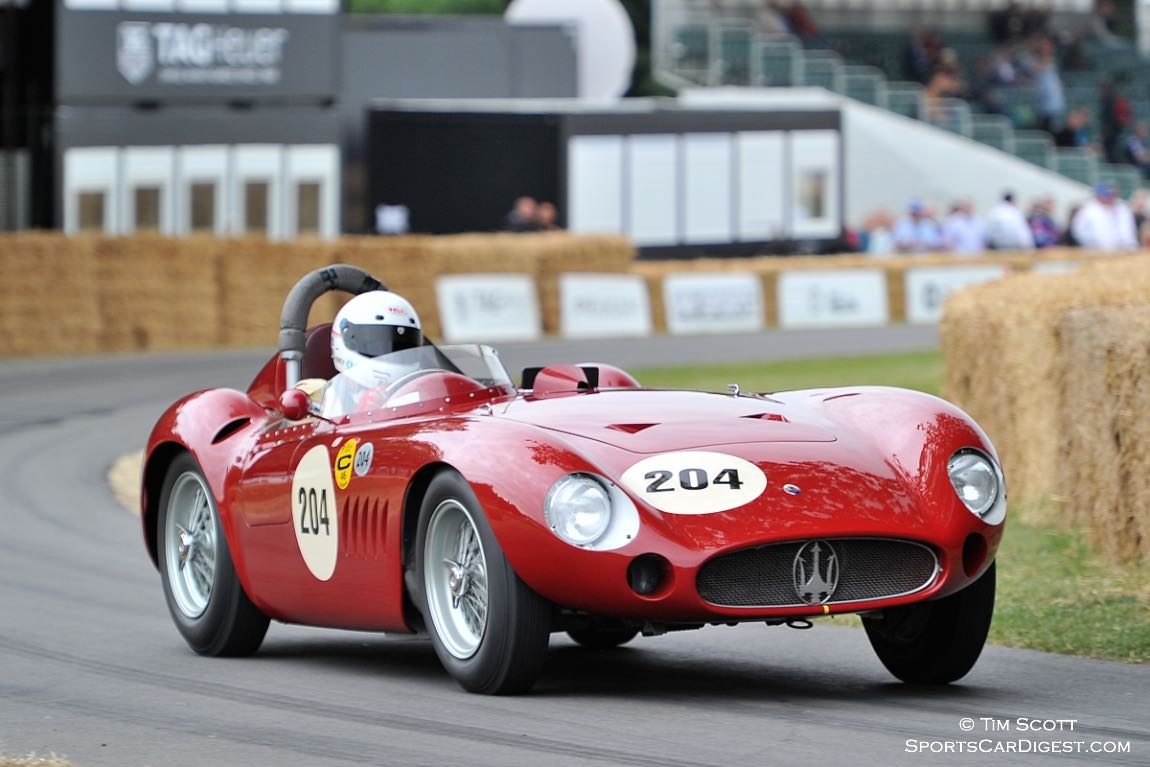
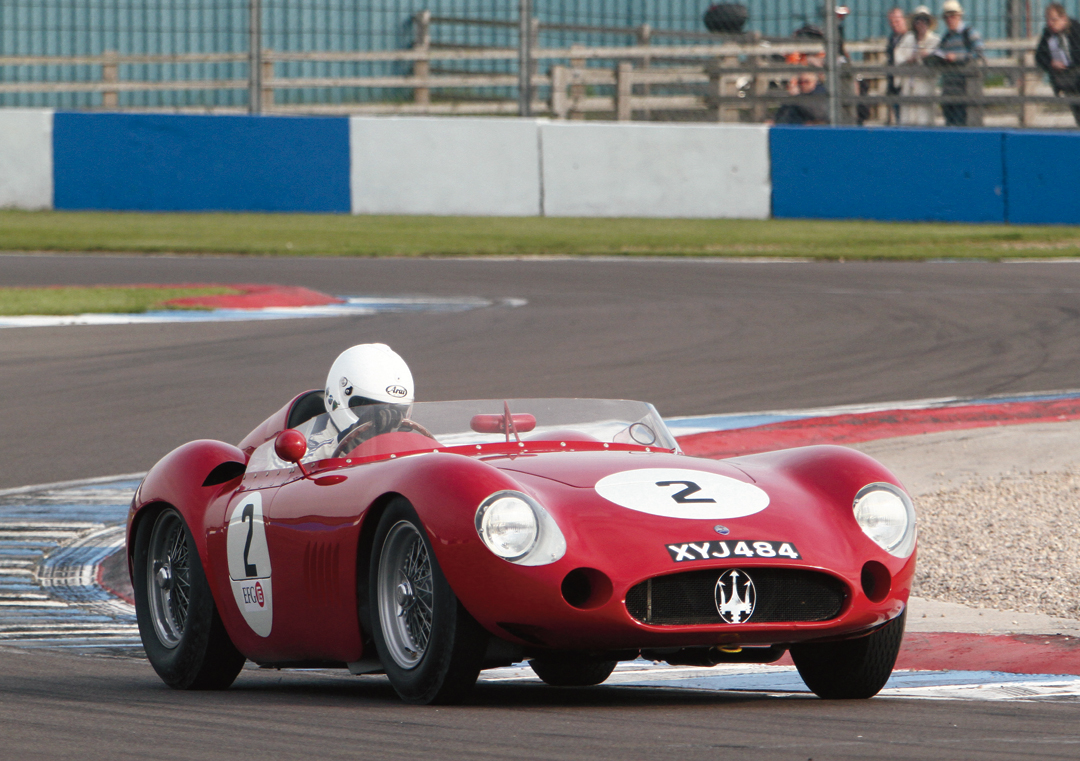
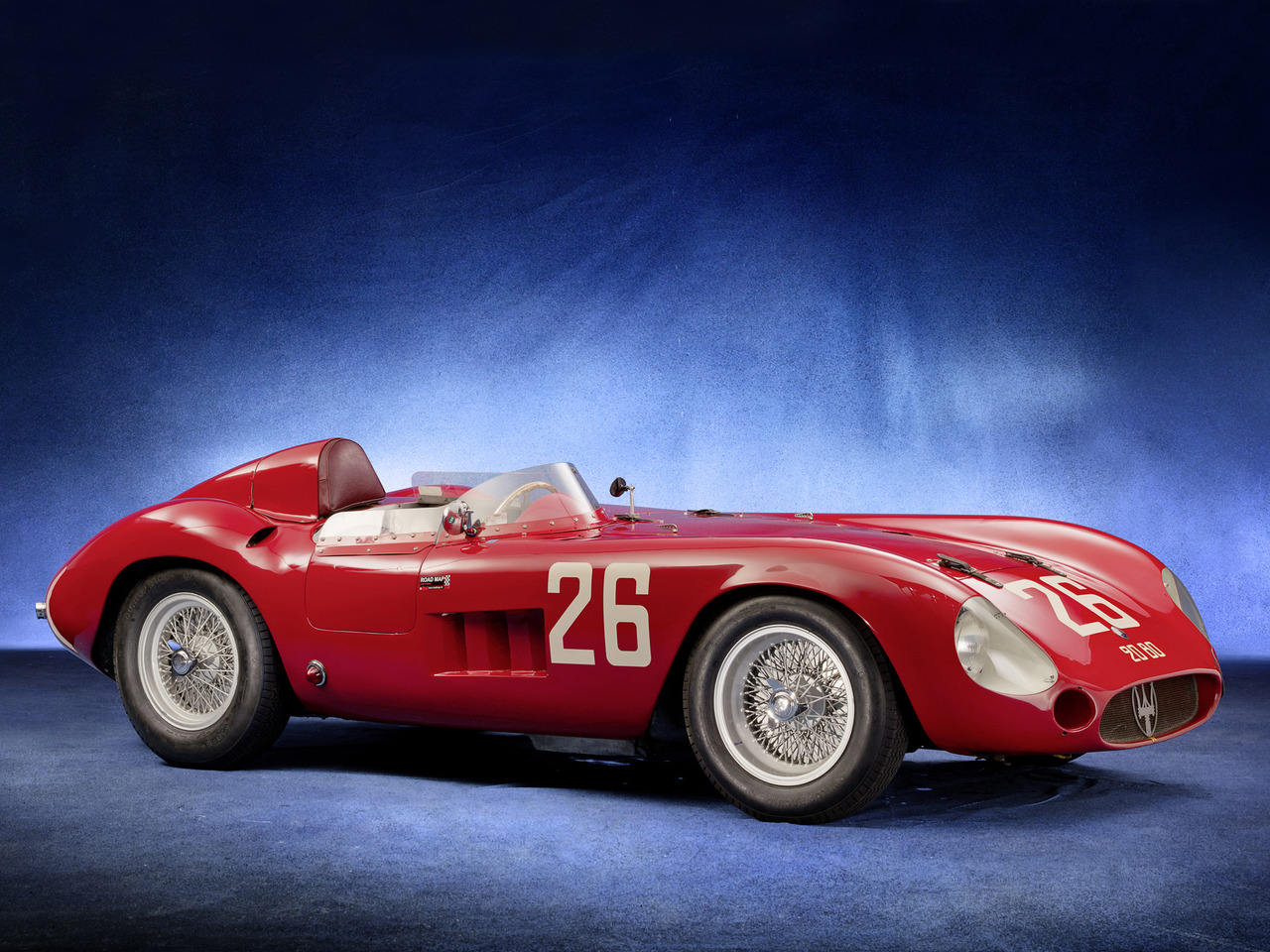
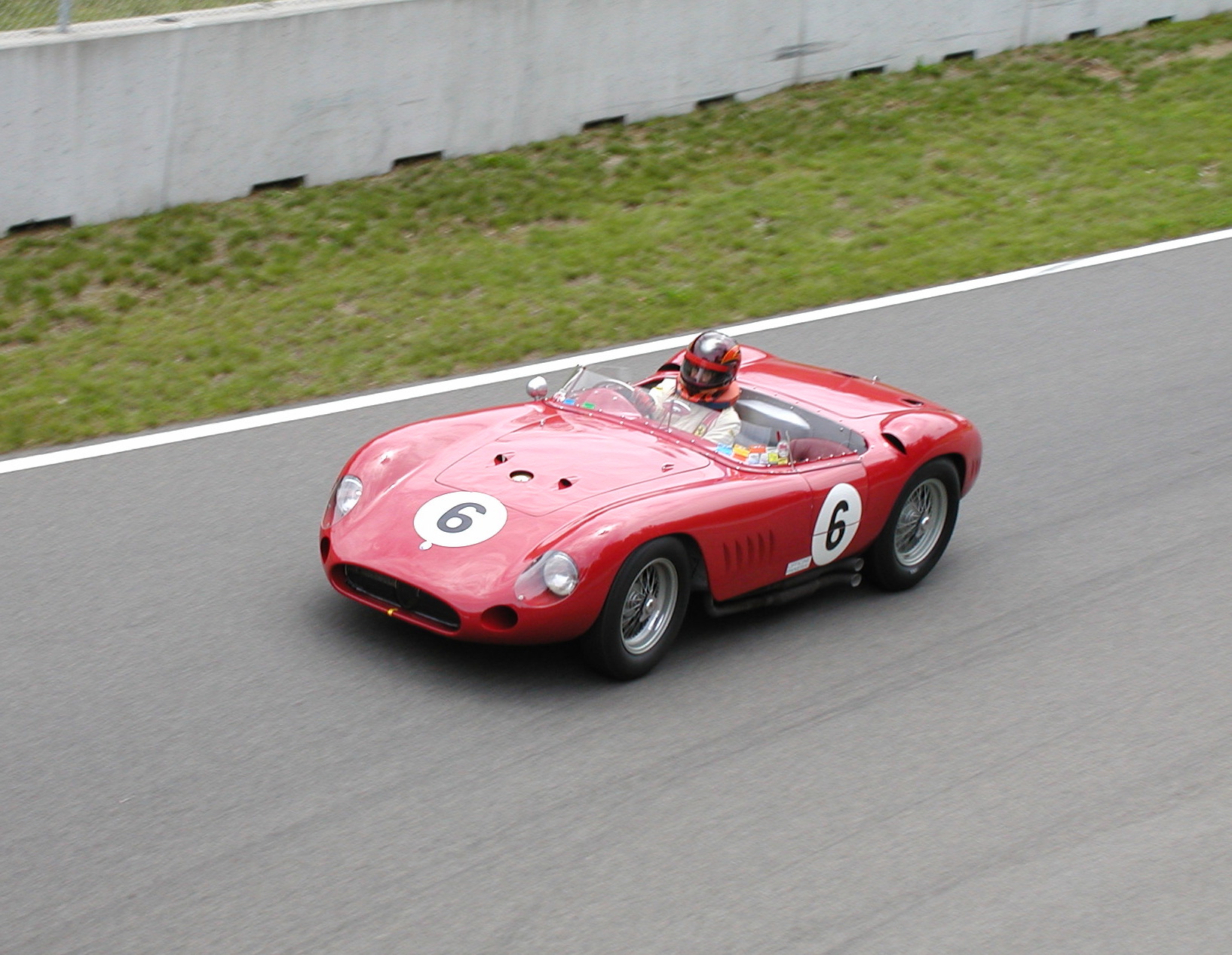
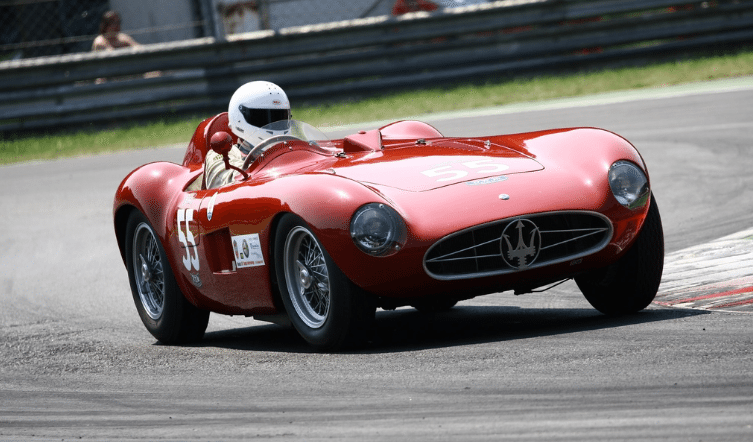
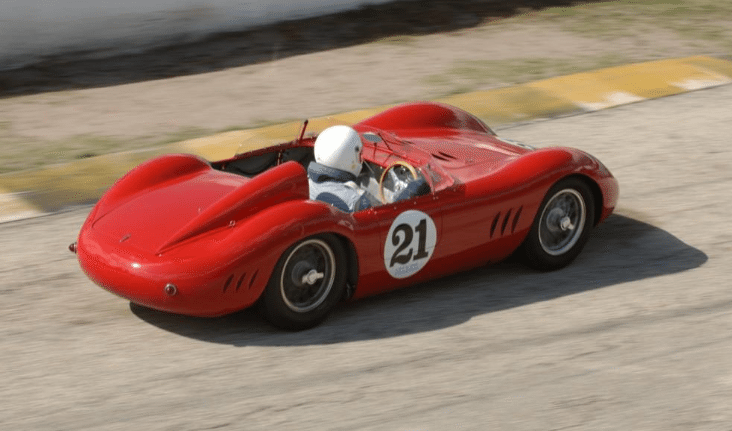
Some of the first cars featured differences including 5-Speed gearboxes and a center throttle panel, but these were changed after the first few cars. All the bodies were made of lightweight aluminum alloy, but they were upgraded throughout the five year production. Half way through production, the shape was changed to a longer protruding nose with circular front intakes.
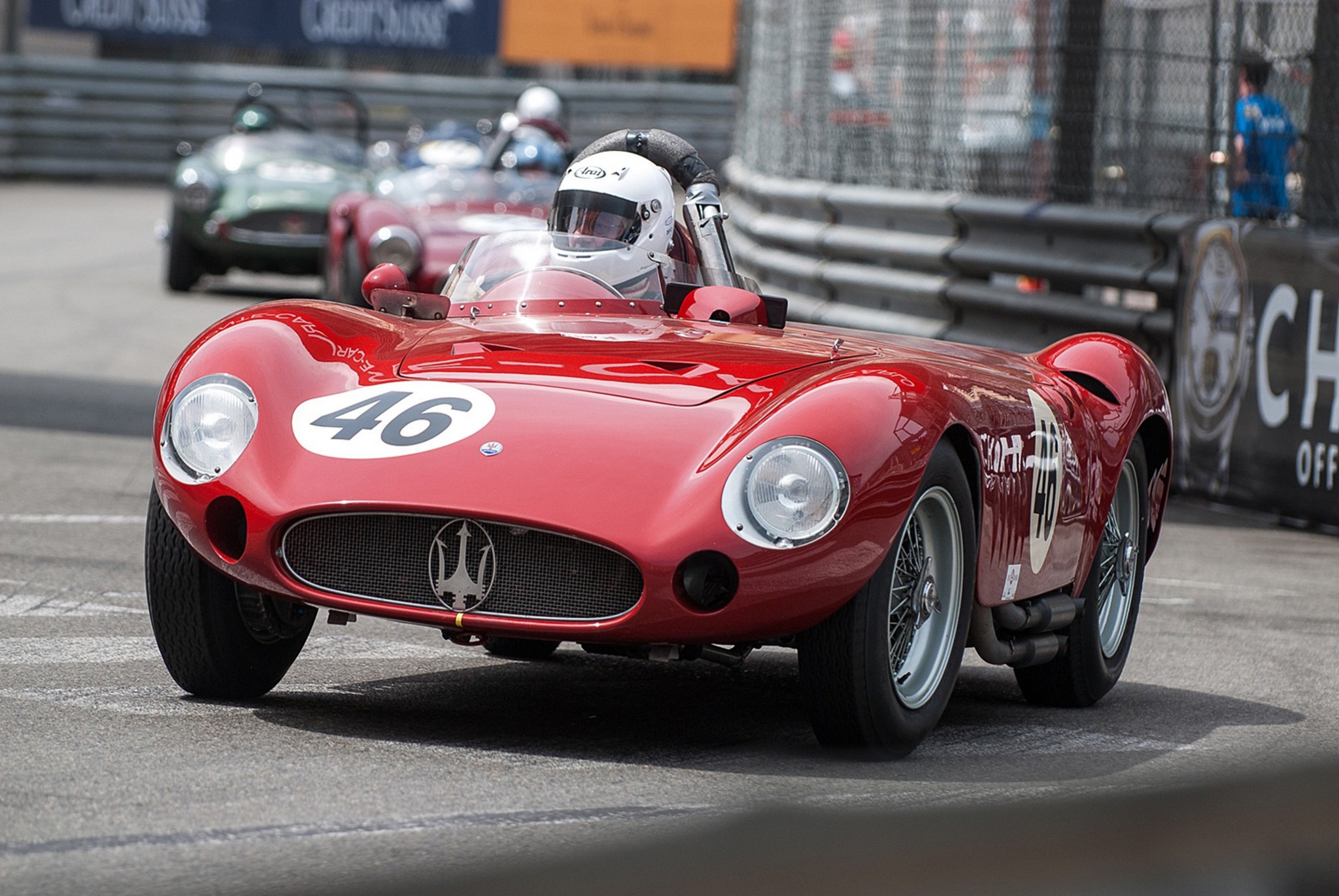
Racing
The 300S made its World Sportscar Championship debut at the 1955 12 Hours of Sebring. Remarkably the privately owned 300S of Bill Spear finished third overall, setting a good precedent for the upcoming model. For the rest of the season the 300S supported the A6GCS cars but never achieved any notable victory. Cars entered in that year’s Mille Miglia and Le Mans both retired.
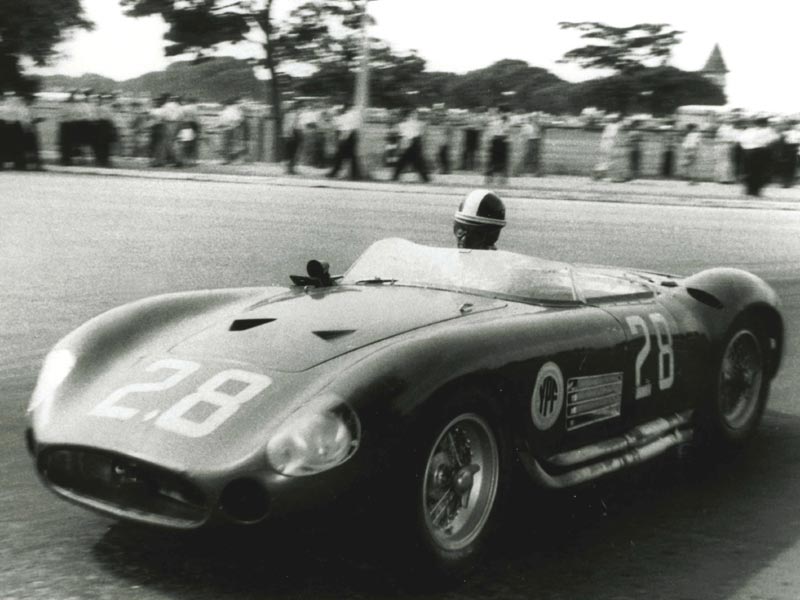
For the 1956 season, Maserati hired Stirling Moss and prepared a works team for all the rounds of the World Sports Car Championship. At the opening round of this season at Buenos Aires, the factory efforts paid which paid off. All the large 4.0-litre Ferrari suffered mechanical problems, and the car driven by Moss and local Carlos Menditeguy took overall victory.
For the next rounds at Sebring and the Mille Miglia, Maserati prepared the 350S. The cars were on pace but succumbed to the competition. The 1000kms of Nurburgring changed this when Moss and Behra took over a second car to win the event.
1956 ended at the Swedish GP and Maserati had high hopes to gain enough points to win over Ferrari. Despite bringing five cars, all the Maseratis retired, leaving Ferrari with the first six positions and the Manufacturer’s Championship.
For 1957, Maserati had prepared its potent 450S with it’s powerful 400 bhp V8 engine. Moss still preferred the more reliable and tractable 300S, but the 450 was a better overall contender. This was exemplified at the 1957 12 Hours of Sebring when the 450S driven by Faglio and Behra won ahead of Moss’s 300S. The season ended with virtual tragedy at Carcas, Venezuela where the entire team was written off. Shortly afterward, Maserati president Omar Orsi shut down the official racing program.
See more Maserati cars, more Maserati Race Cars and recent Maserati news.
Maserati 300S Image Gallery
Find all Maserati 300S images here
In Detail
| submitted by | Richard Owen |
| type | Racing Car |
| production years | 1955 – 1959 |
| built at | Modena, Italy |
| production | 28 |
| price $ | $ 13,750 |
| engine | Twin Plug Inline-6 w/Dry Sump Lubrication |
| position | Front Longitudinal |
| aspiration | Natural |
| block material | Aluminum Alloy |
| valvetrain | DOHC 2 Valves per Cylinder |
| fuel feed | 3 Weber Twin Choke 45DCOE |
| displacement | 2992 cc / 182.6 in³ |
| bore | 84 mm / 3.31 in |
| stroke | 90 mm / 3.54 in |
| compression | 9.0:1 |
| power | 182.7 kw / 245.0 bhp @ 6200 rpm |
| specific output | 81.89 bhp per litre |
| bhp/weight | 314.1 bhp per tonne |
| body / frame | Aluminum Body over Steel Tube Frame |
| driven wheels | RWD |
| wheel type | Borrani Wire Wheels |
| front tires | 550×16 Dunlop |
| rear tires | 550×16 Dunlop |
| front brakes | Hydraulic Drums |
| rear brakes | Hydraulic Drums |
| front wheels | F 40.6 x 12.7 cm / 16.0 x 5.0 in |
| rear wheels | R 40.6 x 12.7 cm / 16.0 x 5.0 in |
| steering | Worm & Sector |
| f suspension | Unequal Wishbones w/Coil Springs, Hydraulic Shock Absorbers |
| r suspension | De Dion-Tube Axle w/Semi-Elliptic Leaf Springs, Hydraulic Houdaille Shock Absorbers |
| curb weight | 780 kg / 1720 lbs |
| wheelbase | 2310 mm / 90.9 in |
| front track | 1300 mm / 51.2 in |
| rear track | 1250 mm / 49.2 in |
| length | 4150 mm / 163.4 in |
| width | 1450 mm / 57.1 in |
| height | 980 mm / 38.6 in |
| transmission | ZF 4-Speed Manual |
| top speed | ~289.7 kph / 180.0 mph |
| 0 – 60 mph | ~5.0 seconds |
| key drivers | Stirling Moss, Jean Behra, Fangio |
| race victories | 1956 1000km of Buenos Aires, 1956 1000kms of Nurburgring |