
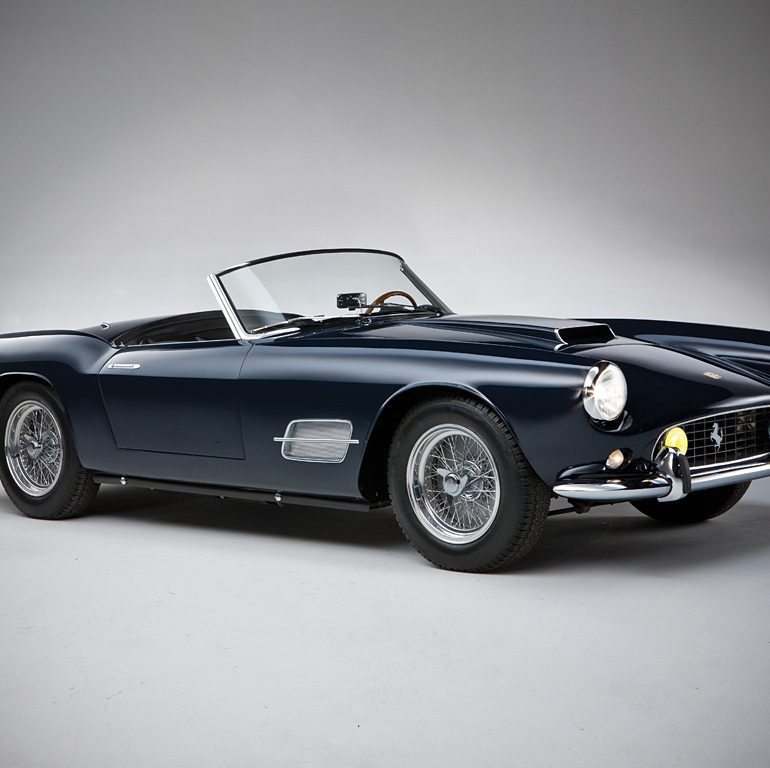
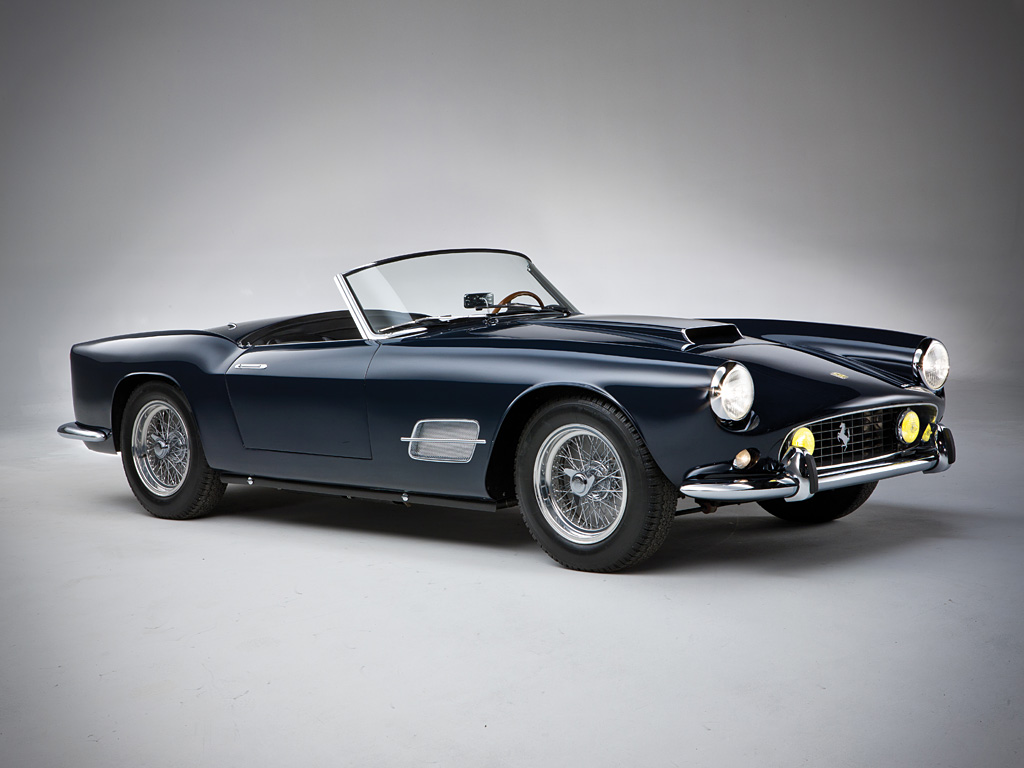
1958→1960 Ferrari 250 California LWB Spyder
When Ferrari replaced their 250 Cabriolet Series I with a more luxurious Series II version, Luigi Chinetti convinced Ferrari to continue on with a more sporting version called the California Spyder.
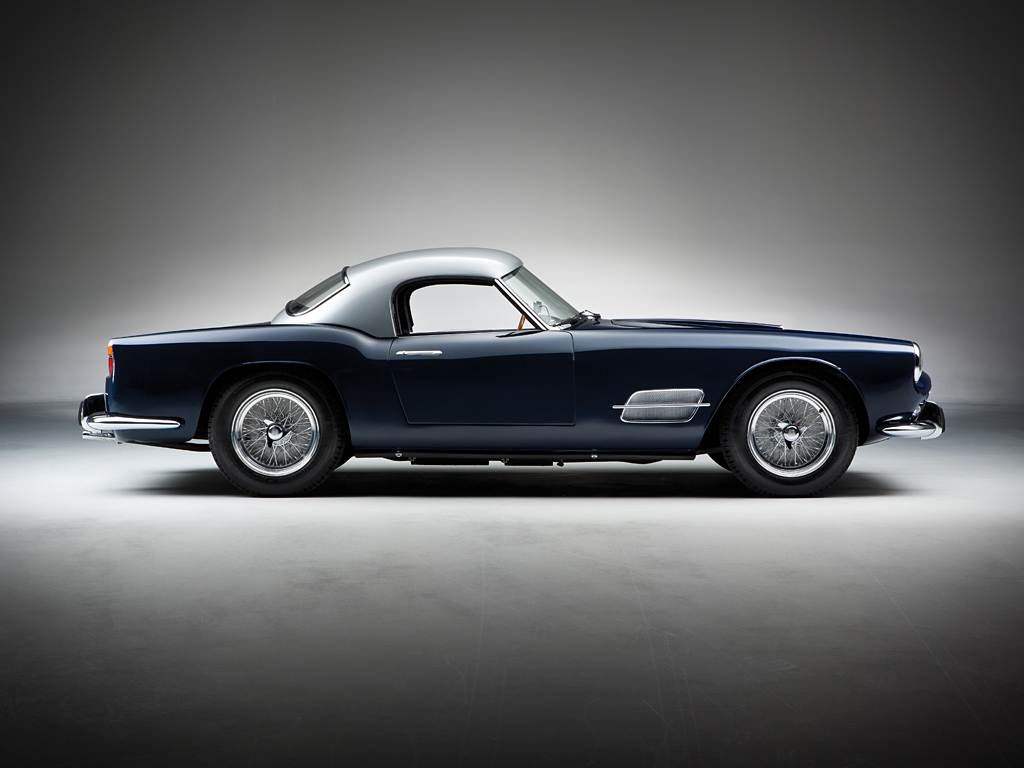
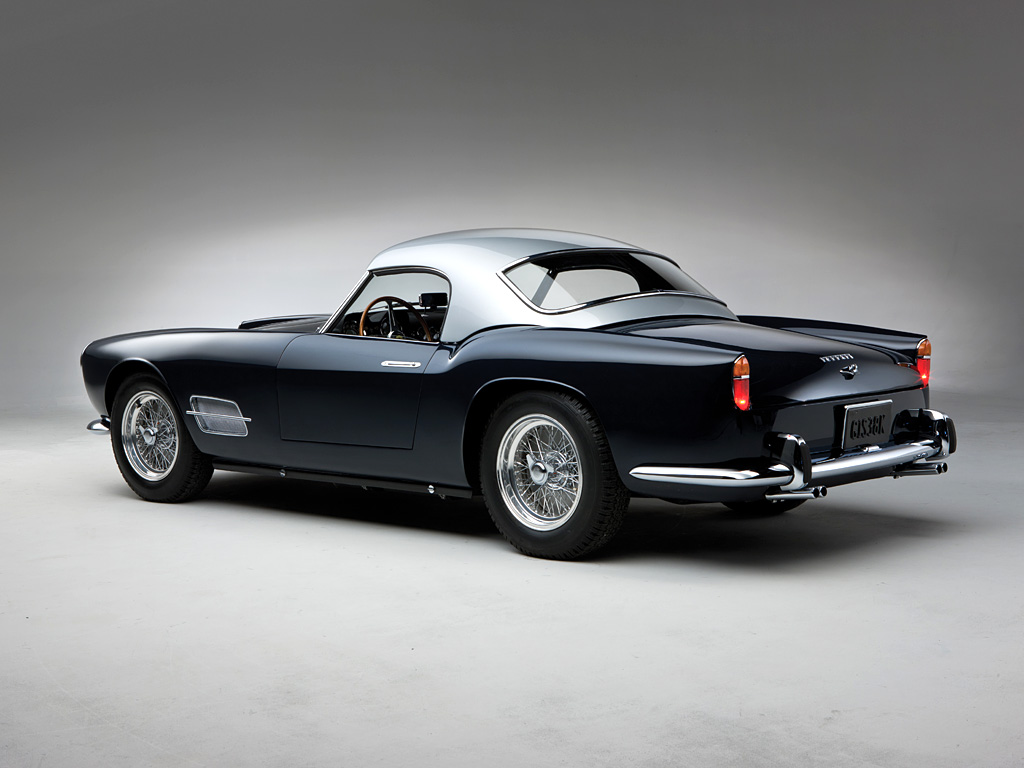
Despite the new name, almost everything from the Series I Cabriolet was used, with only minor details such as larger rear taillights and an optionally-available hard top.
Under the Pinin Farina body, little changed. The car retained the long-wheel-base 250 GT chassis with the Tipo 128D engine.
Our feature example is one of the world’s best LWB California Spyders and is distinguished by its Superamerica-style front fender vents, hood scoop, cold air intake and factory hardtop. In In 1999, owner Jonas Liden of Sweden commissioned a full restoration at Carrozzeria Autosport, Bacchelli & Villa in Bastiglia, Italy . After it gain accolades at the top events such as the 58th Annual Pebble Beach Concours d’Elegance it was again redone with proper fender intakes and an additional $115,000 USD was spent “to bring the car to the Platinum Award-level standards” according to RM. In this guise it was sold by RM Auctions for €2.520.000 at their 2011 Villa d’Este sale.
Story by Richard Owen
In Detail
| submitted by | Richard Owen |
| type | Limited Production Car |
| production years | 1958 – 1960 |
| built at | Mondena, Italy |
| coachbuilder | Scaglietti & C. |
| production | 50 |
| predeccesor | 1957 Ferrari 250 GT Cabriolet Series I |
| succeccesor | 1960 Ferrari 250 California SWB Spyder |
| engine | Type 128D 60º V 12 |
| position | Front Longitudinal |
| aspiration | Natural |
| block material | Aluminum Alloy |
| valvetrain | SOHC, 2 Valves per Cyl |
| fuel feed | 3 36DCL3 Weber Carburetors |
| displacement | 2953 cc / 180.2 in³ |
| bore | 73 mm / 2.87 in |
| stroke | 58.8 mm / 2.31 in |
| compression | 8.9:1 |
| power | 170.0 kw / 228 bhp @ 7000 rpm |
| specific output | 77.21 bhp per litre |
| bhp/weight | 165.34 bhp per tonne |
| body / frame | Steel Body over Tubular Steel Chassis |
| driven wheels | RWD |
| wheel type | Borrani Wire |
| front tires | 6.0×16 |
| rear tires | 6.0×16 |
| front brakes | Dunlop Discs |
| rear brakes | Dunlop Discs |
| steering | Worm & Sector |
| f suspension | Unequal Wishbones w/Coil Springs, Anti-Roll Bar |
| r suspension | Rigid Axle w/Semi Elliptic Leaf Springs, Radius Arms |
| curb weight | 1379 kg / 3040 lbs |
| wheelbase | 2400 mm / 94.5 in |
| front track | 1378 mm / 54.3 in |
| rear track | 1374 mm / 54.1 in |
| length | 4200 mm / 165.4 in |
| width | 1720 mm / 67.7 in |
| height | 1370 mm / 53.9 in |
| transmission | Tipo 508C/603 4-Speed Manual |
| gear ratios | 2.54:1, 1.70:1, 1.26:1, 1.00:1 |
| final drive | 4.86:1 |
| top speed | ~233.4 kph / 145 mph |
| 0 – 60 mph | ~6.5 seconds |
Auction Sales History
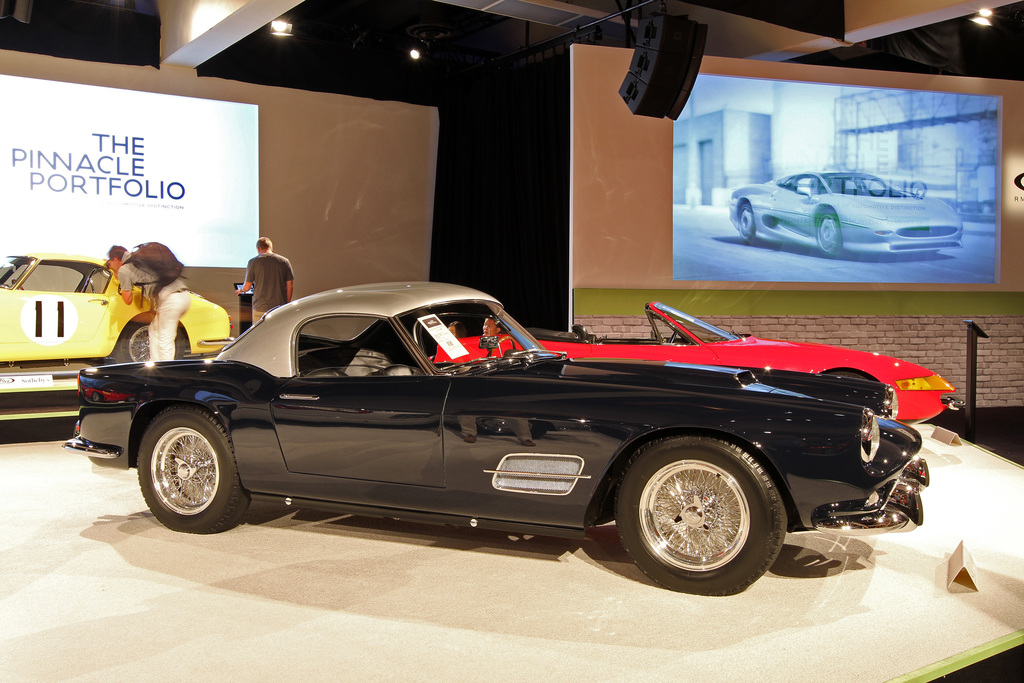
Auction Source: RM Sotheby’s Monterey 2015
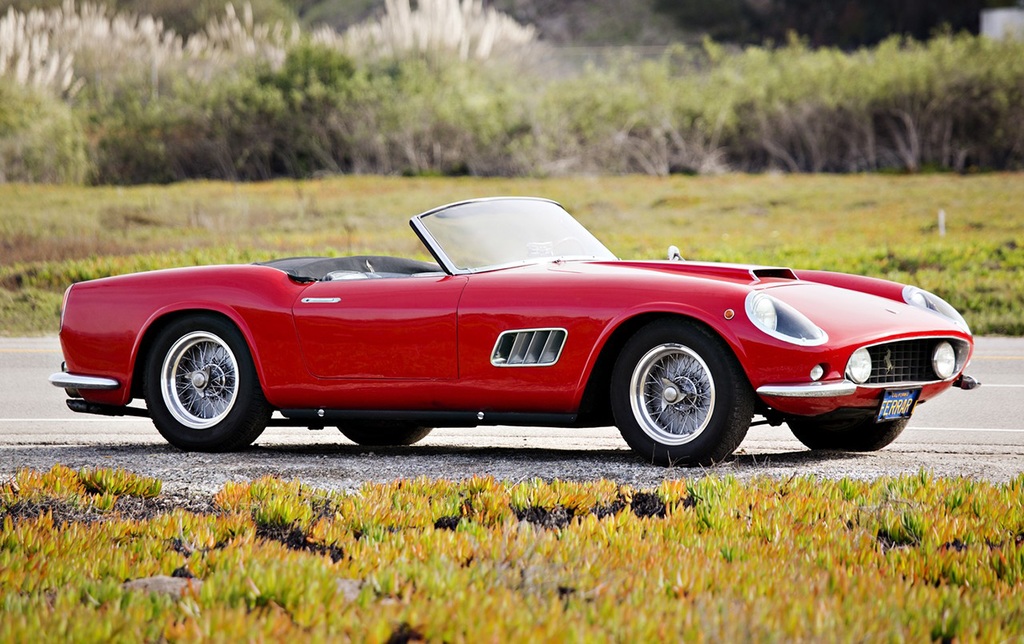
Auction Source: The Scottsdale Auctions 2015 by Gooding & Company
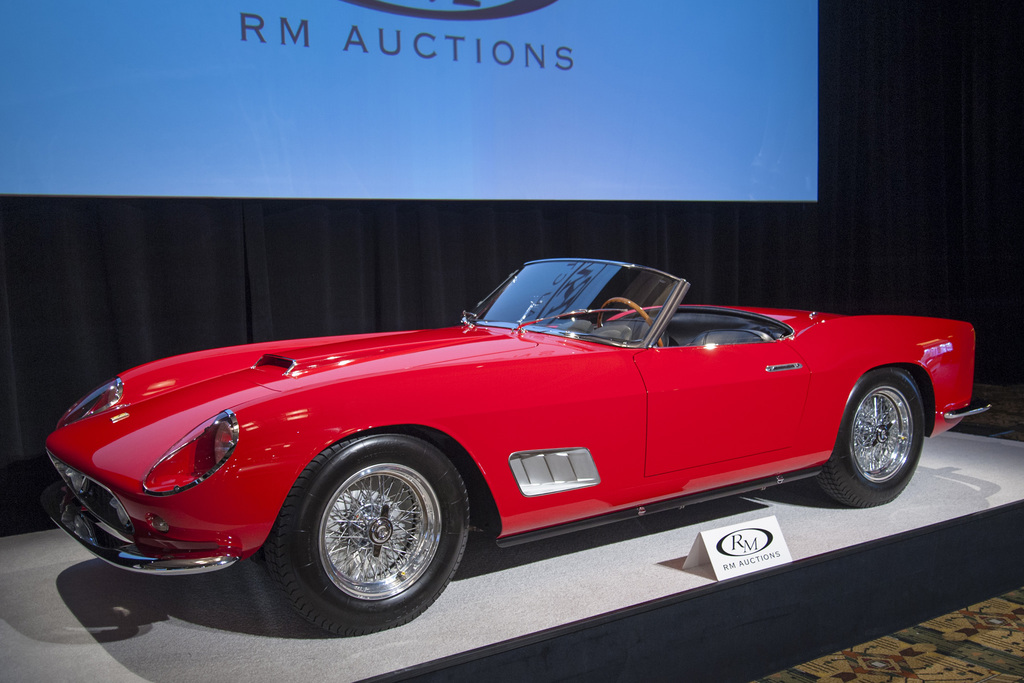
Auction Source: 2014 Arizona by RM Auctions
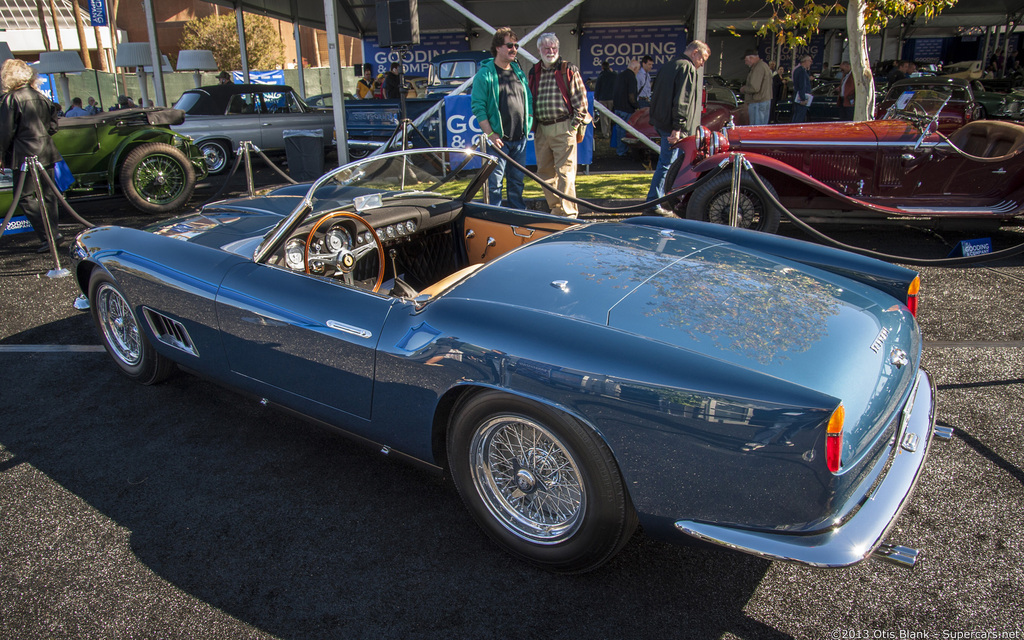
1958 Ferrari 250 GT LWB California Spider 1073GT –
Auction Source: The 2013 Scottsdale Auctions by Gooding & Company
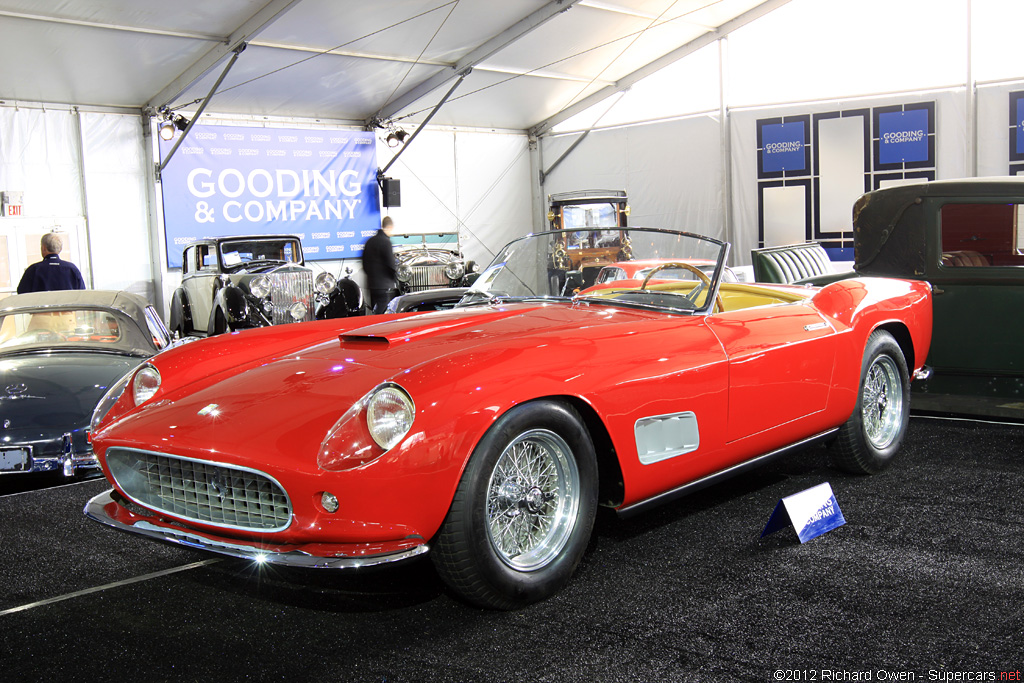
1957 Ferrari 250 GT LWB California Spider Prototipo 0769GT –
Auction Source: 2012 Pebble Beach Auctions by Gooding & Company
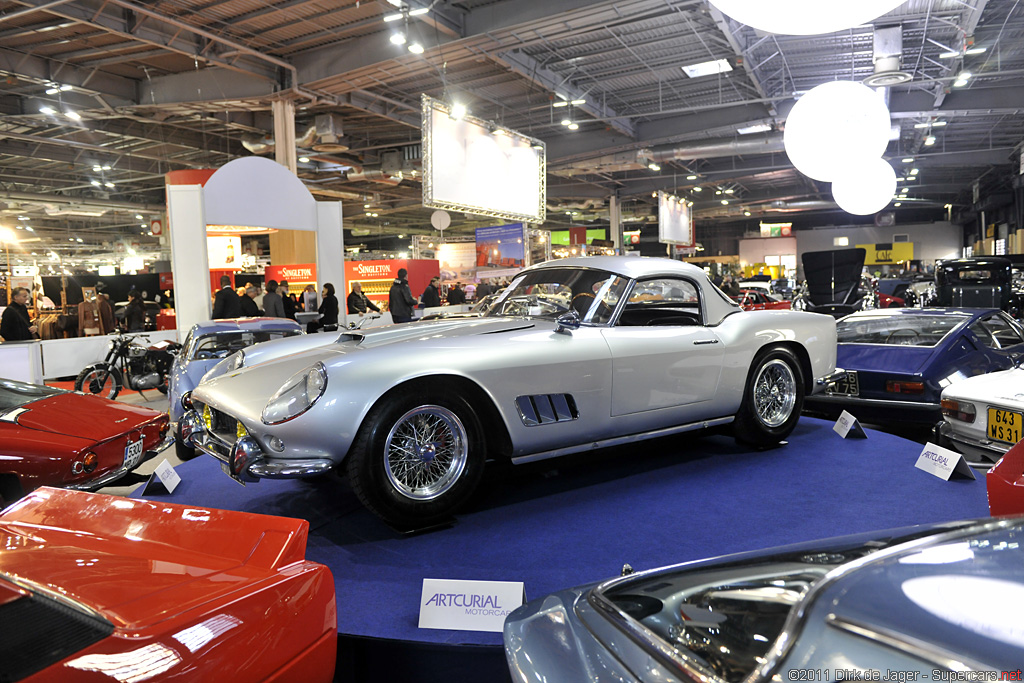
Auction Source: 2012 Artcurial Motorcars à Rétromobile
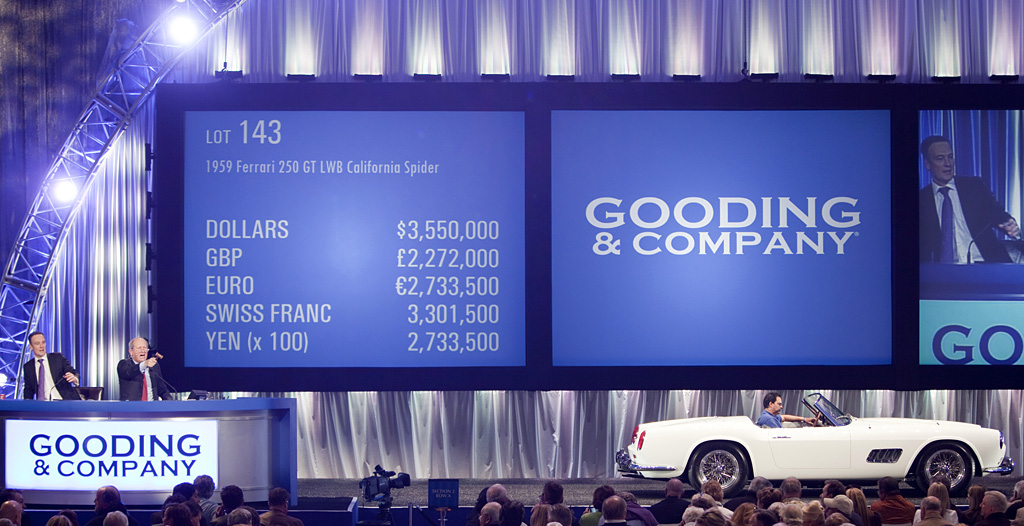
1959 Ferrari 250 GT LWB California Spider 1505GT – sold for $3,905,000 Desirable, Late-Production LWB California Spider. Factory Equipped with Cold-Air Box, Velocity Stacks and Disc Brakes. Distinguished Chain of Knowledgeable Owners. Verified Matching-Numbers Engine. Eligible for the Leading Tours, Rallies and Concours. Documented by Marque Historian Marcel Massini. Certified by Ferrari Classiche.
Auction Source: 2012 Scottsdale Auction by Gooding & Company
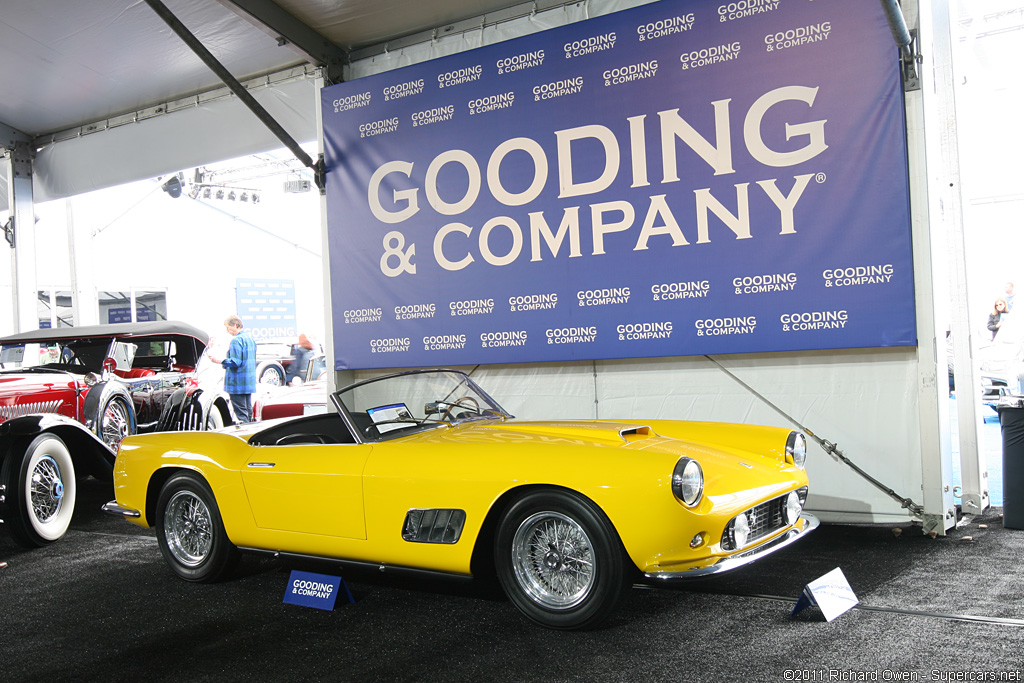
Auction Source: 2011 Pebble Beach Auctions by Gooding & Company
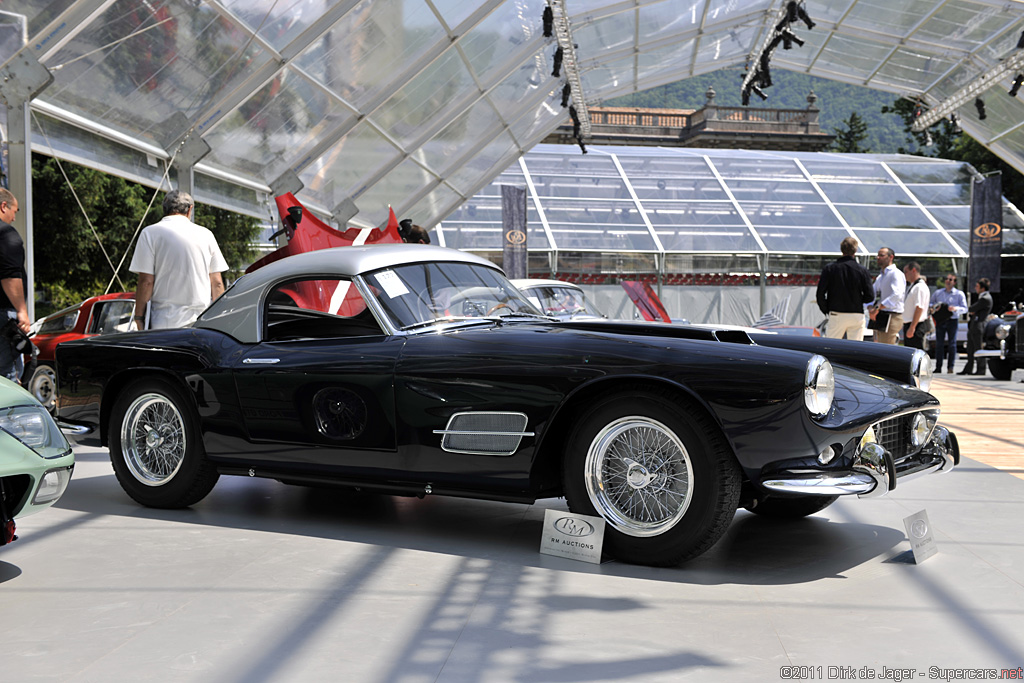
Auction Source: RM 2011 Villa d’Este Auction
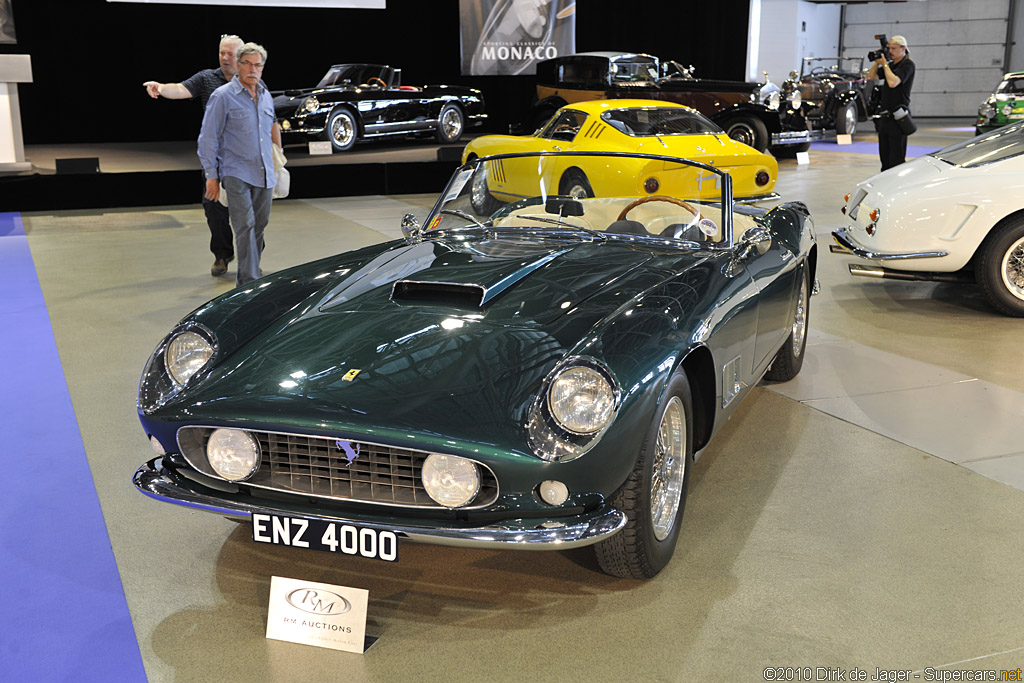
1959 Ferrari 250 GT LWB California Spyder 1253GT –
Auction Source: 2010 RM Auctions Sporting Classics of Monaco
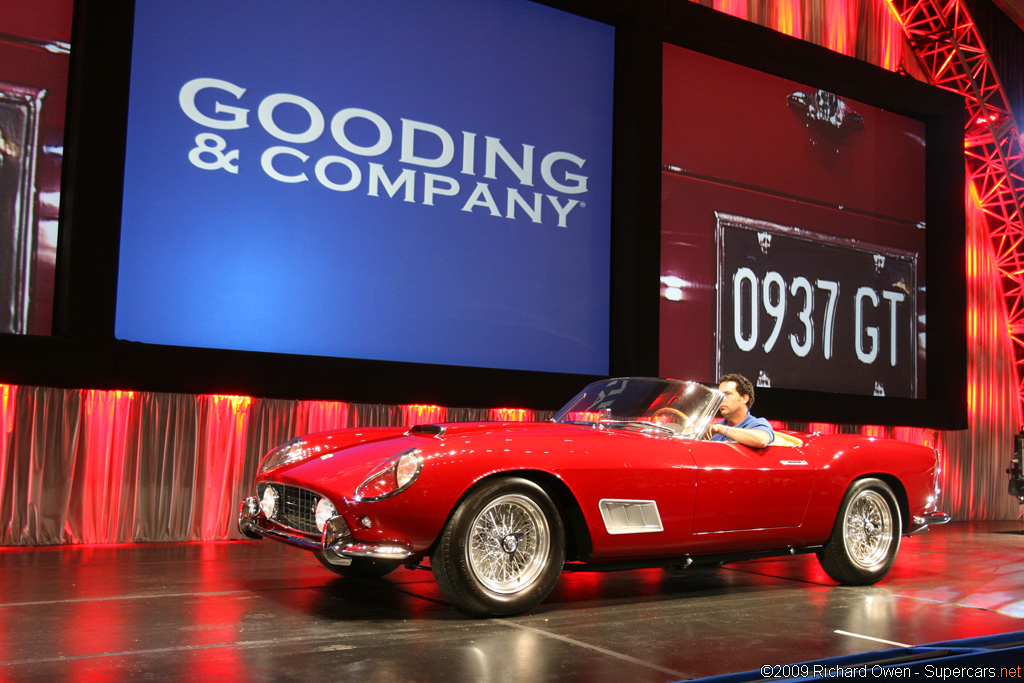
1958 Ferrari 250 GT LWB California Spider 0937GT – sold for $2,750,000 This car with serial number 0937GT is the seventh of the fifty Long wheel Base California Spyders built by Ferrari. It was sold to its first owner, the film actress Brigitte Bardot, in Paris, and it was much admired as it was driven in and around the French Riviera.
Auction Source: 2009 Gooding & Company Pebble Beach Auction
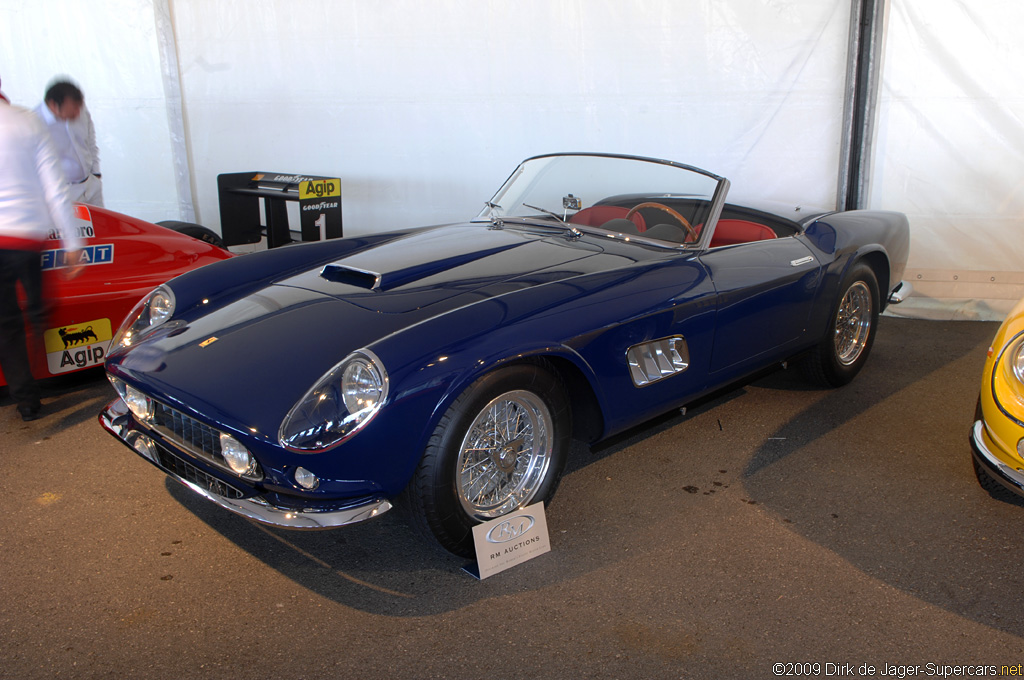
1959 Ferrari 250GT California (LWB) 1487GT –
Auction Source: 2009 Leggenda e Passione
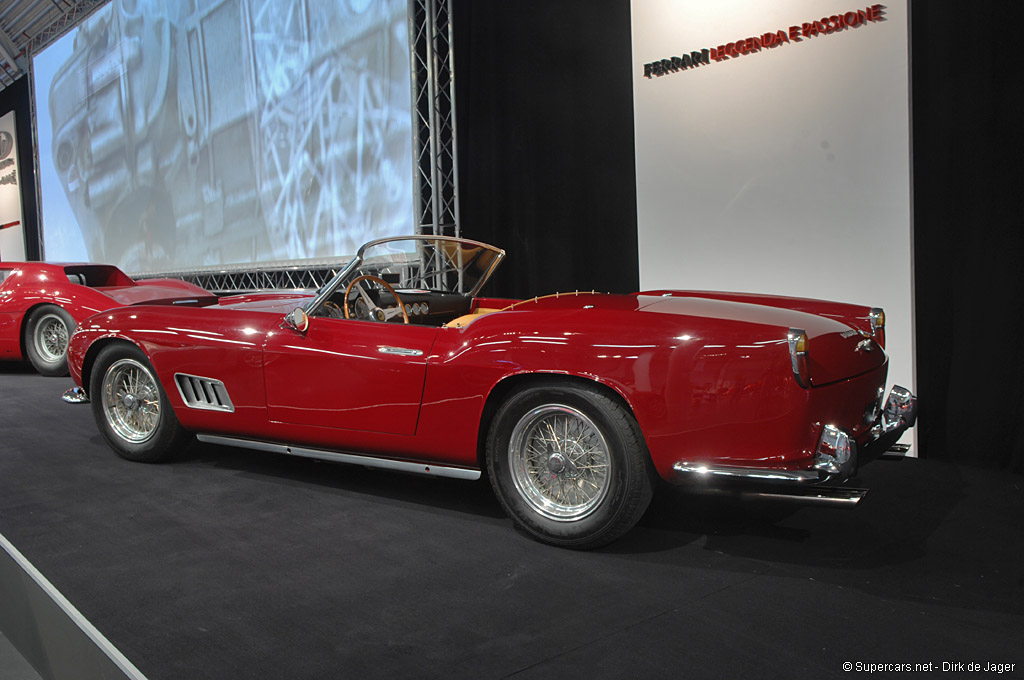
1958 Ferrari 250 GT LWB California Spyder 0923GT –
Auction Source: 2008 Leggenda e Passione
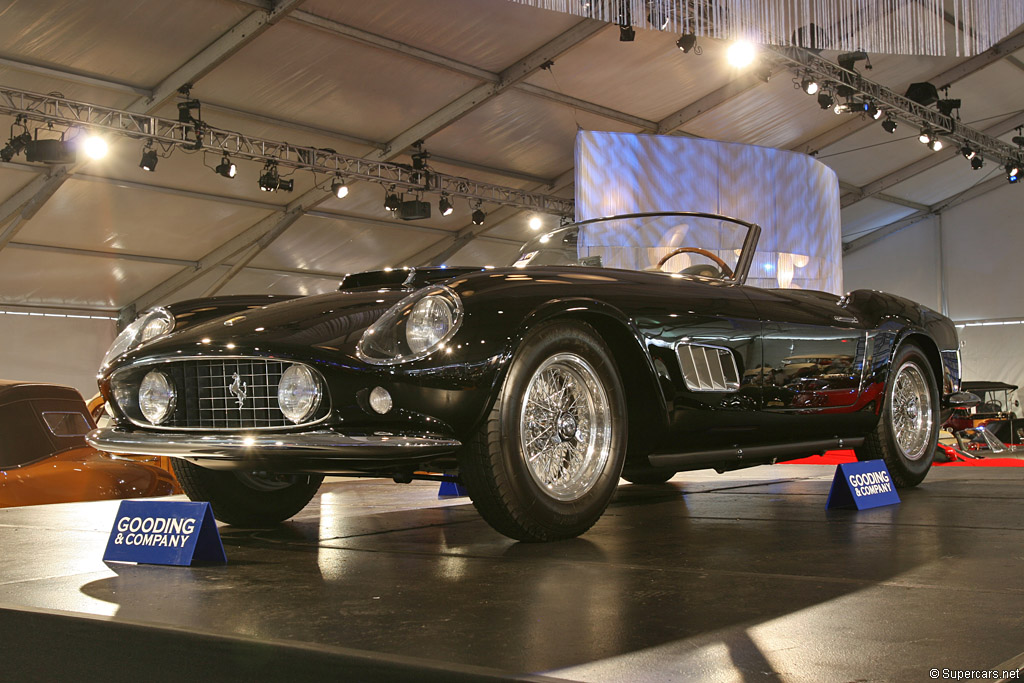
Auction Source: 2007 Monterey Preview