
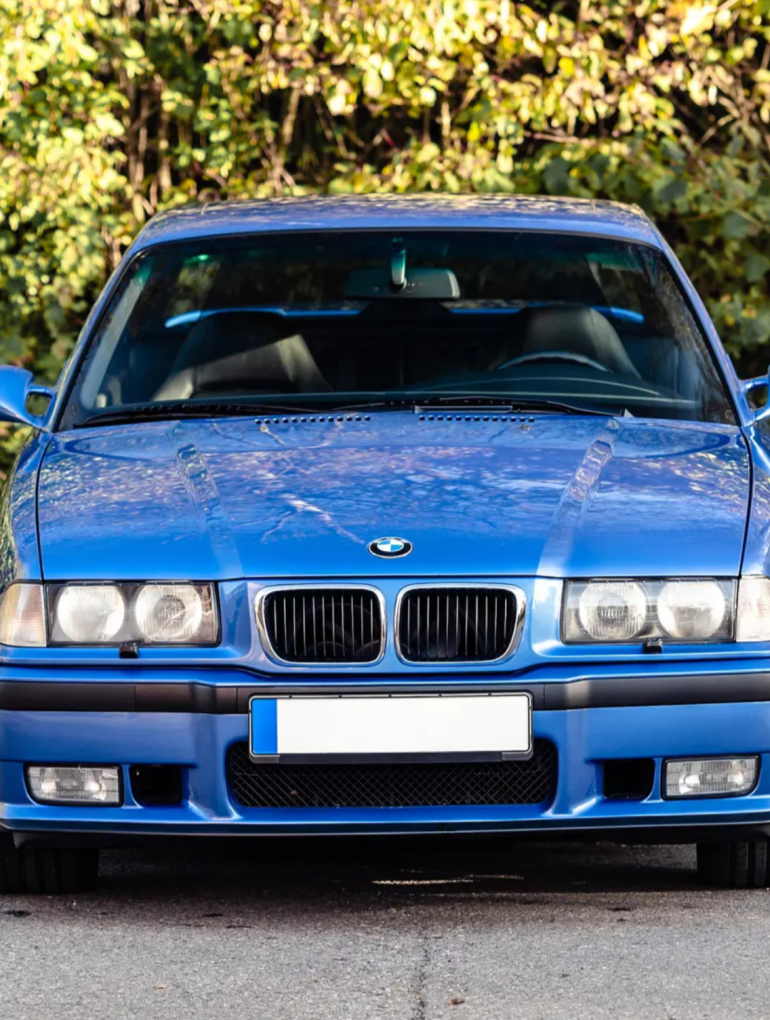

Geneva, March 1995. BMW unveiled the M3 Evolution, a lightweight homologation special built to celebrate the E36 M3’s early touring car racing success. Limited to just 100 examples for European markets, the Evolution featured the newly developed S50B32 3.2-liter inline six producing 321 horsepower, revised suspension geometry, and extensive weight reduction through stripped interiors and lightweight components. The transformation was subtle: unique 17-inch wheels, a small rear spoiler, and Evolution badges were the only external identifiers. Inside, cloth Recaro seats, deleted sound deadening, and minimal equipment saved approximately 100 kilograms compared to standard M3s. This was BMW M’s tribute to racing dominance, a street-legal track car showcasing what the E36 platform could achieve.
Background and Origins
The E36 M3 debuted in 1992 as the successor to the legendary E30 M3. Initial European models used a 3.0-liter S50B30 inline six producing 286 horsepower, while North American versions received a detuned 240-horsepower variant. The E36 M3 immediately dominated touring car racing worldwide, winning championships in the British Touring Car Championship, German Super Touring Championship, and various national series.
By 1994, BMW M Division was developing a larger-displacement engine to maintain competitiveness. The result was the S50B32, a 3.2-liter evolution producing 321 horsepower. To homologate the new engine for motorsport and celebrate racing success, BMW M GmbH developed the Evolution in late 1994.
The brief was straightforward: create the ultimate E36 M3 for enthusiasts who prioritized performance over luxury. Weight reduction was critical, with engineers systematically removing non-essential equipment. Production was limited to 100 units built during 1995 at BMW’s Regensburg facility, with final M Division assembly at Garching. Every car was finished in Fern Green metallic with lightweight cloth Recaro seats.
Design and Engineering

The Evolution was based on the standard E36 M3 coupe’s steel monocoque with a 2,700mm wheelbase. BMW engineers focused on weight reduction rather than structural modifications. Sound deadening was removed throughout, thinner glass was installed, and lightweight components replaced heavier standard parts. Total weight reduction was approximately 100 kilograms, bringing curb weight to 1,460 kilograms.
Suspension geometry was revised for track use. The front used MacPherson struts with stiffer springs, revised damper settings, and modified camber for improved turn-in response. The rear employed a multi-link arrangement with similarly uprated springs and dampers. Ride height dropped 10mm compared to standard M3s.
Braking remained the standard M3’s ventilated discs measuring 315mm front and 310mm rear with four-piston calipers. The system was adequate for the Evolution’s performance, though some owners later upgraded for dedicated track use.

The engine was BMW’s newly developed S50B32 inline six. Displacing 3,201cc with an 86.4mm bore and 91mm stroke, this all-aluminum engine featured individual throttle bodies, VANOS variable valve timing on the intake camshaft, and an 11.3:1 compression ratio. The DOHC head with four valves per cylinder allowed the engine to rev freely to its 7,400 rpm redline.
Output was 321 horsepower at 7,400 rpm with 258 lb-ft of torque at 3,250 rpm. The throttle response was immediate, the powerband linear and progressive. The individual throttle bodies created an addictive intake roar that intensified with revs.
Transmission was a Getrag six-speed manual with close ratios and a 3.23:1 final drive. A limited-slip differential transferred power to the rear wheels. The shift action was mechanical and precise, perfectly suited to the Evolution’s focused character.
Styling

Externally, the Evolution was subtly different from standard M3s. The front bumper was unchanged, retaining the M3’s distinctive quad-headlight arrangement and large lower air intakes. Small Evolution badges appeared on the front fenders. The side profile was dominated by unique 17-inch five-spoke lightweight alloy wheels measuring 8 inches wide front and rear, wearing 235/40 ZR17 Michelin Pilot Sport tires.
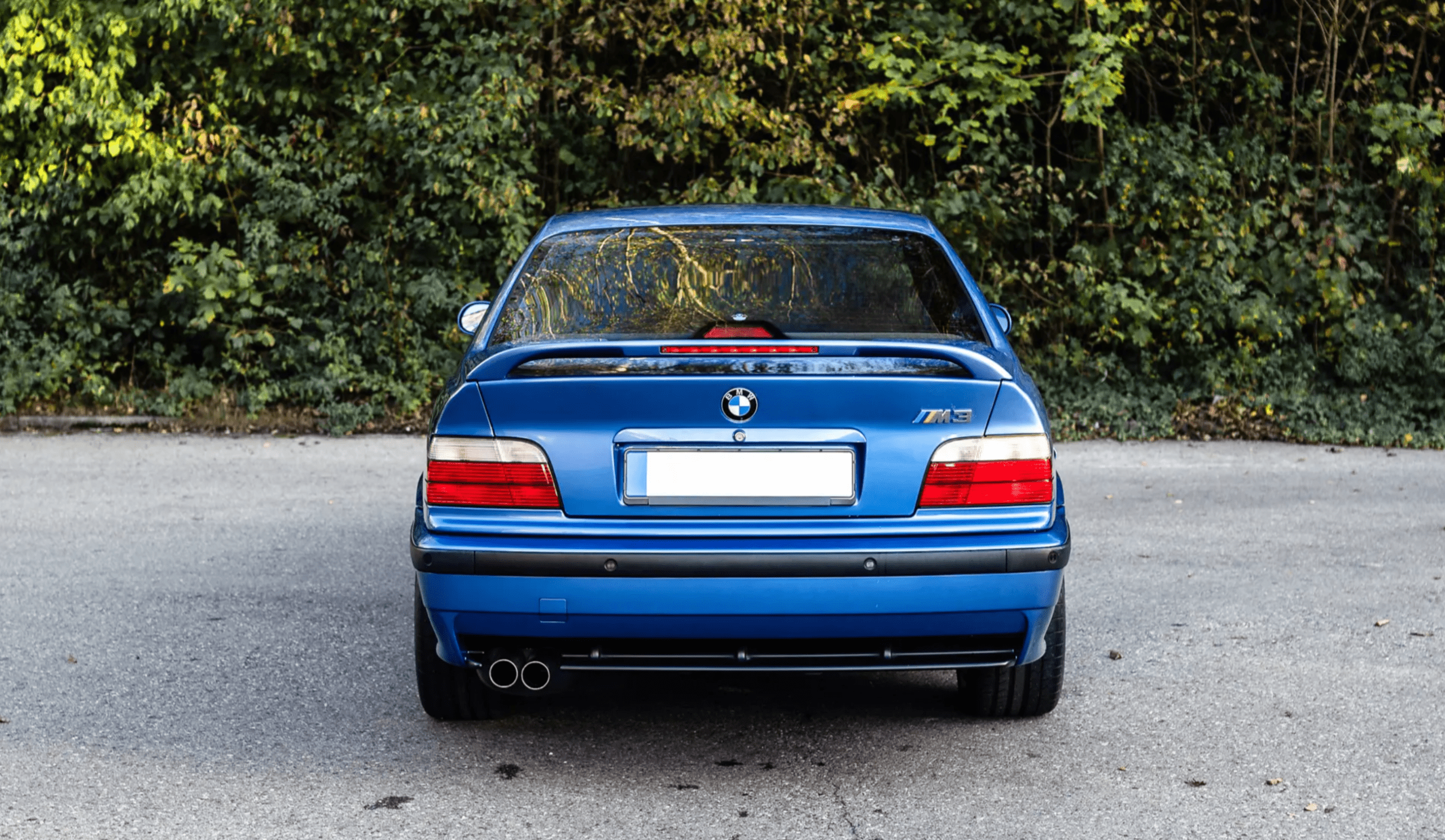
At the rear, a small lip spoiler sat atop the trunk lid, providing minimal downforce while maintaining the clean E36 silhouette. Dual exhaust outlets exited through the rear valance. The overall appearance was understated, with only the wheels and subtle spoiler distinguishing the Evolution from lesser M3s.
Every Evolution was finished in Fern Green metallic, a distinctive dark green shade that became synonymous with the model. No other colors were offered, creating instant recognition among enthusiasts.
Interior

The cabin was stripped to essentials. Lightweight Recaro cloth sport seats replaced the standard M3’s leather chairs, saving weight while providing superior support. The seats featured distinctive green and black fabric with Recaro branding. Evolution badges adorned the door sills.
The dashboard retained the standard E36 layout with analog gauges including a tachometer redlined at 7,400 rpm. An M-specific steering wheel faced the driver, leather-wrapped with M tricolor stitching. The gear lever was shorter than standard with an exposed linkage.
Sound insulation was removed throughout, creating a raw, unfiltered driving experience. Air conditioning was deleted to save weight, though it could be reinstalled at customer request. The radio was similarly absent. The overall atmosphere was purposeful and uncompromising.
Specifications
- Engine: S50B32 inline six, 3,201cc (86.4mm x 91mm), DOHC, four valves per cylinder, individual throttle bodies, VANOS
- Power: 321 bhp at 7,400 rpm
- Torque: 258 lb-ft at 3,250 rpm
- Transmission: Getrag six-speed manual, 3.23:1 final drive, limited-slip differential
- Chassis: Steel monocoque, 2,700mm wheelbase
- Suspension: MacPherson struts (front), multi-link (rear)
- Brakes: Vented discs 315mm (front), vented discs 310mm (rear)
- Wheels: 8×17 lightweight alloy, Michelin Pilot Sport 235/40 ZR17
- Weight: 1,460 kg
- Performance: 155 mph top speed (electronically limited), 0-60 mph in 5.2 seconds
Competition History

The Evolution was built to homologate the 3.2-liter engine for touring car racing. Following its introduction, S50B32-powered M3s dominated motorsport throughout the mid-1990s. The British Touring Car Championship saw M3s win multiple races, while German Super Touring and various national championships featured M3 victories.
Road-going Evolution examples became popular among track day enthusiasts. The lightweight construction and track-focused setup delivered advantages over standard M3s on technical circuits, where reduced weight and optimized suspension compensated for the modest power increase.
Production and Legacy

BMW built exactly 100 Evolution examples during 1995 at Regensburg. Each car received individual attention during assembly, with final M Division preparation at Garching. Every example was finished in Fern Green metallic with cloth Recaro seats, creating absolute uniformity across the production run.
The Evolution introduced the 3.2-liter engine that would become standard in all European-market E36 M3s from 1996 onward. It represented BMW M’s homologation philosophy: build a limited-edition special to satisfy motorsport regulations while offering enthusiasts the ultimate expression of the platform.
Today, E36 M3 Evolutions are extraordinarily rare and valuable. The combination of limited production, distinctive specification, and track-focused mission has made them among the most collectible modern BMWs. Clean examples command significant premiums over standard E36 M3s, reflecting their status as the purest E36 M3 variant.
The Evolution demonstrated BMW M’s commitment to creating focused driver’s cars. It represented an era when homologation specials still mattered, when manufacturers built genuinely extreme limited editions to satisfy racing regulations and reward enthusiasts. The E36 M3 Evolution remains one of the purest expressions of BMW M’s philosophy, a lightweight, naturally aspirated inline six masterpiece that prioritized driving experience above all else.