
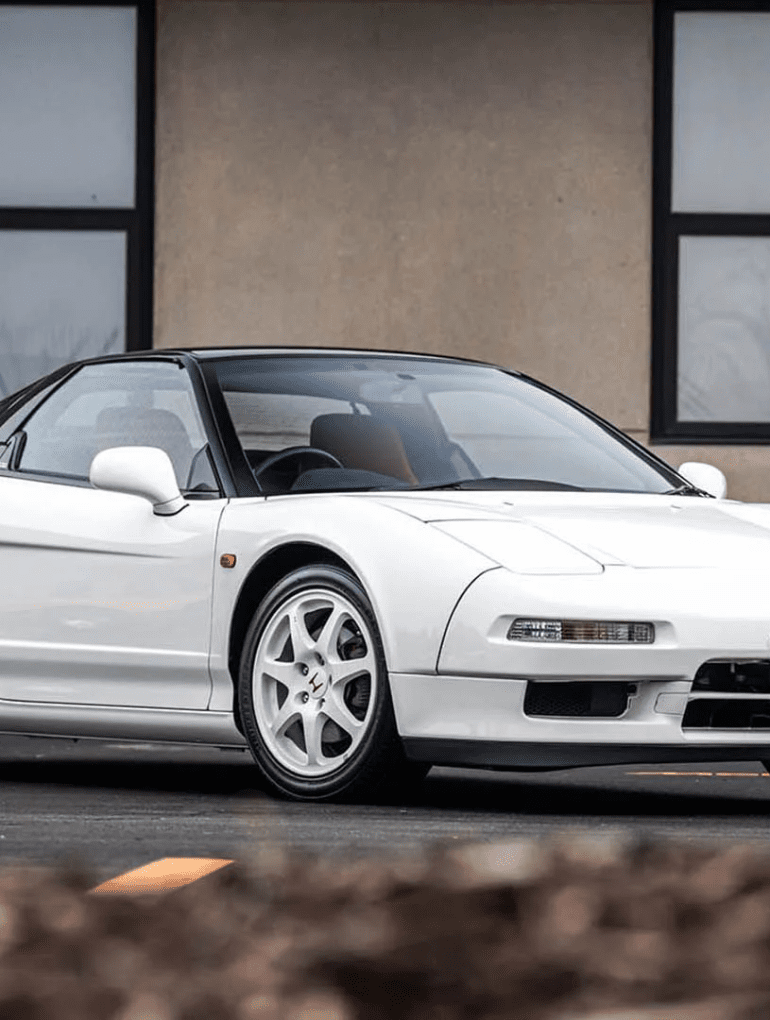

Tokyo, September 1992. Honda unveiled the NSX Type R, a lightweight, track-focused version of their already exceptional mid-engined supercar. Engineers stripped 120 kilograms through weight reduction measures including thinner glass, no sound deadening, deleted air conditioning, lightweight Recaro seats, and a titanium shift knob. The 3.0-liter V6 remained unchanged at 270 horsepower, but reduced mass transformed the driving experience. Suspension was retuned for circuit work with stiffer springs and revised dampers. Only the Japanese market received the Type R, with just 483 examples built between 1992 and 1995. This was Honda’s answer to Ferrari’s Challenge Stradale, a street-legal race car wearing a suit.
Background and Origins
The original NSX debuted in 1990 after six years of development under chief engineer Shigeru Uehara. Honda’s brief was ambitious: create a mid-engined supercar matching Ferrari’s performance while delivering Japanese reliability and everyday usability. The result was revolutionary, combining an all-aluminum monocoque, VTEC V6 engine, and handling dynamics refined with input from Formula 1 champion Ayrton Senna.
By 1992, the NSX had proven itself as a capable grand tourer, but Honda’s engineers wanted something more extreme. The Type R program, established to create lightweight, track-focused versions of Honda’s performance cars, seemed the perfect vehicle. The NSX would become the first Type R model, setting the template for every Integra, Civic, and Accord Type R that followed.
Development focused on weight reduction rather than power increases. Honda’s philosophy held that removing mass improved every aspect of performance: acceleration, braking, handling, and driver engagement. Engineers systematically examined every component, asking whether it was essential or could be lightened.
The result debuted at Tokyo in September 1992 as the NSX Type R, available exclusively in the Japanese domestic market. Production began immediately, continuing until 1995 when the NSX received its first major update. A second-generation Type R appeared in 2002 based on the facelifted NSX, but the original 1992-1995 version remains the purest expression of Honda’s lightweight philosophy.
Design and Engineering
The Type R retained the standard NSX’s all-aluminum monocoque chassis, a revolutionary structure that saved approximately 200 kilograms compared to equivalent steel construction. The 2,530mm wheelbase, double-wishbone suspension geometry, and mid-engine layout were unchanged. However, Honda’s engineers attacked weight everywhere else.
Thinner glass saved 7 kilograms. Sound deadening was completely removed, saving another 15 kilograms. The air conditioning system was deleted, along with the stereo, saving 20 kilograms combined. The forged aluminum wheels were lighter than standard NSX units by 8 kilograms. Lightweight Recaro bucket seats trimmed in black cloth replaced the heavy leather chairs, saving 15 kilograms. Even the toolkit was reduced to essential items.
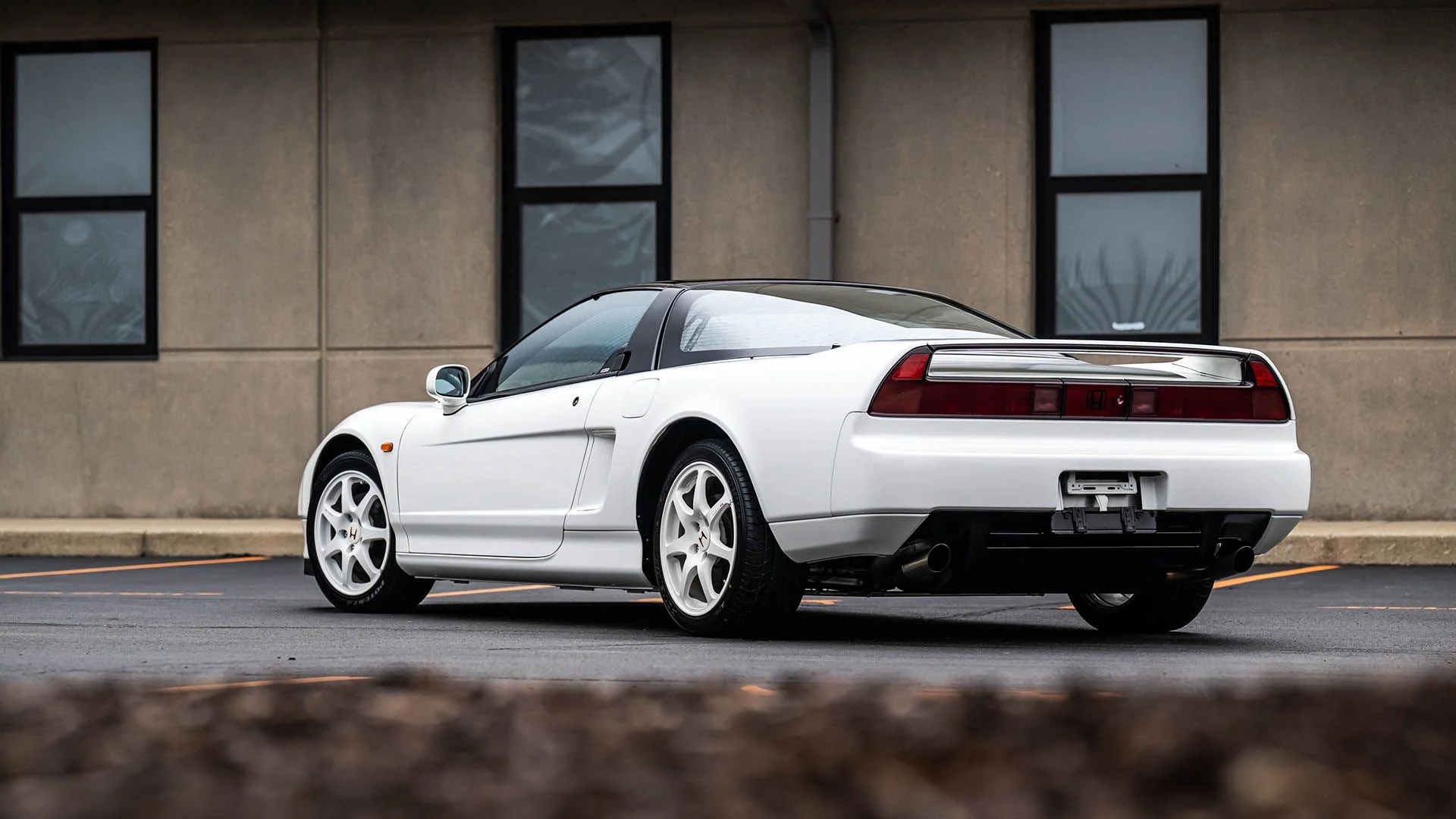
The most visible change was the rear spoiler, a fixed aluminum wing mounted on the engine cover. This provided genuine downforce at speed while adding minimal weight. Total savings were approximately 120 kilograms, bringing curb weight to 1,230 kilograms.
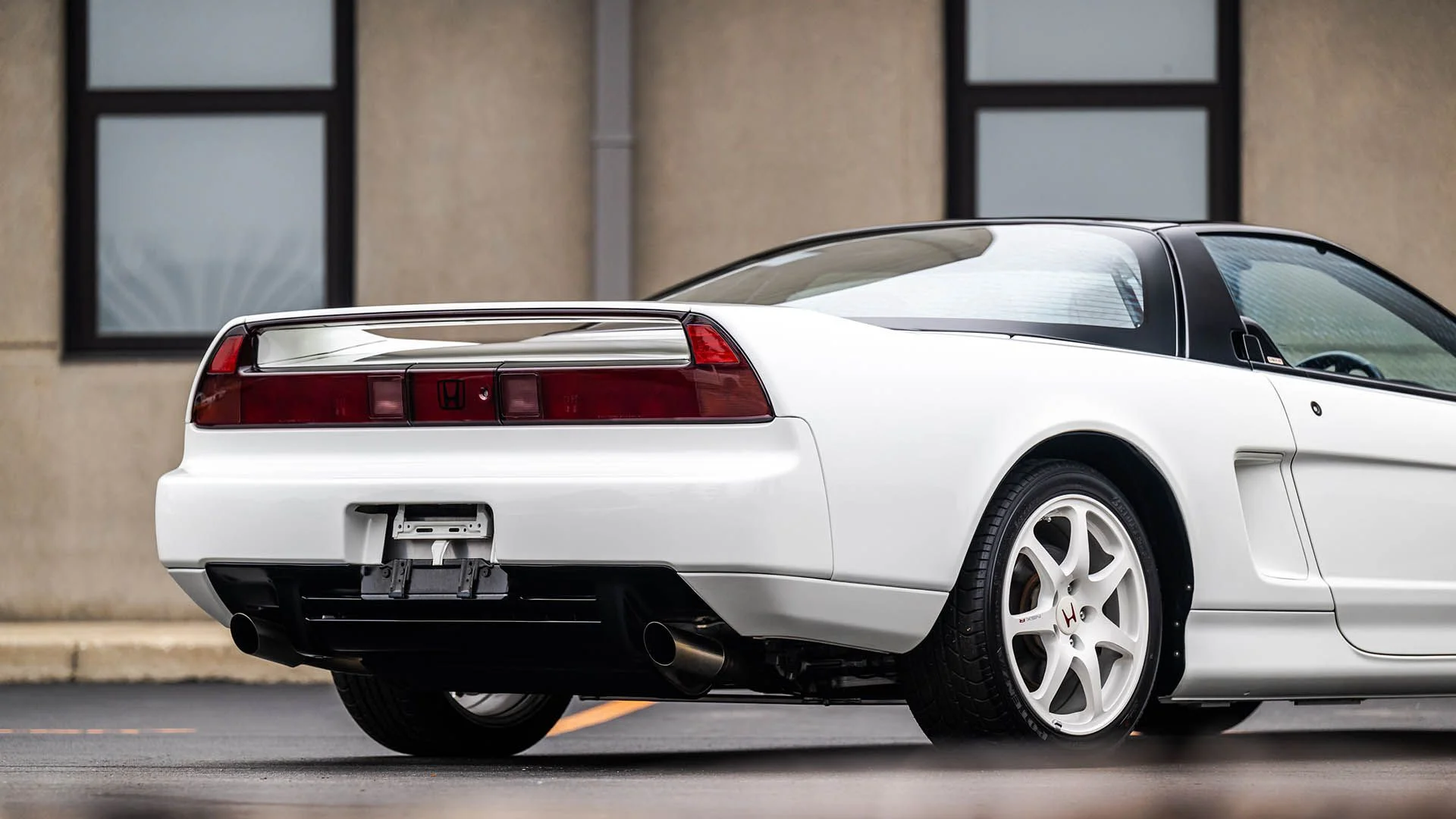
Suspension received significant attention. Spring rates increased front and rear, while Showa dampers were revalved for firmer control. The ride height dropped 10mm. Compliance bushings were replaced with stiffer units, sharpening response but increasing harshness over rough surfaces. The steering rack was unchanged but felt more immediate thanks to reduced mass and stiffer suspension.
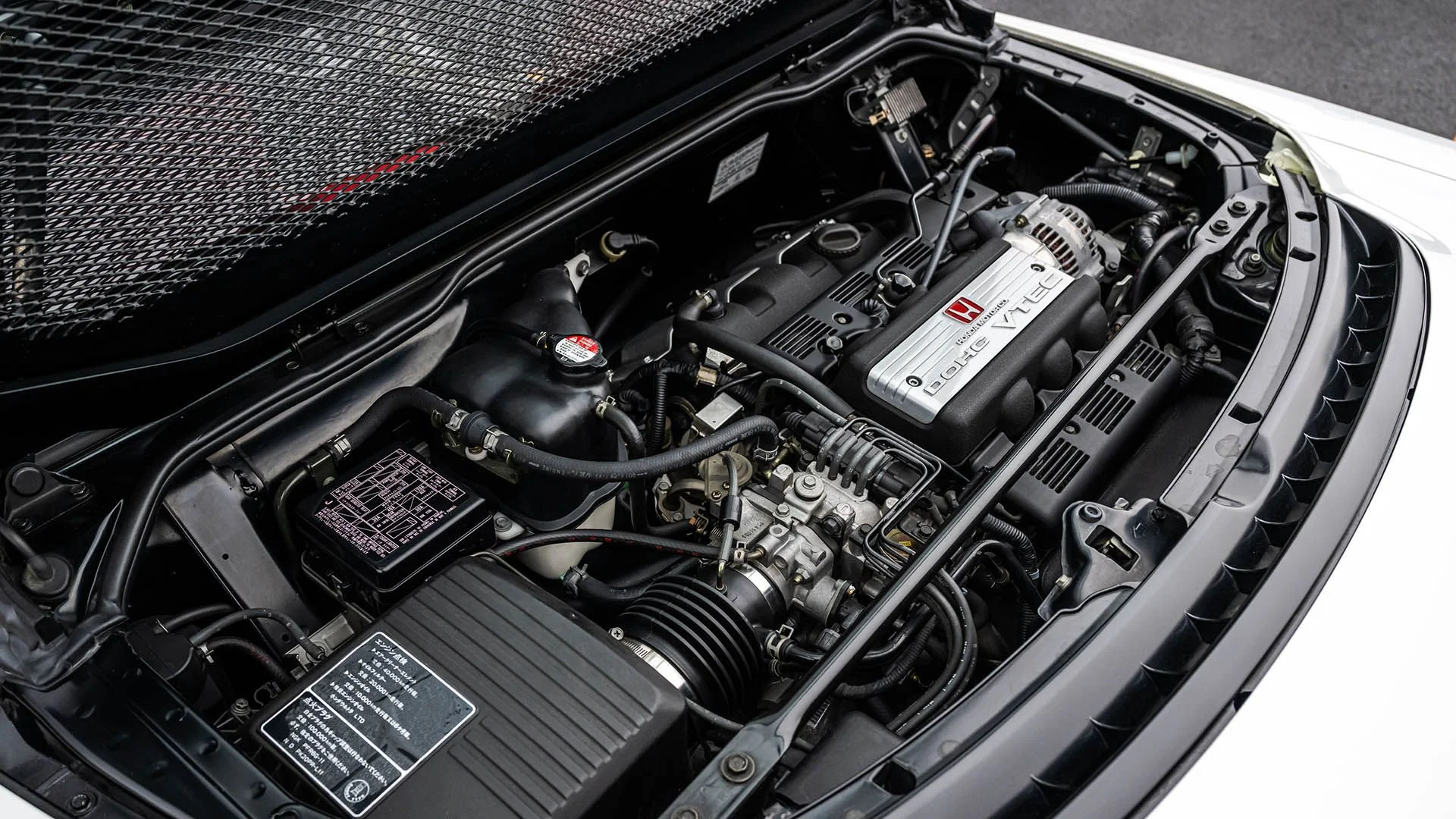
The engine was Honda’s C30A V6, displacing 2,977cc with a 90mm bore and 78mm stroke. The all-aluminum block featured titanium connecting rods and VTEC variable valve timing switching cam profiles at 5,800 rpm. With an 10.2:1 compression ratio and individual throttle bodies, output was 270 horsepower at 7,300 rpm and 210 lb-ft at 5,400 rpm, identical to the standard NSX.
Transmission was a five-speed manual with a close-ratio gearbox and 4.06:1 final drive. The shift action was mechanical perfection, each gear change accompanied by a satisfying metallic click. A titanium shift knob saved grams while looking spectacular.
Styling
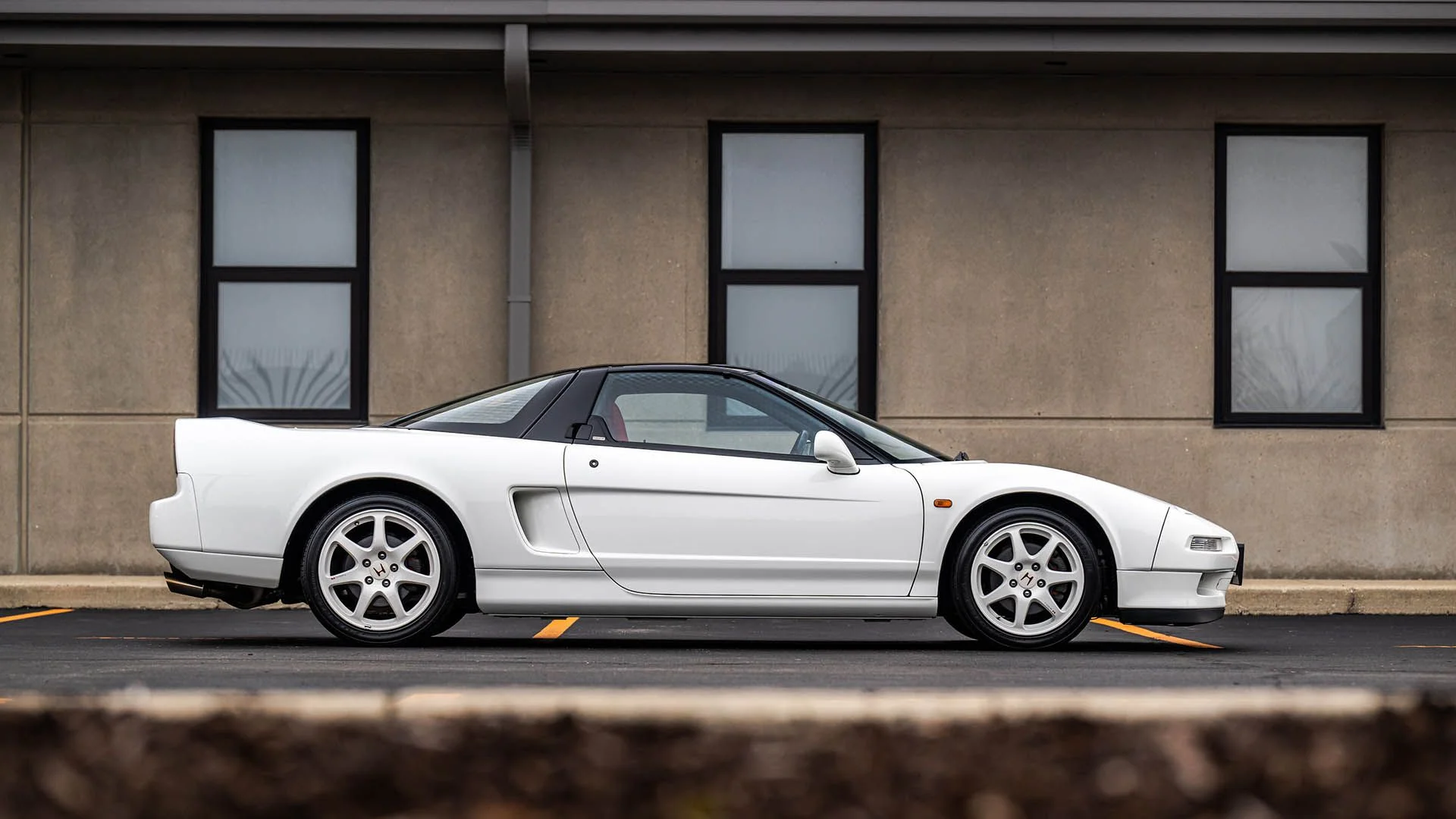
Externally, the Type R was subtle. The fixed rear wing was the most obvious identifier, its simple two-position design allowing adjustment for track use. A small Type R badge appeared on the rear panel. Otherwise, the NSX’s timeless Pininfarina-influenced design remained unchanged.
The long, low profile featured a cab-forward greenhouse and pronounced rear haunches. Pop-up headlights kept the nose clean when retracted. Side air intakes fed the mid-mounted engine, while a glass panel in the rear deck allowed glimpses of the V6. The design was restrained compared to contemporary Italian exotics, favoring elegance over aggression.
Championship White was the signature Type R color, though red was also available. The lightweight forged aluminum wheels measured 6.5×15 inches front and 8×16 inches rear, wearing 205/50 ZR15 and 225/50 ZR16 Yokohama A022H tires respectively. These semi-slick compounds provided substantially more grip than the standard NSX’s rubber.
Interior
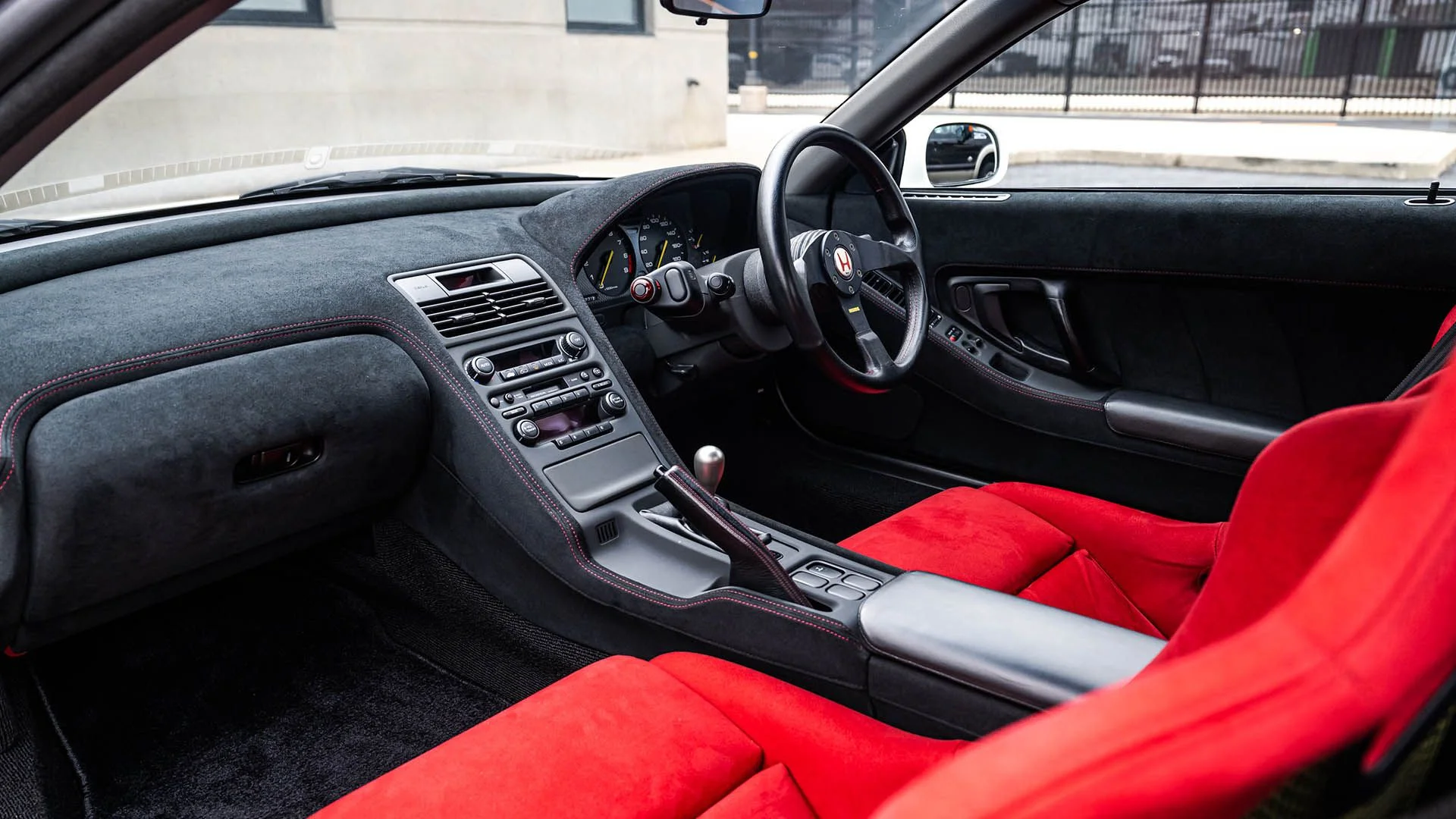
The cabin was stripped to essentials. Black cloth Recaro seats provided aggressive bolstering with minimal padding. The dashboard retained the standard NSX’s layout but lost the stereo and climate control panel, replaced by a simple blanking plate. A red-backed tachometer dominated the instrument cluster, redlined at 8,000 rpm with VTEC engagement marked at 5,800 rpm.
A black Momo steering wheel faced the driver, its leather-wrapped rim perfectly sized for quick inputs. The titanium shift knob was a work of art, its polished surface and perfect weight a tactile pleasure. Behind the seats was a carpeted storage area with a diagonal brace bar, the only concession to practicality.
The lack of sound insulation transformed the driving experience. Every mechanical noise reached the cabin: the V6’s intake roar, transmission whine, tire noise, and exhaust note. It was intimate and involving, connecting driver to machine in ways the refined standard NSX couldn’t match.
Specifications
- Engine: C30A V6, 2,977cc (90mm x 78mm), DOHC, four valves per cylinder, VTEC
- Power: 270 bhp at 7,300 rpm
- Torque: 210 lb-ft at 5,400 rpm
- Transmission: Five-speed manual, 4.06:1 final drive
- Chassis: Aluminum monocoque, 2,530mm wheelbase
- Suspension: Double wishbones (front and rear)
- Brakes: Vented discs 282mm (front), vented discs 282mm (rear)
- Wheels: Forged aluminum 6.5×15 front, 8×16 rear, 205/50 ZR15 (front), 225/50 ZR16 (rear)
- Weight: 1,230 kg
- Performance: 168 mph top speed, 0-60 mph in 5.0 seconds
Competition History
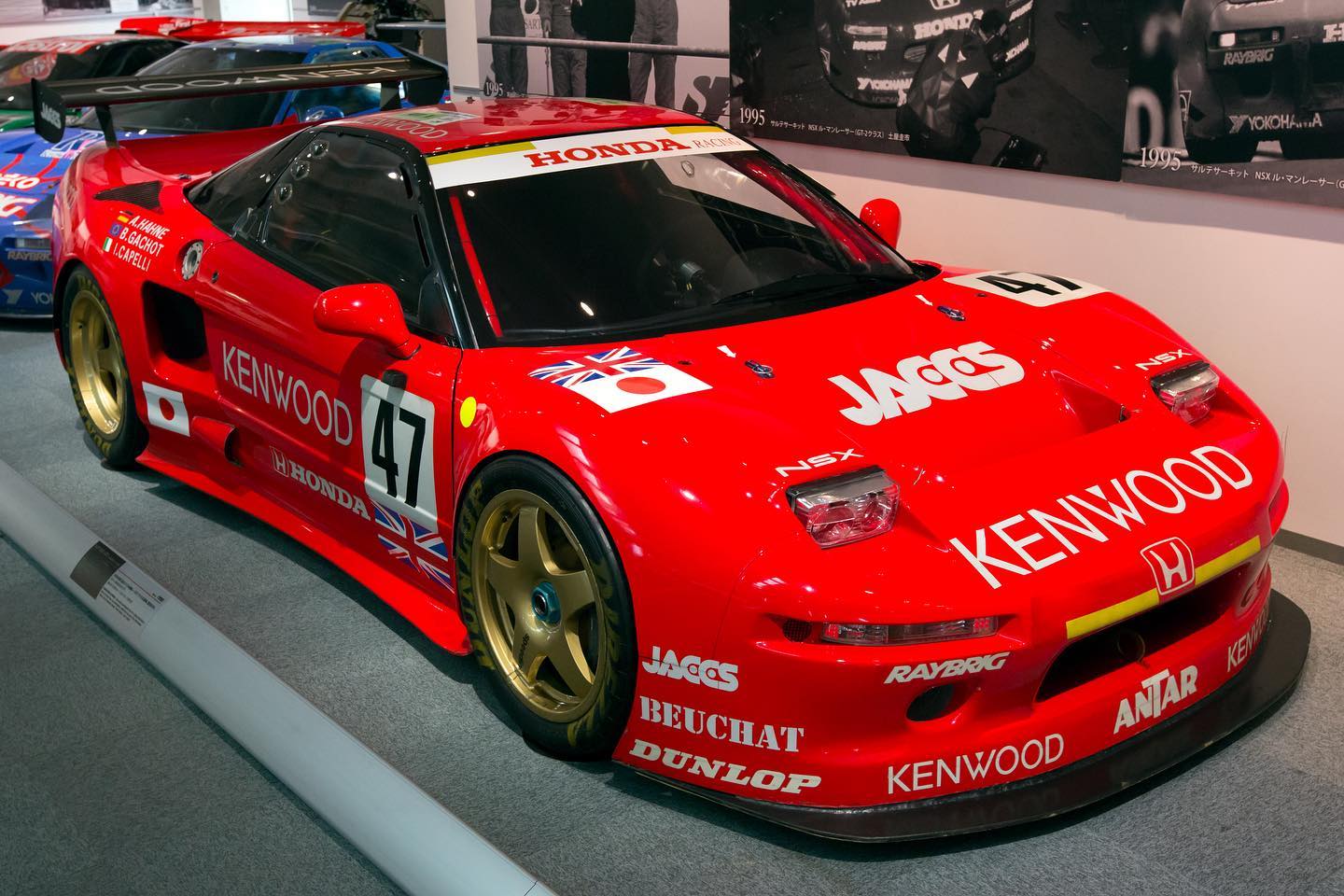
The NSX Type R was built primarily for track days and time attack rather than organized racing. However, several privateer entries competed in Japanese GT racing during the mid-1990s, where the combination of light weight and Honda reliability proved competitive in GT2 class competition.
The Type R dominated time attack events at circuits like Tsukuba and Suzuka, where its balanced chassis and reduced weight allowed skilled drivers to extract remarkable lap times. Many owners modified their cars with aftermarket forced induction, creating 400-plus horsepower weapons that remained competitive against much newer machinery.
Production and Legacy
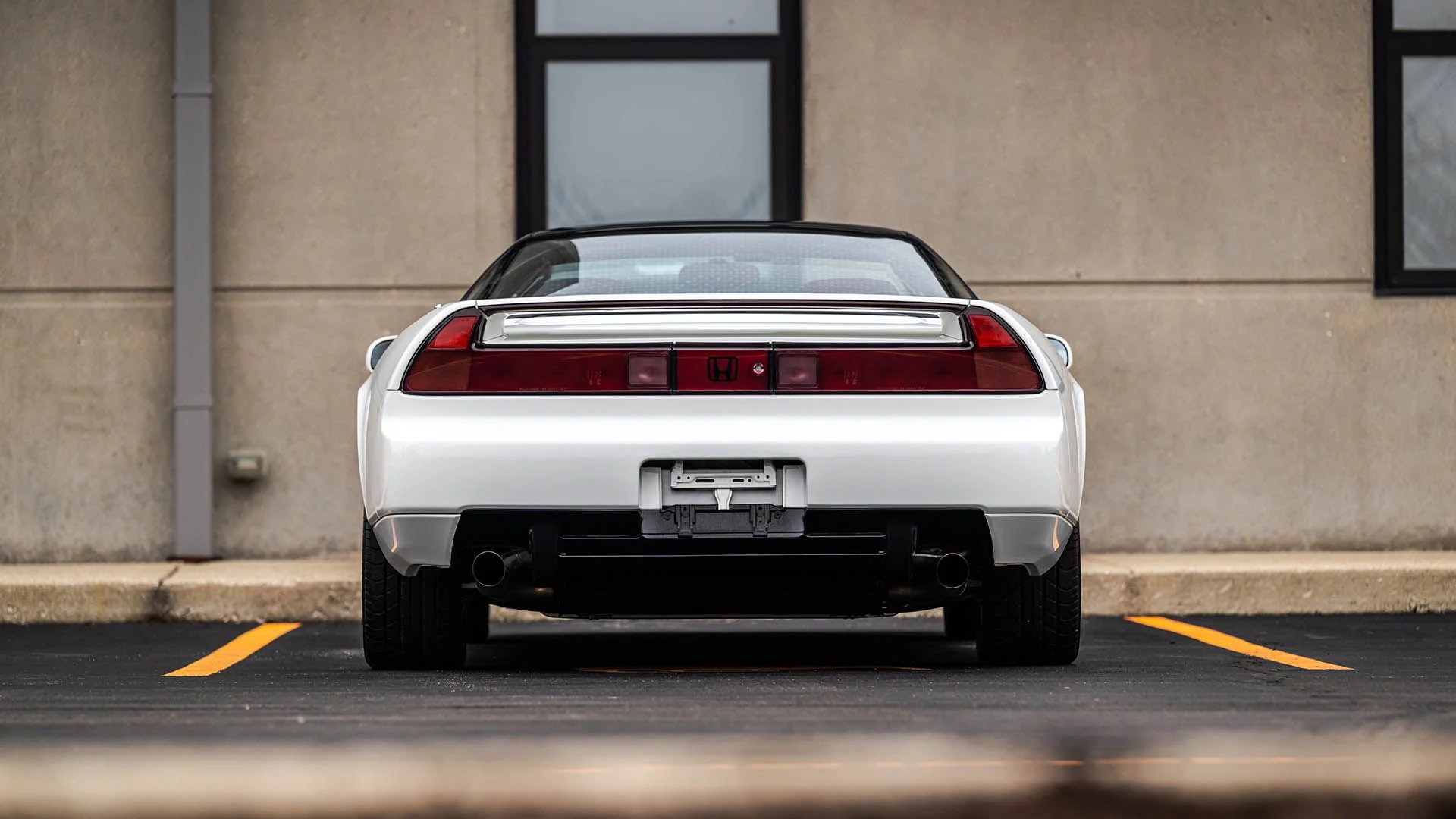
Honda built exactly 483 examples of the first-generation NSX Type R between 1992 and 1995, all for the Japanese domestic market. Every car was hand-assembled at the Tochigi factory with meticulous attention to detail. Production was intentionally limited, creating immediate collectibility.
The Type R established Honda’s lightweight performance philosophy that would define every subsequent Type R model. It proved that removing mass mattered more than adding power, creating a more engaging driving experience through physics rather than brute force. The suspension tuning, weight reduction techniques, and focus on driver connection became the template for the Integra Type R, Civic Type R, and every performance Honda that followed.
The NSX Type R also proved Honda could compete with Ferrari on Ferrari’s terms. While the Italian company offered limited-edition specials like the 348 Challenge, Honda demonstrated that Japanese precision and obsessive engineering could create equally compelling track-focused machines. The Type R wasn’t just lighter than a standard NSX; it was lighter than most contemporary Ferraris while matching or exceeding their performance.
Today, first-generation NSX Type R examples are extraordinarily rare and valuable. Most remained in Japan, with only a handful exported years later under classic car provisions. Clean examples command prices exceeding $300,000, reflecting their status as the ultimate air-cooled NSX and one of Honda’s greatest achievements. The Type R represented Honda at its peak, when engineering excellence and uncompromising focus created machines that rewarded skill and celebrated the pure act of driving.