
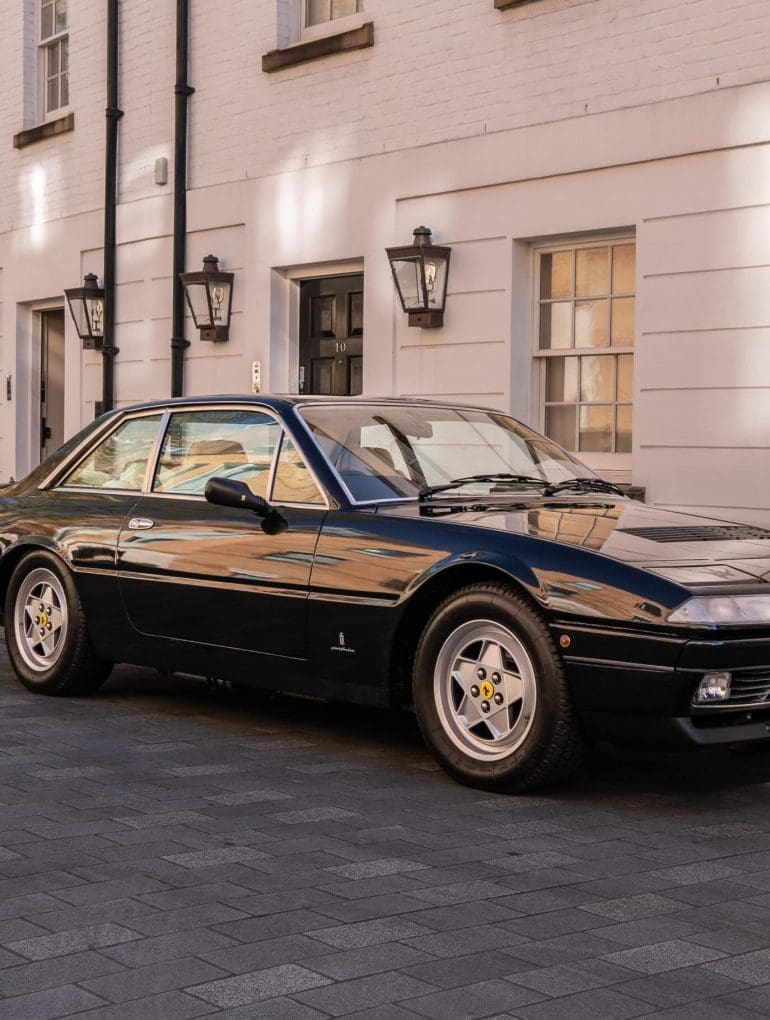

Geneva, March 1985. Ferrari unveiled the 412, the final evolution of the 2+2 grand tourer lineage stretching back to the 365 GT4 2+2 of 1972. The name denoted 4.9 liters and 12 cylinders, Ferrari’s traditional nomenclature. The Colombo V12 grew from 4.8 to 4.9 liters, producing 340 horsepower through Bosch fuel injection. Buyers could choose between a five-speed manual or three-speed automatic transmission, the latter a rarity in Ferrari’s lineup. Pininfarina’s styling was elegant and restrained, prioritizing comfort over aggression. This was Ferrari’s answer to the Rolls-Royce Camargue and Aston Martin Lagonda, a luxurious continent-crosser for wealthy clients who needed four seats and uncompromising refinement. Production continued until 1989, with 576 built.
Background and Origins
Ferrari’s 2+2 grand tourer tradition began with the 250 GTE in 1960, establishing a parallel lineage alongside the company’s two-seat sports cars. By the mid-1980s, this lineage had evolved through the 330 GT 2+2, 365 GT4 2+2, 400, and 400i. Each generation grew slightly larger, more refined, and more luxurious.
The 400i, introduced in 1979, featured fuel injection replacing the earlier 400’s carburetors. It was successful, particularly in European markets where wealthy clients appreciated the combination of Ferrari performance and genuine four-seat practicality. However, by 1984, the 4.8-liter V12 needed updating to meet evolving emissions regulations while maintaining performance.
Ferrari’s engineers enlarged the Colombo V12 to 4,943cc, the largest displacement this legendary engine would ever achieve in production form. The bore remained 81mm while stroke increased from 78mm to 85mm. This longer stroke delivered more low-end torque, better suited to the 412’s role as a relaxed grand tourer rather than a high-revving sports car.
Pininfarina refined the styling with revised bumpers, new taillights, and subtle detail changes. The interior received updated trim and improved climate control. The result was the 412, debuting at Geneva in March 1985. Production began immediately at Maranello, continuing until 1989 when the front-engined V12 2+2 concept was temporarily abandoned.
Design and Engineering
The 412 was based on a traditional steel monocoque with a 2,700mm wheelbase, unchanged from the 400i. The structure was conventional pressed steel with reinforcements in critical areas. Independent suspension at all four corners provided the ride quality expected of a luxury grand tourer.
Front suspension used unequal-length double wishbones with coil springs and telescopic dampers. The rear employed a similar arrangement with anti-squat geometry to maintain composure during acceleration. Anti-roll bars front and rear helped control body roll. The ride was compliant by Ferrari standards, though still firm compared to contemporary luxury sedans.
Braking was by ventilated discs all around, measuring 280mm front and 282mm rear. Four-piston calipers provided adequate stopping power for the 412’s 1,760-kilogram mass. Power steering was standard, with a 3.5-turn lock-to-lock ratio prioritizing ease of use over sporting response.
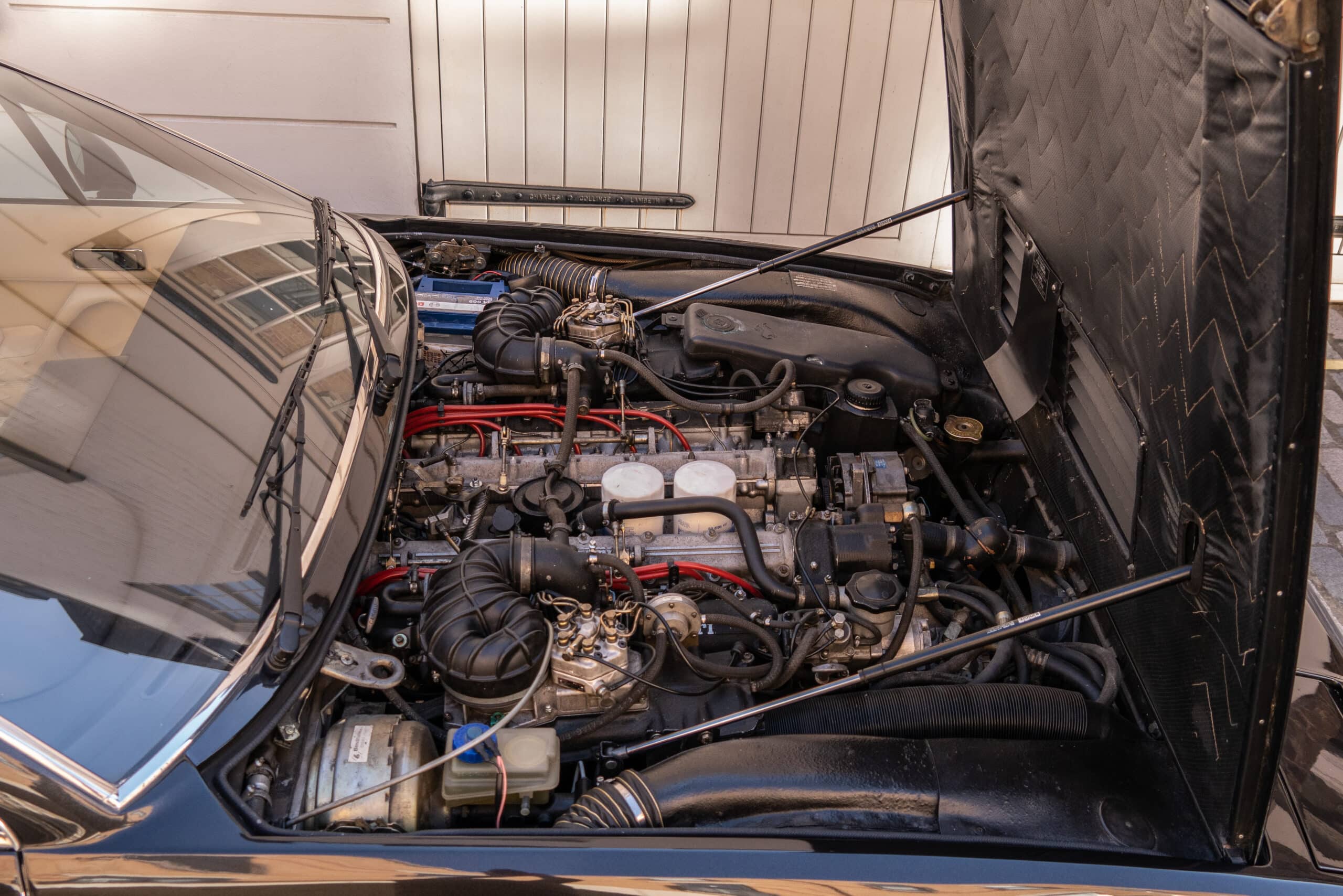
The engine was Ferrari’s Type F101 E000 Colombo V12, the final and largest evolution of the legendary design introduced in 1947. Displacing 4,943cc with an 81mm bore and 85mm stroke, it featured a single overhead camshaft per bank, two valves per cylinder, and a 9.6:1 compression ratio. Bosch K-Jetronic fuel injection replaced the earlier mechanical injection system, improving emissions compliance and low-speed drivability.
Output was 340 horsepower at 6,000 rpm and 333 lb-ft at 4,200 rpm. The torque curve was broad and flat, delivering effortless acceleration from low revs. The redline sat at 6,750 rpm, though the engine’s character encouraged relaxed cruising rather than hard driving.
Transmission choices included a five-speed manual or GM-sourced three-speed automatic. The automatic was unusual for Ferrari but proved popular, particularly in the American market where approximately 60 percent of buyers specified it. The manual featured a traditional open-gate shifter, while the automatic used a conventional floor-mounted selector.
Styling
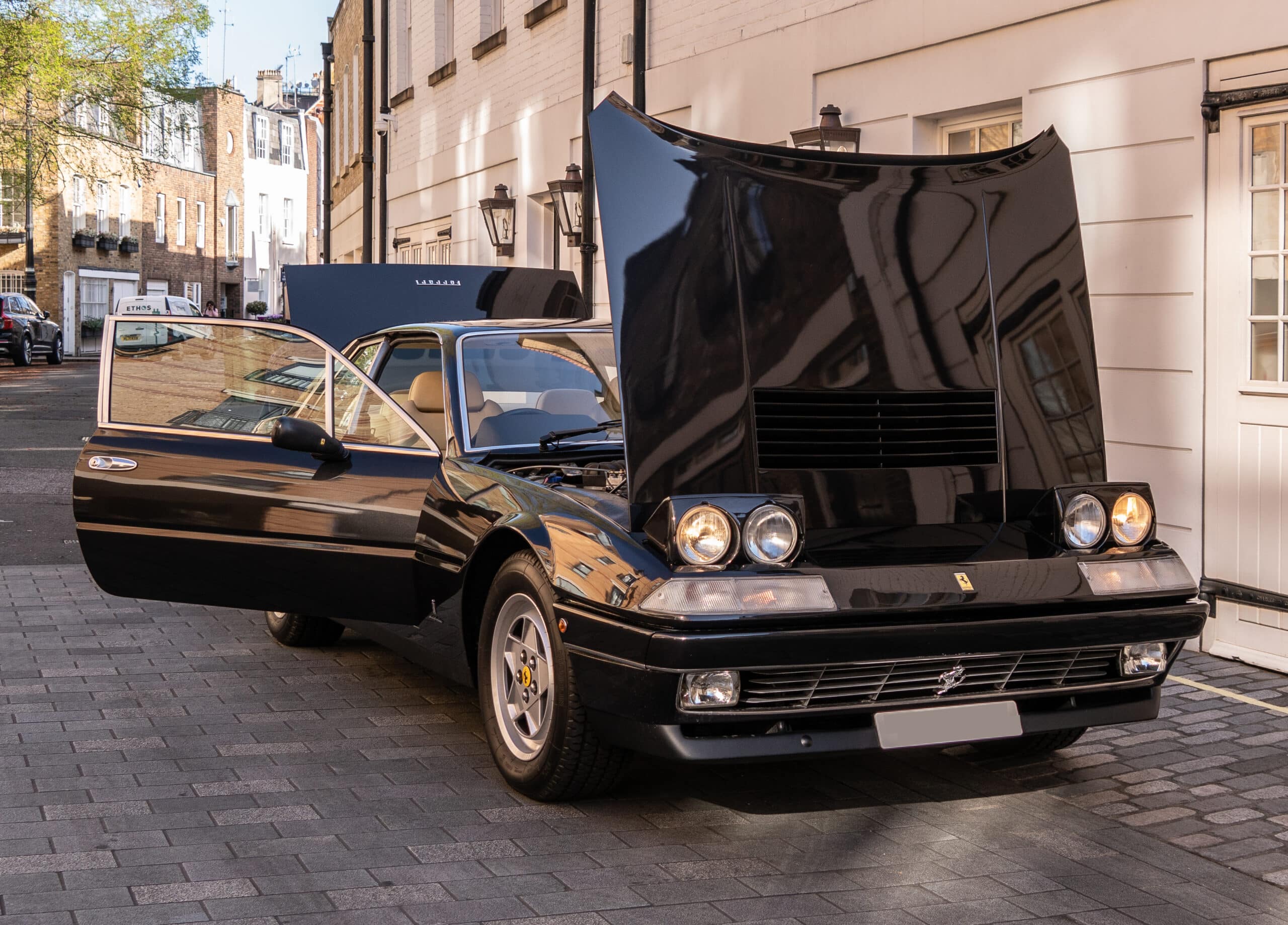
Pininfarina’s design was elegant and understated, a significant departure from Ferrari’s dramatic mid-engined exotics. The proportions were classic grand tourer: long hood, short rear deck, and generous greenhouse providing excellent visibility. The nose featured quad pop-up headlights and a shallow grille with Ferrari’s prancing horse badge.
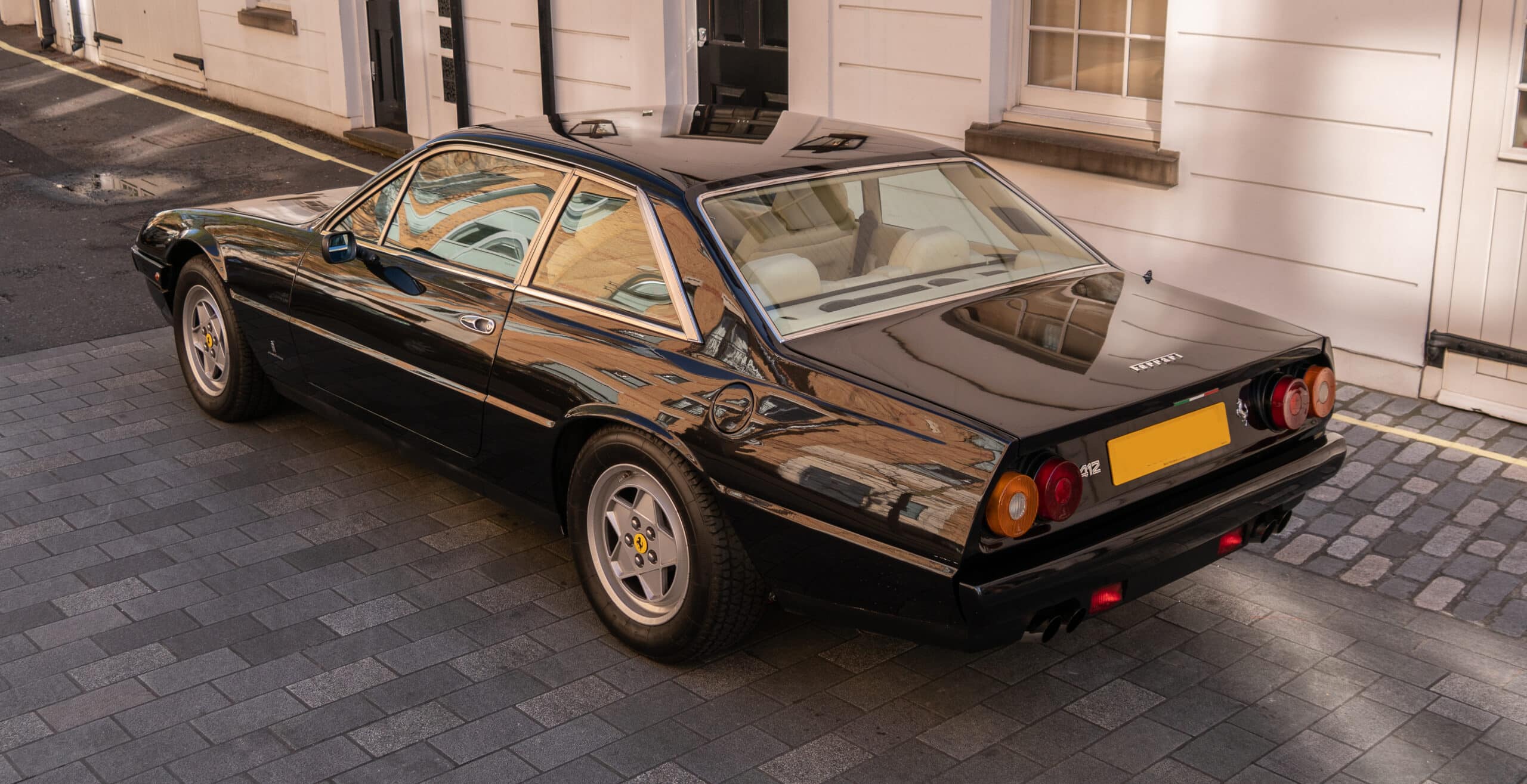
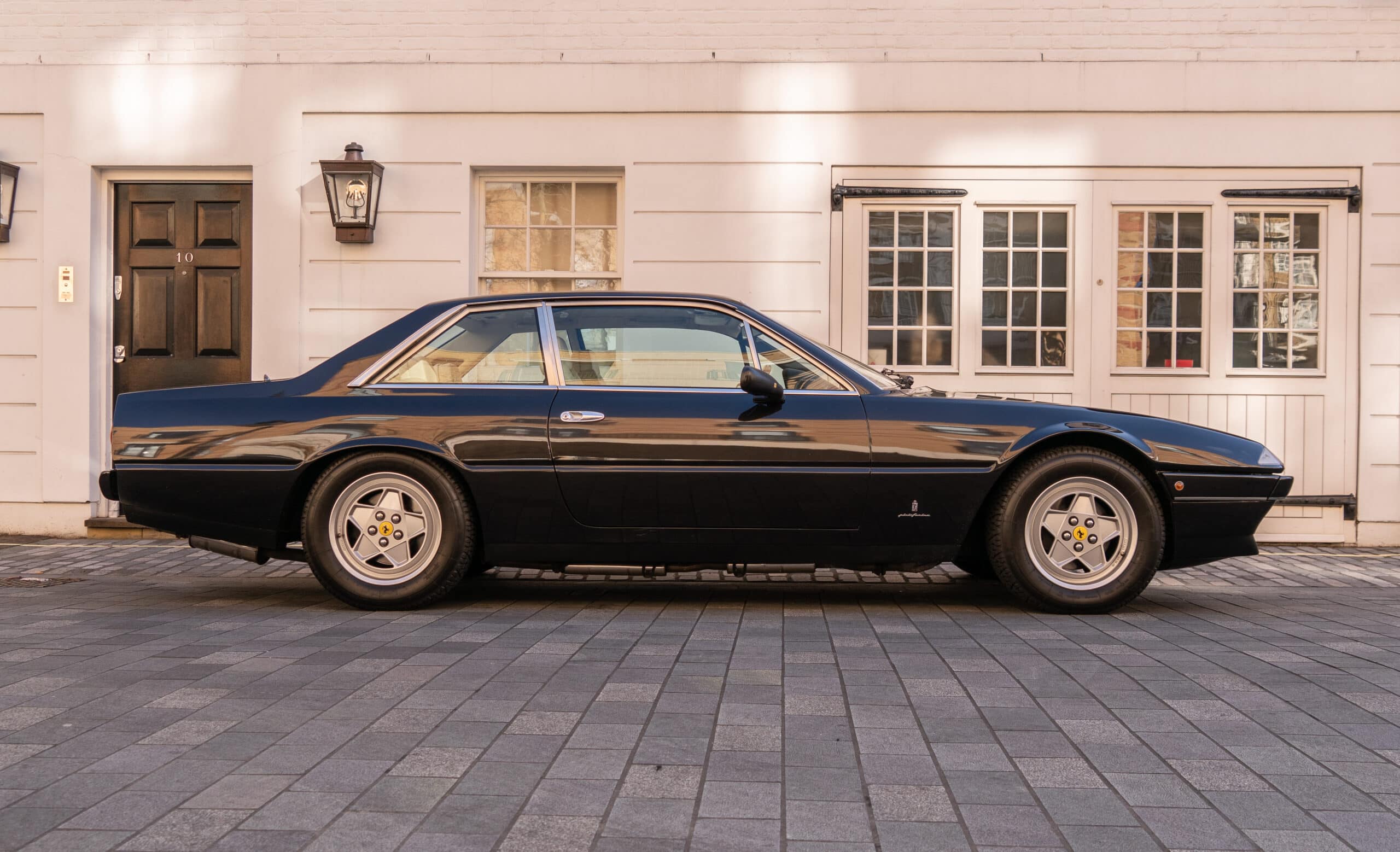
Side profile was clean and flowing, with minimal creases or character lines. Chrome trim surrounded the windows, while body-colored bumpers integrated smoothly into the overall design. At the rear, revised taillights featured a distinctive wraparound design, while dual exhaust outlets exited through the rear valance.
The 412 looked more like a luxury sedan than a traditional Ferrari, which was precisely the intention. This was a car for discreet wealth, favoring elegance over aggression. The design aged remarkably well, looking contemporary even in the late 1980s.
Standard wheels were 7.5×16-inch Cromodora alloys wearing 220/55 VR16 Michelin TRX tires, a metric size system that would prove problematic years later when replacement tires became scarce. Color choices included traditional Ferrari reds, blues, silvers, and various metallics, with many cars specified in conservative dark colors.
Interior
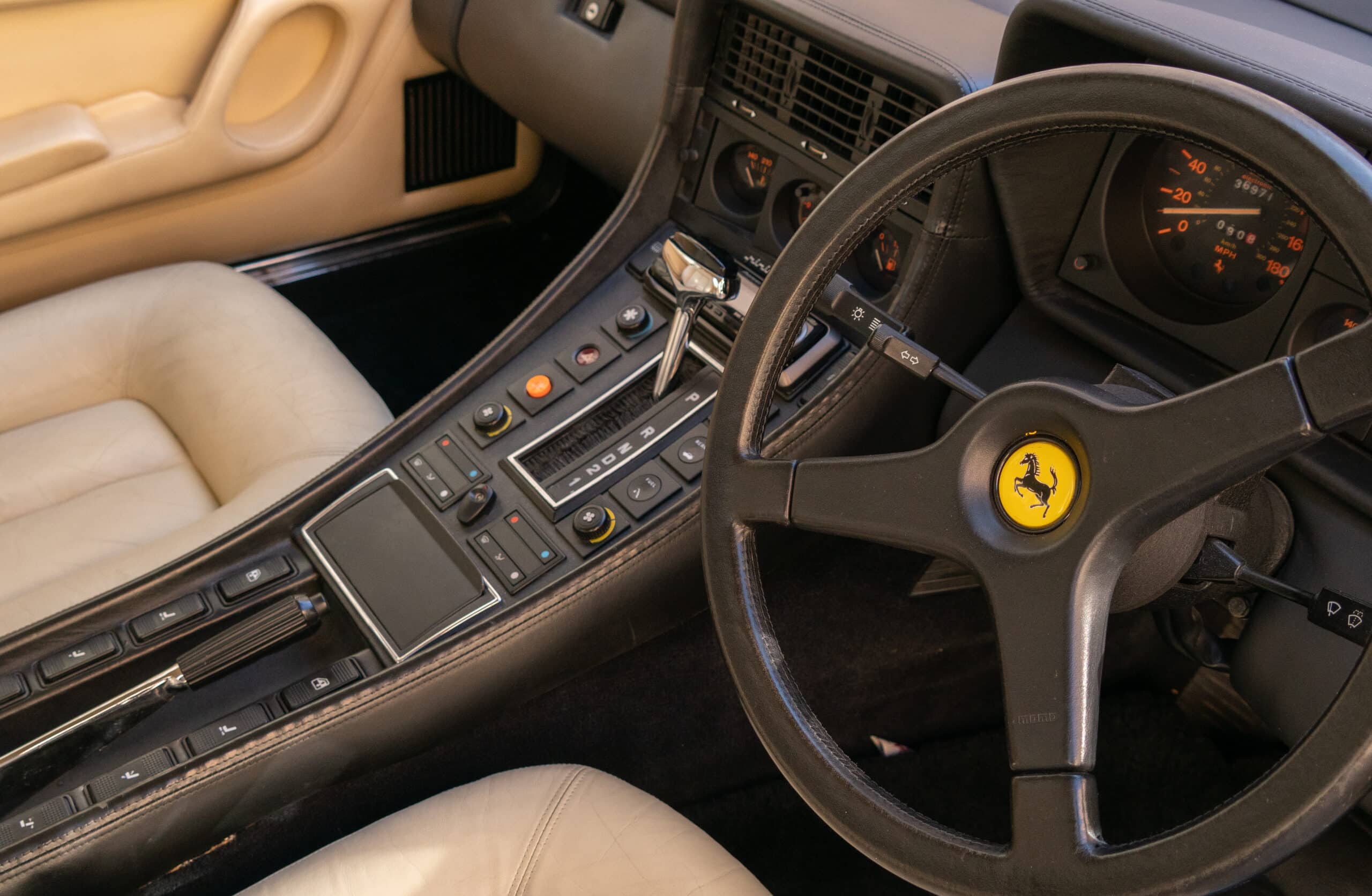
The cabin was trimmed in Connolly leather throughout, with matching carpeting and headlining. Front seats were electrically adjustable with lumbar support, providing exceptional comfort for long-distance touring. The rear bench accommodated two adults, though legroom was tight. Children fit better, making the 412 genuinely practical for family use.
The dashboard was a traditional Ferrari design with analog Veglia instruments including a large speedometer and tachometer directly ahead of the driver. Auxiliary gauges for oil pressure, water temperature, and fuel sat in a central pod. Climate control was automatic, a significant improvement over earlier manual systems. The stereo was a Clarion unit with cassette player.
A leather-wrapped steering wheel featured the Ferrari prancing horse at its center. The manual gearbox’s open-gate shifter was a work of art, its chrome-plated mechanism a visual and tactile pleasure. Automatic-equipped cars received a conventional floor selector. Switchgear was a mix of Italian and German components, generally well-damped and satisfying to use.
Sound insulation was excellent by 1980s standards, though the V12’s mechanical symphony remained audible at all speeds. Walnut trim accented the dashboard and door panels, creating an atmosphere of refined luxury. The overall effect was more Bentley than traditional Ferrari, which suited the car’s mission perfectly.
Specifications
- Engine: Type F101 E000 Colombo V12, 4,943cc (81mm x 85mm), SOHC per bank, two valves per cylinder, Bosch K-Jetronic fuel injection
- Power: 340 bhp at 6,000 rpm
- Torque: 333 lb-ft at 4,200 rpm
- Transmission: Five-speed manual or three-speed automatic
- Chassis: Steel monocoque, 2,700mm wheelbase
- Suspension: Double wishbones (front and rear)
- Brakes: Vented discs 280mm (front), vented discs 282mm (rear)
- Wheels: Cromodora 7.5×16-inch alloy, 220/55 VR16 Michelin TRX
- Weight: 1,760 kg
- Performance: 152 mph top speed, 0-60 mph in 6.8 seconds (manual)
Competition History
The 412 was never intended for competition and saw no official racing use. Its mission was long-distance grand touring in complete comfort, not lap times or rally stages. A handful of owners entered their cars in touring events and rallies, where the combination of V12 power and genuine practicality proved appealing, though the 412’s weight and luxury focus made it uncompetitive against purpose-built machines.
Production and Legacy
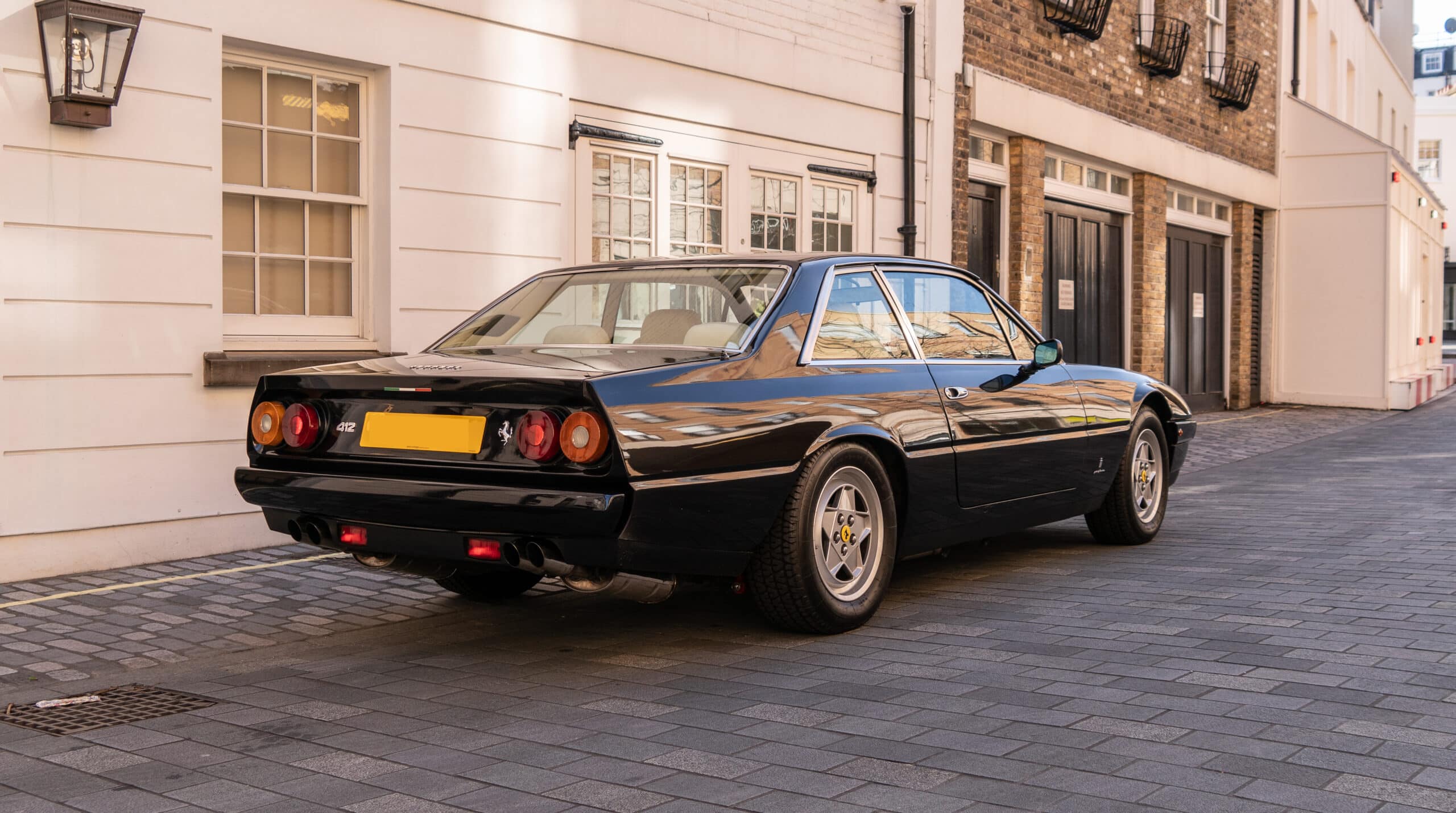
Ferrari built exactly 576 examples of the 412 between 1985 and 1989 at Maranello. Each car was hand-assembled with meticulous attention to detail, though build quality varied as Ferrari struggled with consistent manufacturing standards during this period. The 412 sold primarily in Europe and the United States, with smaller numbers going to Middle Eastern and Asian markets.
The 412 represented the end of Ferrari’s traditional front-engined V12 2+2 lineage. When production ended in 1989, Ferrari temporarily abandoned the concept, focusing on mid-engined cars and the new front-engined V8-powered Mondial. The 2+2 concept wouldn’t return until the 456 GT arrived in 1992 with a completely new platform and engine.
Contemporary reception was mixed. Enthusiasts criticized the 412 for being too soft, too heavy, and insufficiently sporting for a Ferrari. However, owners appreciated the combination of V12 performance, genuine four-seat practicality, and refined road manners. The 412 was never meant to compete with the Testarossa or 288 GTO. It served a different clientele entirely, customers who needed Ferrari performance packaged in conservative, comfortable bodywork.
Today, the 412 remains undervalued compared to contemporary Ferraris. Clean examples can be acquired for reasonable prices, making them accessible entry points into Ferrari ownership. The Colombo V12’s legendary reliability and the car’s practical nature have created a small but devoted following. The 412 represents a different era of Ferrari, when the company still built grand tourers for clients who valued discretion and comfort alongside performance. It was the last of its kind, closing a chapter that began with the 250 GTE nearly three decades earlier.