
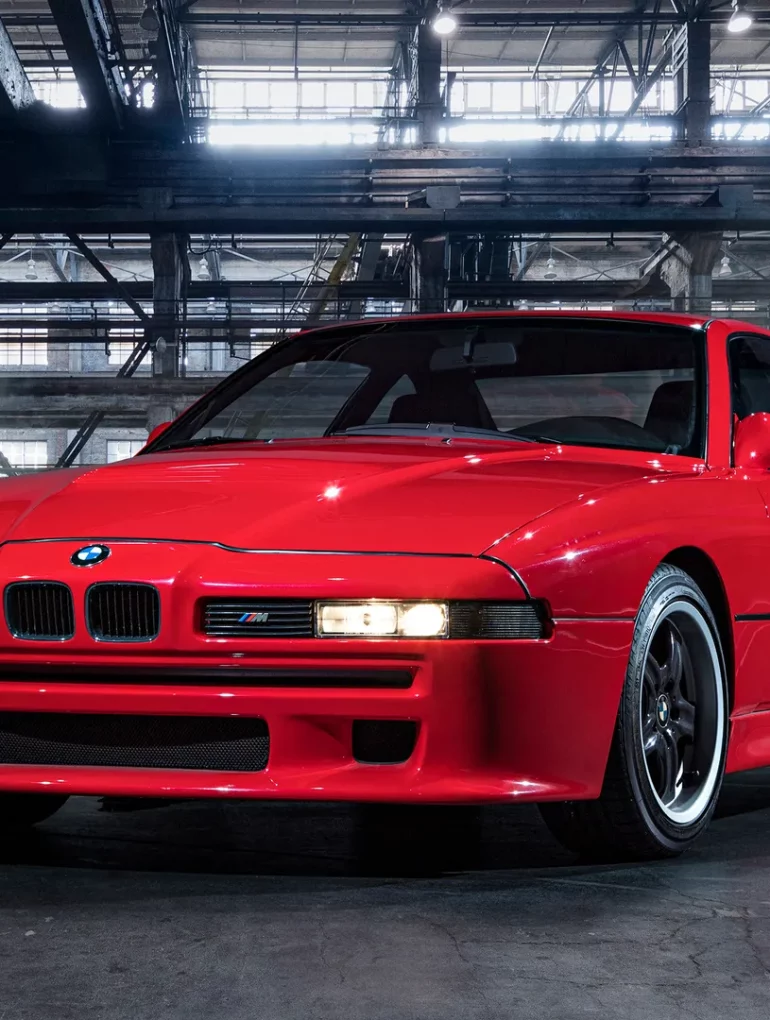

Munich, 1990. BMW’s M Division began development of the ultimate E31, a car that would challenge Ferrari’s F40 and Porsche’s 959. The M8 prototype featured a 6.0-liter V12 producing over 550 horsepower, revised suspension, carbon fiber body panels, and aggressive aerodynamics. Engineers completed at least one running prototype, possibly more. The car underwent extensive testing at the Nürburgring and various proving grounds. Then, in 1992, the project was cancelled. BMW’s management decided the M8 was too expensive, too extreme, and would cannibalize sales of the 850CSi. The prototype was reportedly destroyed, though rumors persist that it survived in BMW’s secret collection. The M8 became automotive legend, the supercar that almost was.
Background and Origins
BMW unveiled the 8 Series at Frankfurt in September 1989, a flagship grand tourer designed to replace the aging 6 Series. The E31 combined advanced technology, dramatic styling, and a new V12 engine. It was expensive, exclusive, and thoroughly modern. However, BMW’s M Division saw potential for something more extreme.
M Division’s brief was simple: create the ultimate E31, a supercar capable of competing against Ferrari and Porsche’s halo cars. The project began in 1990 under chief engineer Paul Rosche, the legendary engineer behind BMW’s Formula 1 engines and every significant M car powerplant since the M1.
The M8 would use a heavily modified S70 V12 engine, the same basic architecture powering the McLaren F1. Engineers targeted over 550 horsepower, possibly as much as 600 in final specification. Weight reduction was critical, with carbon fiber replacing steel and aluminum wherever possible. The suspension received complete redesign, while aerodynamics were optimized for high-speed stability.
Development progressed rapidly through 1990 and 1991. At least one complete running prototype was built, finished in bright red. This car underwent extensive testing, with development drivers reporting exceptional performance and handling. By early 1992, the M8 was nearly ready for limited production. Then BMW’s board intervened, cancelling the project entirely.
Design and Engineering
The M8 was based on the standard E31’s steel monocoque, though extensively reinforced in critical areas. The 2,684mm wheelbase remained unchanged, but the track widened significantly through flared wheel arches. Carbon fiber replaced steel for the hood, trunk lid, doors, and roof, saving approximately 200 kilograms. The side glass was thinner than standard, while sound insulation was reduced.
Suspension was completely redesigned. The front retained the standard E31’s multi-link arrangement but with revised geometry, stiffer springs, and adjustable dampers. The rear multi-link system received similar treatment, with anti-squat characteristics optimized for the M8’s increased power. Ride height dropped 30mm compared to the standard 850i.
Braking was by massive cross-drilled and vented discs, measuring approximately 330mm front and 320mm rear with six-piston calipers. The system was designed to handle repeated high-speed stops from over 180 mph. ABS was standard, calibrated specifically for the M8’s performance envelope.
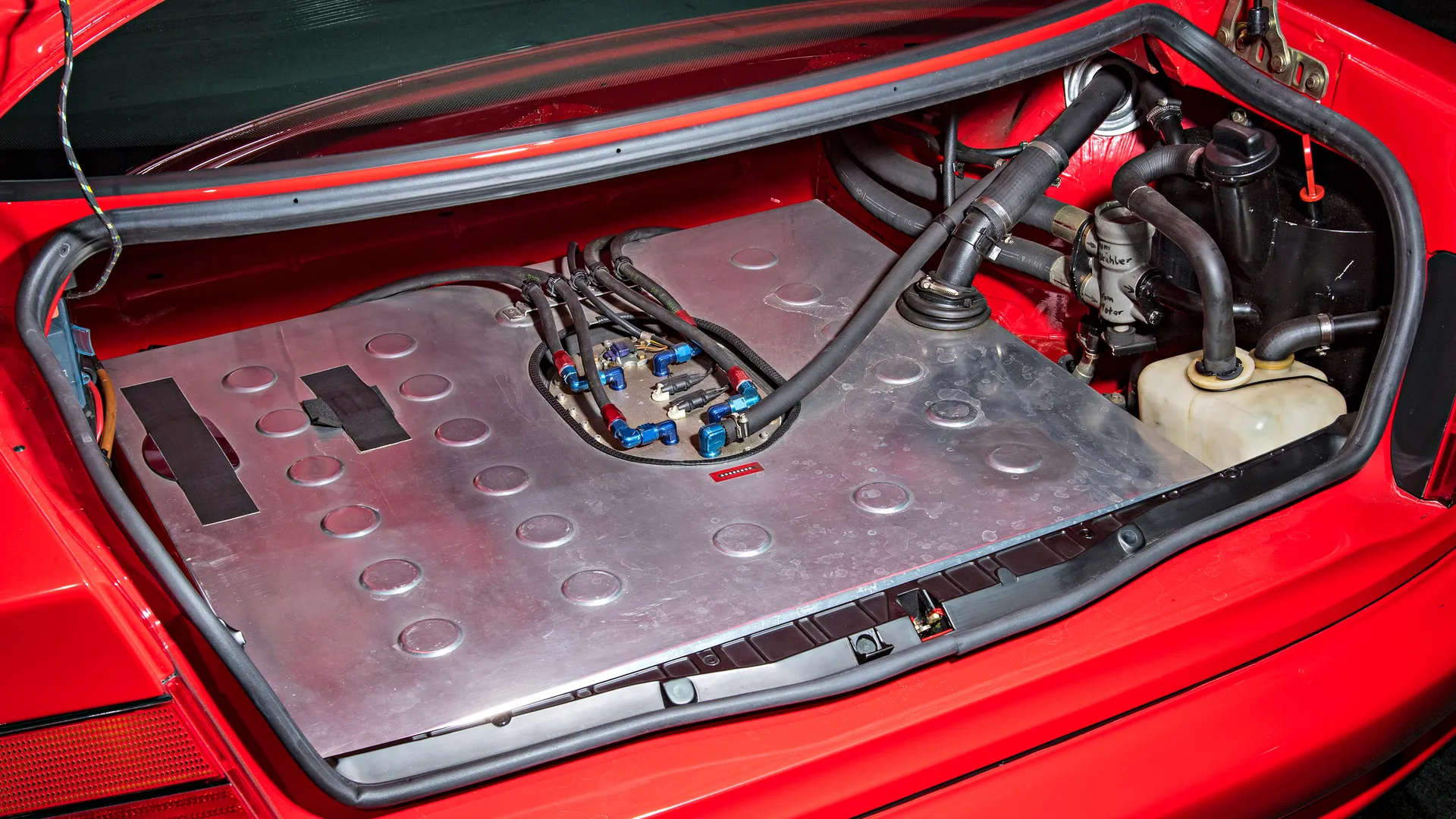
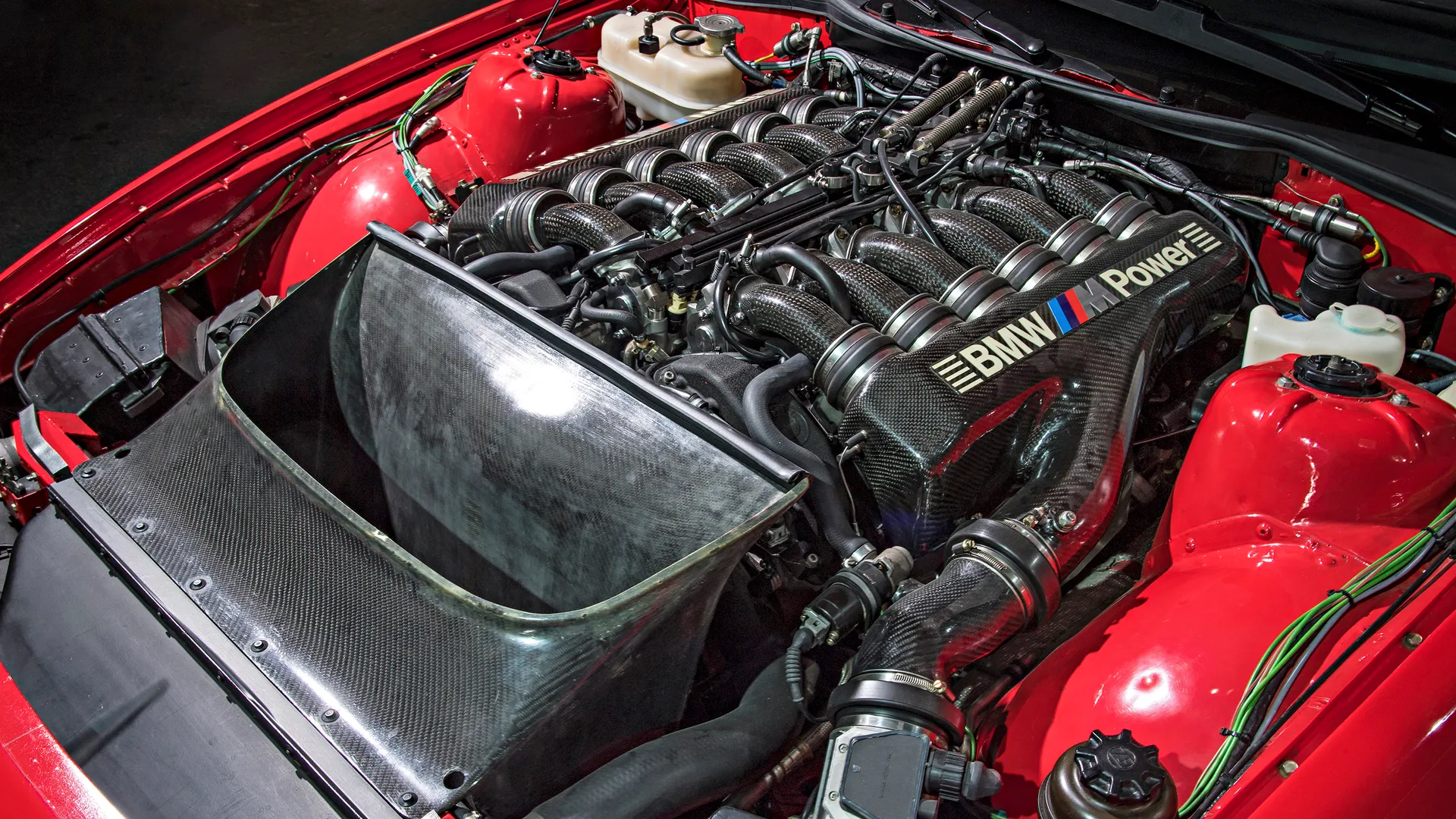
The engine was BMW’s S70 V12, a development of the M70 production engine but extensively modified by M Division. Displacing approximately 6,064cc with a larger bore and stroke than the standard 5.0-liter V12, it featured individual throttle bodies, a higher compression ratio, revised camshafts, reinforced internals, and a sophisticated engine management system.
Reported output varied depending on the source, but most reliable accounts suggest over 550 horsepower at 6,500 rpm and approximately 480 lb-ft of torque. Some sources claim the final development target was 600 horsepower. The redline sat at 7,200 rpm, remarkable for a large-displacement V12.
Transmission was a six-speed manual derived from the Getrag unit used in the 850CSi, but reinforced to handle the M8’s increased torque. A limited-slip differential transferred power to the rear wheels. Final drive ratio was shortened compared to the standard 850i for improved acceleration.
Styling
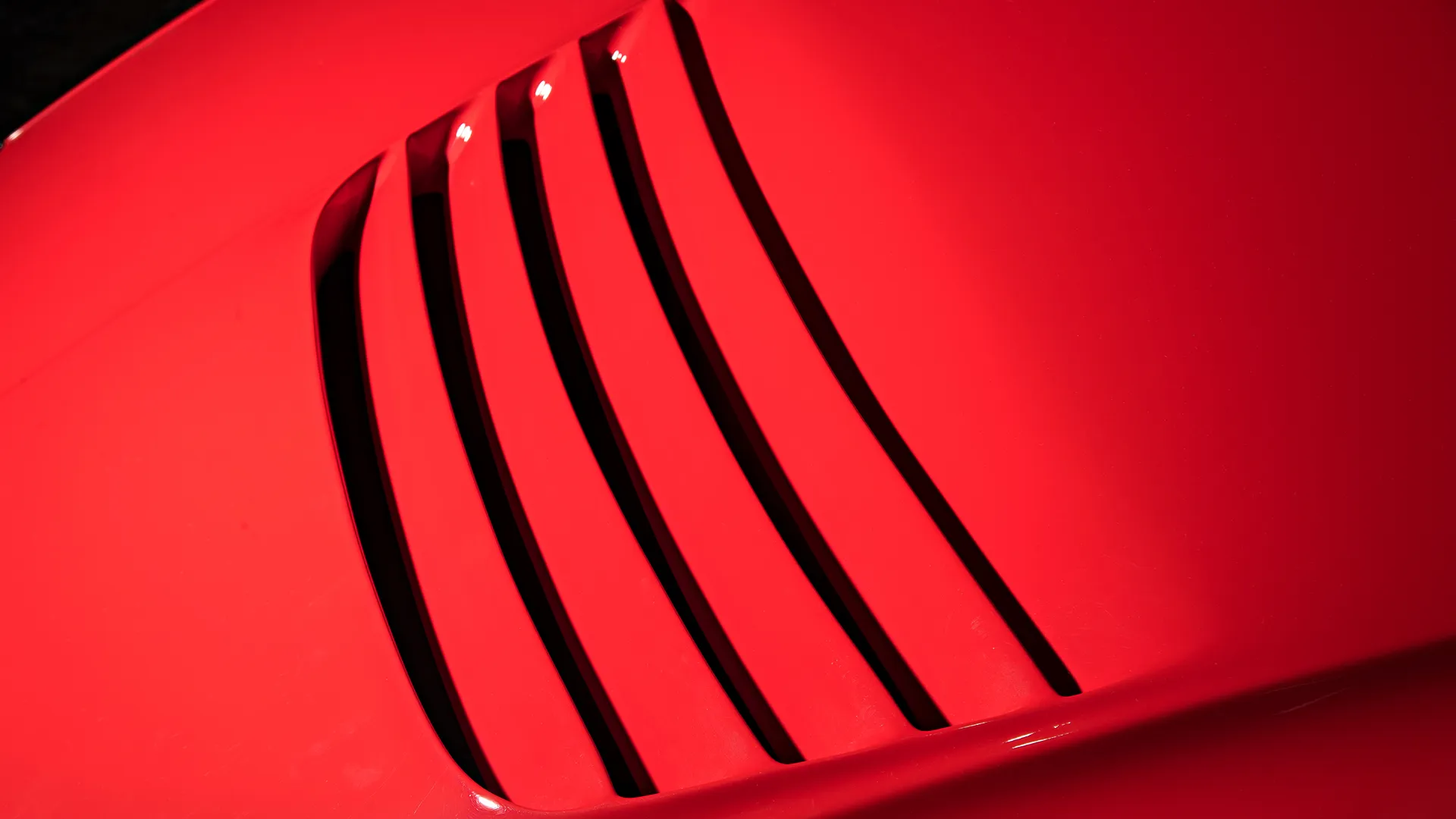
The M8’s appearance was aggressive compared to the standard E31. Massively flared wheel arches covered wider tracks and larger wheels. A deep front air dam incorporated additional cooling ducts for the brakes and oil coolers. The kidney grilles were enlarged, while the hood featured a prominent bulge to clear the modified engine.
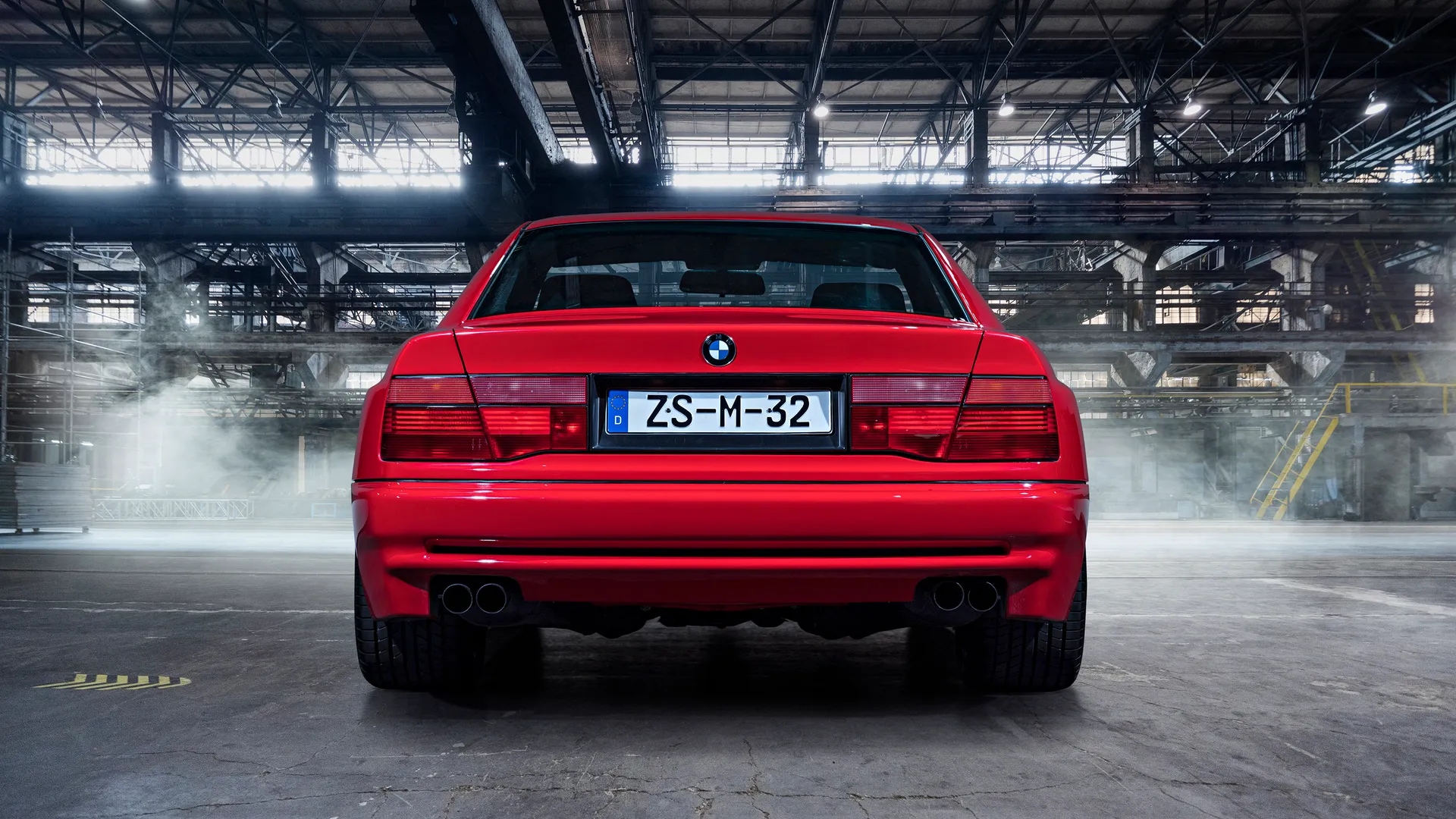
Side profile was dominated by those enormous fender flares and revised side skirts. Carbon fiber mirror housings replaced the standard units. At the rear, a tall fixed spoiler sat atop the trunk lid, providing genuine downforce at speed. The rear diffuser was more aggressive than the standard car, with quad exhaust outlets exiting through the valance.
Body panels showed visible carbon fiber weave on the prototype, though production cars would likely have been painted. The overall stance was purposeful and planted, with the wide track and lowered ride height creating a menacing presence. Photographs of the prototype show massive wheels, likely 18-inch diameter units wearing wide performance tires.
Interior
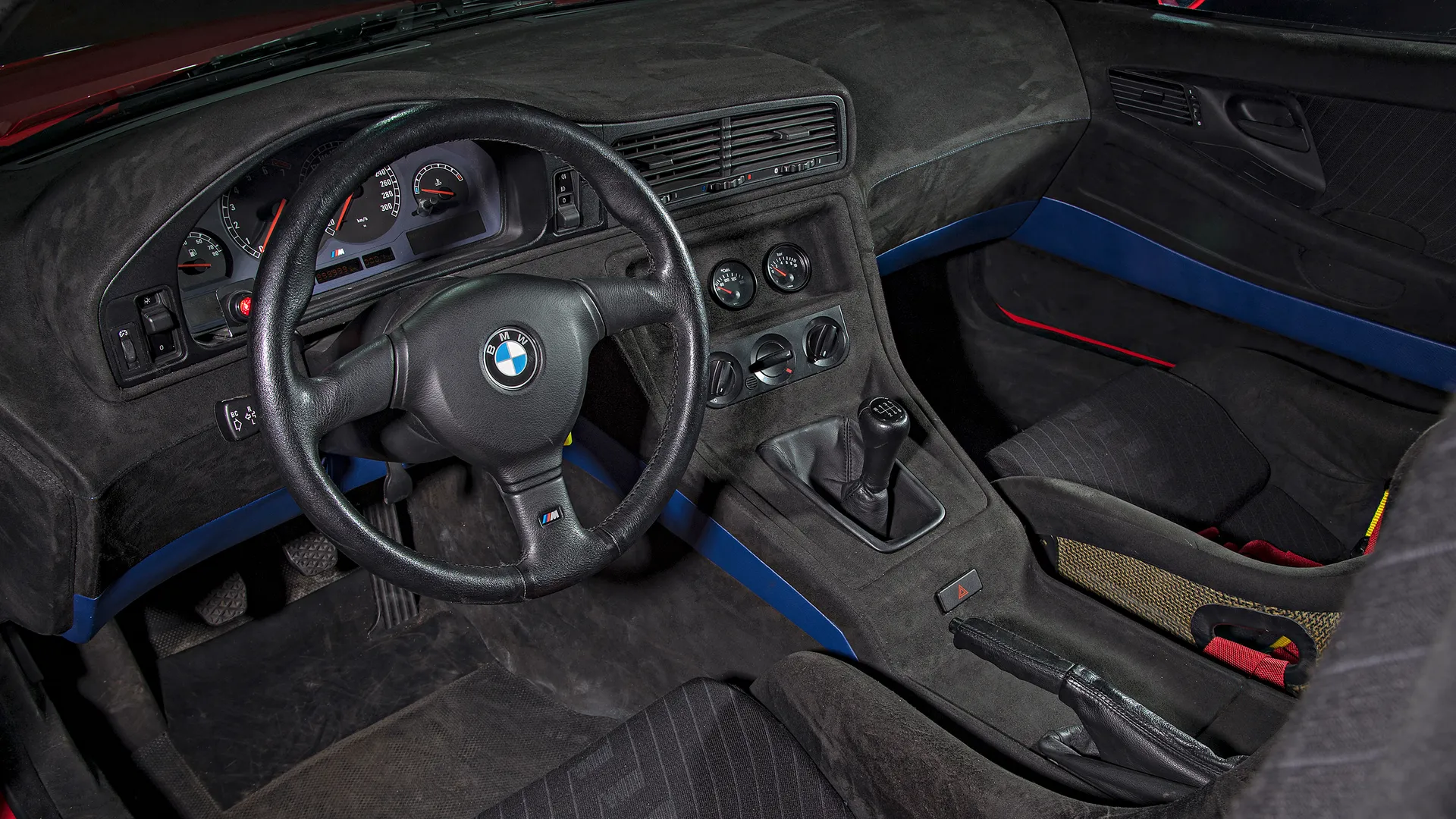
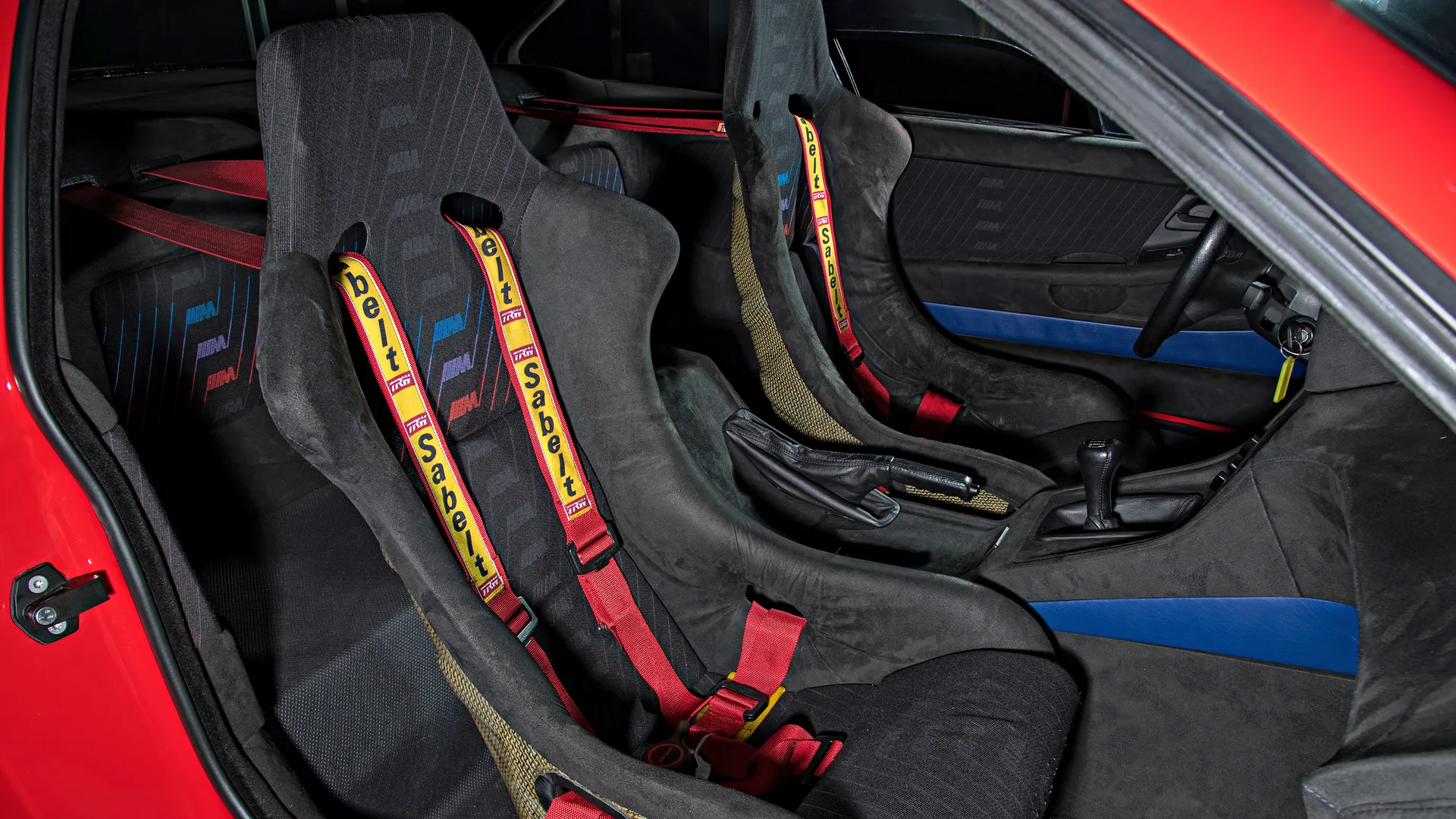
Details of the M8’s interior are scarce, as few photographs exist. Reports suggest the cabin retained the standard E31’s basic architecture but received significant updates. Lightweight racing seats replaced the standard chairs, trimmed in a combination of leather and Alcantara. The dashboard incorporated additional gauges for oil temperature and pressure.
A thick-rimmed M-specific steering wheel faced the driver. The gear lever was shorter than standard with an exposed linkage. Carbon fiber trim replaced wood accents throughout the cabin. Rear seats were deleted entirely, replaced by a carpeted storage area with a diagonal brace bar.
Much of the luxury equipment was removed to save weight. The complex pop-up headlight mechanism remained, though some accounts suggest fixed headlights were considered. Climate control was simplified, while the audio system was basic. The focus was performance and driver engagement rather than luxury.
Specifications
- Engine: S70 V12, approximately 6,064cc, DOHC, four valves per cylinder
- Power: 550+ bhp at 6,500 rpm (reported)
- Torque: 480 lb-ft (estimated)
- Transmission: Six-speed manual, limited-slip differential
- Chassis: Steel monocoque with carbon fiber panels, 2,684mm wheelbase
- Suspension: Multi-link (front and rear), adjustable dampers
- Brakes: Cross-drilled vented discs 330mm (front), 320mm (rear)
- Wheels: 18-inch (estimated), wide performance tires
- Weight: 1,620 kg (estimated)
- Performance: 190+ mph top speed (projected), 0-60 mph in under 4.0 seconds (estimated)
Competition History
The M8 never competed as the project was cancelled before production. However, the technology developed for the M8 influenced BMW’s motorsport programs throughout the 1990s. The S70 engine architecture powered the McLaren F1 to its famous Le Mans victory in 1995, with BMW Motorsport providing technical support. Knowledge gained from the M8’s aerodynamic development informed later M Division projects.
Production and Legacy
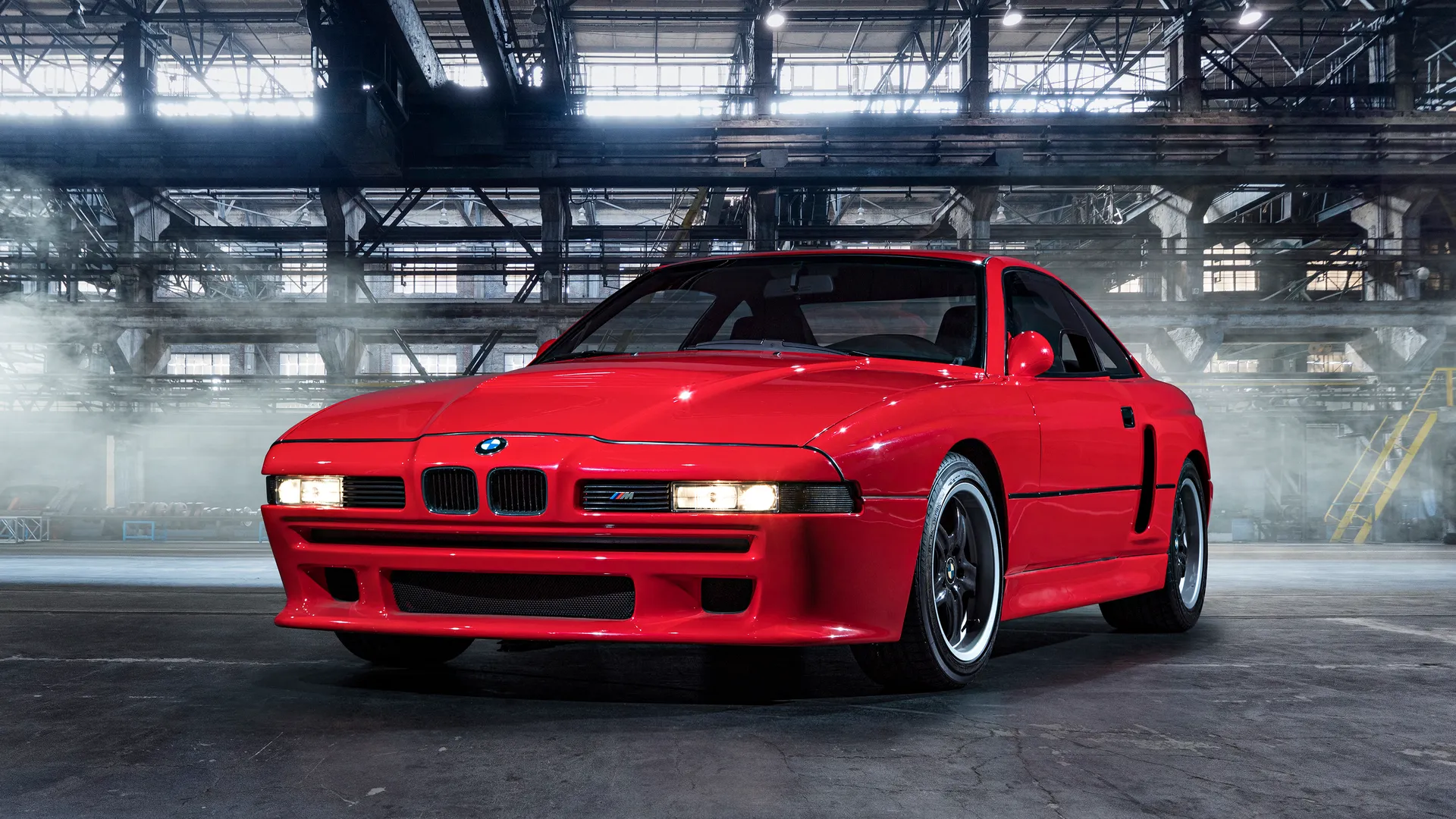
BMW built at least one complete M8 prototype, possibly as many as three. The primary development car was finished in red with a black leather interior. After the project’s cancellation in 1992, BMW reportedly destroyed all prototypes to prevent them from reaching the public. However, persistent rumors suggest at least one example survived, hidden in BMW’s collection or a private storage facility.
The cancellation had multiple causes. The global recession of the early 1990s reduced demand for expensive luxury cars. BMW’s management feared the M8 would cannibalize sales of the 850CSi, which was struggling commercially. The projected price was astronomical, likely exceeding $200,000 in 1992 dollars. Finally, the car’s extreme nature conflicted with BMW’s conservative corporate culture.
The M8 became automotive legend, the supercar that almost challenged Ferrari and Porsche. Its cancellation represented a lost opportunity, a moment when BMW could have competed directly against the world’s fastest cars but chose caution instead. The S70 engine’s success in the McLaren F1 proved the technology was sound. The M8 would have been extraordinary.
Decades later, BMW revived the M8 nameplate for the F91/F92 generation, introduced in 2019. These modern M8s are phenomenally capable grand tourers, but they lack the raw, uncompromising character the original E31 M8 promised. The 1990 prototype remains one of automotive history’s great what-ifs, a tantalizing glimpse of what BMW’s M Division could achieve when freed from corporate constraints. The M8 that never was continues to fascinate enthusiasts, a reminder that sometimes the most interesting cars are those that never reached production.