
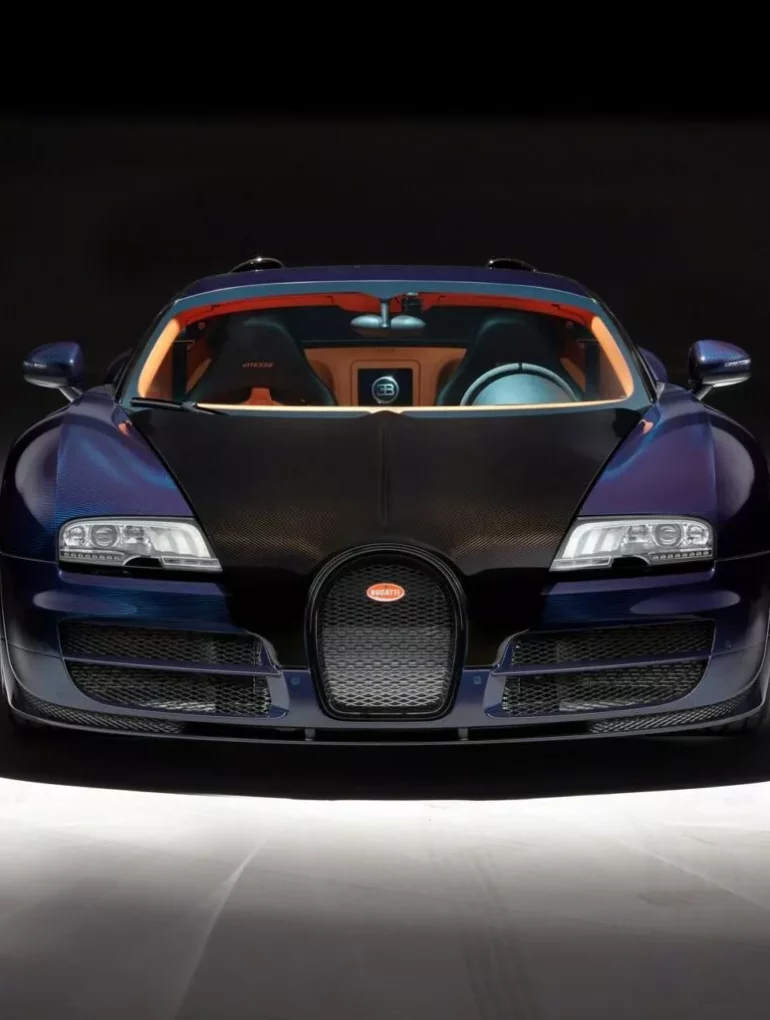

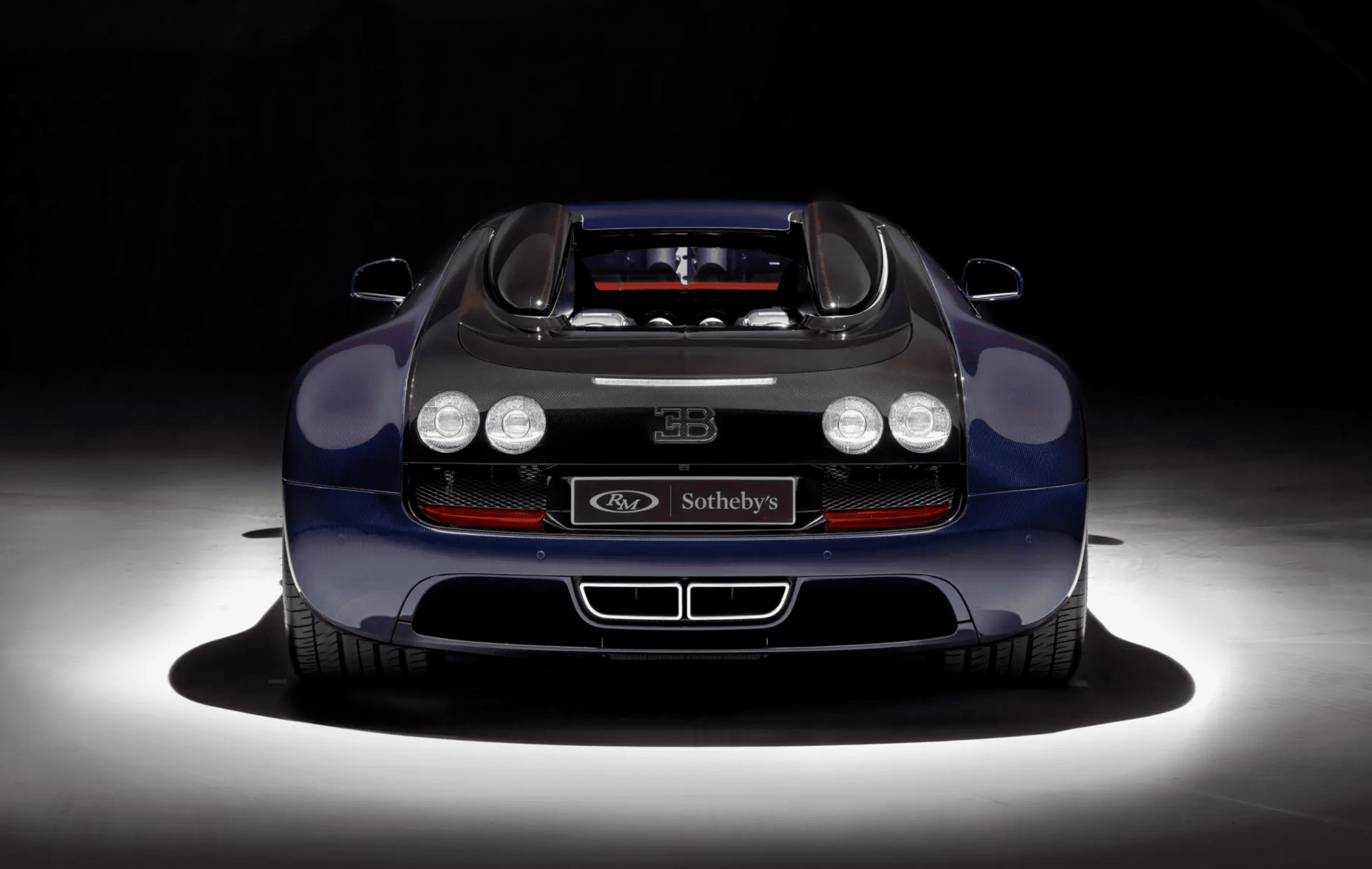
Geneva Motor Show, March 2012. Bugatti unveiled the Grand Sport Vitesse, an open-top variant of the record-setting Veyron Super Sport that combined the thrill of open-air driving with 1,200 horsepower of quad-turbocharged performance. The designation “Vitesse” referenced the French word for speed, signaling Bugatti’s intent to create the fastest production roadster ever built. The 8.0-liter W16 quad-turbo engine produced 1,200 PS at 6,400 rpm and 1,500 N·m of torque across a broad 3,000-5,000 rpm plateau. This extraordinary powerplant enabled 255 mph capability, establishing the Vitesse as the world’s fastest production open-top car. The engineering challenge was immense: maintaining structural rigidity without the roof’s bracing, all while managing temperatures approaching those of a nuclear furnace. This was Bugatti’s statement that extreme performance and open-air freedom weren’t mutually exclusive, that drivers could experience the world’s most powerful roadster with the wind in their hair. Production ran from 2012 through 2015, with approximately 350 Veyrons built across all variants, establishing the Vitesse as among the rarest and most exclusive hypercars ever produced.
Background and Origins
The original Bugatti Veyron 16.4 debuted in 2005, revolutionizing supercar development with its 1,001 horsepower quad-turbocharged W16 engine. By 2010, the Veyron Super Sport emerged with 1,200 horsepower, setting the production car land speed record at 431 km/h. Immediately following the Super Sport’s success, customers began inquiring whether Bugatti would produce an open-top variant combining the Super Sport’s extraordinary power with the freedom of roadster driving.
Development of the Grand Sport Vitesse began with recognition that creating a removable-roof vehicle capable of withstanding 1,200 horsepower presented unprecedented engineering challenges. Unlike traditional convertibles where roof removal was a straightforward design modification, the Veyron’s mid-mounted engine location and extreme performance demands required comprehensive structural redesign. Engineers faced the fundamental challenge of maintaining torsional rigidity without the roof structure’s lateral bracing, while managing aerodynamic forces, handling balance, and thermal management across the entire performance envelope.
Bugatti’s designers drew inspiration from the legendary Bugatti Type 37 A roadster from 1929, which featured half-doors and a raised rear cabin allowing occupant visibility. The modern Vitesse incorporated similar design philosophy with contemporary engineering. The open-top architecture required reinforced A-pillars, revised suspension mounting points, and completely redesigned underbody structures compensating for the absent roof.
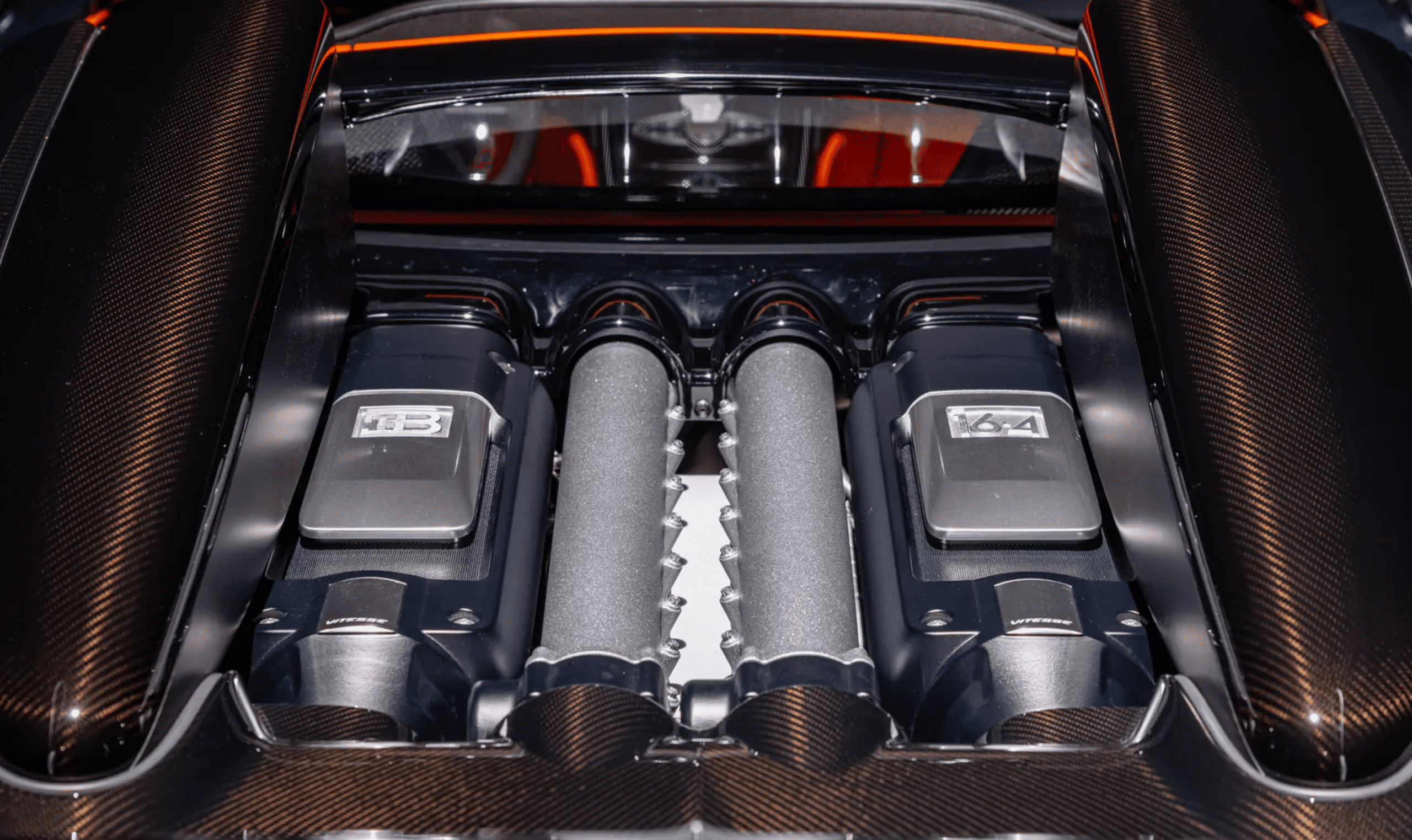
The engine was identical to the Super Sport’s unit but specifically recalibrated for open-top operation. Four enlarged turbochargers replaced the Super Sport’s specification, with revised intercoolers optimizing cooling despite the absent roof’s reduced cooling airflow. The result was 1,200 PS at 6,400 rpm and 1,500 N·m of torque, representing the absolute peak of naturally aspirated and force-inducted four-cylinder performance at the time.
Design and Engineering
The Vitesse utilized a complete carbon-fiber monocoque chassis with a 2,710mm wheelbase, identical to the Super Sport’s foundation. However, the targa-roof architecture required substantial structural modification. The absence of a roof meant the A-pillars had to carry loads traditionally distributed through the roof structure, requiring thicker gauge carbon-fiber construction and revised pillar geometry. The side sills were extensively reinforced, becoming primary load paths where the roof previously distributed stress.
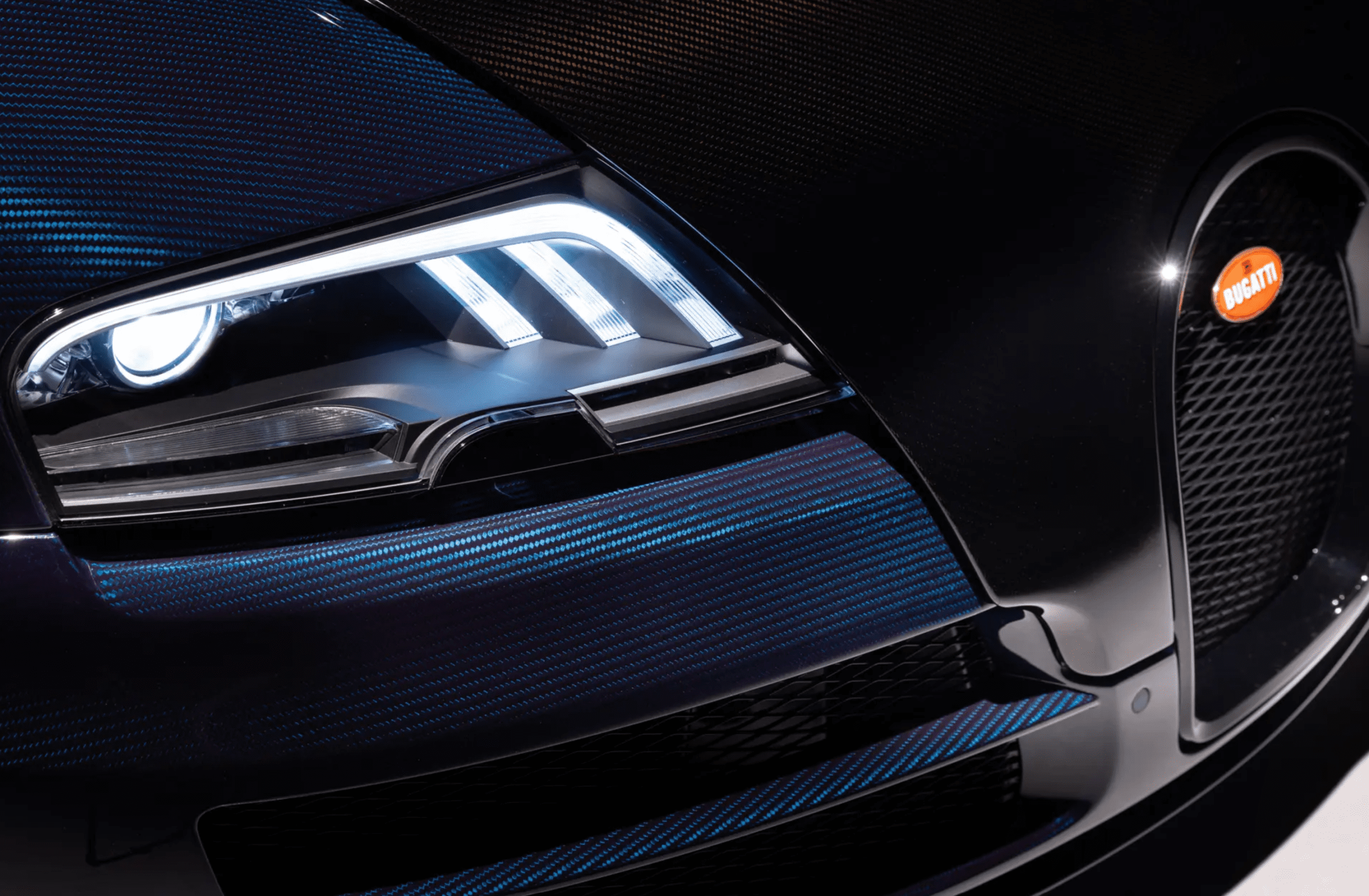
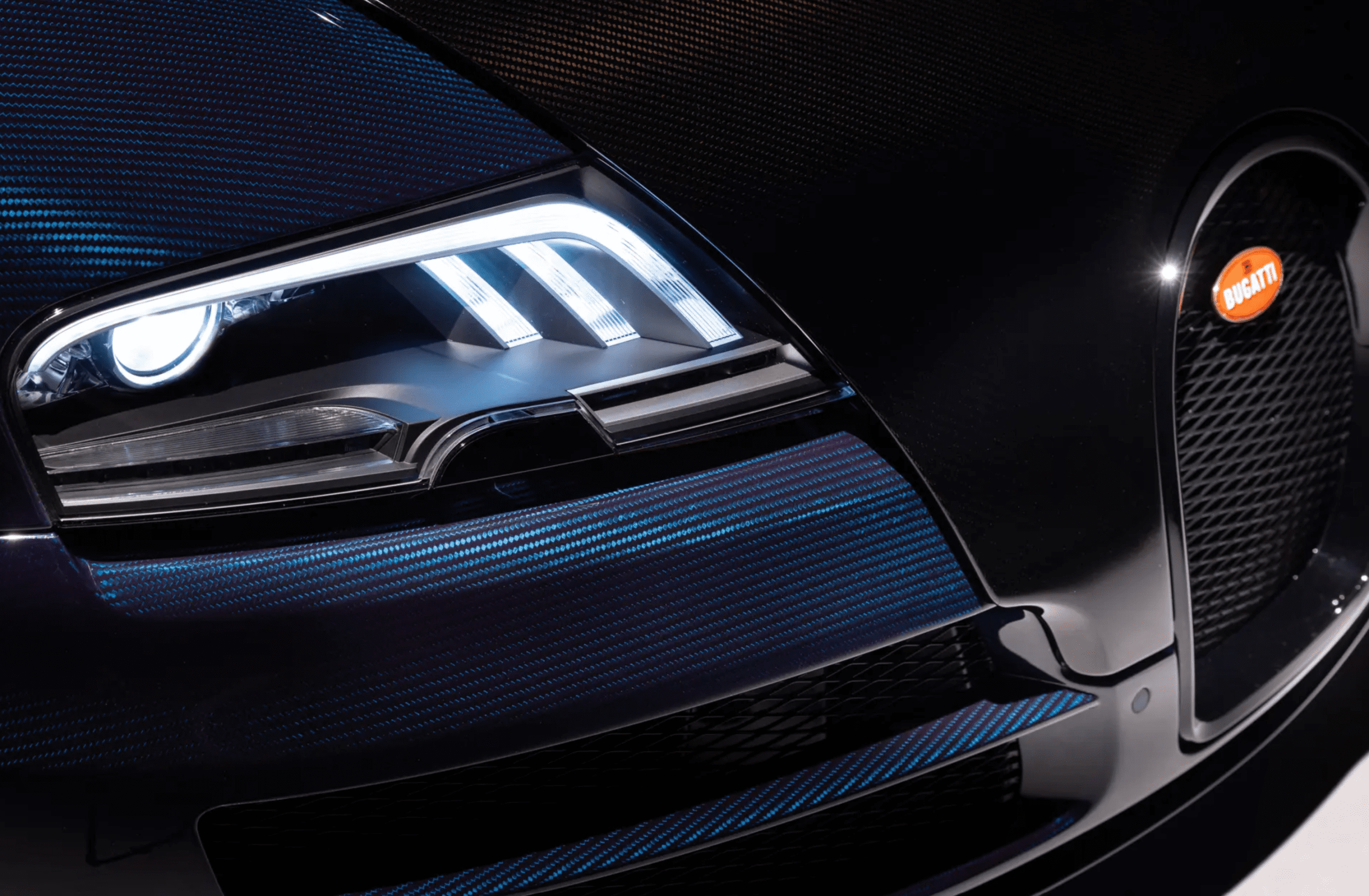
The body panels were constructed entirely from carbon fiber, including the targa roof’s support structure and detachable targa panel. This advanced composite approach maintained lightweight characteristics despite the additional structural reinforcement required. The outer skin’s visible carbon-weave finish was available as a distinctive option, celebrating the advanced materials enabling the Vitesse’s existence.
Aerodynamic refinement was critical, as open-top configuration fundamentally altered airflow patterns compared to the coupe Super Sport. Revised rear fender vents improved cooling airflow, while the targa support structure incorporated aerodynamic profiling minimizing drag penalty relative to the fixed-roof variant. Engineers employed computational fluid dynamics extensively, optimizing every curve to maintain stability at extreme speeds.
Suspension remained fundamentally identical to the Super Sport but with revised geometry addressing the altered center-of-gravity characteristics from the missing roof. Lower ride height improved aerodynamic efficiency while providing improved handling balance. Adaptive suspension damping continuously adjusted stiffness based on driving conditions and speeds, enabling both refinement and extreme performance within the same system.
Braking was by cross-drilled carbon-ceramic discs measuring 400mm front and 380mm rear with eight-piston and six-piston calipers respectively. The system could achieve extraordinary deceleration from 255 mph, with carbon-ceramic material withstanding brake surface temperatures exceeding 1,000 degrees Celsius. An electronic rear wing served as an aerodynamic brake, providing additional deceleration force at extreme speeds.
The W16 engine was mounted in the mid-rear position, a configuration optimizing weight distribution while creating unique handling characteristics. Dry-sump lubrication allowed the engine to sit lower, improving weight distribution and center-of-gravity positioning. Four Garrett turbochargers provided intercooled boost pressure across the entire rev range, with peak torque arriving between 3,000-5,000 rpm for predictable power delivery.
Styling
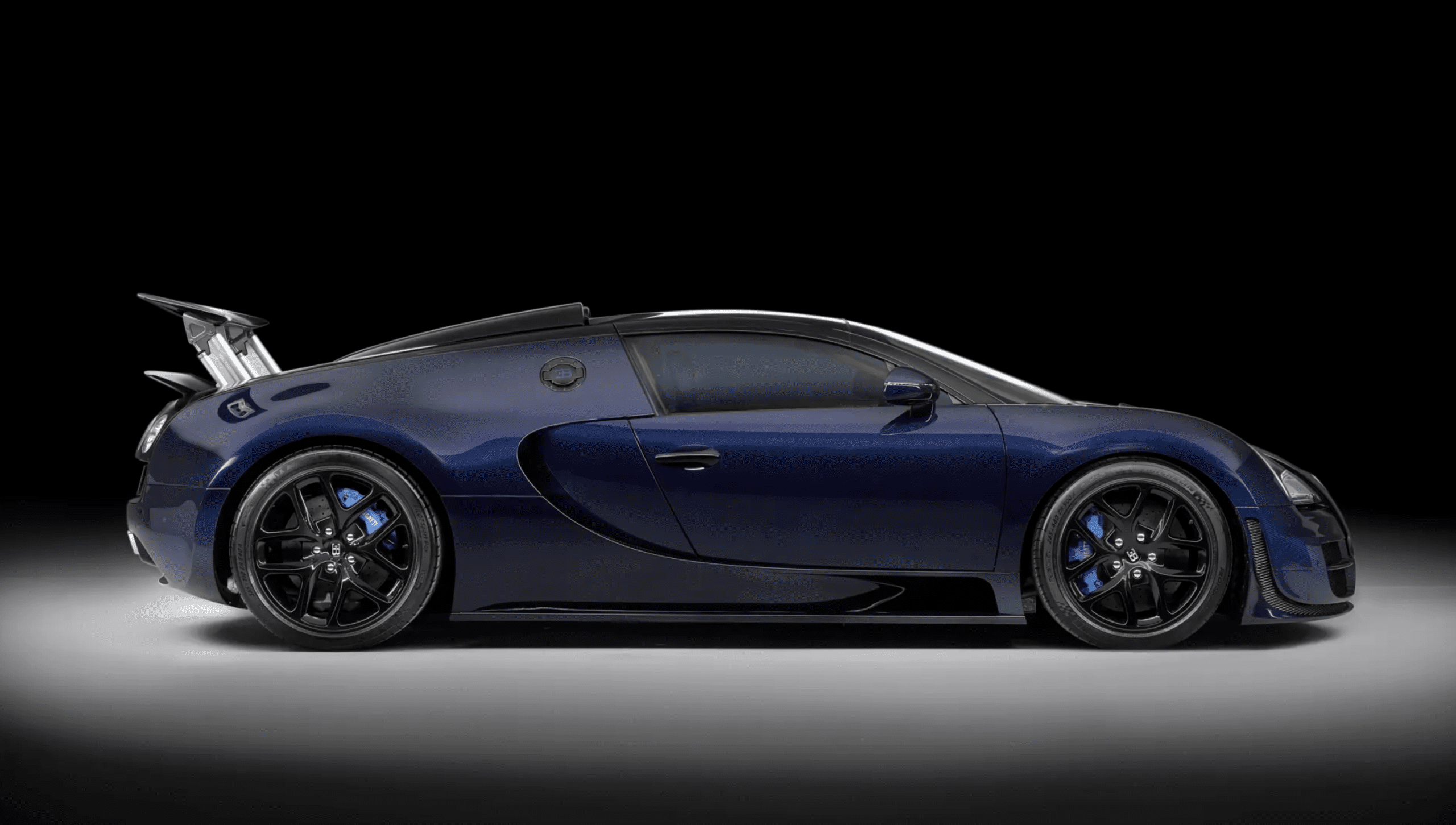
Giorgetto Giugiaro’s original Bugatti design required minimal modification for the Vitesse variant. The targa roof’s support structure integrated seamlessly with the established design language, appearing as a natural element rather than an afterthought. The A-pillars were visually prominent, a consequence of their load-bearing function that Bugatti embraced as part of the Vitesse’s unique character.
The iconic C-shaped light treatment remained unchanged, while the side profile emphasized the open-top architecture through sculpted surfaces and refined proportions. Chrome accents complemented the carbon-fiber visible weave, creating striking visual contrast. The massive 20-inch front and 21-inch rear wheels accommodated enormous Michelin Pilot Sport tires measuring 265/35 R20 and 365/25 R21 respectively, the largest tires ever fitted to a production roadster.
Interior
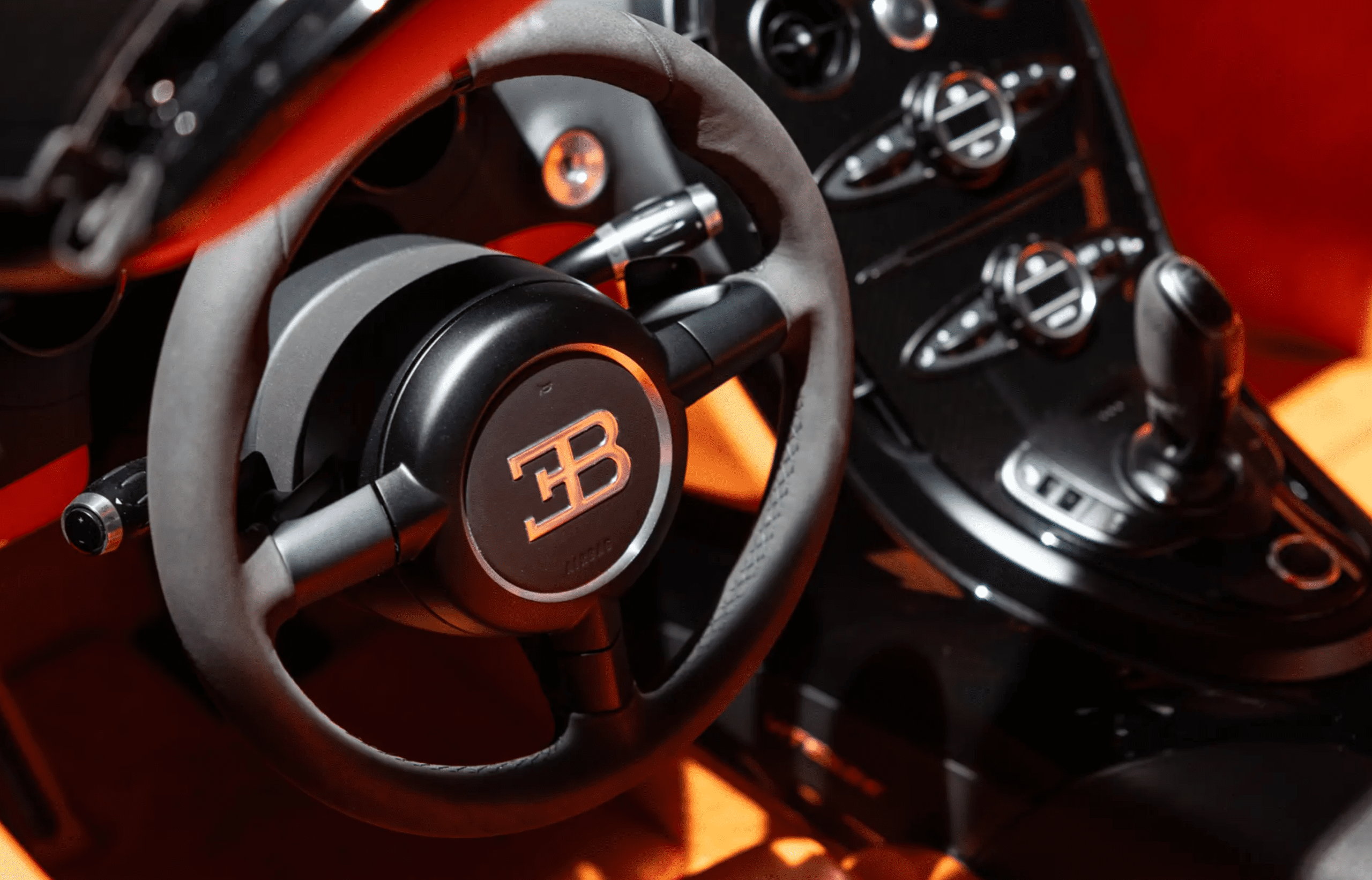
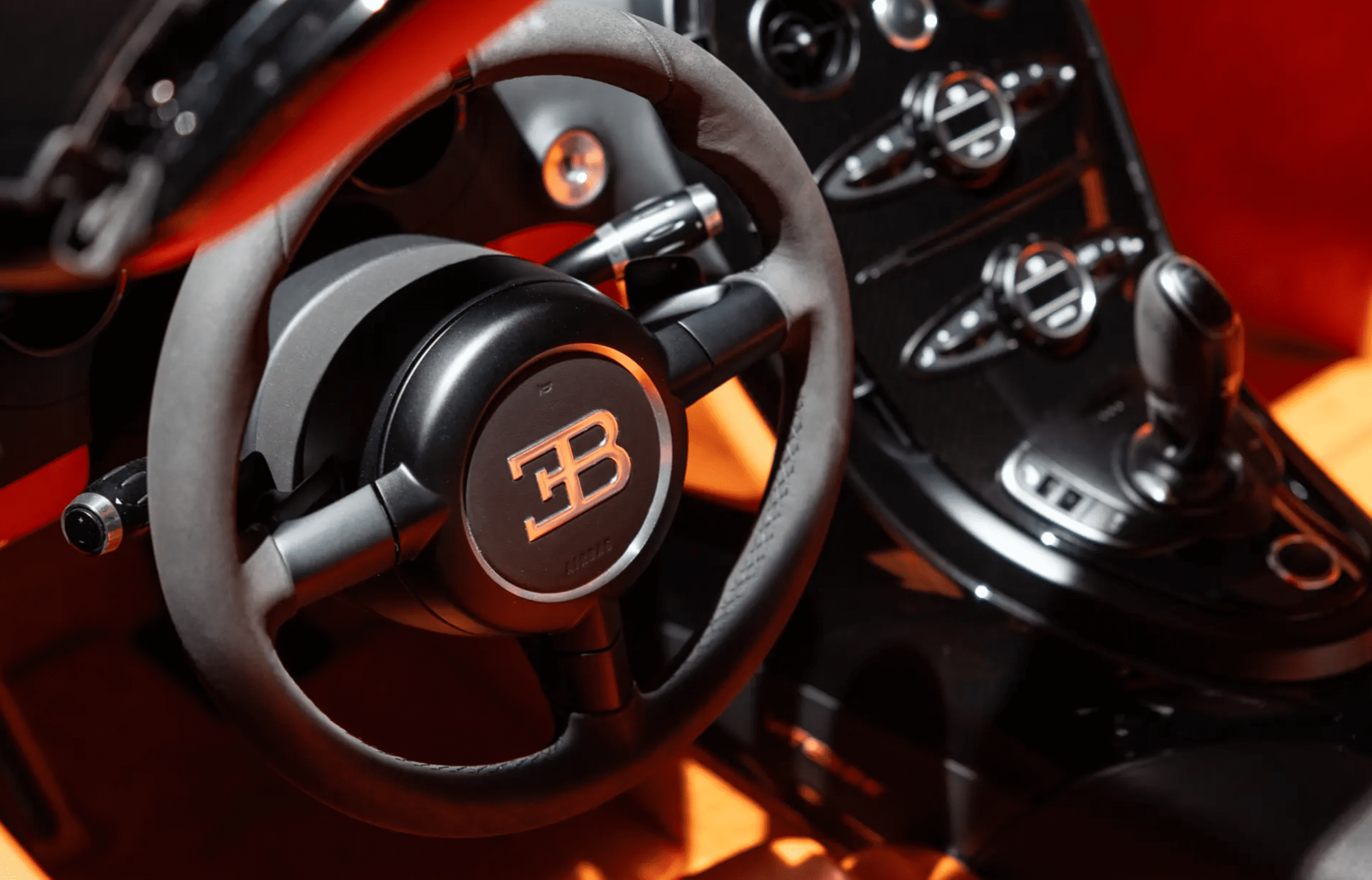
The cabin featured full leather upholstery with contrasting stitching, carbon-fiber accents throughout, and an instrument cluster with a power gauge extending to 1,200 horsepower. Two-tone leather seat covers with distinctive styling provided aggressive support during spirited driving. Recaro-developed sport seats with integrated headrests combined comfort with lateral support adequate for high-speed cornering. Aluminum and magnesium trim accented the carbon-fiber interior elements, creating a cohesive technological atmosphere.
Specifications
- Engine: W16 quad-turbocharged, 7,993cc, DOHC per bank, four valves per cylinder
- Power: 1,200 PS / 1,183.5 bhp / 883 kW at 6,400 rpm
- Torque: 1,500 N·m / 1,106 lb-ft at 3,000-5,000 rpm
- Transmission: Seven-speed semi-automatic with sequential mode, all-wheel drive with limited-slip differential
- Chassis: Carbon-fiber monocoque, 2,710mm wheelbase
- Suspension: Double wishbones (front and rear), adaptive dampers
- Brakes: Carbon-ceramic discs 400mm (front), 380mm (rear), eight-piston/six-piston calipers
- Wheels: 20×9 front and 21×11.5 rear, Michelin Pilot Sport tires
- Weight: 1,990 kg (DIN) / 2,065 kg (EU)
- Performance: 255 mph / 410 km/h top speed, 0-62 mph in 2.6 seconds
Production and Legacy
Bugatti produced the Grand Sport Vitesse from 2012 through 2015, with approximately 350 Veyrons built across all variants during the car’s entire production run. Each vehicle was hand-assembled at Molsheim with meticulous attention to detail, with extensive personalization options allowing customers to specify virtually every detail according to individual preferences.
The Vitesse established itself as the world’s fastest production roadster, a record it maintains to this day. The combination of 1,200 horsepower, open-top architecture, and genuine usability created something unprecedented in automotive history. The engineering achievement—managing the extreme forces generated by 1,200 horsepower within an open-top structure while maintaining structural rigidity and handling balance—represented the absolute pinnacle of automotive engineering.
Today, Vitesse examples are extraordinarily valuable collector items, with their rarity and record-setting significance commanding premium prices. The Bugatti Veyron Grand Sport Vitesse proved that open-air driving and extreme performance could coexist, that drivers could experience 255 mph with the sky overhead. It remains one of the greatest automotive achievements, a quad-turbocharged masterpiece celebrating the ultimate expression of hypercar engineering.