
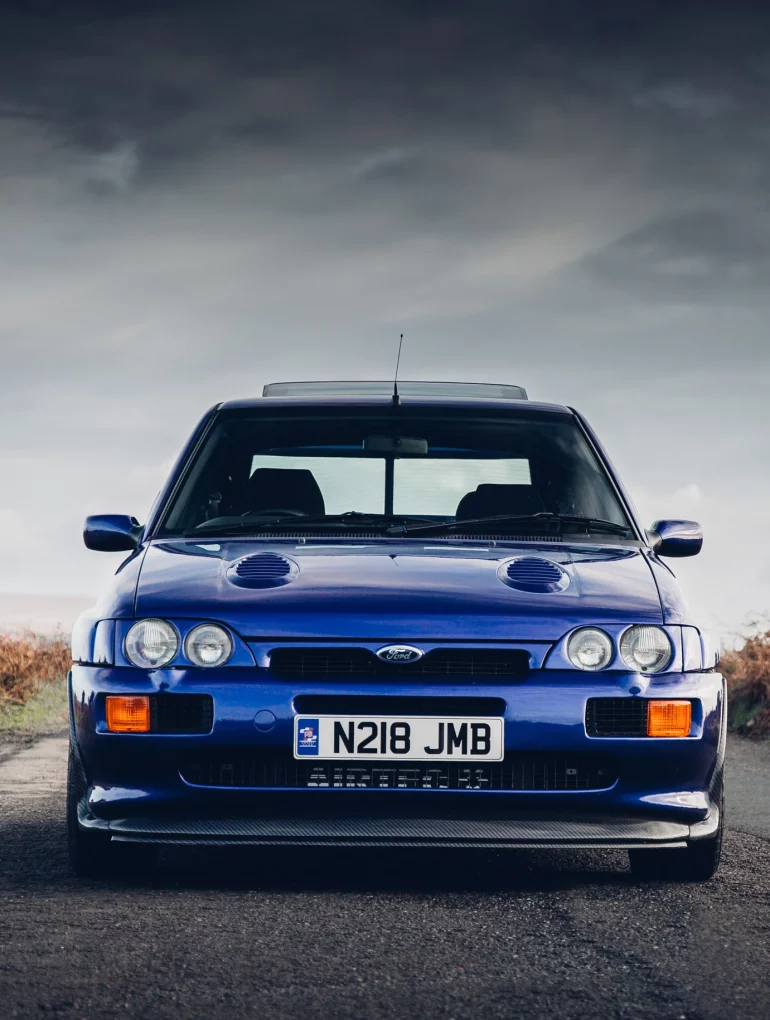

February 1992. Ford unveiled the Escort RS Cosworth at the Royal Albert Hall in London, introducing a revolutionary homologation special establishing a new philosophy for World Rally Championship competition. Designed explicitly to qualify as a Group A competitor, the Escort RS Cosworth represented the culmination of Ford’s rally engineering expertise combined with Cosworth’s turbocharged sophistication. The longitudinally-mounted 2.0-liter Cosworth YBT turbocharged inline-four produced 227 horsepower at 6,250 rpm and 229 lb-ft of torque at 3,500 rpm, delivering 144 mph capability while maintaining practical daily usability.
This was Ford’s statement that smaller displacement, intelligent turbocharged engineering, and sophisticated all-wheel drive could compete against established rivals through engineering sophistication rather than raw displacement. The Escort RS Cosworth featured a distinctive whale-tail rear wing and aggressive aerodynamic tuning, visual cues emphasizing its rally heritage. Production ran from 1992 through 1996, with approximately 7,145 road examples built alongside competitive variants, establishing the Escort RS Cosworth as one of the most successful and desirable rally homologation specials ever created.
Background and Origins
Development of the Escort RS Cosworth began at Ford’s SVO (Special Vehicle Operations) department based at Boreham Airfield in Essex during 1989, conducted in parallel with standard Escort development. The design brief was revolutionary: adapt the rally-proven Sierra Cosworth platform—specifically its longitudinal engine mounting, transmission, and all-wheel-drive architecture—into a compact hatchback body enabling genuine competition capability while maintaining road-car practicality.
The FIA announced 1993 Group A homologation requirements would be halved from 5,000 to 2,500 units, fundamentally changing development economics. This rule change proved decisive: Ford management committed to building a homologation special capable of winning championships, something the larger Sierra Sapphire 4×4 had failed to achieve through sheer size and weight penalty.
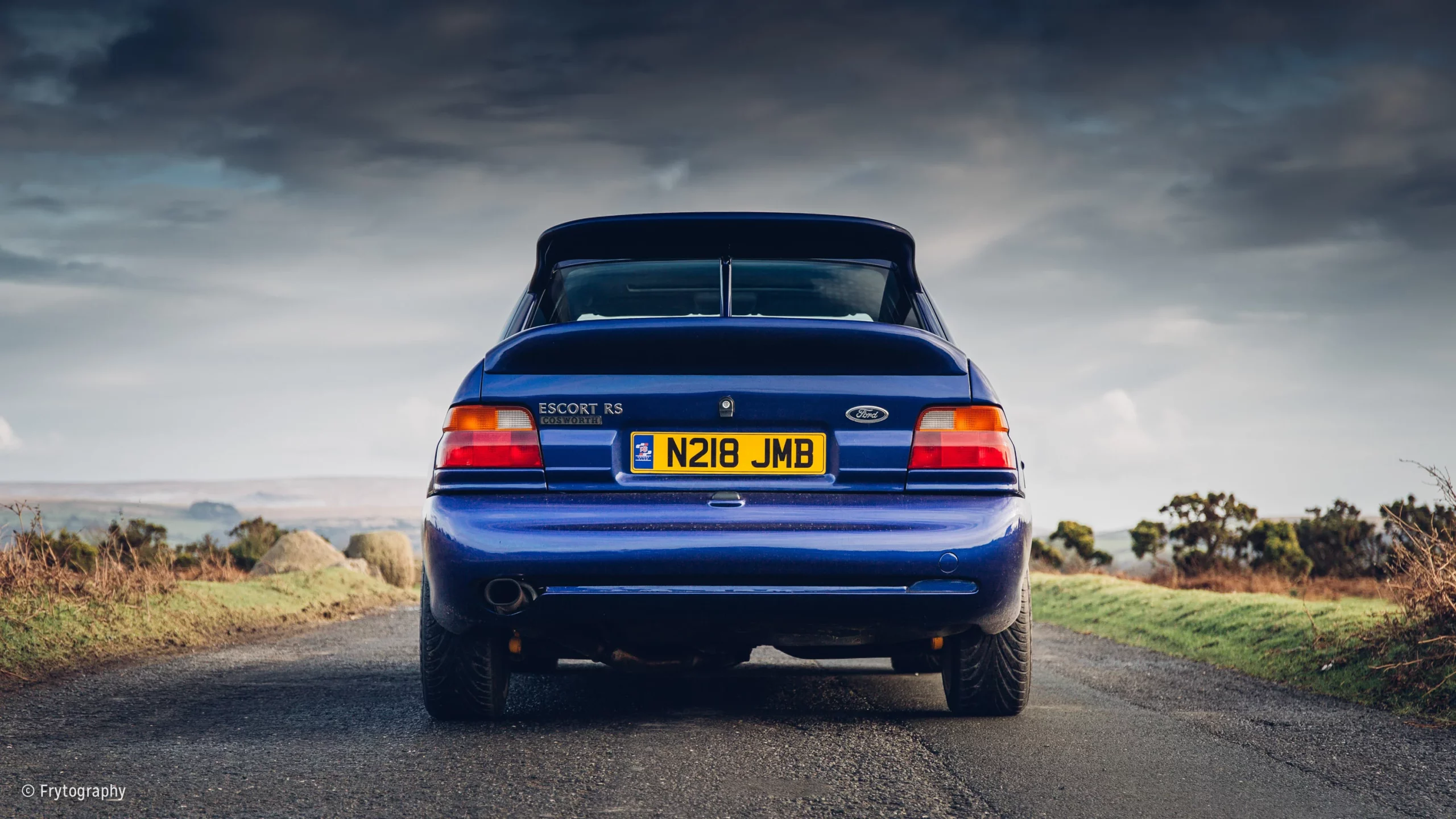
Styling was conducted by MGA Developments in Coventry under Ford’s guidance, with lead exterior designer Frank Stephenson creating the iconic double-deck whale-tail rear wing—a distinctive design element that became the Escort RS Cosworth’s most recognizable feature. This was the first mass-production road car featuring both front and rear downforce, establishing engineering credentials that influenced performance car design throughout the 1990s.
The engine represented comprehensively revised Cosworth architecture optimized for the compact application. The early 1992-1994 Cosworth YBT variant featured a large Garrett T04B turbocharger, but this configuration suffered from pronounced turbo lag—boost pressure remained minimal below approximately 3,500 rpm, then built explosively. Recognizing this limitation for daily driving customers, Ford introduced the revised YBP variant in late 1994, fitted with a smaller Garrett T25 turbocharger and Ford EEC-IV engine management, which provided smoother boost delivery and superior drivability without sacrificing peak performance.
Design and Engineering
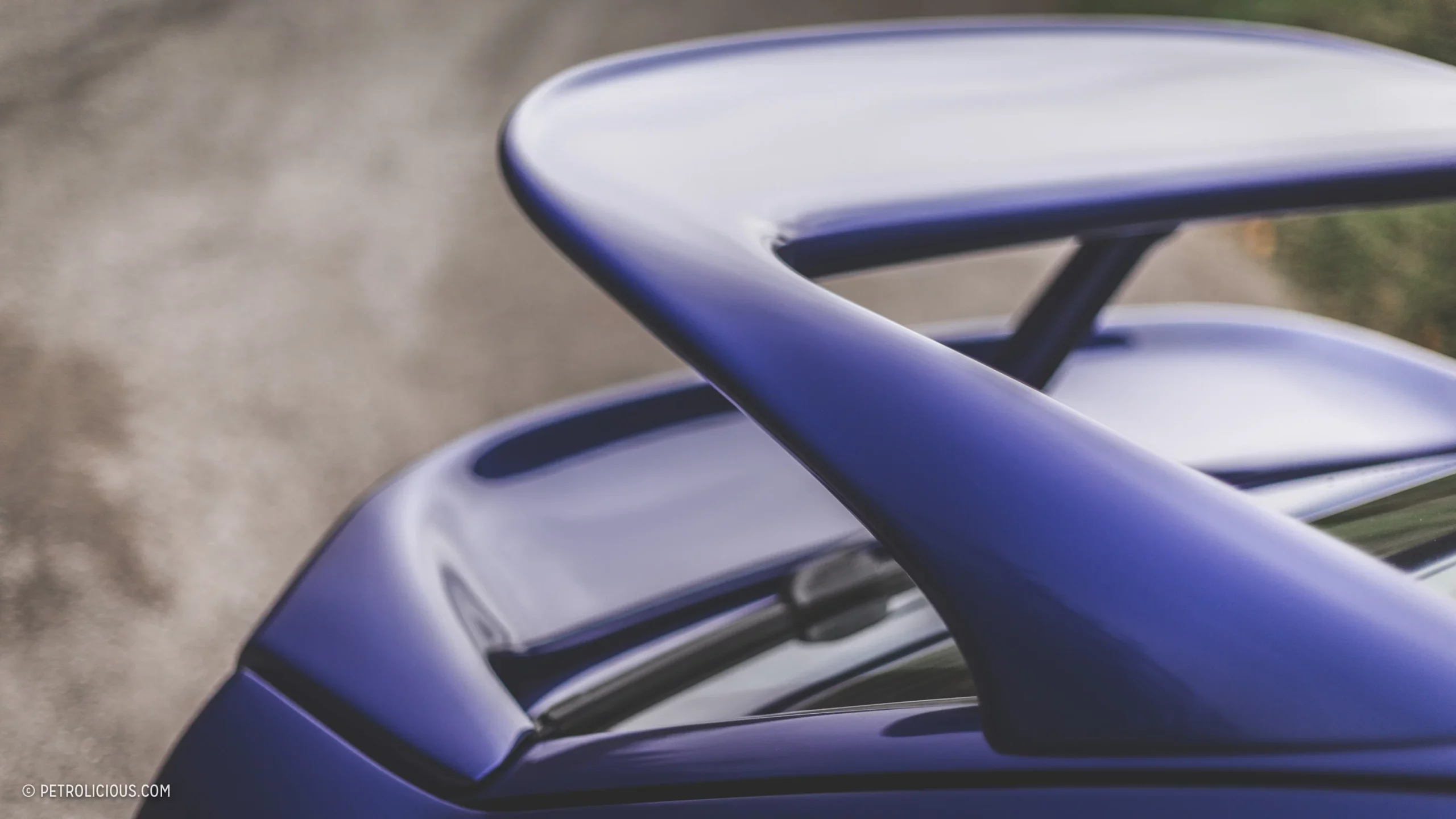
The Escort RS Cosworth utilized the fifth-generation Escort platform as the foundation, but received comprehensive mechanical transformation. The Sierra Cosworth’s longitudinal engine mounting, all-wheel-drive system with Ferguson MT-75 transmission, and sophisticated suspension geometry were adapted for the more compact Escort chassis. This engineering approach was extraordinarily efficient, allowing proven rally components to be transplanted while minimizing development costs and timeframes.
Suspension featured MacPherson struts at the front and semi-trailing arms at the rear, adapted directly from the Sierra Sapphire Cosworth 4×4 platform. The geometry was meticulously tuned for responsive handling while maintaining the ride refinement required for practical road use. Anti-roll bars provided cornering control without excessive harshness. The all-wheel-drive system employed a 34/66% front-rear power distribution, optimizing traction without creating handling imbalance that could prove unpredictable during aggressive driving.
Braking was by ventilated discs with four-piston calipers front and two-piston rear, supplemented by ABS preventing wheel lockup during emergency braking. The system provided adequate stopping power for the Escort’s turbocharged acceleration while remaining user-friendly for practical ownership.
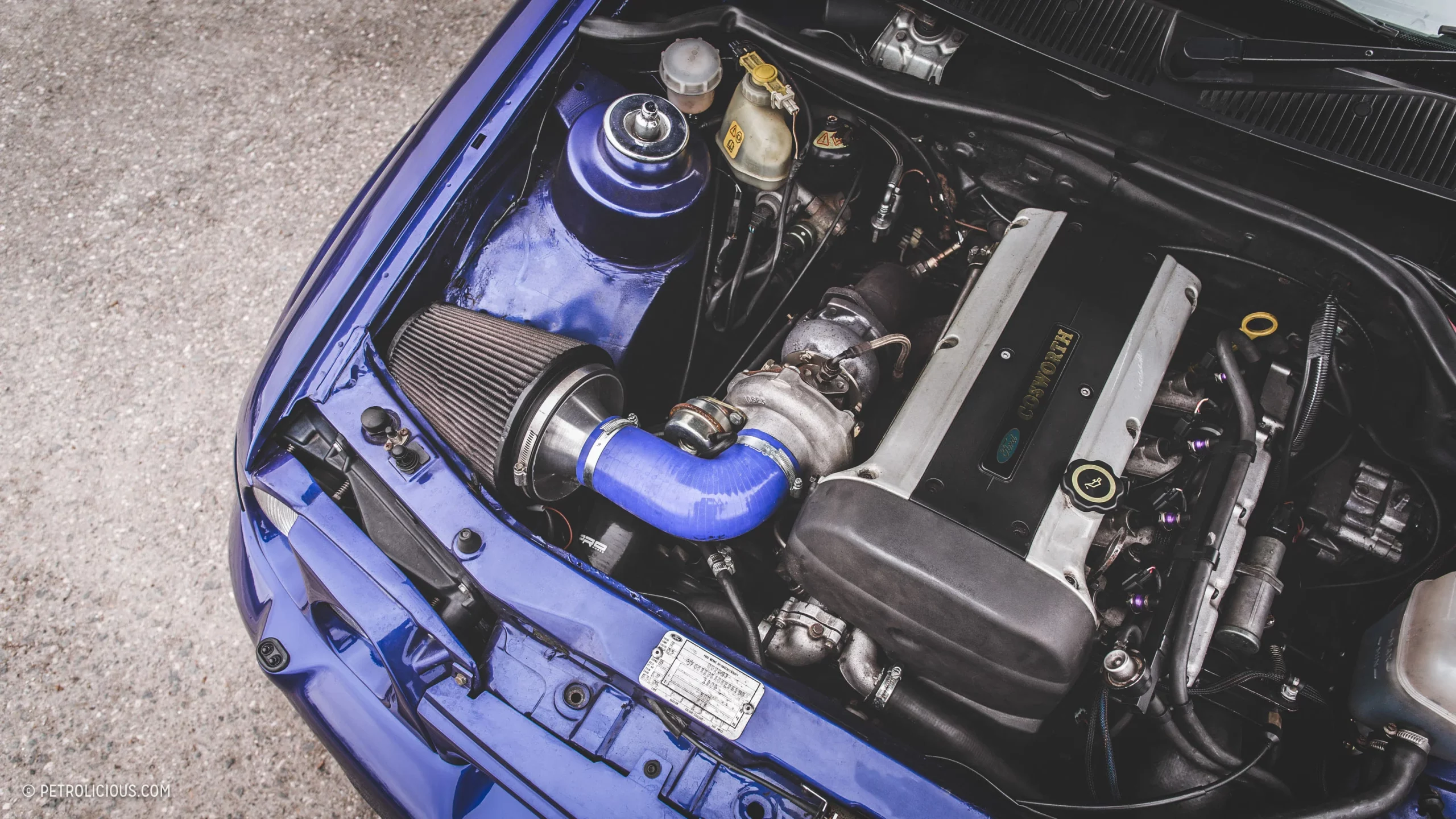
The Cosworth YBT displaced 1,993cc with dual overhead camshafts controlling 16 valves across the single inline-four cylinder bank. The early Garrett T04B turbocharger was calibrated for maximum power delivery at elevated engine speeds, creating the pronounced turbo lag characteristic of 1992-1994 applications. The YBP variant introduced in late 1994 replaced the large turbo with a smaller Garrett T25, providing earlier boost onset and more progressive power delivery suitable for daily driving. With an 8.5:1 compression ratio optimized for premium fuel, the engine produced 227 horsepower at 6,250 rpm and 229 lb-ft of torque at 3,500 rpm.
The five-speed Ferguson MT-75 manual transmission featured close-ratio spacing optimized for rally competition while remaining practical for road use. The limited-slip differential maintained appropriate bias, distributing power effectively to rear wheels while the all-wheel-drive system managed traction during acceleration and cornering.
Styling
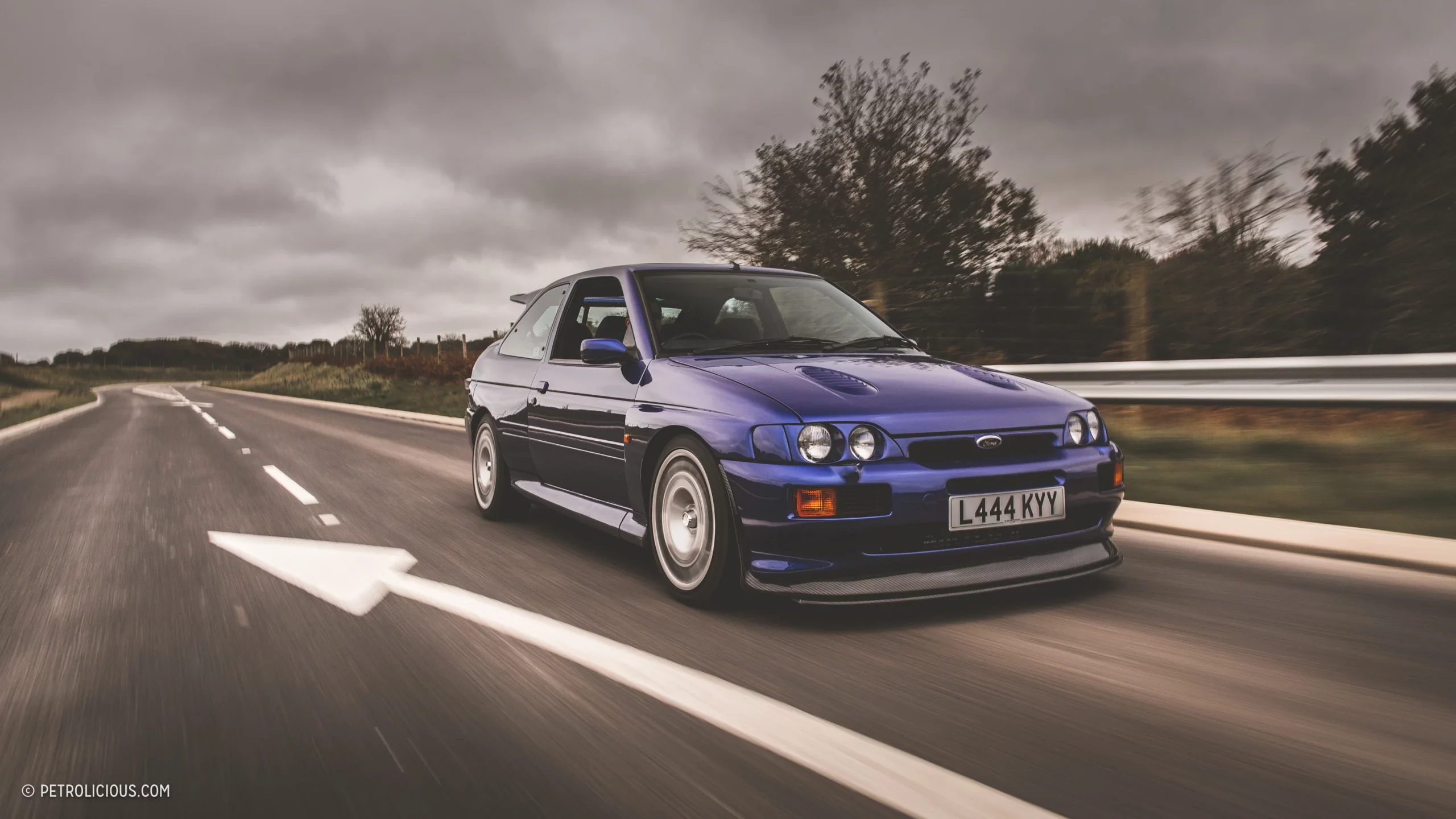
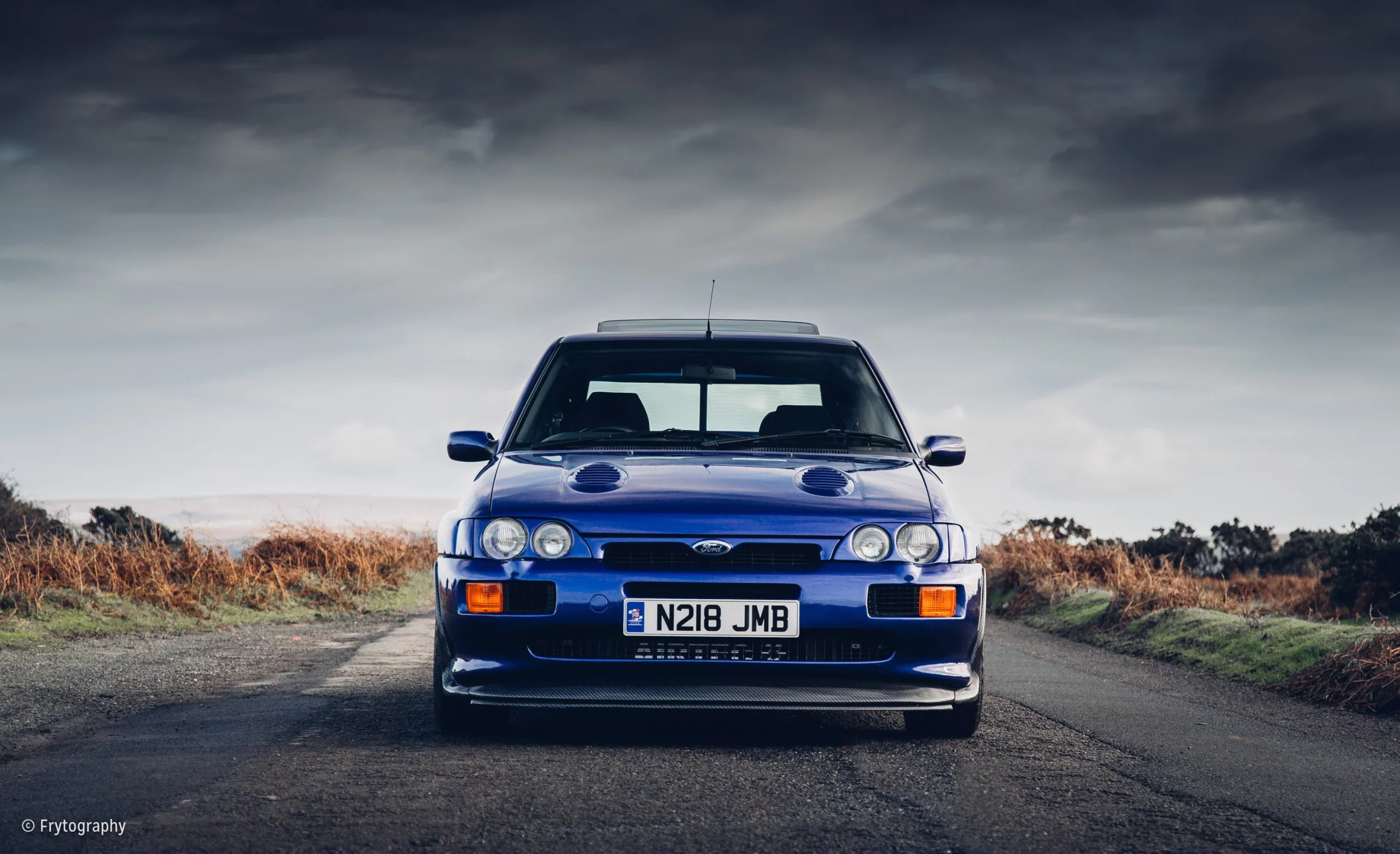
Frank Stephenson’s design for the Escort RS Cosworth emphasized functional elegance without excessive styling aggression. The profile was clean and purposeful, with the distinctive whale-tail rear wing becoming an iconic Escort RS Cosworth characteristic. Large air intakes provided genuine cooling function while establishing visual aggression through functional necessity rather than theatrical ornamentation. The low roofline and forward-positioned cockpit suggested performance while maintaining practical headroom and visibility.
The Escort RS Cosworth was remarkably restrained compared to contemporary competition, suggesting that genuine performance didn’t require dramatic styling—sophisticated proportions and meticulous engineering detail defined the character. Most road cars were finished in Pearl White or metallic blue, classic colors celebrating Ford’s rally heritage through understated elegance.
Interior
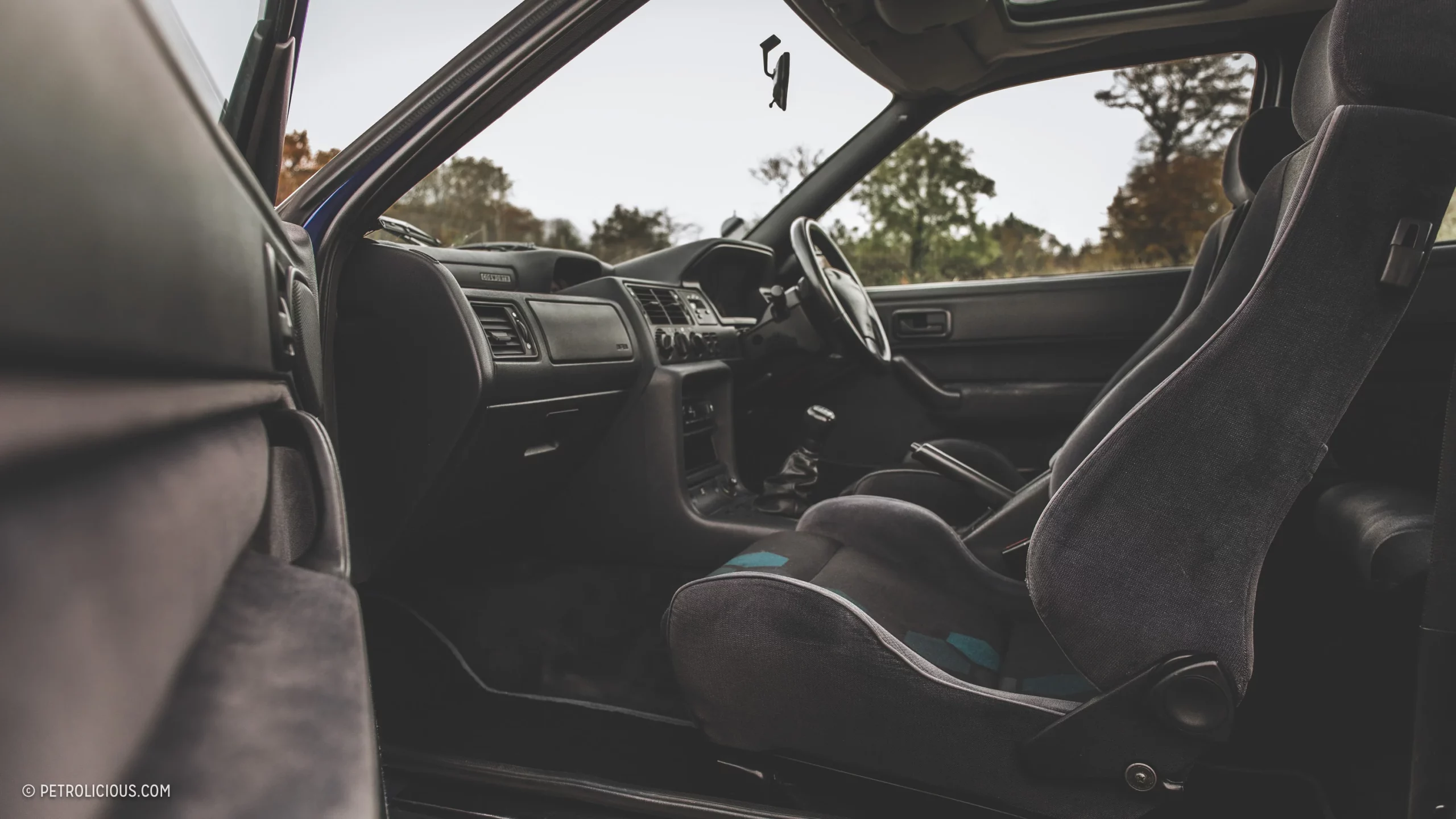
The cabin emphasized driver engagement combined with practical functionality. Supportive sport seats covered in leather-trimmed upholstery provided excellent lateral support during aggressive driving while maintaining comfort for extended road journeys. The driving position was commanding and forward-positioned, offering excellent visibility and ergonomic control placement. The instrument binnacle featured comprehensive gauges displaying engine parameters essential for managing turbocharged power delivery.
Standard equipment included functional climate control, power steering, and quality interior appointments reflecting the Escort’s sophisticated character. The overall atmosphere balanced racing-derived functionality with genuine comfort appropriate for practical daily driving by performance-oriented owners.
Specifications
- Engine: Cosworth YBT turbocharged inline-four, 1,993cc, DOHC, 16 valves, Garrett T04B turbocharger (1992-1994) / Garrett T25 turbocharger (1994-1996)
- Power: 227 PS / 224 hp at 6,250 rpm
- Torque: 229 lb-ft / 310 N·m at 3,500 rpm
- Transmission: Five-speed Ferguson MT-75 manual, all-wheel drive (34/66% front/rear)
- Chassis: Steel monocoque with aluminum subframes
- Suspension: MacPherson struts (front), semi-trailing arms (rear), coil springs
- Brakes: Ventilated discs, four-piston calipers (front), two-piston (rear), ABS
- Wheels: 16-inch alloy, performance tires
- Weight: 1,275-1,310 kg / 2,811-2,888 lbs
- Performance: 144 mph / 232 km/h top speed, 0-60 mph in 5.9 seconds
Racing History
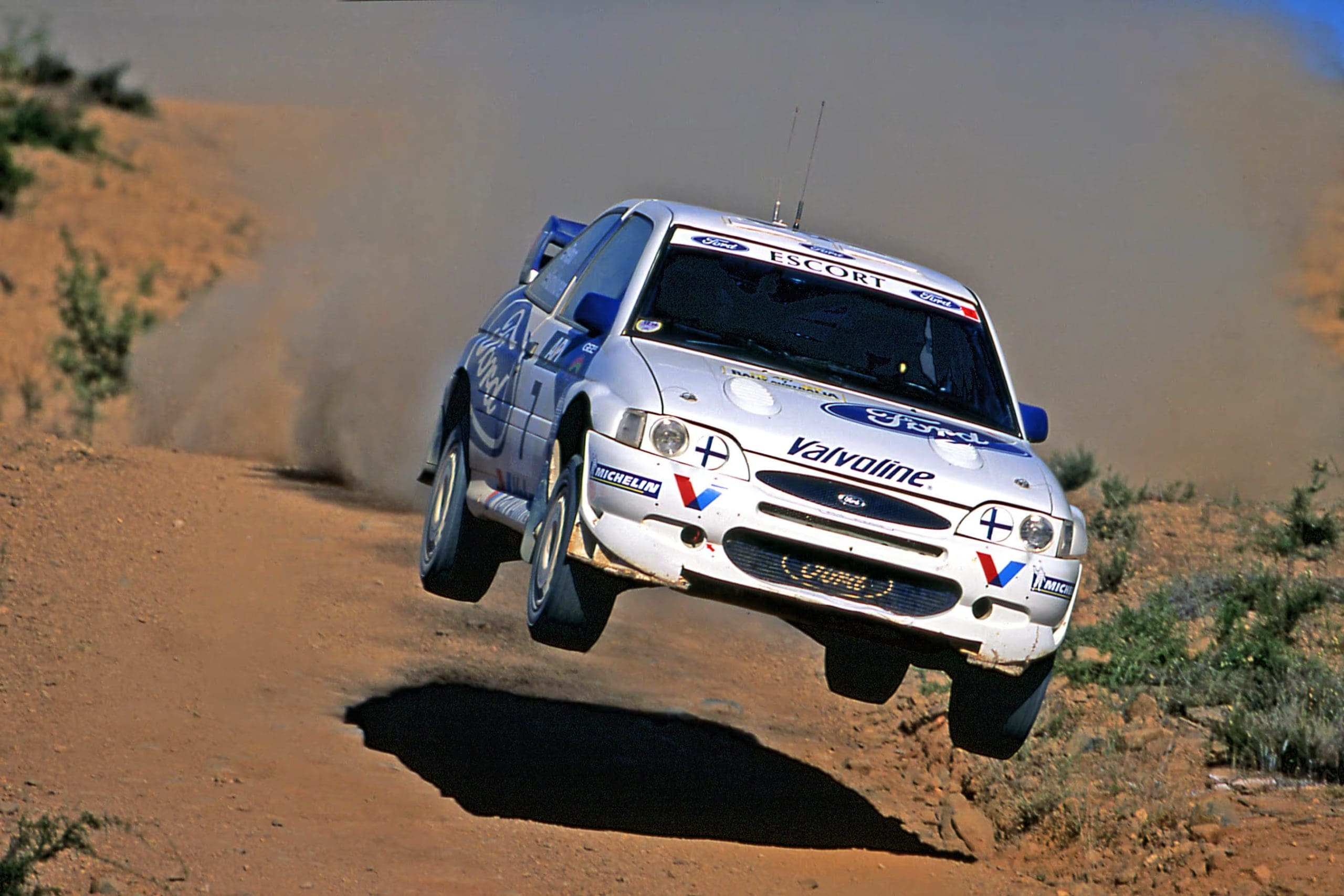
The Ford Escort RS Cosworth competed in the World Rally Championship from 1993 through 1998, establishing itself as one of the most competitive rally cars of the Group A era despite never achieving a drivers’ or manufacturers’ championship. The 1993 debut season proved remarkably successful, with five World Championship wins from 13 events. François Delecour contributed three victories (Portugal, Tour de Corse, and Catalonia), Miki Biasion won the grueling Acropolis Rally on Greek gravel, and Franco Cunico secured victory at Rallye Sanremo.
Subsequent seasons demonstrated sustained competitiveness, with Delecour winning the 1994 Monte Carlo Rally and Tommi Mäkinen claiming victory in the demanding 1000 Lakes Rally. The car proved remarkably versatile, winning on Portuguese gravel, Corsican and Italian tarmac, and the punishing Acropolis stages. Carlos Sainz contributed victories including the 1996 Acropolis Rally and Rally Indonesia, establishing the Escort RS Cosworth as a genuinely competitive platform.
Throughout its competitive career, the Escort RS Cosworth achieved 10 World Championship round victories and competed extensively in European and national championships, where it proved dominant. The 1997 conversion to Escort WRC specification added two further championship wins before the Focus RS WRC superseded the platform. While the Escort RS Cosworth never secured a championship title, its 1993-1998 competitive record established it as one of rally’s most successful and respected cars.
Production and Legacy
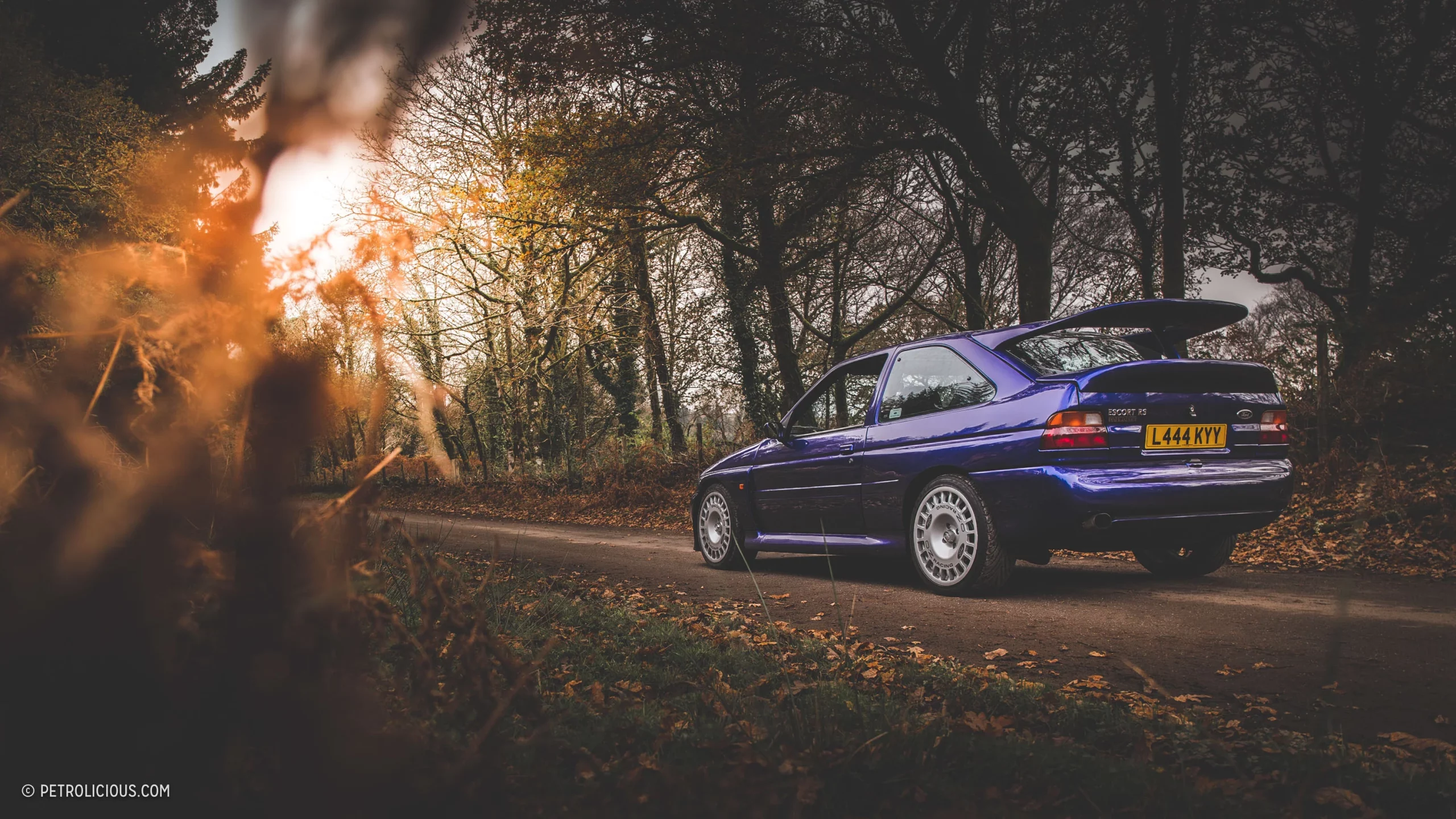
Ford hand-assembled 7,145 road-going Escort RS Cosworth examples at Rheine, Germany (by Karmann) between February 1992 and January 1996. Special editions emerged throughout production, including the Monte Carlo Edition released in 1994 to celebrate François Delecour’s 1994 Monte Carlo Rally victory. The extended production run reflected sustained customer demand despite premium pricing.
The Escort RS Cosworth proved that turbocharged four-cylinders and all-wheel drive could deliver world-class rally performance through intelligent engineering rather than displacement. The combination of proven platform components, sophisticated turbocharging, and practical road-car usability established a template influencing future rally development.
Today, Escort RS Cosworth examples command strong collector prices reflecting their rally heritage and genuine performance credentials. The combination of Cosworth engineering, all-wheel-drive capability, and iconic whale-tail design has established lasting appeal among enthusiasts worldwide.
The Ford Escort RS Cosworth represented Boreham’s engineering excellence, proving that compact turbocharged machinery could compete at motorsport’s highest levels. It remains one of Ford’s greatest achievements, a homologation special establishing legends that endure today.