
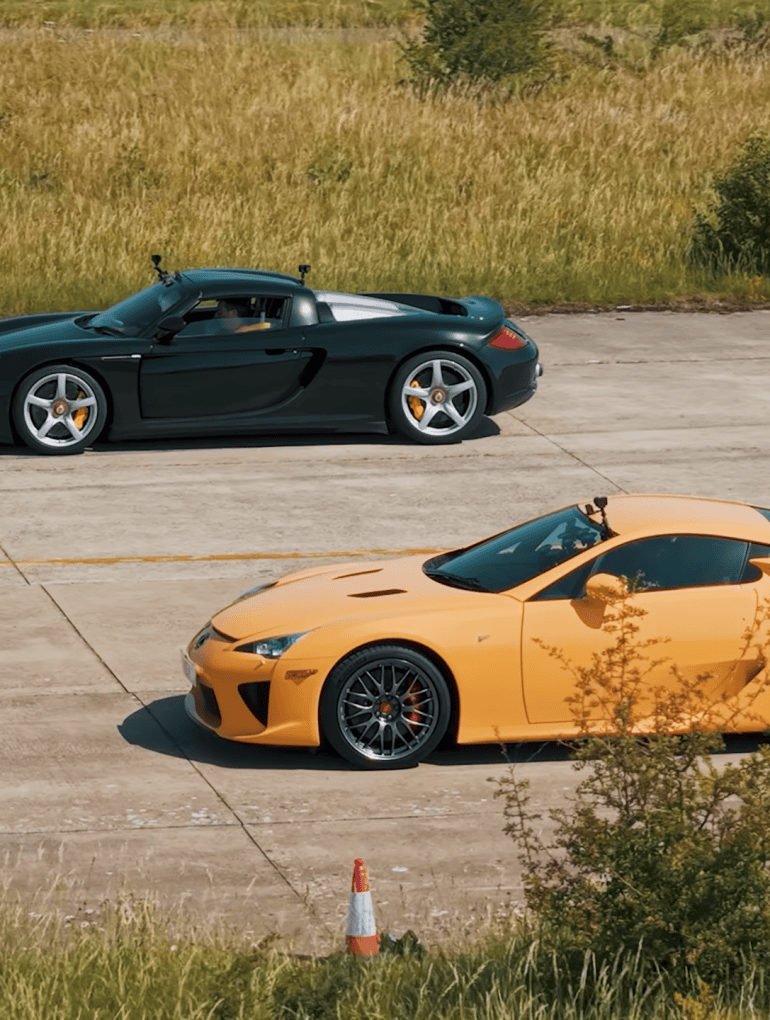
The Porsche Carrera GT and Lexus LFA represent two of the greatest naturally aspirated V10 supercars ever built, and Mat Watson of carwow put the pair head-to-head in a series of acceleration and braking tests to determine which engineering icon still reigns supreme.
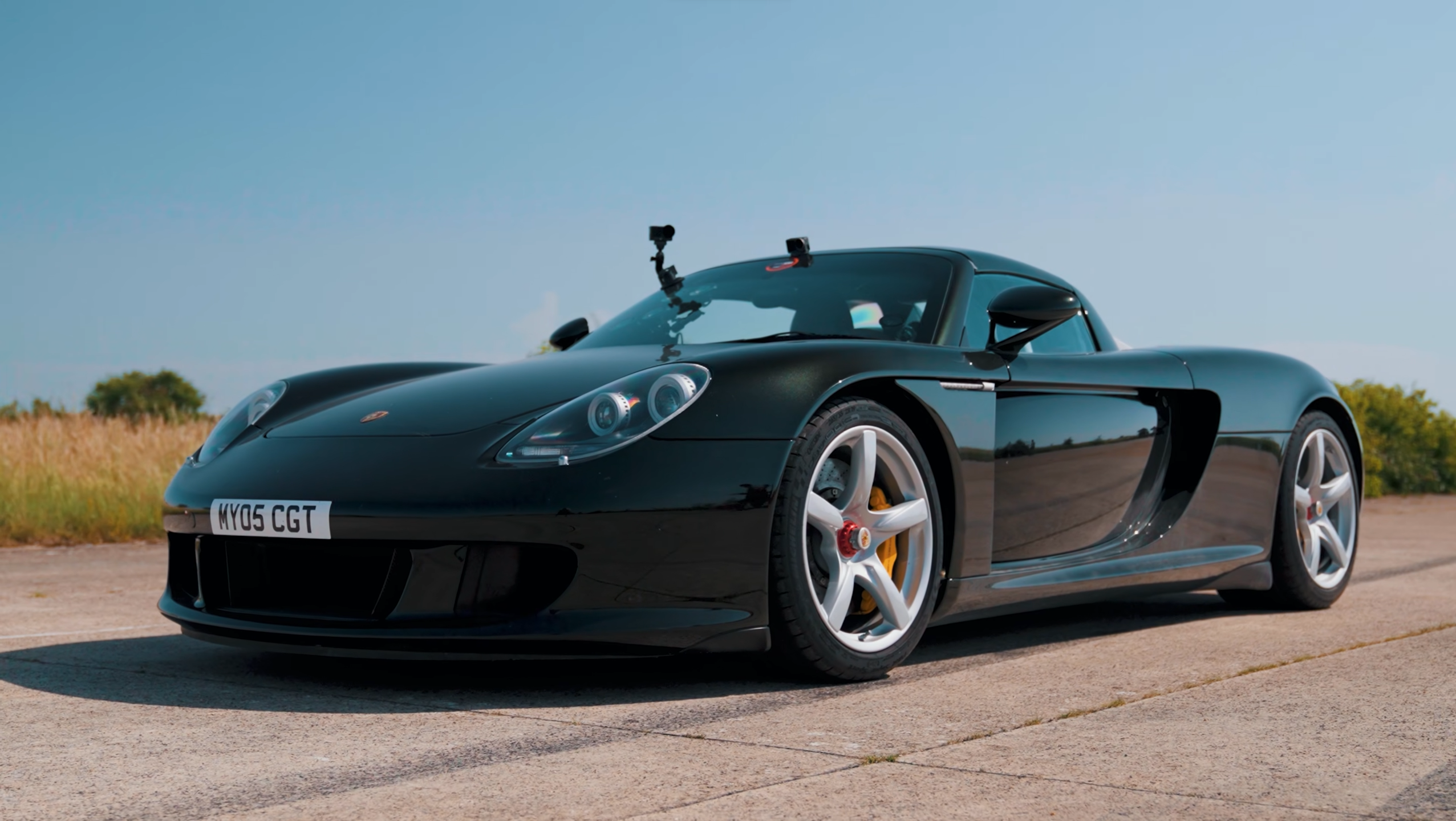
The Carrera GT entered the contest with a clear performance advantage on paper. Its 5.7-liter naturally aspirated V10 produces 612 horsepower and 590 Nm of torque, sending power to the rear wheels through a six-speed manual transmission. Weighing just 1,380 kg, the Porsche combines lightweight construction with one of the most revered manual gearboxes ever fitted to a supercar.
Opposing it was the Lexus LFA, powered by a Yamaha-tuned 4.8-liter naturally aspirated V10 producing 560 horsepower and 480 Nm. Its six-speed automated manual gearbox promised quicker shifts, while its current market value has climbed to roughly £750,000.
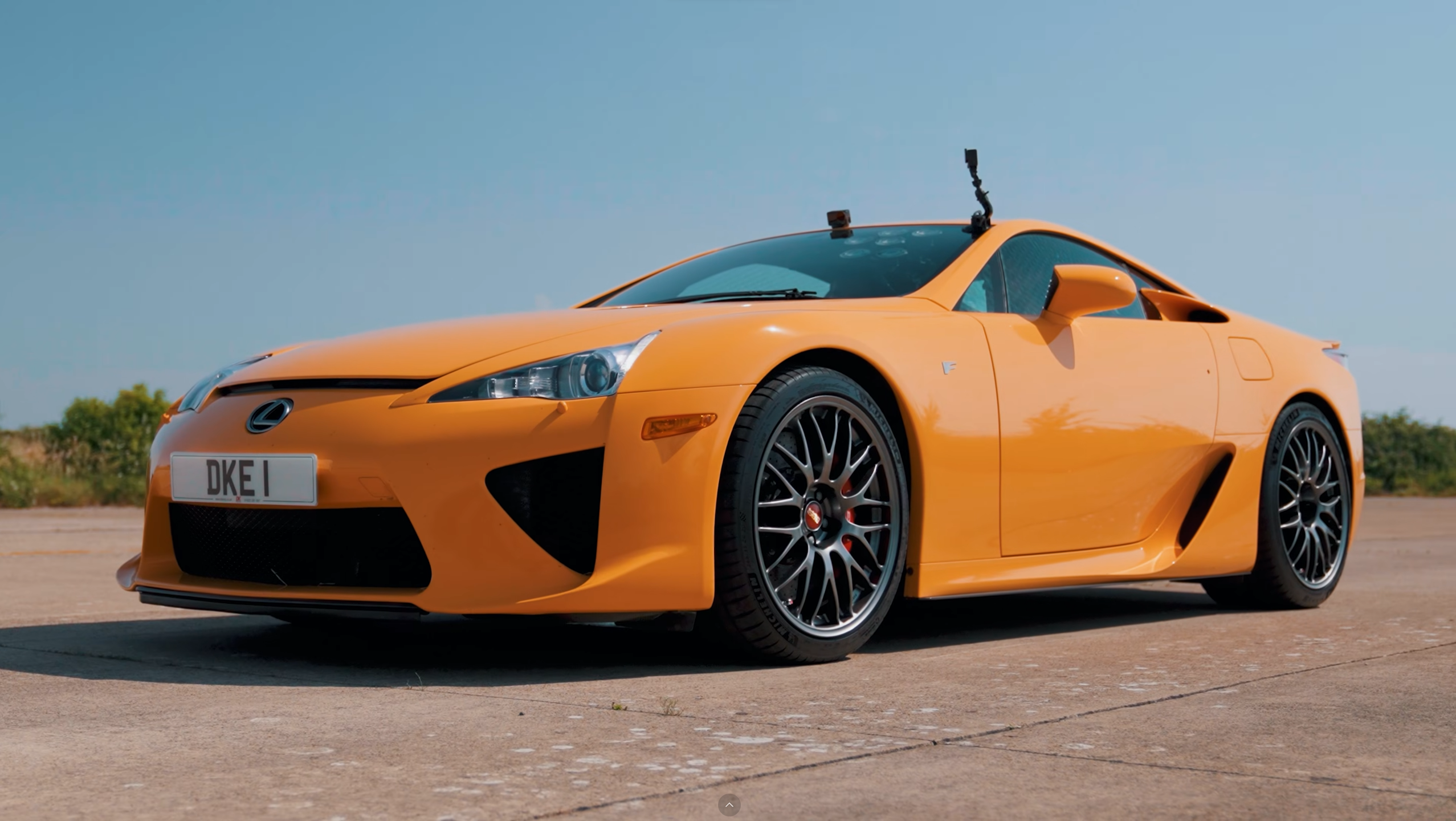
Before the racing began, both cars reminded everyone why they have achieved legendary status. The Carrera GT delivered a raw, mechanical soundtrack, while the LFA countered with its unmistakable Formula 1-inspired exhaust note, widely regarded as one of the greatest engine sounds ever created.
Because of the Carrera GT’s notoriously delicate clutch, the standing-start launch was replaced with rolling quarter-mile runs. Despite the Lexus’ transmission advantage, the Porsche repeatedly edged ahead, recording a best rolling quarter-mile time of 12.1 seconds compared with the LFA’s 12.2 seconds. Additional half-mile races from 30 mph and 50 mph further highlighted the Carrera GT’s superior power-to-weight ratio and stronger torque delivery, allowing it to gradually pull away at higher speeds.
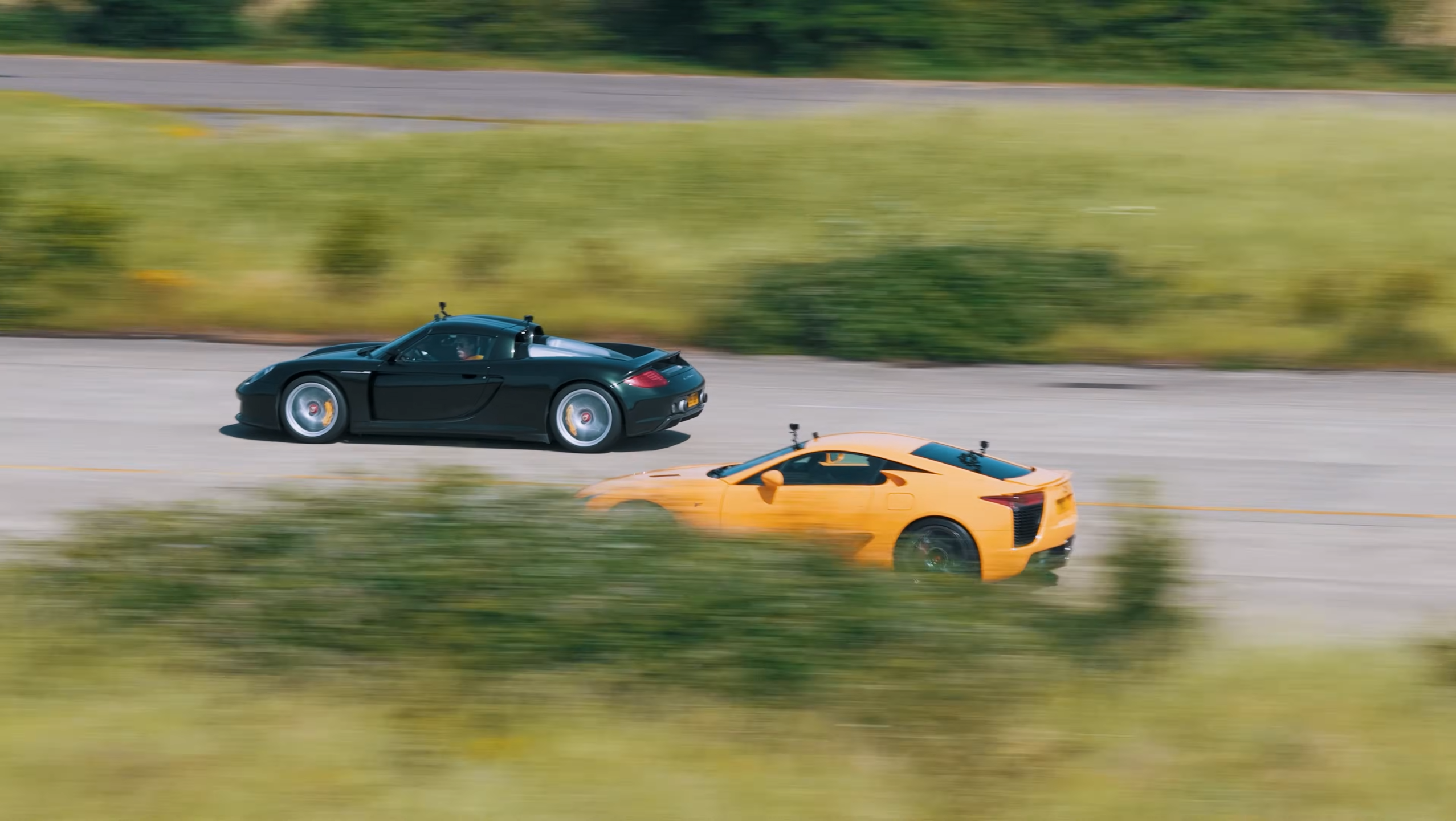
The Lexus fought back during the braking evaluation, where its more modern ABS calibration and braking performance comfortably outperformed the older Porsche. Even so, outright acceleration favored the Carrera GT throughout the day, confirming that its combination of lighter weight, greater output, and manual drivetrain still delivers extraordinary real-world performance over two decades after its debut.
Source: carwow