
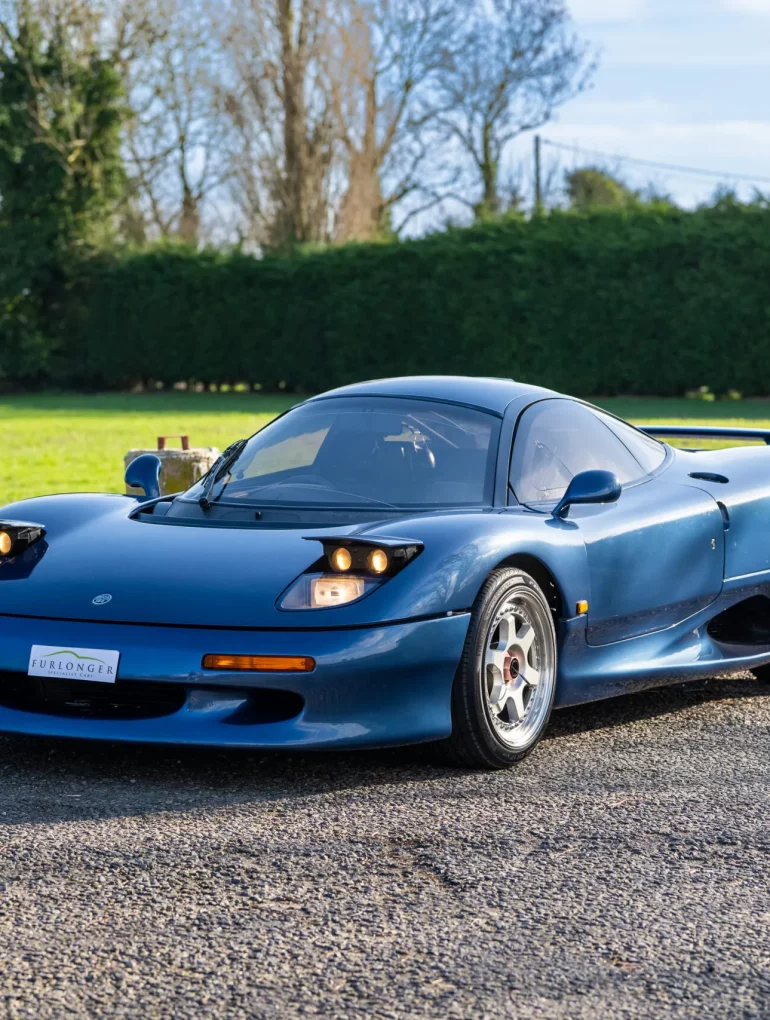

Silverstone, April 1991. JaguarSport unveiled the XJR-15, a revolutionary road-going supercar derived directly from the Le Mans-winning Jaguar XJR-9 race car. This was Jaguar celebrating its racing heritage by transforming proven competition machinery into street-legal performance through modest practical compromises. The 6.0-liter naturally aspirated V12 produced 450 horsepower at 6,250 rpm and 420 lb-ft of torque, delivering genuine supercar performance from mechanical sophistication rather than forced induction. This was a car designed explicitly to evoke Jaguar’s glorious racing lineage—the C-Type, D-Type, and legendary E-Type—proving that engineering excellence and authentic performance could create something genuinely transcendent.
The XJR-15 could accelerate from 0 to 60 mph in 3.9 seconds while achieving 191 mph, establishing credentials matching contemporary Ferrari and Porsche supercars. Production was strictly limited to 53 examples between 1990 and 1992, comprising 27 road-going variants and 26 competition examples, establishing the XJR-15 as one of the rarest and most exclusive British supercars ever produced.
Background and Origins
The decision to develop the XJR-15 emerged from Tom Walkinshaw Racing’s extraordinary success in international sports car racing. The Jaguar XJR-9 had achieved legendary status through Le Mans victories and sustained competition success throughout the late 1980s. When Group C racing regulations changed, Walkinshaw recognized an extraordinary opportunity: transform the proven XJR-9 race car into a road-going supercar celebrating Jaguar’s racing tradition while creating a genuine homologation special.
Designer Peter Stevens, the visionary behind the original XJR-9 and subsequent Jaguar competition machinery, received the brief to create something unprecedented. Rather than develop an entirely new platform, Stevens and collaborators Eddie Hinckley, Dave Fullerton, Jim Router and Andy Morrison evolved the proven race car for road use. The fundamental architecture remained racing-derived: carbon-fiber monocoque chassis, mid-mounted V12, flat bottom for aerodynamic efficiency, and uncompromising performance focus.
The most significant modifications involved practical concessions for road use. Stevens widened the cockpit by 75 millimeters and raised the roof by 40 millimeters, providing genuine headroom and cockpit space without fundamentally compromising the racing DNA. Additional changes included improved access, basic interior amenities, and street-legal lighting systems. Despite these road-car requirements, the XJR-15 remained fundamentally a race car wearing registration plates.
The engine was Jaguar’s proven 6.0-liter V12 providing the foundation for both road and competition versions. The road specification produced 450 horsepower through sophisticated fuel injection and electronic management, while racing variants likely produced higher output through revised tuning. The compression ratio was set at 11.5:1, requiring premium fuel while delivering the linear, high-revving power delivery essential to the Jaguar character.
Design and Engineering
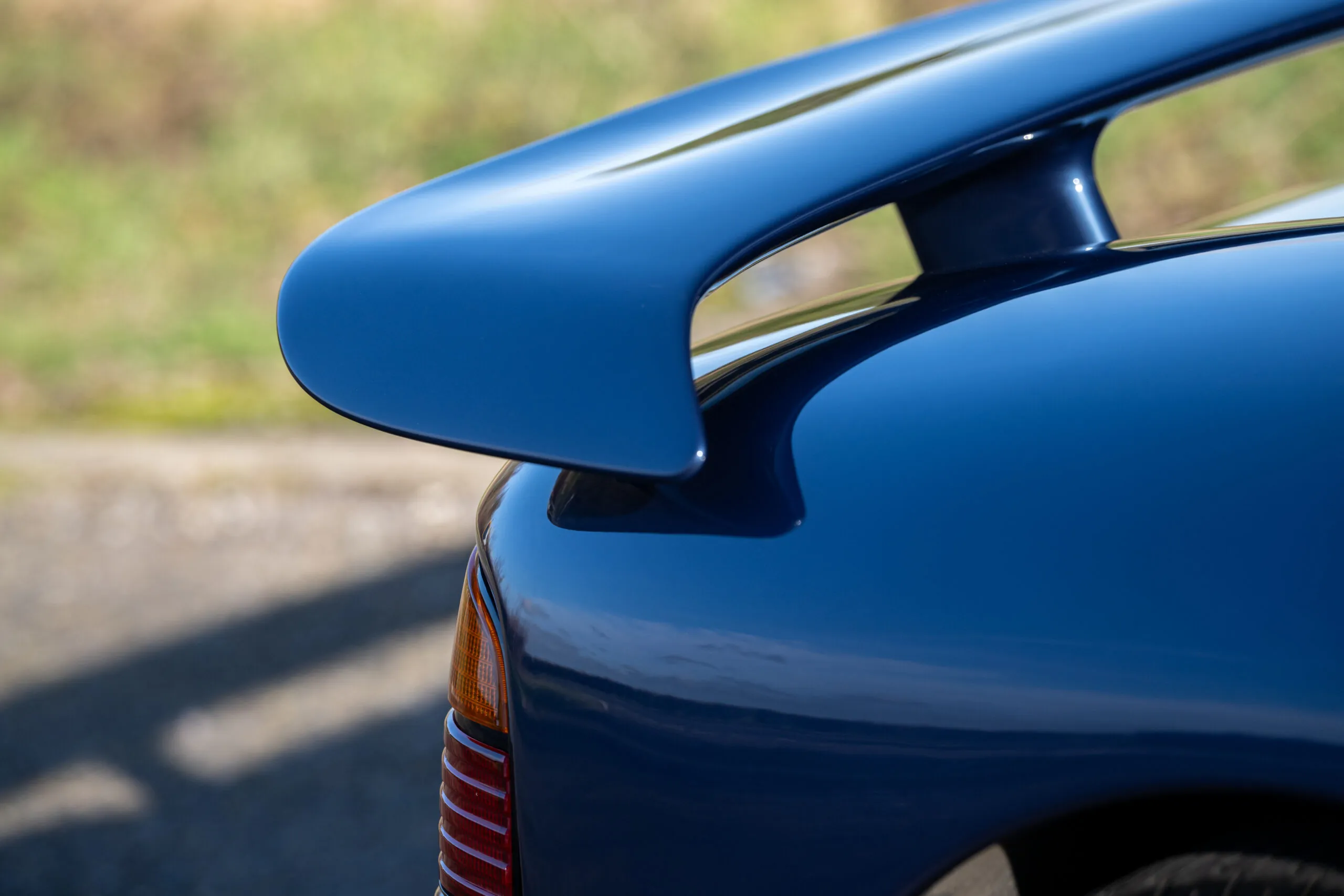
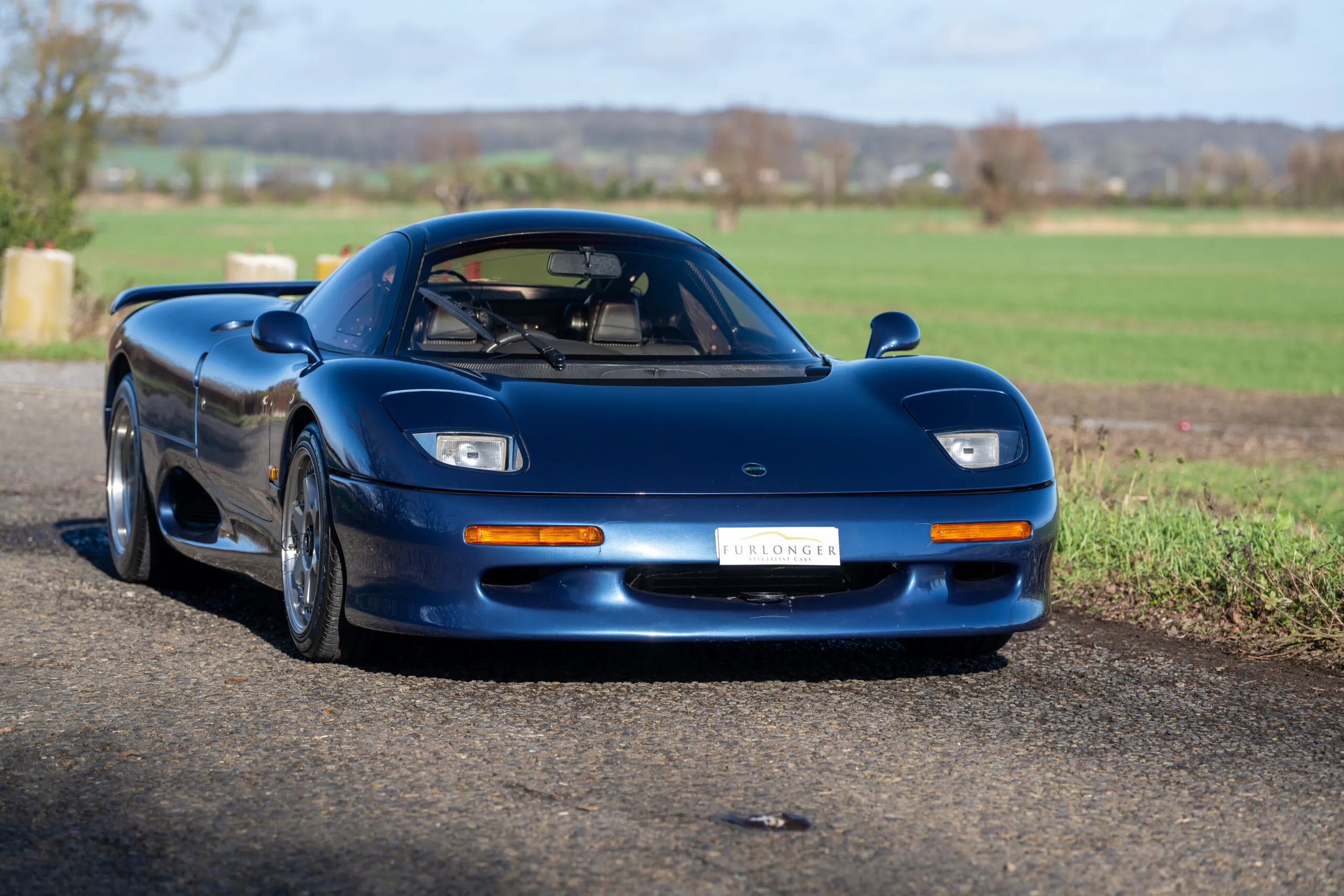
Peter Stevens’ design philosophy emphasized form following function with uncompromising racing authenticity. The XJR-15 featured an extended nose incorporating integrated air intakes feeding cooling systems for the mid-mounted engine. The cockpit was positioned well forward, creating distinctive proportions that suggested performance while maintaining practical visibility.
The construction methodology was revolutionary for 1991. Extensive carbon-fiber and Kevlar composite panels minimized weight while providing the structural rigidity essential for racing performance. The flat floor provided aerodynamic efficiency through ground effect principles, while adjustable aerodynamic appendages generated downforce necessary for high-speed stability. The overall curb weight was remarkably low at approximately 2,315 kilograms, creating an exceptional power-to-weight ratio.
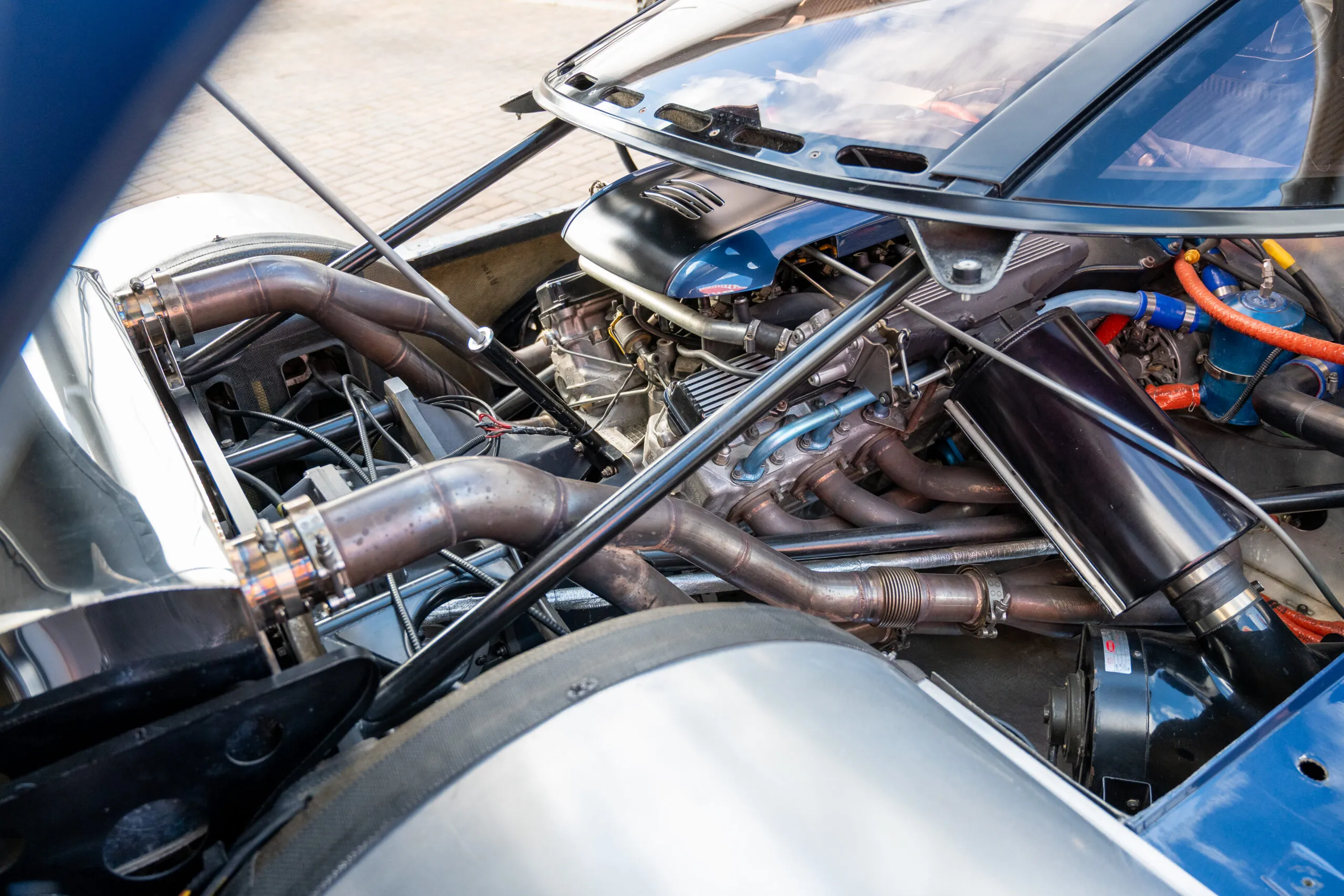
Suspension featured race-derived double wishbones front and rear with coil springs and adjustable dampers. The geometry was optimized for responsive feedback and precise handling rather than comfort, with minimal suspension compliance transmitting road feel directly to occupants. Braking was by race-specification AP Racing four-piston calipers with large ventilated discs providing powerful stopping power adequate for the car’s extraordinary acceleration.
The mid-mounted V12 was mounted longitudinally, optimizing weight distribution and creating the ideal handling balance inherent to mid-engine design. The naturally aspirated character meant consistent linear power delivery without turbo-lag considerations, allowing skilled drivers to exploit the engine’s capabilities through disciplined throttle management and gearbox work.
Styling
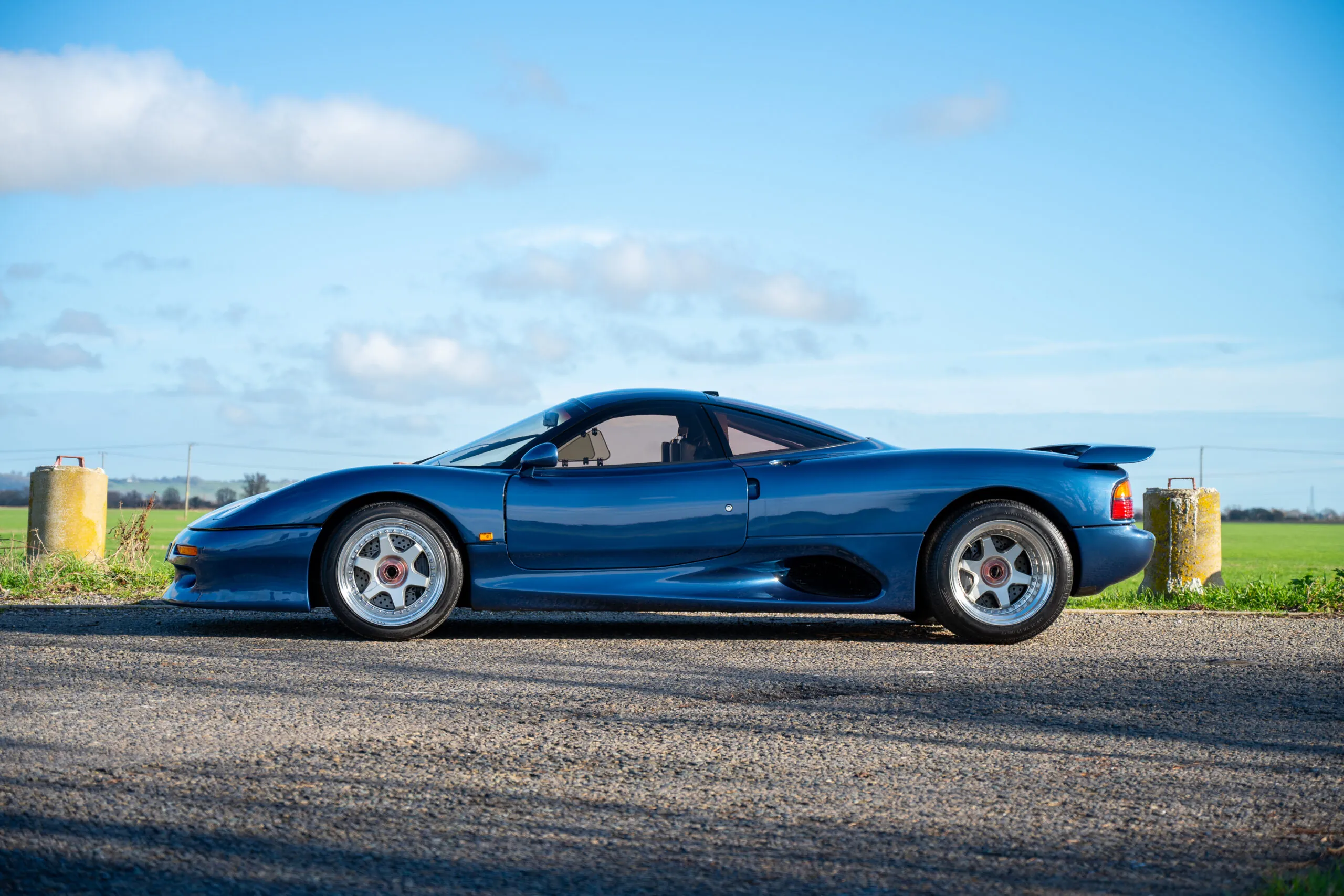
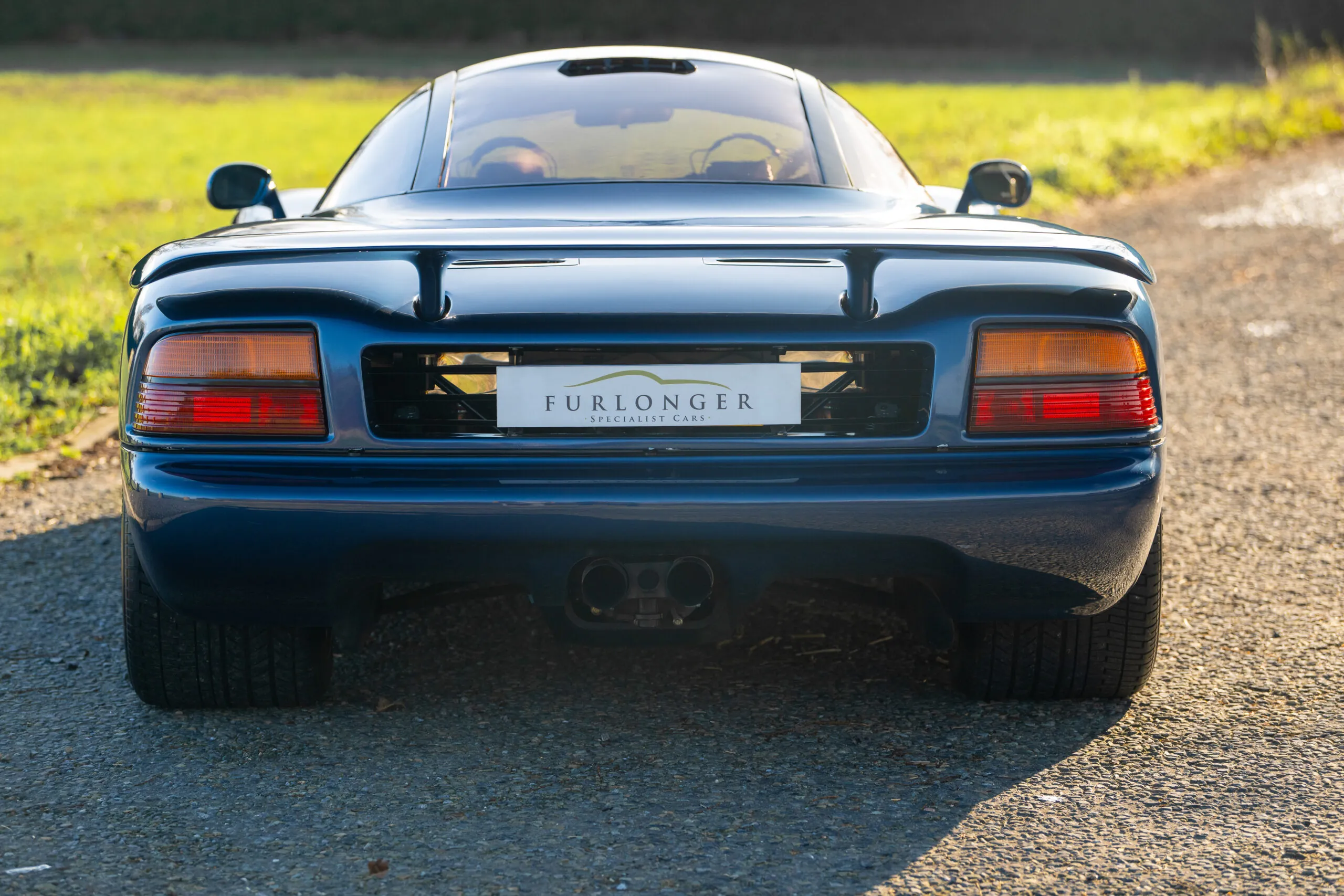
Peter Stevens’ design created an immediately distinctive visual identity emphasizing racing authenticity. The aggressive front end featured functional cooling ducts and integrated spoiler elements providing genuine aerodynamic benefit rather than visual theatre. The prominent side air intakes fed cooling systems while defining the car’s muscular profile. The elevated rear deck accommodated the mid-mounted engine while housing sophisticated aerodynamic development including an adjustable rear wing and integrated diffuser.
The overall appearance was uncompromising and dramatic, suggesting that this was fundamentally a race car wearing road-legal credentials. Most XJR-15 examples were finished in Le Mans Blue, traditional British Racing Green, or Jaguar’s contemporary metallic colors, celebrating the brand’s racing heritage through classic liveries.
Interior
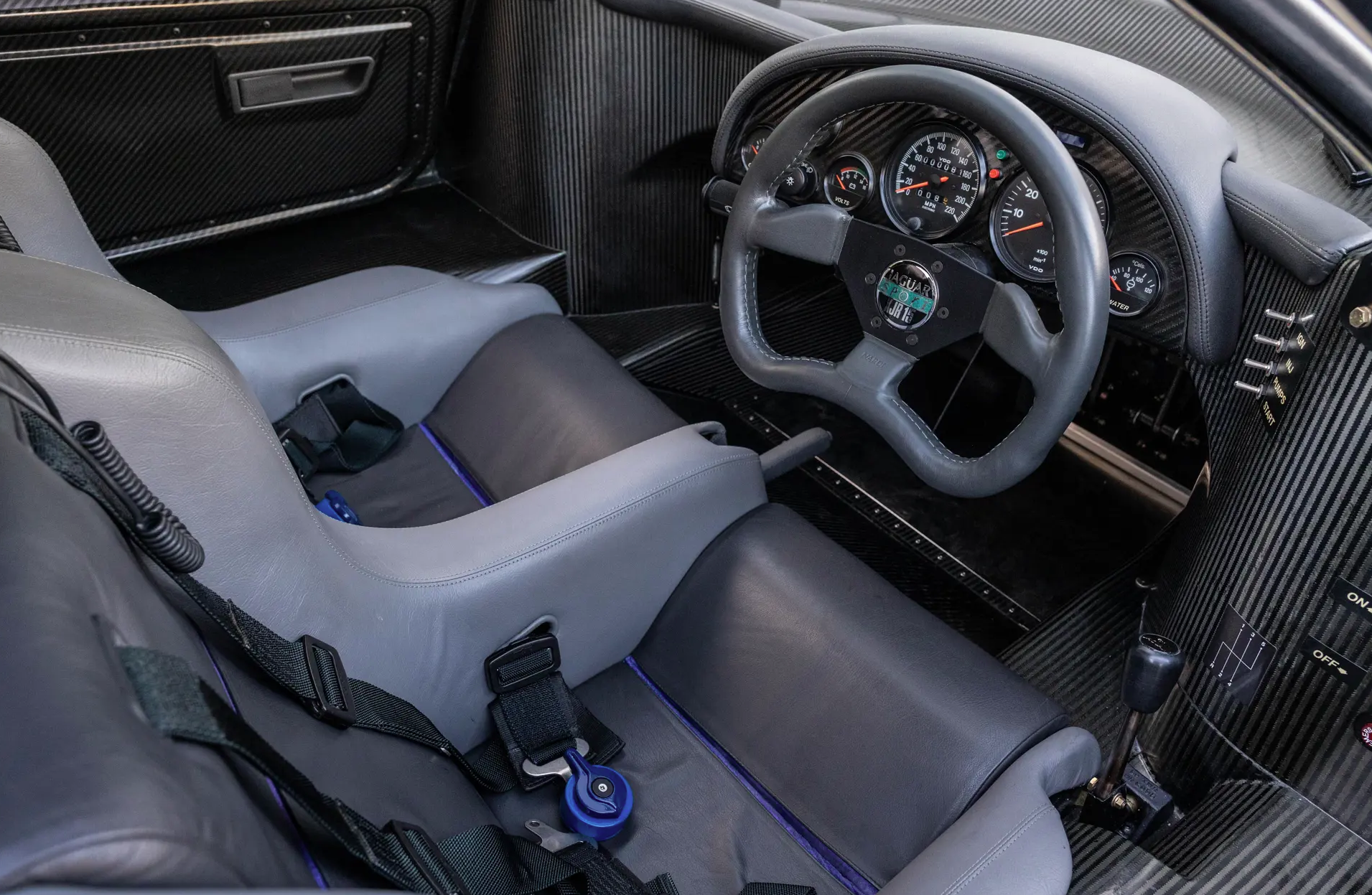
The cabin embodied functional minimalism reflecting racing priorities. Supportive race-specification seats provided excellent lateral support during aggressive driving while maintaining basic comfort for extended road use. The driving position was commanding and forward-positioned, offering excellent all-around visibility. The dashboard featured essential instrumentation including a large tachometer with red line at 7,000 rpm and comprehensive engine parameter gauges.
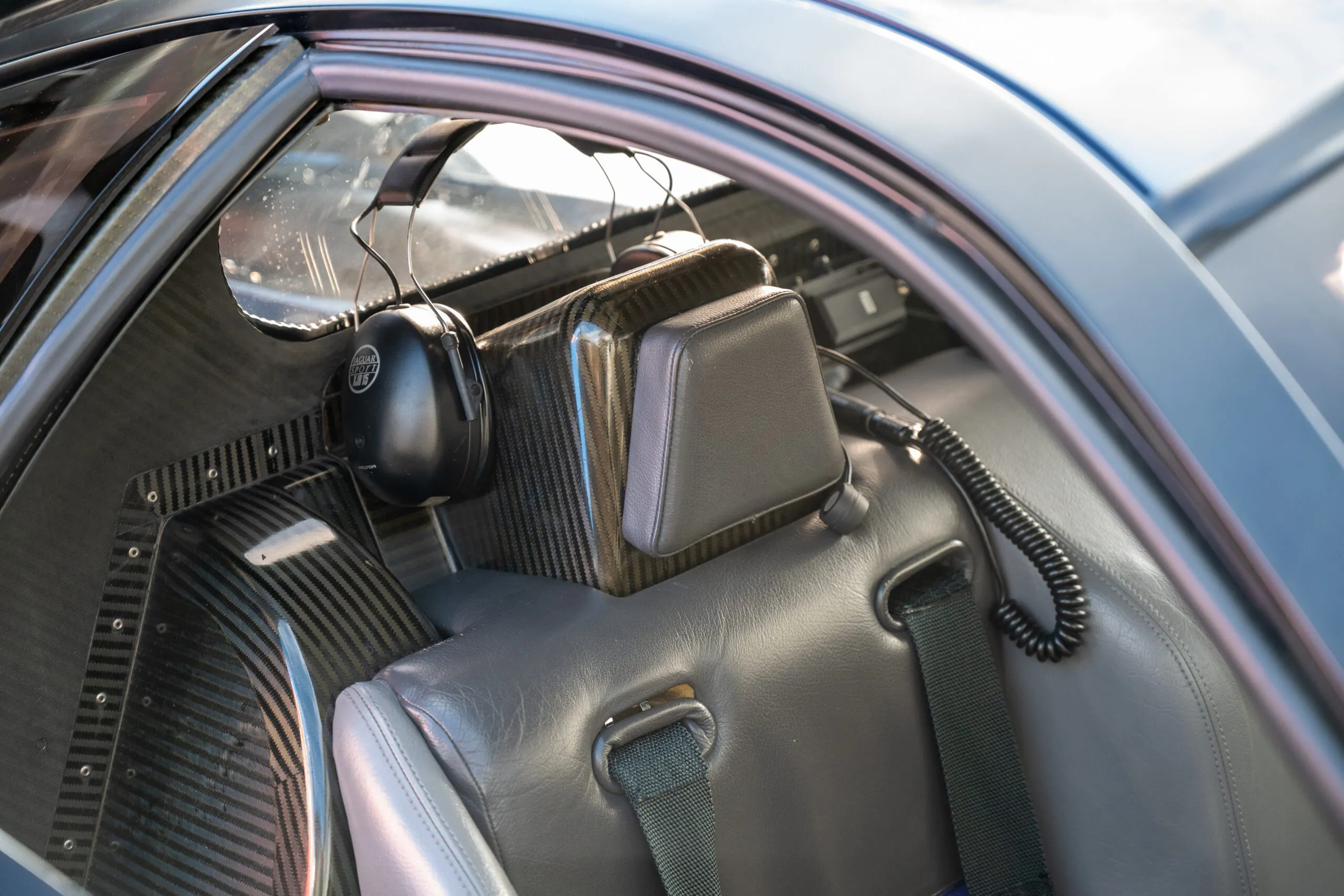
The overall atmosphere emphasized mechanical engagement and racing authenticity over luxury appointments. Notable was the absence of superfluous trim, sound deadening, or unnecessary embellishment—every component served functional purpose or was eliminated entirely to minimize weight.
Specifications
- Engine: V12 naturally aspirated, 5,993cc, DOHC per bank, four valves per cylinder
- Power: 450 hp / 456 PS at 6,250 rpm
- Torque: 420 lb-ft / 569 N·m at 4,500 rpm
- Transmission: Five-speed manual TWR (road), six-speed manual (racing)
- Chassis: Carbon-fiber and aluminum monocoque
- Suspension: Independent double wishbones (front and rear), coil springs
- Brakes: AP Racing four-piston calipers, ventilated discs
- Wheels: 17-inch center-lock, varying widths for road and racing configurations
- Weight: 1,050-1,062 kg dry / 2,315-2,341 lbs
- Performance: 191 mph / 307 km/h top speed, 0-60 mph in 3.9 seconds
Racing History
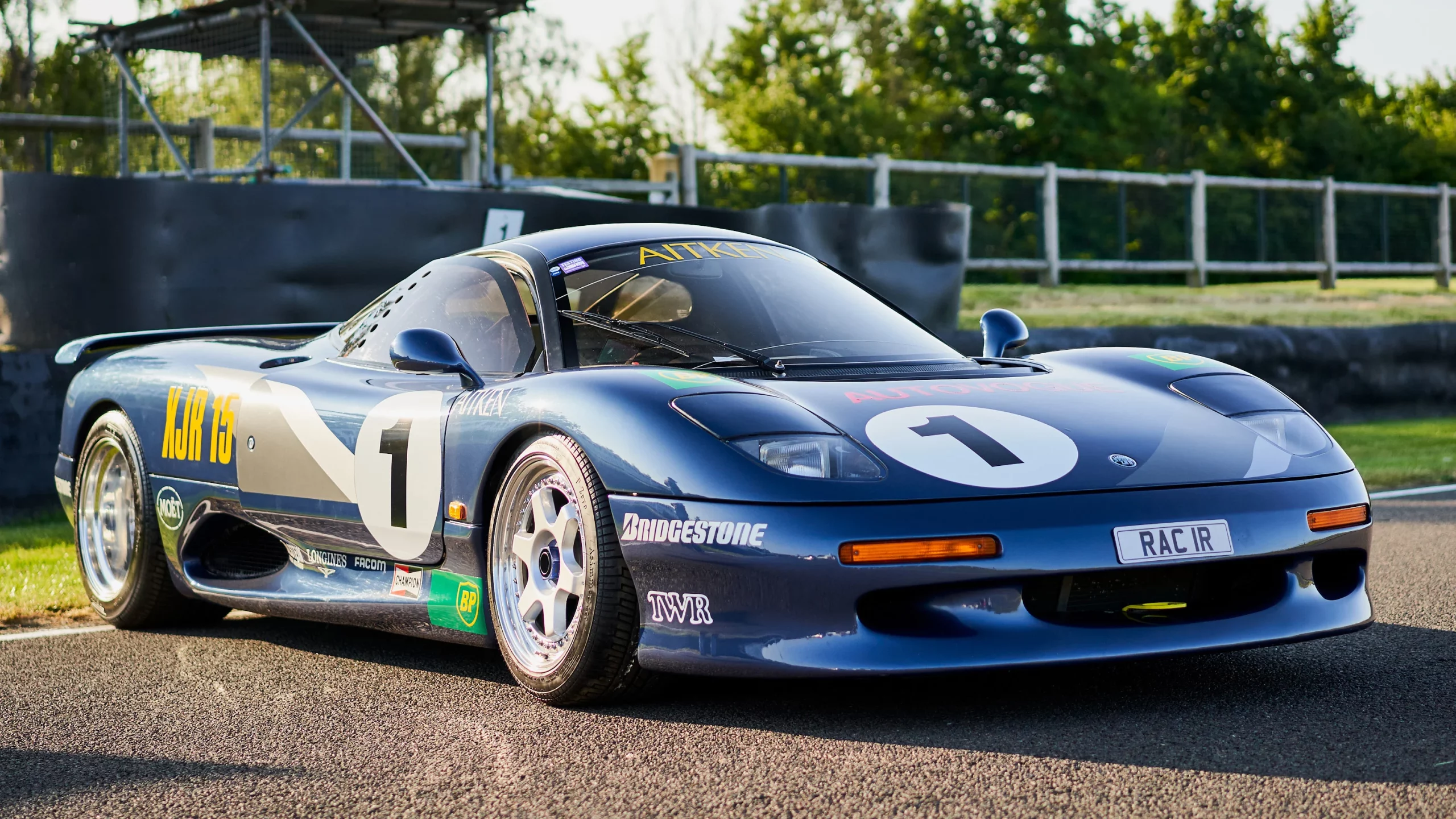
The XJR-15 competed in the Jaguar Intercontinental Challenge, an exclusive one-make racing series supporting three Formula 1 events at Monaco, Silverstone, and Spa-Francorchamps during 1991. Sixteen XJR-15 examples were prepared specifically for competition, with professional drivers including David Brabham and Juan Manuel Fangio II competing for substantial prizes including a Jaguar XJR-S and $1 million reward for the final race winner.
The racing program proved successful, demonstrating that the road-derived platform possessed genuine competition capability. The Intercontinental Challenge established the XJR-15 as a legitimate racing machine while showcasing its technological sophistication and performance credentials, with approximately ten original competition examples believed to survive in period racing specification.
Production and Legacy
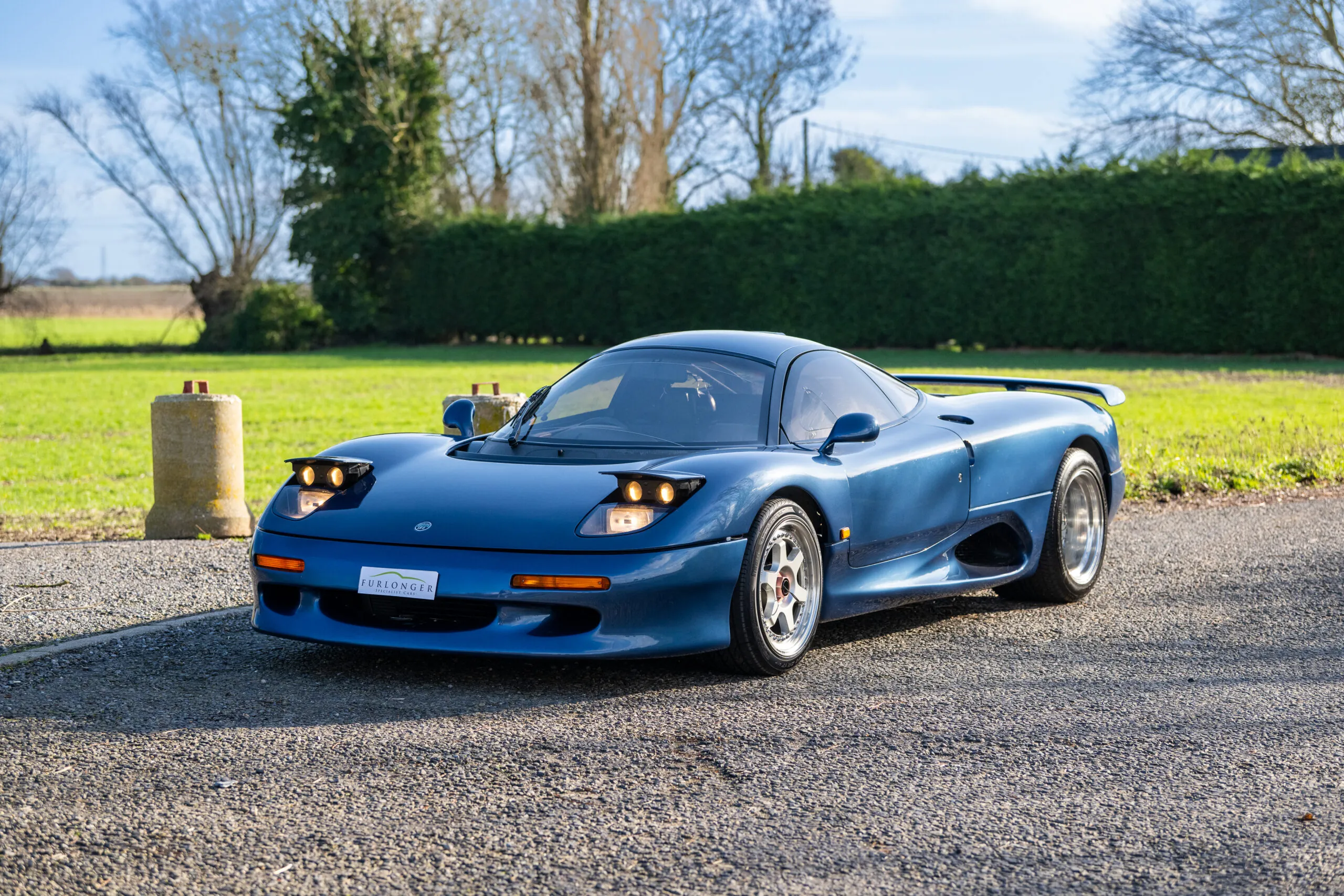
JaguarSport hand-assembled 53 XJR-15 examples between 1990 and 1992 at Bloxham, Oxfordshire. The deliberate production limitation reflected Jaguar’s exclusivity strategy, ensuring the XJR-15 remained genuinely elite and extraordinarily rare. Each car required meticulous assembly reflecting British manufacturing standards and customer personalization reflecting Jaguar’s tradition of bespoke craftsmanship.
The XJR-15 proved that authentic racing technology could enhance production cars while maintaining daily usability. It established that Jaguar’s racing tradition remained vital and relevant despite changing motorsport landscapes.
Today, XJR-15 examples command substantial collector prices reflecting their rarity and significance. The combination of race-derived engineering, V12 heritage, and British manufacturing excellence has established lasting appeal.
The Jaguar XJR-15 represented Coventry at its most ambitious, proving that racing excellence and road-car practicality could coexist. It remains one of the greatest British supercars, a naturally aspirated masterpiece celebrating engineering authenticity and motorsport tradition.