
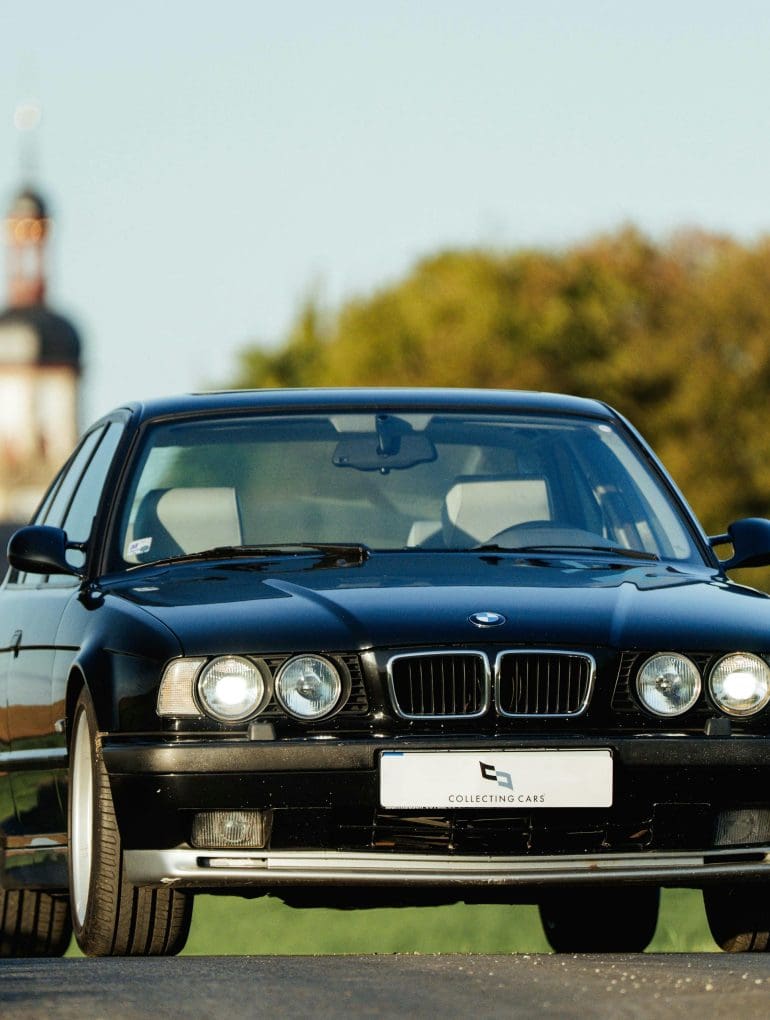

Geneva, March 1998. BMW unveiled the third-generation M5 at the Geneva Motor Show, and it was the first M5 powered by a V8. Its 4.9-liter S62 engine produced 400 PS (394 hp) at 6,600 rpm and 500 Nm (369 lb-ft) of torque at 3,800 rpm, driving the rear wheels through a six-speed manual gearbox. BMW quoted 0-100 km/h (62 mph) in 5.3 seconds and limited top speed to 250 km/h (155 mph), while some contemporary American road tests recorded 0-60 mph in as little as 4.8 seconds. The E39 M5 also changed the way the M5 was built. Earlier generations had been hand-assembled at BMW M’s Garching facility, but this one was produced on the regular 5 Series assembly line at Dingolfing. BMW built 20,482 examples between 1998 and 2003, and many enthusiasts consider it one of the finest performance sedans ever made.
Background and Origins
The first two M5 generations, the E28 and E34, used straight-six engines developed from BMW’s motorsport experience and were hand-assembled in small numbers by BMW M GmbH at Garching. By the late 1990s, competition in the high-performance sedan segment was increasing, and Mercedes-Benz was preparing the V8-powered E55 AMG. BMW M responded with a more powerful M5 that could be built in larger numbers without losing the character of the earlier cars.
The E39 5 Series, introduced in 1995, provided an excellent starting point. It had a stiff body, sophisticated suspension and a cabin widely regarded as one of the best in its class. Rather than develop another inline-six, BMW M based the new M5’s engine on the 4.4-liter M62 V8 used in the 540i and extensively reworked it into the high-performance S62. Series production began at Dingolfing in October 1998. Building the M5 on the main 5 Series assembly line allowed BMW to produce it in much larger numbers than its hand-built predecessors.
Design and Engineering
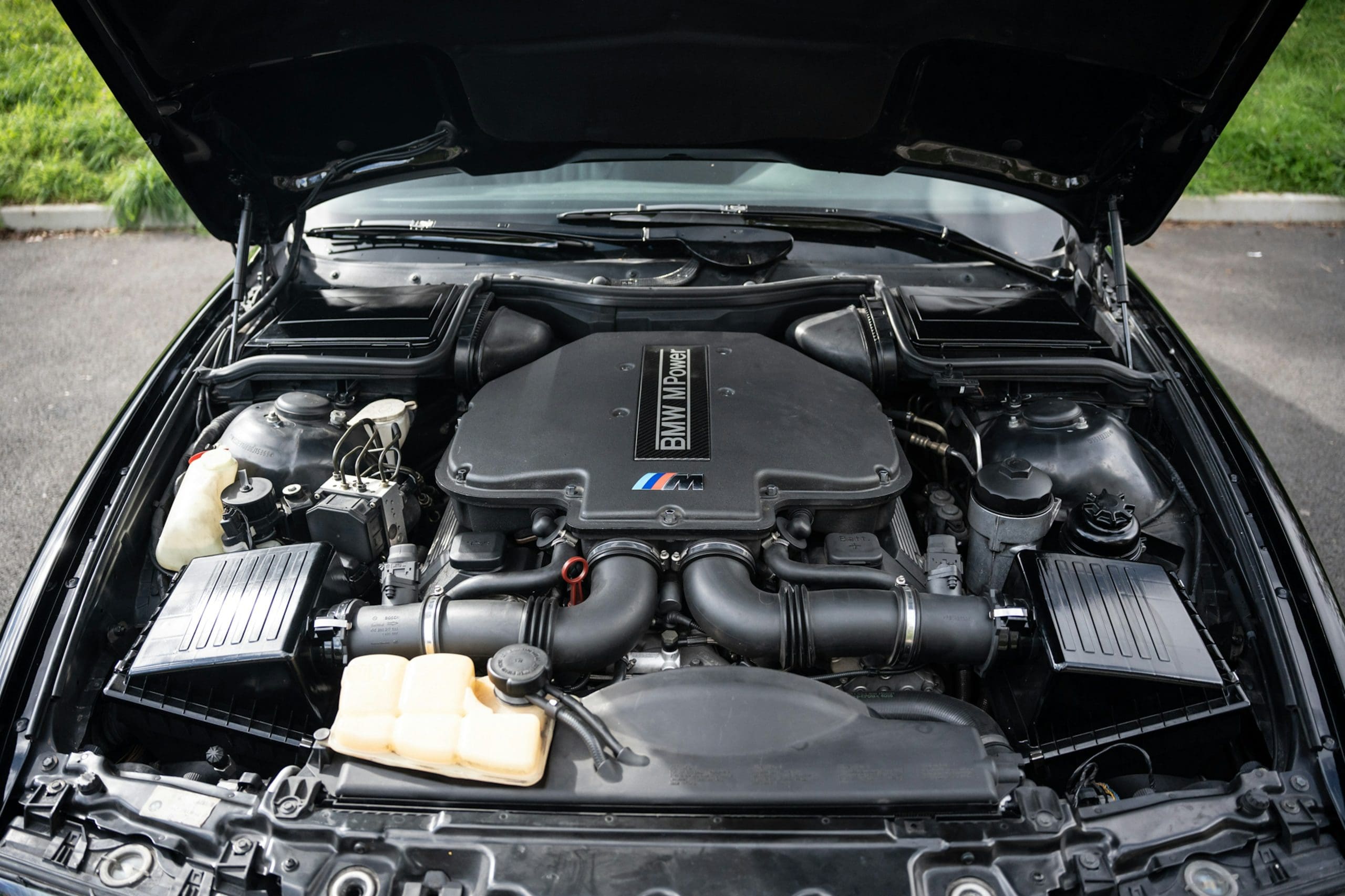
BMW M increased the S62’s displacement to 4,941 cubic centimeters, with a 94-millimeter bore and an 89-millimeter stroke, and extensively revised its internals and control systems for high-performance use. The engine had an 11.0:1 compression ratio, an aluminum block and heads, a forged steel crankshaft and double VANOS variable valve timing on both the intake and exhaust camshafts. Eight individual electronically controlled throttle bodies gave it sharp throttle response, while a semi-dry-sump lubrication system maintained oil supply during hard cornering. The result was 400 PS at 6,600 rpm and 500 Nm at 3,800 rpm, with a redline of about 7,000 rpm. Its strong torque across the rev range made the M5 fast and flexible in everyday driving.
Power went to the rear wheels through a Getrag six-speed manual gearbox, the only transmission offered, with a limited-slip differential. The suspension retained the E39’s basic layout, with a double-pivot MacPherson-type front arrangement and a four-link rear axle, while BMW M added specific springs and dampers, lowered the ride height and revised other chassis components. Like the V8-powered 540i, the M5 used recirculating-ball steering rather than the rack-and-pinion system of the six-cylinder E39 models. Dynamic Stability Control was standard, and a Sport button provided more immediate throttle response and a firmer steering setting. Large ventilated disc brakes provided strong stopping power. The car weighed about 1,795 kilograms in European specification, but it still delivered impressive acceleration.
Styling
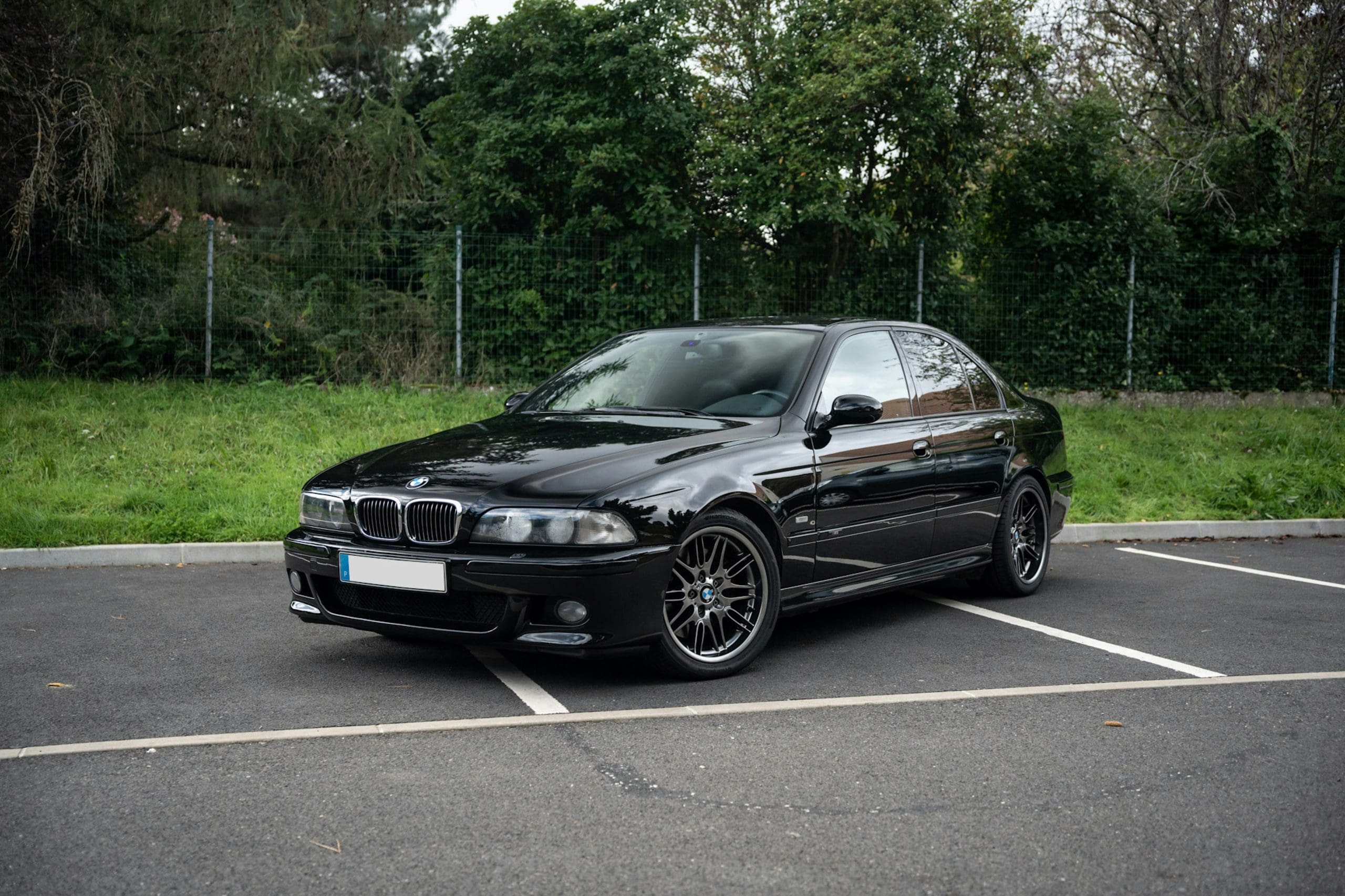
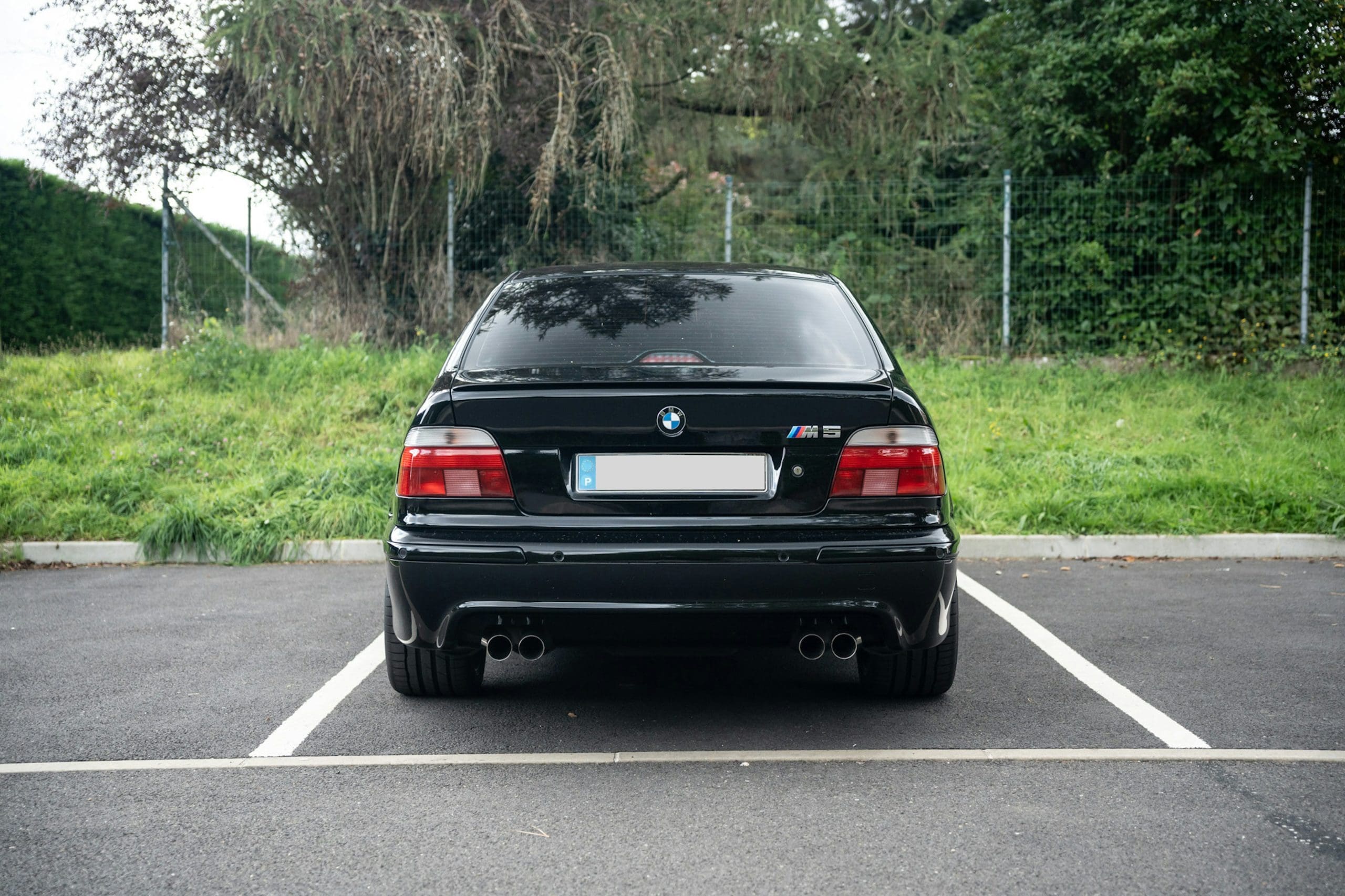
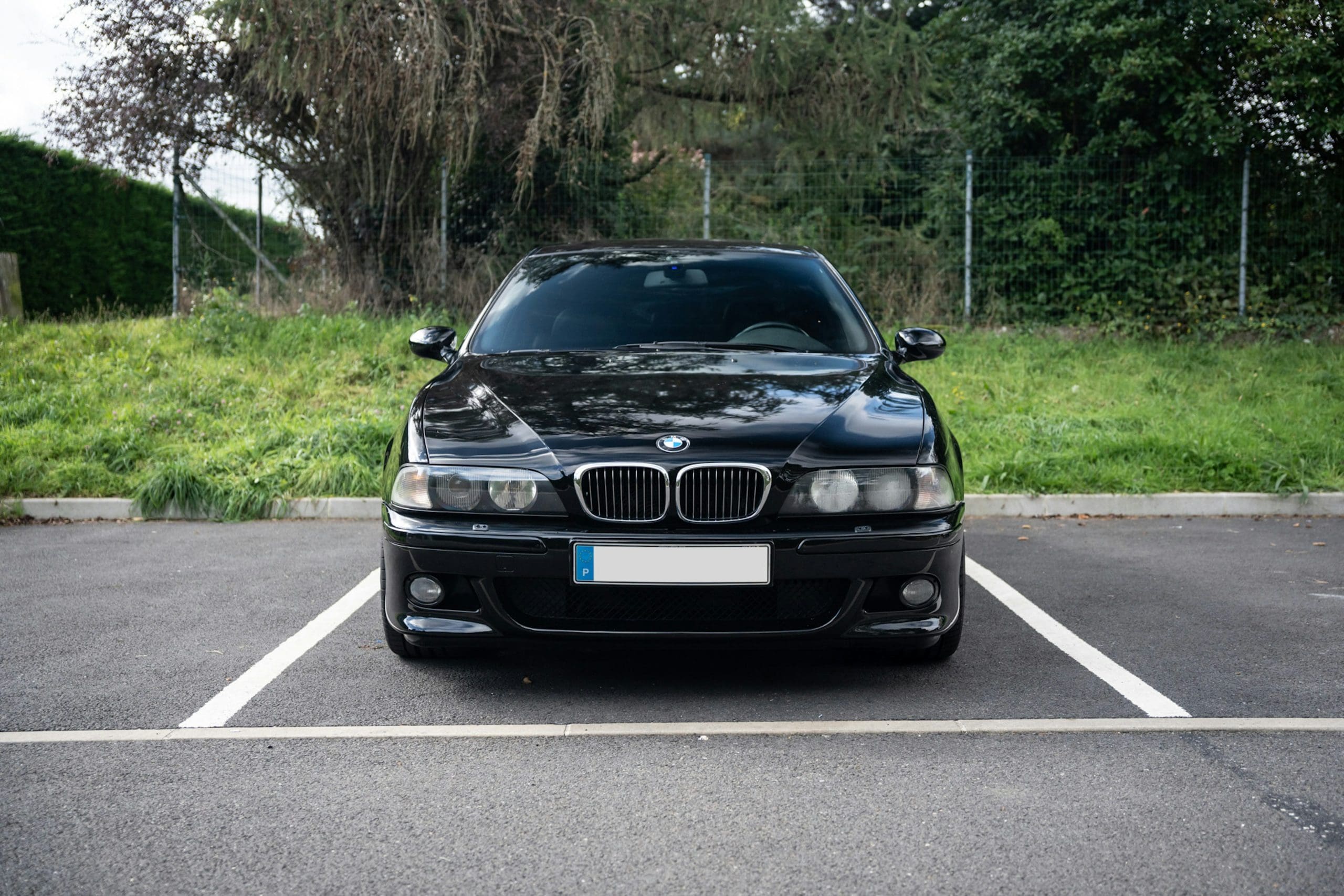
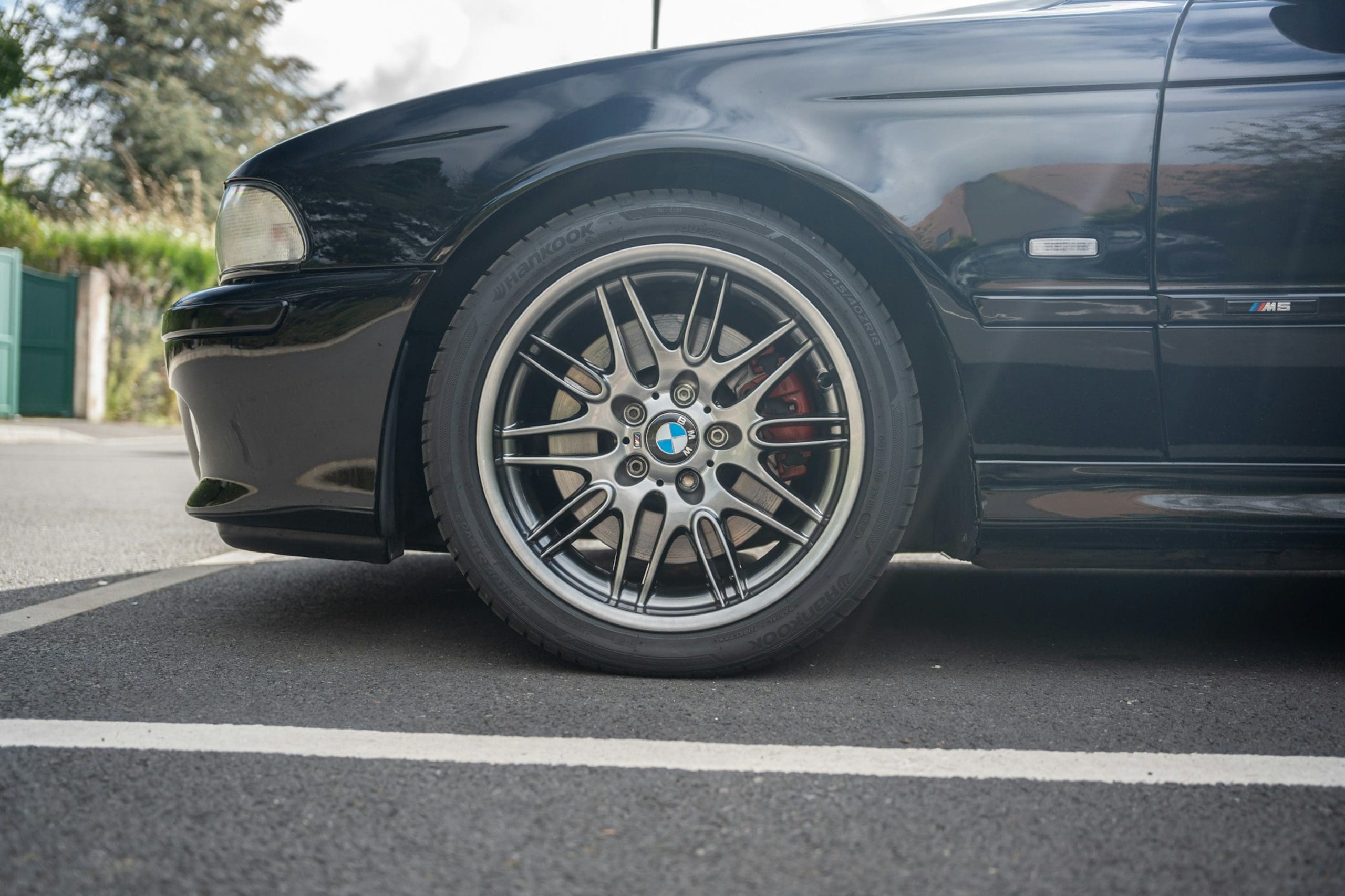
The E39 M5 was typically understated. Compared with the standard 5 Series, it had a deeper front bumper with larger air intakes, revised side sills, a subtle rear valance and four exhaust outlets. Distinctive aerodynamic M exterior mirrors and M5-specific 18-inch Style 65 wheels completed the look. Beyond those details and the M5 badges, little set it apart from an ordinary 5 Series, which made it a classic example of the high-performance sleeper sedan. The facelift introduced in 2000 added the corona-ring “Angel Eye” headlights, revised taillights and updated interior details, while the mechanical specification remained essentially unchanged.
Interior
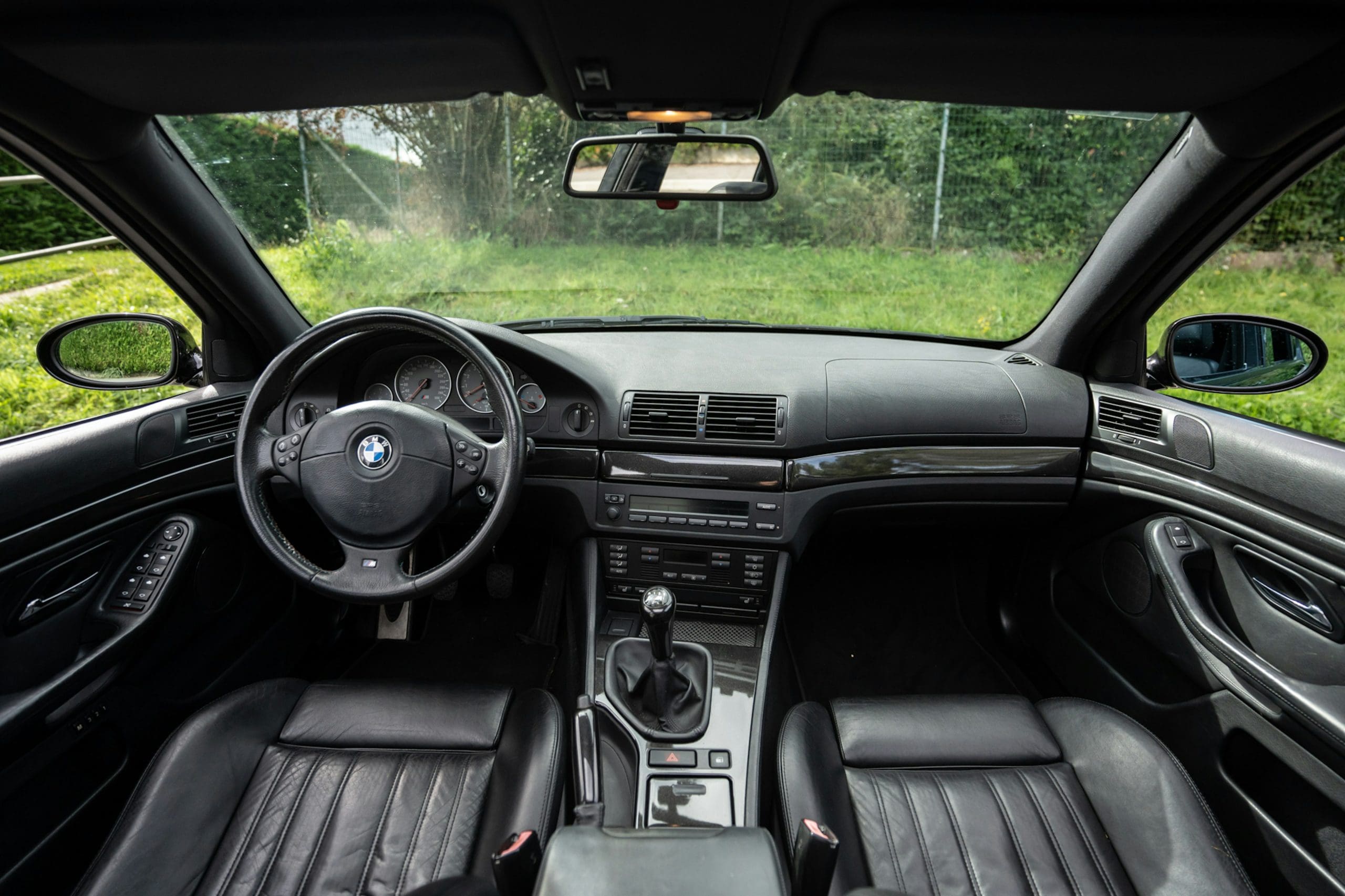
The M5’s cabin combined luxury with subtle sporting touches. Standard equipment included sports seats, an M steering wheel, M instruments and extensive leather trim. The tachometer had a variable warning zone, whose displayed redline was lower when the engine was cold and rose as it warmed up, helping protect the engine before the oil reached operating temperature.
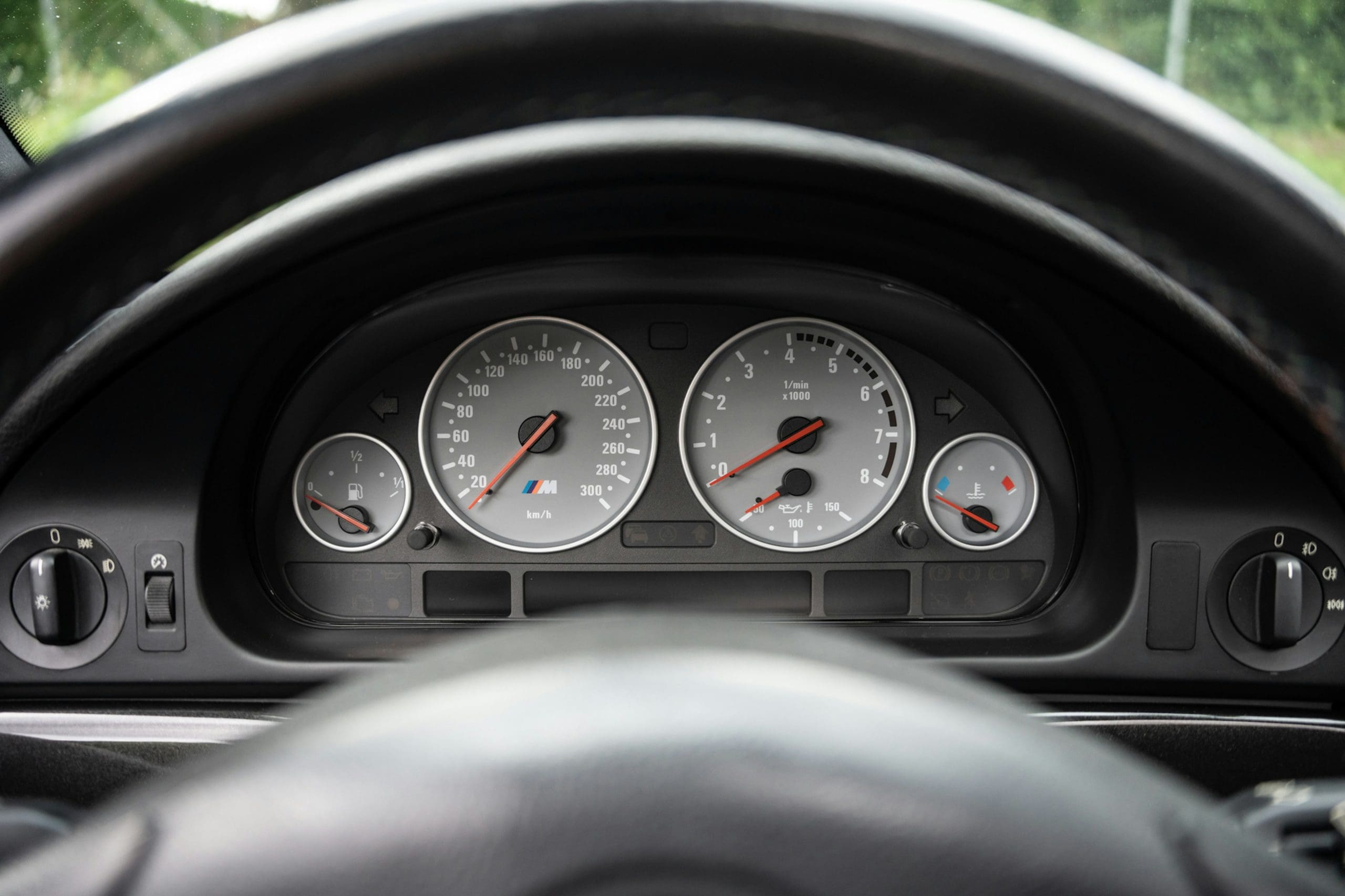
Depending on market and options, cars could also have navigation, heated and electrically adjustable seats, climate control and upgraded audio. The M5 had space for five adults and a usable trunk, making it as practical as any executive sedan despite its performance.
Specifications
- Engine: BMW S62B50 V8, 4,941cc, DOHC per bank, 32 valves, double VANOS, eight individual throttle bodies
- Power: 400 PS (394 hp) at 6,600 rpm
- Torque: 500 Nm (369 lb-ft) at 3,800 rpm
- Transmission: Six-speed manual, rear-wheel drive, limited-slip differential
- Chassis: Steel unibody
- Suspension: Double-pivot MacPherson-type struts (front), four-link (rear)
- Steering: Recirculating ball
- Brakes: Ventilated discs front and rear
- Weight: Approximately 1,795 kg / 3,957 lbs (European specification); 4,024 lbs (US curb weight)
- Aerodynamics: Drag coefficient of 0.31
- Performance: 0-100 km/h in 5.3 seconds (manufacturer), 0-60 mph in 4.8 seconds (Car and Driver), 250 km/h / 155 mph electronically limited top speed
- Production and Legacy
Production and Legacy
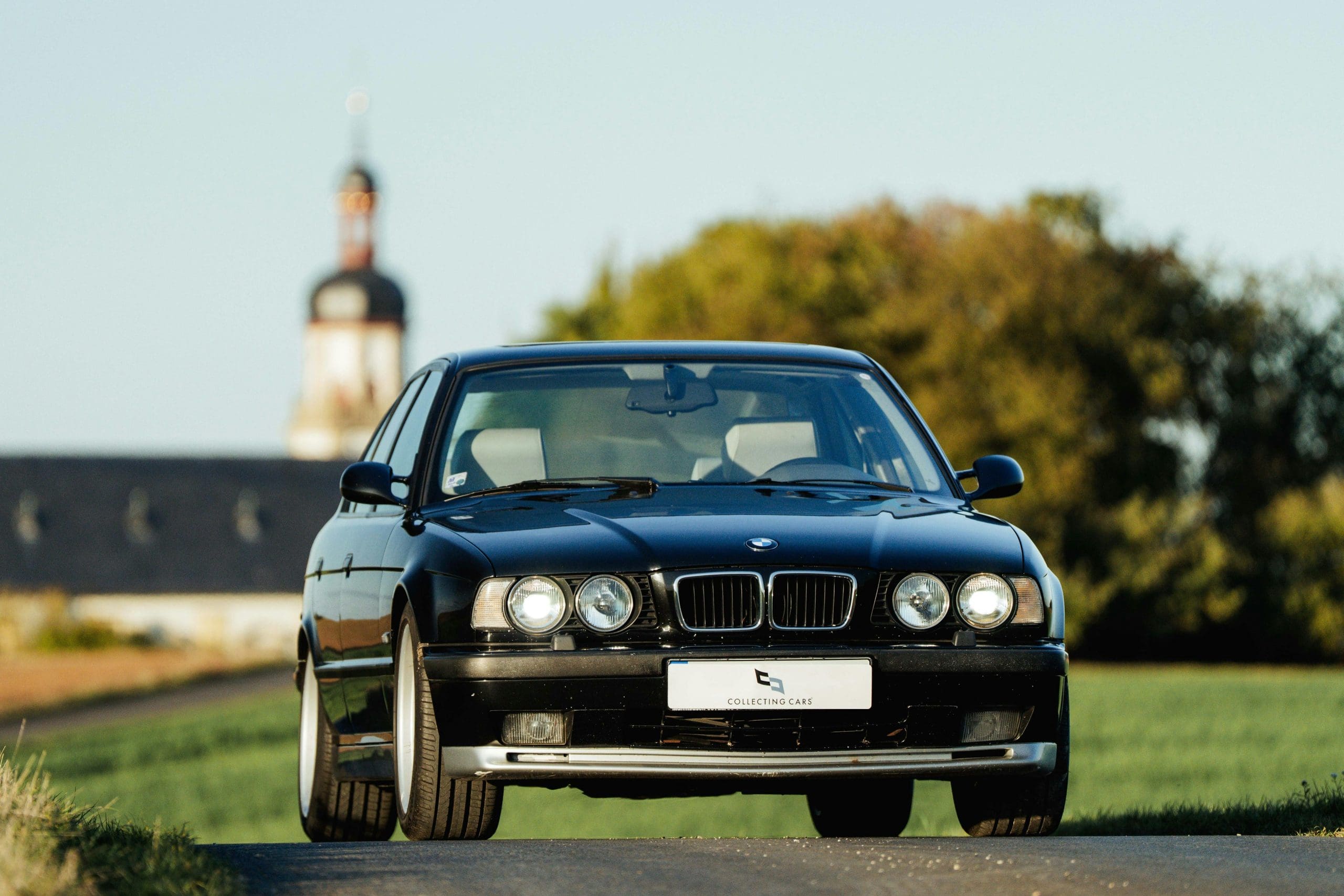
BMW built 20,482 E39 M5s at Dingolfing between October 1998 and June 2003. Of those, 9,992 went to North America, 7,895 were left-hand-drive European models and 2,595 were right-hand-drive cars. BMW also evaluated an M5 Touring and built at least one prototype, but it never entered production, so every production E39 M5 was a sedan. Its successor, the E60 M5, was unveiled in 2004 and introduced for the 2005 model year, with a high-revving V10 and a seven-speed SMG automated manual gearbox.
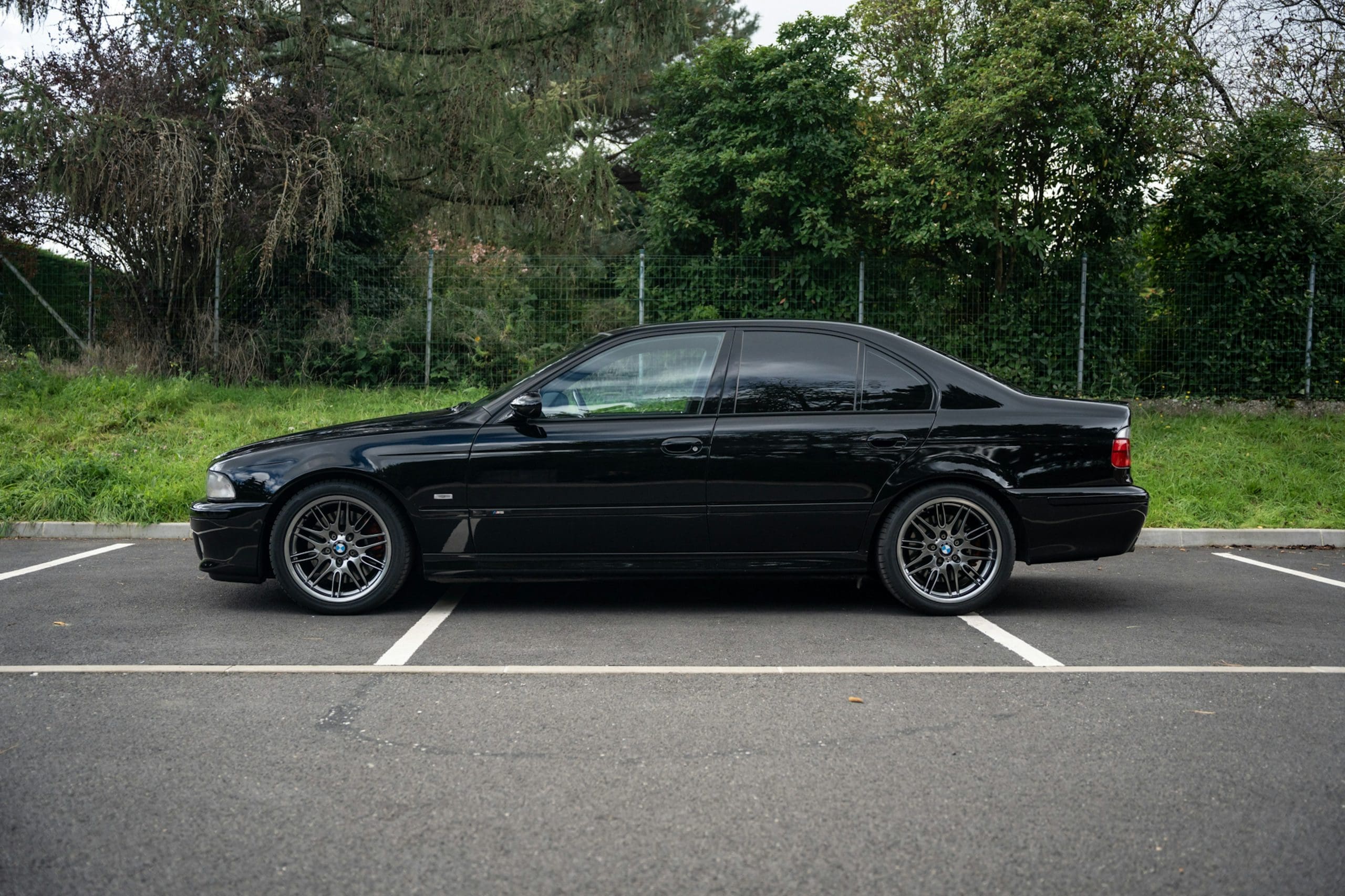
The E39 M5 is widely regarded as one of the greatest M cars and one of the best performance sedans ever built. It combined a large naturally aspirated V8, a manual gearbox, rear-wheel drive and a refined, understated body, delivering near-supercar performance with the comfort and practicality of an executive car. Later M5s became faster and more technically advanced, but many enthusiasts still consider the E39 the most balanced of the series. In recent years, it has also become increasingly sought after by collectors, especially in well-maintained, low-mileage condition.