
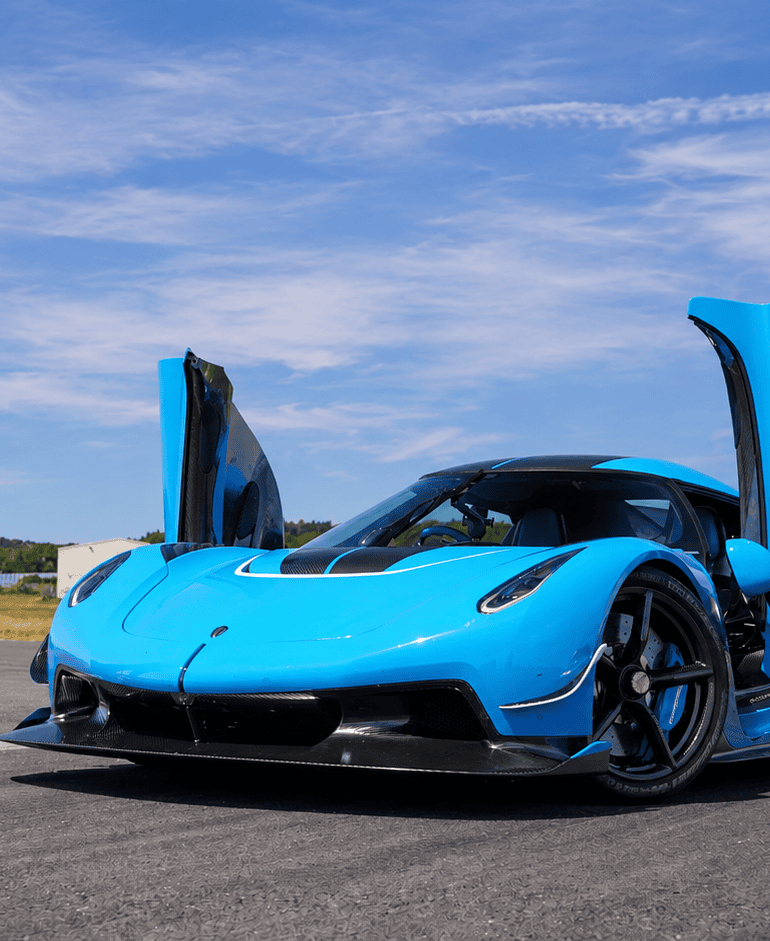
Ben Collins takes the Koenigsegg Jesko Attack onto the Top Gear test track, examining how one of the world’s most extreme hypercars manages to extract extraordinary performance from a rear-wheel-drive configuration. Unlike the Jesko Absolute, which prioritizes maximum straight-line speed, the Attack is engineered around aerodynamic load, mechanical grip, and high-speed cornering.
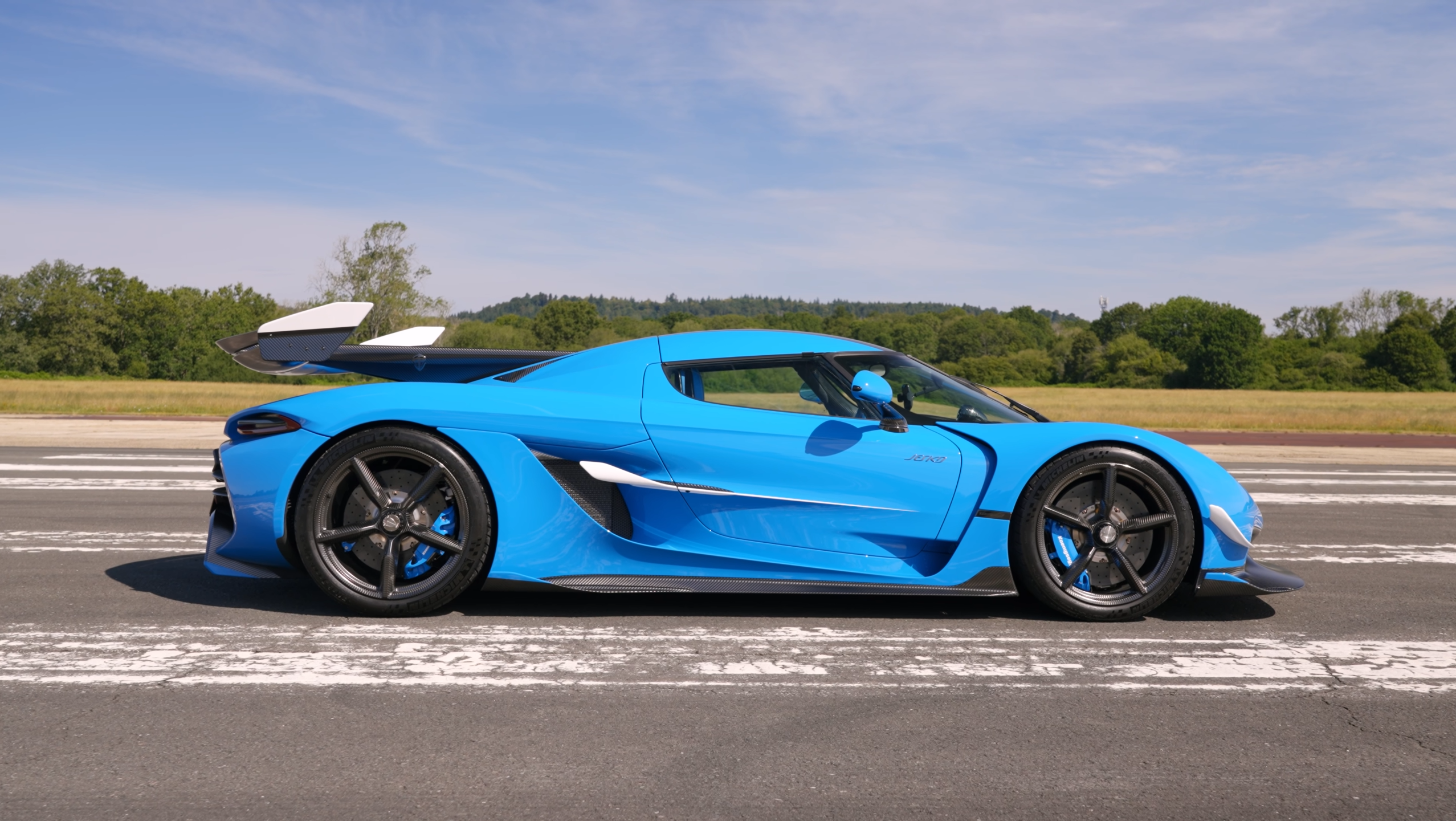
At the center of the car’s performance philosophy is its sophisticated aerodynamic package. The enormous rear wing, front splitter, and carefully managed airflow generate approximately 800 kg of downforce at 155 mph, increasing toward 1,400 kg at maximum speed. With a vehicle weighing roughly 1,300 kg, the aerodynamic load can approach or exceed the car’s own mass. Öhlins active suspension and twin-rate springs help maintain the platform’s composure, controlling ride height, pitch, and body movement as aerodynamic forces intensify.
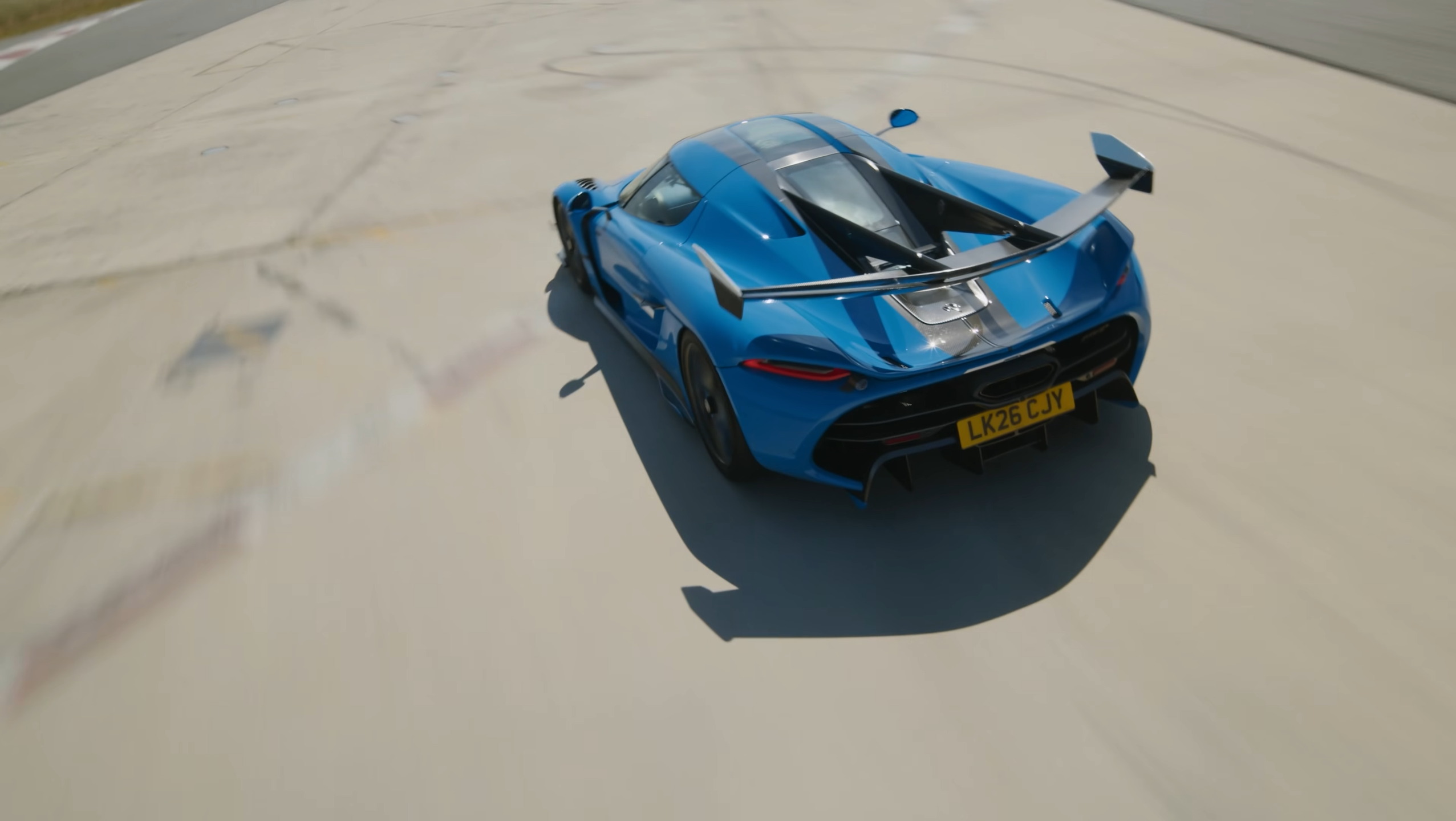
The Jesko’s 5.0-liter twin-turbocharged V8 produces up to 1,600 hp on ethanol and around 1,300 hp on conventional gasoline. Yet the remarkable achievement is translating that output through only the rear wheels. Sophisticated traction management continuously monitors wheel speed, steering, yaw, and other parameters to anticipate wheelspin rather than simply reacting after it occurs. Weight distribution also works in the car’s favor, with the mid-mounted engine, rear-mounted transmission, and long wheelbase helping load the rear tires under acceleration.
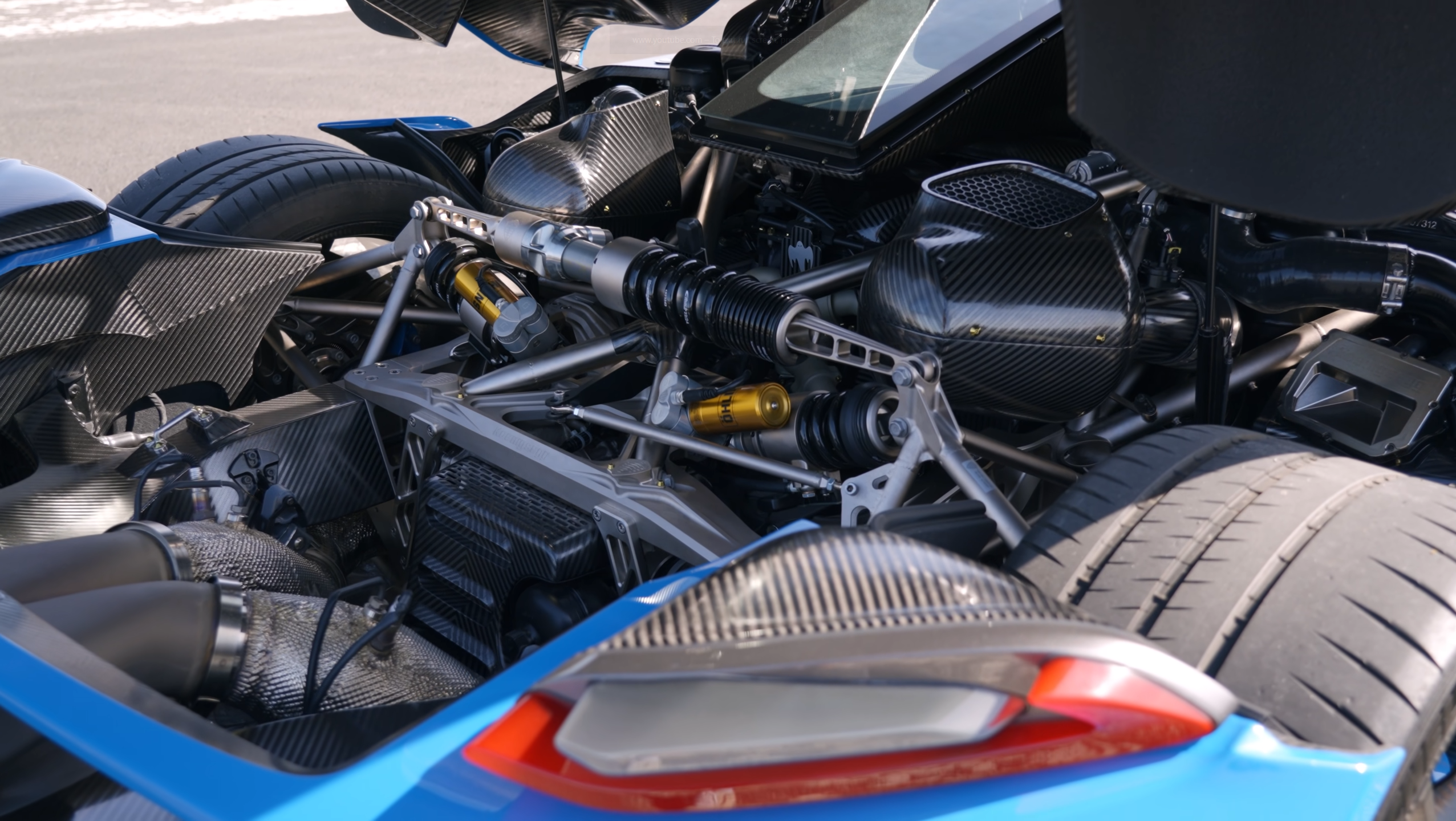
Power is delivered through Koenigsegg’s nine-speed Light Speed Transmission, whose multi-clutch architecture enables exceptionally rapid gear changes with minimal interruption. Collins notes that acceleration initially feels deceptively manageable before the Jesko rapidly gathers speed, particularly beyond seventh gear as the remaining ratios continue extending its acceleration.
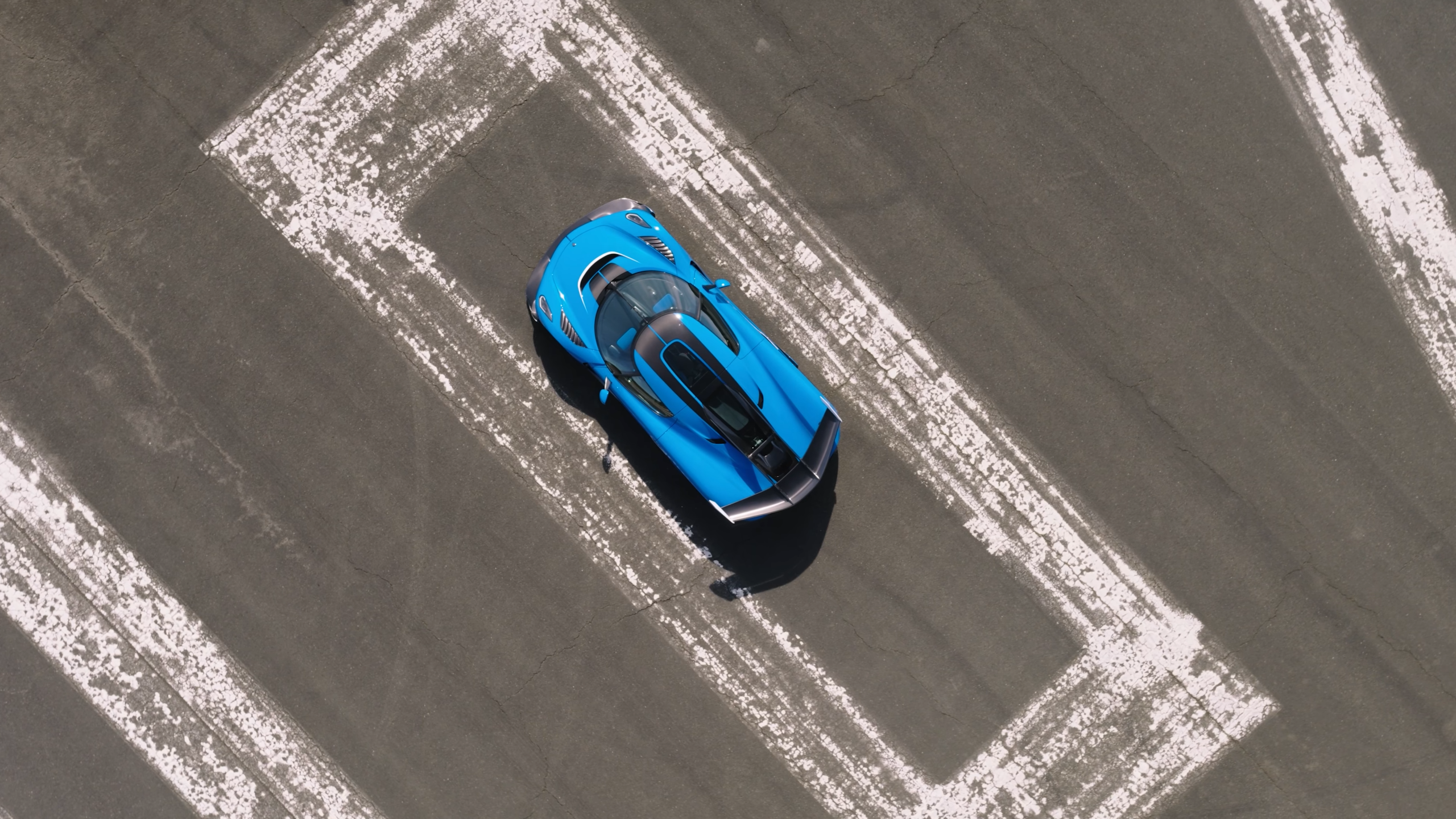
Lightweight construction is equally important. Carbon-fiber wheels reduce unsprung and gyroscopic mass, improving the driver’s ability to control the car at extreme speeds, while the carbon-fiber monocoque provides a rigid foundation for the suspension and aerodynamic systems.
The test also carries personal significance for Collins. He recalls crashing a Koenigsegg CCX at the same Top Gear corner years earlier, before engineering revisions transformed the car’s track performance and ultimately helped produce a lap record. Returning to the Jesko Attack, he finally conquers the notorious section cleanly—a fitting conclusion to a long-running chapter in his Koenigsegg experience.
Source: Ben Collins Drives