
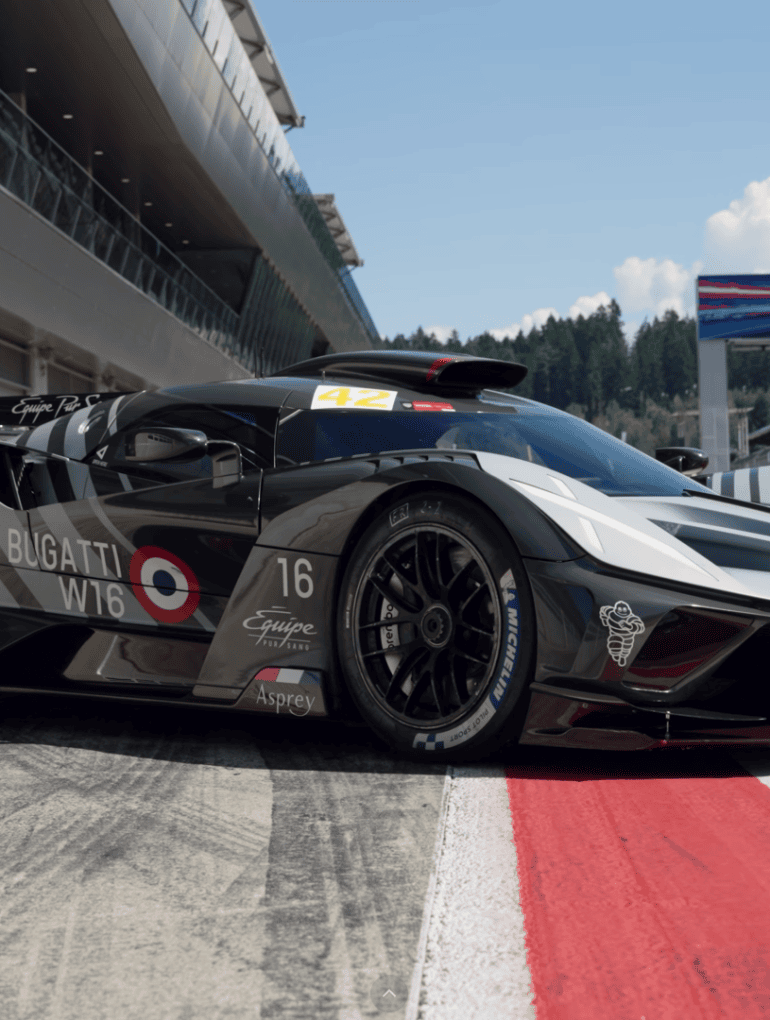
Ben Collins tested the Bugatti Bolide on a race circuit, focusing on its braking, cornering, aerodynamics, cooling, and tire performance. Unlike the road-legal Veyron and Chiron, the Bolide was engineered exclusively for track use, combining Bugatti’s 8.0-liter quad-turbocharged W16 with a lightweight carbon-fiber structure and extreme aerodynamic load.
A Chiron W16 Wrapped in a Racing Car
The Bolide retains Bugatti’s 8.0-liter W16 but uses a completely new carbon-fiber monocoque. The structure is lighter and stiffer than the Chiron’s to withstand the significantly higher aerodynamic loads.
Bugatti reduced weight by removing road-car equipment and using carbon fiber and titanium extensively. The car incorporates 3D-printed titanium suspension components and carbon-titanium driveshafts. The tested configuration weighed approximately 1,600 kg.
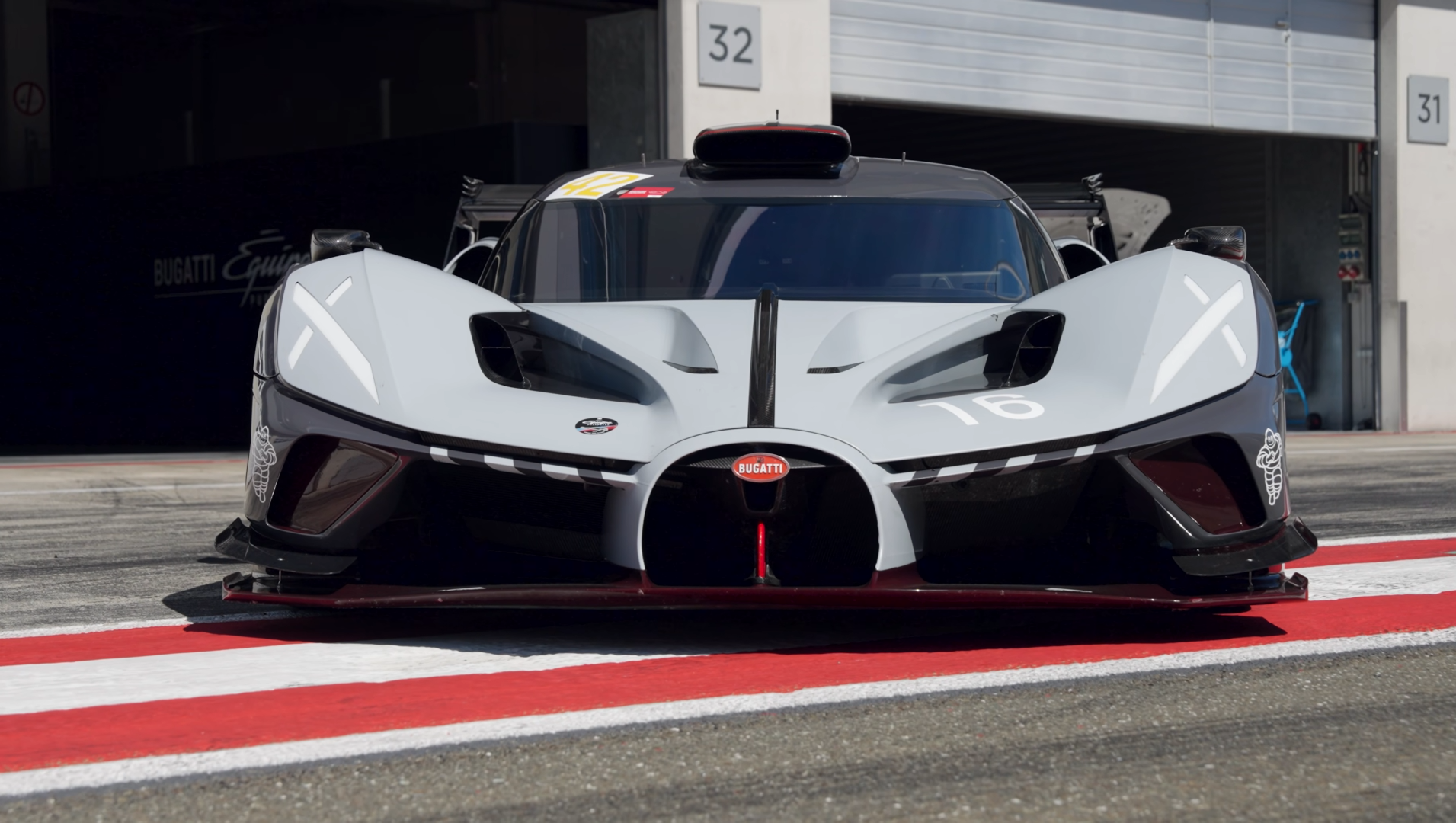
The engine uses four turbochargers and a roof-mounted air intake. Large front radiators and intercoolers handle the W16’s thermal requirements. The engine can consume approximately 60,000 liters of air per minute at full load.
Aerodynamics Are the Bolide’s Defining Feature
The Bolide’s aerodynamic package separates it from Bugatti’s road cars.
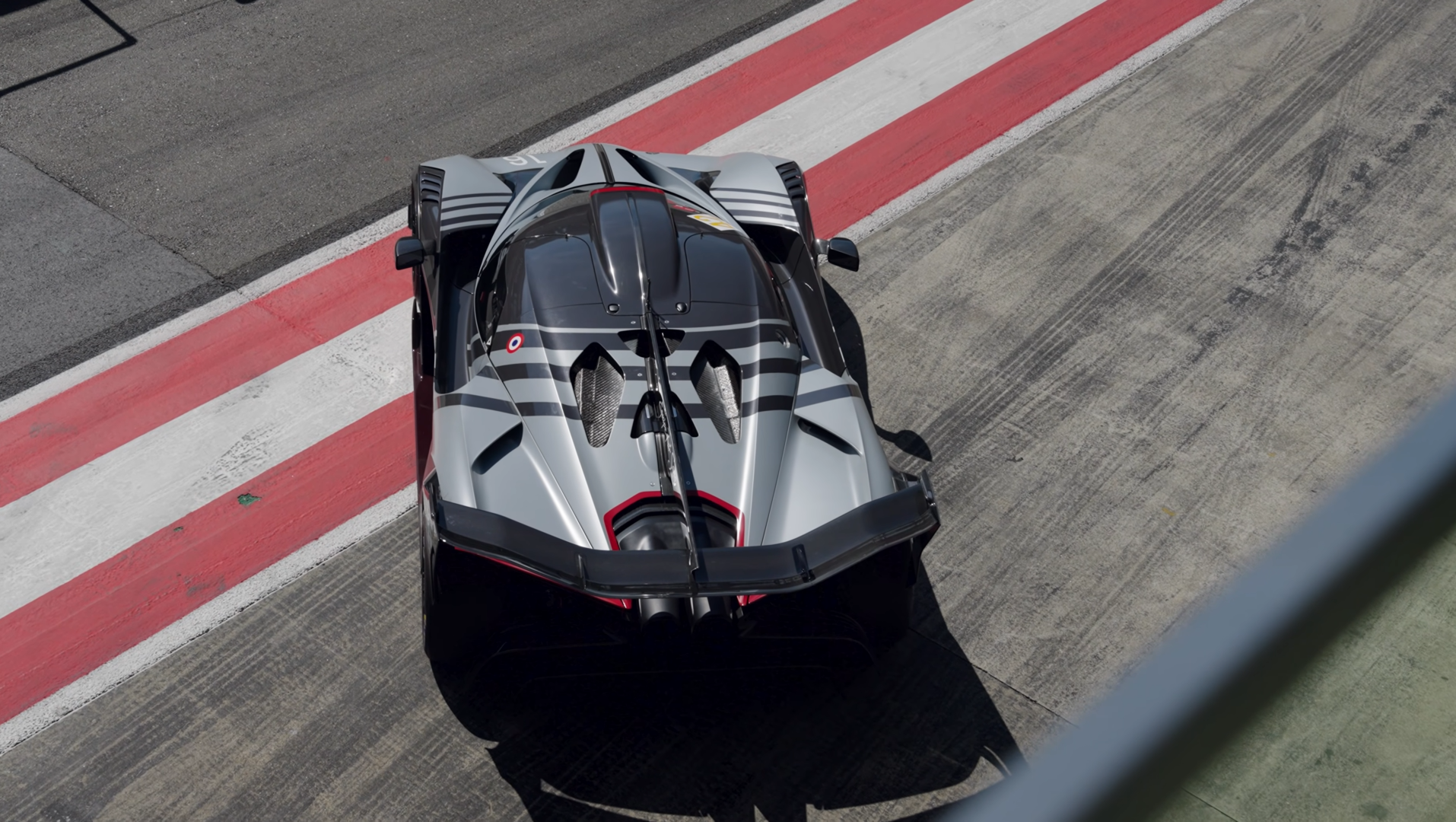
A large front splitter accelerates airflow beneath the car, generating low pressure and increasing downforce. Front dive planes manage airflow around the front axle, while the underbody feeds a large rear diffuser.
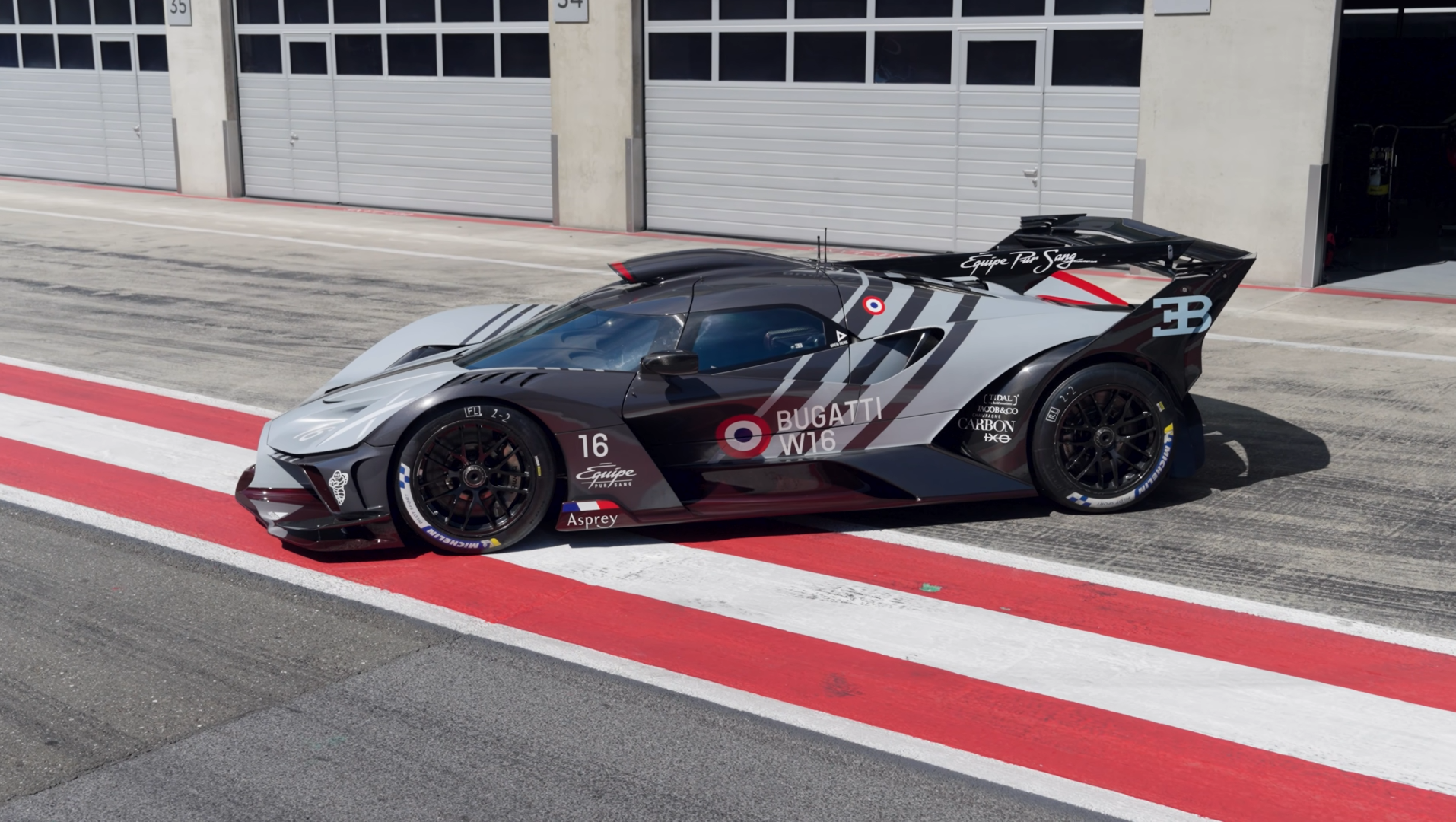
A fixed rear wing provides additional aerodynamic load, while a central vertical fin improves stability during high-speed running and braking.
Bugatti quotes up to 2,900 kg of downforce. The figure places the Bolide’s aerodynamic performance in racing-car territory and dramatically increases the loads imposed on its tires.
The circuit-specific slicks are designed for maximum grip rather than durability. Collins reported an approximate service life of only 40 miles during hard track use.
Formula 1-Grade Braking Hardware
The Bolide replaces conventional carbon-ceramic brakes with carbon-carbon discs. The lighter racing-derived system provides extremely high braking performance but requires substantial heat to operate effectively.
Collins noted that approximately 90 kg of pedal force was required during heavy braking. Once the brakes reached operating temperature, the stopping power matched the Bolide’s acceleration and aerodynamic capability.
Brake temperatures remained a critical limitation. During the test, a dashboard warning indicated excessive temperature at the front-left disc after repeated hard laps.
Four-Wheel Drive Makes the Bolide Unusual
The Bolide retains Bugatti’s four-wheel-drive system, allowing its enormous power to reach the track through both axles.
The system provides exceptional traction when accelerating out of slow corners. Collins also noted that the front tires could become overloaded when power was applied aggressively while cornering, producing front-end understeer.
Traction control further limits wheelspin and rear-end movement. With the electronic systems active, the Bolide remains relatively stable despite its extreme power and grip.
The 2.5G Target
Collins entered the test intending to reach 2.5 g of cornering force.
Initial laps were used to bring the slick tires and carbon-carbon brakes up to temperature while familiarizing himself with the car. As the pace increased, the Bolide’s aerodynamic grip became increasingly apparent, particularly through high-speed corners.
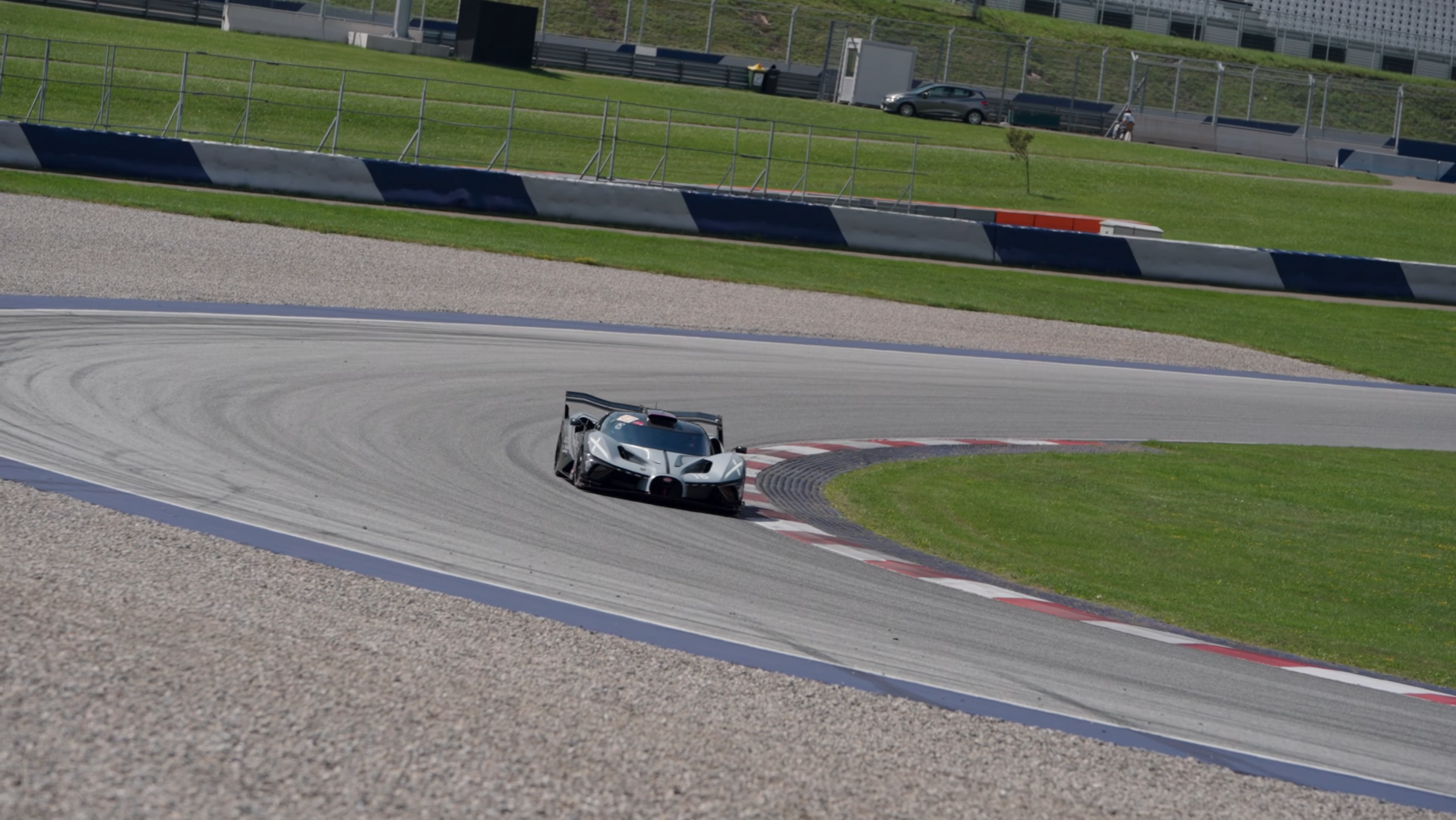
The recorded data showed approximately 1.3 g of lateral acceleration, below the 2.5-g target for cornering. However, the car reached 2.5 g under braking.
That result demonstrates the combined effect of aerodynamic downforce, slick tires, high-performance ABS calibration, and carbon-carbon braking hardware.
Performance Requires Engineering Support
The Bolide’s performance requires substantially more preparation and monitoring than a conventional road car.
Cooling systems, brake temperatures, tire condition, and electronic systems must be monitored during track operation. The extreme aerodynamic load also places significant stress on the tires and chassis.
Its track-only specification eliminates many of the compromises required for road use. The result is a machine built around aerodynamic grip, braking performance, power delivery, and sustained circuit operation rather than everyday usability.
With production limited to 40 examples, the Bolide represents the most track-focused interpretation of Bugatti’s W16 platform. It combines the 8.0-liter quad-turbo engine and four-wheel-drive system associated with the Chiron with a purpose-built carbon-fiber structure, racing-derived brakes, slick tires, and an aerodynamic package capable of generating up to 2,900 kg of downforce.
Source: Ben Collins Drives