
The McLaren 750S Spider and 765LT represent two different stages of McLaren’s relentless pursuit of performance. Although the 750S is the newer model, the 765LT remains one of the most aggressively focused versions of the 720S family, with its Longtail philosophy prioritizing reduced mass, sharper responses, and track-oriented performance.
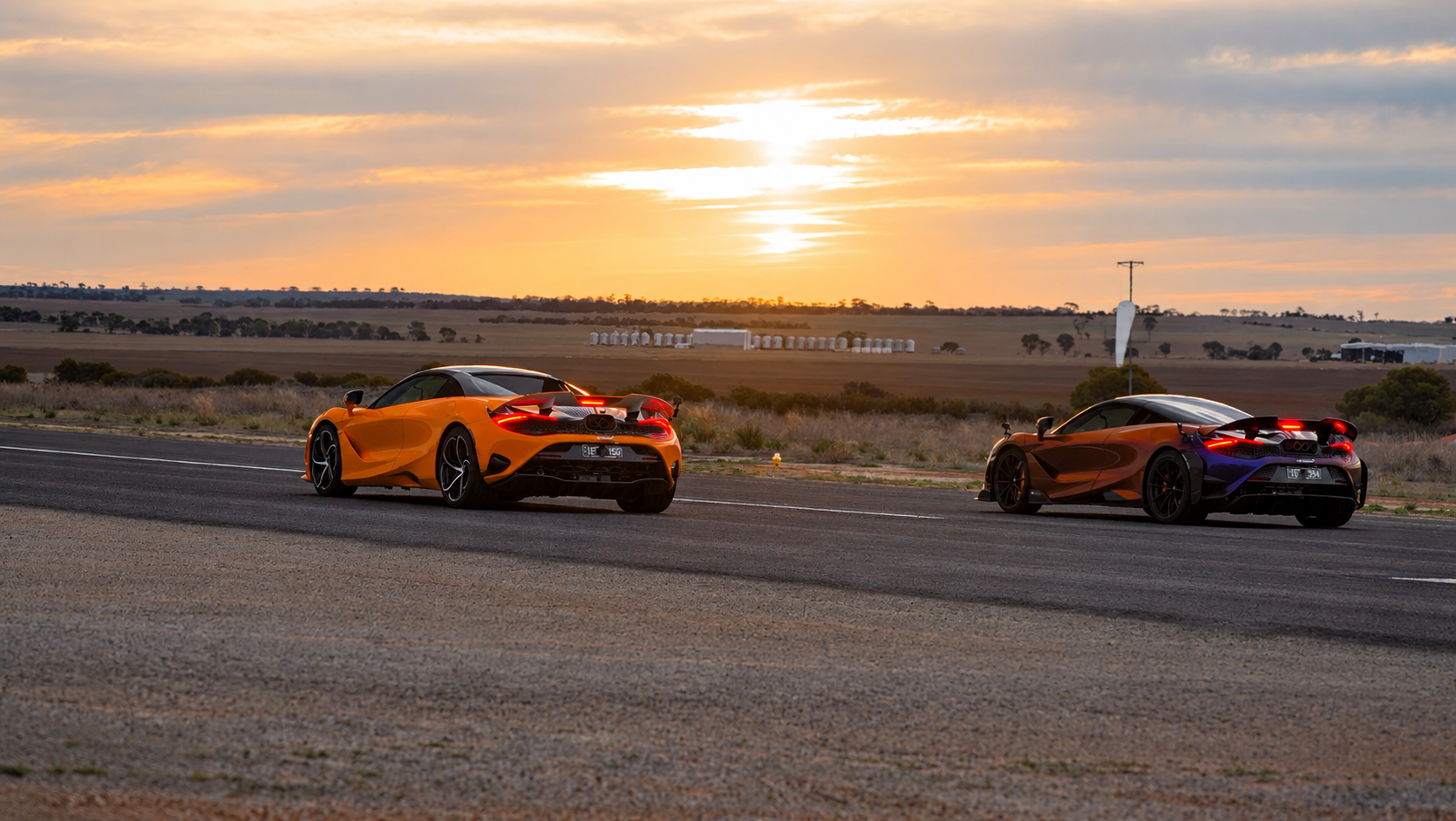
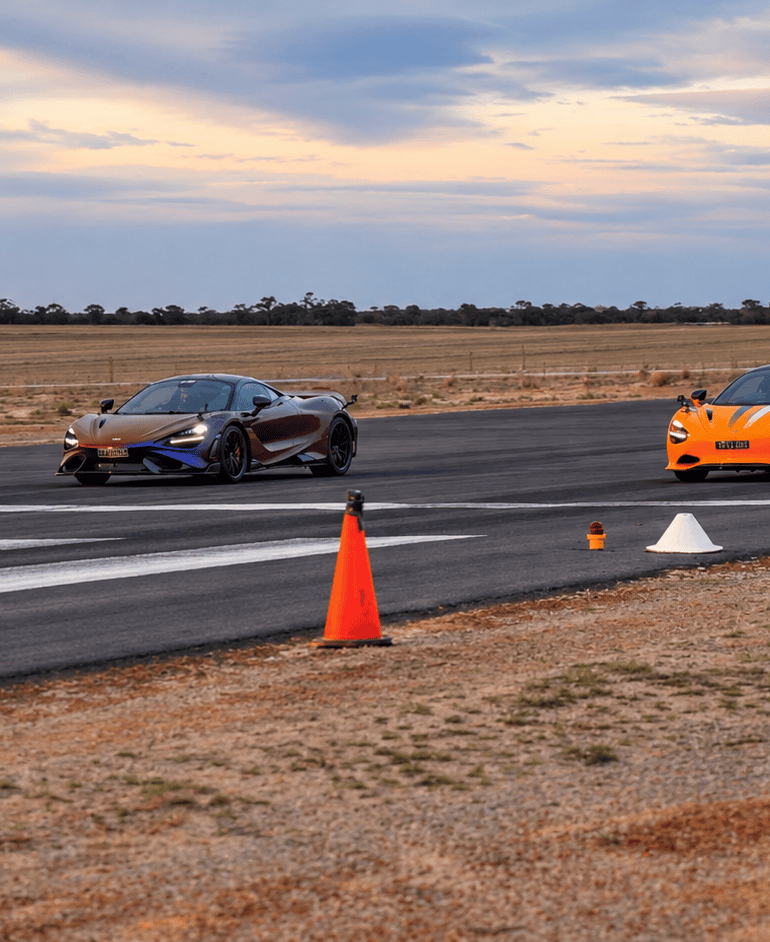
CarExpert brought the two McLarens to a regional airport runway to determine how their performance translates to an imperfect real-world surface. Rather than a prepared drag strip, the runway presented inconsistent grip, painted lines, and traction challenges that would make extracting every bit of performance considerably more difficult.
750S Spider: Modern Evolution
The 750S Spider is powered by McLaren’s 4.0-liter twin-turbocharged V8, producing 740 hp and 800 Nm. Power is sent to the rear wheels through a seven-speed Seamless Shift Gearbox with a short final-drive ratio.
McLaren quotes 0–100 km/h in 2.8 seconds, 0–200 km/h in 7.3 seconds, and a 332 km/h (206 mph) top speed for the Spider. Its lightest dry weight is 1,326 kg, while DIN weight is 1,438 kg.
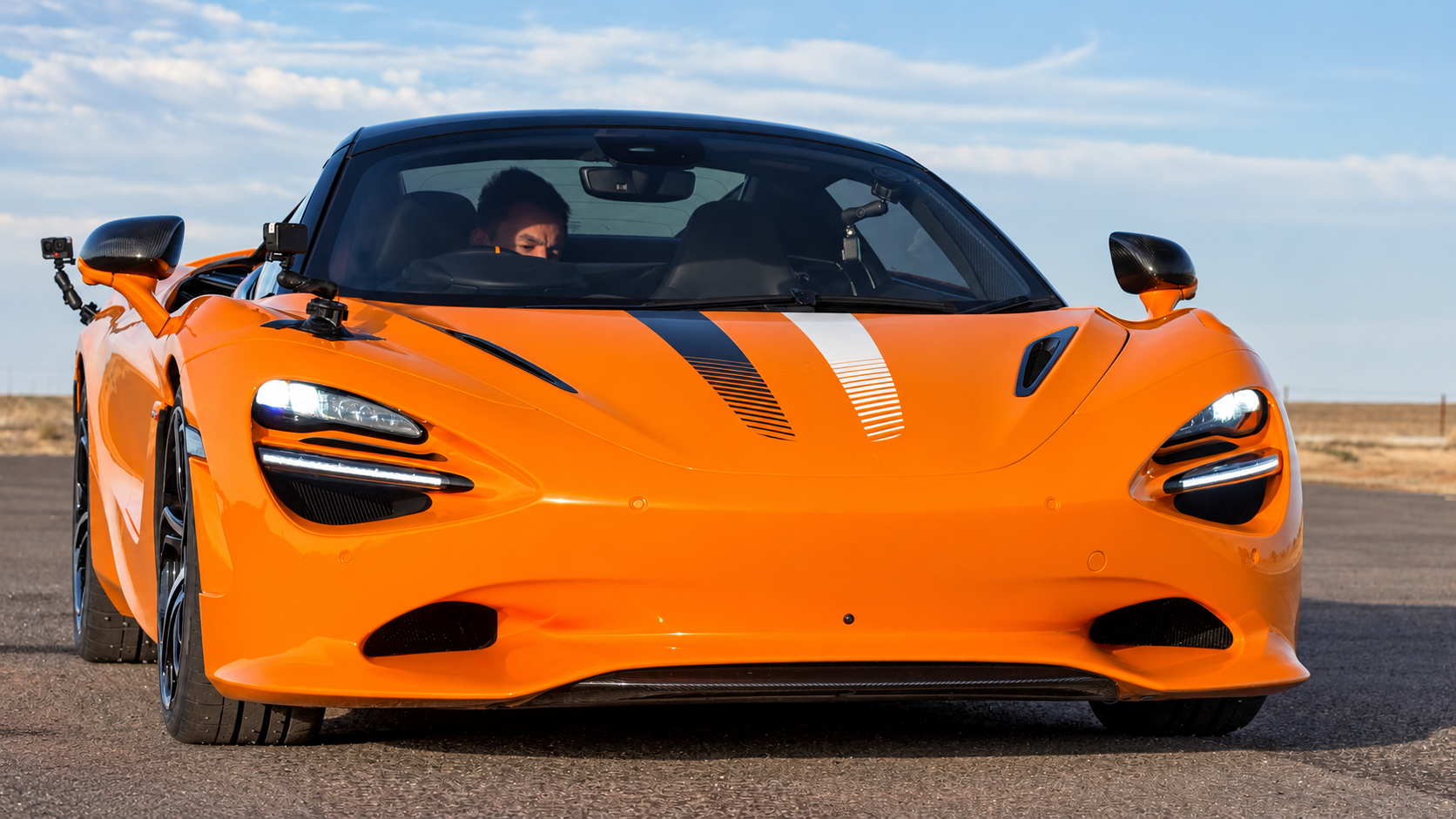
The chassis uses McLaren’s carbon-fiber MonoCage II architecture, adaptive dampers, ProActive Chassis Control III, and carbon-ceramic brakes. The Spider’s retractable roof adds weight compared with the coupe, an important consideration in a straight-line contest.
765LT: The Lightweight Specialist
The 765LT counters with a similarly sized 4.0-liter twin-turbo V8 developing 755 hp and 800 Nm. It uses a seven-speed SSG transmission and rear-wheel drive, while extensive weight reduction gives the LT a dry-lightest figure of just 1,229 kg.
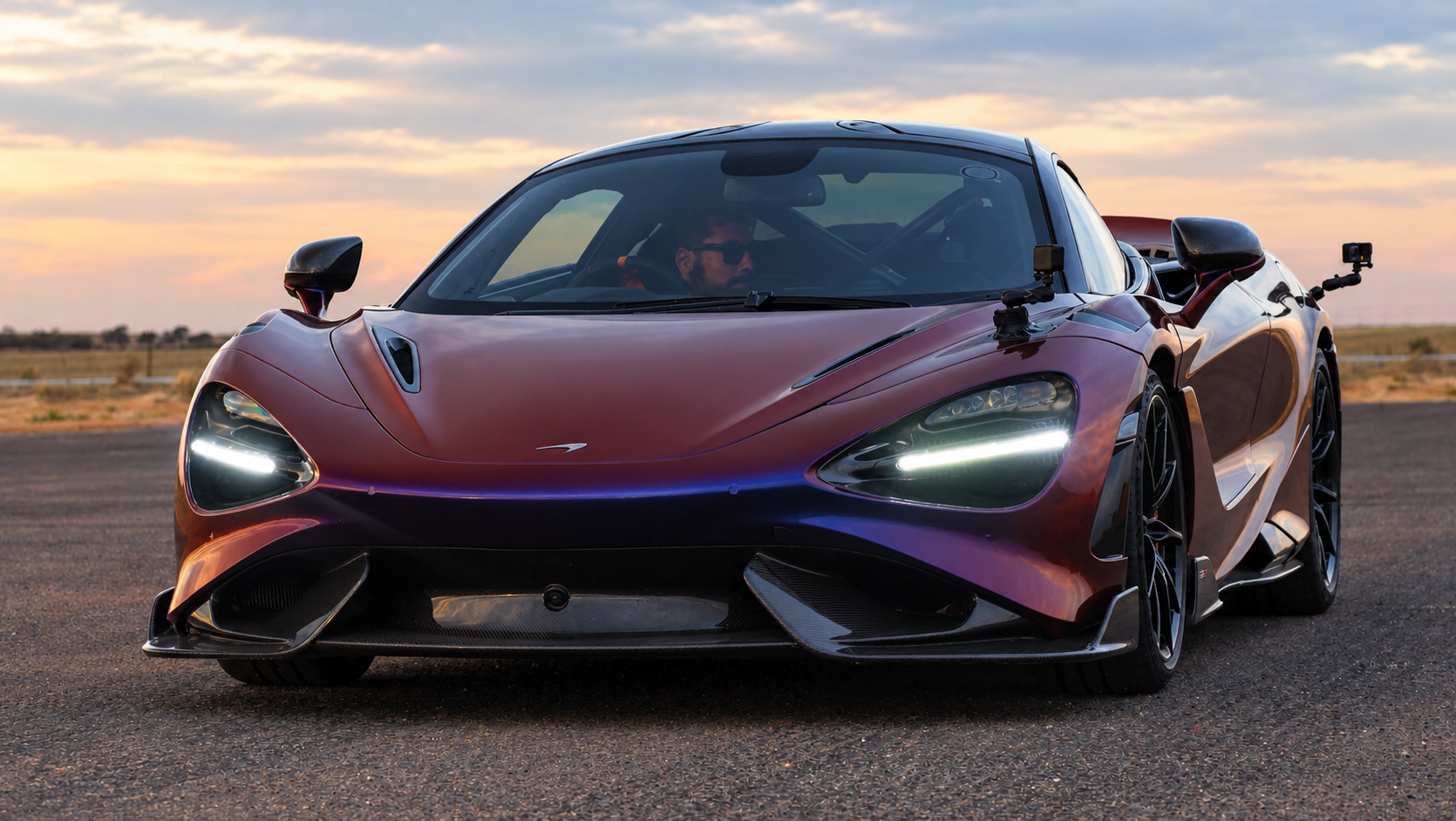
McLaren rates the 765LT at 0–100 km/h in 2.8 seconds, 0–200 km/h in 7.2 seconds, and 0–400 meters in 9.9 seconds, with a 330 km/h (205 mph) top speed. Its carbon-fiber MonoCage II structure, adaptive suspension, ProActive Chassis Control II, and carbon-ceramic CCM-R brakes reinforce its track-focused character.
Launch Control vs. Real-World Traction
Both cars were tested using Track settings for their powertrains and handling systems, with ESC placed in Sport and launch control activated. However, the runway’s poor surface immediately introduced an unpredictable variable: traction.
Several standing-start attempts demonstrated how quickly wheelspin and electronic intervention can alter the performance equation. The test was subsequently repeated from a cleaner section of runway before moving into rolling-start acceleration.
That second phase reduces the influence of initial traction and places greater emphasis on power delivery, gearing, aerodynamic efficiency, and weight.
With 740 hp versus 755 hp and a substantial weight advantage for the LT, the specification sheet suggests an intriguing contest—but real-world acceleration rarely follows numbers alone.
So which McLaren delivers the stronger performance when the runway becomes the deciding factor? Watch the full CarExpert video to see how the 750S Spider and 765LT perform through the standing launches, rolling race, and quarter-mile-style tests.
Source: CarExpert