
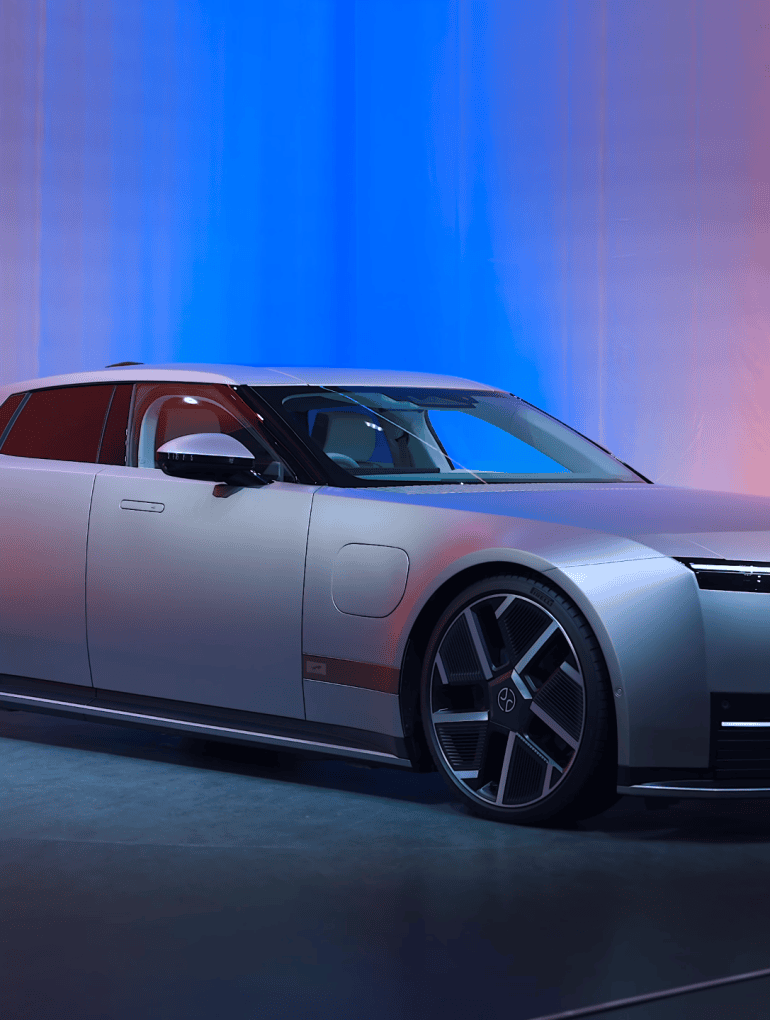
Jaguar’s Type 01 represents far more than the launch of a new luxury EV. It is the centerpiece of an almost complete reinvention of the marque, abandoning its previous design and product strategy in favor of a deliberately exclusive, all-electric flagship. The production car follows the controversial Type 00 concept while retaining much of its radical visual identity, establishing a new direction intended to make Jaguar rarer, more bespoke, and considerably more luxurious.
A Radical New Design Language
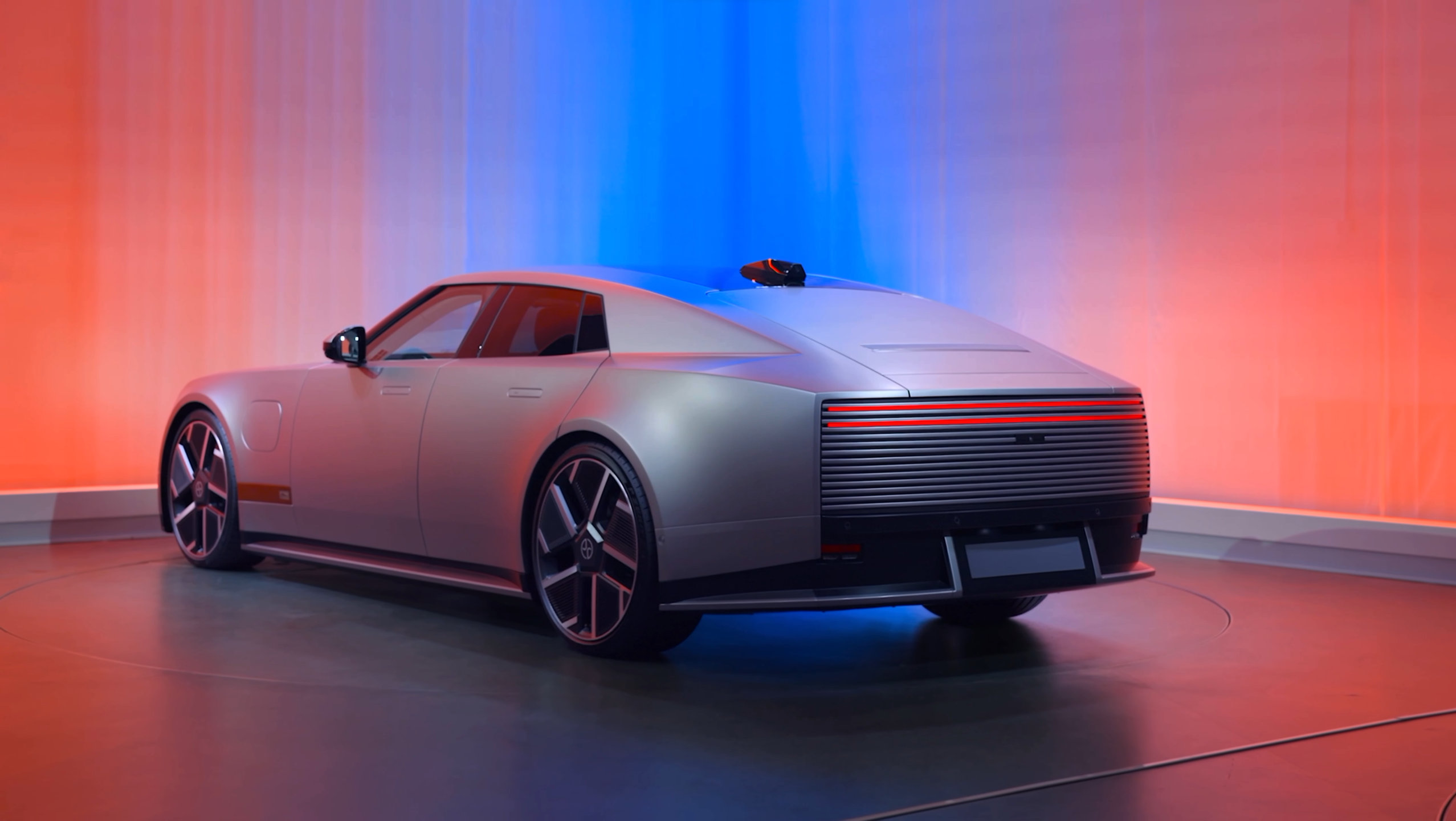
The Type 01 adopts a low, elongated silhouette defined by extensive aerodynamic detailing. Its concealed forward-facing radar, four-strip LED lighting signature, active cooling shutters, flush door handles, and 23-inch wheels contribute to a design that prioritizes visual length and aerodynamic efficiency. Jaguar claims the shutters alone can provide up to 27 miles of additional range when closed. The car also uses conventional door mirrors rather than camera-based replacements, while a rear-facing camera takes the place of a conventional rear window beneath the dramatically sloping glass roof.
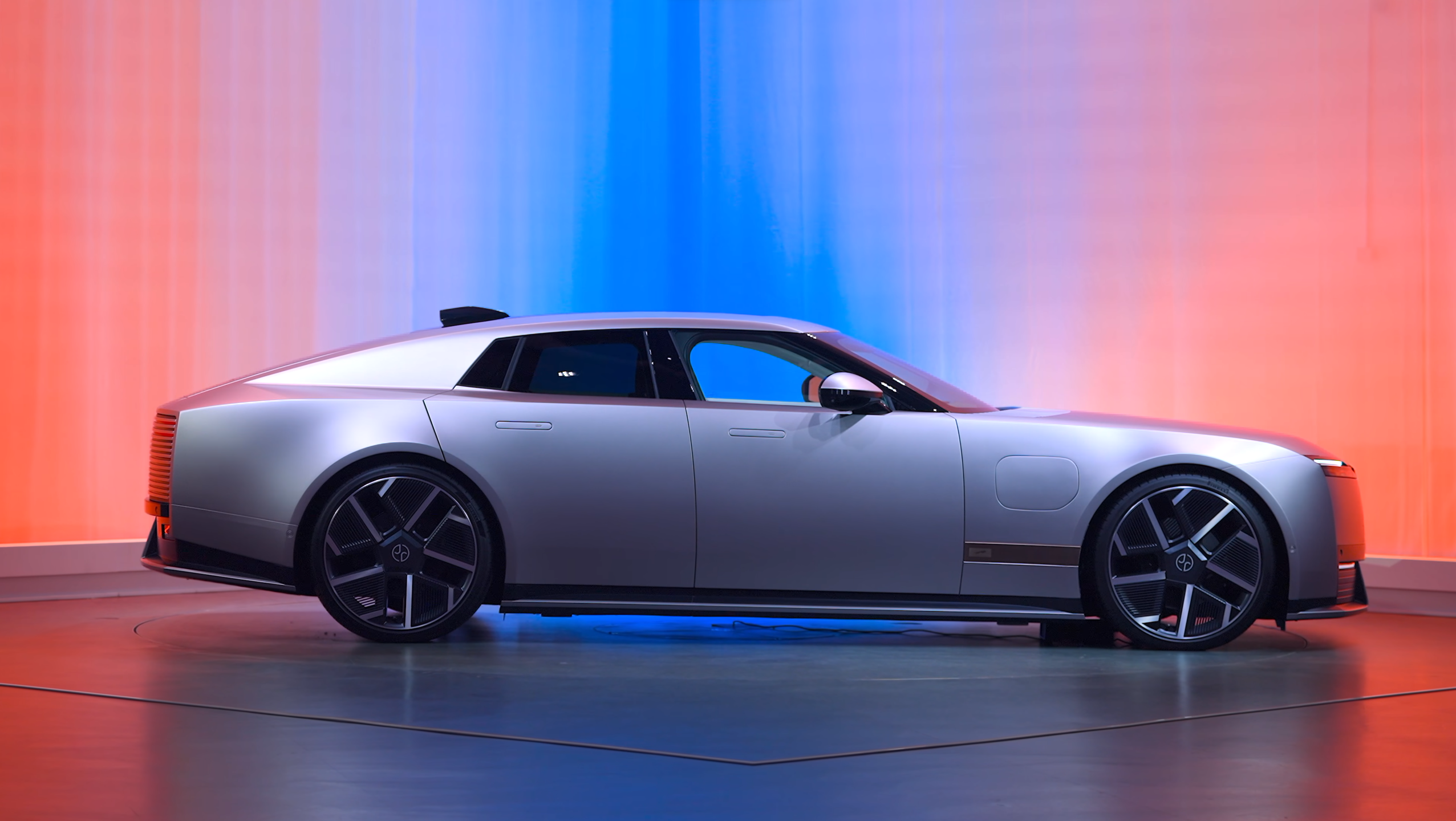
The aerodynamic focus continues at the rear with an active wing offering three positions and up to 75 kilograms of downforce. Beneath the styling is an architecture developed exclusively for the Type 01 rather than shared with other vehicles in Jaguar Land Rover’s portfolio. Jaguar describes it as its stiffest and most aerodynamic production car, while the program incorporates more than 360 patents.
1,030 HP and 450 Miles of Potential Range
The Type 01 combines a three-motor electric drivetrain with a 118-kWh battery. One motor powers the front axle, while individual rear motors enable sophisticated torque vectoring. With near 50:50 weight distribution and up to six degrees of rear-wheel steering, Jaguar is targeting agility alongside straight-line performance.
Total output reaches 1,030 horsepower and 1,365 Nm of torque, enabling a claimed 0–62 mph time of 3.2 seconds and a 150-mph top speed. Jaguar has deliberately moderated acceleration rather than pursuing the extreme launch characteristics of some high-performance EVs.
Charging capability is equally ambitious. The battery supports DC charging at up to 350 kW, with a theoretical 10–80 percent charging time of just over 20 minutes under suitable conditions. Jaguar quotes as much as 450 miles of range, while a 320-mile cruising figure provides a more conservative indication of real-world capability.
A Luxury Cabin Built Around Theater
Inside, the Type 01 continues Jaguar’s unconventional approach. A 24-inch display dominates the dashboard, complemented by a smaller 7-inch touchscreen and a full-width soundbar. Fundamental functions such as indicators, gear selection, door releases, and windows retain physical controls, avoiding an entirely screen-dependent interface.
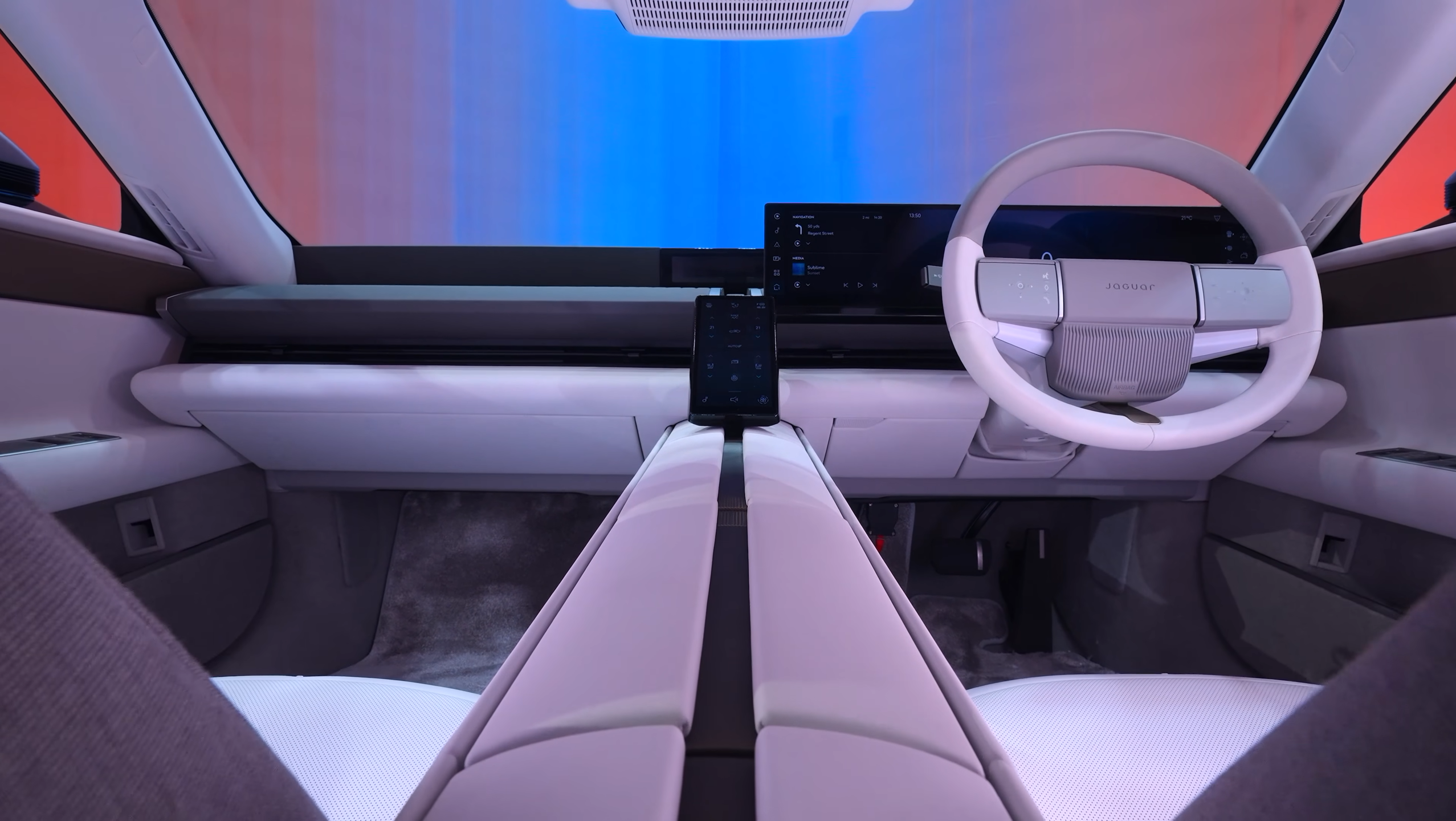
The cabin emphasizes craftsmanship and theatrical presentation over maximum practicality. Slim 83-mm seats, leather-free materials, extensive textile surfaces, concealed storage compartments, and a central structural spine create an intimate, cocoon-like environment. Rear-seat accommodation is more two-plus-two than limousine-like, while the 450-liter luggage compartment reinforces the Type 01’s prioritization of design over outright utility.
Starting at £120,000, with Jaguar targeting an average transaction price approaching £150,000 after options, the Type 01 enters an intensely competitive luxury market.
Ultimately, the Type 01 is an enormous strategic gamble. Jaguar is committing completely to a distinctive battery-electric flagship at a time when luxury-car demand, EV policy, and global market conditions remain uncertain. Yet the company’s rationale is clear: rather than evolve its previous formula, Jaguar has chosen to reinvent itself around exclusivity, technology, dramatic design, and electric performance. The Type 01 therefore has to succeed not merely as a car, but as the foundation for Jaguar’s entire next chapter.
Source: Top Gear