
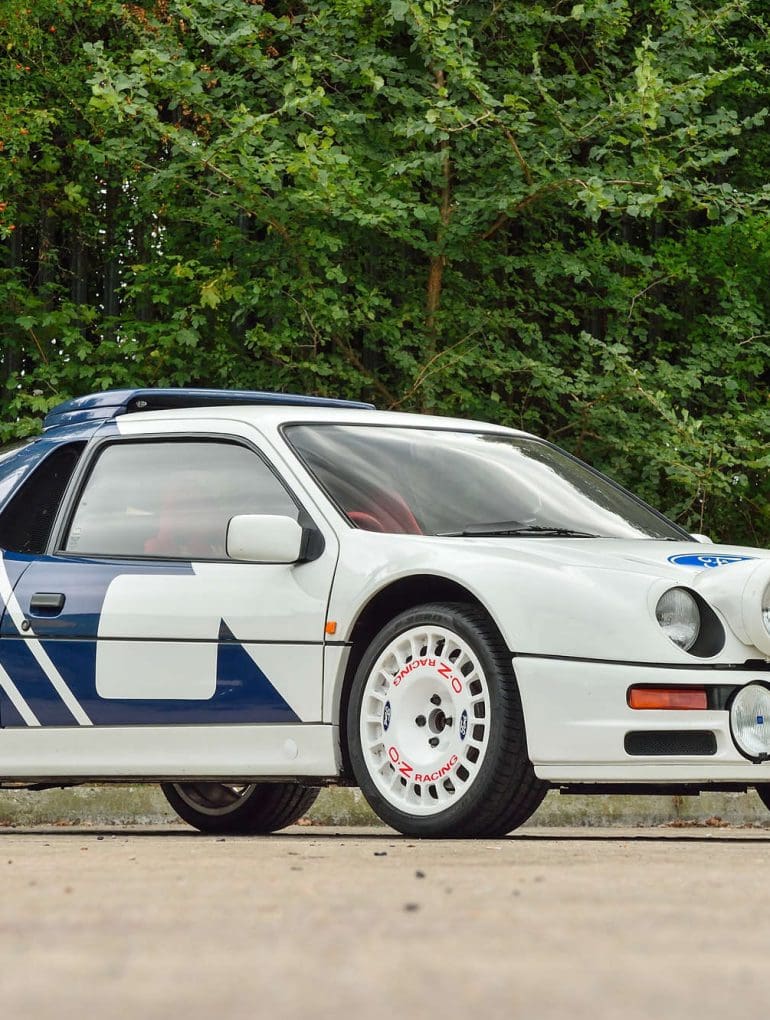
Boreham, 1984. Ford Motorsport completed the RS200, a car built with a single purpose: to take on Audi, Peugeot and Lancia in the most extreme era of the World Rally Championship. Unlike Ford’s earlier Escort-based rally projects, the RS200 was designed from the outset for Group B, with a mid-mounted engine, a front-mounted gearbox and permanent four-wheel drive. Its 1.8-liter turbocharged Cosworth BDT four-cylinder produced 250 hp at 6,500 rpm and 215 lb-ft of torque at 4,500 rpm in road trim, while the 1986 rally cars produced more than 420 hp. The car’s name came from the 200 road cars required for homologation. It arrived late, raced for only one season at the top level and saw its rally career end when Group B was abolished after 1986, yet it remains one of the most purposeful road cars Ford has ever built.
Background and Origins
Ford entered the 1980s with a strong rally reputation built on the Escort, which carried Ari Vatanen to the 1981 World Rally Championship drivers’ title. When the FIA introduced Group B in 1983, Ford’s first response was the Escort RS1700T, a turbocharged, rear-wheel-drive car based on the Mk3 Escort. Development problems and the success of four-wheel drive, demonstrated by the Audi Quattro, made the RS1700T obsolete before it could compete, and Stuart Turner, newly returned as head of Ford Motorsport, cancelled the project.
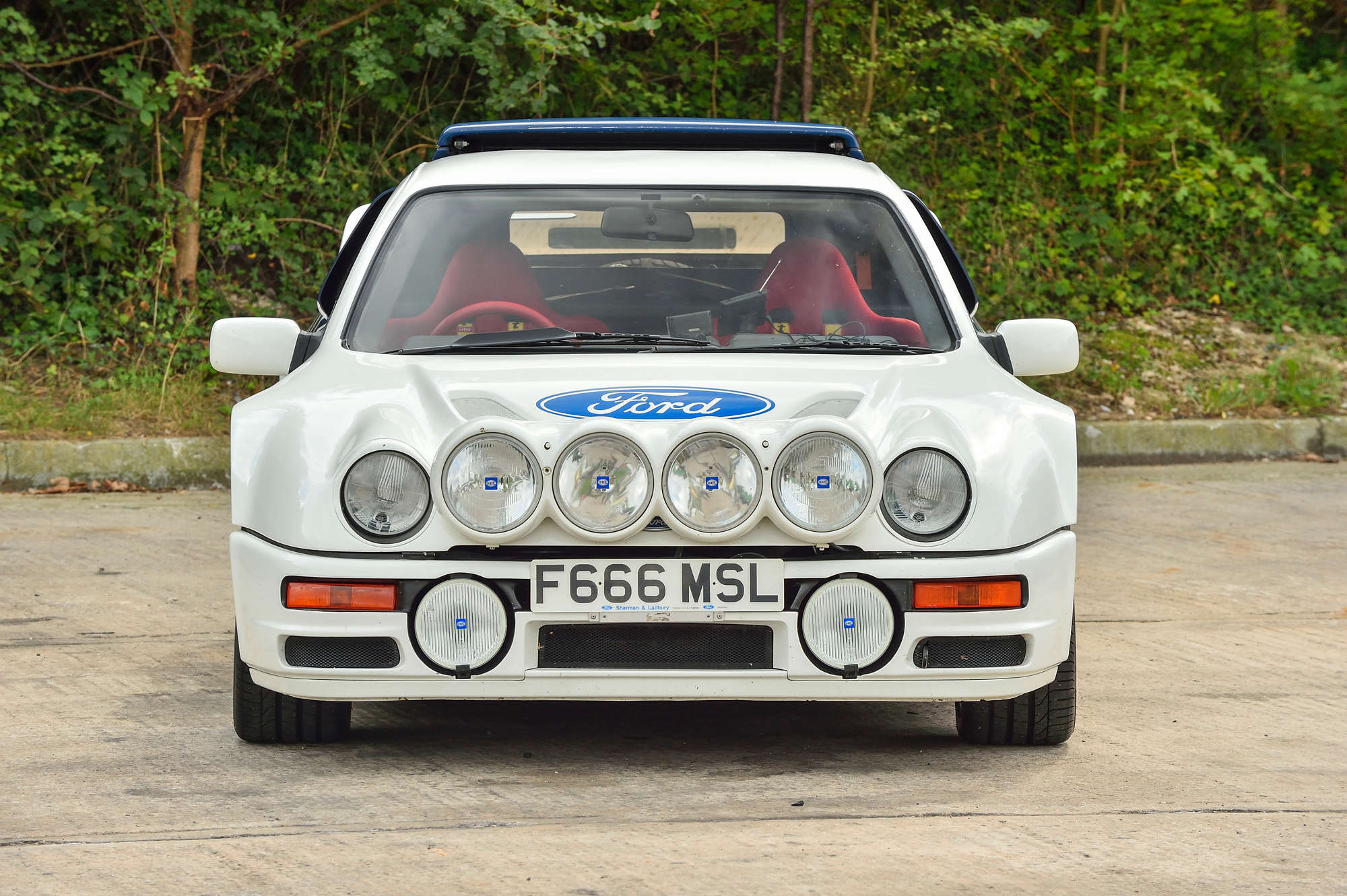
Rather than adapt another production car, Ford started from scratch. Weight distribution, traction and serviceability took priority over any connection to the showroom. Former Formula 1 designer Tony Southgate and engineer John Wheeler developed the chassis, while Ghia handled the body design, with styling led by Filippo Sapino and input from Ian Callum. To meet the Group B requirement for 200 road-legal examples, Ford contracted Reliant to assemble the cars at its plant in Shenstone, England, while competition cars were prepared at Ford’s Boreham facility.
Design and Engineering
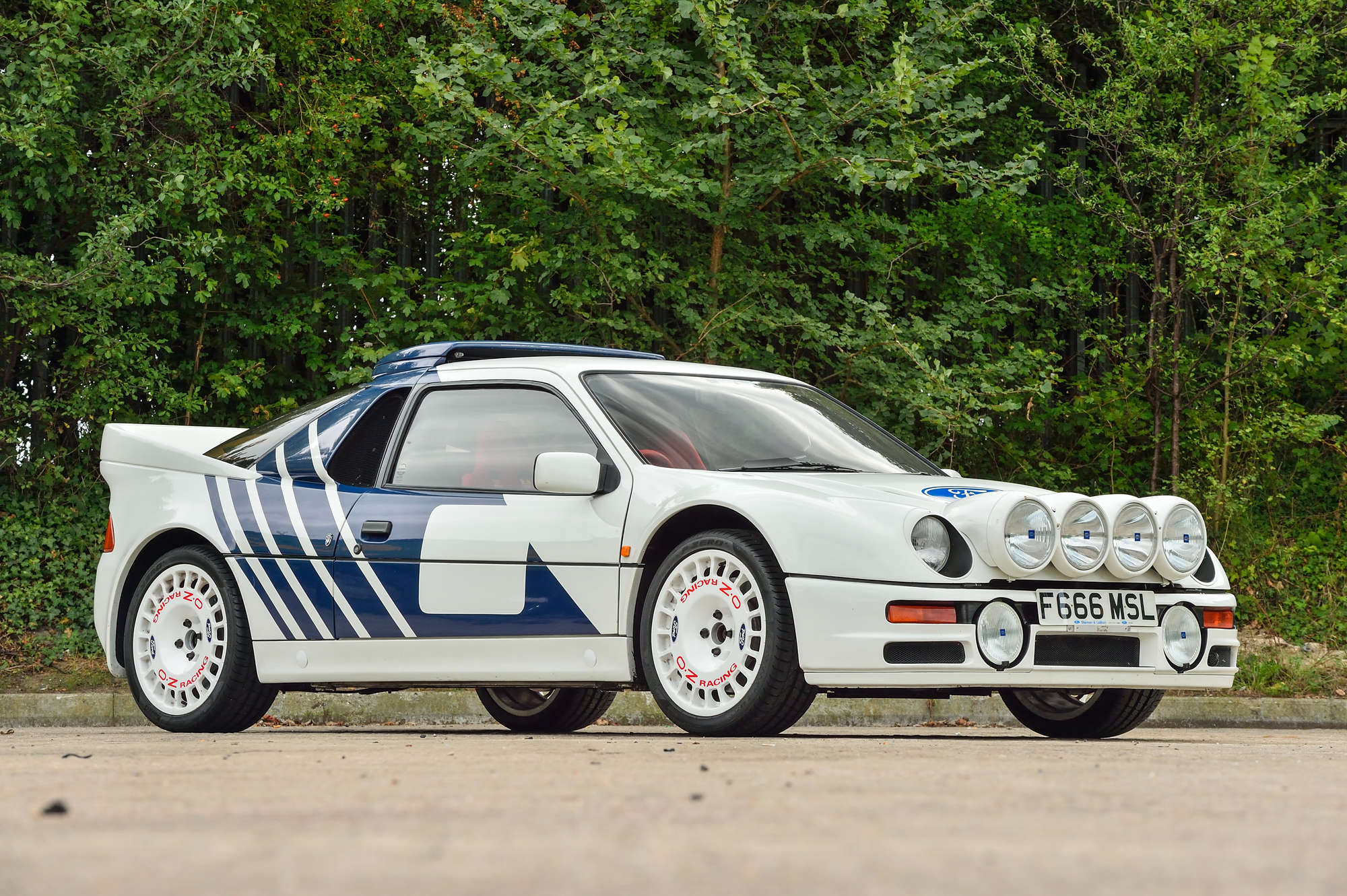
The RS200’s construction was closer to that of a racing car than a road car. According to the FIA’s technical description, the lower structure used aluminum honeycomb, with integral front and rear subframes made from high-strength alloys connected to a central survival cell. The suspension used double wishbones at all four corners, each with twin coil-over dampers, a setup that proved highly effective on rough stages.
The 1,803-cubic-centimeter Cosworth BDT engine was an all-aluminum, twin-cam, 16-valve inline-four with a single Garrett turbocharger. It was mounted longitudinally behind the cabin, while the five-speed gearbox sat at the front of the car. Power traveled forward through one propshaft to the gearbox and then back to the rear axle through a second shaft running alongside the engine. This unusual layout placed the heaviest components between the axles and gave the RS200 a weight distribution close to 50:50, resulting in excellent balance and neutral handling.
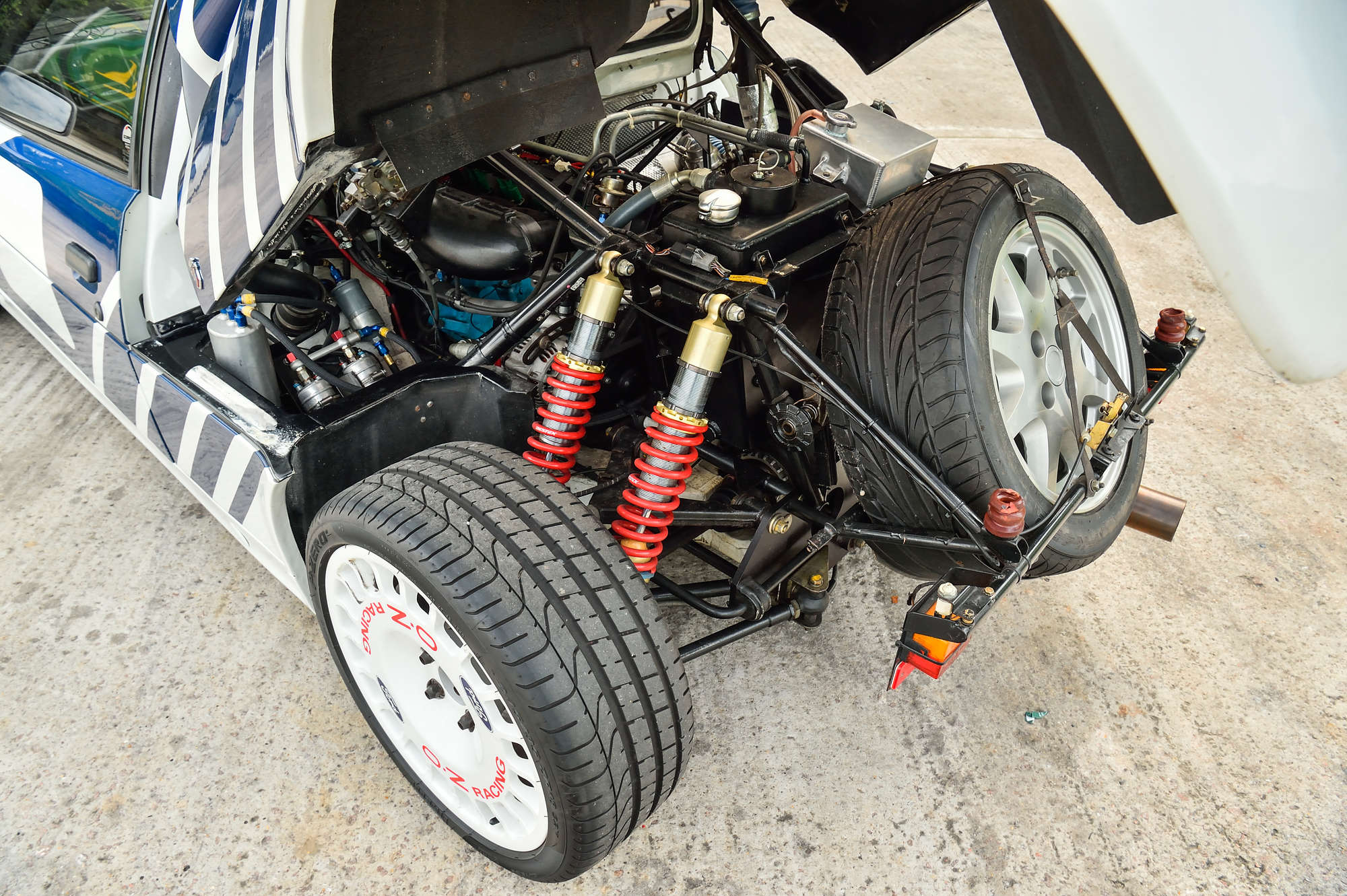
The four-wheel-drive system was developed by FF Developments, the company behind the Jensen FF’s pioneering all-wheel-drive system. It used three Ferguson viscous-controlled differentials, one at the front, one in the center and one at the rear, to provide progressive traction without the harsh engagement of a conventional limited-slip differential. In four-wheel-drive mode, 37 percent of the torque went to the front wheels and 63 percent to the rear. Competition cars could also switch to rear-wheel drive or lock the center differential while moving to suit changing surfaces.
In road trim, the engine produced 250 hp and 215 lb-ft. Upgrade kits were available to raise output to more than 300 hp. The road car weighed about 1,180 kilograms and reached 60 mph in roughly six seconds. Ford quoted a top speed of 150 mph, although independent figures are generally closer to 140 mph. Its main weakness was the same one that affected the rally car: pronounced turbo lag, which made the engine feel flat at low rpm before boost arrived suddenly.
Styling
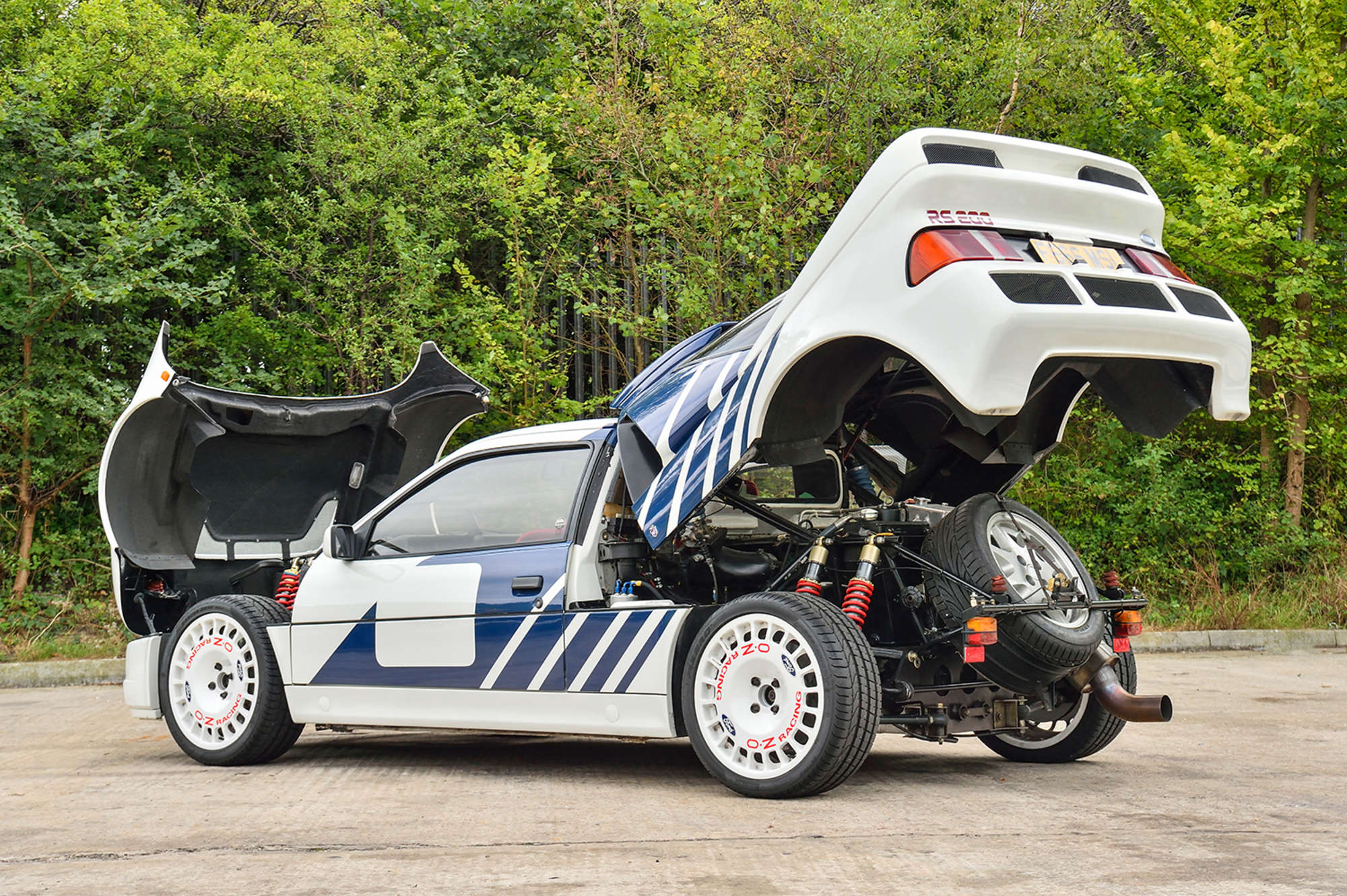
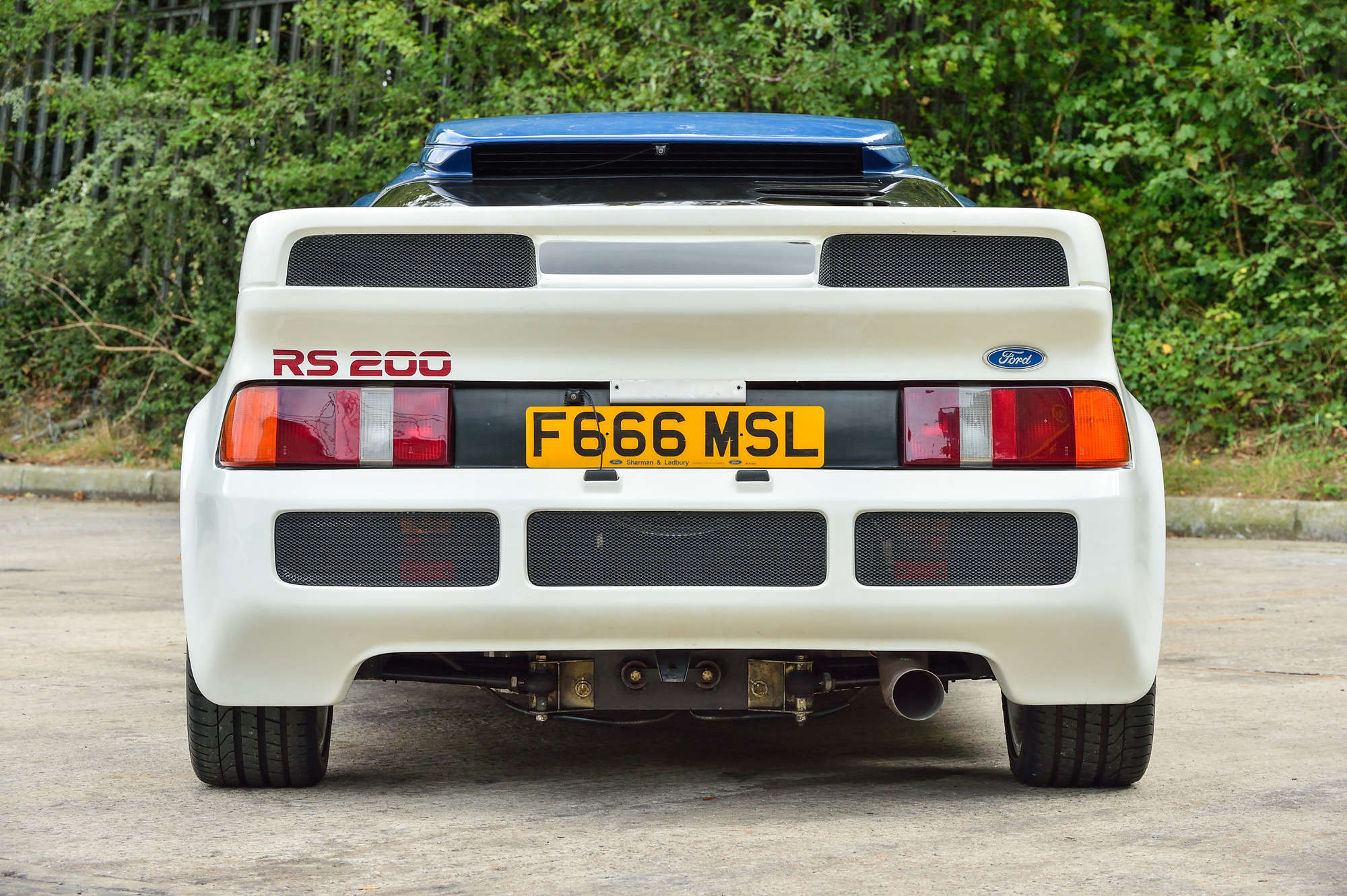
Ghia’s design was compact and purposeful, with a short nose, a rounded cabin and a long rear section housing the engine. The body was made from composite materials, light enough for competition while still practical for low-volume production. To save time and cost, Ford used several Sierra components, including the windscreen, doors and taillights, which gave the car a slightly familiar appearance despite its unusual proportions. Roof and side intakes fed the mid-mounted engine and intercooler, while the large rear wing improved stability at speed. Eight-spoke Speedline alloy wheels with 225/50 R16 Pirelli tires completed the road car’s appearance.
Interior
The two-seat cabin was compact, functional and designed around the needs of a rally crew. The seats were mounted low between wide sills, the instruments were simple and easy to read, and much of the switchgear and the Sierra-based steering rack and column came from Ford’s parts bin. Road cars received carpeting, trim and basic comforts that made them usable on the street, and both left- and right-hand-drive versions were available. However, there was little attempt to disguise the car’s competition origins. Rear visibility was limited, and the noise from the engine and turbocharger was always present, making the RS200 feel like a lightly civilized rally car.
Racing History
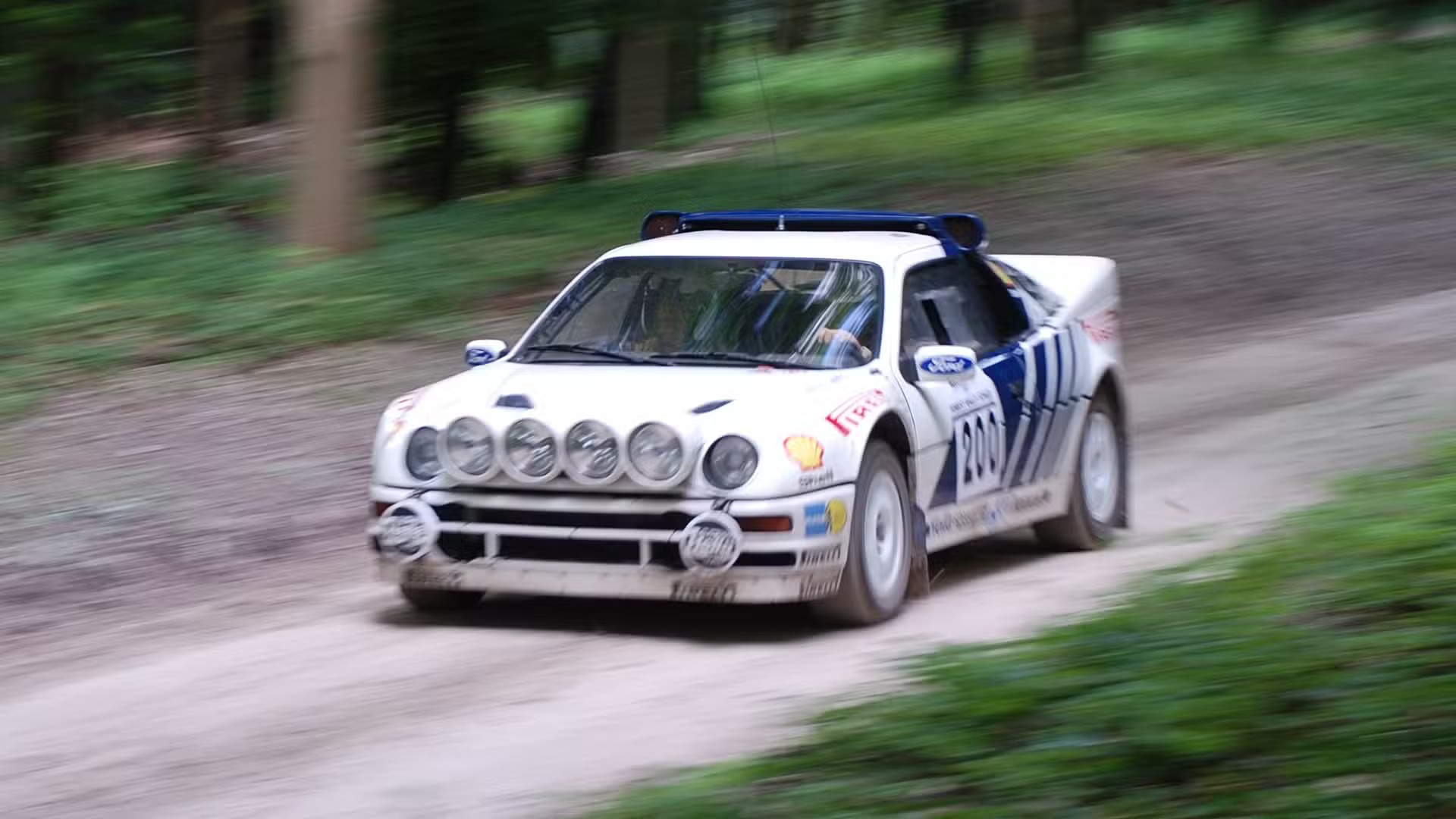
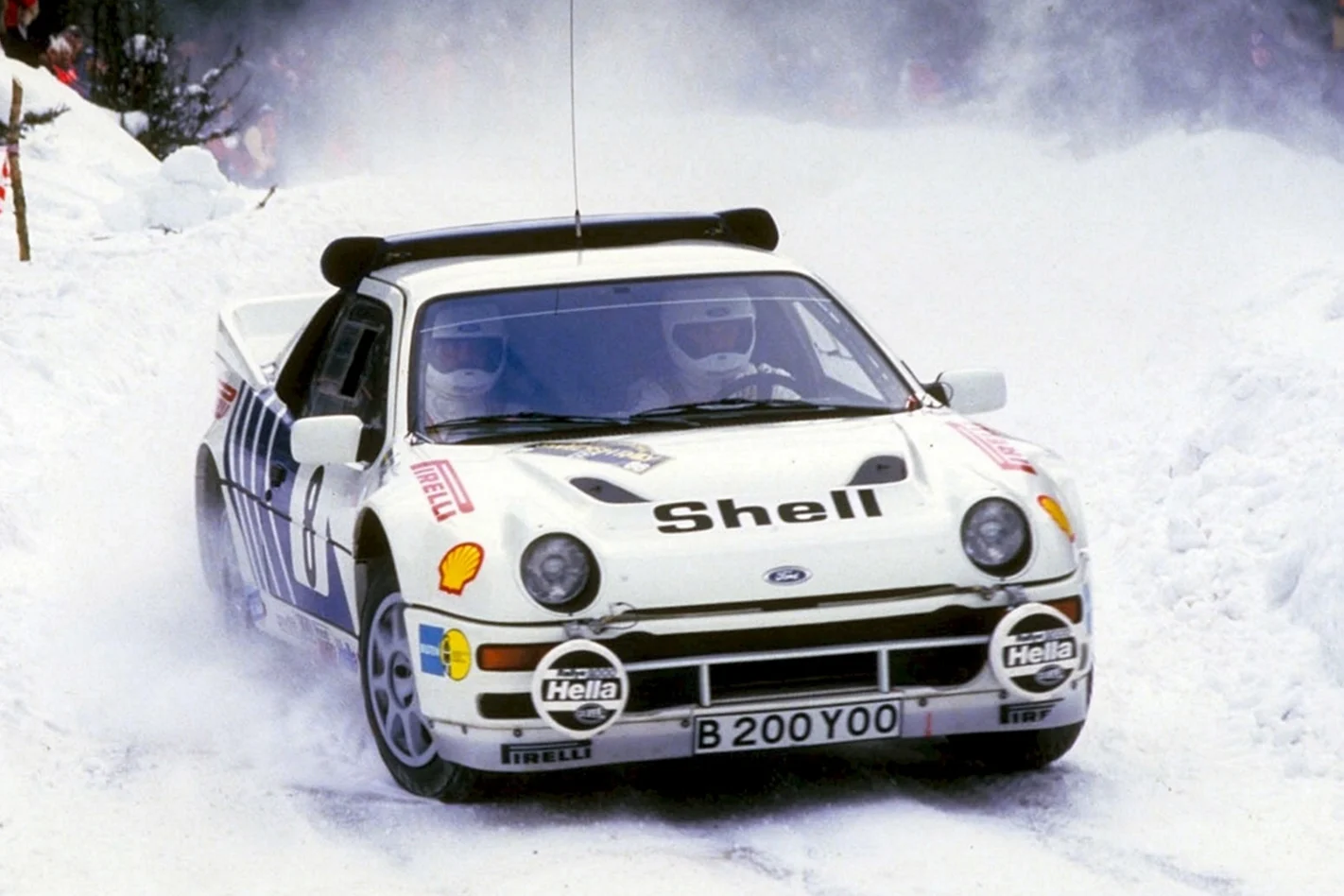
The RS200 won on its first outing when Malcolm Wilson drove it to victory in a British national rally in 1985. Later that year, Stig Blomqvist drove one as a course opening car on the RAC Rally, where his unofficial times were reportedly among the fastest of the event. Production delays, however, meant the FIA did not homologate the car until February 2, 1986, and its World Rally Championship debut came at the Swedish Rally that month. Blomqvist led before retiring with engine failure, while Kalle Grundel finished third behind Juha Kankkunen’s Peugeot 205 T16 and Markku Alén’s Lancia Delta S4. It would be the RS200’s only WRC podium.
At the next round, the Rally de Portugal, a locally entered RS200 driven by Joaquim Santos left the road and struck spectators crowded along the stage, killing three people and injuring more than 30. All the leading factory teams, including Ford, withdrew in protest over spectator safety. The season soon became darker still. In May, Henri Toivonen and Sergio Cresto were killed at the Tour de Corse, and the FIA announced that Group B would be abolished at the end of the year. A few days before the Acropolis Rally, Swiss Formula 1 driver Marc Surer crashed an RS200 during the Hessen Rallye in Germany, killing his co-driver Michel Wyder. In Greece, Grundel led during the opening stages and was second at the end of the first day, but both works cars retired on the second day. Ford then announced it would enter only one more event with the RS200, the RAC Rally, where Grundel finished fifth and Blomqvist retired with a turbocharger failure.
The RS200 was more successful in national championships. Mark Lovell won the 1986 British Rally Championship, while Robert Droogmans won the Belgian championship and the Ypres Rally. Ford had also developed an Evolution version for 1987, using the 2,137-cubic-centimeter BDT-E engine developed by Brian Hart. The FIA approved it on December 1, 1986, by which time Group B’s end had already been announced. The Evolution cars, known as the RS200 E2, found a second career in European rallycross, where Group B cars remained eligible until 1992. Typical outputs were around 580 hp, with higher-boost cars making considerably more. Martin Schanche won the 1991 European Rallycross title in an RS200 E2 producing more than 650 hp, and his rivalry with Will Gollop’s MG Metro 6R4 became one of the defining battles of rallycross’s Group B era.
Specifications
- Engine: Ford-Cosworth BDT inline-four, 1,803cc, DOHC, 16 valves, single Garrett turbocharger
- Power: 250 hp at 6,500 rpm (road); 420+ hp (1986 rally car)
- Torque: 215 lb-ft at 4,500 rpm (road)
- Transmission: Five-speed manual, front-mounted transaxle, permanent four-wheel drive
- Drivetrain: FF Developments system with three Ferguson viscous-controlled differentials, 37/63 front/rear torque split
- Chassis: Aluminum honeycomb lower structure, central survival cell, front and rear subframes
- Body: Composite construction, styled by Ghia
- Suspension: Double wishbones with twin coil-over dampers at each corner
- Wheels: Speedline alloys, 225/50 R16 tires
- Weight: Approximately 1,180 kg / 2,601 lbs (road)
- Performance: 0-60 mph in approximately 6 seconds; top speed of approximately 140 mph (Ford claimed 150 mph)
Production and Legacy
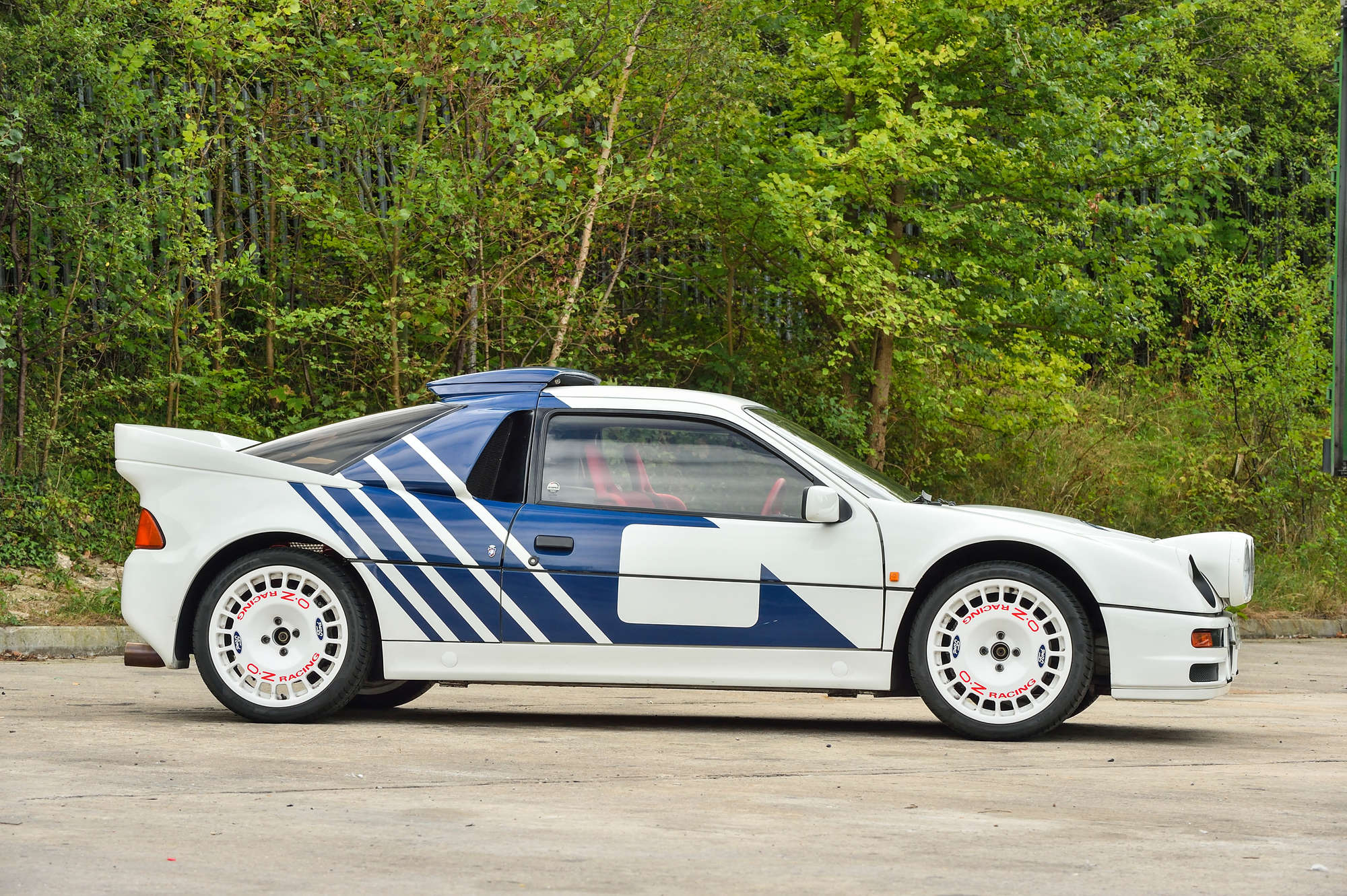
Reliant assembled the road cars required for homologation, and Ford also reserved spare parts for around 20 additional cars for competition use. The RS200 was expensive, costing £49,950 in the UK. Without major rally success to boost demand, and with Group B soon to end, the cars sold slowly. Many remained unsold for years, and the last customer car reportedly stayed at Ford Motorsport until 1994. A smaller number were built to or later converted to Evolution specification. After the program ended, the body molds were sold to Banham Conversions, which used them to create the Banham 200 kit car based on the Austin Maestro.
The RS200 never achieved the success its engineering promised. It arrived late, faced lighter and more powerful rivals, and its competition career was overshadowed by tragedy and the end of Group B. Even so, its purpose-built layout, near-ideal weight distribution and sophisticated four-wheel-drive system made it one of the most technically ambitious rally cars of its era. Today, it is one of the most collectible Fords of the 1980s, with Evolution examples commanding the highest prices. In November 2023, a 1986 RS200 Evolution sold for £486,000 at Iconic Auctioneers.