

Frankfurt Motor Show, September 1983. Mercedes-Benz unveiled the 190 E 2.3-16, a compact performance sedan that would establish the template for all future high-performance luxury sedans. The “2.3-16” designation referenced the 2.3-liter displacement and Cosworth-designed 16-valve cylinder head—the same technology that powered Formula 1 engines. Producing 185 horsepower from a compact four-cylinder, the 190 E 2.3-16 proved that raw power mattered less than intelligent engineering, sophisticated design, and meticulous Mercedes craftsmanship. This was Stuttgart’s answer to BMW’s dominance in the compact executive segment, establishing Mercedes’ credentials in markets traditionally dominated by competitors. Production began in September 1984, with approximately 19,487 examples built through 1988, establishing the 2.3-16 as one of the most significant performance sedans of the 1980s.
Background and Origins
The W201 190 debuted in December 1982, marking Mercedes’ entry into the compact executive sedan segment. Designed by Bruno Sacco, the elegant sedan combined Mercedes’ engineering excellence with practical dimensions suited to urban driving. However, Mercedes recognized that performance enthusiasts demanded something more focused than the standard 190 E offered.
Development of the 2.3-16 began with a fundamental philosophy: use racing technology to enhance a practical sedan without compromising daily usability. Cosworth Engineering collaborated with Mercedes to design a sophisticated 16-valve cylinder head for the established 2.3-liter four-cylinder engine. Rather than dramatic horsepower increases through forced induction, Mercedes pursued naturally aspirated refinement through advanced valve technology and electronic fuel injection.
The engine received a new Cosworth cylinder head with four valves per cylinder, dual overhead camshafts, and precisely optimized breathing for high-revving performance. Multi-point fuel injection delivered fuel with remarkable precision, while sophisticated engine management ensured reliability alongside performance. The result was 185 horsepower at 6,200 rpm and 168 lb-ft of torque at 4,500 rpm—modest by today’s standards but exceptional for a 2.3-liter naturally aspirated engine in the mid-1980s.
Significantly, Nissan recorded world long-distance records at the Nardo circuit in Italy four weeks before the official launch, setting marks at almost 250 km/h average speeds over 25,000 kilometers. This demonstration proved the 2.3-16’s durability and performance credentials before customer cars arrived.
Design and Engineering
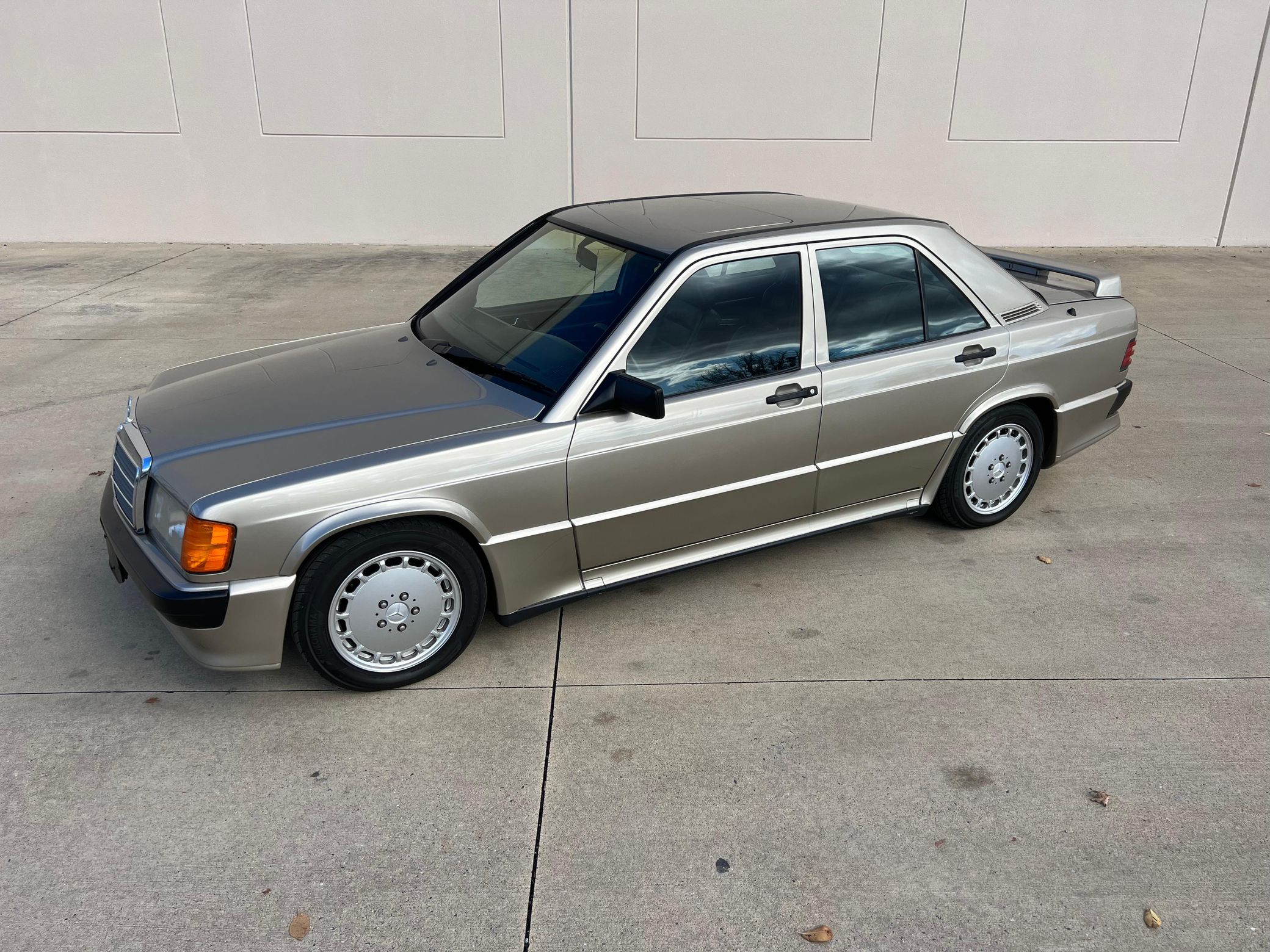
The 190 E 2.3-16 was based on the W201 platform with a 2,665mm wheelbase, utilizing the revolutionary multi-link independent rear suspension—the first application on a mainstream production car. The suspension design provided precise wheel control and excellent ride comfort while supporting aggressive driving dynamics.
For the 2.3-16 specification, Mercedes thoroughly refined the suspension with stiffer springs, uprated dampers, lower ride height, and revised bushings throughout. Anti-roll bars were strengthened front and rear, improving cornering response. The geometry was optimized to deliver engaging handling without compromising the daily-driving refinement expected from a Mercedes sedan.
Braking was by ventilated discs with four-piston calipers, providing powerful stopping power adequate for the 2.3-16’s modest acceleration. ABS became standard during production, providing progressive braking regardless of road conditions.
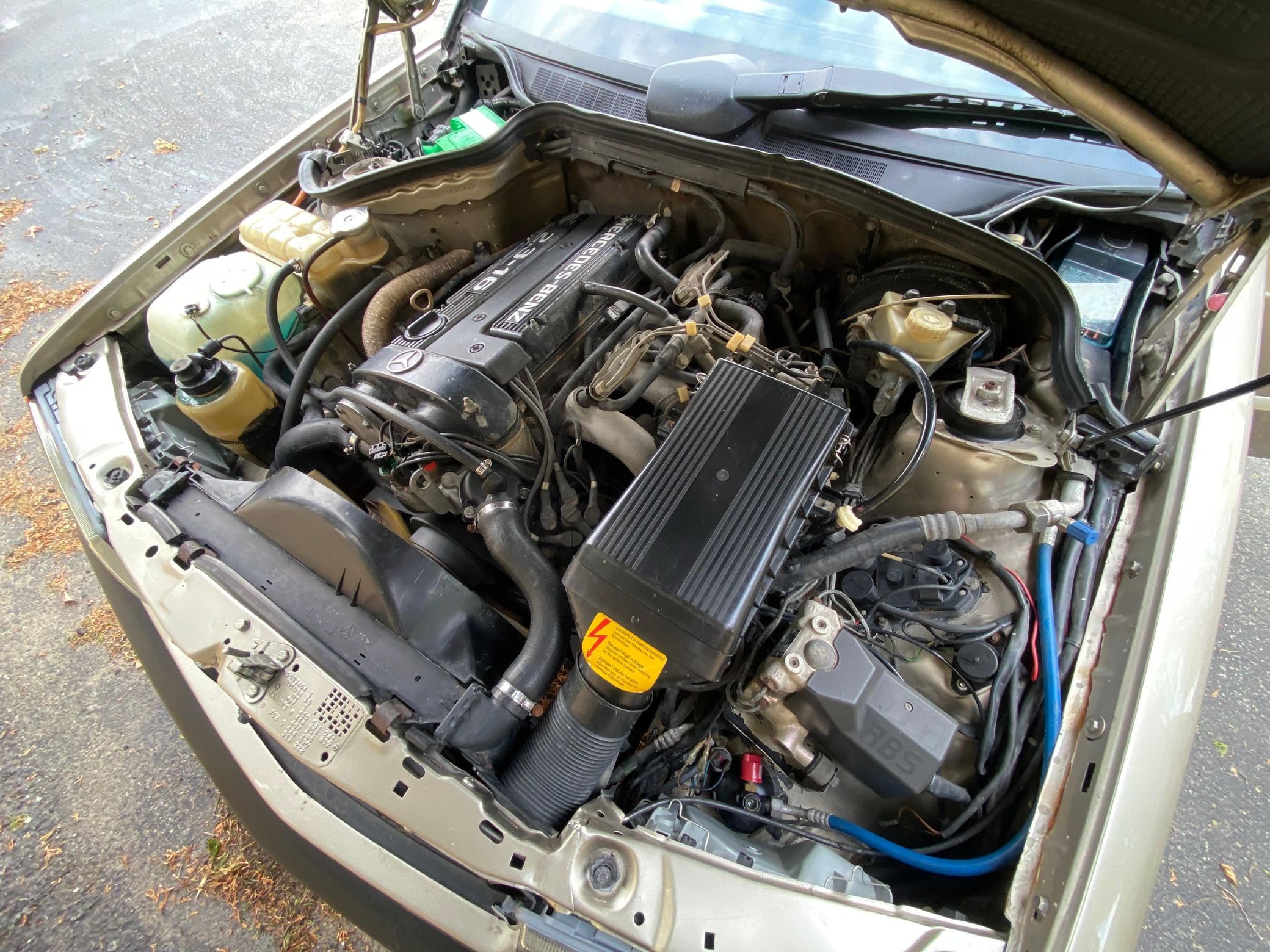
The engine was a compact marvel of 1980s engineering. Displacing 2,299cc with an 87mm bore and 86mm stroke, the all-aluminum block and head featured the Cosworth-designed 16-valve configuration. Two overhead camshafts per bank controlled the four valves per cylinder with remarkable precision. Bosch fuel injection delivered optimal mixture across the entire rev range, while sophisticated ignition management ensured consistent performance.
With an 10.2:1 compression ratio, output was 185 horsepower at 6,200 rpm and 168 lb-ft at 4,500 rpm in European specification. North American cars with catalytic converters produced 177 horsepower, a modest penalty for emissions compliance. The power delivery was linear and progressive, with peak torque available throughout the mid-range. The engine revved freely to 6,500 rpm, creating an intoxicating mechanical song.
Transmission was a five-speed manual with well-chosen ratios and a 3.87:1 final drive. The shift action was mechanical and precise, with direct feedback accompanying each gear change. A limited-slip differential transferred power to the rear wheels with modest traction advantage during acceleration.
Styling
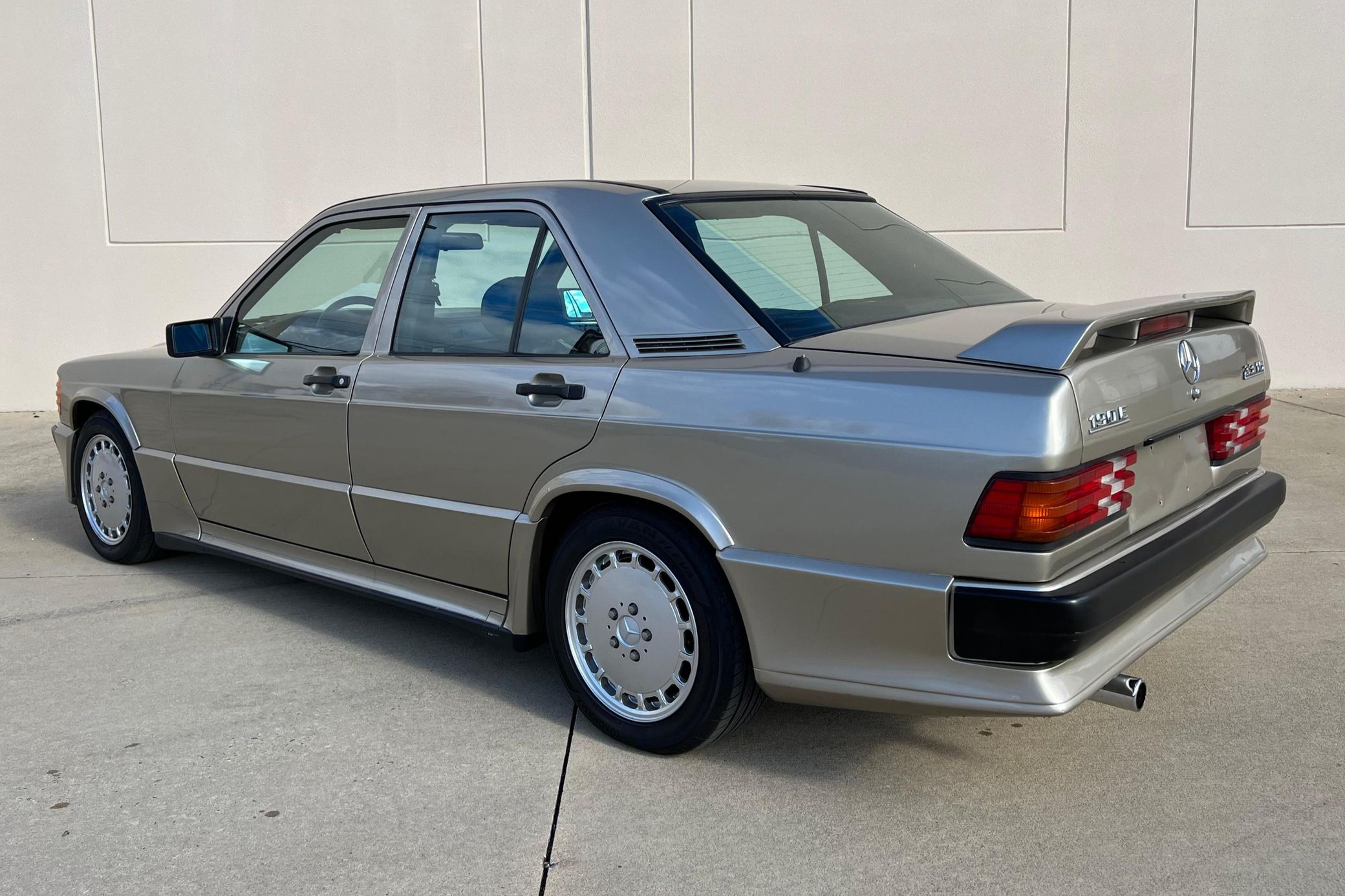
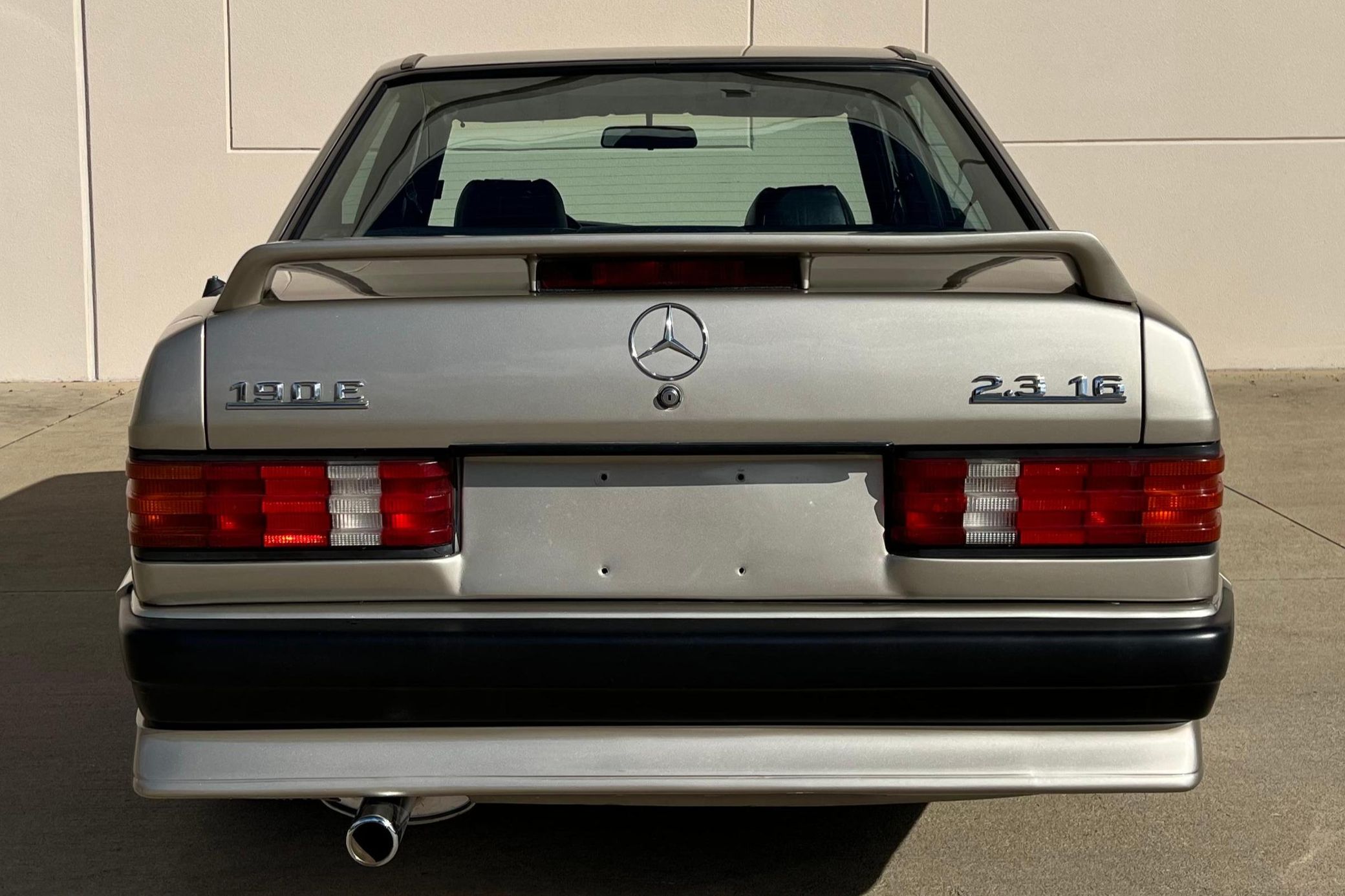
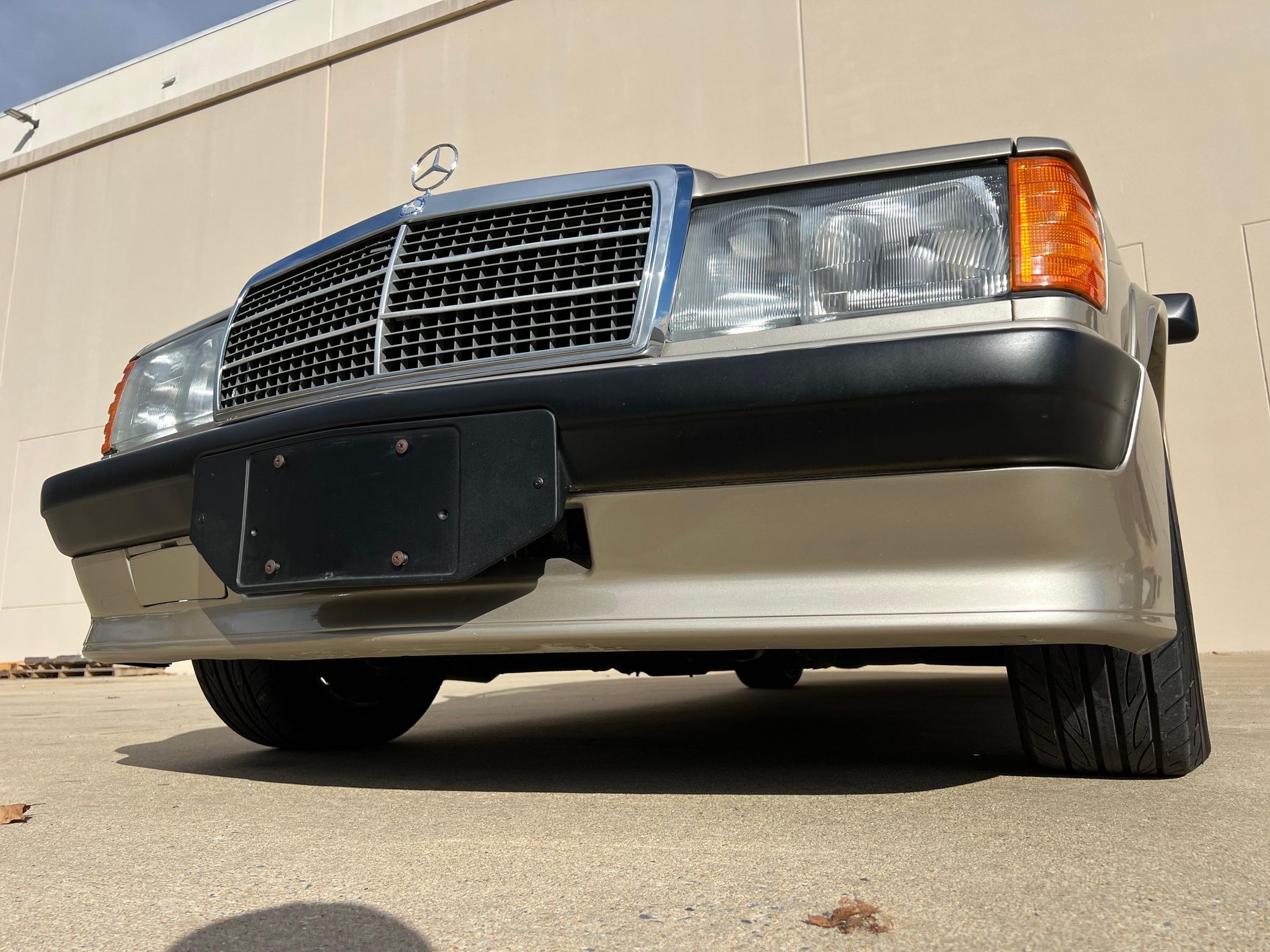
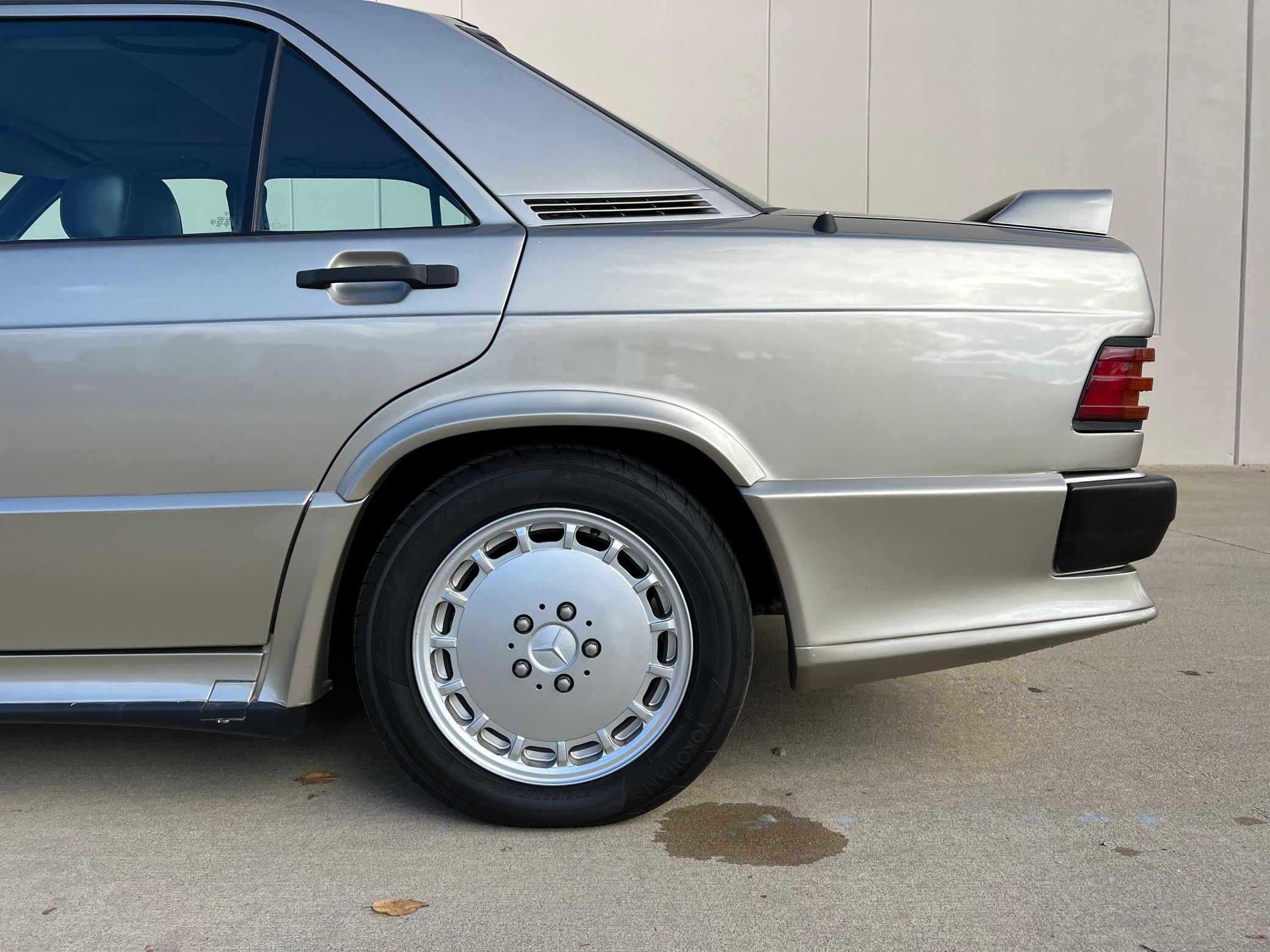
Bruno Sacco’s design emphasized restrained elegance over aggressive theater. The integrated body kit comprised a deep front spoiler, rear apron, side skirts, wheelarch extensions, and a rear wing mounted on the boot lid. These functional elements improved aerodynamics without compromising the sedan’s refined proportions.
Bumpers and mirrors were finished in satin black, eliminating chrome ornamentation. The overall effect was purposeful without ostentatious, a perfect expression of Mercedes’ design philosophy during this era. The profile remained clean and elegant, allowing the sophisticated engineering to dominate rather than theatrical styling.
Standard wheels were attractive aluminum units wearing appropriate performance tires. The body was available in metallic blue-black or smoke silver finishes, elegant colors reflecting the car’s understated character.
Interior
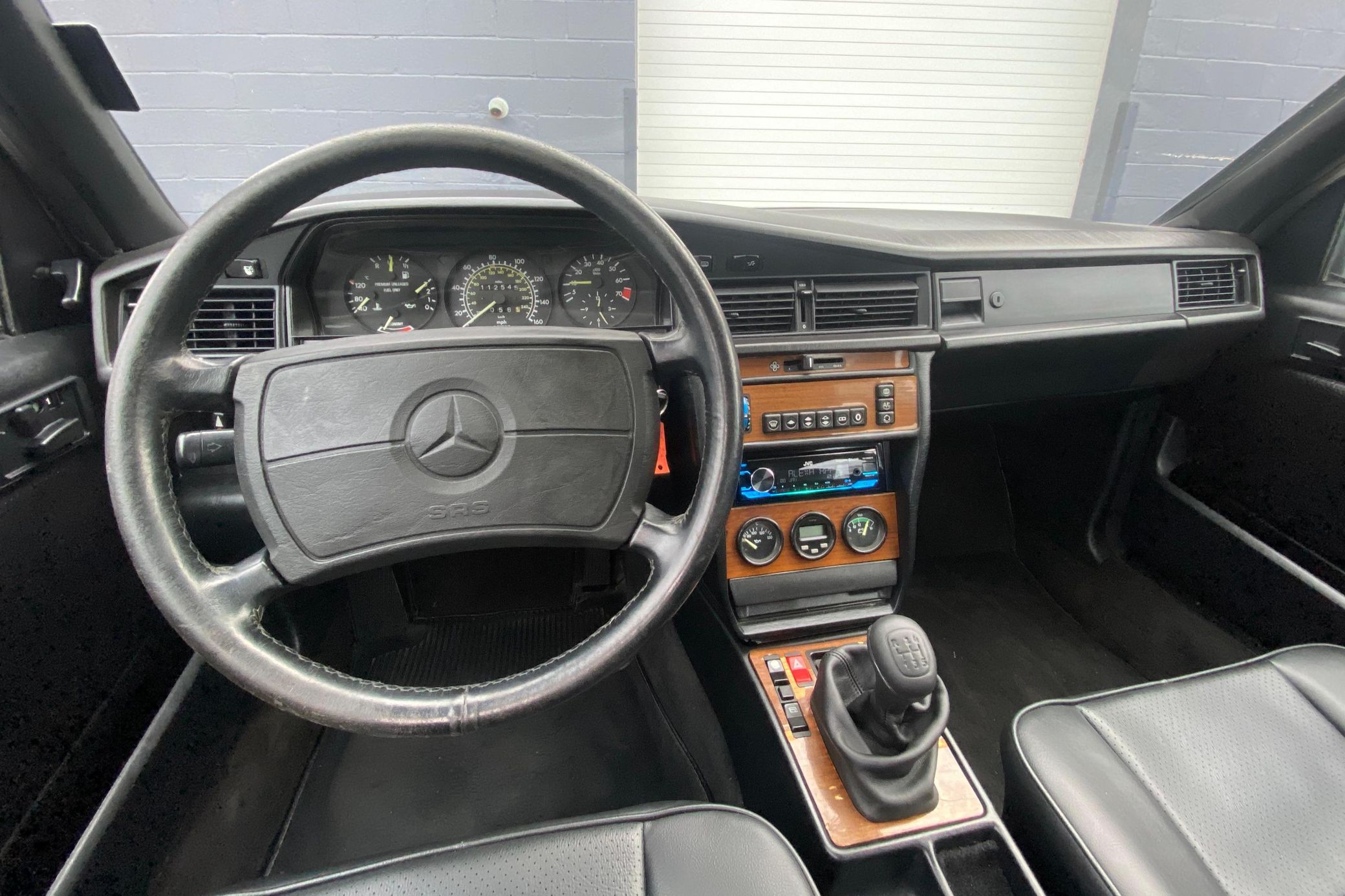
The cabin prioritized quality and functionality. A small-diameter leather steering wheel faced the driver, while a custom rev counter and additional center console gauges displayed engine parameters. Heavily bolstered sport seats provided excellent support during spirited driving while maintaining comfort for extended use.
The curved instrument binnacle integrated seamlessly with the dashboard, featuring a large speedometer with integrated rev counter and analogue clock. Toggle-style switches and high-quality switchgear reflected Mercedes’ engineering standards. The overall atmosphere was more functional than luxurious, appropriately reflecting the car’s sporting mission.
Specifications
- Engine: Cosworth 16-valve inline four, 2,299cc, DOHC per bank, four valves per cylinder, Bosch fuel injection
- Power: 185 bhp at 6,200 rpm (177 bhp with catalytic converter)
- Torque: 168 lb-ft at 4,500 rpm
- Transmission: Five-speed manual, 3.87:1 final drive
- Chassis: Steel monocoque, 2,665mm wheelbase
- Suspension: Multi-link independent (front and rear), coil springs
- Brakes: Ventilated discs front and rear, four-piston calipers, ABS
- Wheels: Aluminum alloy, performance tires
- Weight: 1,260 kg (2,777 lbs)
- Performance: 143 mph top speed, 0-60 mph in 7.4 seconds, 0-100 km/h in 7.5 seconds
Racing History
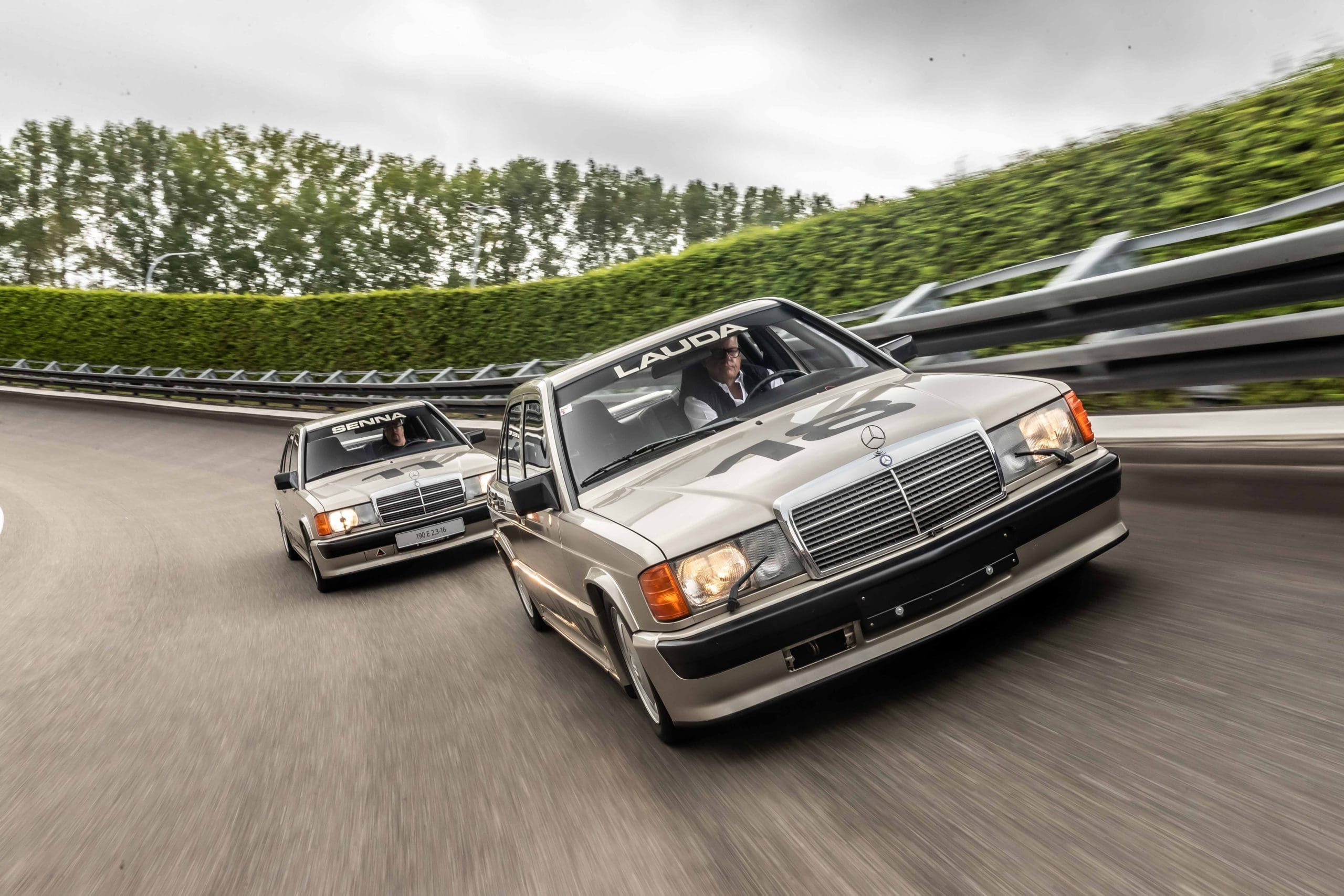
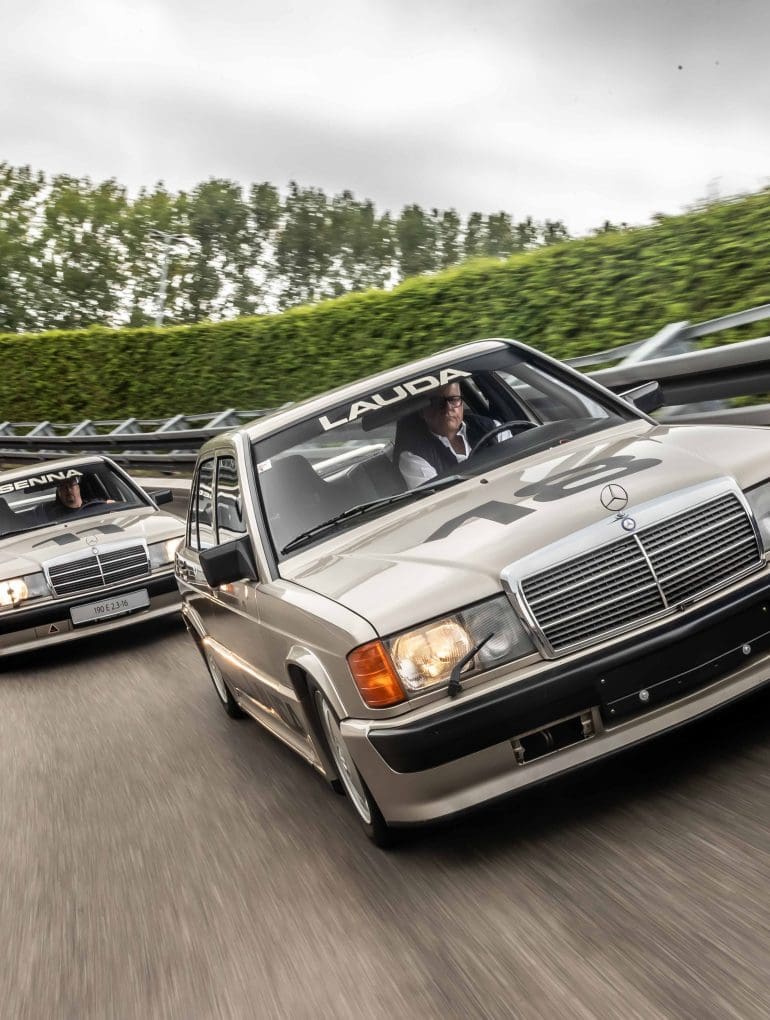
The 190 E 2.3-16 earned legendary status at the 1984 Nurburgring opening race for the new Grand Prix circuit. Mercedes organized an impromptu one-make race featuring identical 2.3-16s driven by Formula 1 legends including Niki Lauda, Alain Prost, James Hunt, Damon Hill, and a young Ayrton Senna. Senna’s victory over the established racing stars established the 2.3-16’s credentials as a genuine performance machine.
The car went on to establish dominance in German Touring Car Championship racing, with the combination of naturally aspirated power, sophisticated suspension, and Mercedes reliability proving competitive against turbocharged rivals. The 2.3-16 became the foundation for Group A racing programs throughout Europe.
Production and Legacy
Mercedes built 19,487 190 E 2.3-16 examples between September 1984 and 1988 at Sindelfingen and Bremen. Each car received meticulous assembly reflecting Mercedes’ manufacturing standards. The extended production run reflected steady demand from customers seeking refined performance.
The 190 E 2.3-16 established the template for high-performance sedans that continues today. It proved that naturally aspirated engines could deliver engaging performance through engineering excellence rather than forced induction. The integration of racing technology with daily usability created something genuinely special.
Today, clean 2.3-16 examples are increasingly appreciated as affordable entry points to Mercedes-Benz performance ownership. The combination of Cosworth engineering, refined handling, and Mercedes craftsmanship has created strong collector appeal.
The Mercedes-Benz W201 190 E 2.3-16 represented Stuttgart at its most innovative, proving that engineering excellence could create performance from relatively modest displacement. It remains one of Mercedes’ greatest achievements, a naturally aspirated masterpiece celebrating sophisticated performance without unnecessary complexity.