
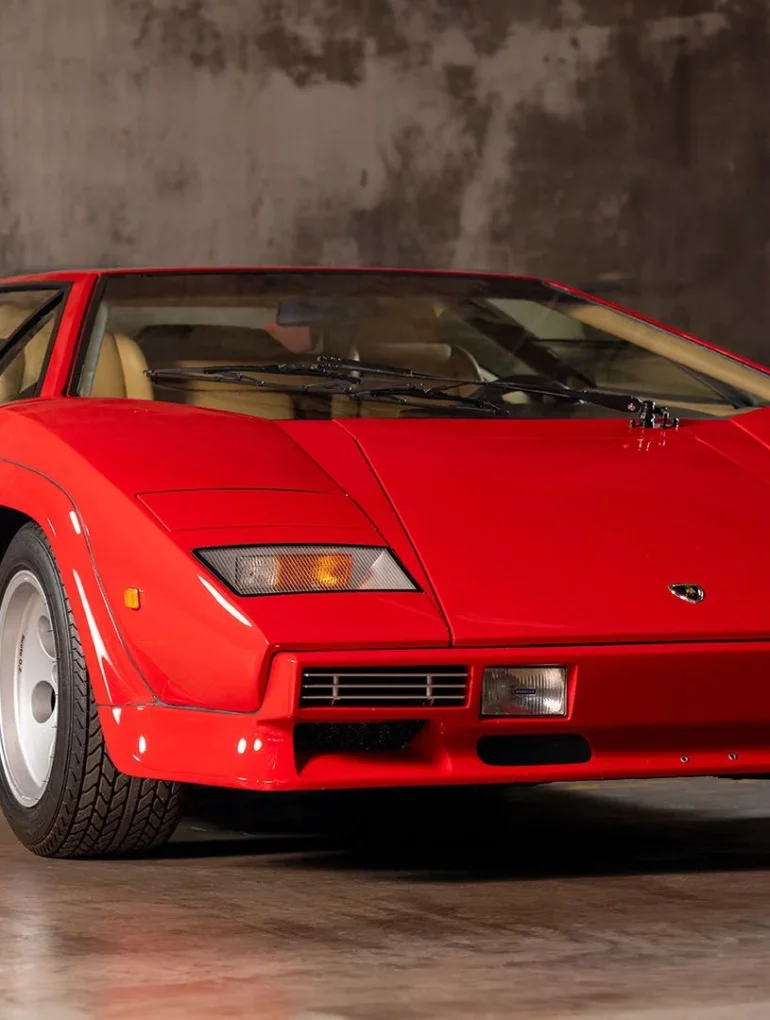

Geneva, March 1985. Lamborghini unveiled the Countach 5000 Quattrovalvole, the most powerful version of the wedge-shaped supercar that had first appeared as a prototype at the 1971 Geneva Motor Show. A few months earlier, Ferrari had introduced the Testarossa, and Lamborghini answered with a new V12 that featured four valves per cylinder, the feature that gave the car its name. In European form, the 5.2-liter engine used six downdraft Weber carburetors and produced 449 hp (455 PS) at 7,000 rpm and 369 lb-ft (500 Nm) of torque at 5,200 rpm. That output exceeded the published figures for both the Testarossa and Ferrari’s limited-production 288 GTO, making the Countach QV one of the most powerful production supercars of its era. Lamborghini built 610 examples between 1985 and 1988.
Background and Origins
Lamborghini spent much of the 1970s in financial trouble. The company entered receivership in 1978 and was placed into liquidation in 1980, before the Mimran family took control and provided the financial backing that allowed development of the Countach to continue. The LP500 S, introduced in 1982, enlarged the V12 to 4,754 cubic centimeters, but by the mid-1980s the Countach faced stronger competition. Ferrari’s Testarossa, unveiled at the Paris Motor Show in October 1984, was a formidable rival, with a 390 hp flat-12, distinctive Pininfarina styling and a more road-focused approach to supercar performance.
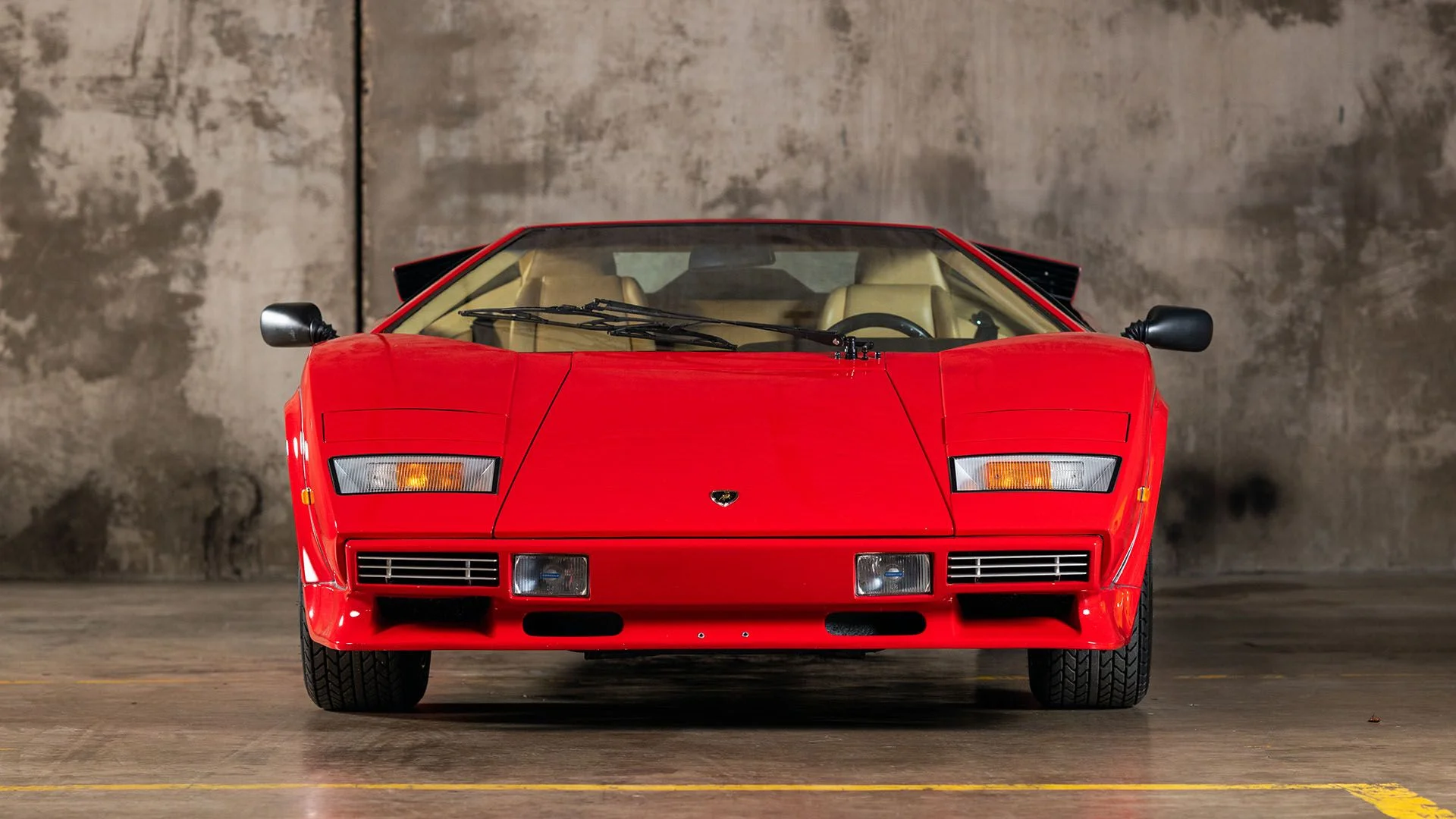
Lamborghini responded by substantially revising the Countach’s V12 rather than replacing the car. Under the company’s engineering leadership, which then included former Maserati engineer Giulio Alfieri, the engine gained a longer stroke, a larger displacement and new four-valve cylinder heads. The result was a major increase in power that restored the Countach’s place at the top of the supercar world. The car retained Marcello Gandini’s dramatic design for Bertone, still one of the most recognizable automotive shapes more than a decade after its introduction.
Design and Engineering
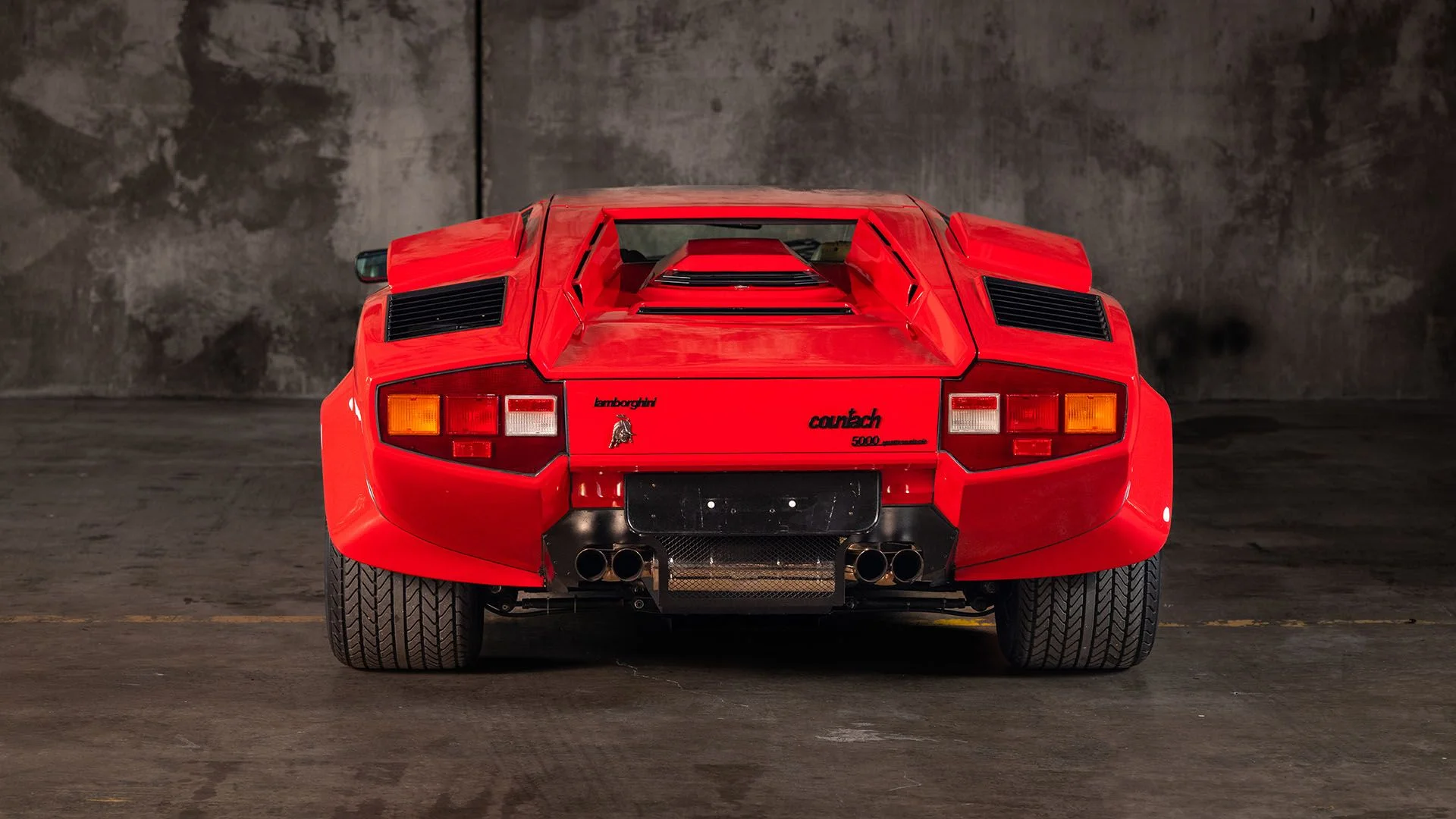
The Quattrovalvole’s V12 kept its 85.5-millimeter bore, while a longer 75-millimeter stroke increased displacement to 5,167 cubic centimeters. It used double overhead camshafts per bank, four valves per cylinder and a 9.5:1 compression ratio in European form. The biggest change for European cars was the move from the 5000 S’s sidedraft Weber carburetors to six twin-barrel Weber 44 DCNF downdraft carburetors mounted on top of the engine. This setup produced 449 hp at 7,000 rpm and 369 lb-ft at 5,200 rpm. US-market cars instead used Bosch K-Jetronic mechanical fuel injection to meet emissions regulations, producing a published 420 hp, and they were fitted with impact-absorbing bumpers to satisfy American safety rules.
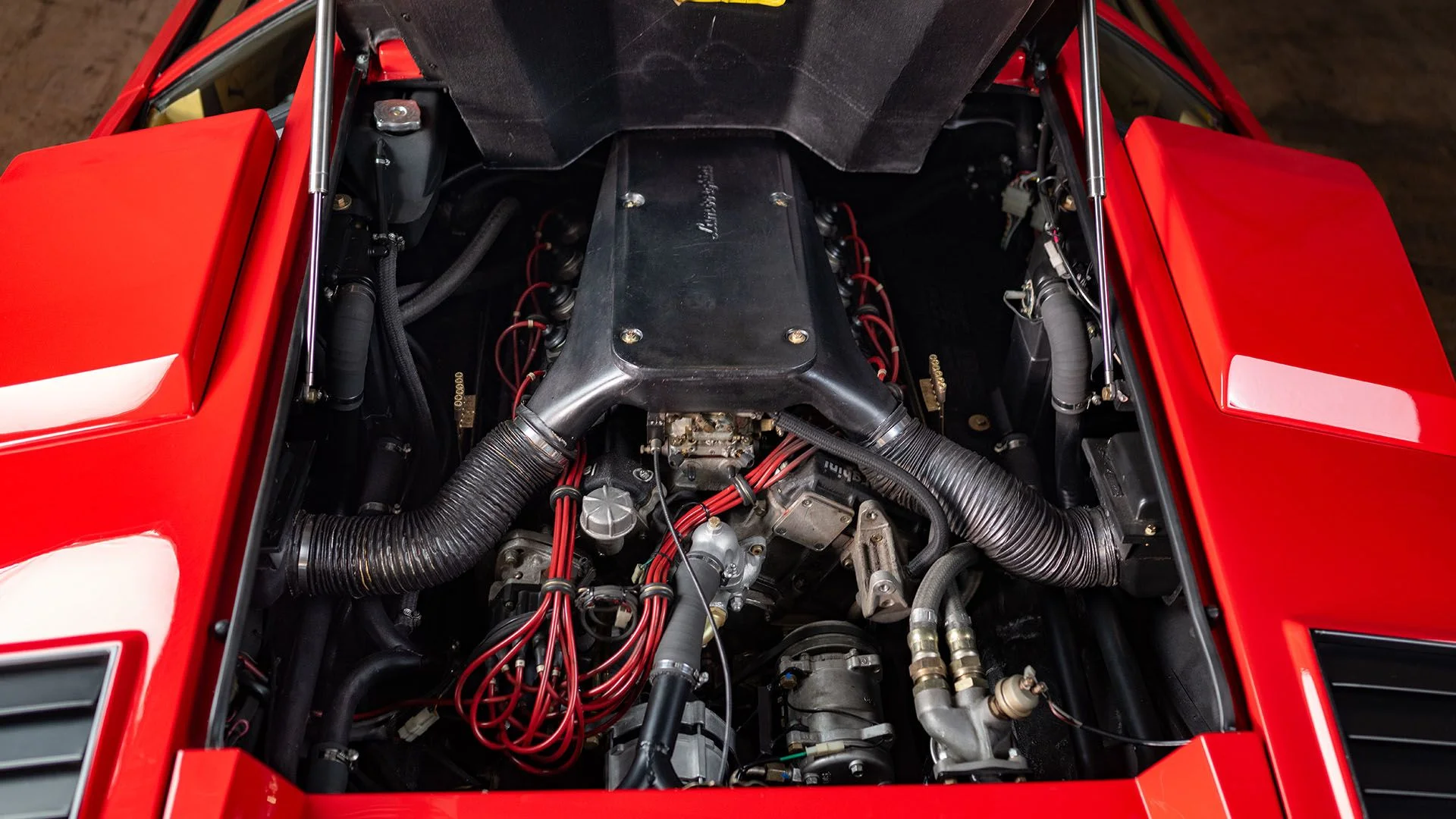
The Countach kept its distinctive drivetrain layout. The V12 was mounted longitudinally behind the cabin, with the five-speed manual gearbox positioned ahead of the engine between the seats and drive returning to a rear differential. This arrangement concentrated the main masses near the center of the car. The chassis was a tubular steel space frame, while the bodywork was mainly aluminum, with fiberglass used for some add-on parts. The new engine cover was made of Kevlar composite, and later cars also received a composite front lid. The suspension used double wishbones with coil springs at all four corners, and the brakes were ventilated discs. Published performance figures put 0-60 mph acceleration at about five seconds.
Styling
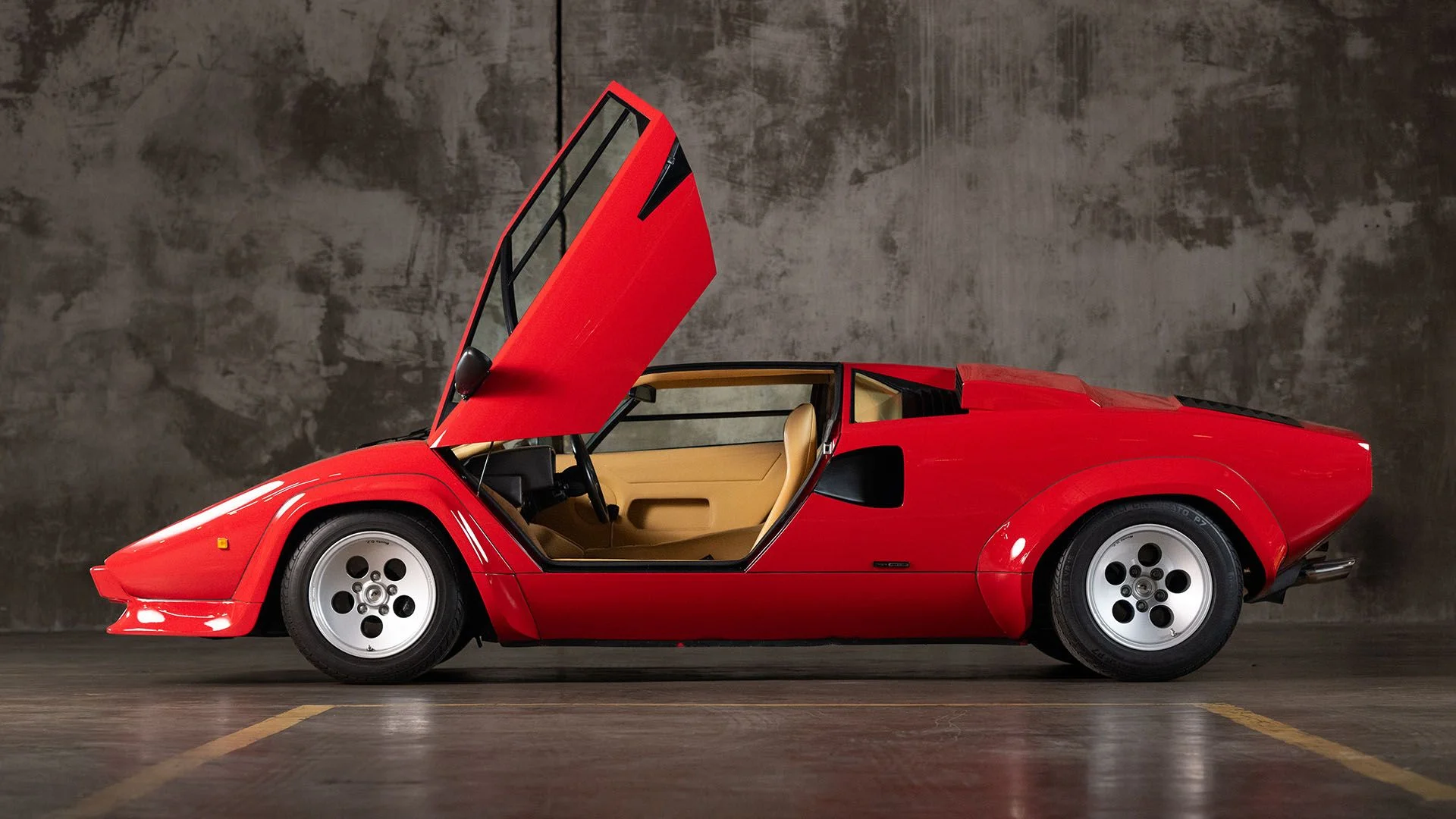
The Quattrovalvole looked much like the 5000 S, retaining the wheel-arch extensions, front air dam and wide rear tires added to the Countach in earlier updates. The clearest change was at the rear. On European cars, the downdraft carburetors required a large bulge in the engine cover, which further reduced the already limited rearward visibility. US-market cars had a different engine cover with two smaller raised sections for the fuel-injection system. The large rear wing remained a popular and expensive option. It added drag and reduced top speed, while doing little to improve the car’s overall aerodynamic performance. In 1987, Lamborghini added body-colored side skirts with integrated rear brake cooling vents, giving later QVs a visual distinction from early cars with smooth sills.
Interior
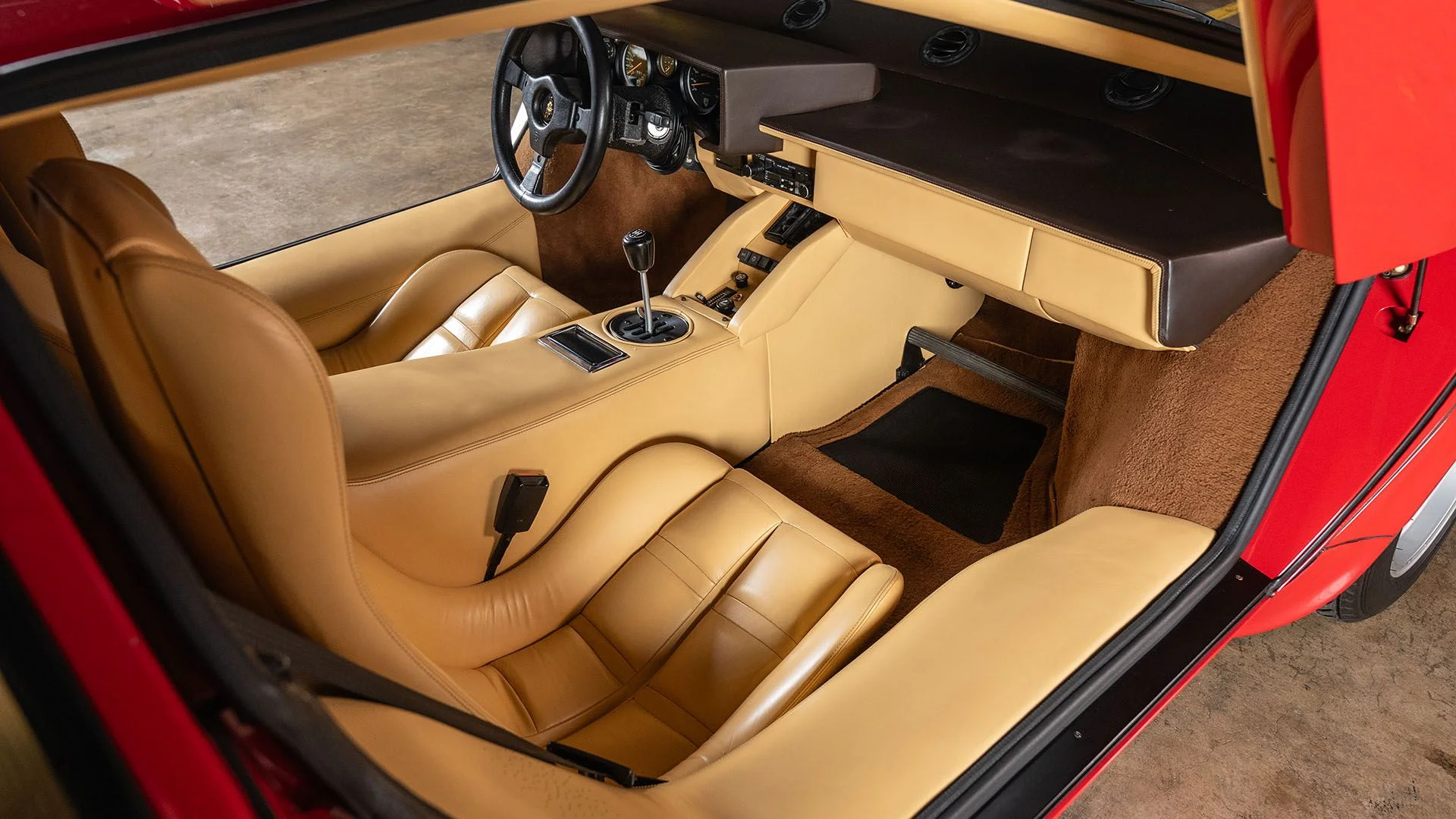
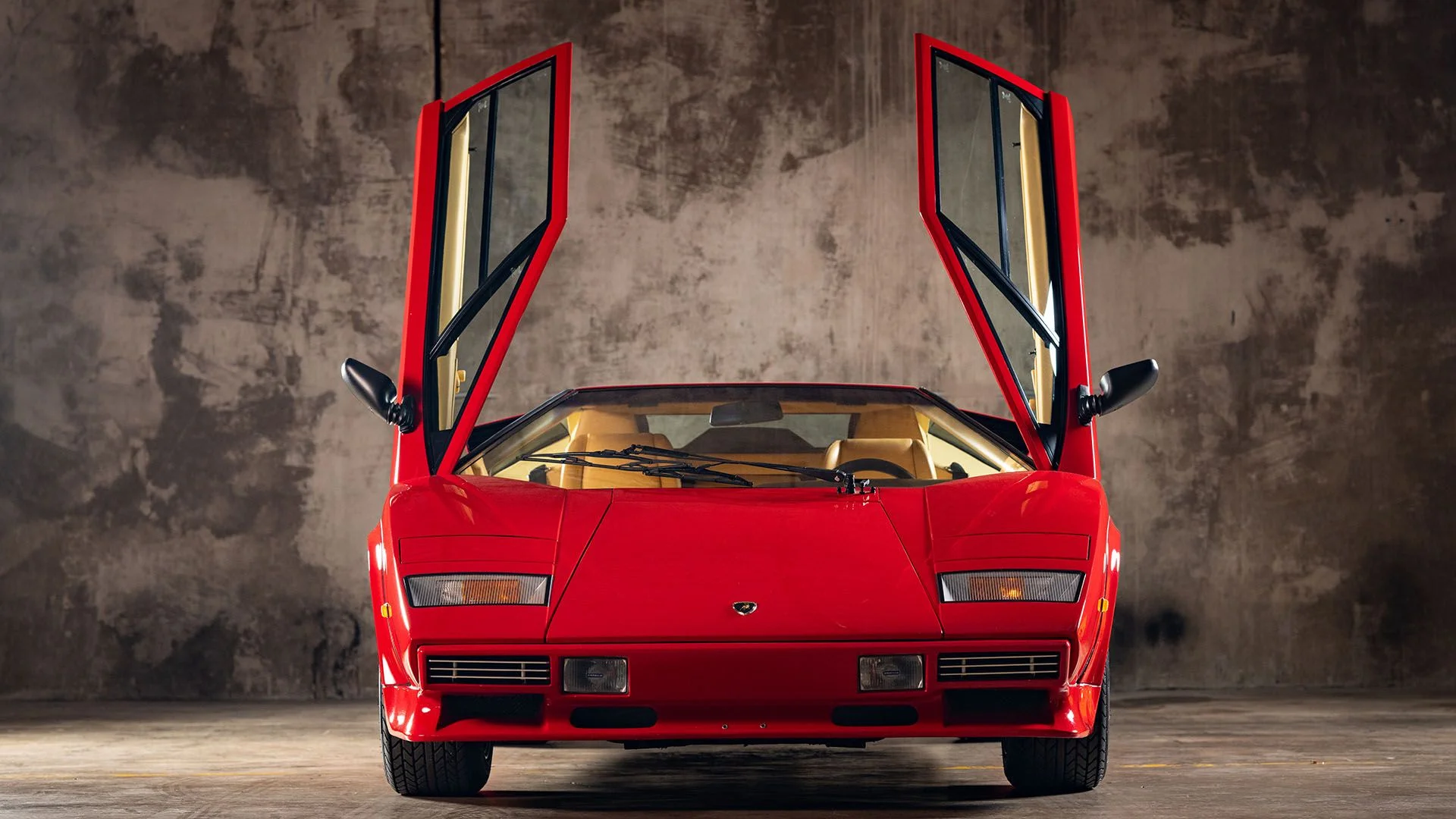
The cabin remained tight, especially for taller drivers, and rear visibility was poor. The scissor doors, low seating position and wide sills required a particular technique to get in and out of the car. Inside, the Countach offered leather upholstery, air conditioning and a full set of instruments, but its ergonomics reflected a design that dated back to the early 1970s.
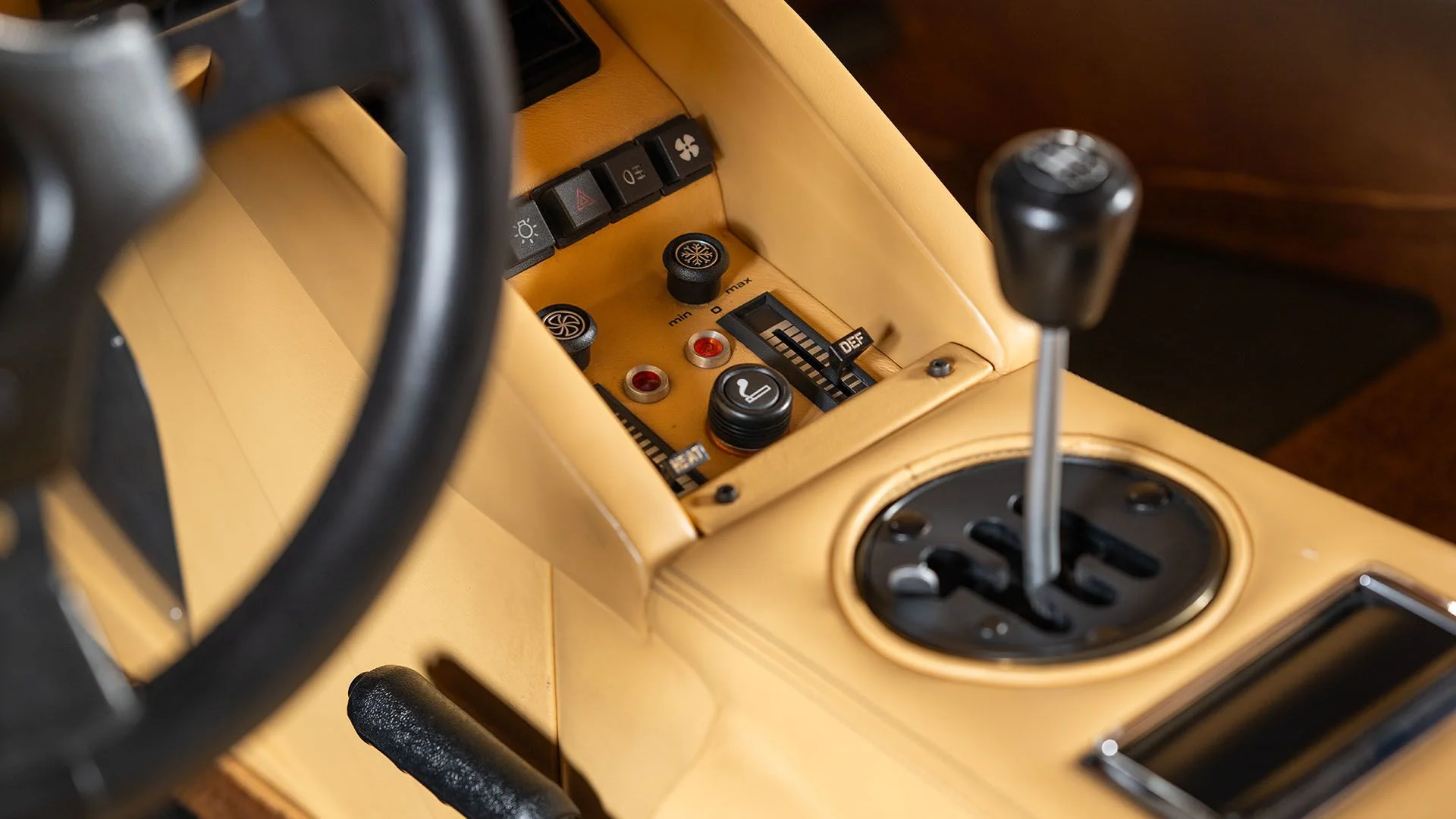
Heavy controls, a firm clutch and limited visibility made it demanding in traffic, though those traits also became part of its character. The 1987 updates also brought central locking, revised heater controls and improved cabin ventilation.
Specifications
- Engine: Lamborghini 60-degree V12, longitudinally mid-mounted, 5,167cc, DOHC per bank, 48 valves, 9.5:1 compression (Europe)
- Fuel system: Six twin-barrel Weber 44 DCNF downdraft carburetors (Europe); Bosch K-Jetronic fuel injection (US)
- Power: 449 hp (455 PS) at 7,000 rpm (Europe); 420 hp (US)
- Torque: 369 lb-ft (500 Nm) at 5,200 rpm (Europe)
- Transmission: Five-speed manual, mounted ahead of the engine, rear-wheel drive
- Chassis: Tubular steel space frame
- Body: Aluminum panels with fiberglass add-on parts, Kevlar composite engine cover
- Suspension: Independent double wishbones with coil springs front and rear
- Brakes: Ventilated discs front and rear
- Weight: Approximately 1,490 kg / 3,285 lbs
- Performance: 0-60 mph in approximately 4.9 seconds, top speed of approximately 182 mph / 293 km/h
Production and Legacy
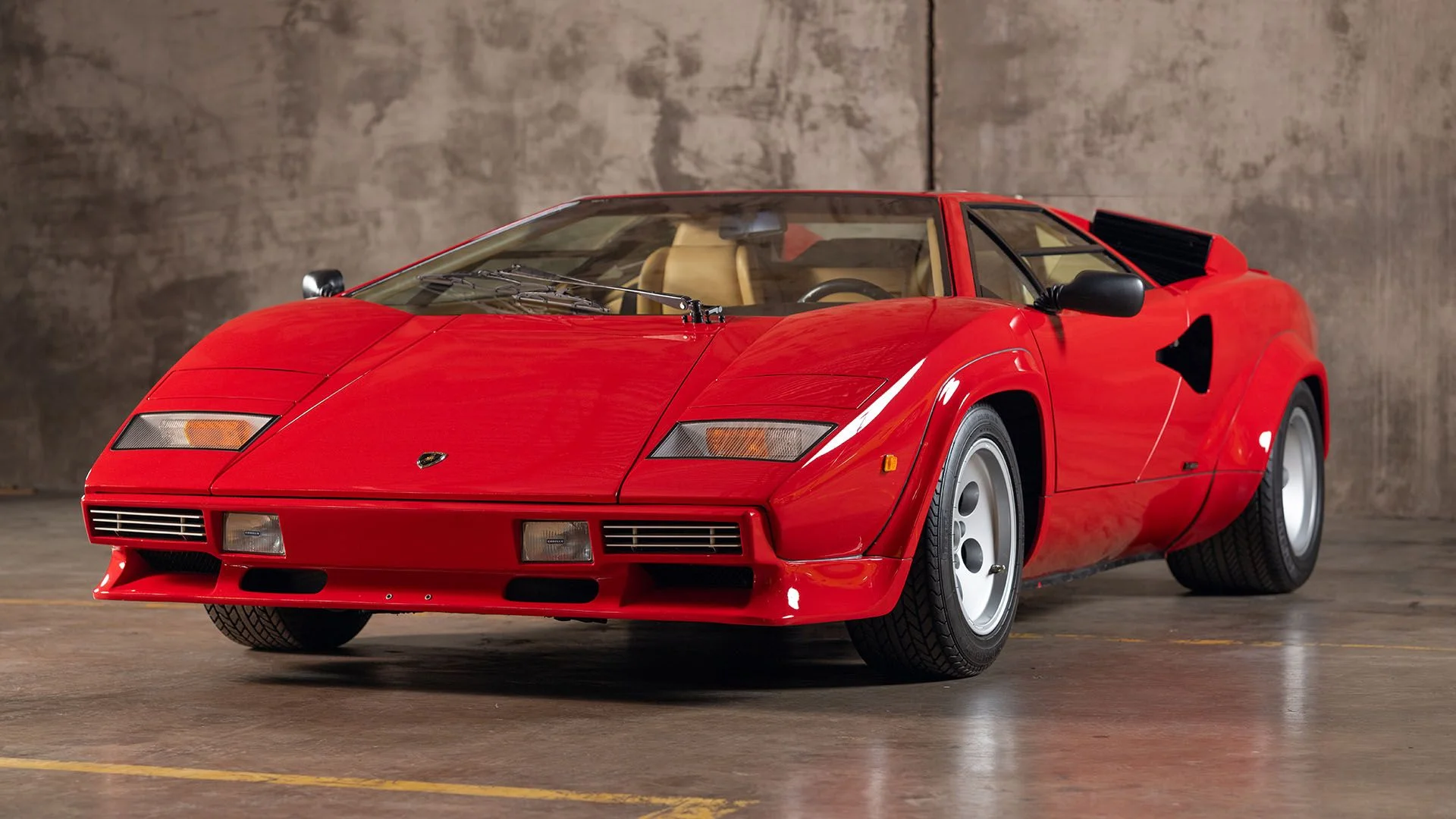
Lamborghini built 610 Countach Quattrovalvoles between March 1985 and September 1988. During that period, in April 1987, Chrysler acquired Lamborghini from the Mimran family in a deal widely reported at about $25 million. The QV was succeeded by the Countach 25th Anniversary, introduced in 1988 with styling revisions by Horacio Pagani as the model’s final evolution. Countach production ended in 1990, when the Diablo took over as Lamborghini’s flagship.
The Quattrovalvole represented the Countach at its most powerful. It put the car back at the top of the supercar performance tables against a new generation of Ferrari rivals, while keeping the outrageous design that had made the Countach a symbol of the 1970s and 1980s. Today, European downdraft cars are especially sought after for their higher output and distinctive carbureted configuration, and the QV remains one of the most celebrated versions of the Countach.