
Few engines are as closely associated with an automotive marque as Lamborghini’s V12. From the groundbreaking Miura to the electrified Revuelto, the architecture has evolved dramatically while retaining the character that made Lamborghini’s flagship supercars legendary.
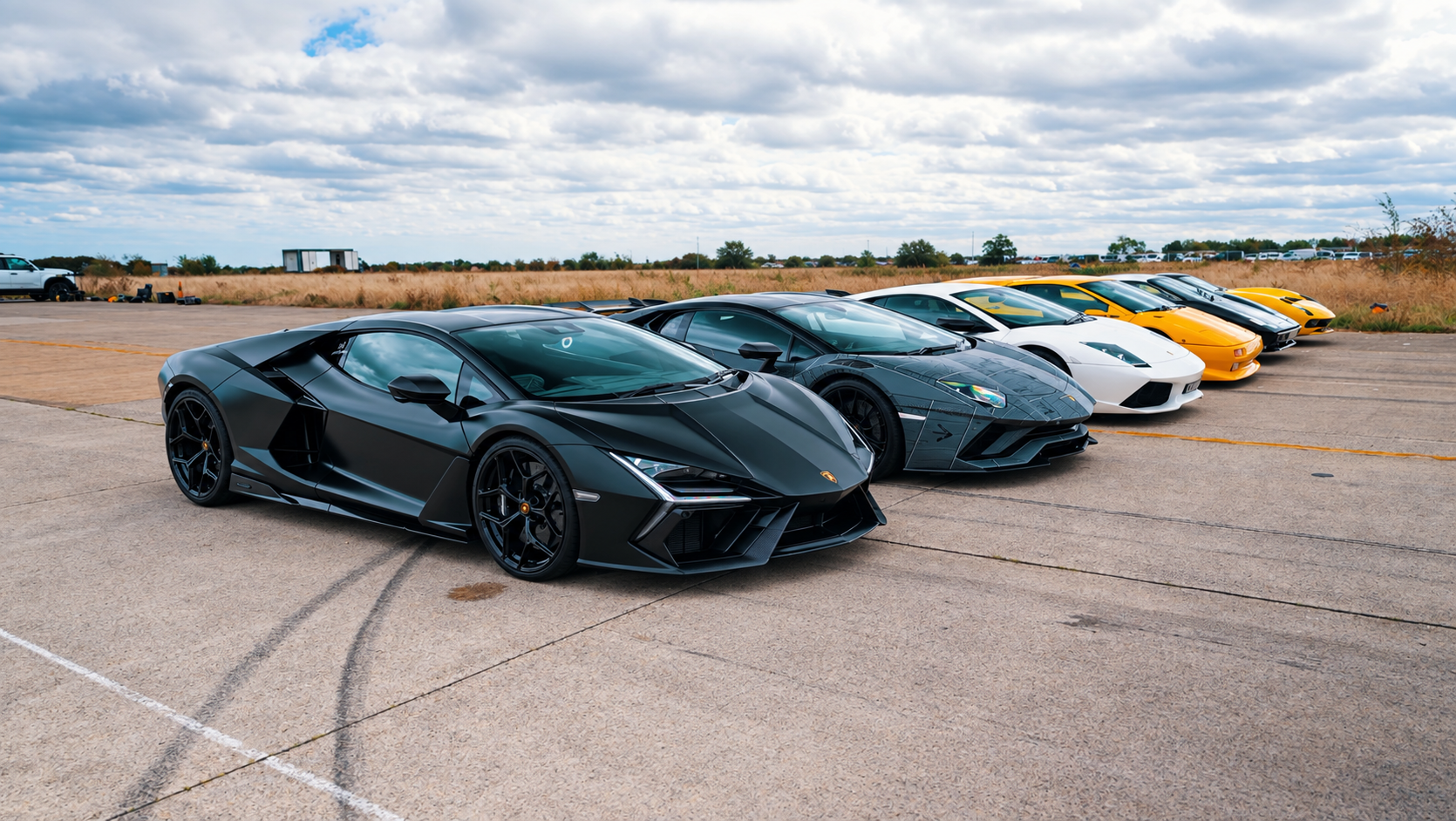
Mat Watson and his team from carwow brings six generations together for an extraordinary runway showdown, putting more than five decades of Lamborghini V12 development to the ultimate acceleration test.
Lamborghini Miura P400 SV
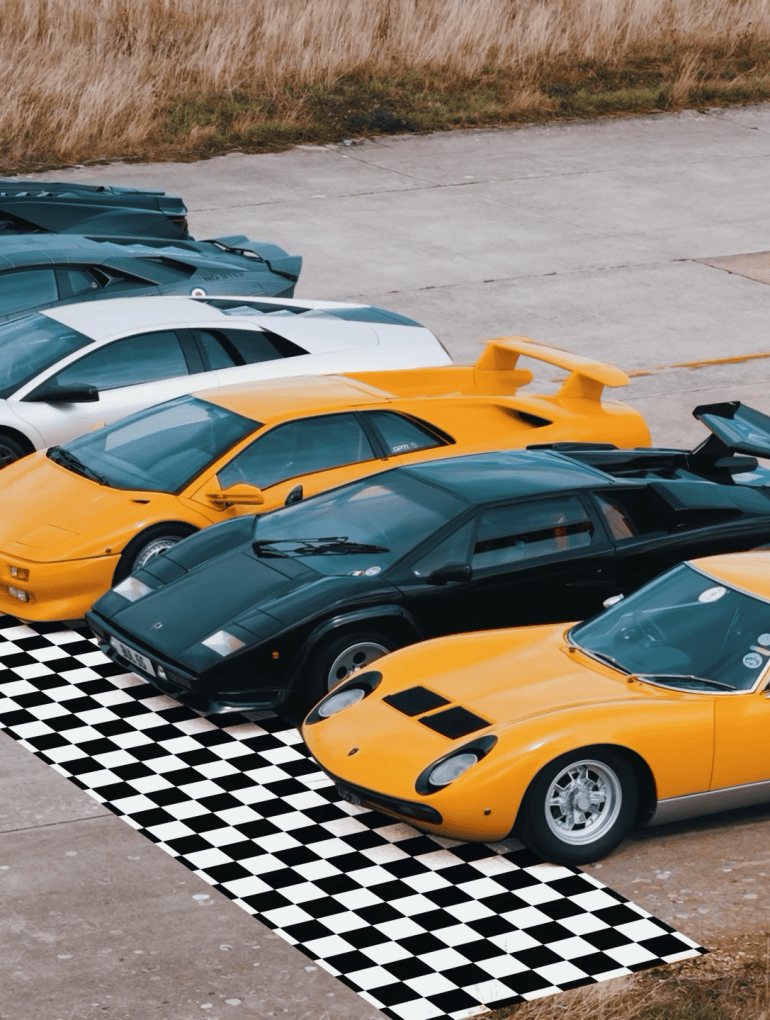
The lineup begins with the 1973 Lamborghini Miura P400 SV, powered by a 3.9-liter naturally aspirated V12 producing 385 hp and 400 Nm. With a five-speed manual transmission, rear-wheel drive, and a relatively lightweight 1,293-kg curb weight, the Miura represents the mechanical purity of Lamborghini’s early supercars.
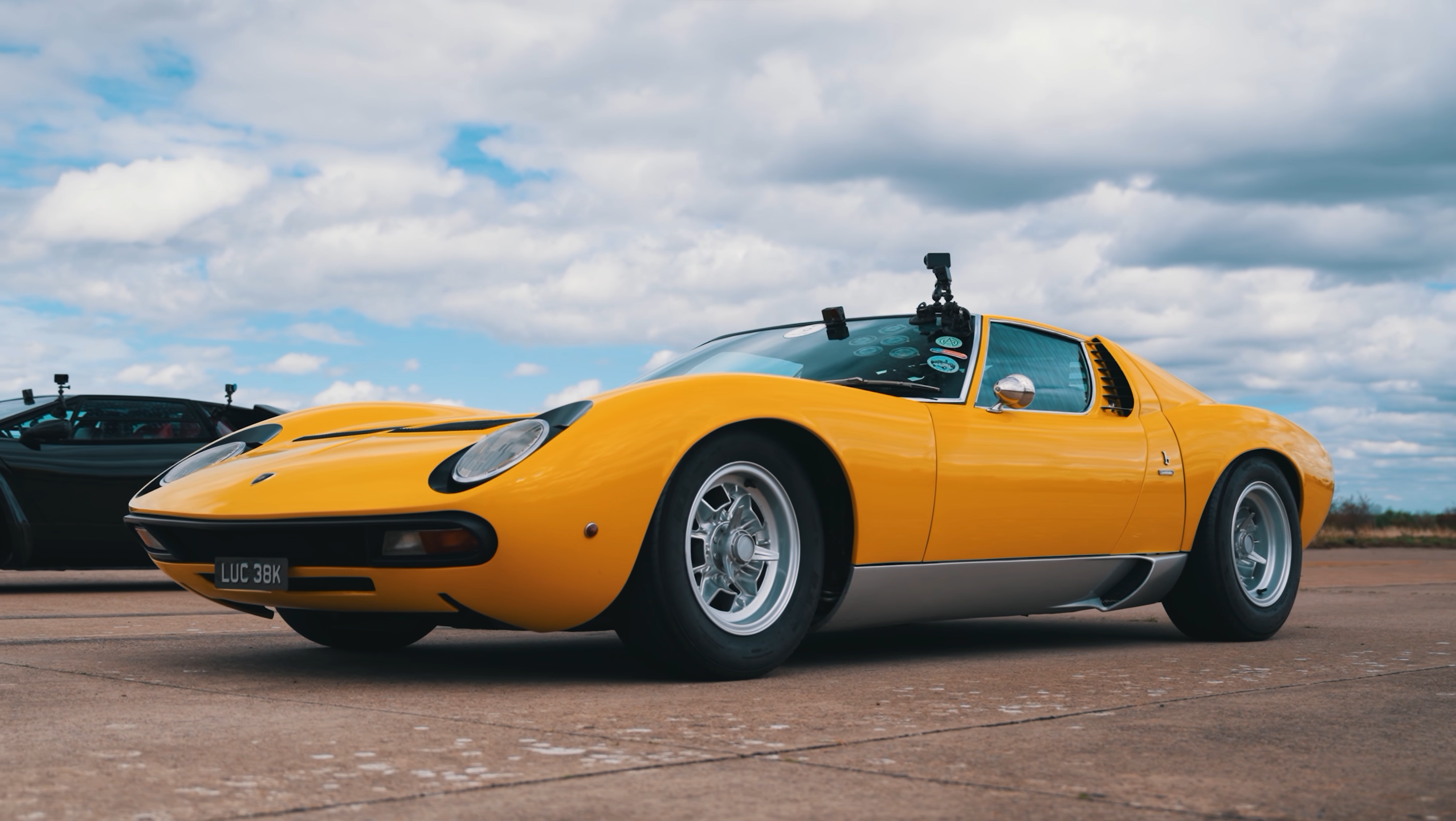
Its transverse-mounted V12 and lightweight construction also highlight just how different Lamborghini’s approach was in the early years of its supercar dynasty.
Lamborghini Countach 5000S
Next comes the 1982 Countach 5000S, whose 4.8-liter naturally aspirated V12 develops 375 hp and 410 Nm. Like the Miura, it sends its power exclusively to the rear wheels through a five-speed manual gearbox, although its 1,480-kg mass demonstrates how Lamborghini’s flagship cars were becoming larger and more substantial.
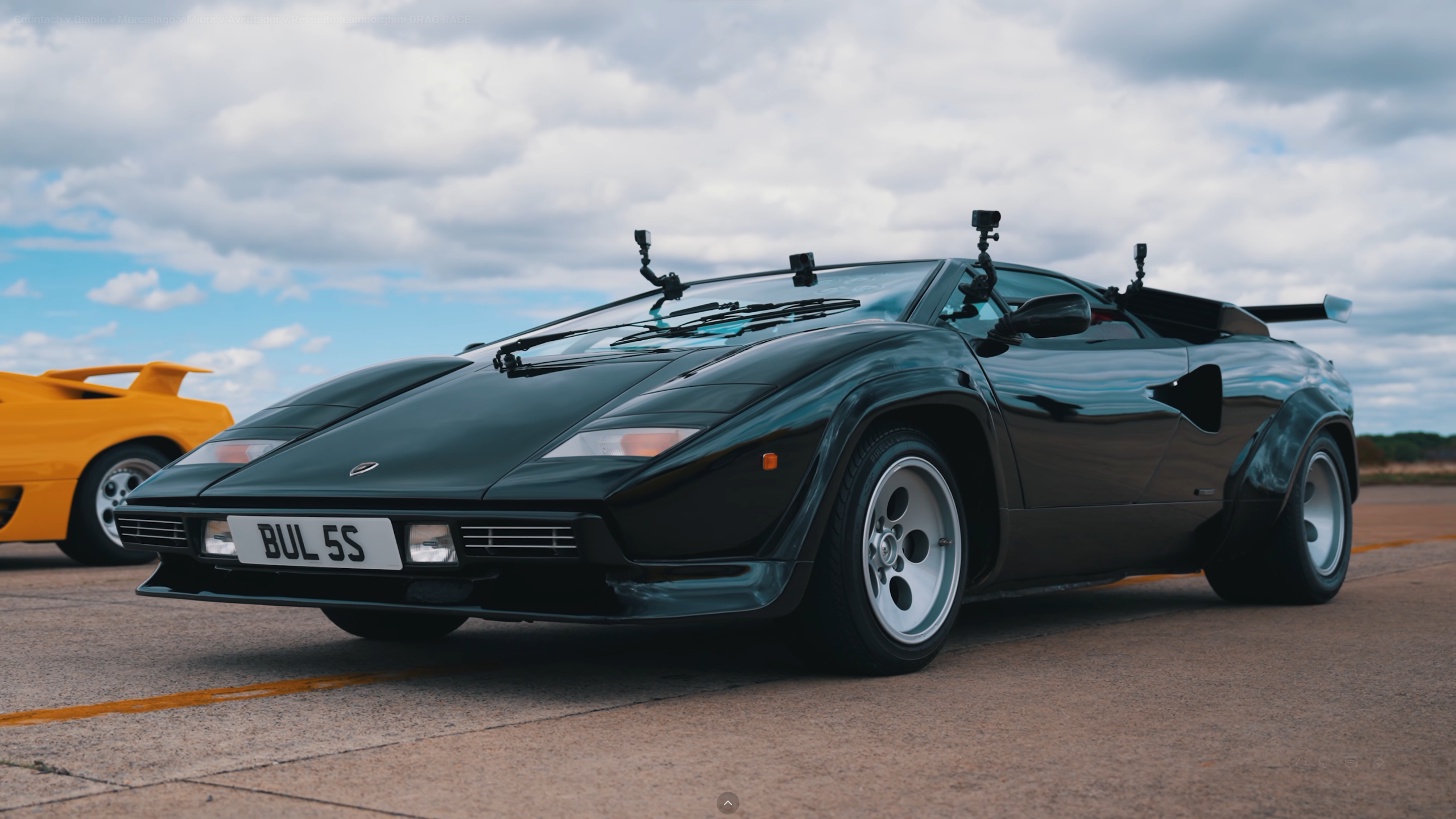
The Countach also represents a major design evolution, moving away from the Miura’s flowing lines toward the angular, wedge-shaped aesthetic that became synonymous with Lamborghini.
Lamborghini Diablo
The Diablo raises the stakes with a 5.7-liter V12 producing 492 hp and 580 Nm. Its traditional rear-wheel-drive configuration and five-speed manual transmission preserve a direct connection between driver and engine.
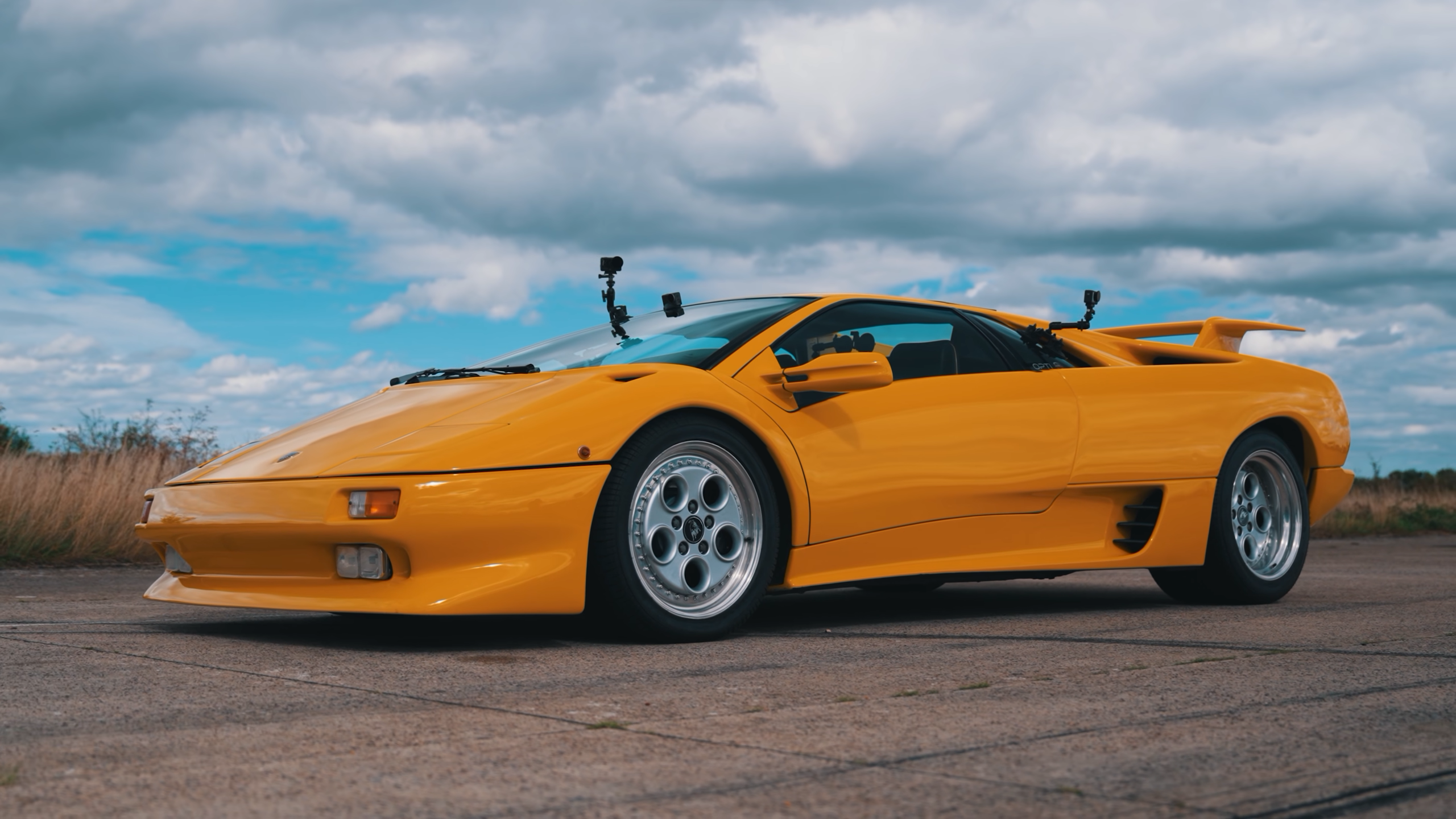
At 1,576 kg, however, the Diablo is substantially heavier than the Miura, illustrating the constant trade-off between increasing performance, size, equipment, and structural development.
Lamborghini Murciélago LP640
The Murciélago LP640 marks another significant technological transition. Its 6.5-liter naturally aspirated V12 produces 640 hp and 660 Nm, while all-wheel drive gives it a fundamentally different method of putting that power onto the runway.
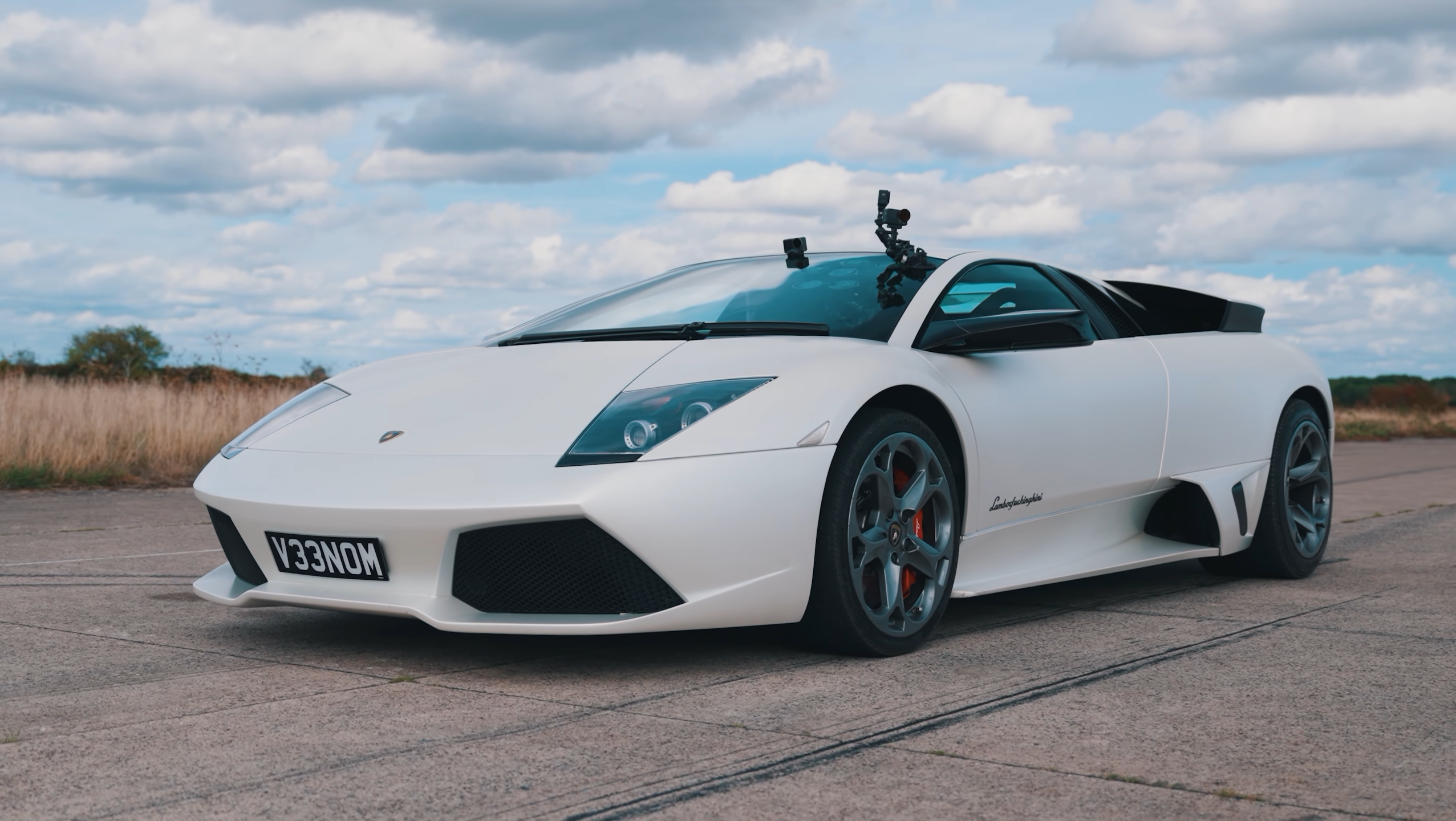
A six-speed automated manual transmission further separates it from the purely mechanical character of the earlier Lamborghinis, while its approximately 1,765-kg weight demonstrates the substantial growth of the marque’s flagship supercars.
Lamborghini Aventador SV
The Aventador SV pushes output to 740 hp and 690 Nm while retaining Lamborghini’s naturally aspirated 6.5-liter V12. Its all-wheel-drive system, seven-speed automated manual transmission, and approximately 1,675-kg weight showcase how electronics and drivetrain technology had transformed Lamborghini’s flagship performance formula.
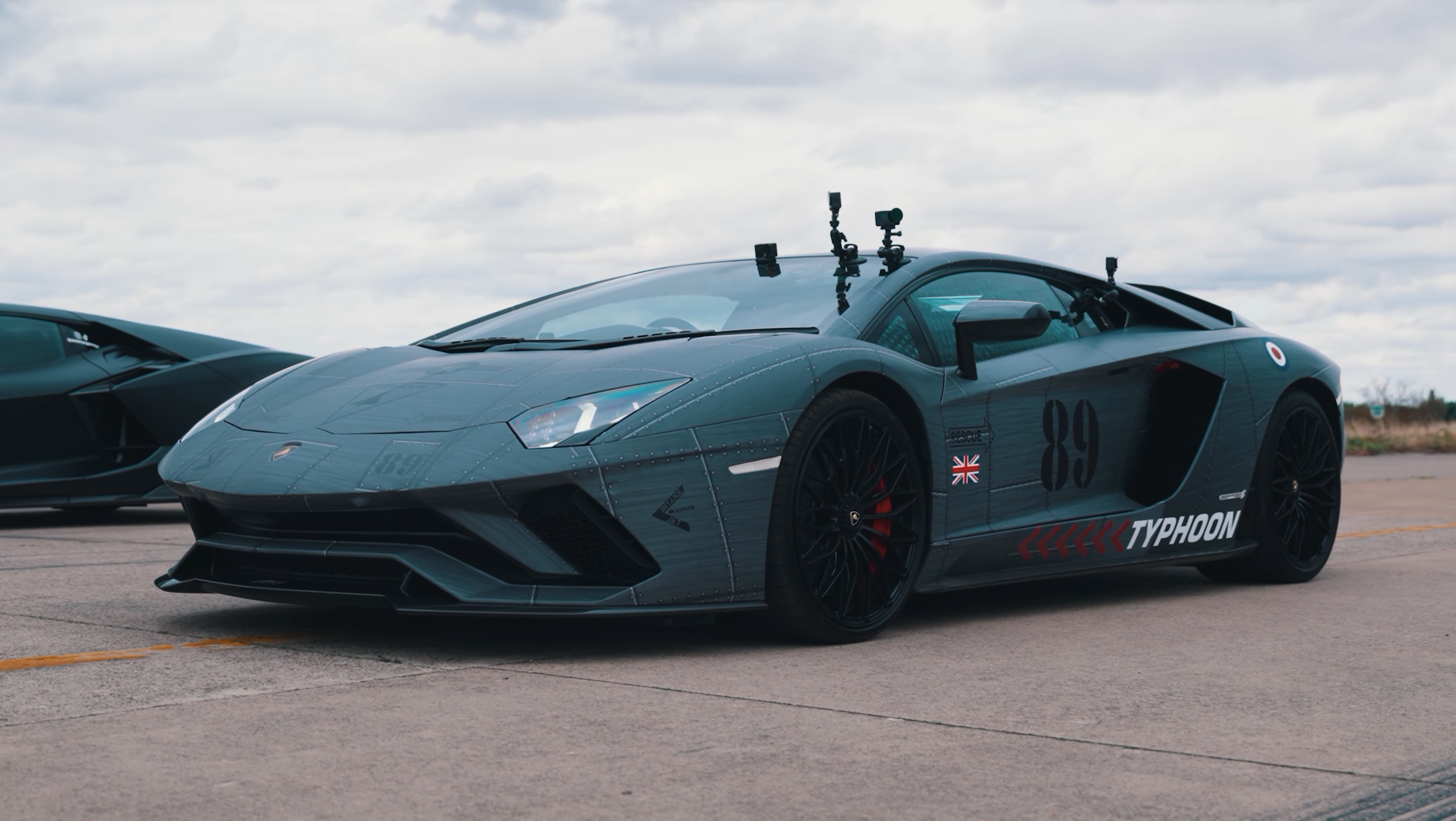
It represents the mature form of Lamborghini’s traditional V12 concept: huge naturally aspirated displacement, extremely high output, four-wheel traction, and a sophisticated automated transmission.
Lamborghini Revuelto
Finally, the Revuelto represents the most dramatic technological leap in the lineup. Its 6.5-liter naturally aspirated V12 is supplemented by three electric motors, producing a combined 1,015 hp and 1,062 Nm.
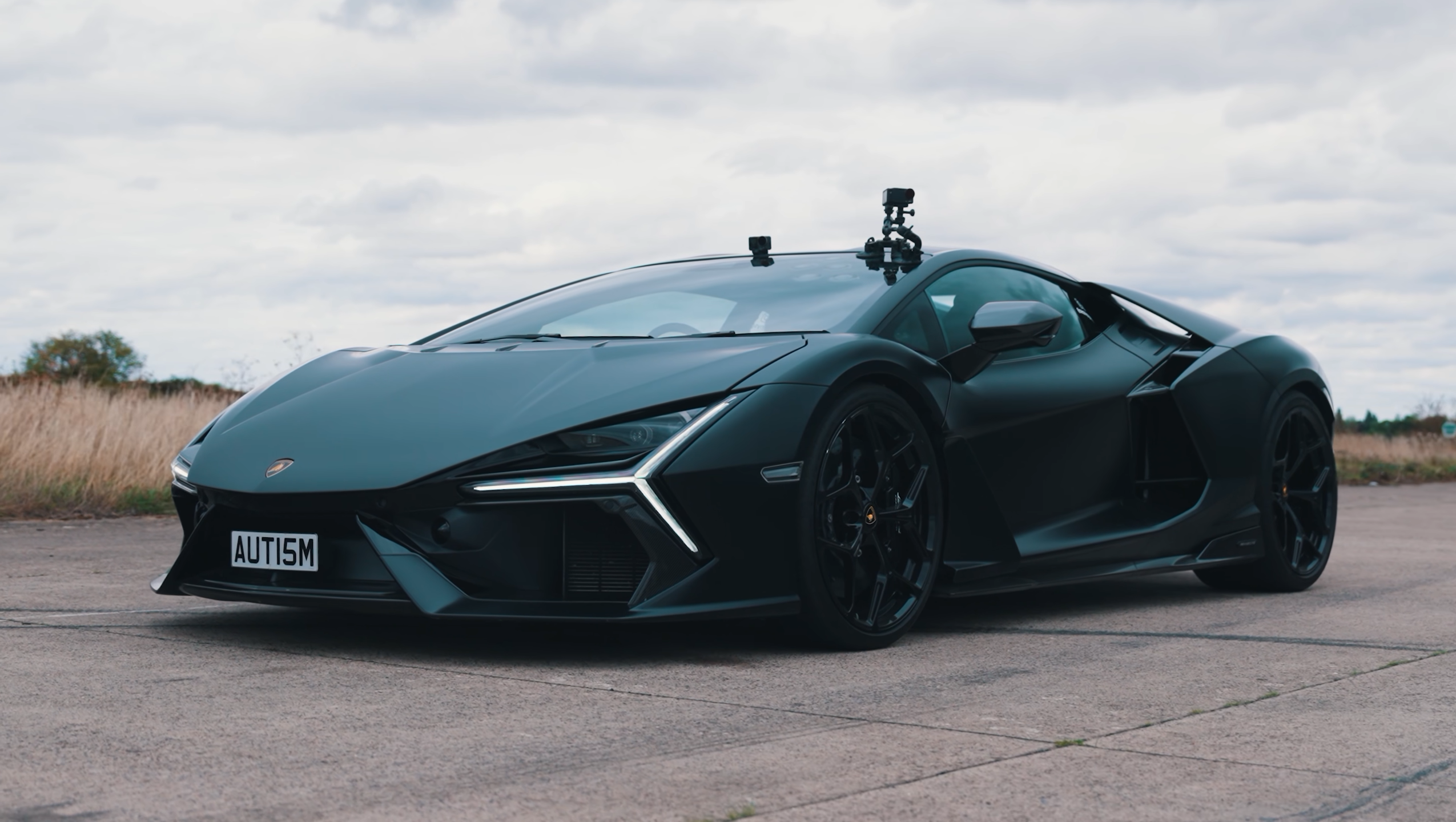
Two electric motors operate at the front while another assists the rear axle, giving the Revuelto all-wheel drive and instantaneous electric torque alongside the high-revving V12. An eight-speed transmission completes a powertrain that is fundamentally different from anything that came before it.
Five Decades of V12 Evolution
Placed together, these six Lamborghinis provide a remarkable snapshot of how supercar engineering has changed. The Miura and Countach rely on relatively simple rear-wheel-drive layouts and manual gearboxes, while the Diablo adds greater displacement and output. The Murciélago and Aventador then introduce increasingly sophisticated drivetrains and substantially greater power.
The Revuelto takes that progression another step by combining the emotional character of a naturally aspirated V12 with hybrid electrification and all-wheel drive. Six generations. Six very different interpretations of Lamborghini’s flagship formula. And one runway to determine how much performance has been gained across more than five decades of development.
The numbers suggest that the newest car should have a formidable advantage, but drag racing is never decided by specifications alone. Launches, traction, gearing, weight, and power delivery can all reshape the contest. So, can the latest Revuelto simply walk away from Lamborghini’s legendary V12 ancestors, or will one of the older icons produce a surprise? Watch the full video below to see this extraordinary Lamborghini showdown unfold.
Source: carwow