
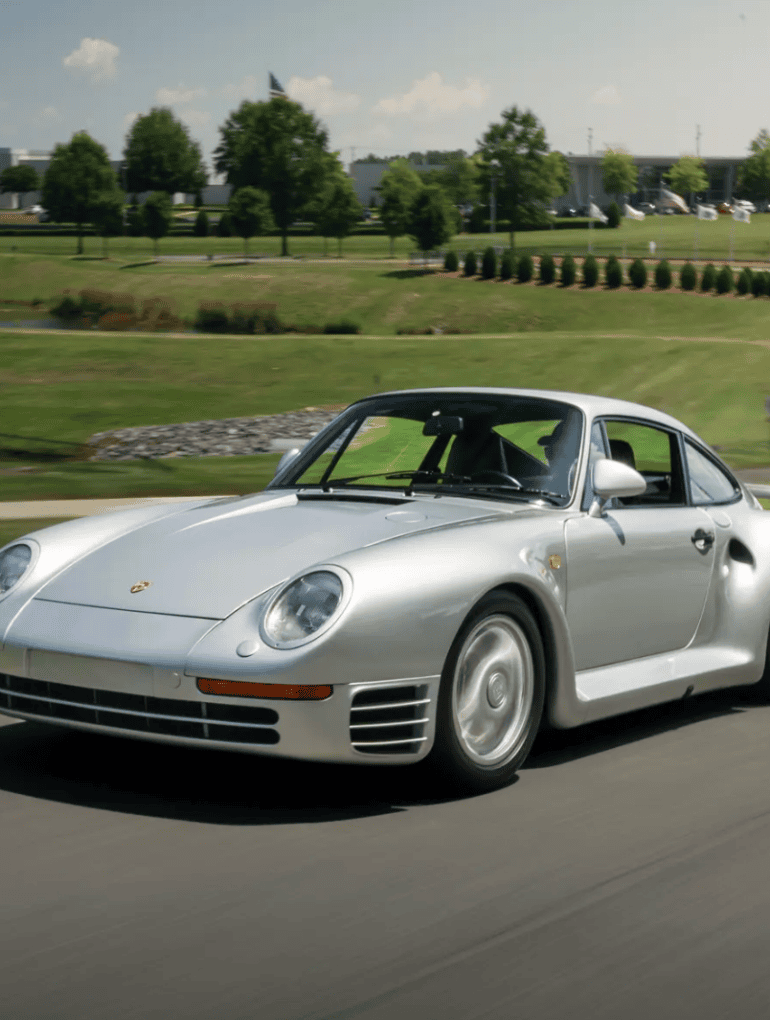

Frankfurt Motor Show, September 1985. Porsche unveiled the 959, revealing the most technologically sophisticated supercar ever conceived and establishing benchmarks that would influence automotive development for decades. Conceived initially as a Group B rally racing machine before the category’s cancellation, Porsche pivoted to creating a road-going homologation special representing the absolute pinnacle of engineering achievement. The 2.8-liter twin-turbocharged flat-six produced 450 horsepower in standard form with sequential turbocharging providing smooth power delivery virtually unattainable from competing platforms.
This was Porsche celebrating technological innovation: ride-height adjustable suspension, anti-lock braking, variable all-wheel-drive torque distribution, and all-wheel-drive traction delivering 197 mph capability while establishing itself as the world’s fastest production car at introduction. The 959 represented an extraordinary fusion of racing technology, mechanical sophistication, and manufacturing precision that raised performance benchmarks across the entire industry. Production ran from 1986 through 1993, with approximately 292 road-going customer examples built alongside competition variants, establishing the 959 as one of the most technologically advanced and influential supercars ever created.
Background and Origins
The 959’s genesis traced directly to Porsche’s determination to compete successfully in Group B rally racing during the mid-1980s. When the FIA introduced the Group B category in 1982, regulations required manufacturers to produce 200 homologated road cars, establishing homologation rules that would shape the 959’s development. Porsche management envisioned a genuinely revolutionary machine: leverage Porsche’s extraordinary racing experience, develop technologies that would redefine performance car engineering, and create a customer car that would dominate both road and rally competition simultaneously.
Helmuth Bott, Porsche’s Head of Research and Development, established the visionary engineering concept, while design chief Anatol Lapine and stylist Dick Lamm transformed technological ambition into visual reality. Rather than create something aggressively theatrical, the design team emphasized functional aerodynamic efficiency and purposeful proportion, resulting in proportions that appeared futuristic yet organic. The design accommodated extraordinary engineering complexity while maintaining the classic Porsche proportion philosophy that had defined the 911 since 1963.
When the Group B category was suspended in 1986 following several high-profile racing accidents, Porsche adapted the 959 toward exclusive road-car positioning. Management committed to building only the minimum required 200 customer cars, plus additional competition and special variants, establishing production restrictions that would maintain exclusivity while recovering extraordinary development investments.
The engineering challenge was unprecedented: develop an all-wheel-drive system that would engage and disengage seamlessly, create electronically adjustable suspension continuously varying damping and ride height based on speed and driving conditions, implement sophisticated anti-lock braking technology at the highest performance level, and integrate sequential twin-turbocharging eliminating traditional turbo lag while maintaining reliability for road use. This required collaboration with cutting-edge suppliers and extraordinary in-house development effort.
Design and Engineering
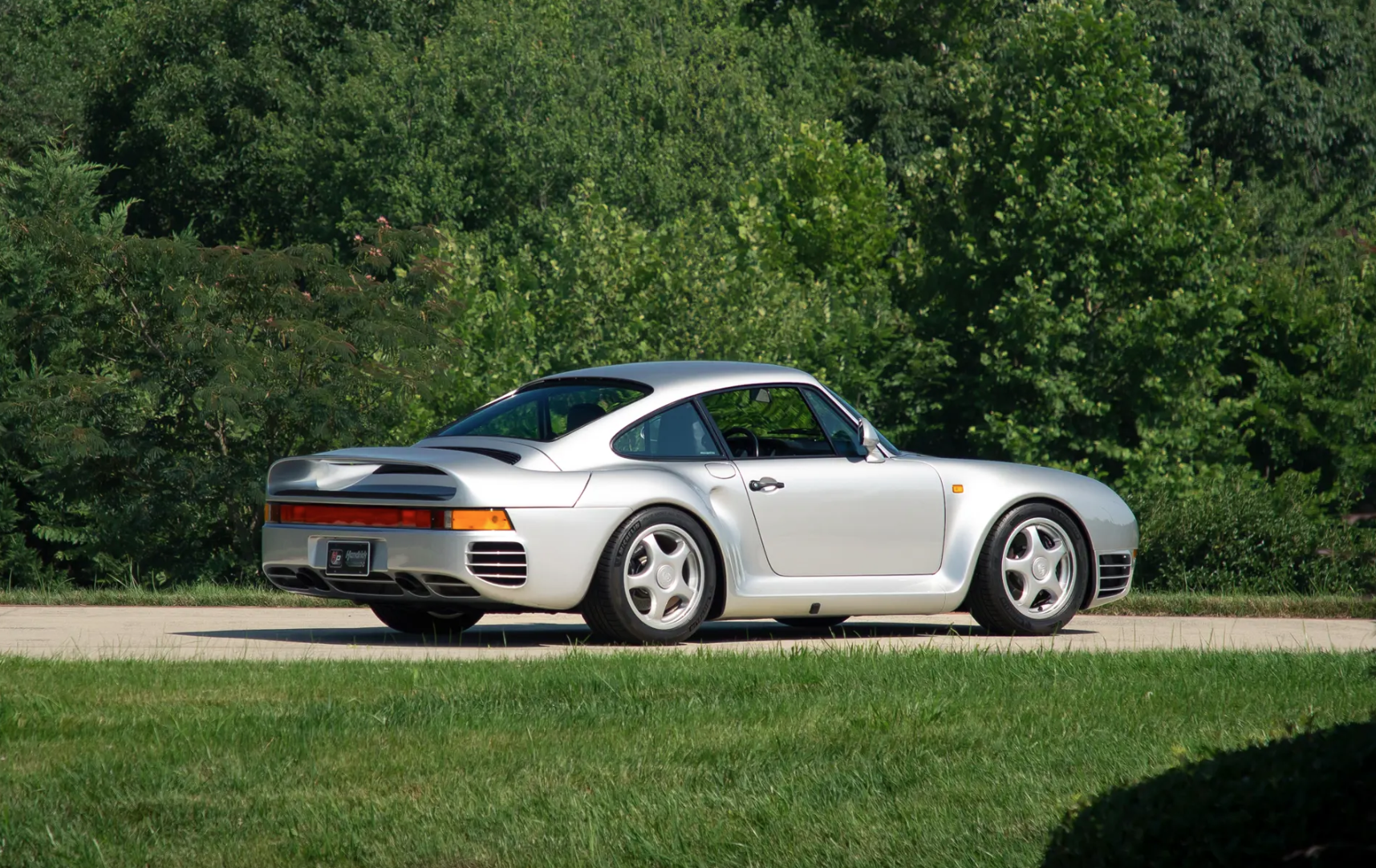
The 959 utilized an advanced steel shell structure derived from the 911 platform, heavily modified with aluminum, Kevlar, and aramid composites, featuring the longitudinal flat-six engine mounting fundamental to Porsche’s design philosophy. However, comprehensive all-wheel-drive integration required sophisticated mechanical systems distributing power intelligently across all four wheels. Rather than a conventional center differential, the Porsche-Steuer-Kupplung (PSK) system utilized a multi-plate clutch pack that could transfer up to 80 percent of engine torque to the rear wheels under acceleration or lock to a 50:50 split in slippery conditions, optimizing traction without compromising handling balance.
The suspension system was equally revolutionary—Porsche’s first implementation of a speed-sensitive adjustable suspension on a road car. Hydraulic actuators adjusted suspension damping and ride height based on vehicle speed and driver selection. The ride height automatically lowered at high speeds, enabling customers to optimize aerodynamics and ground clearance for different driving conditions. This represented extraordinary sophistication, establishing templates that would influence suspension development throughout the industry.
Braking was by the largest rotors Porsche had ever fitted to a production car—12.6 inches front and 12.1 inches rear—with four-piston calipers and a sophisticated four-wheel anti-lock braking system. Building on technology introduced on earlier road cars like the 928, the 959’s ABS system allowed precise wheel-speed management during high-speed emergency braking.
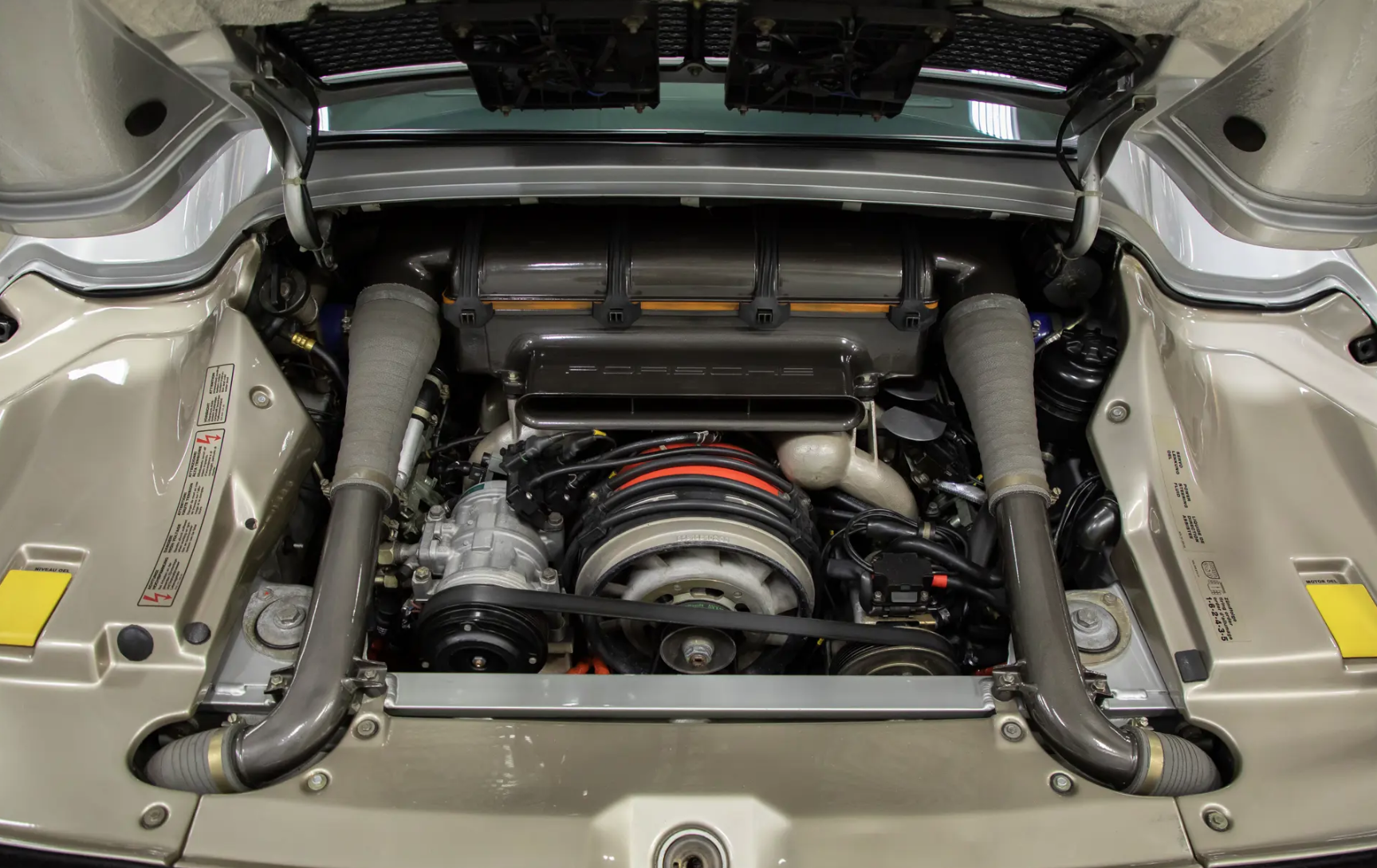
The 2.8-liter twin-turbocharged flat-six represented the pinnacle of forced-induction engineering. Two identical KKK turbochargers operated sequentially: exhaust gases were routed to a single unit at lower engine speeds for immediate response, while a complex valve system opened at elevated RPM to engage the second turbo. This revolutionary approach virtually eliminated traditional turbo lag, creating smooth, progressive power delivery across the entire rev range—something turbocharged competitors struggled to achieve.
With an 8.3:1 compression ratio and Motronic engine management, the standard engine produced 450 horsepower at 6,500 rpm and 369 lb-ft of torque at 5,000 rpm. The six-speed manual transmission featured a unique layout: five close-ratio road gears plus an ultra-low crawler gear labeled “G” (for Gelände, or terrain) designed for low-friction starts and off-road driving. The Sport variant, of which only 29 examples were built, featured enhanced turbocharging and internal modifications producing 515 horsepower while weighing approximately 100 kilograms less than standard variants through interior weight reduction.
Styling
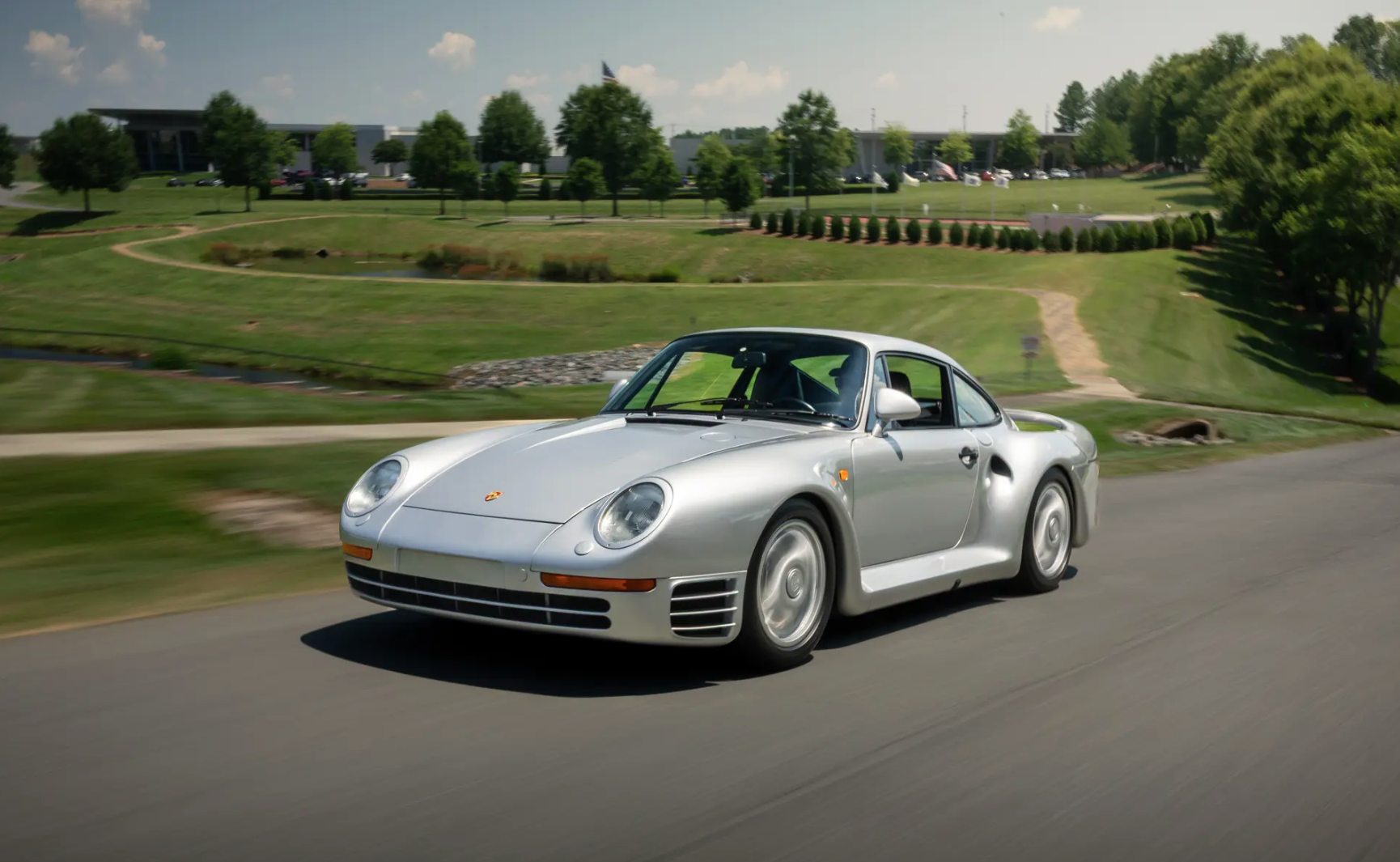
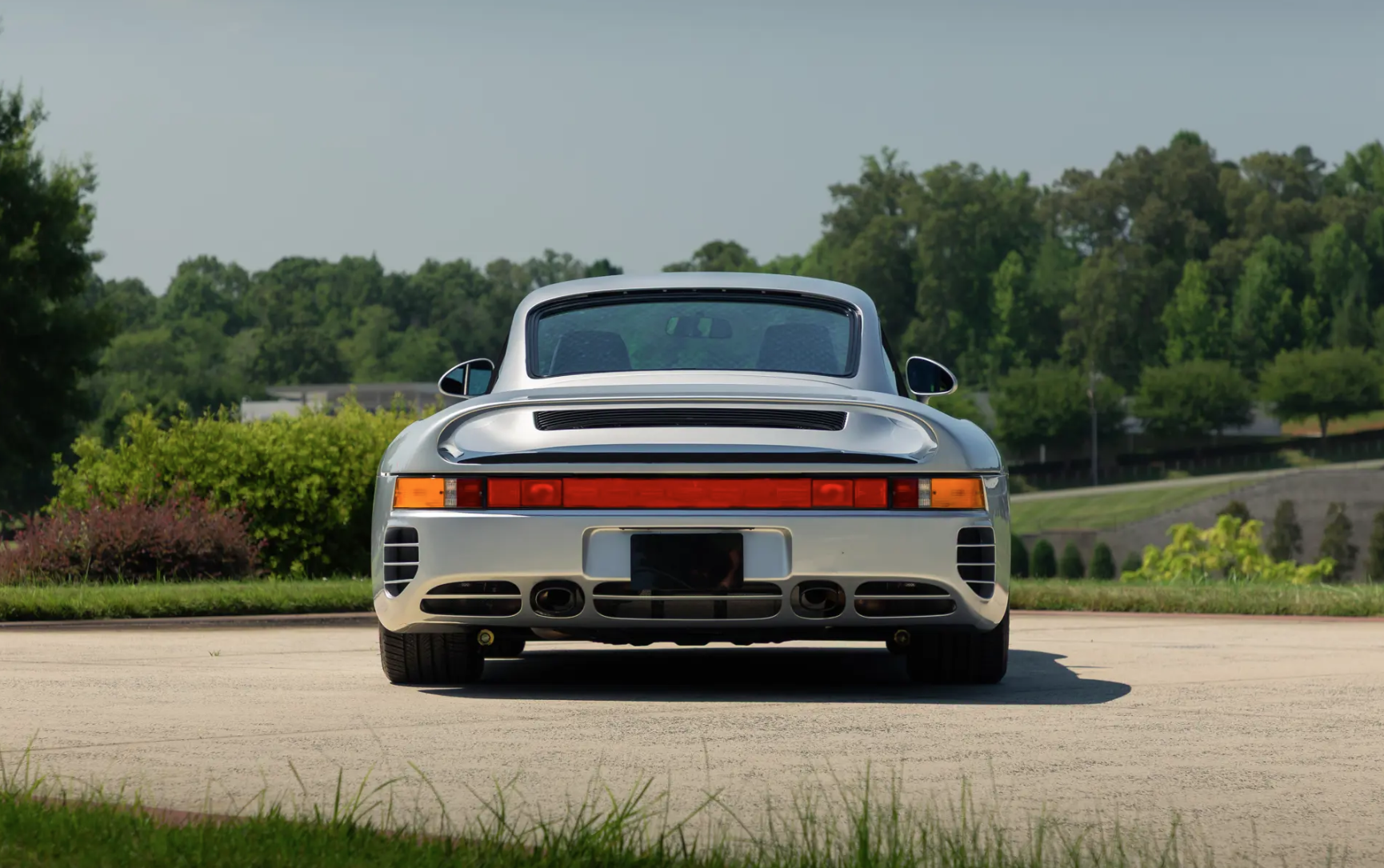
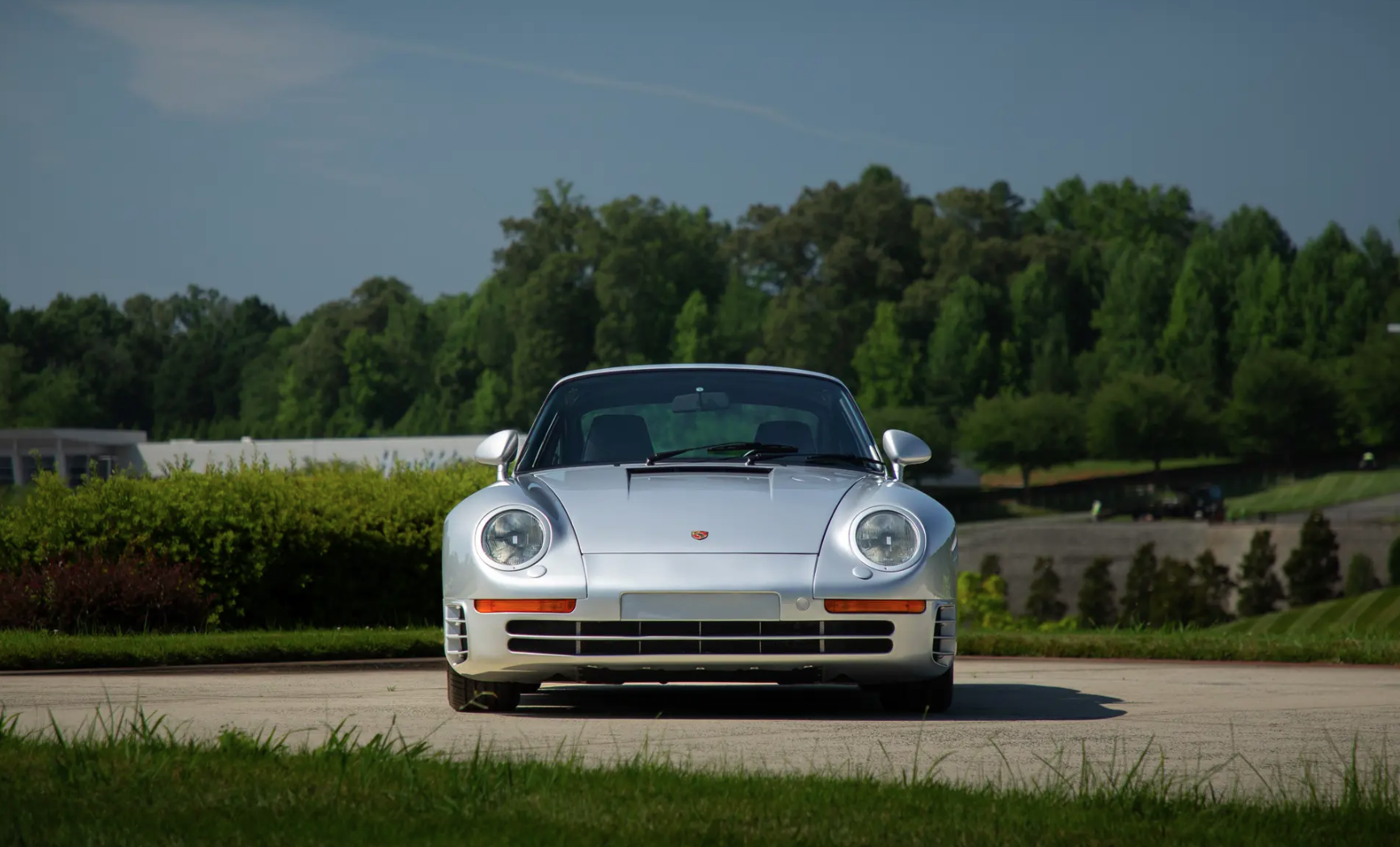
Anatol Lapine and Dick Lamm’s design emphasized purposeful proportion and aerodynamic functionality without theatrical aggression. The low-slung nose featured integrated air intakes providing cooling and downforce through sophisticated design rather than visual drama. The side profile showcased prominent wheel arches accommodating the substantial wheel and tire package necessary for all-wheel-drive traction management. The rear deck accommodated the flat-six engine while providing substantial aerodynamic development area, with subtle rear wing elements and diffuser design generating measurable downforce.
The overall appearance suggested that this was fundamentally a race car wearing legal credentials—purposeful, sophisticated, and uncompromising. Most 959 examples were finished in traditional Porsche colors: Grand Prix White, Deep Black Metallic, or Slate Grey, celebrating the brand’s racing heritage through understated elegance.
Interior
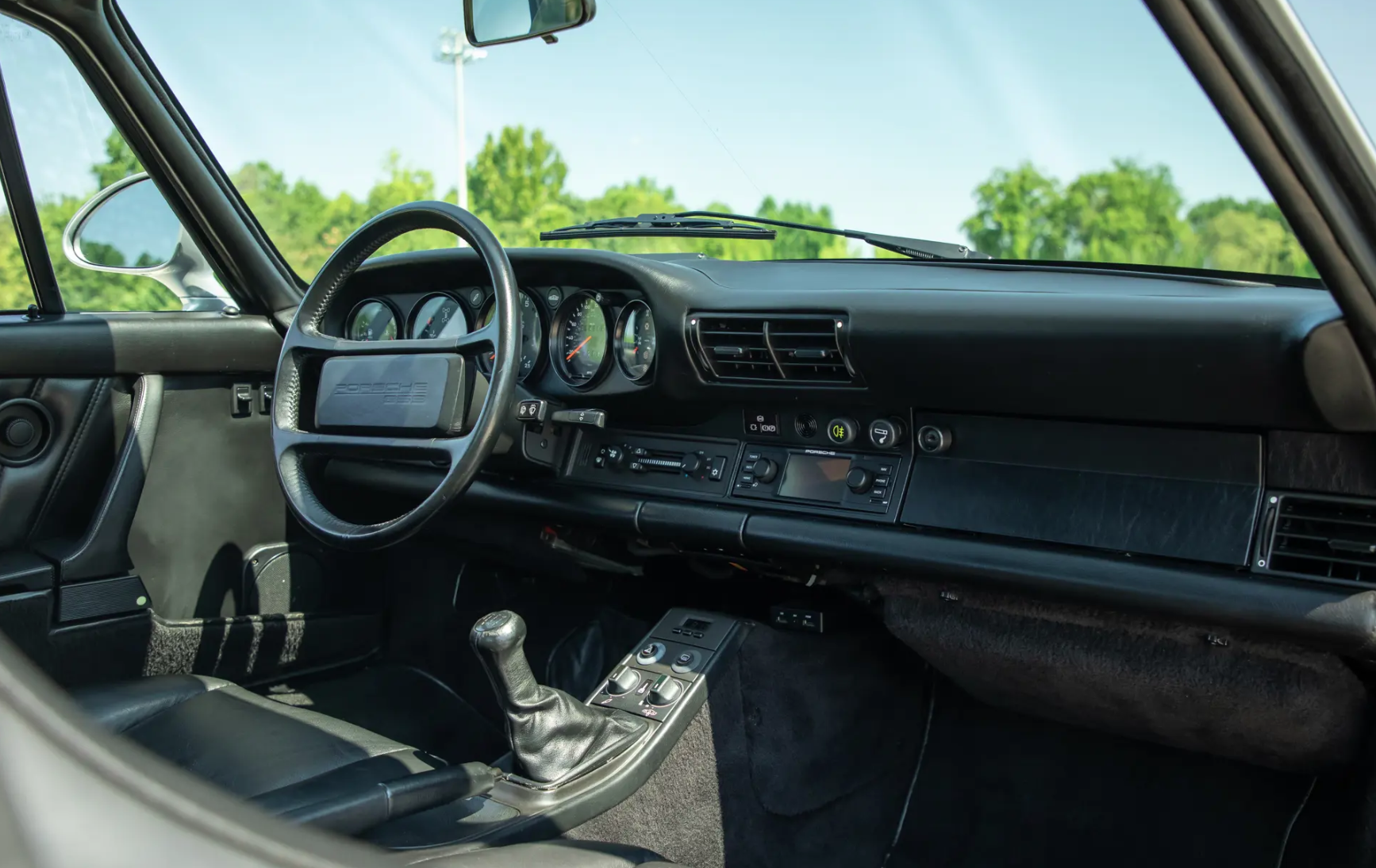
The cabin offered two distinct philosophies: the “Komfort” variant provided luxury appointments including leather, sound systems, and air-conditioning reflecting customer comfort expectations; the “Sport” variant stripped unnecessary equipment, featuring minimal trim and weight reduction emphasizing performance over accommodation. High-bolstered seats provided excellent lateral support during aggressive driving while maintaining comfort for extended road journeys.
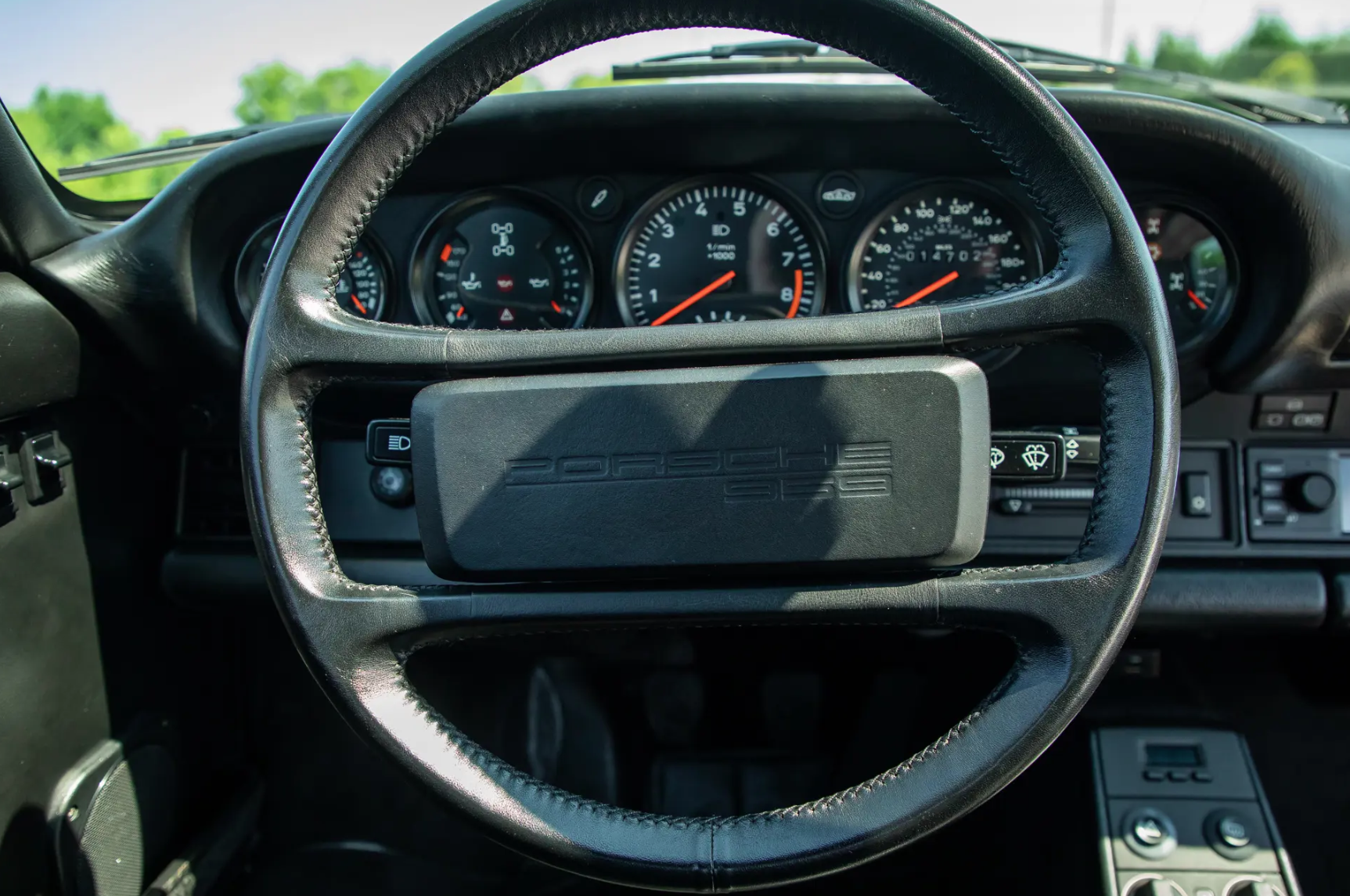
Standard equipment on Komfort variants included climate control, premium audio systems, and sophisticated gauges displaying engine parameters and all-wheel-drive torque distribution essential for managing turbocharged power delivery. The overall atmosphere balanced racing-derived functionality with genuine luxury appropriate for customers paying extraordinary sums for exclusive performance.
Specifications
- Engine: Porsche 2.8L twin-turbocharged flat-six, 2,849cc, DOHC per bank, four valves per cylinder, sequential turbocharging
- Power: 450 PS / 444 hp (Komfort) or 515 PS / 507 hp (Sport) at 6,500 rpm
- Torque: 369 lb-ft / 500 N·m at 5,000 rpm
- Transmission: 6-speed manual (5 road speeds + 1 “G” terrain gear), PSK all-wheel drive
- Chassis: Steel unit-body with Kevlar/aluminum panels, 2,272mm wheelbase
- Suspension: Independent double wishbones (front and rear), hydraulic height and dampening adjustment
- Brakes: Ventilated discs 320mm (front), 310mm (rear), four-piston calipers, four-wheel ABS
- Wheels: 17-inch magnesium alloy, run-flat performance tires
- Weight: 1,450 kg / 3,197 lbs (Komfort), 1,350 kg / 2,975 lbs (Sport)
- Performance: 197 mph / 317 km/h top speed (Komfort), 211 mph / 339 km/h (Sport), 0-60 mph in 3.6-3.7 seconds
Racing History
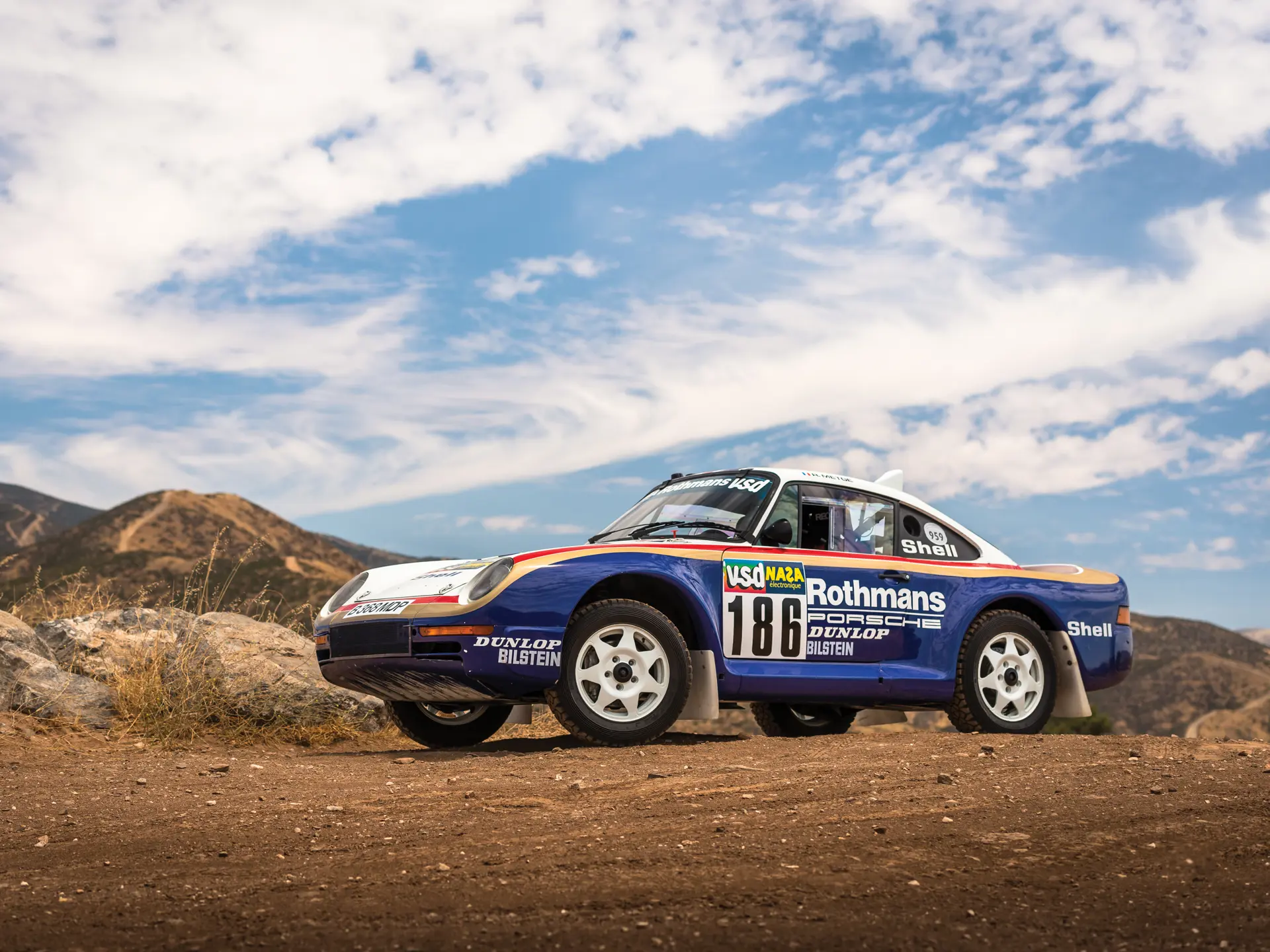
The Porsche 959 achieved legendary status through the 1986 Paris-Dakar Rally, one of the world’s most grueling endurance events combining high-speed road sections with extreme off-road conditions. Driven by René Metge and Jacky Ickx, the 959 achieved a remarkable 1-2 finish, demonstrating extraordinary versatility and durability across vastly different terrain and driving conditions. This victory proved that the sophisticated all-wheel-drive system and adjustable suspension could deliver genuine competition capability despite the car’s technological complexity.
Porsche simultaneously developed the 961, a race-prepared variant competing in circuit racing. The 961 debuted at the 1986 24 Hours of Le Mans, finishing seventh overall and first in its class, establishing the 959’s engineering credibility for sustained high-performance driving. These racing achievements validated Porsche’s engineering approach while demonstrating that sophisticated technology could enhance rather than compromise authentic performance.
Production and Legacy
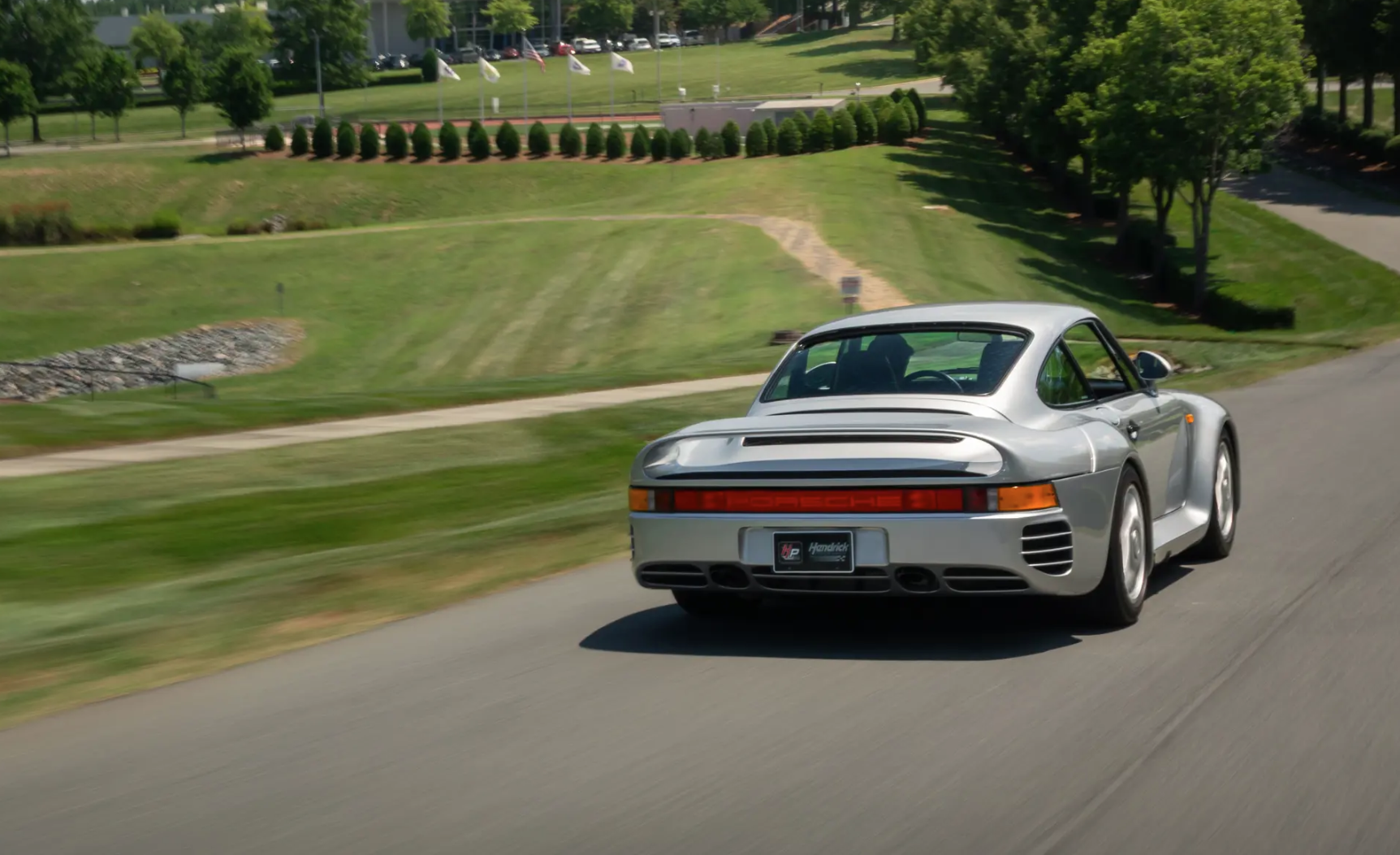
Porsche produced customer road-going 959 examples with bodies crafted and finished in partnership with coachbuilder Karosserie Baur in Stuttgart between 1986 and 1993. The extended production run reflected sustained demand from wealthy customers recognizing the car’s technological significance and genuine performance credentials. The Komfort variant represented the majority of production, while the rare Sport models, with only 29 examples built, have achieved legendary collector status.
The 959 proved that technological sophistication could enhance rather than compromise authentic performance. The combination of adjustable suspension, anti-lock braking, sequential turbocharging, and all-wheel-drive innovation established templates influencing supercar development for generations.
Today, 959 examples command extraordinary collector prices reflecting their historical significance and technological achievements. The combination of engineering innovation, manufacturing precision, and genuine performance credentials ensures immortal appeal.
The Porsche 959 represented Stuttgart at its most ambitious and accomplished, proving that comprehensive technological innovation could create something genuinely transcendent. It remains one of the greatest supercars ever built, a masterpiece establishing benchmarks that continue influencing automotive development today.