
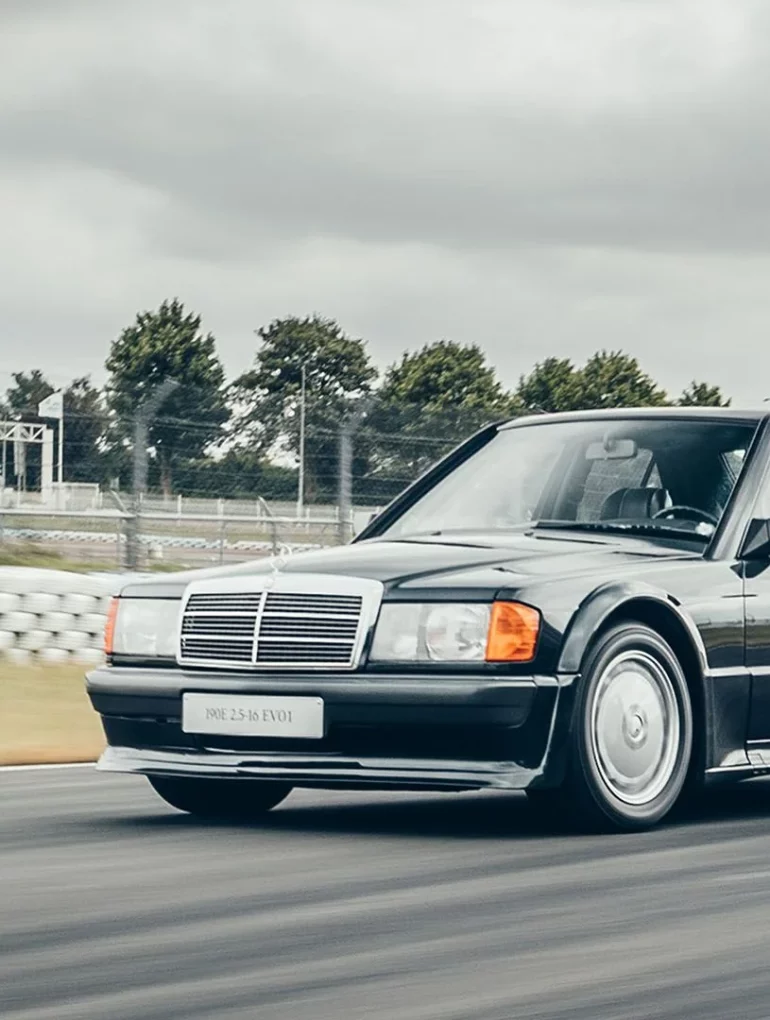

Geneva, March 1989. Mercedes-Benz unveiled the 190 E 2.5-16 Evolution, a road-going homologation special created to make its compact sedan more competitive in the Deutsche Tourenwagen Meisterschaft (DTM). It looked like a more aggressive version of the existing 190 E 2.5-16, but under the new body kit was a substantially redesigned 2.5-liter four-cylinder engine with a larger bore, a shorter stroke and lighter internal components. On the road, the catalytic-converter version produced 192 hp, the same as the standard 2.5-16. The redesign’s real purpose was to give Mercedes’ racing engineers more room for development. Mercedes built 502 examples, all finished in Blue-Black Metallic. Now known as the Evolution I, it was the first of two Evolution models that carried the 190 into DTM history.
Background and Origins
The 190 E, known internally as the W201, arrived in 1982 as Mercedes-Benz’s first compact sedan. Its high-performance version, the 190 E 2.3-16, used a 16-valve cylinder head developed with Cosworth and was initially conceived with rallying in mind, but it became best known in touring car racing. In 1988, Mercedes-Benz began officially supporting teams in the DTM, and that same year the 190 E 2.5-16 was introduced with a larger engine. Its main rival, the BMW M3, was being continually improved through homologated Evolution versions.
Group A regulations allowed manufacturers to homologate evolutionary versions of existing competition cars, provided they met the applicable production requirements. Mercedes built 502 examples of the 190 E 2.5-16 Evolution to homologate the revised engine, wider wheels, larger brakes and aerodynamic changes needed for its 1989 DTM campaign. These upgrades were intended to help the team compete more effectively against BMW and Ford.
Design and Engineering
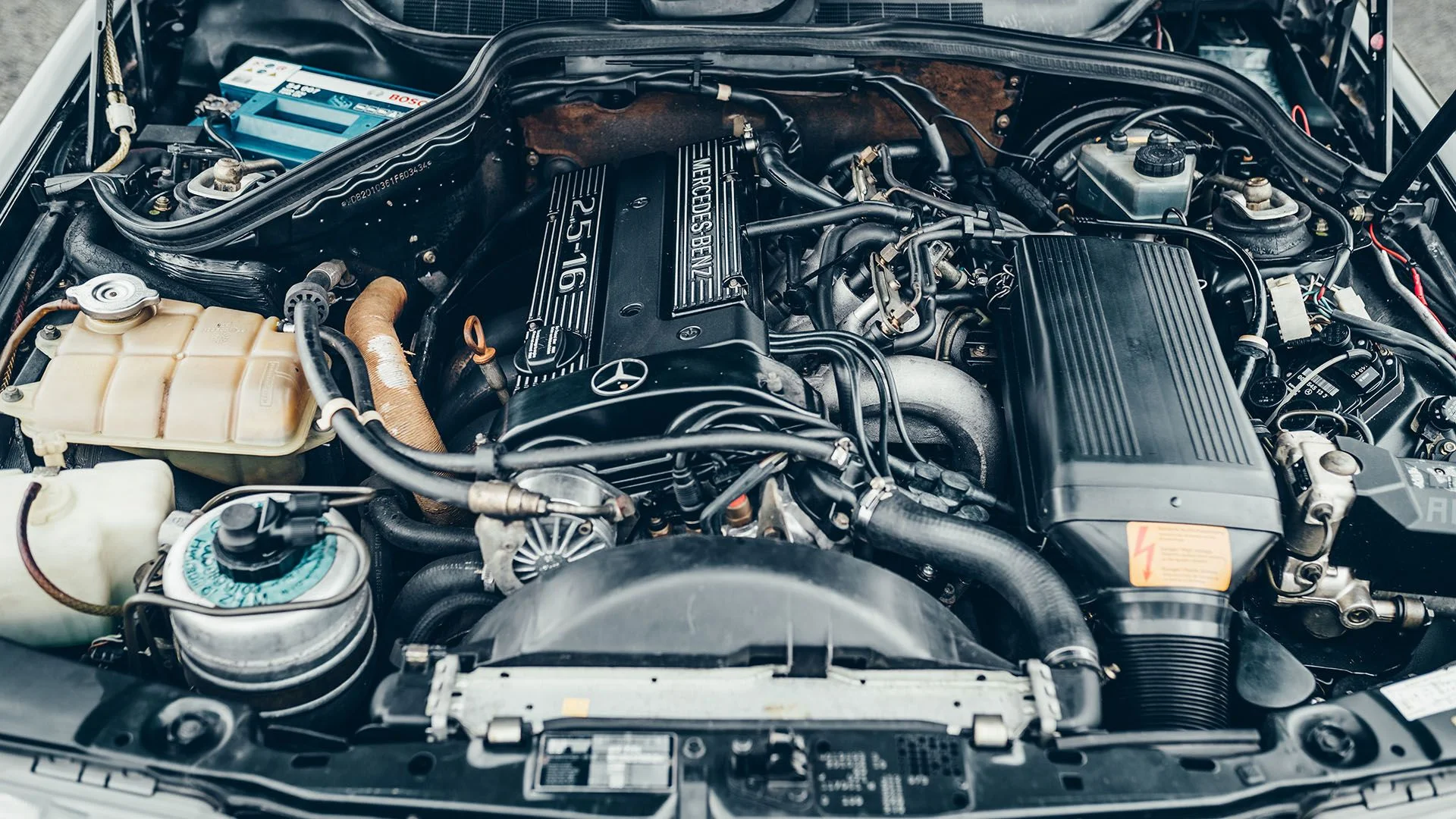
The most important changes were inside the engine. The Evolution used the M 102.991, a big-bore, short-stroke version of the 2.5-liter four-cylinder. It displaced 2,463 cubic centimeters, with a 97.3-millimeter bore and an 82.8-millimeter stroke, compared with 2,498 cubic centimeters for the standard 2.5-16 engine. Developed with Cosworth, it also had lighter rotating components, improved lubrication and revised cam timing. The new design allowed the engine to rev more freely and gave Mercedes’ racing engineers greater tuning potential. With Bosch KE-Jetronic mechanical-electronic fuel injection, the catalytic-converter version produced 192 hp at 6,800 rpm and 173 lb-ft of torque between 5,000 and 5,500 rpm. The version without a catalytic converter produced 201 hp at 6,750 rpm and 177 lb-ft. For buyers who wanted more performance, AMG offered a PowerPack for DM 18,000. According to commonly cited figures, it raised output to about 222 hp at 7,200 rpm and torque to about 181 lb-ft.
The chassis changes supported both the road car and the racing program. The Evolution received larger brakes, with 300-millimeter front and 278-millimeter rear discs, along with 8×16-inch alloy wheels and 225/50 ZR16 tires. The suspension was revised to suit the wider wheels and incorporated hydropneumatic self-leveling components. Power went to the rear wheels through a Getrag five-speed manual gearbox with a dogleg first gear and Mercedes’ ASD automatic locking differential. Curb weight was about 2,910 pounds, and top speed was 143 mph with a catalytic converter or 146 mph without one. The changes mainly served to homologate wider wheels, larger tires and stronger brakes for the race cars. On the road, they gave the Evolution a more planted, purposeful feel, even though its rated output matched the standard 2.5-16.
Styling
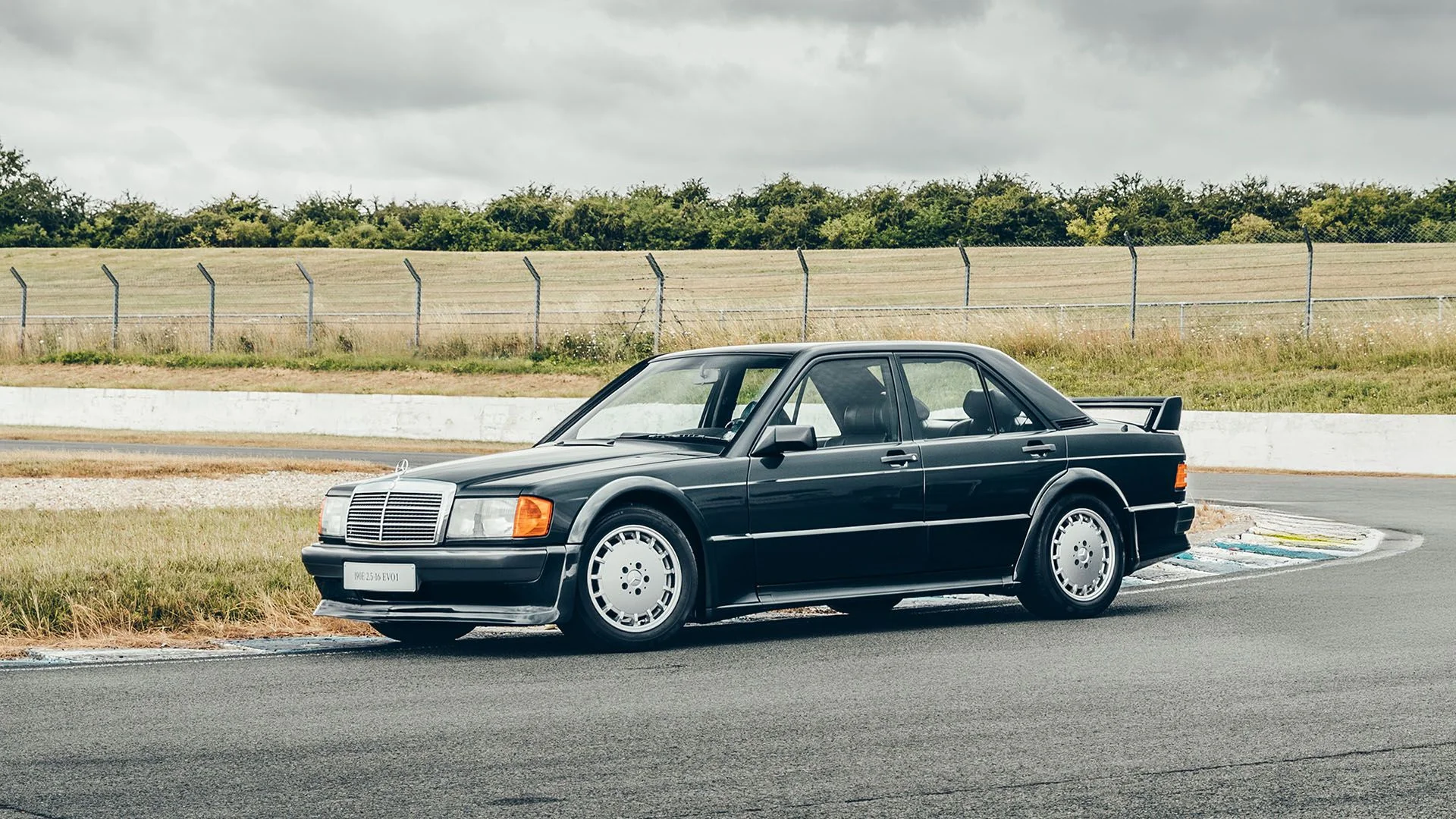
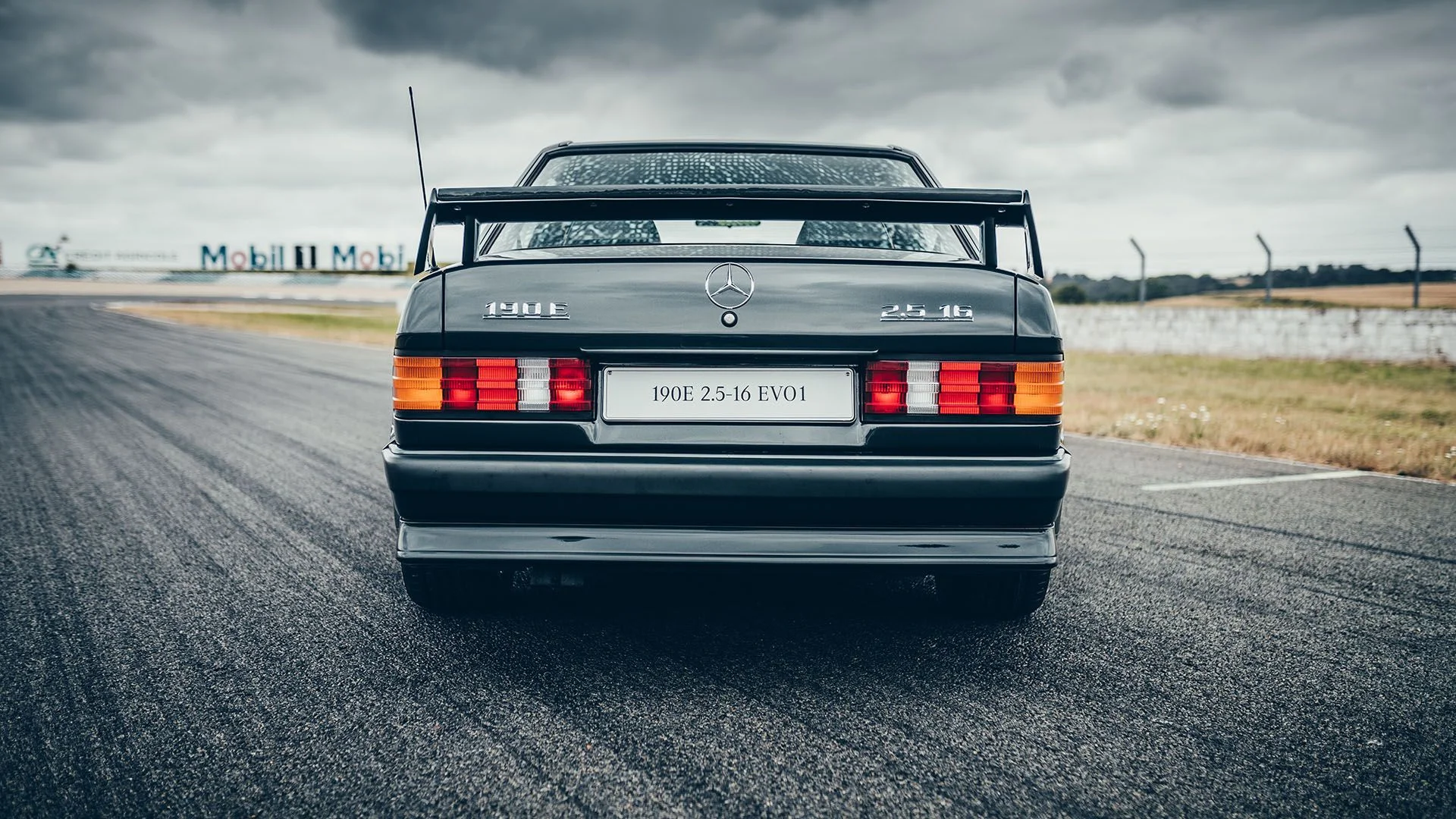
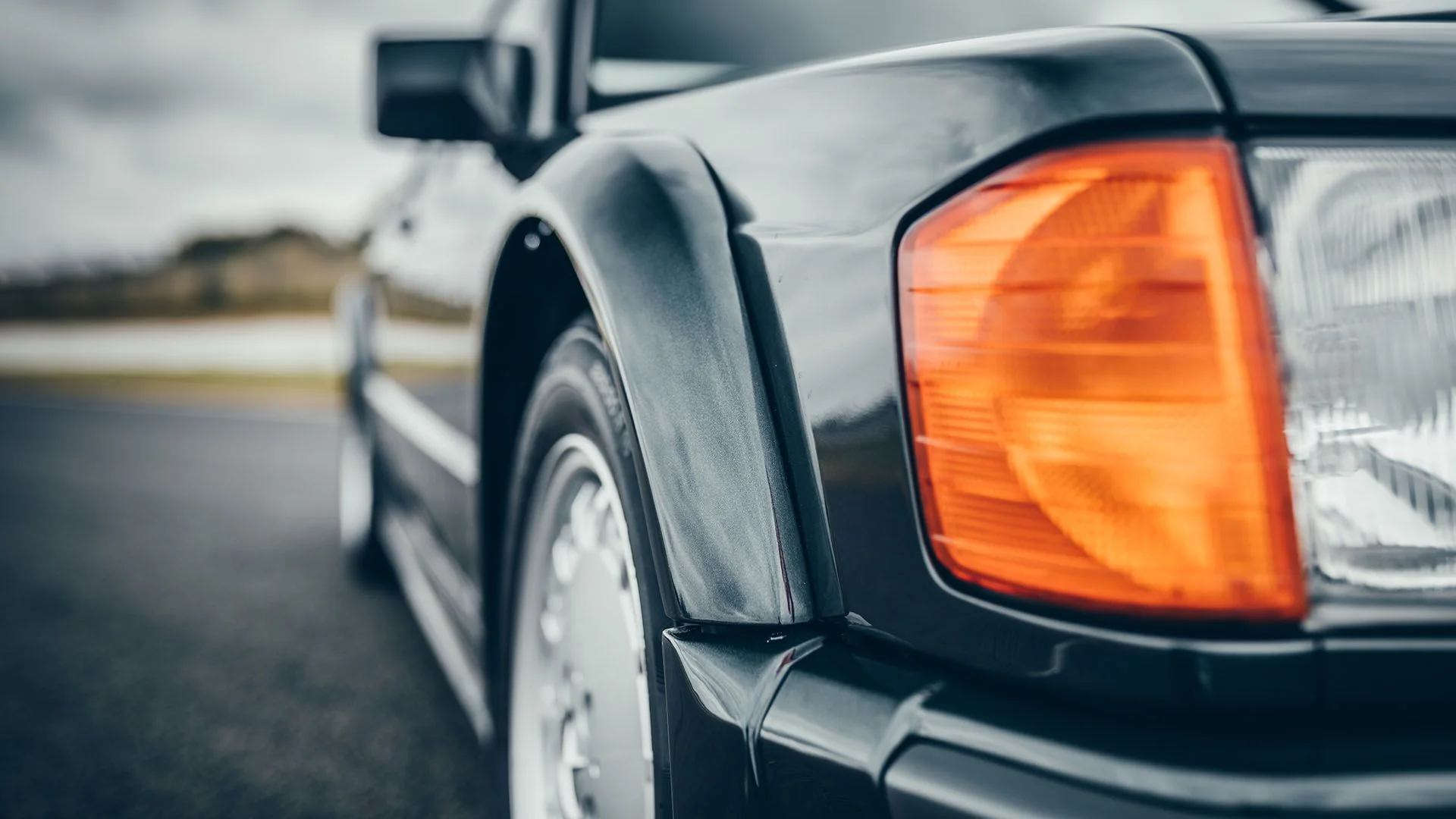
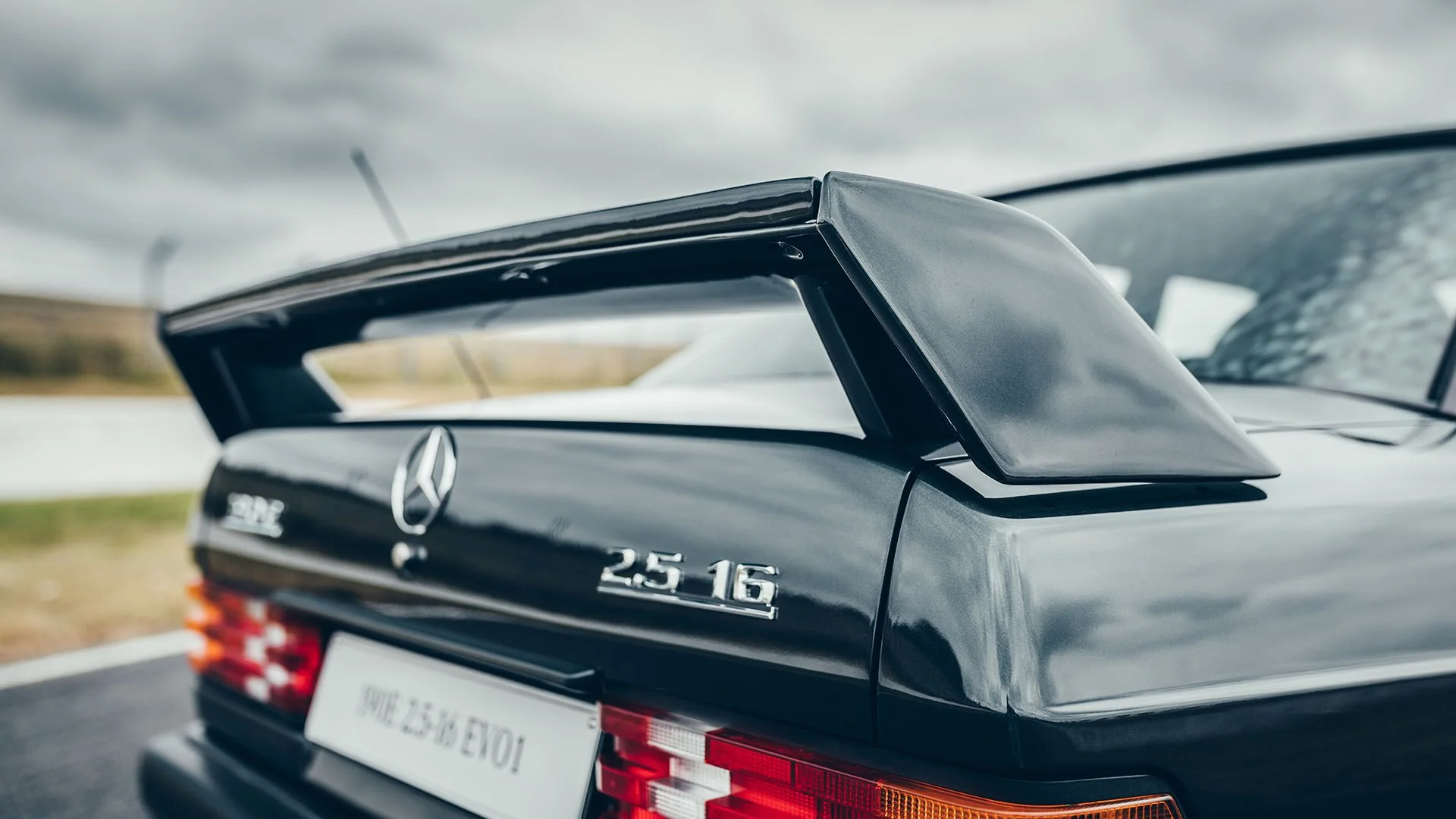
The Evolution was easy to distinguish from a regular 190. Its flared front and rear wheel arches covered the wider wheels and tires, and it gained a deeper front spoiler and a larger adjustable rear spoiler. These parts were designed to improve the race cars’ aerodynamics, and fitting them to the road car allowed Mercedes to homologate them for the DTM. Every Evolution was painted Blue-Black Metallic, giving it a dark, purposeful appearance. Compared with the more extreme Evolution II that followed a year later, the Evolution I was relatively restrained, but it was still clearly more than an ordinary compact sedan.
Interior
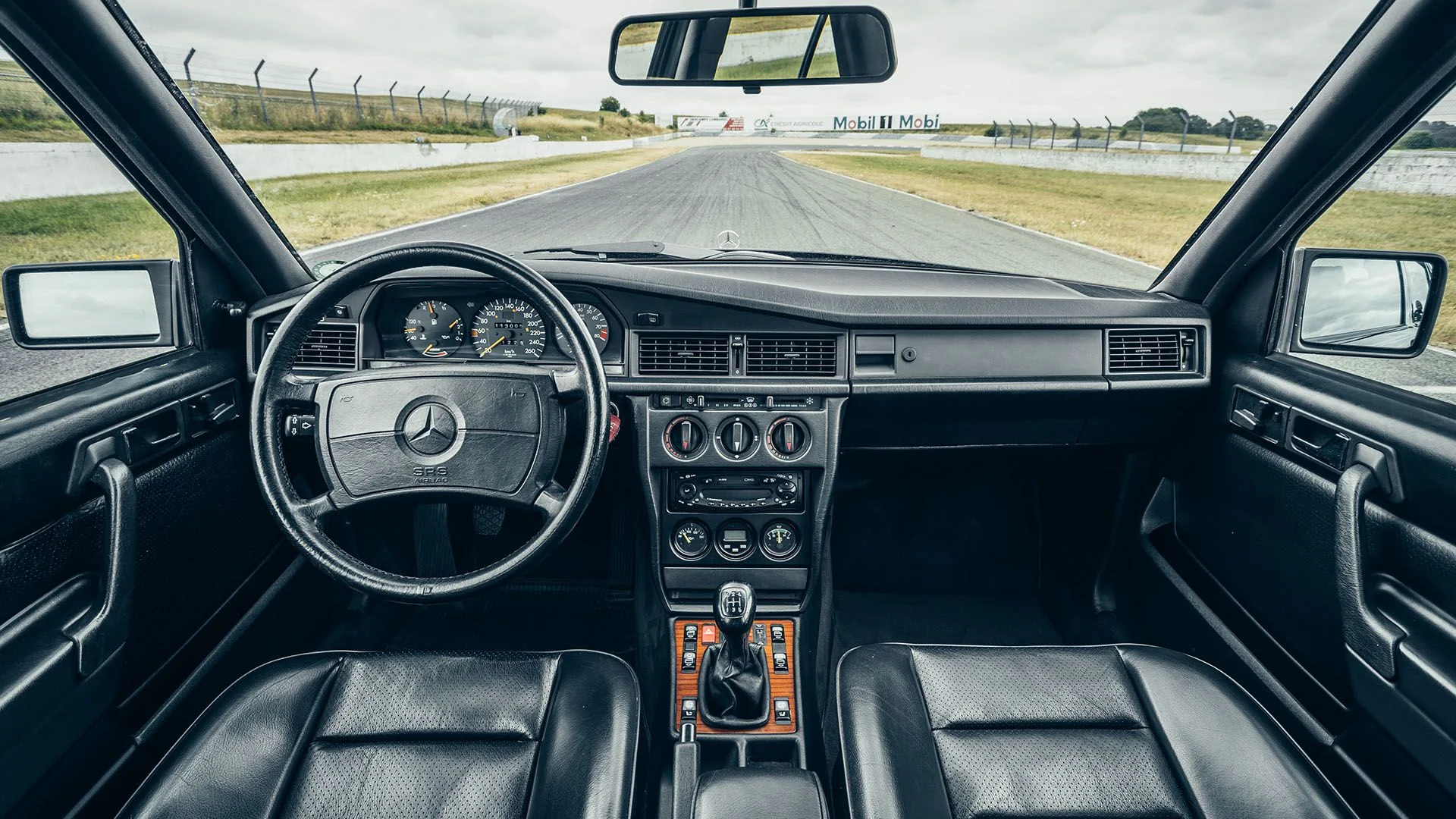
The interior was based on that of the 190 E 2.5-16. It featured sports seats and additional center-console gauges for oil temperature, a stopwatch and a voltmeter, mounted below the climate controls. The layout was typical of Mercedes in the 1980s, with solid build quality and a functional, somewhat austere design. Unlike many homologation specials, the Evolution kept the 190’s everyday usability, with four doors, five seats and a practical trunk. Equipment varied from car to car, and some examples were ordered with a sunroof.
Racing History
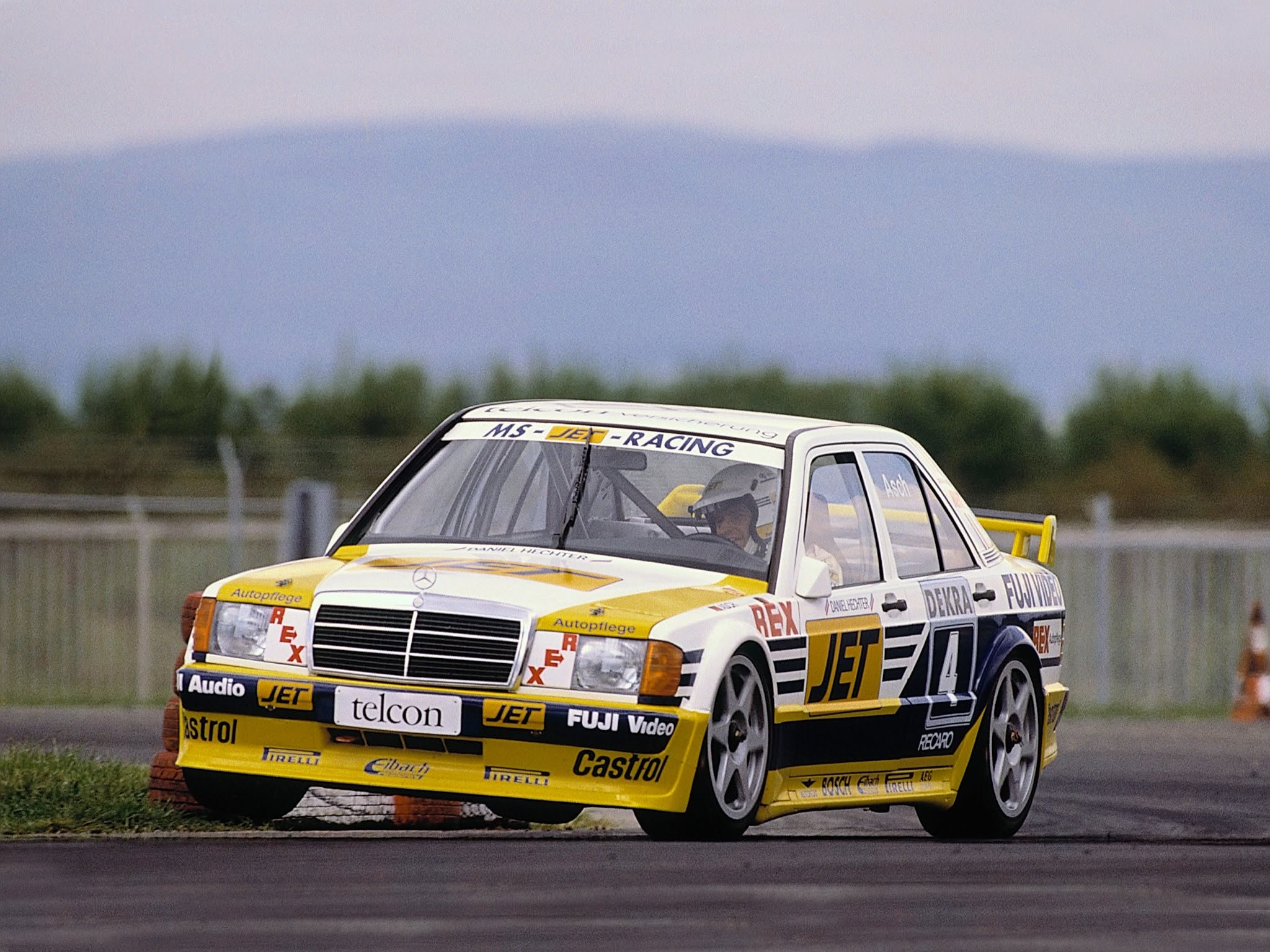
Mercedes recruited reigning DTM champion Klaus Ludwig from Ford for its 1989 campaign. Ludwig won early in the season at Hockenheim in the earlier car, before the AMG-run Evolution made its racing debut at Mainz-Finthen in May 1989. Roland Asch won one of the two races there for MS Jet Racing, and Kurt Thiim won the other. Thiim later added a victory at the Norisring, while Ludwig won both races at Diepholz and both at the Nürburgring. In total, the Evolution won seven races in its first season. BMW’s Roberto Ravaglia nevertheless won the drivers’ championship, and Thiim was the best-placed Mercedes driver, finishing fourth.
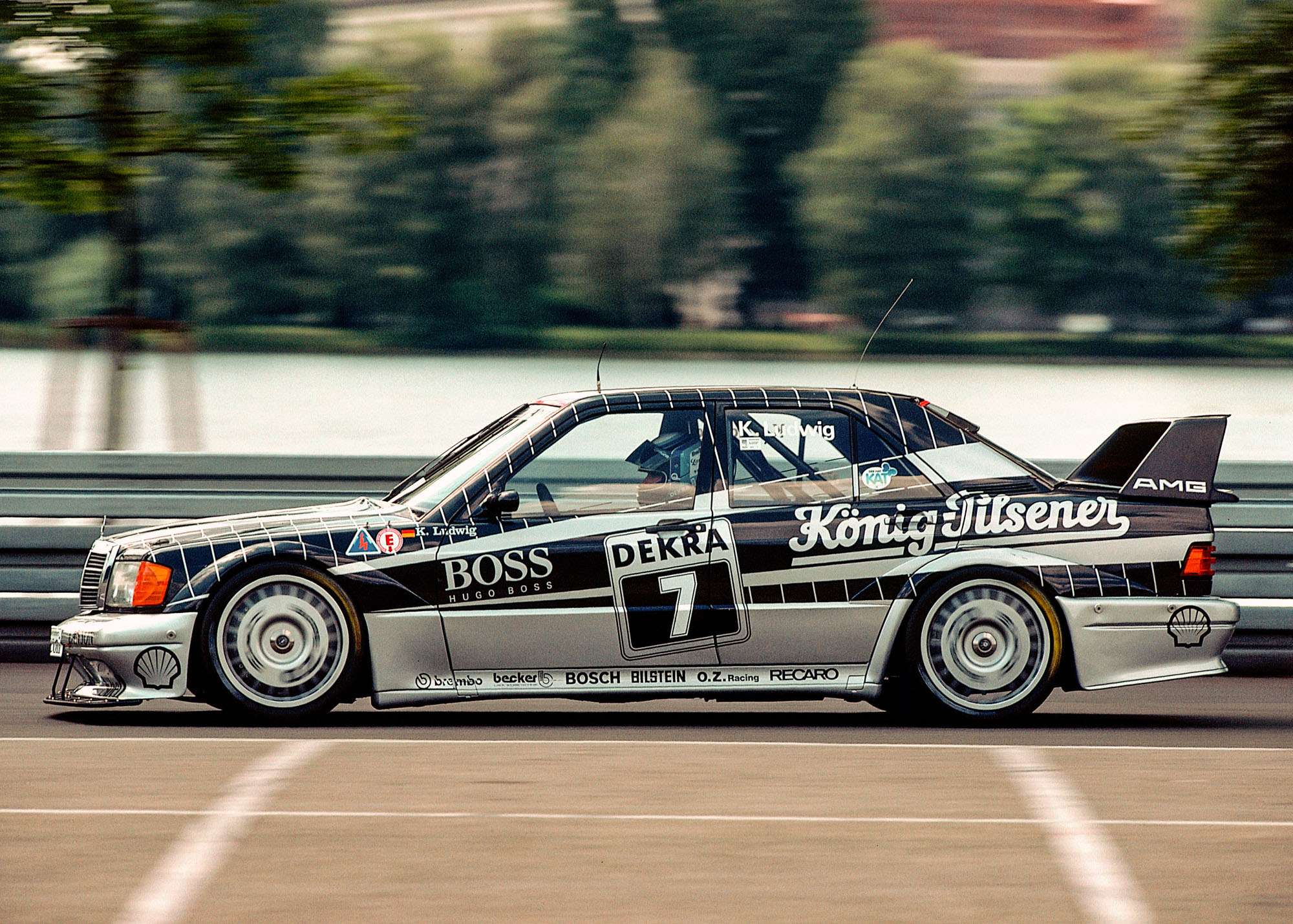
The Evolution continued into the 1990 season, when Thiim finished third in the championship. Mercedes unveiled the road-going Evolution II at the Geneva Motor Show in March 1990, and its racing version debuted at the Nürburgring Nordschleife in June, gradually replacing the earlier car. The Evolution II, which built on the Evolution I with further engine and aerodynamic development, delivered Mercedes’ greatest DTM success. In 1992, Klaus Ludwig won the drivers’ championship, Mercedes drivers won 16 of the season’s 24 races, and Ludwig, Thiim and Bernd Schneider finished first, second and third in the standings. The Evolution I laid the groundwork for that success by introducing the short-stroke engine and the chassis upgrades that its successor developed further.
Specifications
- Engine: Mercedes-Benz M 102.991 inline-four, 2,463cc, DOHC, 16 valves, Cosworth-developed cylinder head, Bosch KE-Jetronic fuel injection
- Bore and stroke: 97.3 mm x 82.8 mm
- Power: 192 hp at 6,800 rpm (with catalytic converter); 201 hp at 6,750 rpm (without catalytic converter); about 222 hp at 7,200 rpm with AMG PowerPack
- Torque: 173 lb-ft at 5,000-5,500 rpm (with catalytic converter); 177 lb-ft (without catalytic converter); about 181 lb-ft with AMG PowerPack
- Transmission: Getrag five-speed manual with dogleg first gear, rear-wheel drive, ASD automatic locking differential
- Wheels and tires: 8×16-inch alloy wheels, 225/50 ZR16 tires
- Brakes: 300 mm front and 278 mm rear discs
- Weight: Approximately 2,910 lbs (curb)
- Performance: 0-60 mph in about 7.7 to 8.5 seconds depending on specification; top speed of 143 mph (with catalytic converter) or 146 mph (without)
- Price: DM 87,204 when new
Production and Legacy
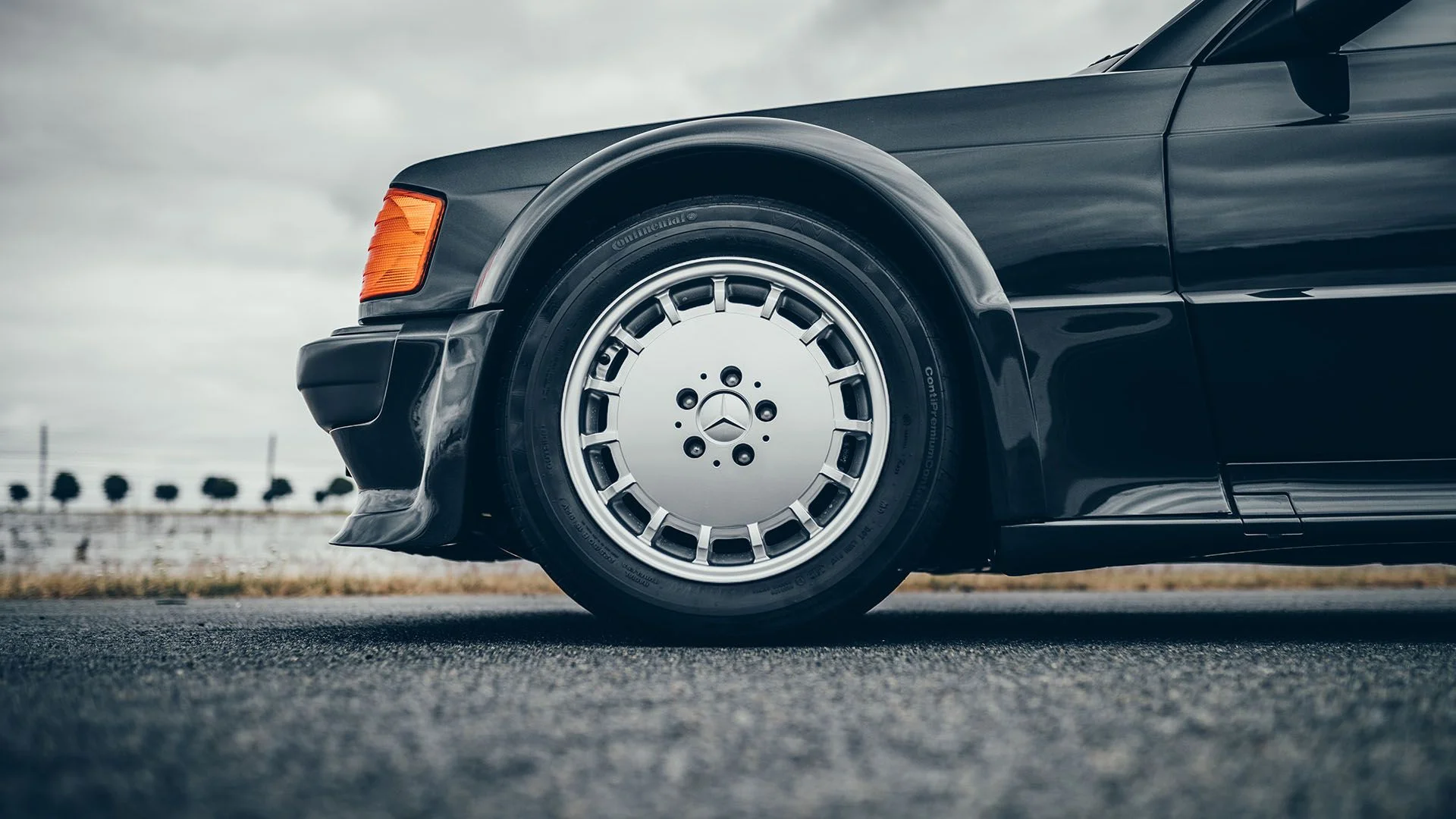
Mercedes built 502 Evolution I cars in 1989 to meet DTM homologation requirements. In March 1990, it unveiled the 190 E 2.5-16 Evolution II at the Geneva Motor Show. With its much larger rear wing and more aggressive bodywork, the Evolution II became the most famous version of the W201, and Mercedes again built 502 examples.
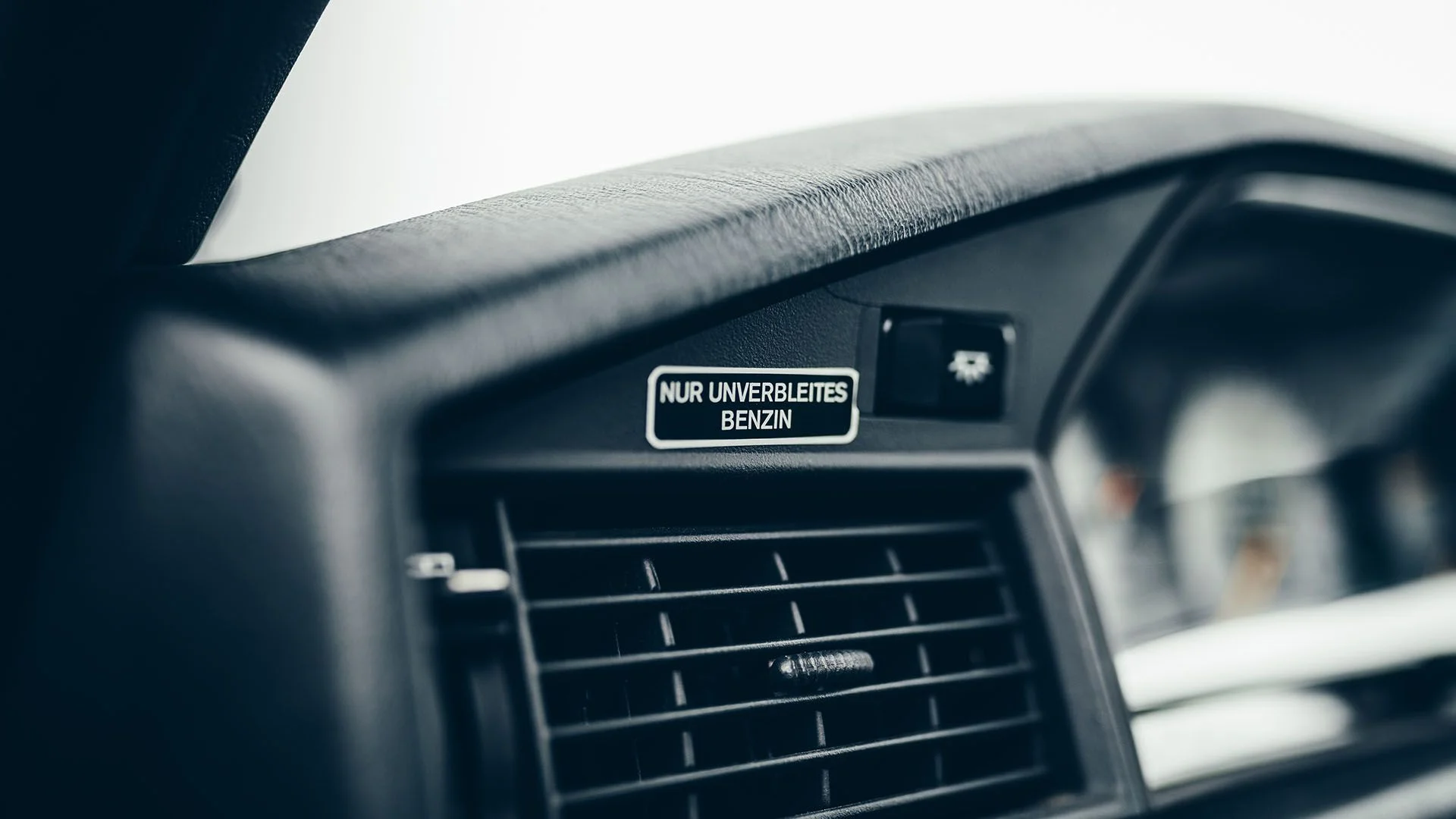
The Evolution I has often been overshadowed by the more dramatic Evolution II, but it played a crucial role in the 190’s racing story. It introduced the short-stroke engine, larger brakes and wider tires that formed the basis of Mercedes’ later DTM success, while its subtler styling made it one of the more understated homologation specials of its era. Today, both Evolution models are highly sought after, and the Evolution I’s rarity and racing connection have made it one of the most collectible Mercedes-Benz models of the 1980s.