

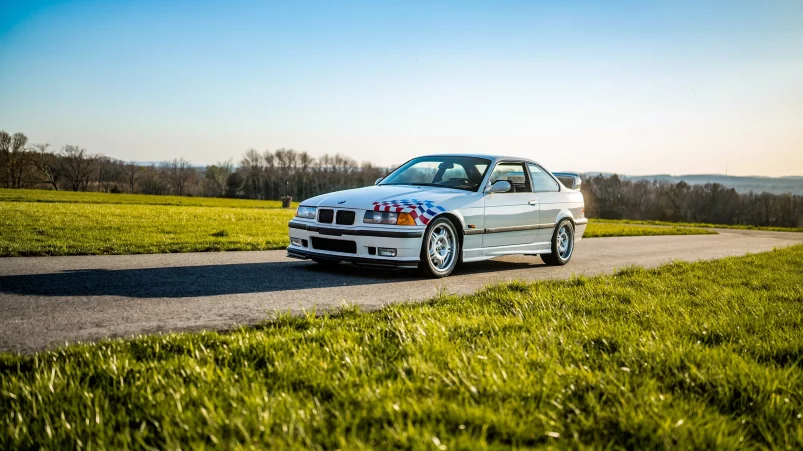
United States, 1995. BMW of North America introduced the M3 Lightweight, a stripped-down, track-focused version of the E36 M3 built exclusively for the American market. It used the standard US-specification 3.0-liter inline-six, producing 240 hp and 225 lb-ft of torque, but BMW removed about 225 pounds by deleting the air conditioning, radio and sunroof, fitting aluminum door skins and reducing sound insulation. The Lightweight also received a firmer chassis setup, a shorter final drive and a set of competition parts supplied for owners to install. Every car was finished in Alpine White with BMW Motorsport graphics. BMW built just 126 examples, making the Lightweight one of the rarest and most sought-after M3s ever sold in the United States.
Background and Origins
The E36 M3 debuted in Europe in 1992 with a high-revving 3.0-liter inline-six rated at 282 hp. When BMW brought the M3 to North America, it used a different engine configuration to meet local requirements and keep costs under control. The US-specification M3 coupe went on sale in 1994 with the S50B30US, a 2,990-cubic-centimeter inline-six derived from BMW’s contemporary six-cylinder architecture but less highly developed than the European S50B30. It produced 240 hp. In Europe, BMW also developed the M3 GT, a limited-production homologation special with revised engine tuning, aerodynamic changes and chassis updates to support competition. It was finished in British Racing Green and sold only in Germany, so American buyers could not get it.
BMW’s American motorsport ambitions helped shape the Lightweight. For 1995, BMW of North America supported professional M3 racing through Tom Milner’s Prototype Technology Group (PTG) in Virginia, while the popular IMSA Firehawk showroom-stock series offered another arena for production-based cars. The Lightweight gave American enthusiasts a more track-focused version of the standard M3 that could serve as a strong starting point for club racing. BMW built 10 pre-production Lightweights in January and February 1995, followed by another prototype in April. Series production took place between August and October 1995, bringing the total to 126 cars, and the finished cars were sent to PTG in Virginia for preparation before delivery to customers.
Design and Engineering
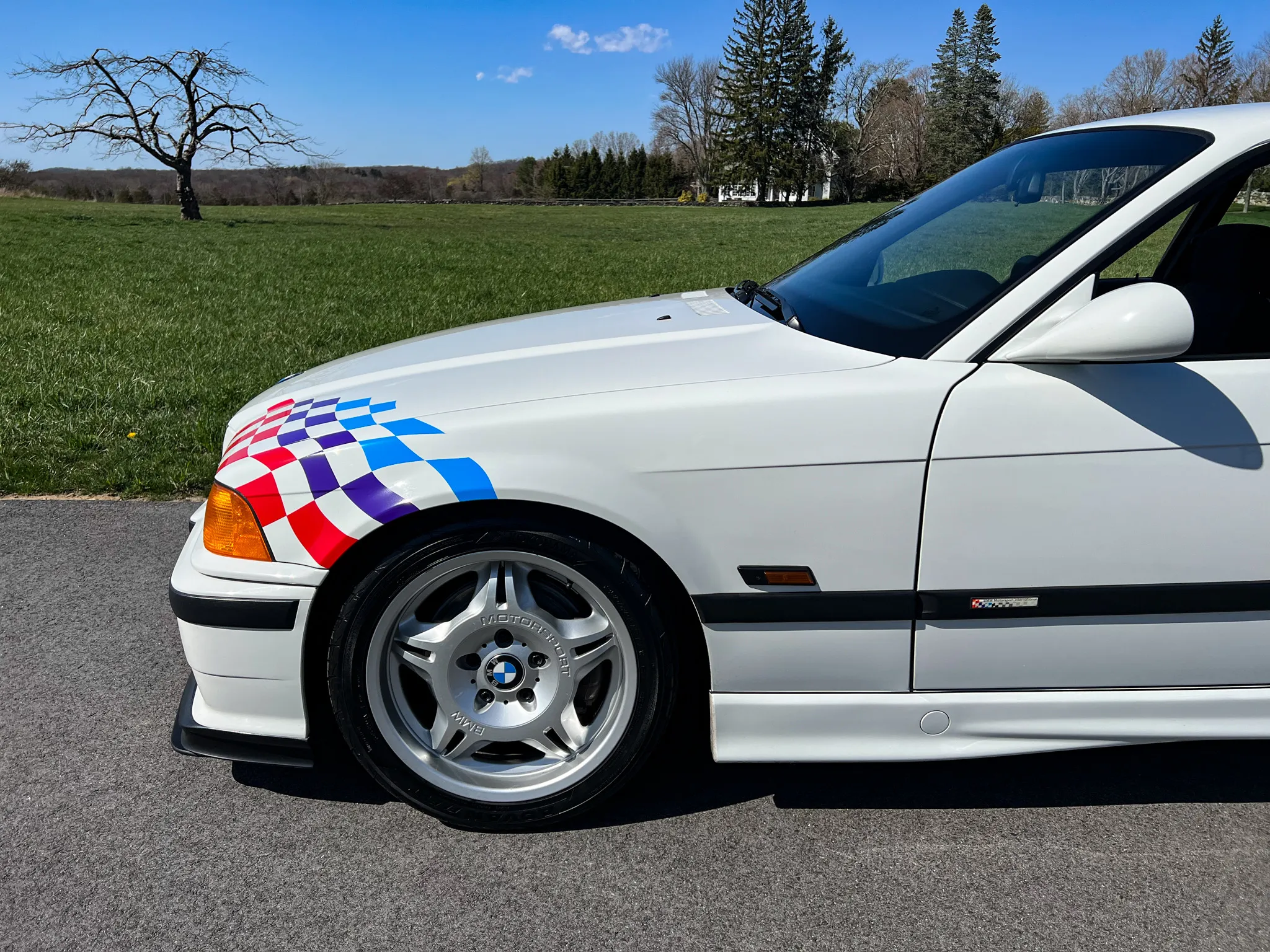
The Lightweight used the S50B30US inline-six, which produced 240 hp at 6,000 rpm and 225 lb-ft of torque at 4,250 rpm. The engine was unchanged from the standard US M3, so BMW focused on reducing weight and sharpening the car’s response. Power went to the rear wheels through a five-speed manual gearbox and a limited-slip differential. In place of the standard M3’s 3.15:1 final drive, the Lightweight used a shorter 3.23:1 ratio, which improved acceleration in each gear without changing the engine’s rated output.
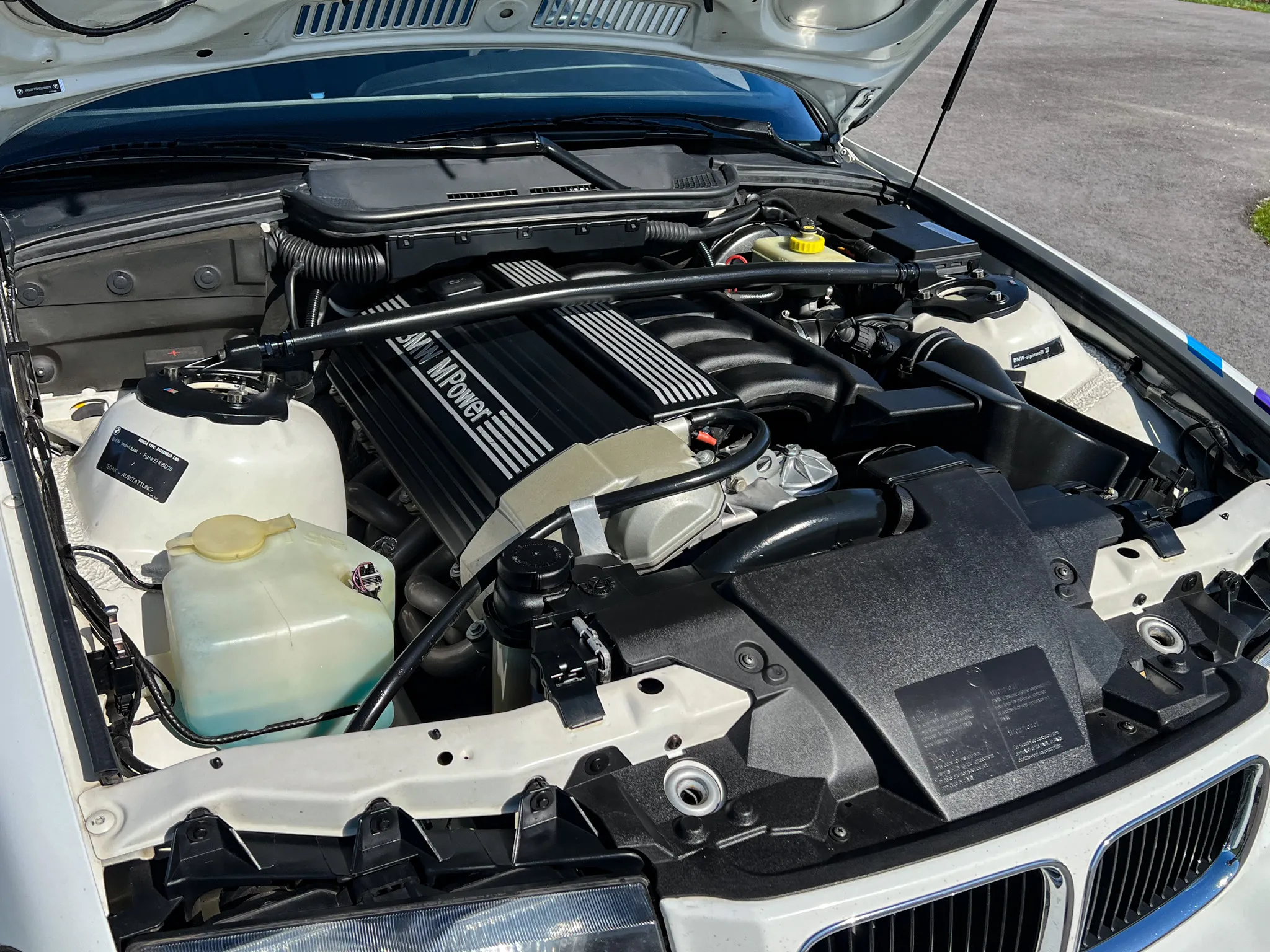
Weight reduction was the core of the Lightweight program. BMW deleted the air conditioning, radio, sunroof and tool kit, reduced the sound insulation, fitted lighter cloth seats and replaced the steel door skins with aluminum ones. Those changes brought curb weight to about 2,950 pounds, roughly 225 pounds less than a standard US-specification M3 coupe. The chassis kept the E36’s MacPherson strut front suspension and multi-link rear axle, but BMW revised the setup to give the Lightweight a firmer, more track-oriented feel than the standard US M3. The result was a car that felt sharper and more responsive, and better suited to circuit use.
Styling
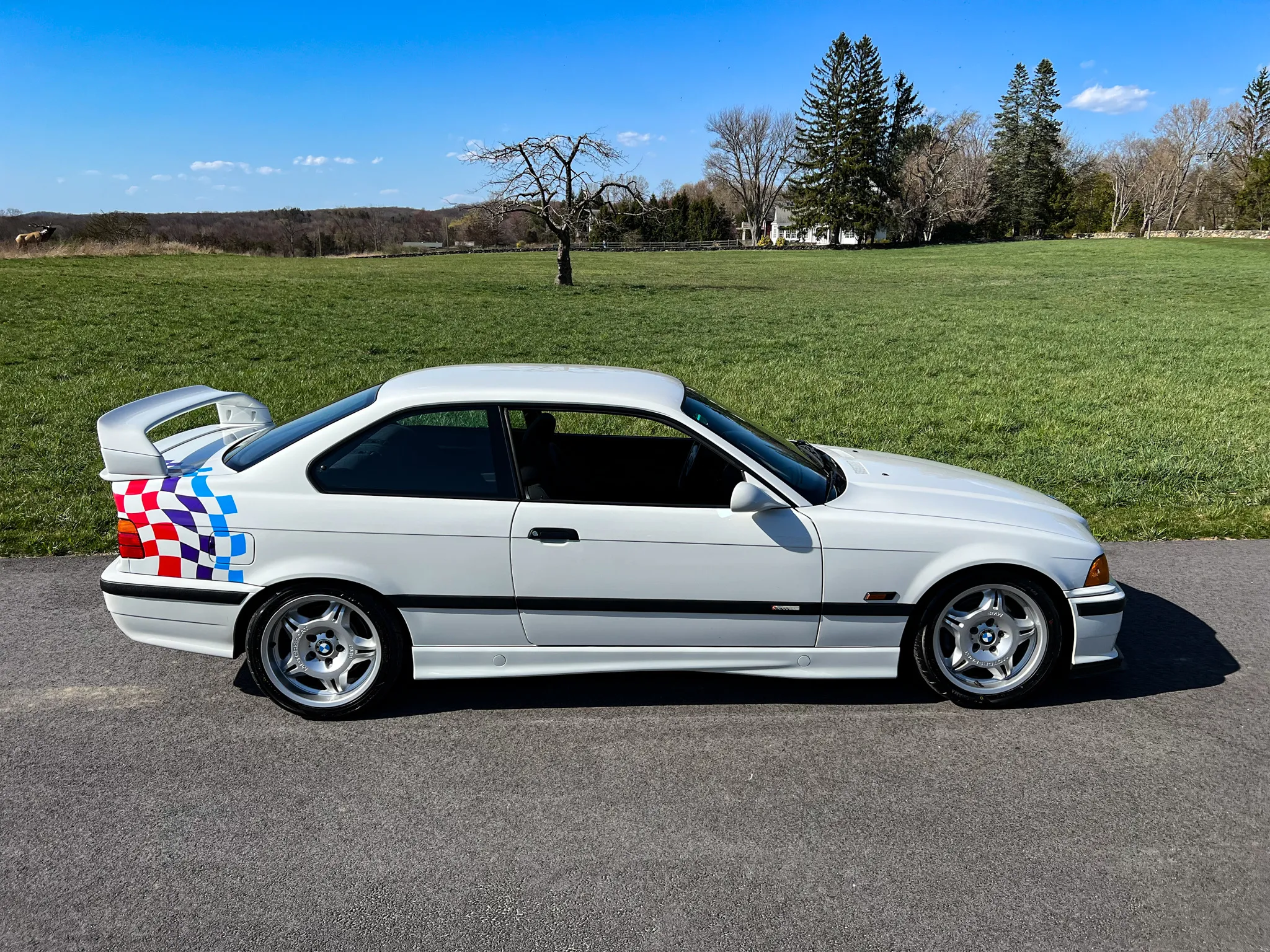
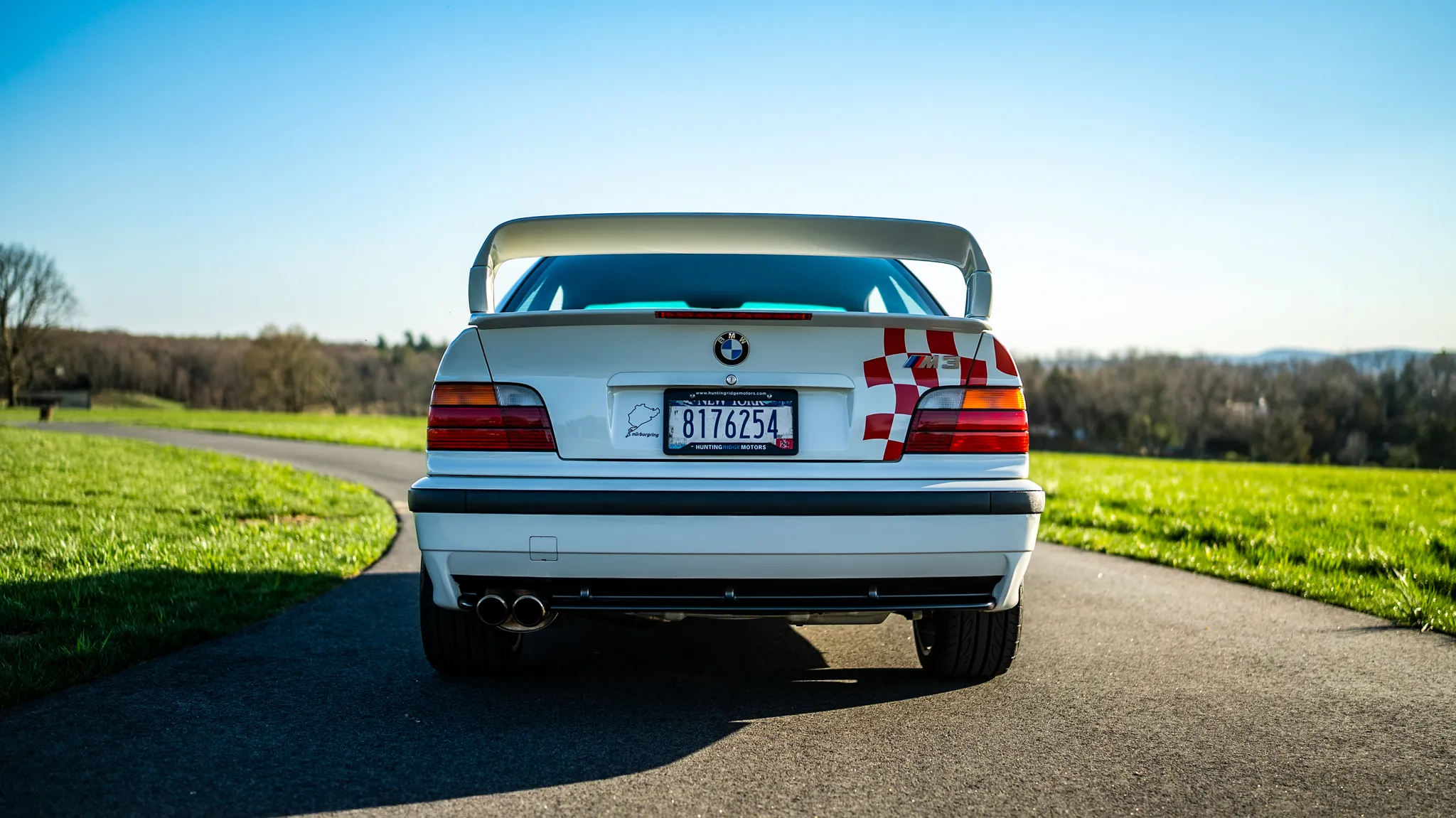
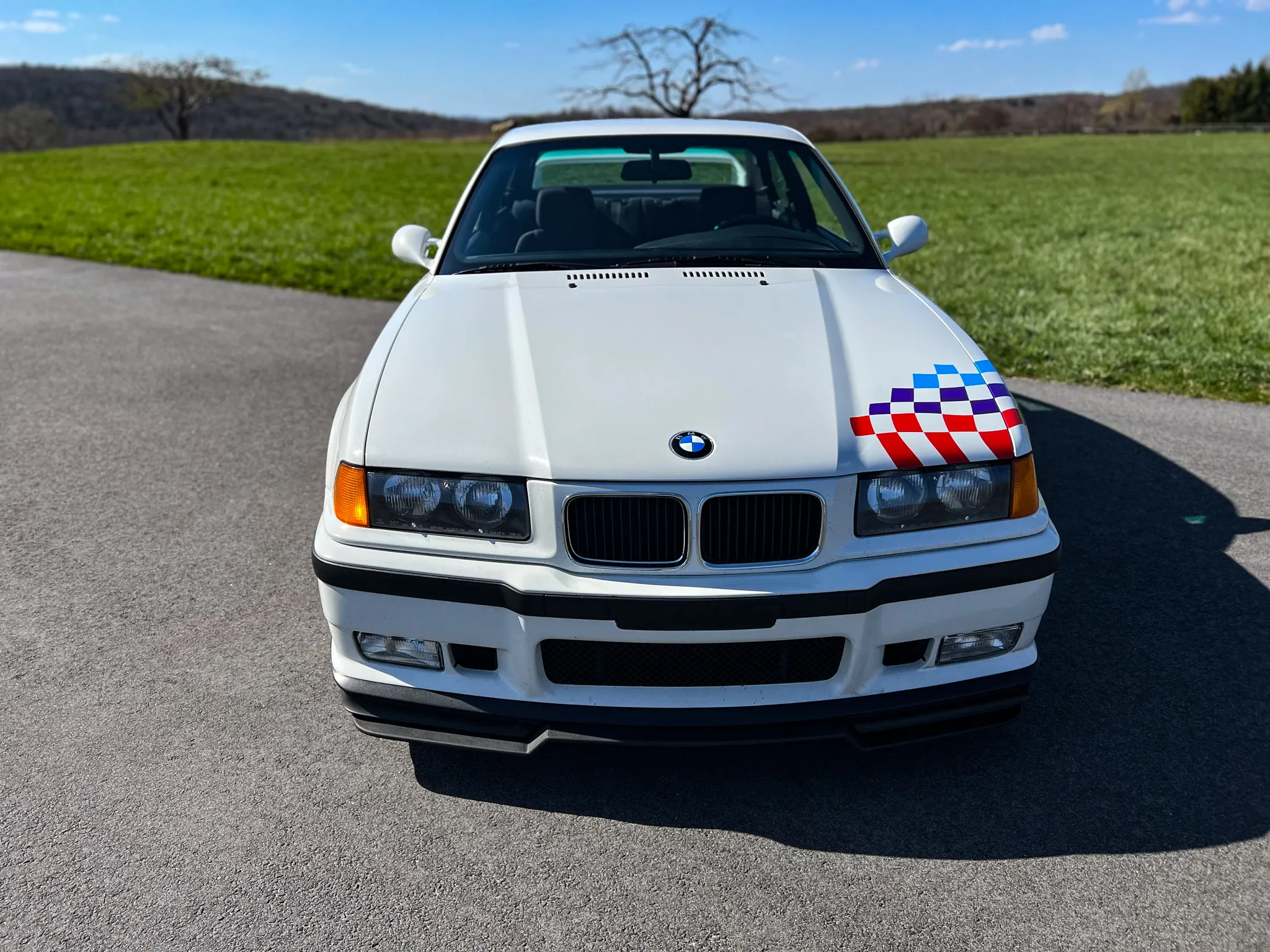
Every Lightweight was painted Alpine White and wore BMW Motorsport graphics in red, blue and violet on opposite corners of the body. Its appearance was completed by a front splitter and a taller rear wing supplied as part of its track-oriented equipment. These and other competition parts were shipped in the trunk for owners to install, because they were not intended for road use. According to BMW, the package also included a BMW Motorsport oil pan and a dual-pickup oil pump, along with a front strut brace. The combination of white paint, Motorsport graphics and large wing made the Lightweight one of the most distinctive E36s ever built.
Interior
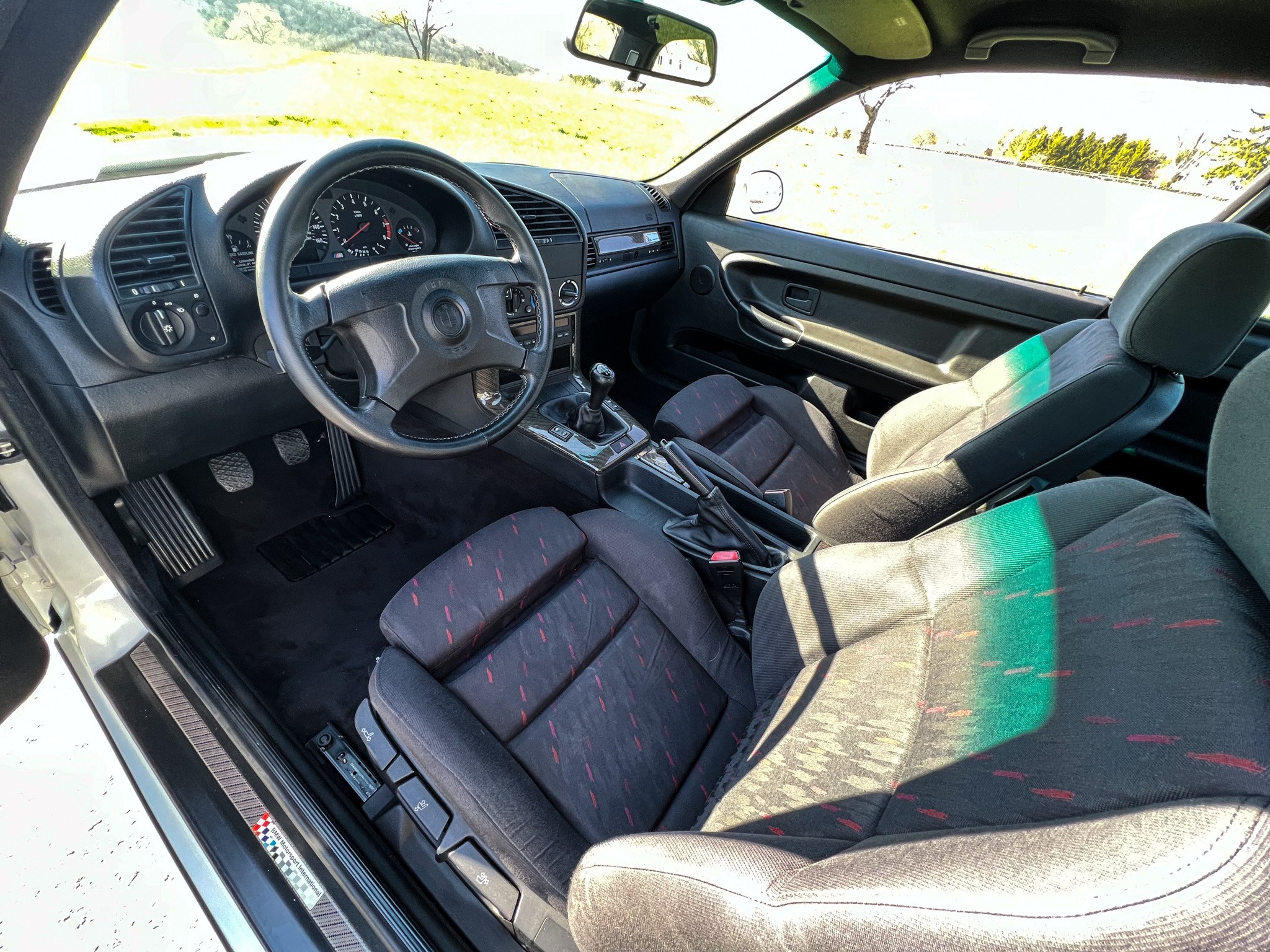
The Lightweight’s cabin reflected its performance focus. It had simple manual sports seats in black cloth, with carbon-fiber trim. With no air conditioning, radio or sunroof and much of the sound insulation removed, the interior was louder and more basic than that of the standard M3. Even so, the Lightweight remained a road-legal car that could be driven on the street, while its reduced weight and supplied competition parts made it a strong starting point for track days and club racing.
Racing History
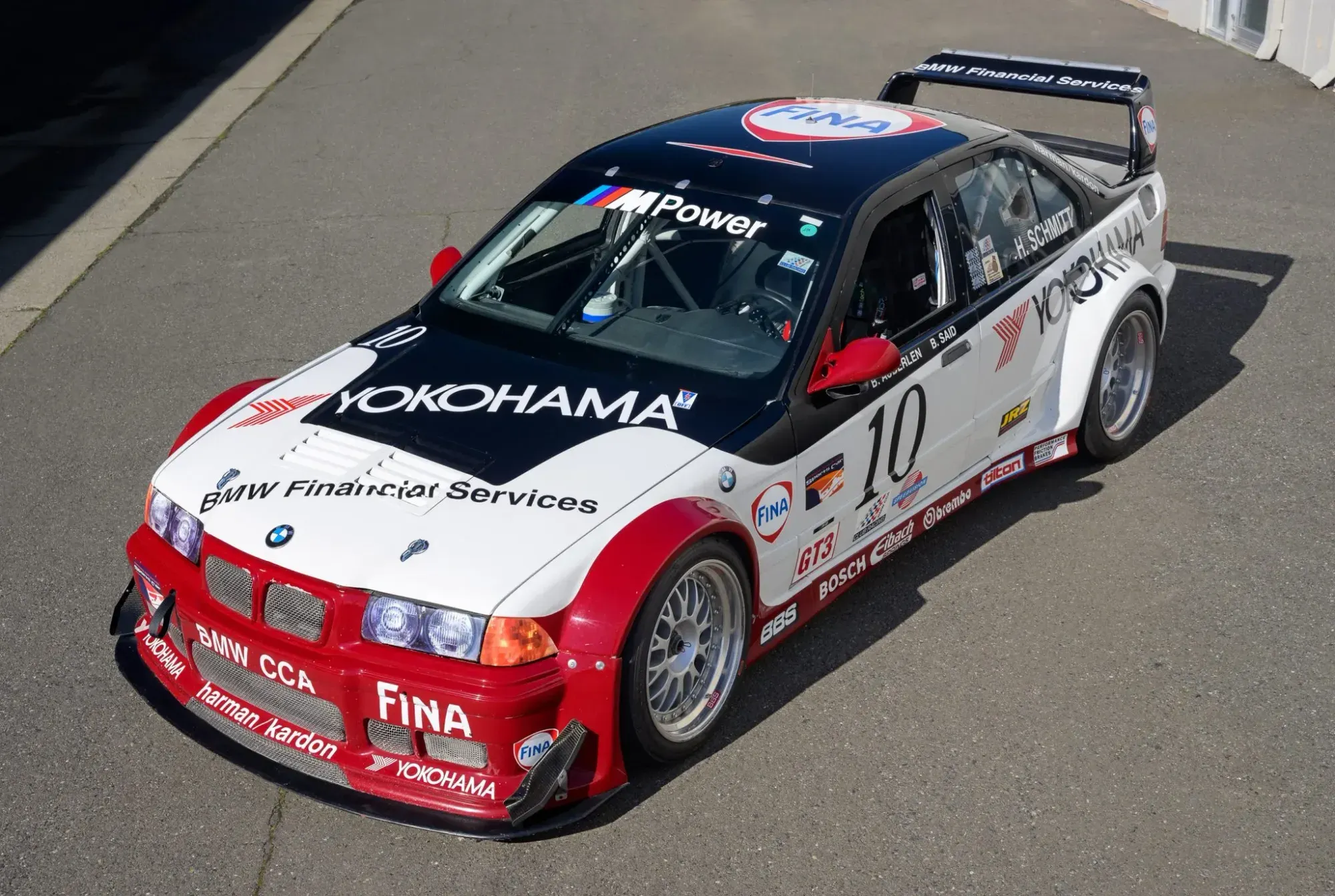
The Lightweight quickly became a popular starting point for club racers, many of whom modified their cars for competition. Over time, racing use and later modifications made untouched examples increasingly hard to find, which is one reason original cars are so valued today. At the professional level, BMW’s North American racing program fielded competition-prepared E36 M3s run by PTG. The 1995 season was difficult, but the program became highly successful from 1996 onward. That year, BMW won the IMSA GTS-2 manufacturers’ championship, its first IMSA GT manufacturers’ title since 1981.
In 1997, BMW and PTG won the class’s manufacturers’, drivers’ and teams’ titles, with Bill Auberlen taking the drivers’ championship. The M3 also won its class at the 1997 24 Hours of Daytona and at the 12 Hours of Sebring in both 1997 and 1998. In 1998, BMW added the manufacturers’ title in the GT3 class of the United States Road Racing Championship. The Lightweight was a road car rather than one of these race cars, but it shared their image and brought a version of that motorsport spirit to American buyers.
Specifications
- Engine: BMW S50B30US inline-six, 2,990cc, DOHC, 24 valves
- Power: 240 hp at 6,000 rpm
- Torque: 225 lb-ft at 4,250 rpm
- Transmission: Five-speed manual, rear-wheel drive, limited-slip differential, 3.23:1 final drive
- Suspension: MacPherson struts (front), multi-link (rear), firmer track-oriented setup
- Body: Steel unibody coupe with aluminum door skins
- Weight: Approximately 2,950 lbs
- Track equipment: Front splitter, rear wing, front strut brace, BMW Motorsport oil pan and dual-pickup oil pump, supplied in the trunk for owner installation
- Production: 126 (including pre-production cars)
Production and Legacy
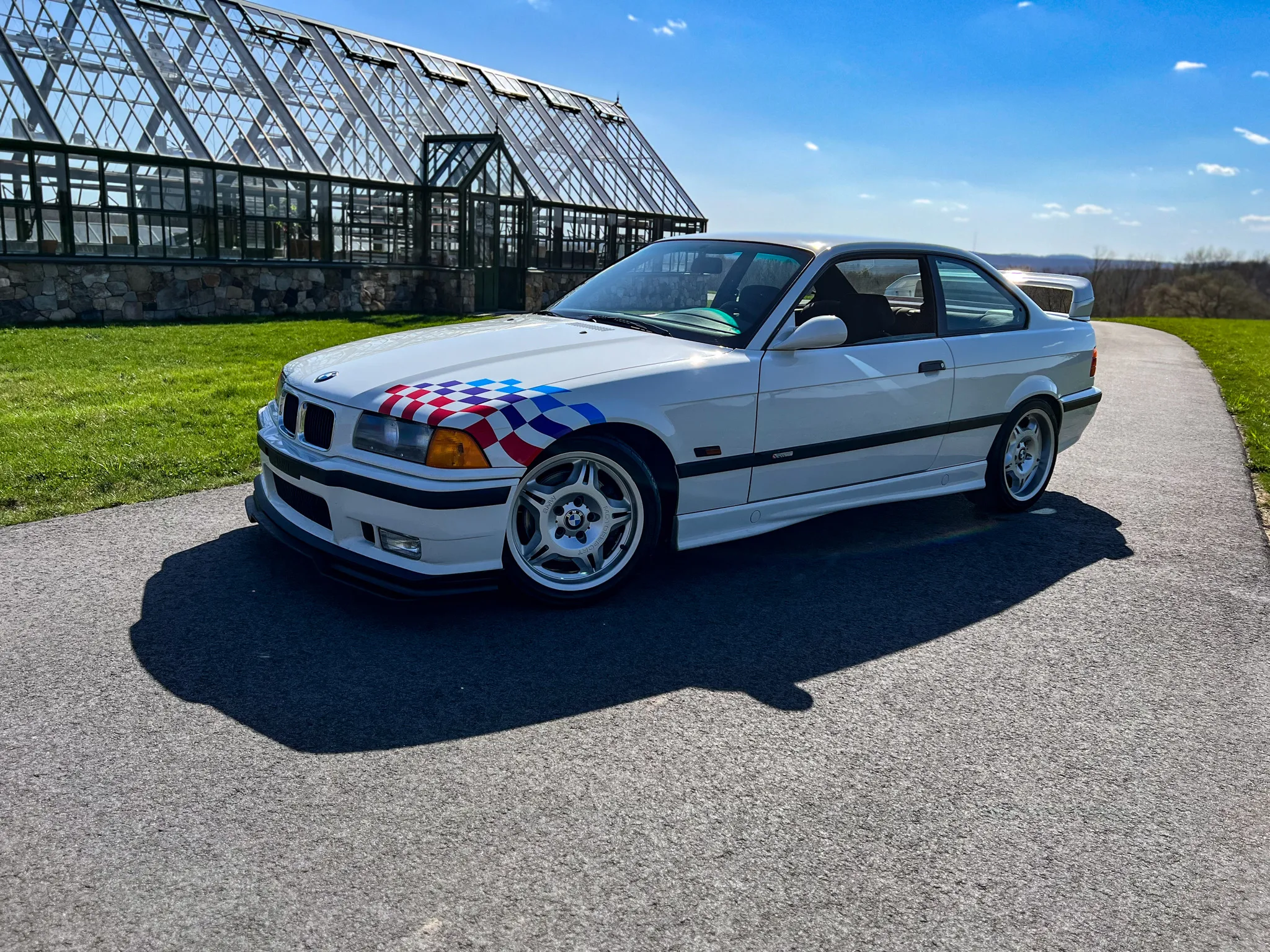
BMW built 126 M3 Lightweights in 1995, including the pre-production cars and prototype. It was a one-year model. For 1996, the standard US M3 received the larger 3.2-liter S52 engine, and the Lightweight’s 3.0-liter, limited-production formula did not continue.
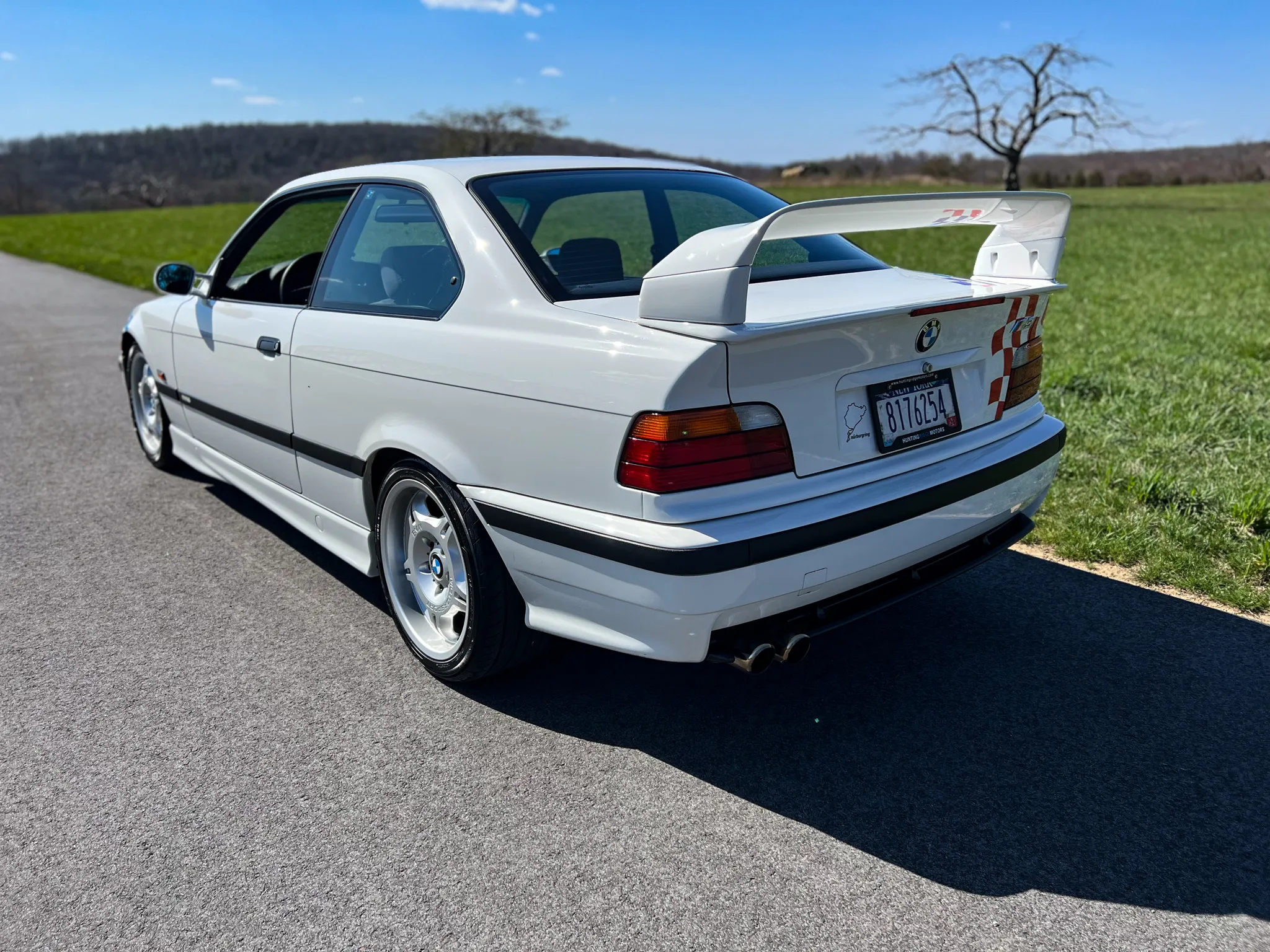
Today, the Lightweight is one of the most collectible BMWs of its era. Its rarity, its focus on reducing weight and its connection to BMW’s American motorsport efforts make it far more than an M3 with some equipment removed. Because many examples were driven hard on track, original, low-mileage cars are especially desirable. The Lightweight is also widely seen as an early example of BMW of North America’s willingness to create special, enthusiast-focused M models for American customers.