
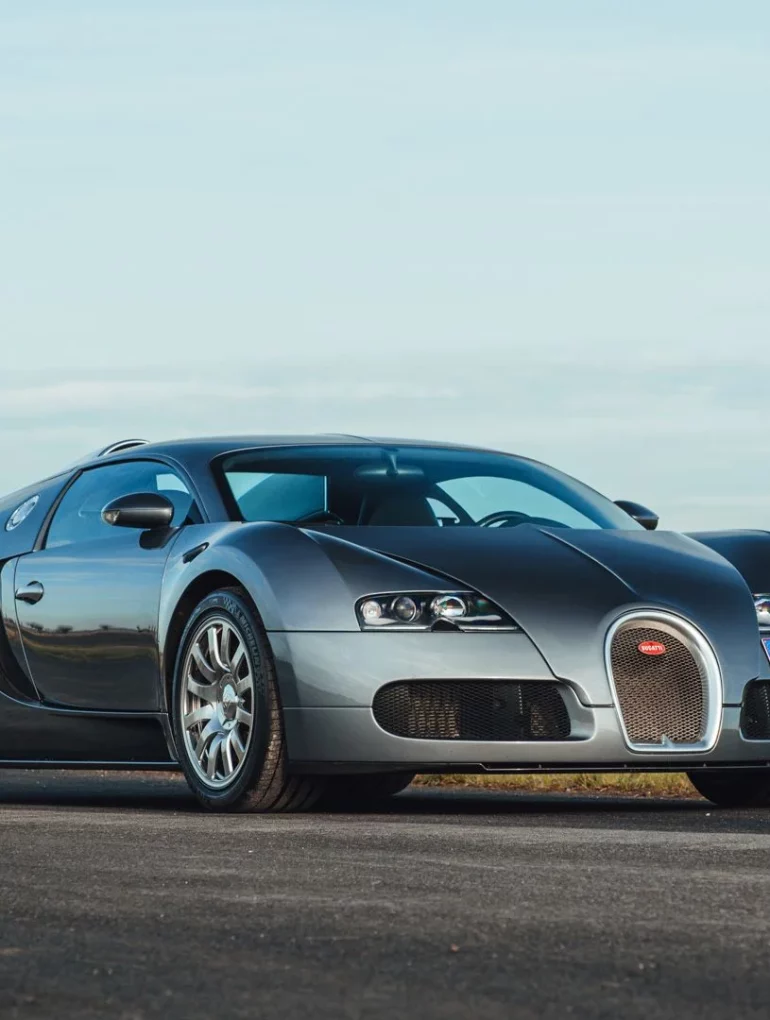

Paris, September 2004. Bugatti unveiled the Veyron 16.4 at the Motor Show, a revolutionary mid-engine hypercar representing the culmination of Volkswagen’s automotive ambitions. The “16.4” designation referenced the engine’s sixteen cylinders arranged in a W configuration and four turbochargers. The 8.0-liter W16 produced 1,001 horsepower and 922 lb-ft of torque, making it the most powerful production car engine ever built. With a proven top speed of 253 mph, the Veyron became the world’s fastest production car. The seven-speed dual-clutch transmission could shift gears in under 150 milliseconds, while all-wheel drive provided traction for the 1,888-kilogram hypercar’s extraordinary acceleration. At approximately 1.7 million dollars, the Veyron was also the most expensive production automobile ever offered. This was Volkswagen’s statement that German engineering could build the ultimate supercar, that no performance metric was unachievable with sufficient resources and determination. Production began in September 2005, with approximately fifty cars built annually through 2011.
Background and Origins
Volkswagen chairman Ferdinand Piëch conceived the Veyron on a bullet train in Japan, sketching the revolutionary W16 engine configuration on paper. Rather than pursue conventional approaches, Piëch wanted something completely unprecedented: a hypercar combining luxury appointments with uncompromising performance. The project became one of the greatest technological challenges in automotive history.
Development consumed six years and billions of dollars. Nearly every component had to be developed from scratch, as existing automotive technology couldn’t satisfy the Veyron’s extraordinary demands. Bugatti’s engineers drew upon expertise from aviation and space industries, adapting systems typically found in those fields for automotive application.
The prototype debuted at Frankfurt in 2003, revealing a production-ready design that shocked the automotive world. The mid-engine layout positioned the W16 behind the driver, creating ideal weight distribution. A carbon-fiber monocoque weighing just 110 kilograms provided the structural foundation. Aluminum and stainless-steel subframes supported suspension, engine, and other major components.
The production-ready Veyron was presented at Bugatti’s newly rebuilt Molsheim factory on September 3, 2005. Orders exceeded production capacity immediately, with waiting lists extending years into the future. The Veyron established Bugatti as a genuine hypercar manufacturer, something few believed possible when the project began.
Design and Engineering
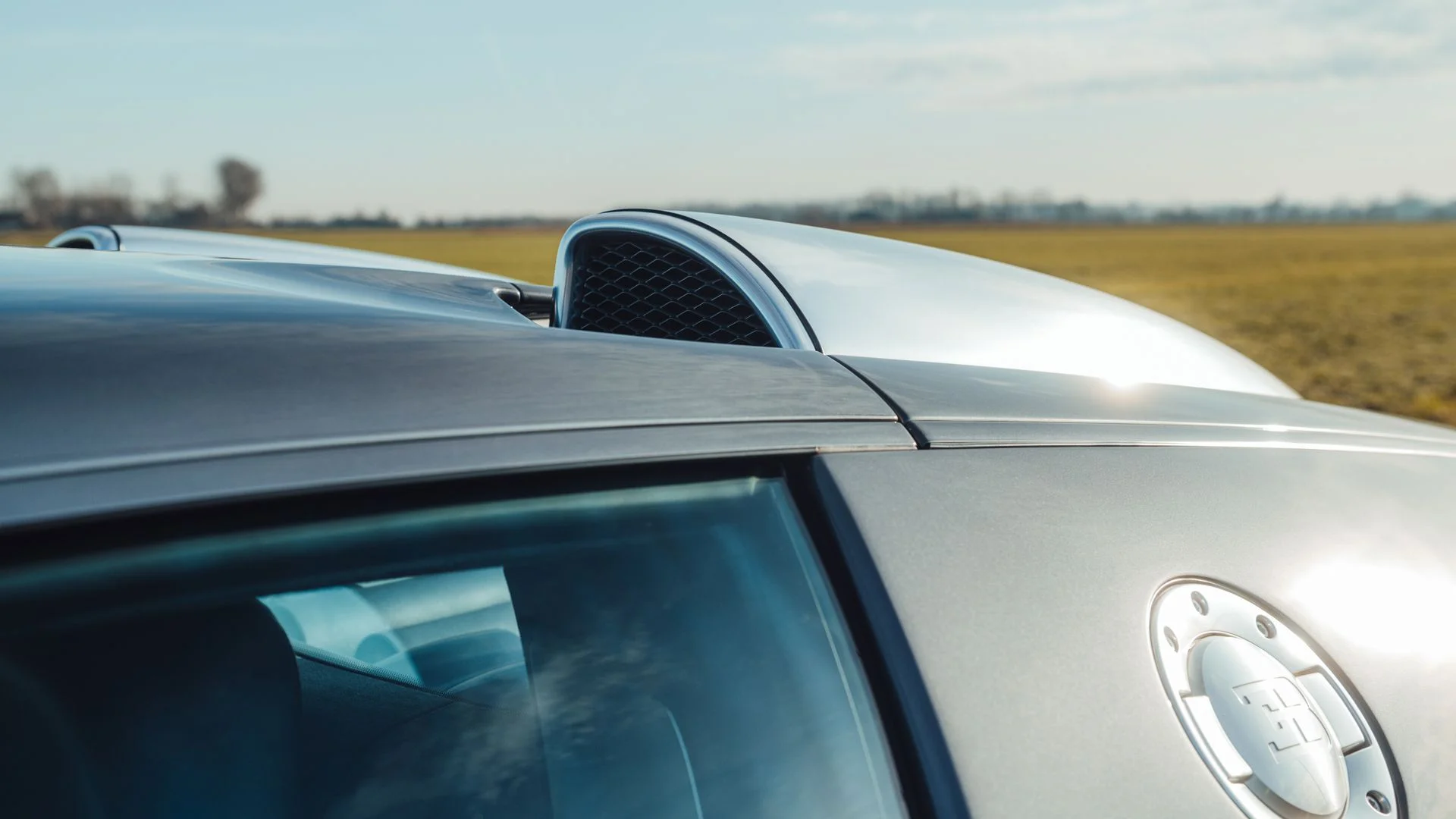
The Veyron was constructed around a carbon-fiber monocoque chassis with a 2,710mm wheelbase, the longest for any supercar of the era. The lightweight composite structure was bonded and riveted to provide exceptional rigidity while minimizing weight. An aluminum front subframe supported the suspension, steering, radiator pack, and ancillary systems. The rear subframe, constructed of stainless steel due to extreme heat from the turbochargers reaching 1,000 degrees Celsius, supported the engine.
Front suspension used unequal-length double wishbones with coil springs and adaptive dampers. The rear employed a similar arrangement, with active suspension geometry adjusting for different driving conditions. Michelin PAX run-flat tires, specially developed for the Veyron, measured 365/710 R18 and could withstand extreme speeds without failure.
Braking was by carbon-ceramic discs measuring 370mm front and 370mm rear with eight-piston calipers. The system could achieve extraordinary deceleration, with the carbon-ceramic material withstanding brake surface temperatures exceeding 1,000 degrees. An electronic rear wing served as an airbrake, providing additional deceleration at extreme speeds. The combined braking system required expertise borrowed from aerospace engineering.
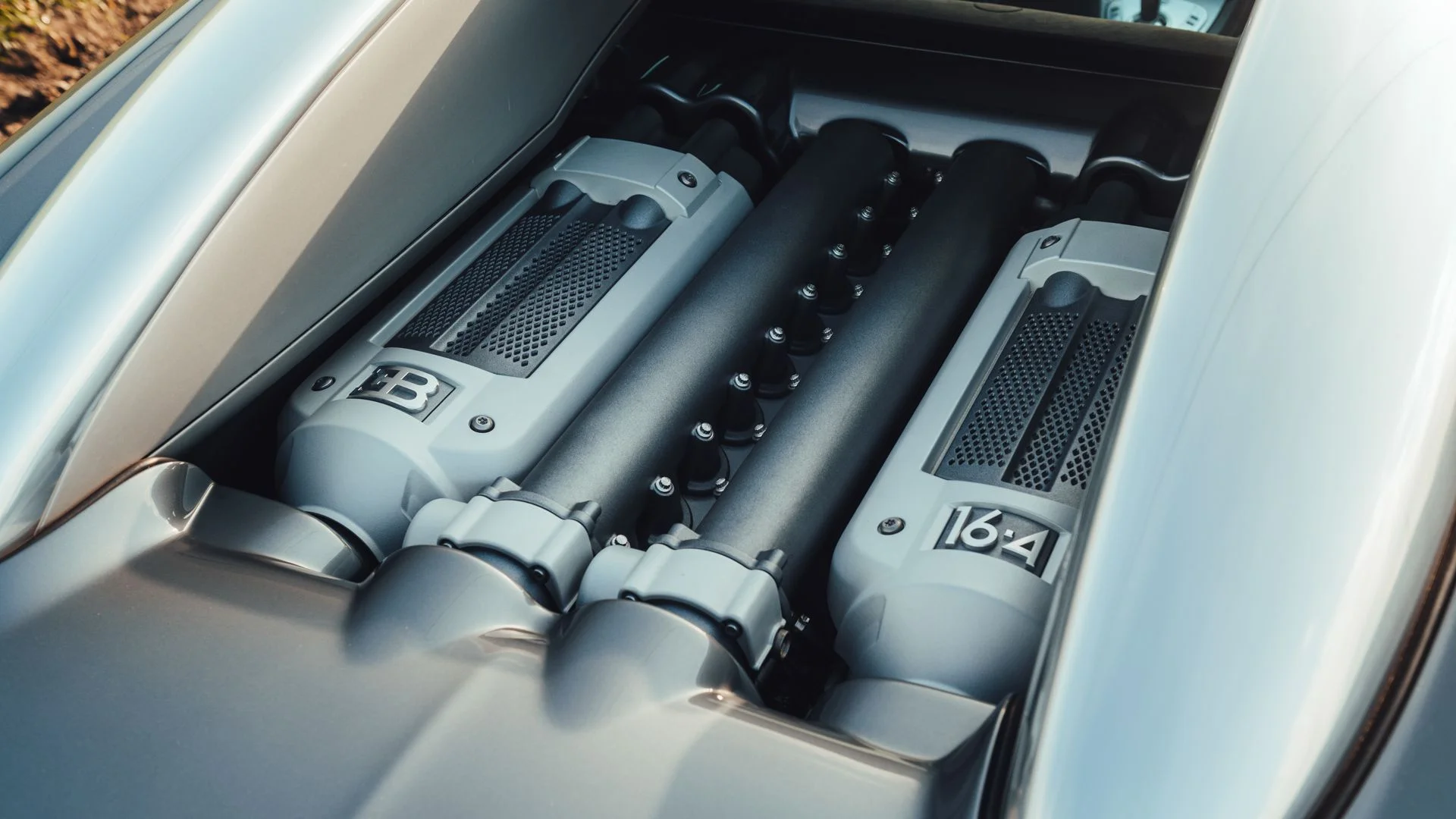
The engine was Bugatti’s legendary W16, displacing 7,993cc in a revolutionary configuration. Two VR8 blocks, each with a 15-degree bank angle, joined in the crankcase to form one unified powerplant. Both eight-cylinder blocks operated at 90 degrees to each other, aspirated by four exhaust gas turbochargers. The compact 710mm-long engine weighed just 490 kilograms, making it remarkably lightweight for its displacement.
With a 9.0:1 compression ratio and four Garrett turbochargers pushing boost pressure, output was 1,001 horsepower at 6,000 rpm and 1,250 N·m of torque from 2,200 to 5,500 rpm. The power delivery was linear and progressive, though the immediate response to throttle input from turbo boost could overwhelm unprepared drivers. The engine was fully capable of continuous full-load operation, something racing engines cannot achieve.
Transmission was a seven-speed dual-clutch DSG developed specifically for the Veyron. The gearbox had to handle up to 1,500 N·m of torque, far exceeding any conventional automotive transmission. Shift times of under 150 milliseconds provided instant response to driver inputs. All-wheel drive with Torsen differential distributed power intelligently, though the engine’s extraordinary power meant wheelspin was possible even in top gear.
Styling
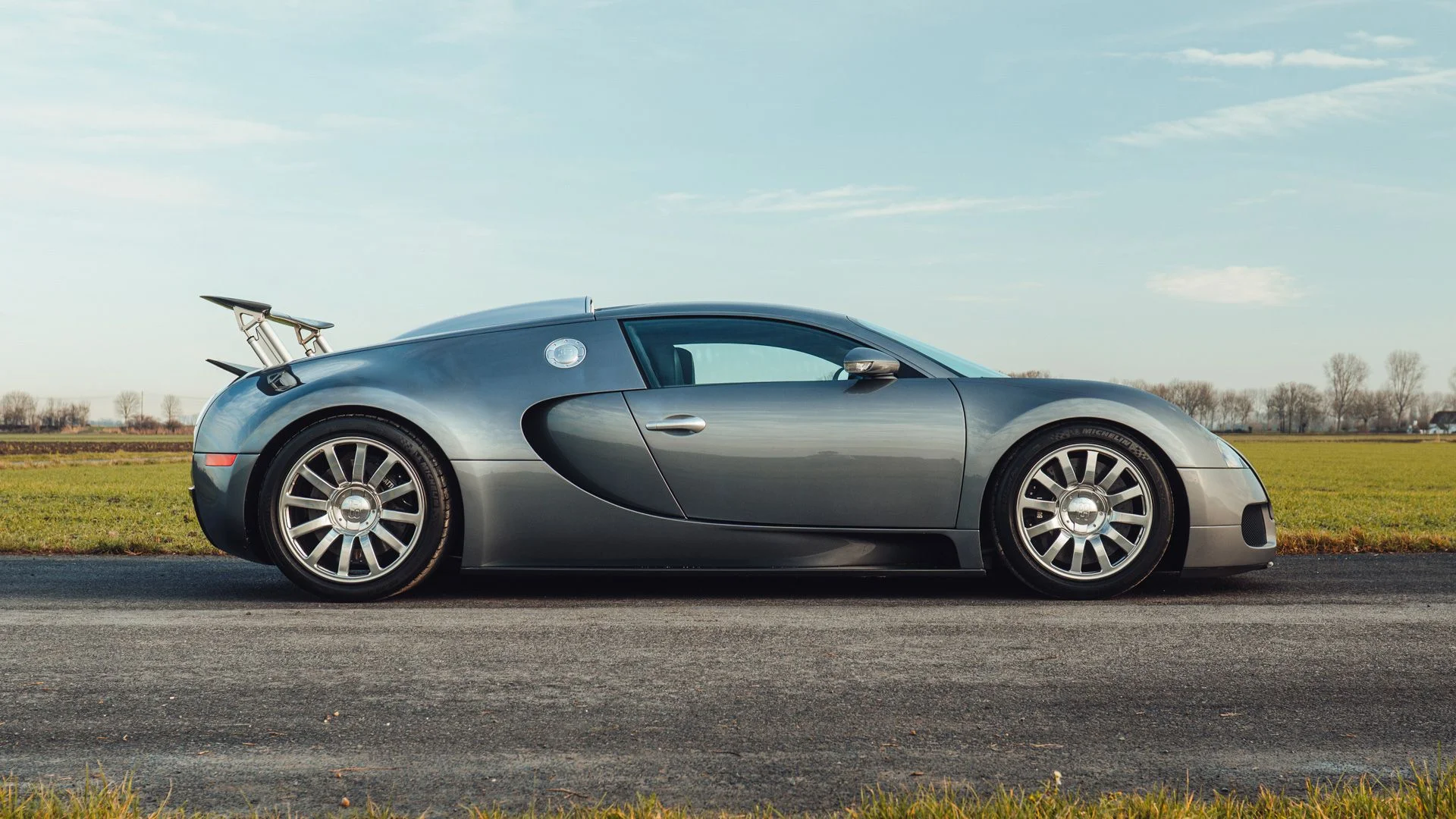
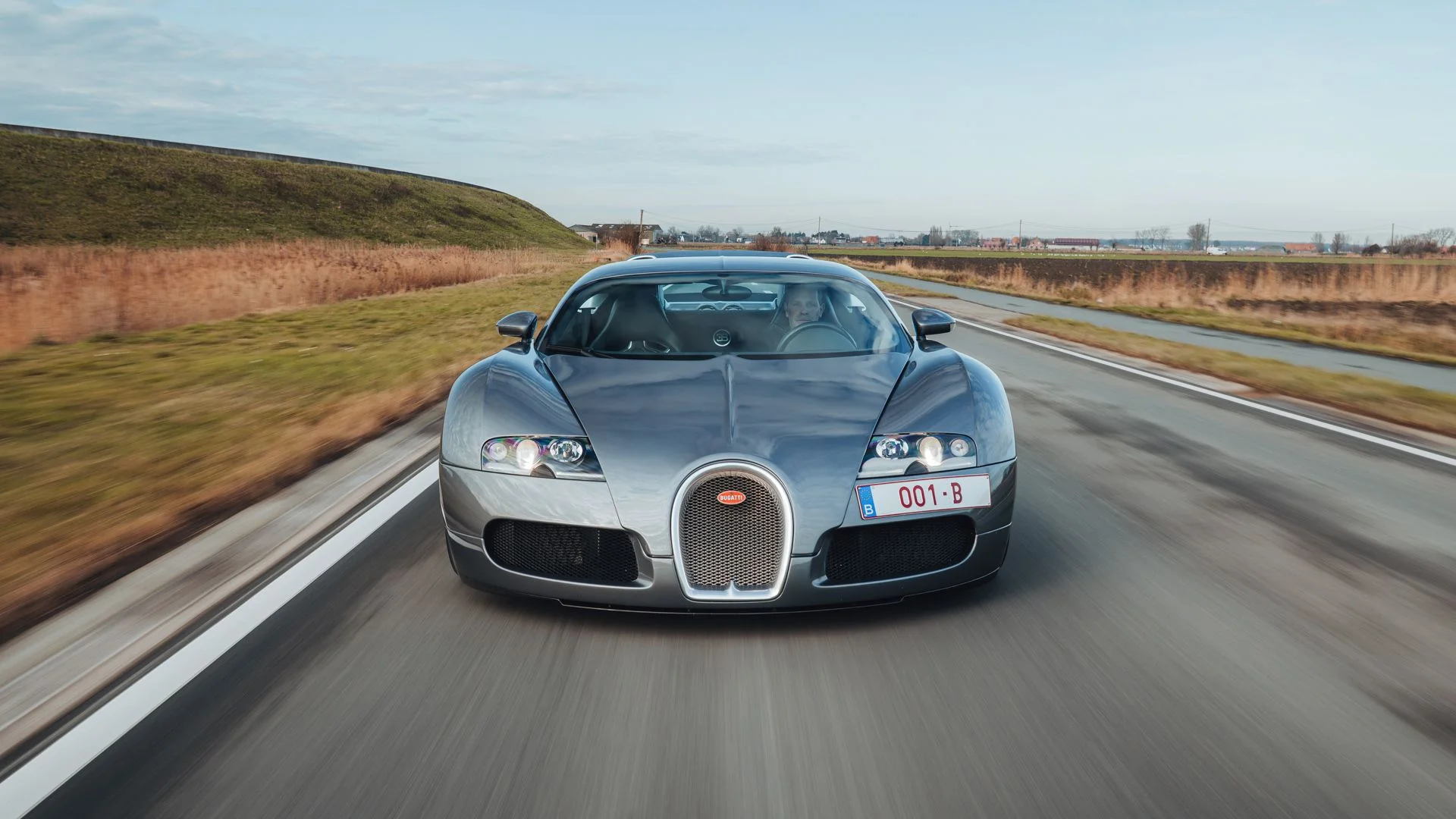
The Veyron’s design, penned by Giorgetto Giugiaro, harmonized performance with aesthetic elegance. The low nose, prominent fender flares, and aggressive stance suggested extreme performance. The side profile featured dramatic curves emphasizing the mid-engine layout. The signature C-shaped light treatment referenced classic Bugatti design language.
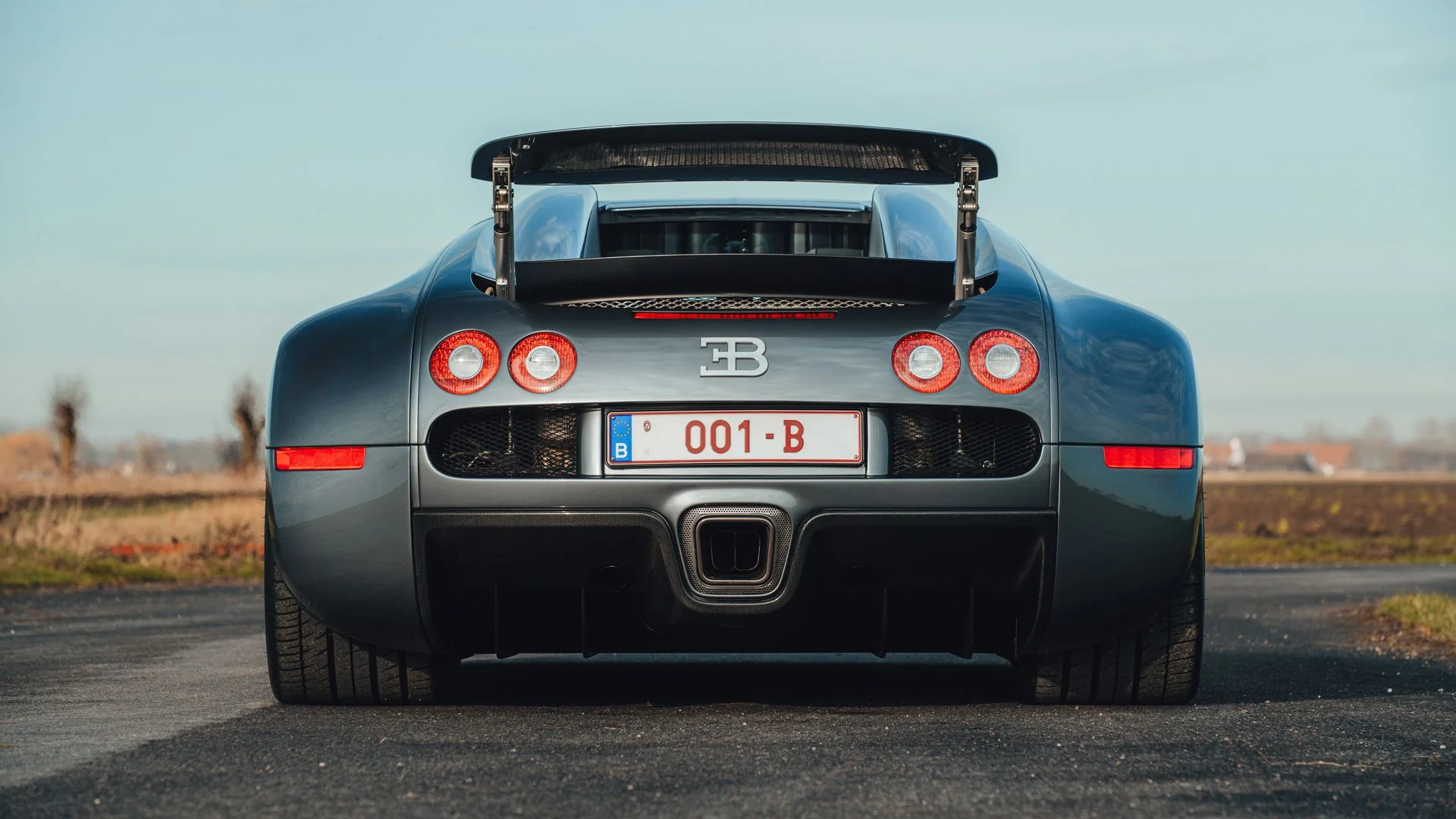
The front grille extended downward to the spoiler, creating continuous visual flow. Air ducts on either side featured decorative chrome strips. The side skirts flowed from front to rear, emphasizing the car’s length. At the rear, quad exhaust outlets emerged from a diffuser, with an adjustable rear wing providing downforce adjustment.
Customers could specify dual or monotone exteriors, with polished aluminum or exposed carbon-fiber options. Brake calipers were available in multiple colors, while door handles, mirrors, and trim pieces could be customized. The level of personalization available reflected the car’s exclusivity and astronomical price.
Interior
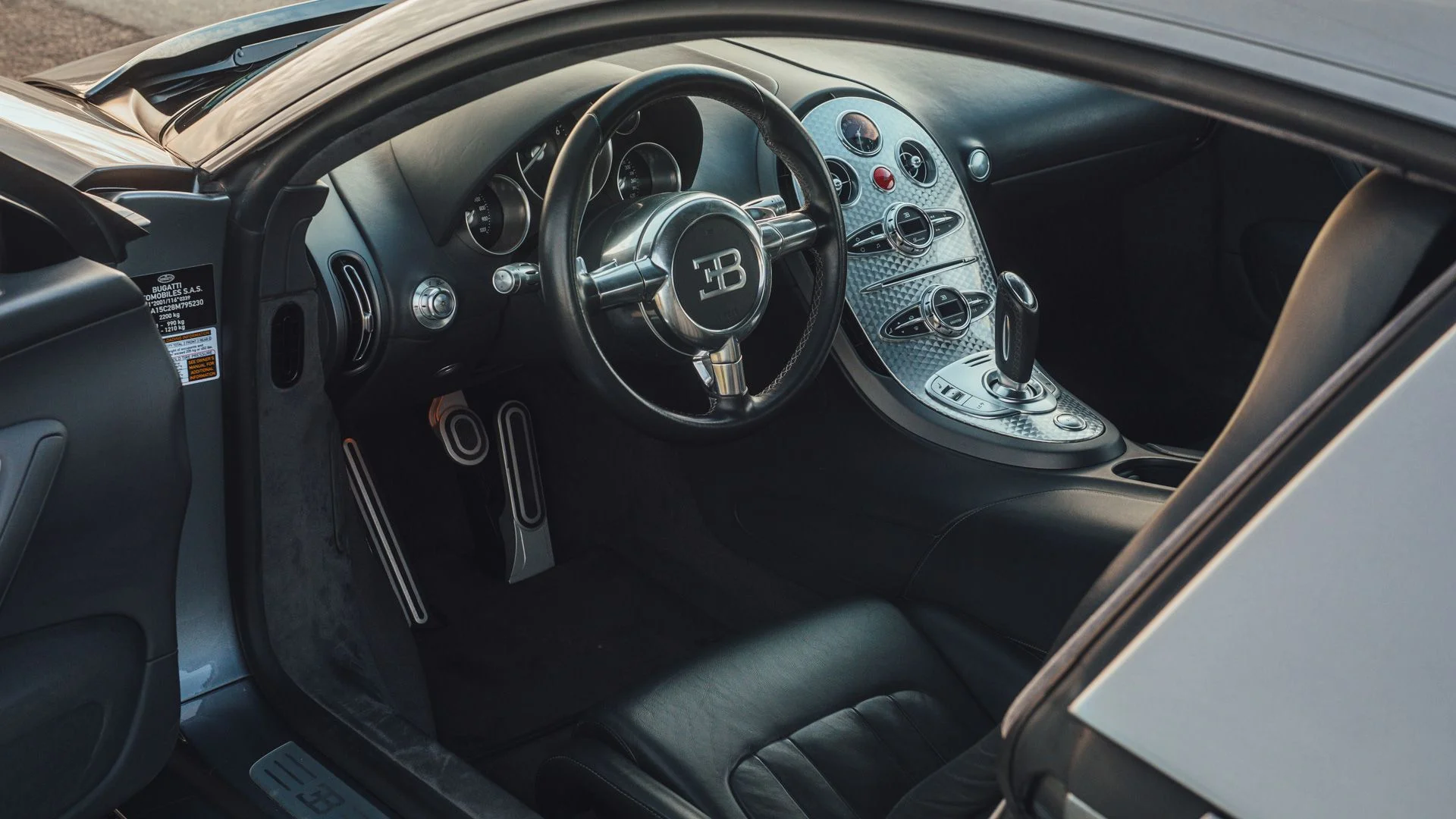
The cabin was trimmed in Hermès leather with contrast stitching, while the center console featured custom aluminum or carbon-fiber inserts. The dashboard was comprehensively instrumented with a speedometer reading to 500 km/h and additional performance-monitoring gauges. A head-up display projected critical information onto the windshield.
Two individual seats provided aggressive bolstering and support for high-speed driving. Climate control was standard, with sophisticated systems managing air intake and cooling. The steering wheel was leather-wrapped with paddle shifters for manual transmission operation. All controls fell naturally to hand, reflecting the hypercar’s emphasis on driver engagement.
Specifications
- Engine: W16 quad-turbo, 7,993cc (four VR8 blocks at 90 degrees), four valves per cylinder
- Power: 1,001 bhp at 6,000 rpm
- Torque: 922 lb-ft at 2,200-5,500 rpm
- Transmission: Seven-speed dual-clutch DSG, all-wheel drive with Torsen differential
- Chassis: Carbon-fiber monocoque, 2,710mm wheelbase
- Suspension: Double wishbones (front and rear), adaptive dampers
- Brakes: Carbon-ceramic discs 370mm (front and rear), eight-piston calipers, electronic airbrake
- Wheels: Michelin PAX 365/710 R18 run-flat tires
- Weight: 1,888 kg
- Performance: 253 mph top speed, 0-60 mph in 2.4 seconds, 0-100 mph in 6.0 seconds
Production and Legacy
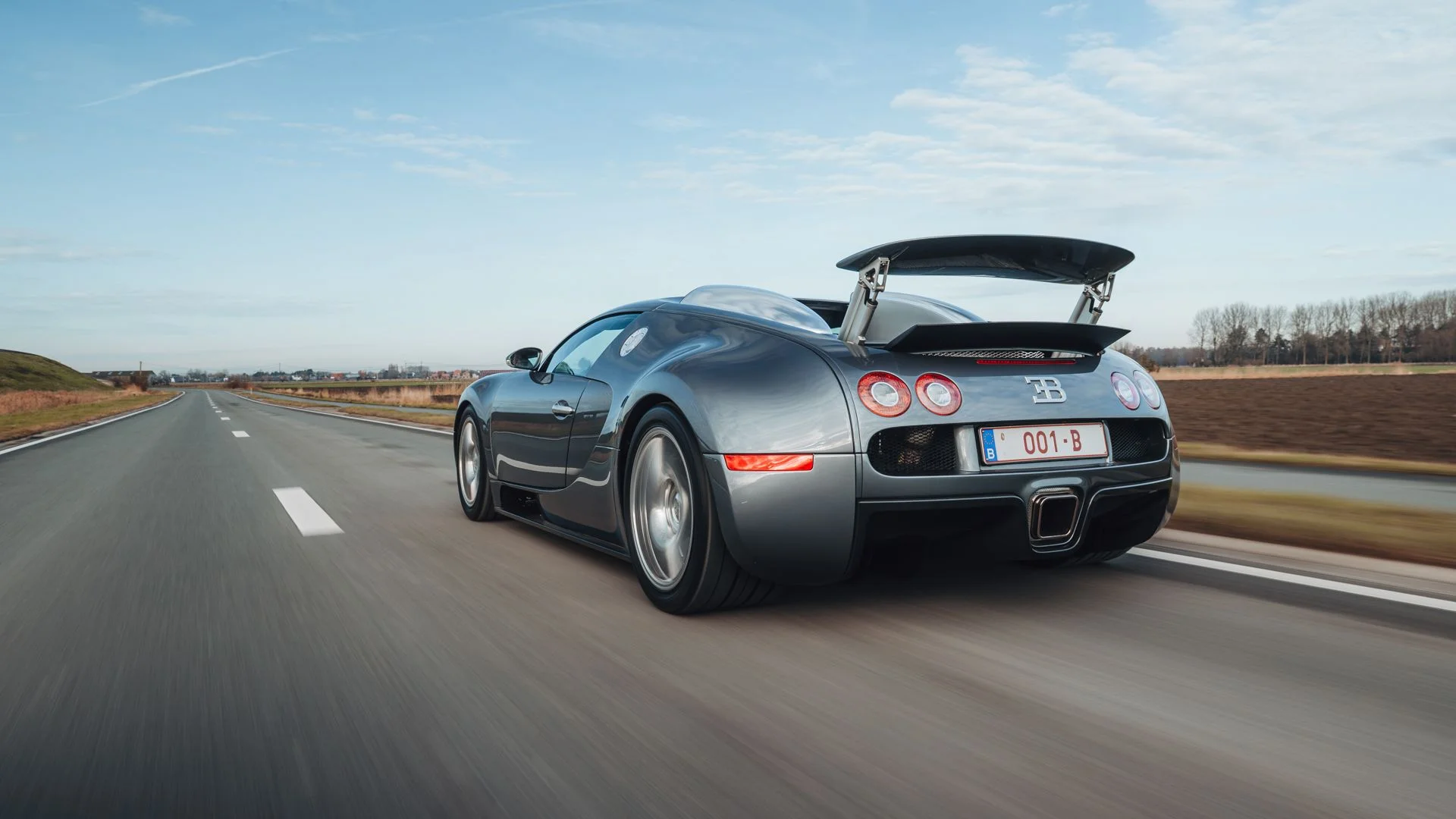
Bugatti built approximately 450 Veyron 16.4 examples between 2005 and 2011, with approximately fifty cars constructed annually. Each hypercar was hand-assembled over several weeks at Molsheim, reflecting the meticulous attention to detail. The exceptional cost combined with limited production ensured absolute exclusivity.
The Veyron proved that Volkswagen could build the world’s ultimate hypercar, that engineering ingenuity could overcome any performance barrier. It established records that stood unchallenged, proving 250-plus mph was genuinely achievable in a production vehicle.
The 2010 Veyron Super Sport variant later exceeded expectations, achieving 267.81 mph with a specially prepared engine producing 1,200 horsepower. This set the production car land speed record, cementing the Veyron’s legendary status.
Today, Veyron 16.4 examples are extraordinarily valued by collectors. The combination of technological innovation, uncompromising engineering, and absolute exclusivity has created legendary status. The Veyron remains one of the automotive industry’s greatest achievements, a hypercar that transcended performance specifications to become a work of art.