
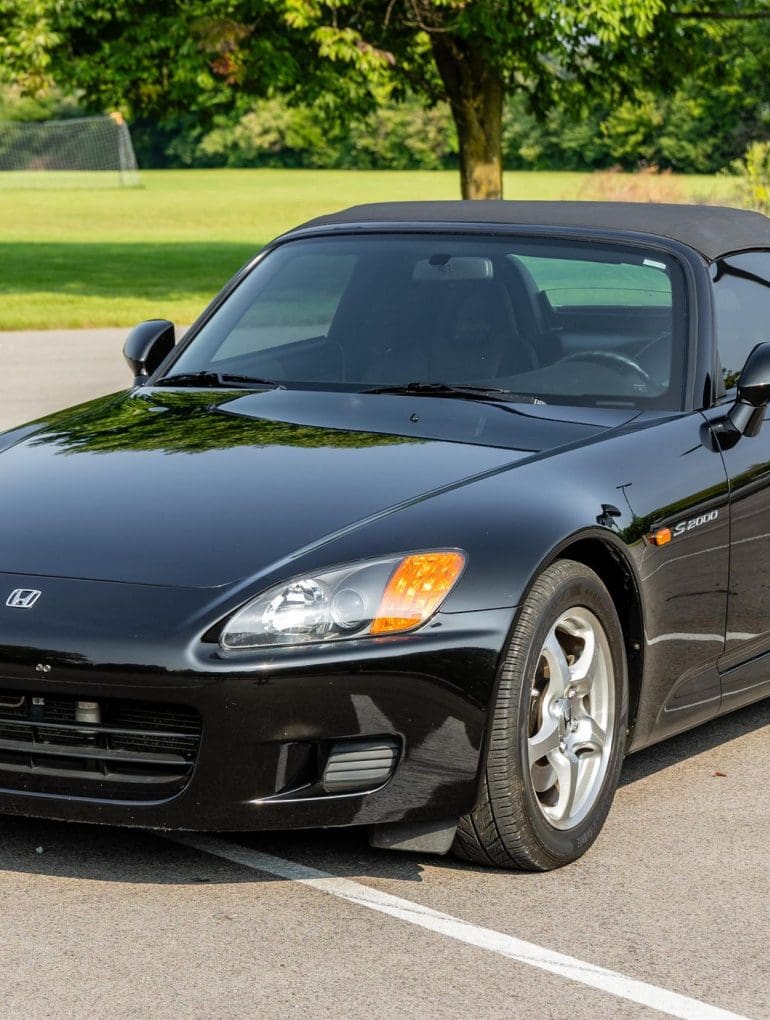

Tokyo, April 1999. Honda unveiled the S2000 at the company’s 50th anniversary celebration, a fitting tribute to founder Soichiro Honda’s passion for high-revving engines and pure driving dynamics. The roadster featured a naturally aspirated 2.0-liter inline four producing 247 horsepower at 8,300 rpm, achieving 123.5 horsepower per liter without forced induction.
A 9,000 rpm redline, six-speed manual transmission, and near-perfect 50:50 weight distribution completed the package. This was Honda’s challenge to Porsche, delivered with VTEC technology and wrapped in clean, purposeful styling. Production began in April 1999, continuing until 2009 with over 110,000 built.
Background and Origins
Honda’s sports car heritage stretched back to the 1960s with the S500, S600, and S800 roadsters. These tiny machines established Honda’s reputation for high-revving engines and precise handling. After Soichiro Honda retired in 1973, the company focused on practical transportation, abandoning sports cars entirely.
By the mid-1990s, Honda’s engineers wanted to build a proper sports car again. The brief was simple: create a front-engine, rear-wheel drive roadster that showcased Honda’s engineering prowess. It needed to rev higher, handle better, and demonstrate more precision than anything from Mazda, BMW, or Porsche.
Development began in 1995 under chief engineer Shigeru Uehara, who’d previously worked on the original NSX. His team designed an all-new platform with a front-mid engine layout, X-bone frame structure, and sophisticated suspension geometry. The engine would be Honda’s F20C, a clean-sheet design specifically for the S2000.
The car debuted at Tokyo in October 1995 as the SSM concept, then reappeared in production form in October 1998. Sales began in Japan in April 1999, with US deliveries starting in June as a 2000 model year vehicle.
Design and Engineering
The S2000’s structure was a steel monocoque with an innovative X-bone frame connecting the suspension pickup points. High-strength steel in critical areas provided exceptional rigidity while keeping weight to 1,260 kilograms. The 2,400mm wheelbase positioned the engine entirely behind the front axle centerline, achieving perfect 50:50 weight distribution.
Suspension was a sophisticated double wishbone setup at all four corners. Forged aluminum lower arms, advanced geometry, and carefully tuned compliance bushings delivered remarkable precision. Compliance steer was engineered in deliberately, allowing the rear suspension to toe slightly during hard cornering for increased stability.
Braking was by four-wheel discs: vented 300mm front, solid 282mm rear, with four-piston calipers up front. ABS was standard. Electric power steering provided quick response with a 2.4-turn lock-to-lock ratio.
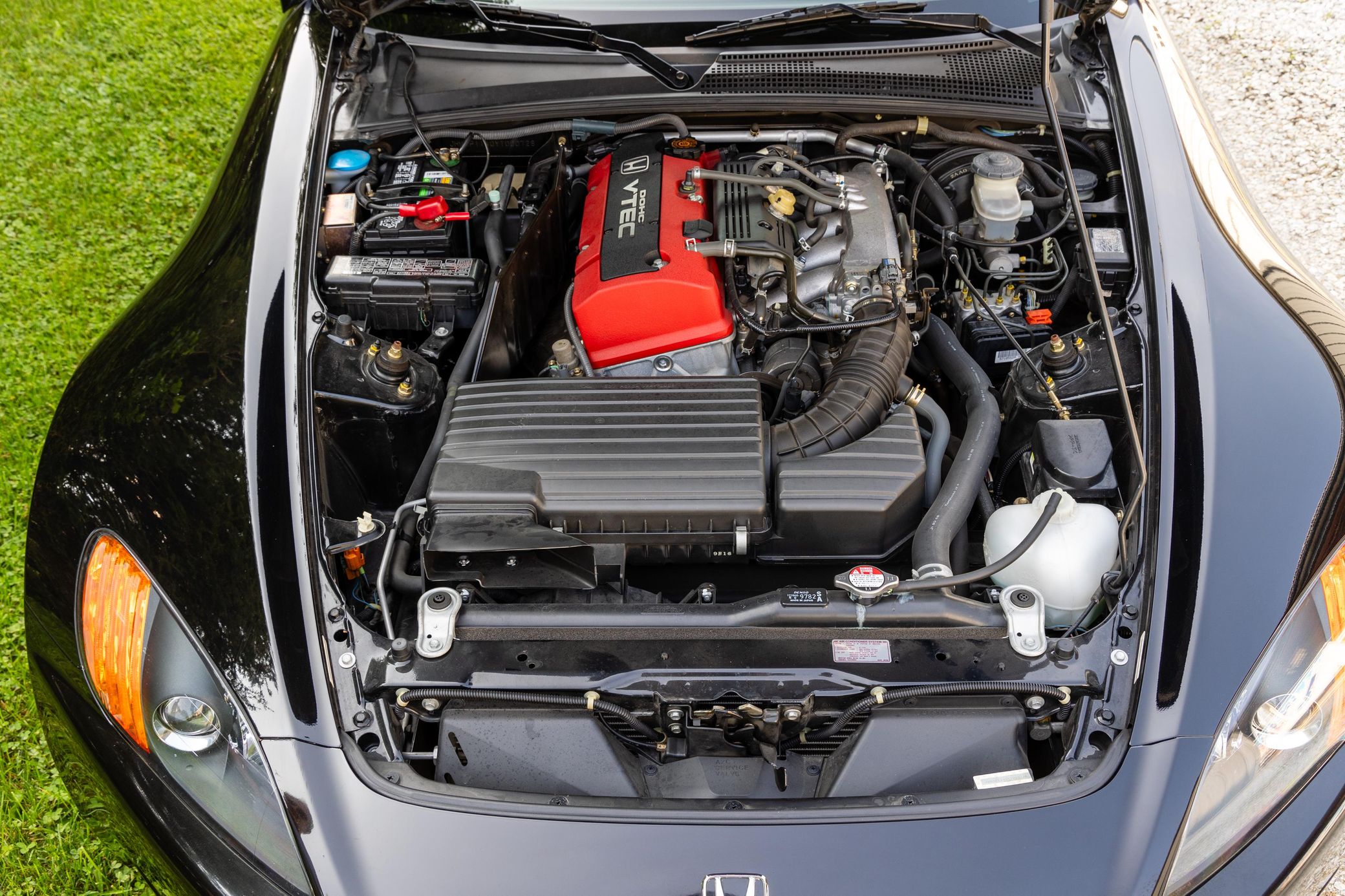
The engine was Honda’s masterpiece. The F20C displaced exactly 1,997cc with an oversquare 87mm bore and 84mm stroke. The aluminum block featured fiber-reinforced metal cylinder liners and a ladder-frame main bearing structure. The DOHC head incorporated VTEC variable valve timing on both intake and exhaust, switching cam profiles at 6,000 rpm.
With an 11.1:1 compression ratio and individual throttle bodies, the F20C produced 247 horsepower at 8,300 rpm and 161 lb-ft at 7,500 rpm in Japan and Europe. US-spec cars were slightly detuned to 240 horsepower due to emissions regulations. The 9,000 rpm redline was the highest of any production car with a conventional valvetrain.
The transmission was a close-ratio six-speed manual with a 4.1:1 final drive. Honda’s engineers machined the gears to aerospace tolerances, creating shifts so precise they felt mechanical rather than automotive.
Styling
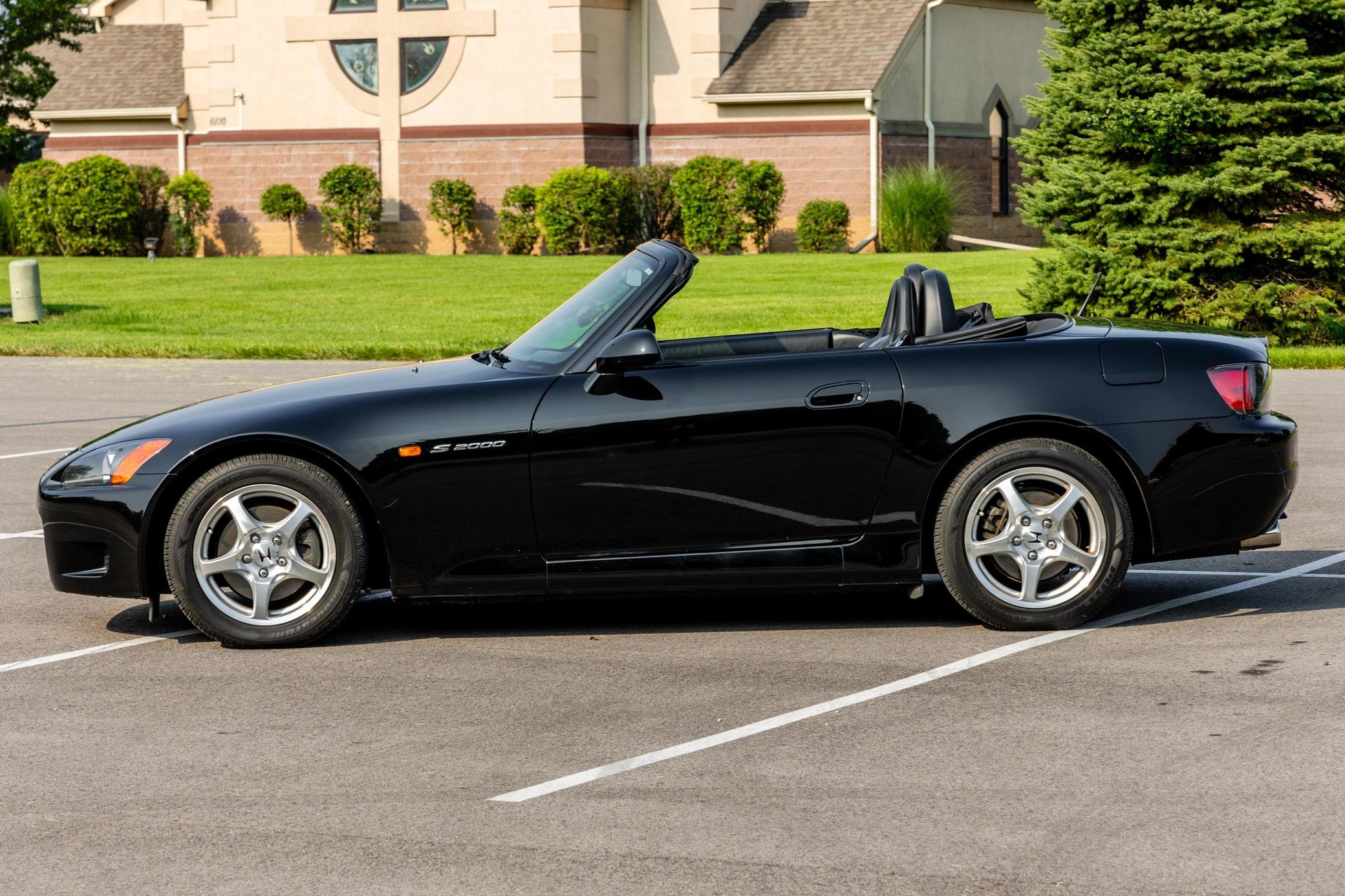
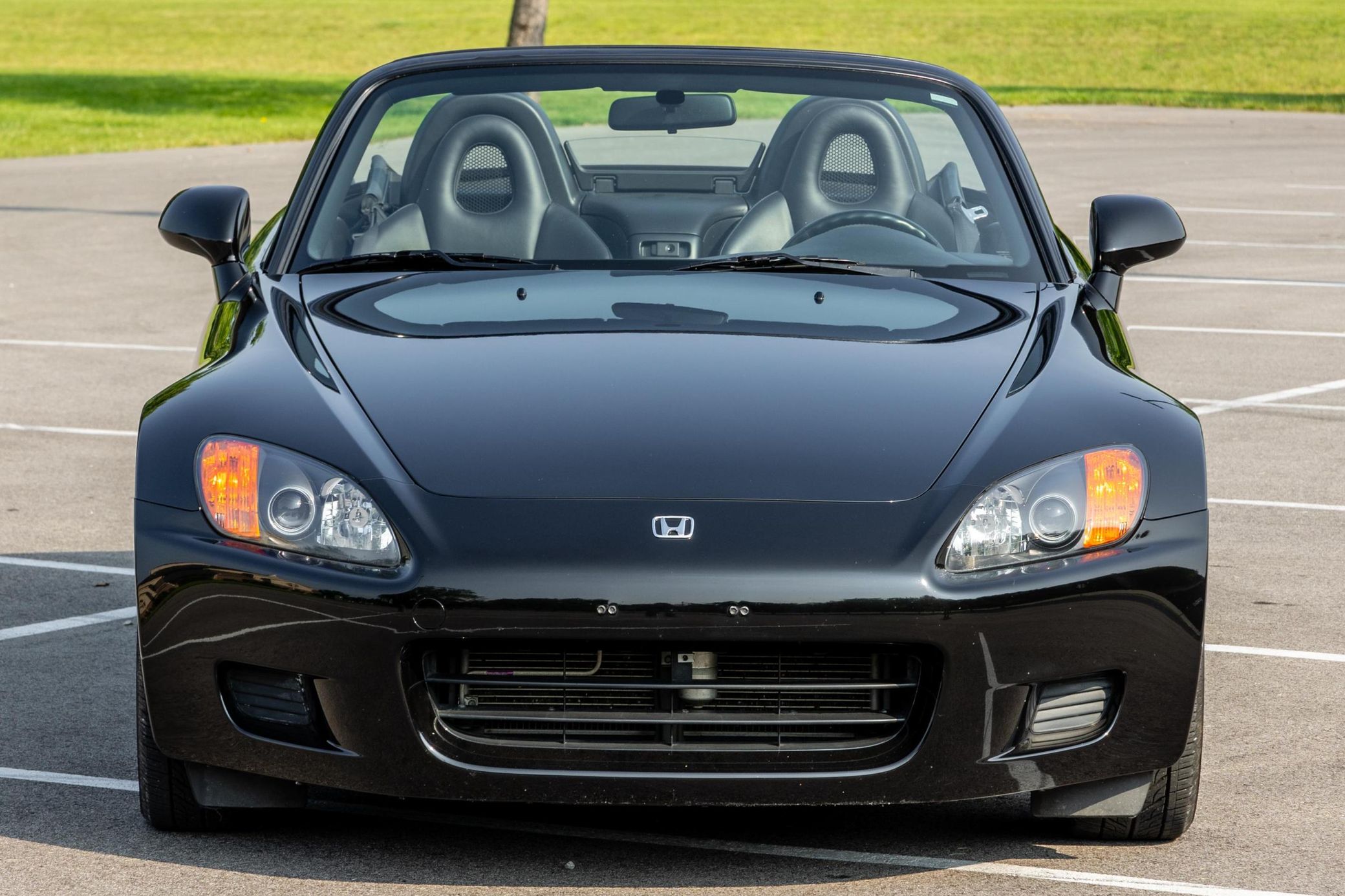
The S2000’s design came from Honda’s California design studio under Hiroshi Nagano. The proportions were classic roadster: long hood, short rear deck, and minimal overhangs. Flush-mounted headlights and a simple grille kept the nose clean. Small side vents behind the doors evacuated cabin heat.
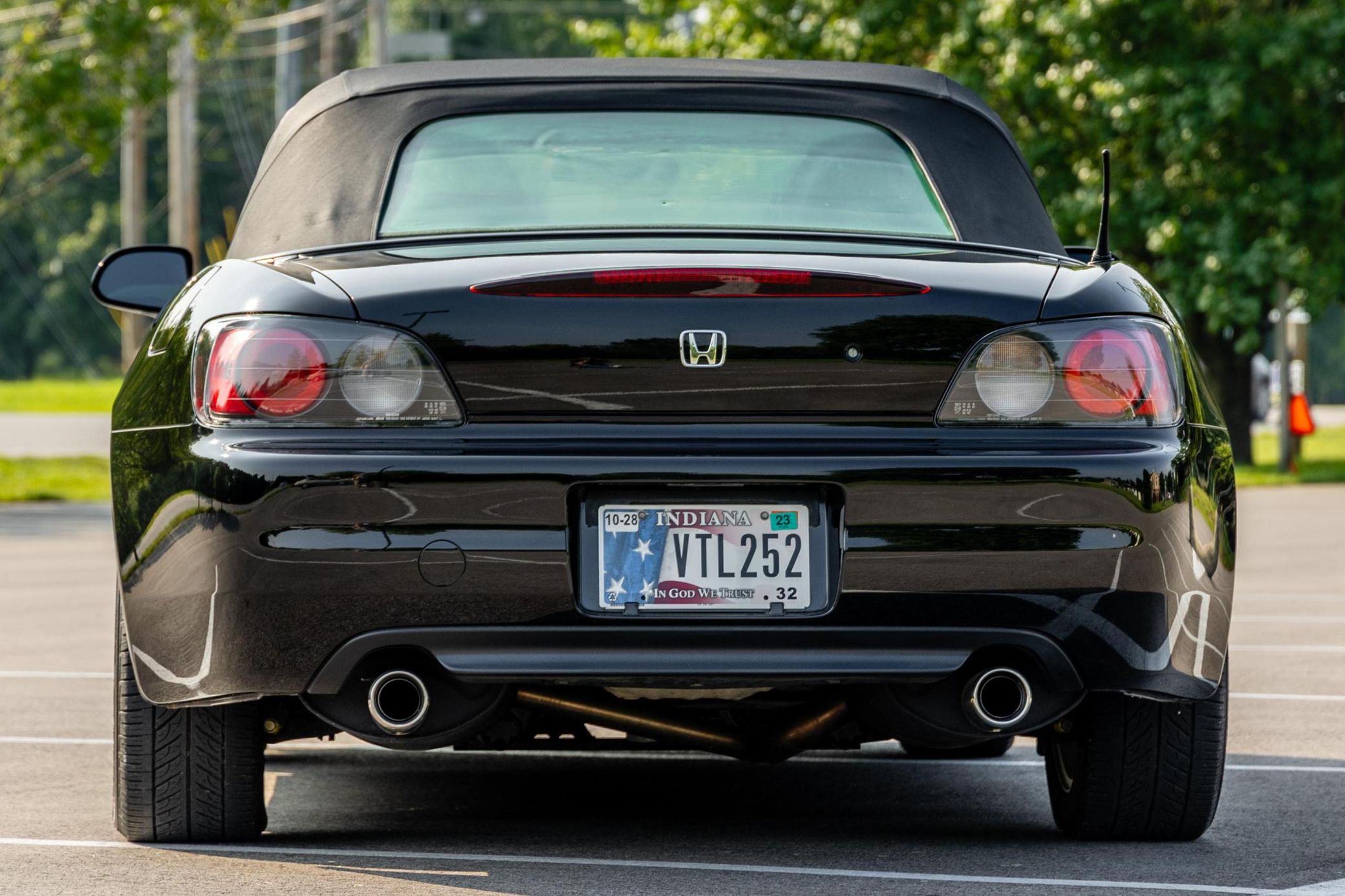
The rear featured rounded taillights and a subtle integrated spoiler. A soft top folded beneath a rigid tonneau cover, maintaining clean lines when lowered. The design was understated compared to contemporary Japanese sports cars, favoring elegance over aggression.
Standard wheels were 16-inch aluminum measuring 6.5 inches wide front and 7.5 inches wide rear, wearing 205/55 R16 and 225/50 R16 Bridgestone Potenza S-02 tires respectively. Color choices included Grand Prix White, Silverstone Metallic, Spa Yellow, Sebring Silver, and Berlina Black.
Interior
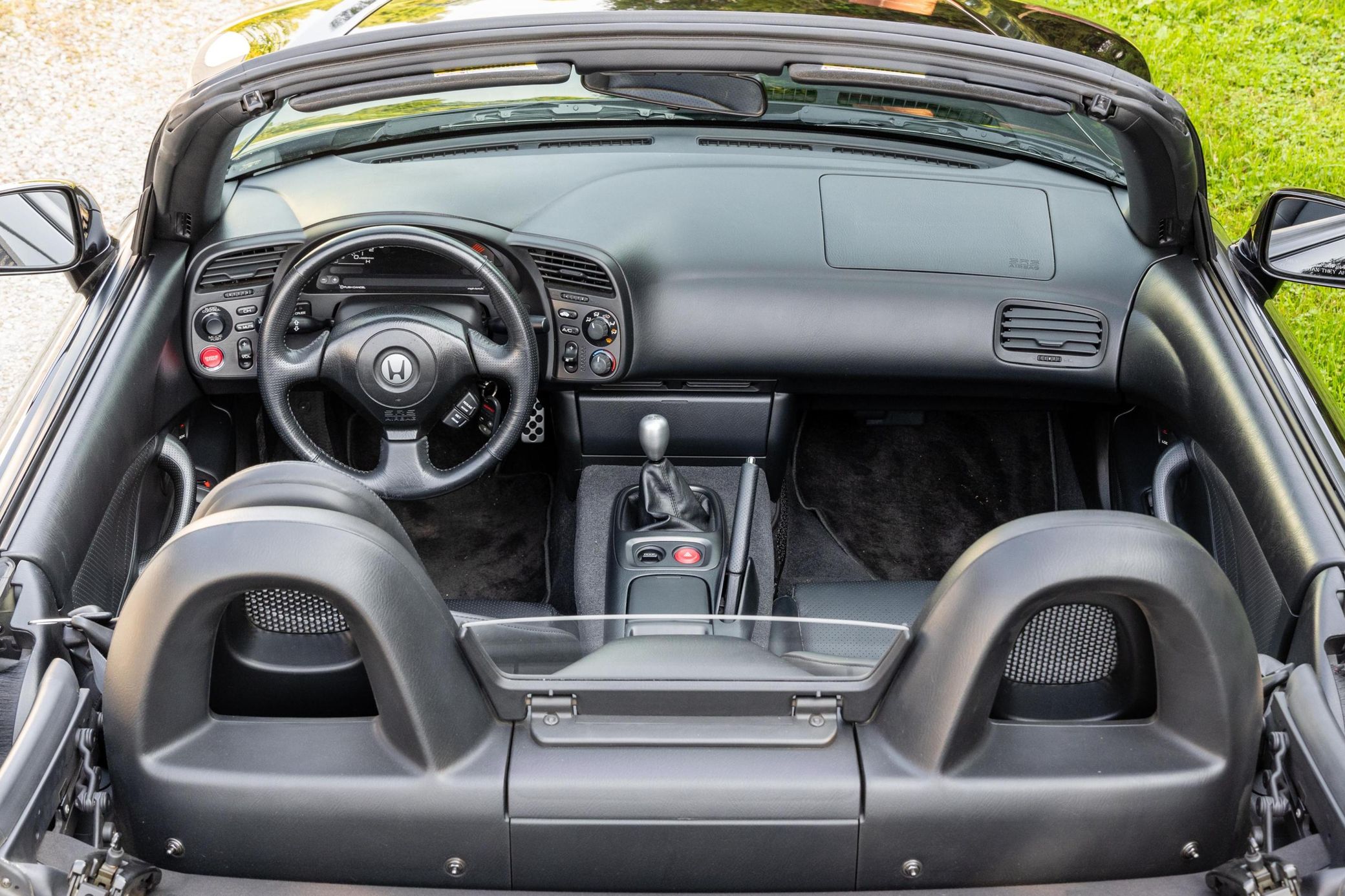
The cockpit was driver-focused and deliberately simple. Black leather bucket seats provided excellent support. The dashboard curved around the driver, placing all controls within easy reach. A large analog tachometer dominated the instrument cluster, redlined at 9,000 rpm with white numbers on black background. The digital speedometer sat to the right, along with fuel and temperature gauges.
A leather-wrapped steering wheel faced the driver, with the Honda badge at its center. The aluminum shift knob was perfectly weighted, each gear change a tactile pleasure. Climate control was manual, with rotary dials for temperature and fan speed. The stereo was basic but adequate, though most owners preferred the F20C’s mechanical soundtrack. The soft top operated manually. With the top down and windows up, wind buffeting was minimal.
Specifications
- Engine: F20C inline four, 1,997cc (87mm x 84mm), DOHC, four valves per cylinder, VTEC
- Power: 247 bhp at 8,300 rpm (240 bhp US-spec)
- Torque: 161 lb-ft at 7,500 rpm (153 lb-ft US-spec)
- Transmission: Six-speed manual, 4.1:1 final drive
- Chassis: Steel monocoque with X-bone frame, 2,400mm wheelbase
- Suspension: Double wishbones (front and rear)
- Brakes: Vented discs 300mm (front), solid discs 282mm (rear)
- Wheels: 16-inch aluminum, 6.5×16 front, 7.5×16 rear, 205/55 R16 (front), 225/50 R16 (rear)
- Weight: 1,260 kg
- Performance: 150 mph top speed, 0-60 mph in 5.8 seconds
Competition History
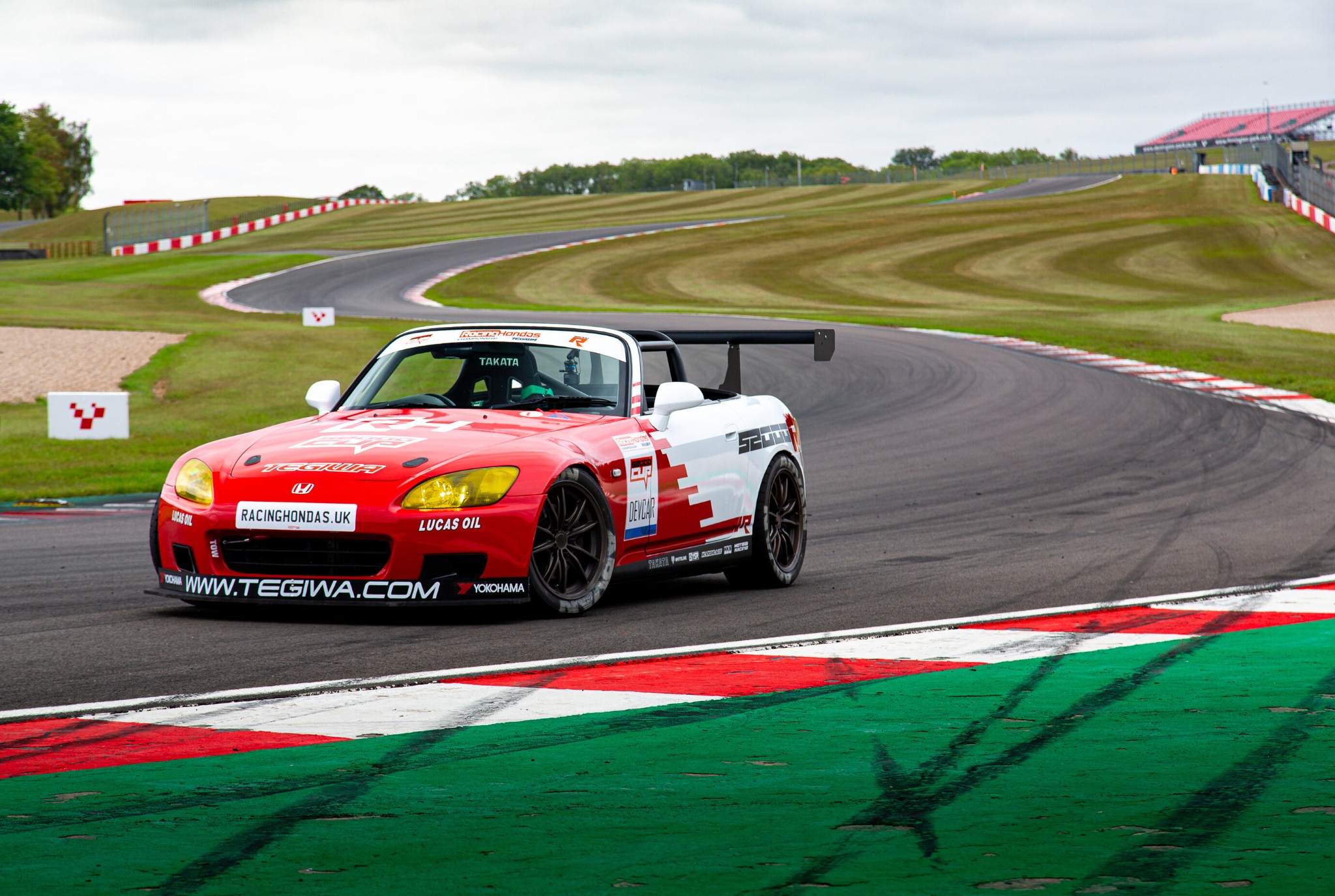
While designed as a road car, the S2000 found success in amateur racing worldwide. Its balanced chassis and rev-happy engine made it competitive in stock classes. The S2000 dominated SCCA T2 class competition throughout the early 2000s, with its combination of power, handling, and reliability proving unbeatable. Numerous privateer entries campaigned S2000s in British club racing and Japanese time attack events. Several tuning shops developed forced induction kits for customers seeking more power, though most enthusiasts appreciated the naturally aspirated character.
Production and Legacy
Honda built 110,673 S2000s between April 1999 and August 2009 at the Takanezawa plant in Tochigi. Early AP1 models ran from 1999 to 2003 with the F20C engine. The 2004 refresh brought the AP2 chassis with revised suspension geometry, a larger 2.2-liter F22C engine for some markets, and improved steering feel.
The S2000 achieved everything Honda intended. It proved the company could build a world-class sports car matching or exceeding European rivals. The F20C’s 123.5 horsepower per liter remained the naturally aspirated production record until Ferrari’s 458 Italia arrived in 2010. More importantly, the S2000 recaptured Soichiro Honda’s spirit, creating a machine that rewarded commitment and skill.
Today, clean examples command strong prices as enthusiasts recognize the S2000 as the last pure naturally aspirated sports car from Honda’s golden era. It remains the benchmark for high-revving naturally aspirated engines and proof that perfect execution matters more than raw specifications. The S2000 was Honda’s love letter to driving, a celebration of engineering excellence wrapped in understated elegance.