
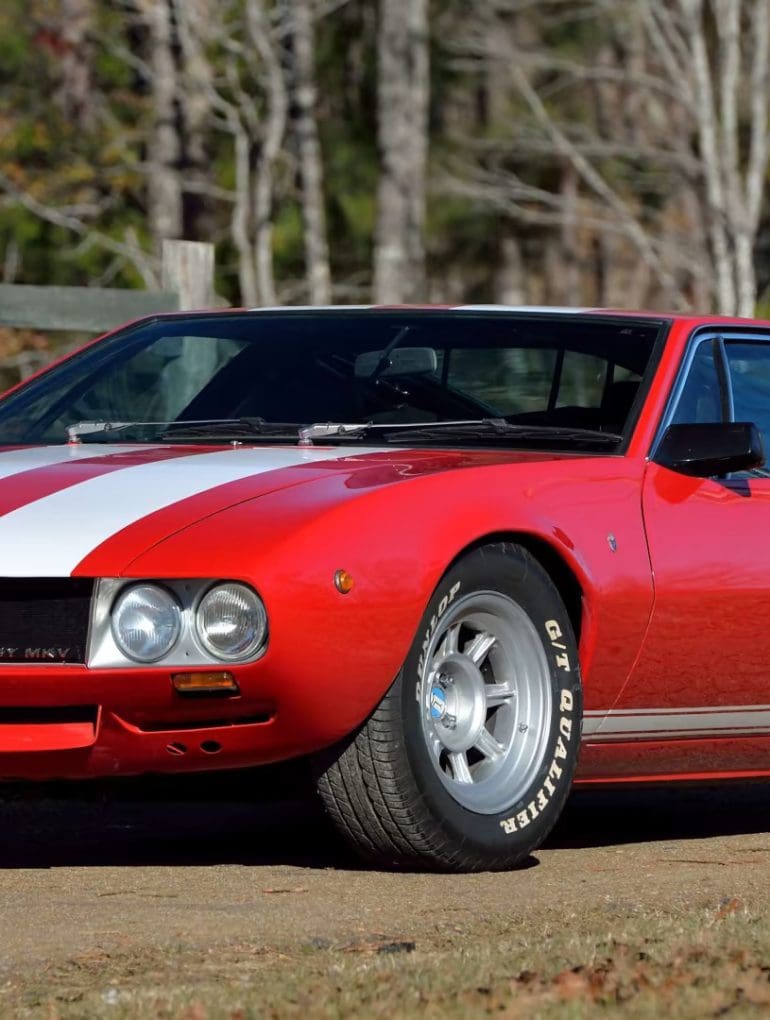

Los Angeles, 1967. Carroll Shelby needed a successor to the Cobra. Ford’s racing program was winding down, and the brutish roadster was becoming obsolete in an era of mid-engined exotics. Shelby approached Alejandro de Tomaso, whose Vallelunga sports racer showed promise. They struck a deal: De Tomaso would build a mid-engined chassis, Shelby would install Ford V8 power and sell it through his American dealer network. The result was the Shelby MkV, essentially a pre-production Mangusta with Shelby badges. Approximately six examples were built in 1967 before the partnership collapsed. De Tomaso took the design, refined it, and launched it as the Mangusta in his own name. The Shelby MkV became a footnote, the car that almost was.
Background and Origins
By 1966, Carroll Shelby dominated American sports car racing with the Cobra and GT40, but both programs were ending. Ford was withdrawing from racing after achieving their Le Mans objectives. The Cobra was outdated, its front-engine layout and solid rear axle thoroughly obsolete compared to mid-engined competitors. Shelby needed a modern sports car for the road and track.
Alejandro de Tomaso was building racing specials in Modena with limited success. His Vallelunga featured a mid-mounted Ford inline four and backbone chassis, but financial struggles limited production. When Shelby approached him in early 1966 proposing a partnership, De Tomaso saw opportunity. Shelby would provide Ford engines, American market access, and capital. De Tomaso would design and build the chassis in Italy.
Development began immediately. De Tomaso’s team, led by engineer Gian Paolo Dallara, designed a steel backbone chassis similar to the Vallelunga but larger and stronger. The engine would mount longitudinally behind the seats, driving through a ZF transaxle. Ghia, which De Tomaso had recently acquired, would design the bodywork under Giorgetto Giugiaro’s direction.
The first prototype appeared in mid-1967, badged as the Shelby MkV. Approximately six examples were built and shipped to Shelby American in California for evaluation and dealer demonstrations. However, the partnership quickly soured over financial disagreements and control issues. By late 1967, Shelby and De Tomaso had parted ways. De Tomaso kept the design, refined it slightly, and launched it at Turin in November 1966 as the Mangusta under his own name.
Design and Engineering
The MkV utilized a steel backbone chassis with tubular outriggers supporting the suspension and body panels. Two large-diameter tubes ran from the front suspension to the firewall, where they joined a substantial center section housing fuel tanks. Behind the cabin, fabricated steel supports carried the rear suspension and engine/transmission assembly. The 2,500mm wheelbase was identical to the later Mangusta.
Suspension was unequal-length double wishbones at all four corners with coil springs and tube shocks. The geometry prioritized simplicity and serviceability over sophistication. Rack-and-pinion steering provided direct response. Girling disc brakes measuring 280mm sat at all four corners, though early examples suffered from inadequate cooling.
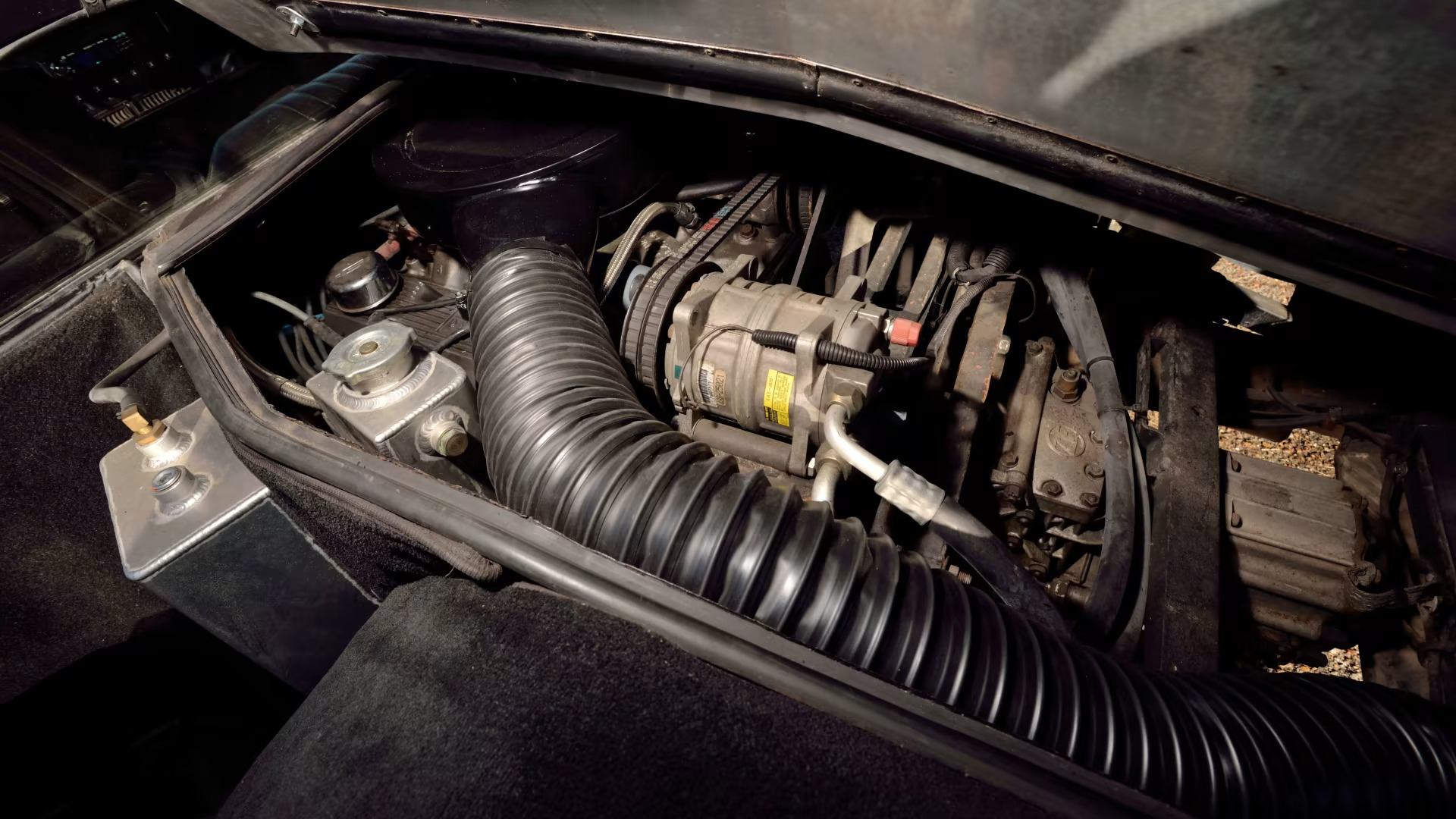
The engine was Ford’s 289 cubic inch small-block V8, the same unit powering late-model Cobras. Displacing 4,727cc with a 101.6mm bore and 72.9mm stroke, this overhead-valve V8 featured a Holley four-barrel carburetor and hydraulic lifters. Output was approximately 271 horsepower at 6,000 rpm and 312 lb-ft at 3,400 rpm in Shelby’s typical high-performance tune.
The engine mounted amidships but faced rearward, driving forward through a ZF five-speed transaxle positioned ahead of the rear axle line. This layout concentrated weight between the axles but created significant polar moment of inertia. Weight distribution was approximately 32 percent front, 68 percent rear, making the car extremely tail-happy.
Styling
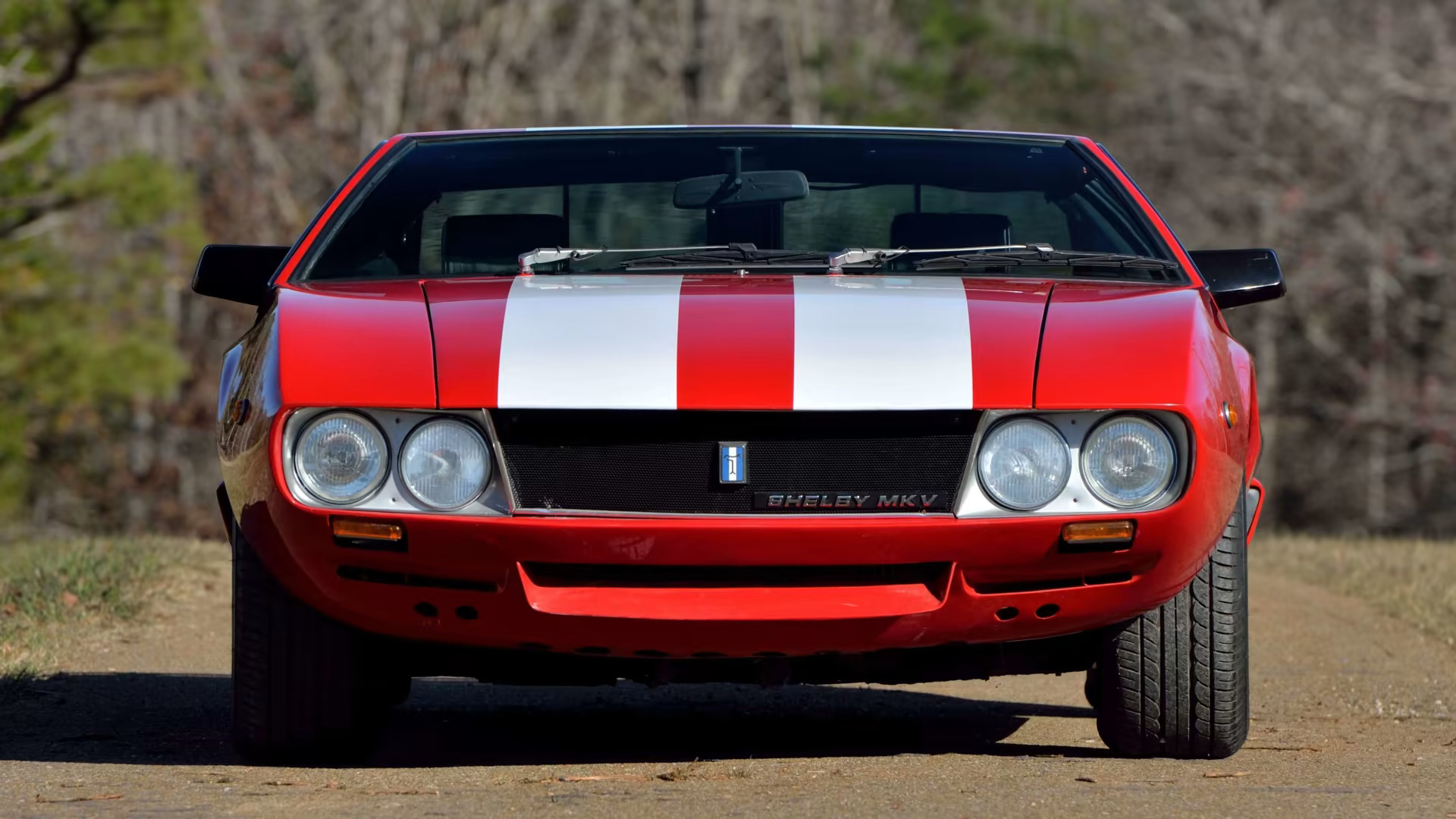
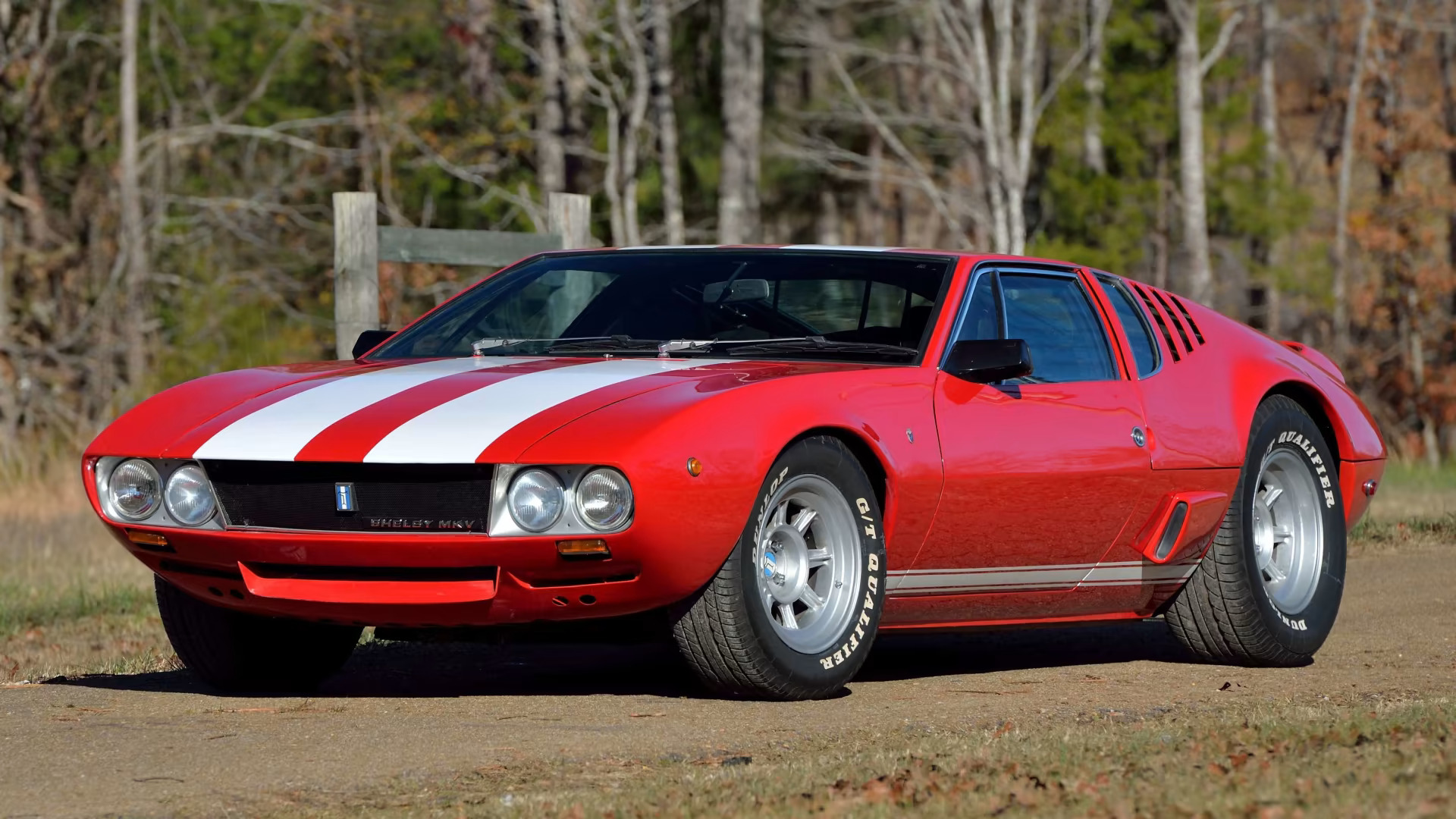
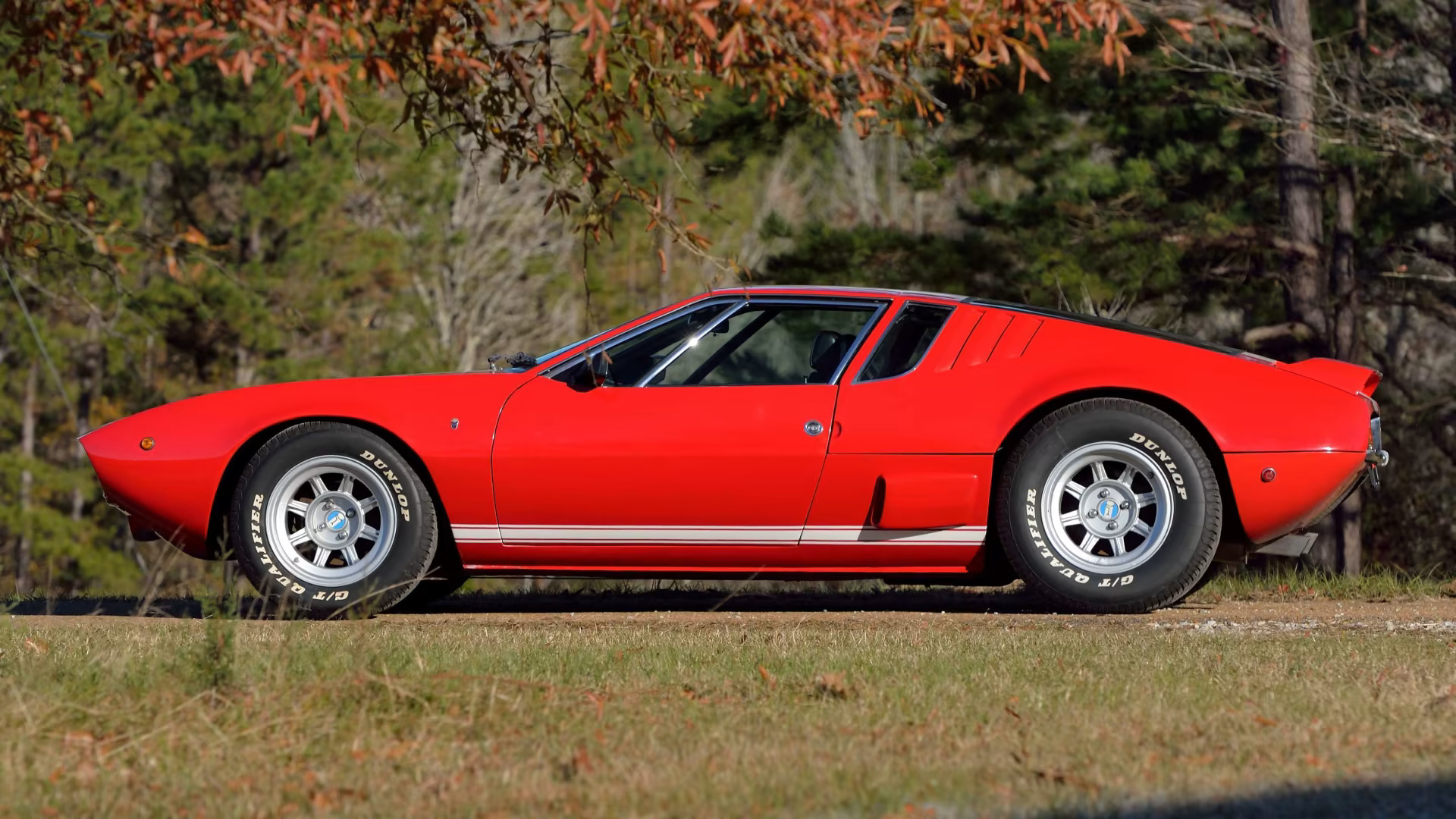
Giugiaro’s design for the MkV was virtually identical to the production Mangusta that followed. The dramatic wedge shape featured a low nose, high tail, and those signature gullwing engine covers dominating the rear three-quarters. The front end had retractable headlights behind slatted grilles with a shallow air intake feeding the radiator.
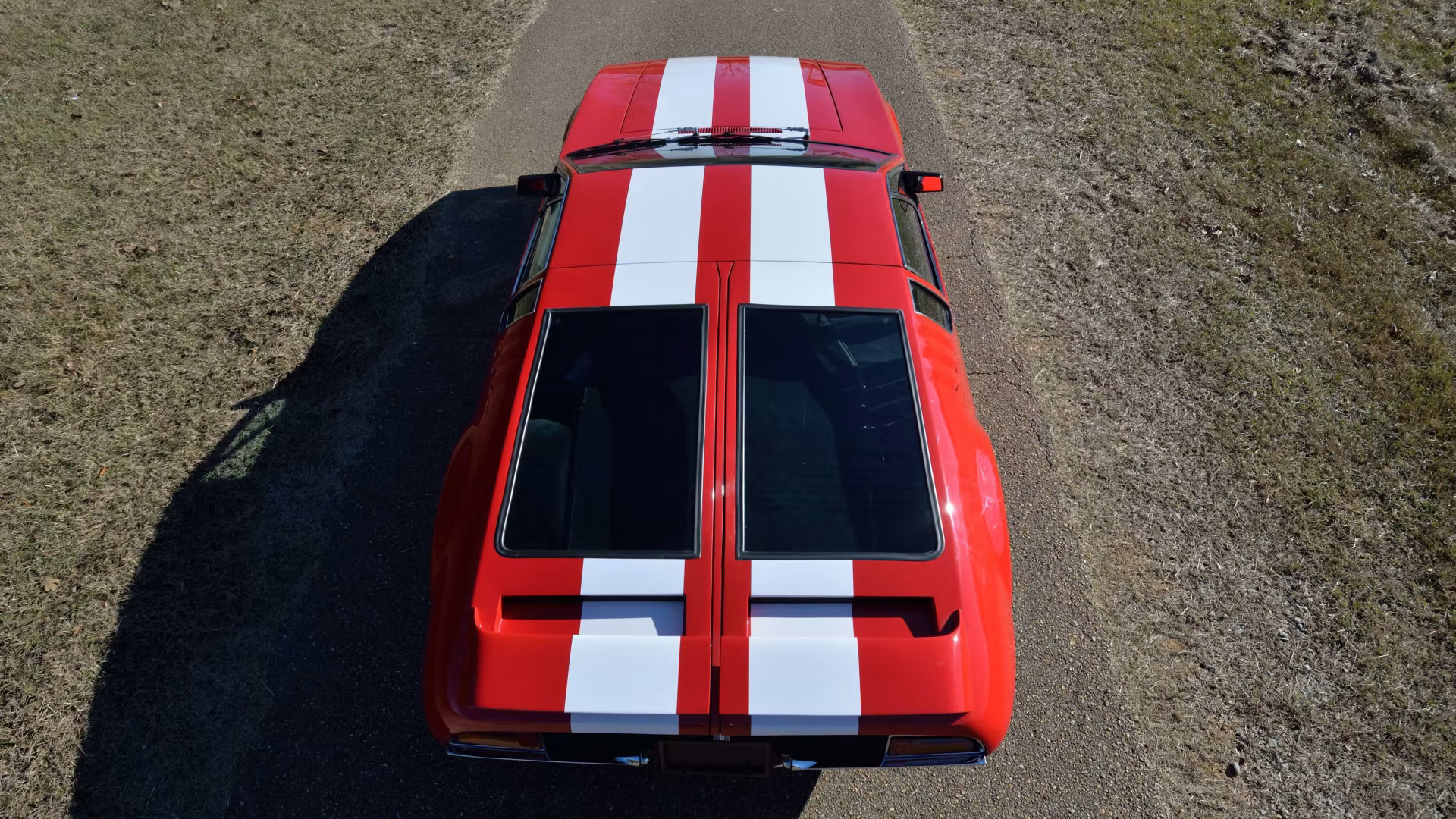
The defining feature was the enormous rear hatches, hinged along the centerline and opening upward like wings. With both covers raised, the entire drivetrain was accessible for service. This theatrical gesture became the car’s signature, even if it made parking in tight spaces nearly impossible.
Body panels were hand-formed aluminum over the tubular steel framework. Early MkV examples featured exposed pop-rivets along panel seams, reflecting their prototype status. Shelby badges appeared on the nose and tail, along with side stripes in traditional Shelby blue and white. Five-spoke wheels were American-market Shelby units rather than the Campagnolo magnesium wheels used on later Mangustas.
The overall appearance was aggressive and purposeful, though details like panel gaps and trim quality reflected the car’s prototype nature. These were development mules rather than finished production cars.
Interior
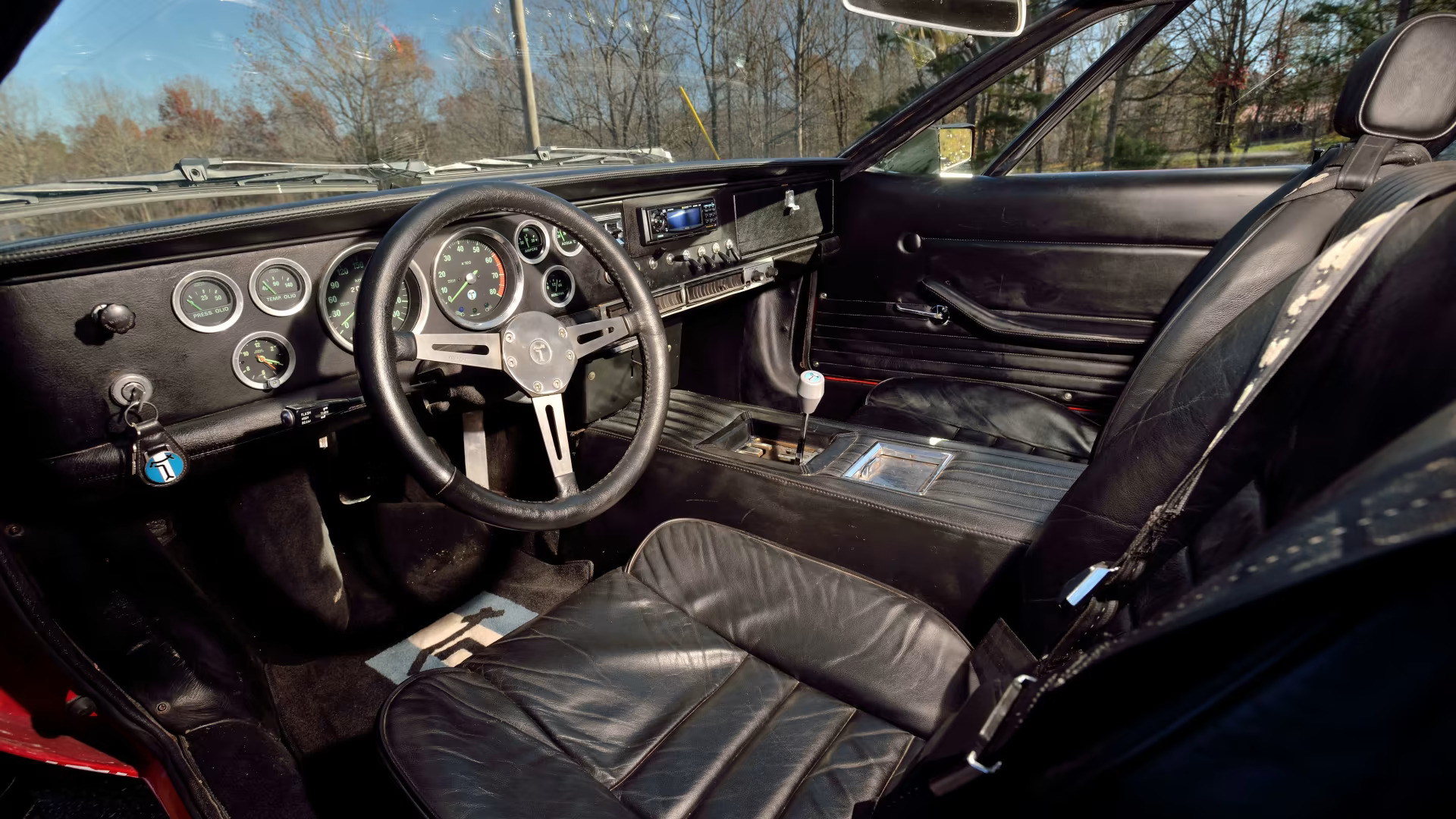
The MkV’s cabin was spartan. Simple bucket seats wore vinyl upholstery with minimal padding. The dashboard was a basic aluminum panel housing Stewart-Warner gauges including a tachometer, speedometer, oil pressure, water temperature, and fuel gauges. The instrument layout was more American hot rod than Italian exotic.
A wood-rimmed steering wheel faced the driver. The ZF gear lever protruded from the transmission tunnel with mechanical directness. Pedals were floor-mounted and well-positioned despite the offset driving position. Switchgear was minimal, controlling lights, wipers, and basic ventilation.
There was no radio, no air conditioning, minimal sound deadening. The engine sat directly behind the cabin with only a thin bulkhead for separation, making conversation impossible at speed. Luggage space was negligible, limited to a tiny compartment in the nose. The overall atmosphere was unfinished and functional, reflecting the car’s prototype status.
Specifications
- Engine: Ford 289 V8, 4,727cc (101.6mm x 72.9mm), overhead valves, two valves per cylinder
- Power: 271 bhp at 6,000 rpm
- Torque: 312 lb-ft at 3,400 rpm
- Carburation: Single Holley four-barrel carburetor
- Transmission: ZF five-speed transaxle
- Chassis: Steel backbone with tubular outriggers, 2,500mm wheelbase
- Suspension: Unequal-length double wishbones (front and rear)
- Brakes: Girling disc brakes 280mm (front and rear)
- Wheels: 15-inch Shelby five-spoke, approximately 205/70 VR15 (front), 215/70 VR15 (rear)
- Weight: 1,360 kg (estimated)
- Performance: 155 mph top speed (estimated), 0-60 mph in approximately 6.5 seconds
Competition History
The Shelby MkV never competed officially as only six examples were built before the partnership dissolved. These prototype cars were used primarily for dealer demonstrations and press evaluation in California. At least one example was reportedly tested at Riverside Raceway, where its straight-line performance impressed but handling proved treacherous due to the extreme rear weight bias.
Had the partnership continued, Shelby likely would have campaigned the MkV in SCCA production racing and possibly international GT competition. However, the car’s cancellation prevented any serious competition development.
Production and Legacy
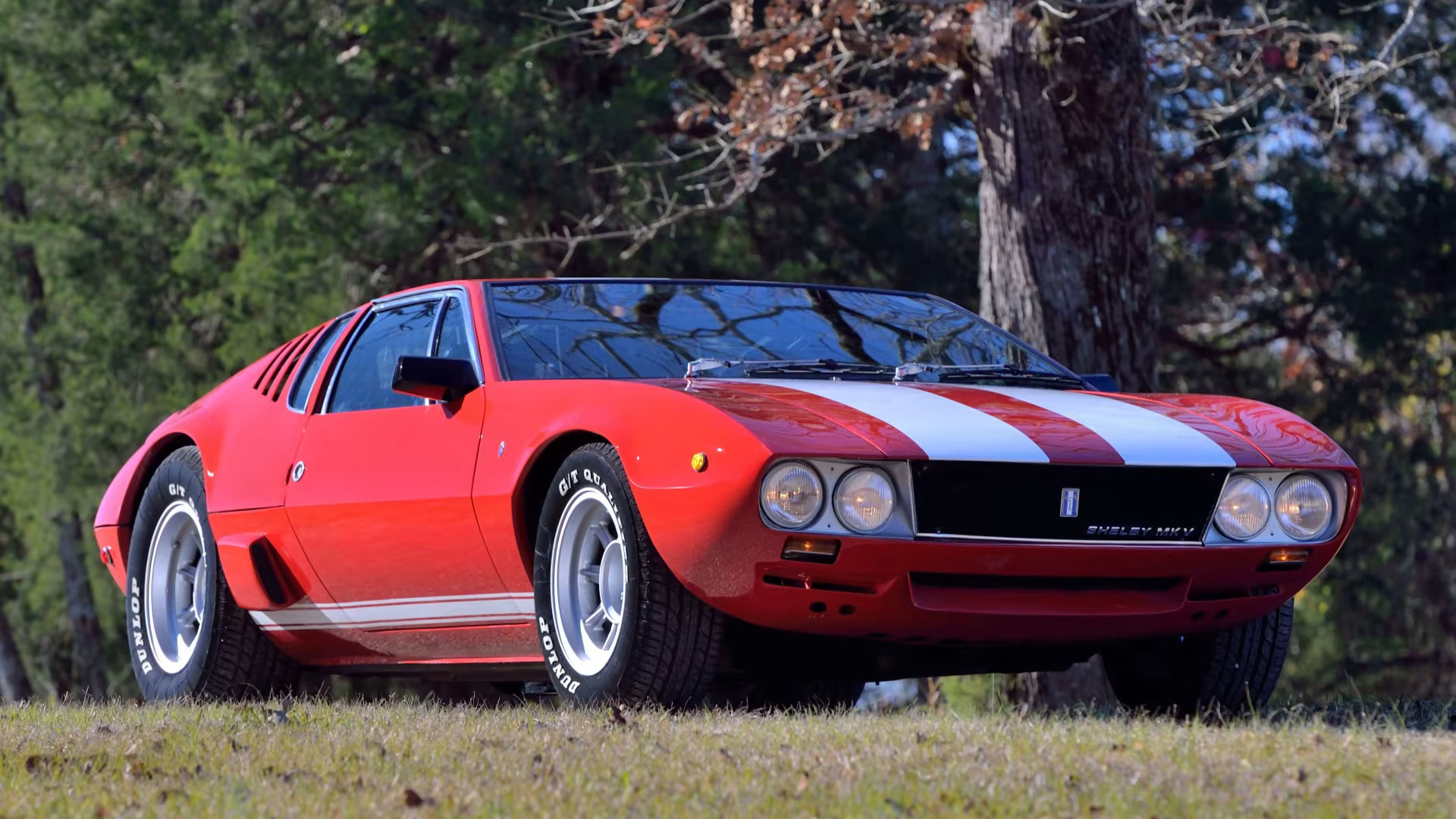
Approximately six Shelby MkV examples were built during 1967 at De Tomaso’s Modena facility. These cars were essentially pre-production Mangustas with Shelby badging and American-market specifications. After the partnership ended, most examples were rebadged as Mangustas or had their Shelby identification removed.
The fate of individual cars is murky. At least two are known to survive in private collections, one retaining its Shelby badges, the other converted to Mangusta specification. The remaining four examples may have been destroyed, converted to Mangustas, or lost to history.
The MkV represented what might have been. Had Shelby and De Tomaso maintained their partnership, the American market might have received Italian mid-engined exotics through Shelby’s dealer network years before the Pantera arrived. The combination of Shelby’s marketing genius and De Tomaso’s engineering could have created something extraordinary.
Instead, the partnership collapsed over money and control. De Tomaso took the design, refined it, and launched it as the Mangusta. That car went on to establish De Tomaso as a legitimate exotic car manufacturer and led directly to the Pantera partnership with Ford. Meanwhile, Shelby moved on to other projects, never building another mid-engined sports car.
Today, the Shelby MkV is barely remembered, a footnote in both Shelby’s and De Tomaso’s histories. The few surviving examples are extraordinarily rare, representing a brief moment when two ambitious men nearly created something special. The MkV proved that sometimes the most interesting automotive stories are about the cars that almost were, the partnerships that failed, and the opportunities lost to disagreement and circumstance. It remains one of the great what-ifs of 1960s sports car history.