
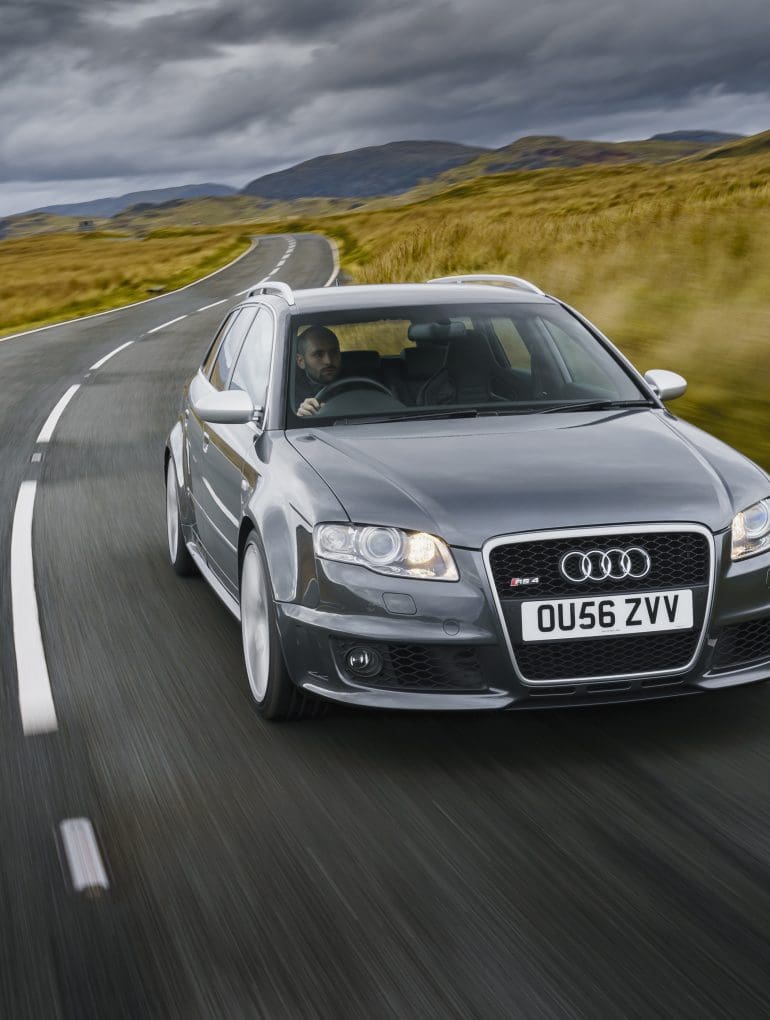

Geneva, March 2005. Audi unveiled the second-generation RS 4, available as Avant wagon, sedan, and cabriolet body styles. The centerpiece was an all-new 4.2-liter V8 producing 420 horsepower at 7,800 rpm, making it the most powerful naturally aspirated engine Audi had ever installed in a production car. Quattro permanent all-wheel drive distributed power through a six-speed manual transmission. The 0-60 mph sprint took just 4.8 seconds, while top speed was electronically limited to 155 mph, or 174 mph with the optional Dynamic Package. This was Audi’s answer to BMW’s M3 and Mercedes-AMG’s C-Class, proving that family wagons could deliver supercar performance. Production ran from 2006 to 2008.
Background and Origins
The original B5 RS 4 Avant, introduced in 1999, established Audi’s reputation for building devastatingly fast wagons. Its twin-turbocharged 2.7-liter V6 produced 380 horsepower, making it a cult favorite. By 2005, BMW and Mercedes-AMG had responded with their own high-performance estates, and Audi needed something extraordinary.
Development of the B7 RS 4 began in 2003 under Audi’s quattro GmbH performance division. The brief was straightforward: create the ultimate naturally aspirated sports sedan and wagon while maintaining everyday usability. Rather than continue with forced induction, engineers developed an entirely new high-revving V8.
The engine shared its basic architecture with the 4.2-liter V8 used in various Audi models, but displacement, internals, and character were completely different. The result was a free-revving naturally aspirated V8 that delivered power linearly to an 8,250 rpm redline.
The B7 RS 4 debuted at Geneva in March 2005, with European deliveries beginning in early 2006. North American markets received the sedan and cabriolet but not the Avant wagon, frustrating enthusiasts.
Design and Engineering
The RS 4 was based on the B7 Audi A4’s steel monocoque platform with a 2,648mm wheelbase, reinforced to handle the V8’s increased power. Adaptive suspension replaced the standard car’s conventional setup, allowing drivers to select between comfort and sport settings.
Front suspension used a five-link arrangement with coil springs and adaptive dampers. The rear employed a trapezoidal-link setup, similarly equipped with adaptive damping. Dynamic Ride Control connected the dampers diagonally, reducing body roll during cornering.
Braking was by massive vented discs measuring 365mm front and 324mm rear with eight-piston calipers up front and four-piston rears. The optional carbon-ceramic brake package reduced unsprung weight while improving fade resistance.
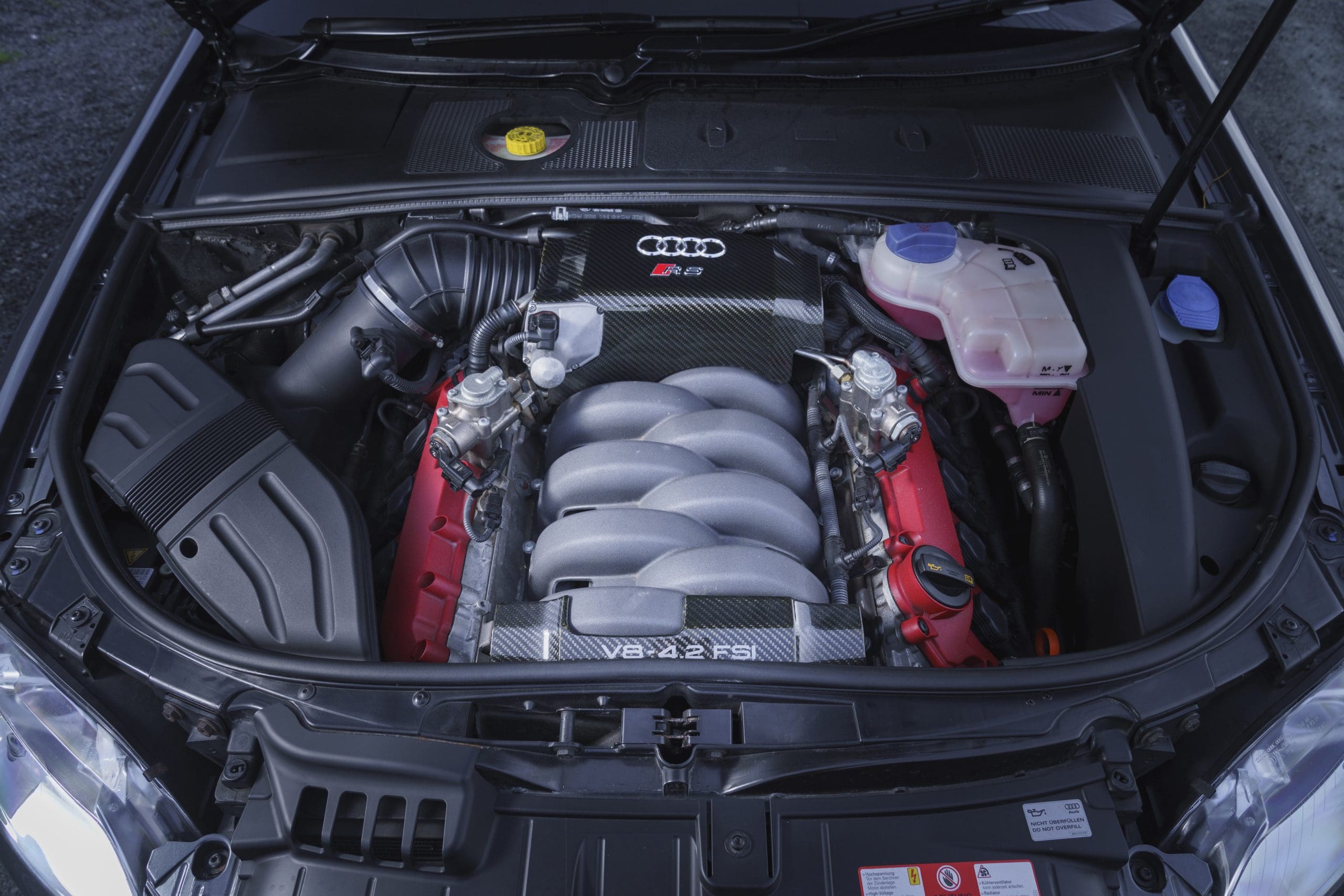
The engine was Audi’s FSI 4.2-liter V8, an all-aluminum masterpiece of naturally aspirated engineering. Displacing 4,163cc with an 84.5mm bore and 93mm stroke, it featured dual overhead camshafts per bank, four valves per cylinder, and direct fuel injection. The 90-degree vee angle and lightweight construction allowed the engine to rev freely.
With a 12.5:1 compression ratio and sophisticated Bosch engine management, output was 420 horsepower at 7,800 rpm and 317 lb-ft at 5,500 rpm. The power delivery was linear and progressive, encouraging drivers to explore the upper reaches of the rev range. The 8,250 rpm redline was extraordinary for a large-displacement V8.
Transmission was a six-speed manual with close ratios and a 4.1:1 final drive. Quattro permanent all-wheel drive distributed power through a Torsen center differential with a default 40:60 front-to-rear torque split. A sport rear differential actively distributed torque between the rear wheels.
Styling
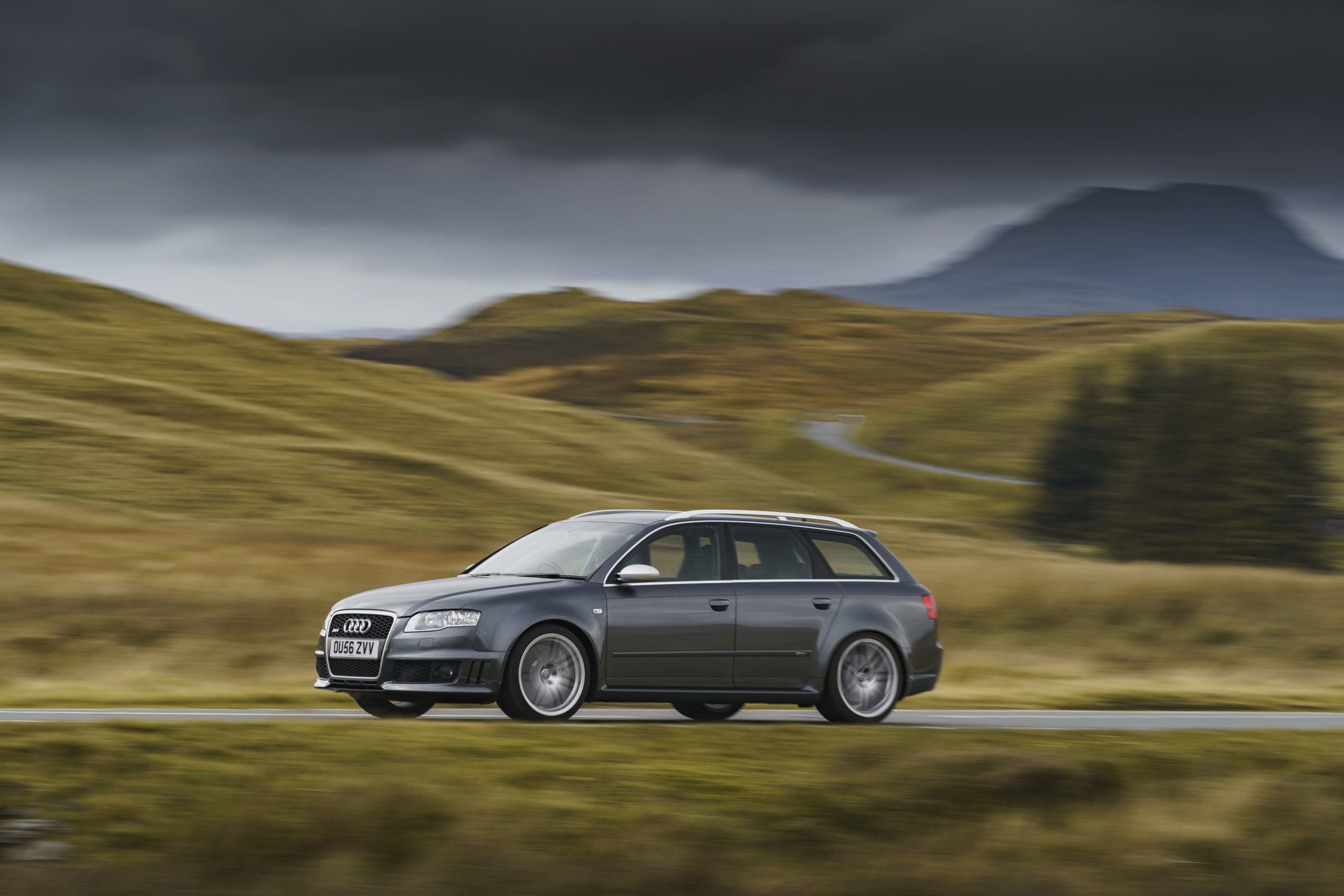
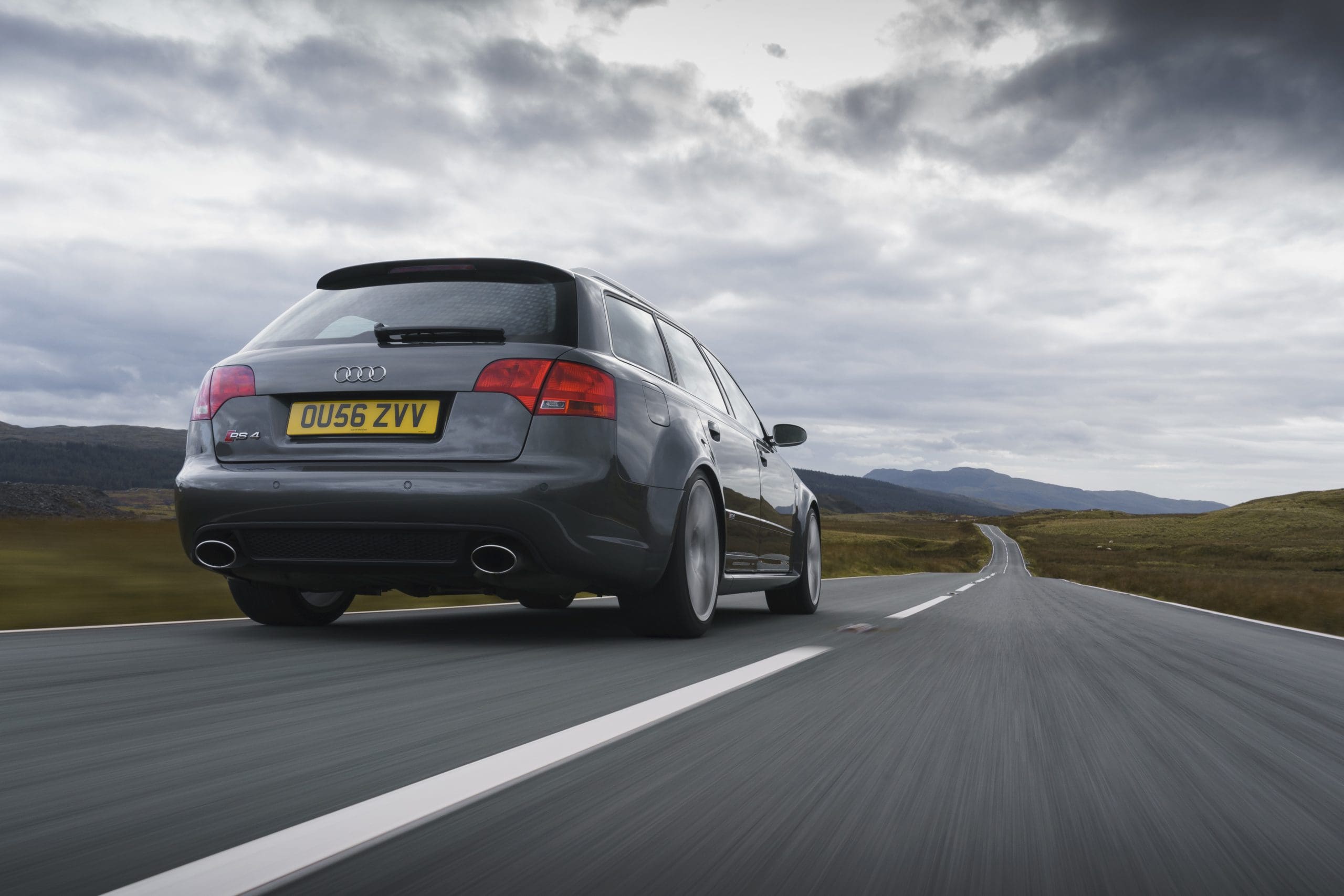
Externally, the RS 4 was subtly aggressive compared to the standard A4. The front bumper featured larger air intakes with honeycomb mesh grilles and integrated LED daytime running lights. Flared wheel arches covered wider tracks, accommodating massive wheels and tires. The single-frame grille wore gloss black finish.
Side profile featured distinctive aluminum-look mirror housings and RS 4 badges on the front fenders. At the rear, the Avant featured a subtle roof spoiler, while the sedan received a trunk-mounted lip. The rear bumper incorporated an aggressive diffuser with oval exhaust outlets on either side.
Standard wheels were massive 19-inch units measuring 8.5 inches wide, wearing 235/35 ZR19 Continental Sport Contact tires. Color choices included Imola Yellow, Mugello Blue, Phantom Black, and various metallics.
Interior
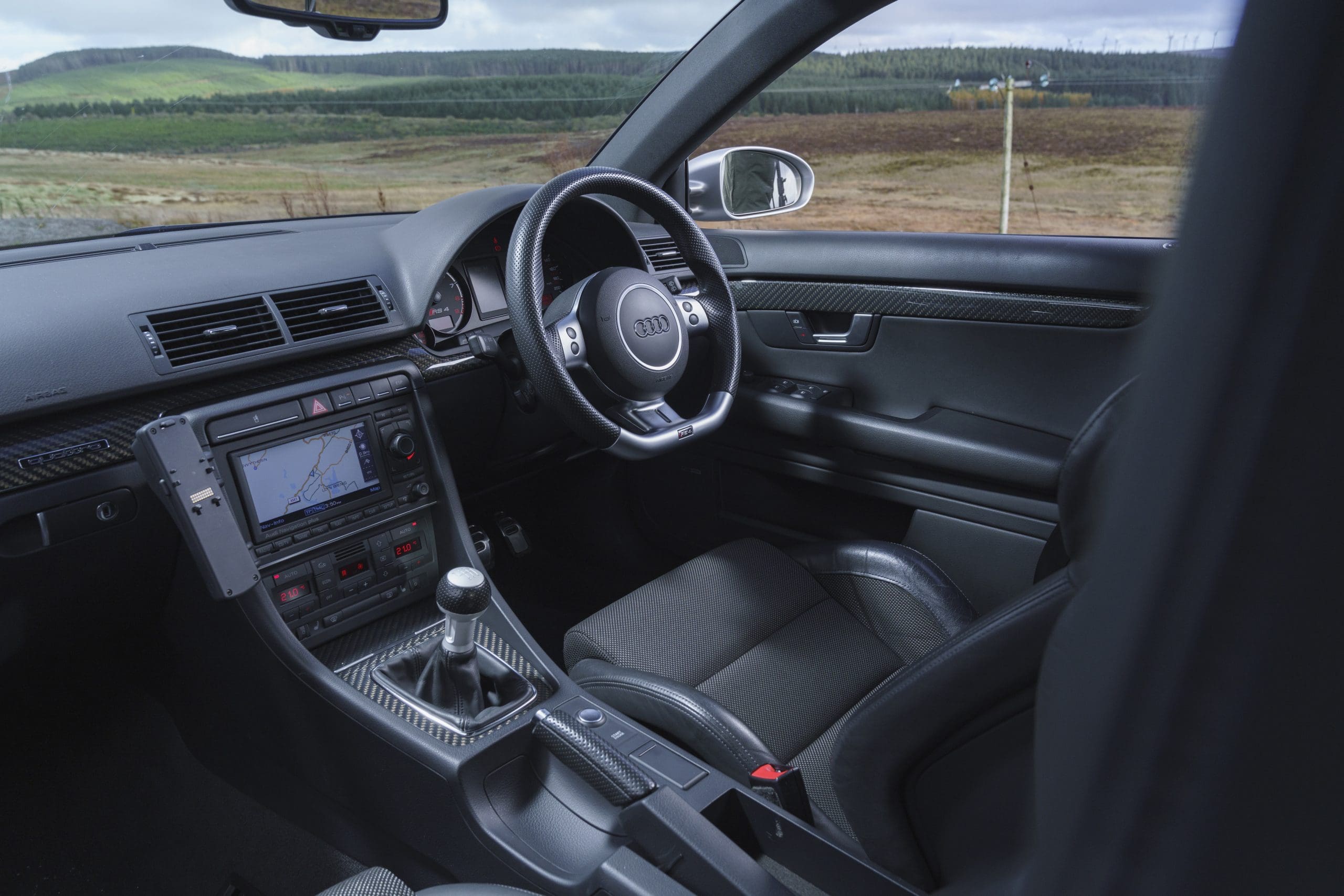
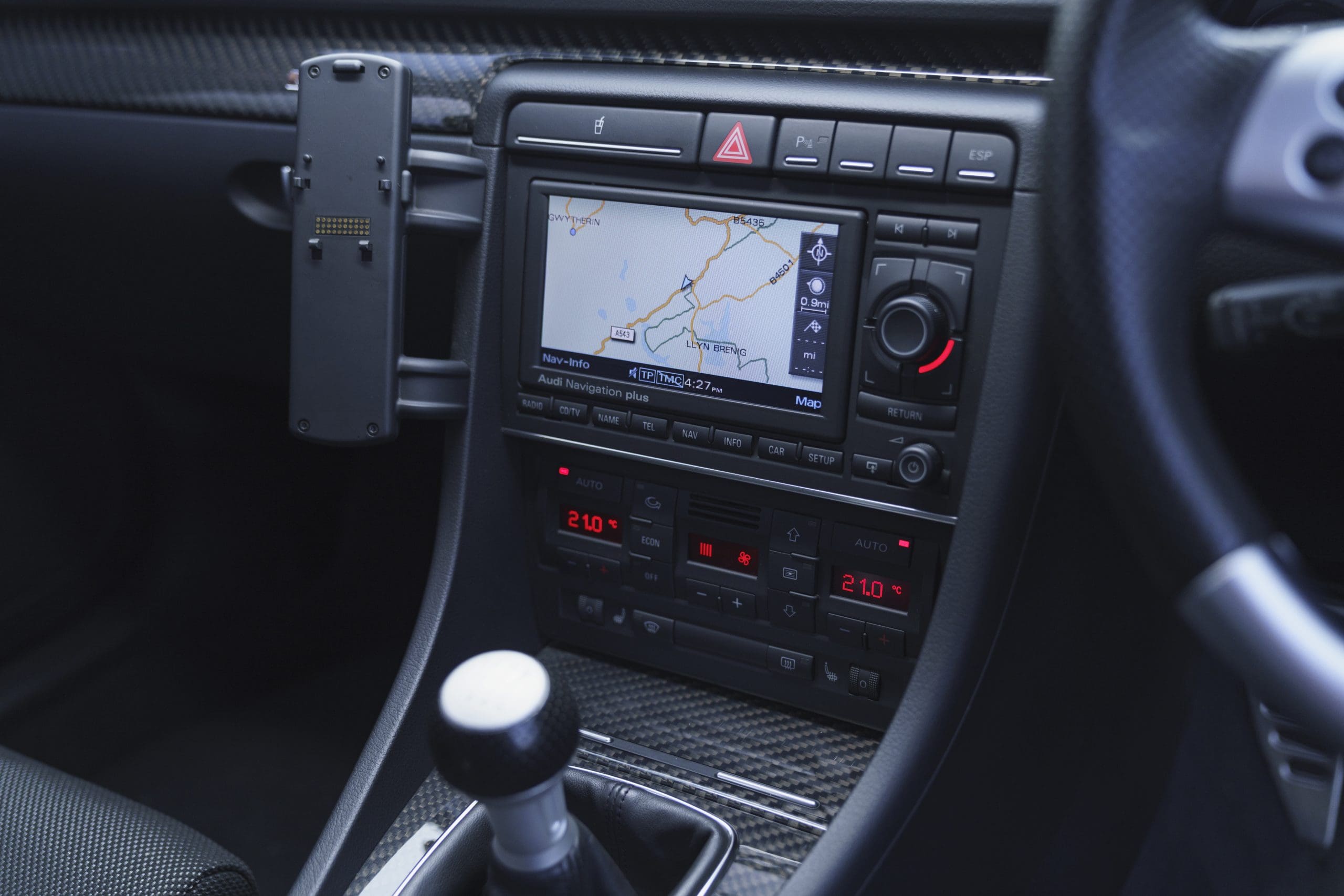
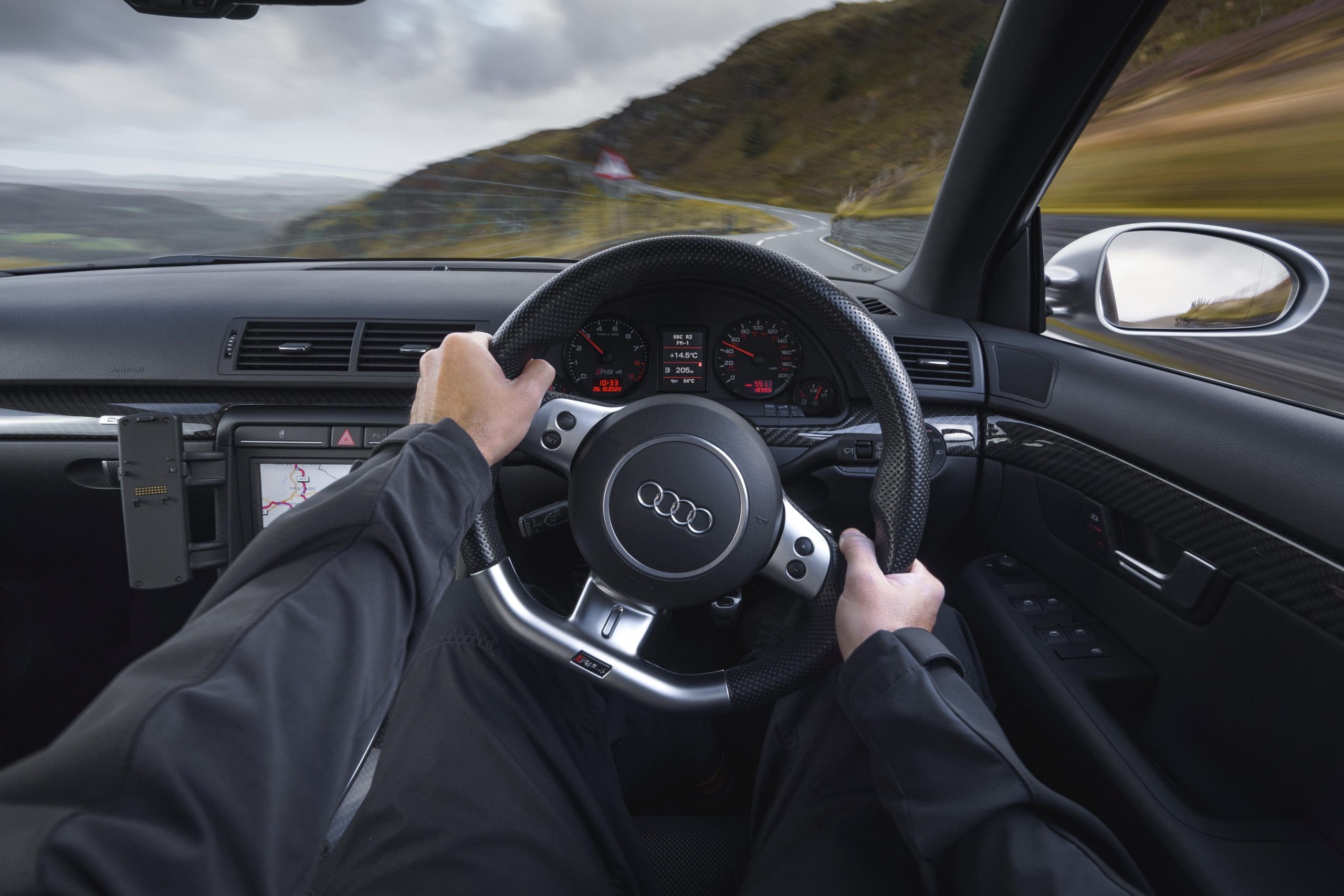
The cabin featured Recaro sport seats upholstered in Fine Nappa leather with Alcantara inserts. RS 4 logos were embossed on the seat backrests. The dashboard featured Audi’s MMI infotainment system with a central screen. The instrument cluster housed white-faced gauges with red needles, including a tachometer redlined at 8,250 rpm.
A flat-bottomed three-spoke steering wheel trimmed in leather faced the driver. The gear lever was a traditional manual gate with a weighted aluminum knob. Carbon fiber trim accented the dashboard and door panels. Standard equipment included navigation, premium audio, heated seats, automatic climate control, and parking sensors. The Avant’s rear seats folded flat, creating enormous cargo capacity.
Specifications
- Engine: FSI V8, 4,163cc (84.5mm x 93mm), DOHC per bank, four valves per cylinder, direct injection
- Power: 420 bhp at 7,800 rpm
- Torque: 317 lb-ft at 5,500 rpm
- Transmission: Six-speed manual, quattro AWD with Torsen center differential
- Chassis: Steel monocoque, 2,648mm wheelbase
- Suspension: Five-link (front), trapezoidal-link (rear), adaptive dampers
- Brakes: Vented discs 365mm (front), vented discs 324mm (rear)
- Wheels: 8.5×19, Continental Sport Contact 235/35 ZR19
- Weight: 1,650 kg (Avant)
- Performance: 174 mph top speed (with Dynamic Package), 0-60 mph in 4.8 seconds
Competition History
The B7 RS 4 was designed as a road car and saw minimal official motorsport use. However, the combination of quattro all-wheel drive, naturally aspirated V8 power, and practical body style made it popular for track days and time attack events. The high-revving engine and balanced chassis delivered impressive lap times on technical circuits where handling mattered more than outright power.
Production and Legacy
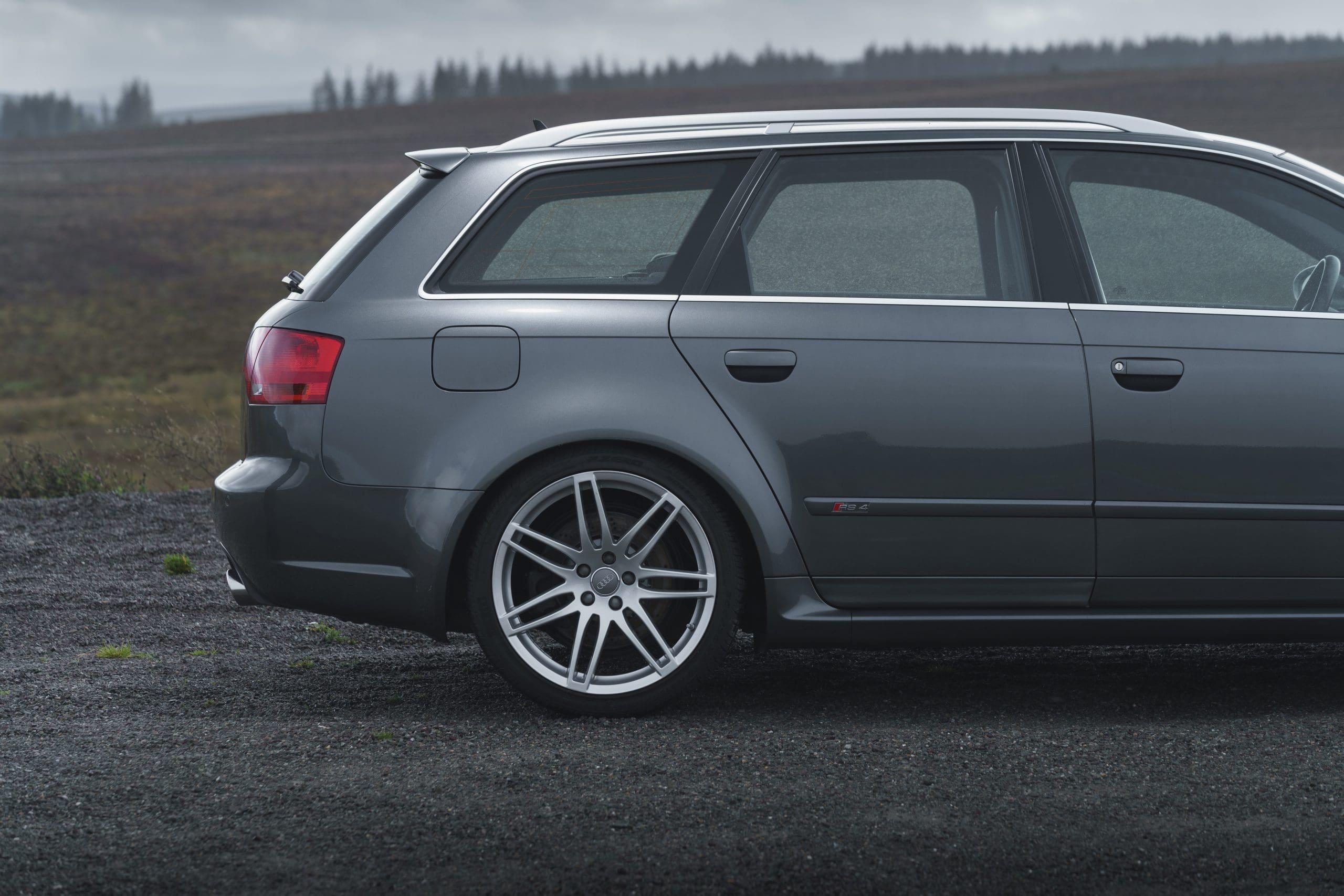
Audi built approximately 10,500 B7 RS 4 examples between 2006 and 2008, split between Avant wagon, sedan, and cabriolet body styles. The Avant significantly outsold other variants in European markets. North America received only sedan and cabriolet versions, with the desirable Avant remaining Europe-exclusive.
The B7 RS 4 represented the peak of Audi’s naturally aspirated V8 performance cars. It proved that high-revving naturally aspirated engines could deliver thrilling performance while maintaining everyday usability. The 8,250 rpm redline, linear power delivery, and intoxicating soundtrack created an experience fundamentally different from turbocharged alternatives.
The C6 RS 6 that preceded it used a twin-turbo V10, while the B8 RS 4 that followed employed a supercharged V8. The B7 RS 4’s naturally aspirated character made it unique in Audi’s RS lineup, the last expression of high-revving naturally aspirated philosophy before forced induction became mandatory.
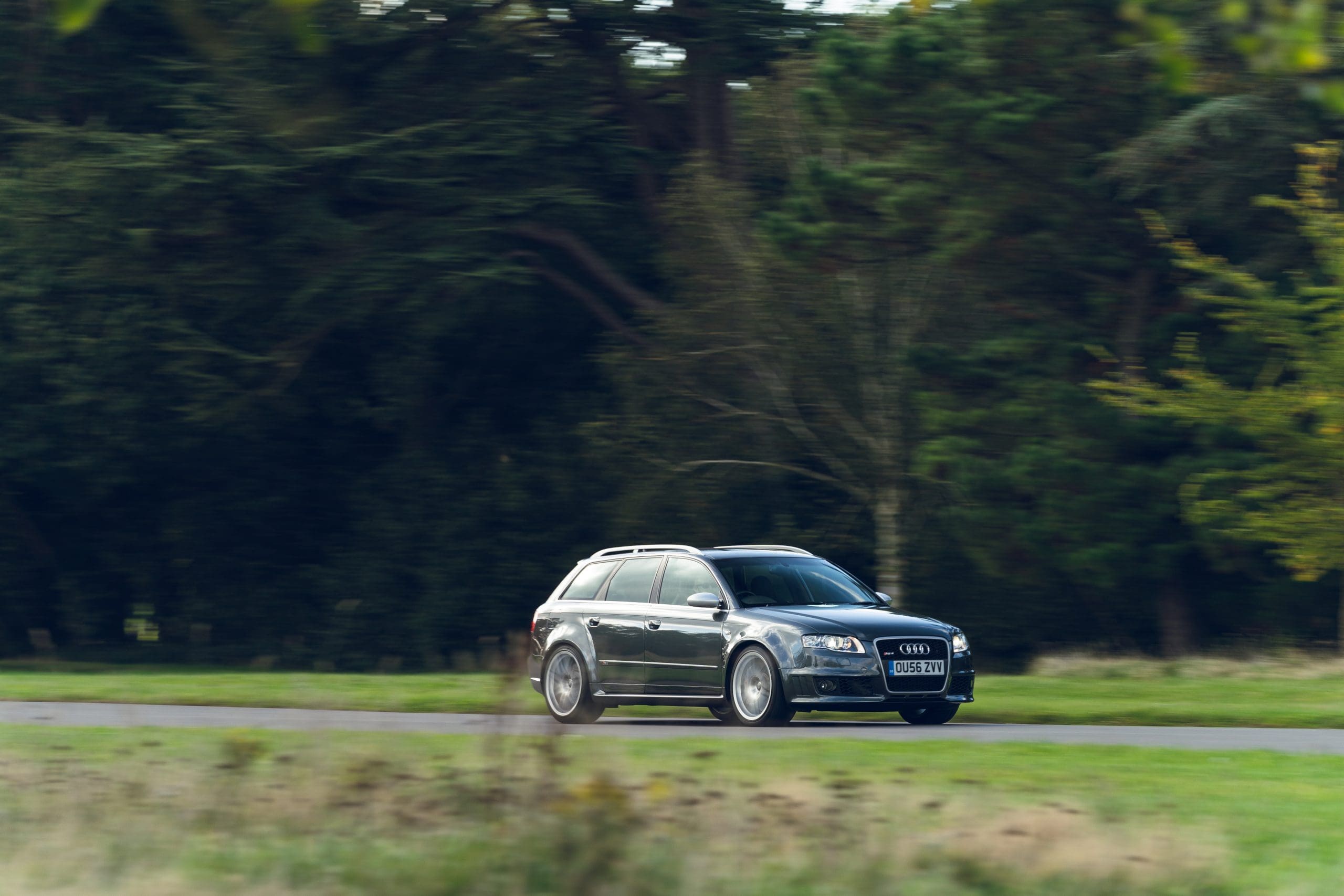
Today, clean B7 RS 4 Avants are increasingly sought after as enthusiasts recognize them as the last naturally aspirated RS 4 and one of the greatest Q-cars ever built. European-market Avants command premiums over sedans and cabriolets, while North American enthusiasts lament the wagon’s absence from their market.
The B7 RS 4 proved that wagons could be genuinely exciting, that practicality and performance weren’t mutually exclusive. The naturally aspirated V8, six-speed manual transmission, and devastating performance wrapped in subtle bodywork made it the ultimate sleeper. It remains one of Audi’s greatest achievements, a naturally aspirated swan song before turbocharging became universal.