
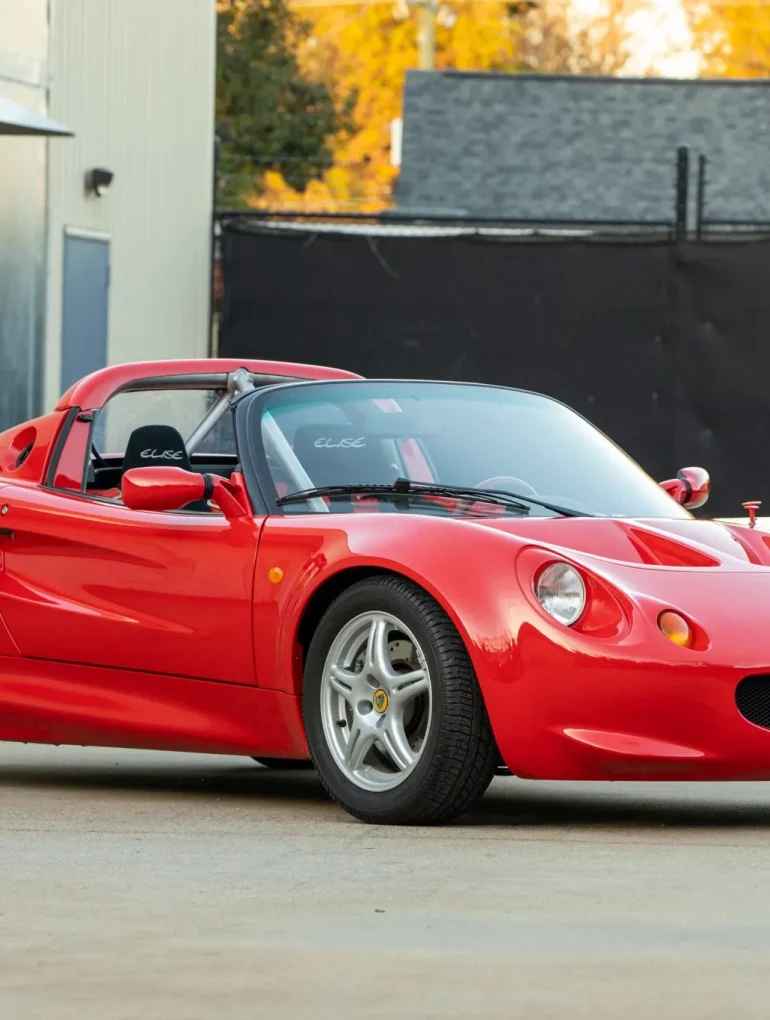

February 1998. Lotus unveiled the Sport 190, an uncompromising track-focused variant of the Elise Series 1 that represented the pinnacle of lightweight performance engineering. The “190” designation referenced the hand-built Rover K-Series engine producing 190 horsepower, transformed by Lotus’s race technicians into a Very High Performance Derivative (VHPD) capable of remarkable performance in the featherweight 670-kilogram chassis. This was a car designed primarily for circuit use, existing in a regulatory grey area since it was never type-approved for road use. Instead, Lotus sold standard Elises and converted them to Sport 190 specification through Special Vehicle Operations, a process reflecting the car’s intent: maximum performance through intelligent weight reduction and meticulous engineering. Production was limited to just 59 examples built between 1998 and 1999, making the Sport 190 one of the rarest production Lotus cars and an instant collectible.
Background and Origins
The Elise Series 1 debuted in September 1996, revolutionizing sports car design through radical weight reduction and advanced aluminum construction. With just 118 horsepower and 700 kilograms of weight, the standard Elise embarrassed much more powerful machinery through superior handling and agility. By 1998, Lotus recognized an opportunity to create something even more extreme for customers willing to prioritize track performance over road practicality.
Development of the Sport 190 began with a clear mission: extract maximum performance from the Rover K-Series engine while minimizing weight through competition-focused components. Rather than create a new platform, Lotus worked within the Series 1 structure, focusing engineering resources on mechanical refinement and weight savings. The engine was the critical element, requiring collaboration between Rover Sport and Lotus to develop the VHPD variant.
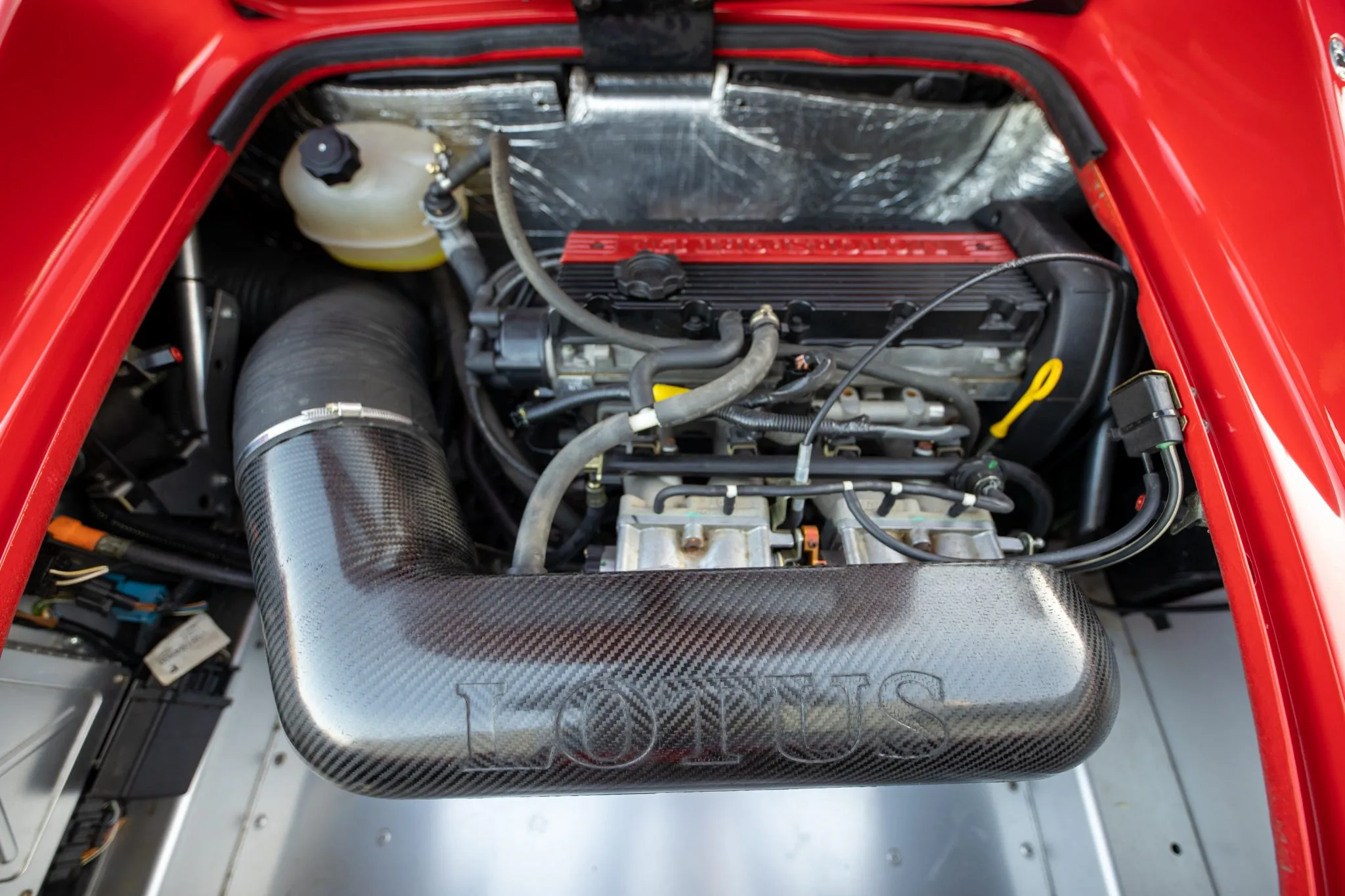
The VHPD engine featured a modified cylinder head, revised valves, optimized pistons, upgraded crankshaft, and lightened flywheel. Solid valve lifters replaced the standard hydraulic units, allowing the engine to rev safely to 8,000 rpm. A carbon-fiber air box, competition air filter, supplementary oil cooler, and deleted catalytic converter completed the high-performance specification. The result was 190 horsepower at 7,000 rpm and 140 lb-ft of torque, a remarkable achievement for the diminutive Rover four-cylinder.
The first customer Sport 190s were delivered in February 1998, with production continuing through 1999. Each car was hand-built by Lotus’s race technicians, ensuring meticulous attention to detail. The conversion process was performed at Lotus’s Hethel, Norfolk facility, transforming standard Elises into genuine competition machines.
Design and Engineering
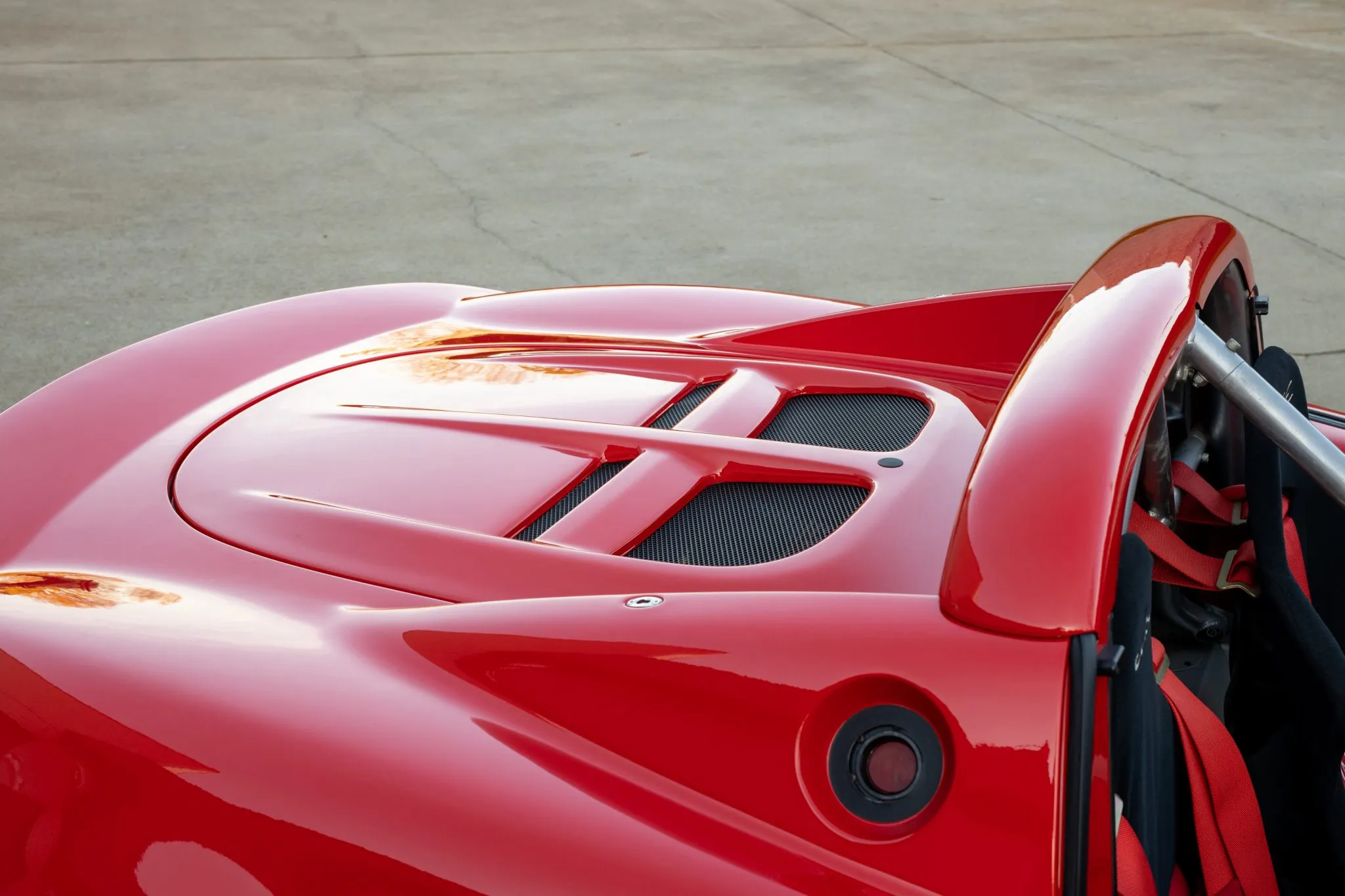
The Sport 190 retained the Series 1’s epoxy-bonded aluminum spaceframe with integral roll-over hoop, providing structural integrity while minimizing weight. The chassis benefited from extensive weight reduction throughout the car’s development, with fiberglass body panels replacing standard items and a carbon-fiber air box contributing to the minimalist specification.
Suspension geometry remained fundamentally unchanged from the standard Elise, maintaining the upper and lower wishbones with co-axial coil springs and inverted monotube dampers. However, competition-grade Koni dampers with higher spring rates and Eibach competition springs were fitted. The adjustable suspension kit allowed ride-height reduction of up to 50 millimeters, improving aerodynamic efficiency without sacrificing handling balance. A higher-rate adjustable front anti-roll bar and toe links on Uniball joints sharpened response during hard cornering.
Braking featured uprated cross-drilled and ventilated discs measuring 282mm diameter front and rear. In contrast to the standard Elise’s aluminum discs, the Sport 190 employed cast-iron discs for superior fade resistance during extended track use. New Lotus-AP Racing front calipers provided powerful stopping power, while Brembo units remained at the rear. Race-specification Pagid brake pads completed the high-performance system.
The engine was mounted in the rear-mid position, a configuration that optimized weight distribution and created predictable, balanced handling. A dry-sump lubrication system allowed the engine to sit lower in the chassis, further improving weight distribution. The close-ratio five-speed manual transmission featured a traditional shift action and 3.73:1 final drive through a limited-slip differential.
Styling
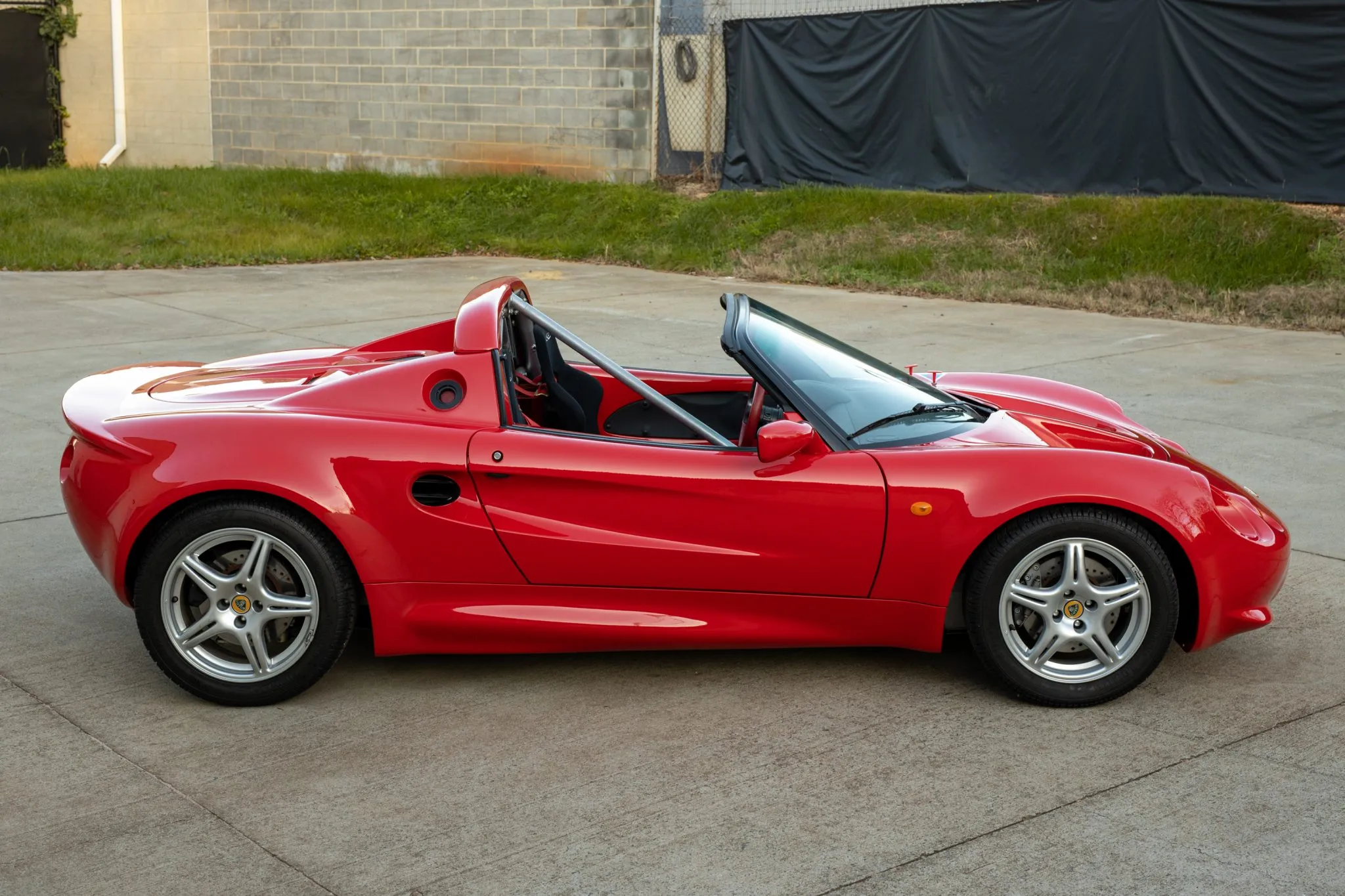
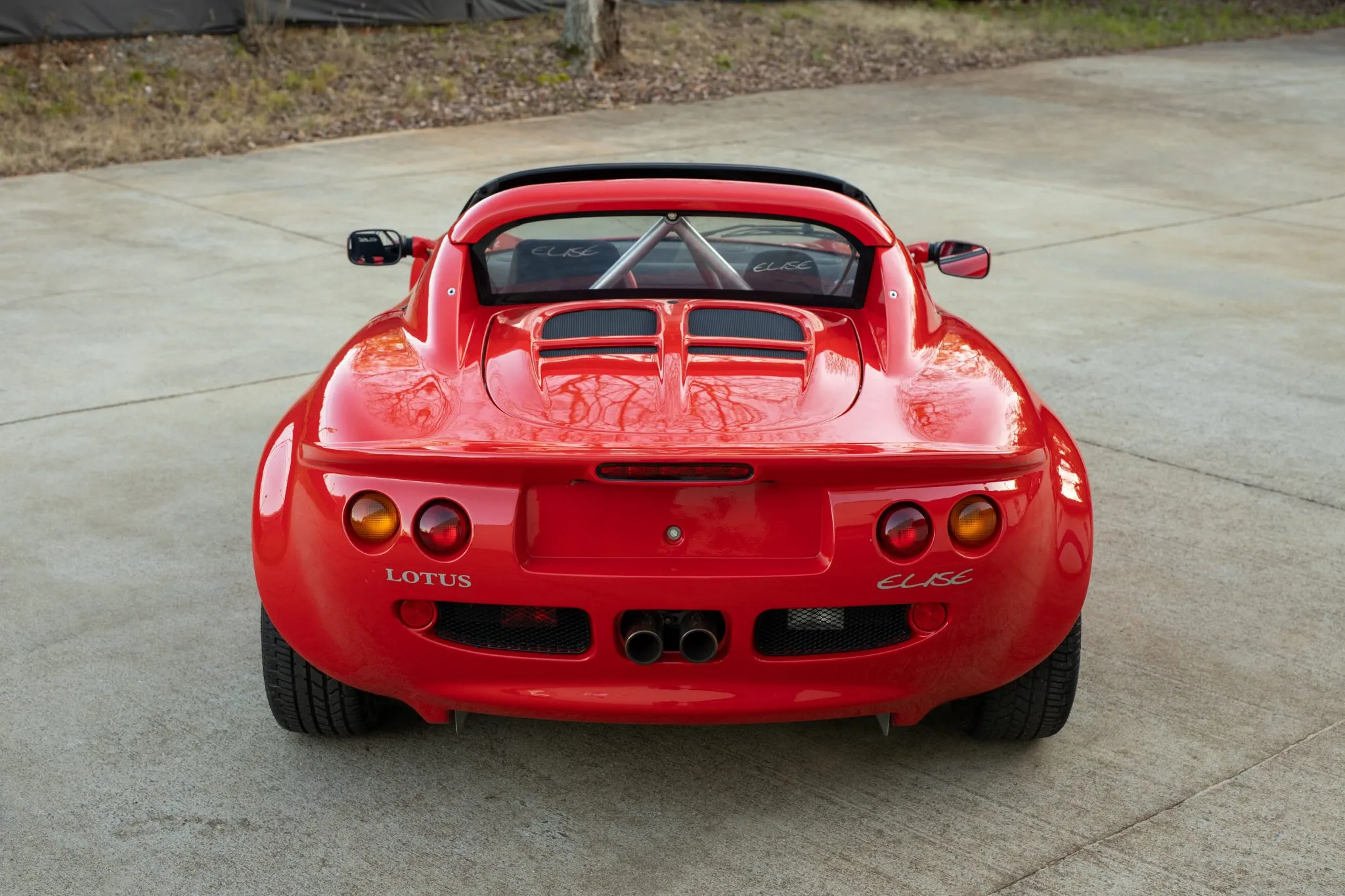
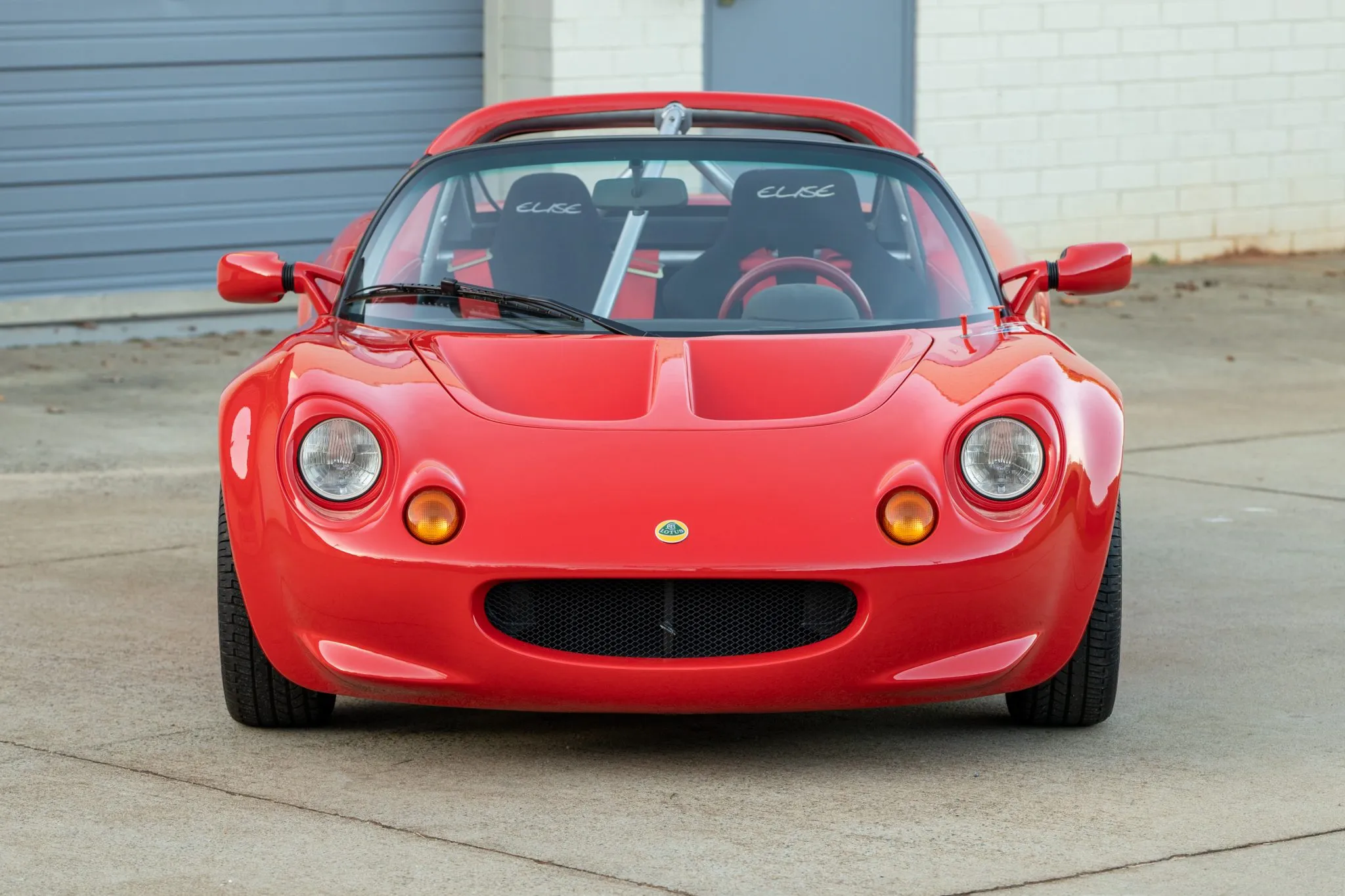
Externally, the Sport 190 was subtly distinguished from standard Elises through functional modifications rather than dramatic styling changes. An FIA-approved roll cage with diagonal bracing was installed behind the seats, visible through the transparent rear window. Lightweight polycarbonate replaced standard glass for the rear window, reducing unsprung weight.
Competition Speedline wheels measuring 6.5×15 inches front and 8×16 inches rear wore semi-slick Yokohama tires, providing exceptional grip for circuit driving. The narrow wheel widths reflected the minimal bodywork, with no flared arches. Most Sport 190s were finished in traditional colors including British Racing Green, Elise Yellow, or contemporary metallics.
Interior
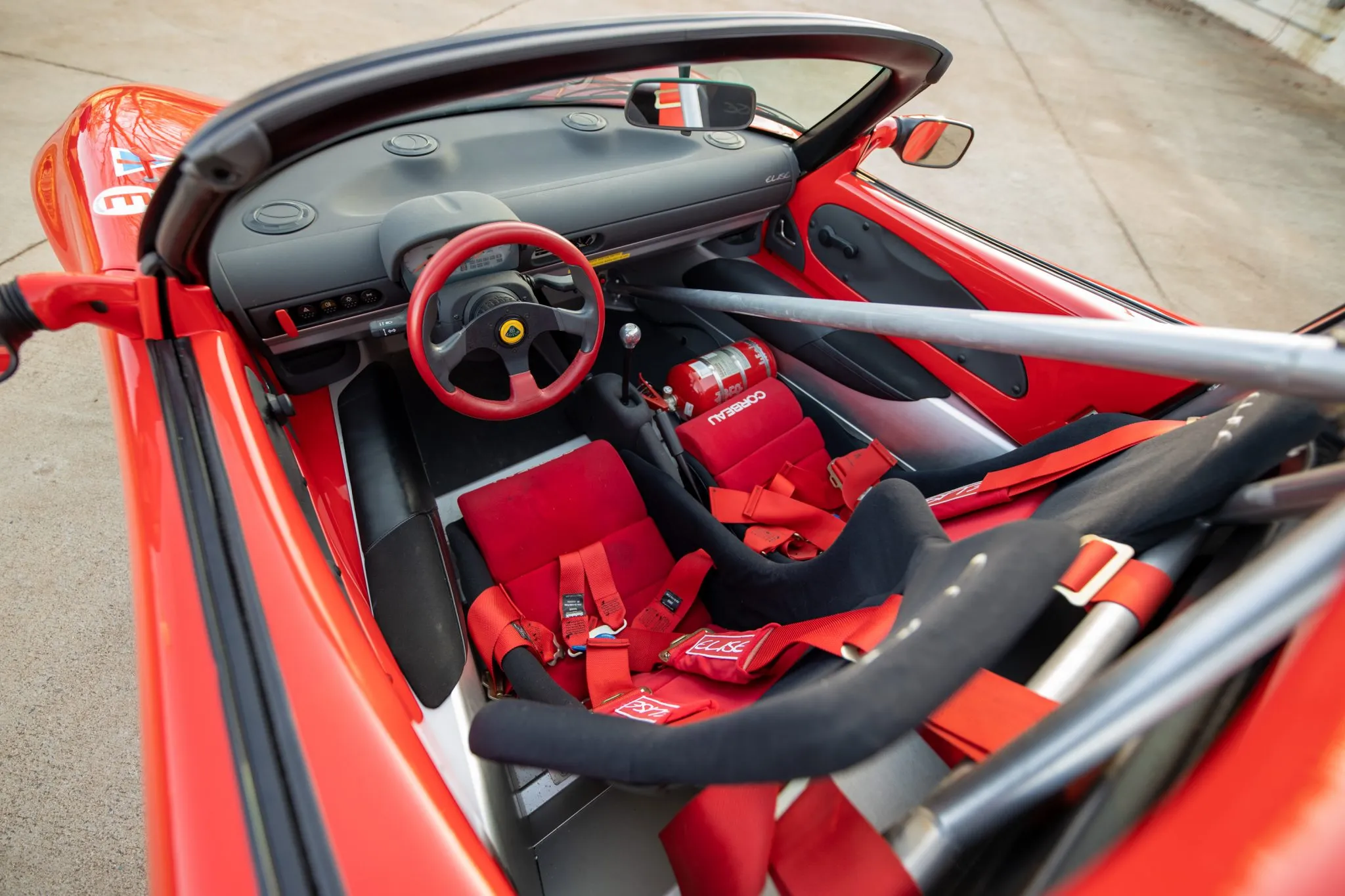
The interior reflected the car’s competition intent. Competition seats replaced the standard Elise units, with aggressive bolstering and a six-point racing harness. A lightweight racing battery with master switch was fitted, while a removable leather-rimmed steering wheel added adjustability. An FIA-approved roll cage dominated the cabin, providing safety during track excursions.
The stripped-to-essentials specification meant minimal creature comforts. No sound deadening, minimal trim, and functional switchgear emphasized lightweight construction. Optional passenger seats were available but rarely specified, as the Sport 190 was genuinely conceived as a single-seat competition machine.
Specifications
- Engine: Rover K-Series VHPD inline four, 1,796cc, naturally aspirated, DOHC per bank, four valves per cylinder
- Power: 190 bhp at 7,000 rpm
- Torque: 140 lb-ft at 5,650 rpm
- Transmission: Five-speed manual, close-ratio, 3.73:1 limited-slip differential
- Chassis: Epoxy-bonded aluminum spaceframe, integral roll-over hoop
- Suspension: Double wishbones (front and rear), adjustable Koni dampers, Eibach springs, adjustable anti-roll bars
- Brakes: Cast-iron ventilated discs 282mm (front and rear), AP Racing/Brembo calipers
- Wheels: 6.5×15 front/8×16 rear Speedline, semi-slick Yokohama tires
- Weight: 670 kg dry (minimum specification)
- Performance: 150 mph top speed, 0-60 mph in 4.3 seconds, 0-100 mph in 10.7 seconds
Production and Legacy
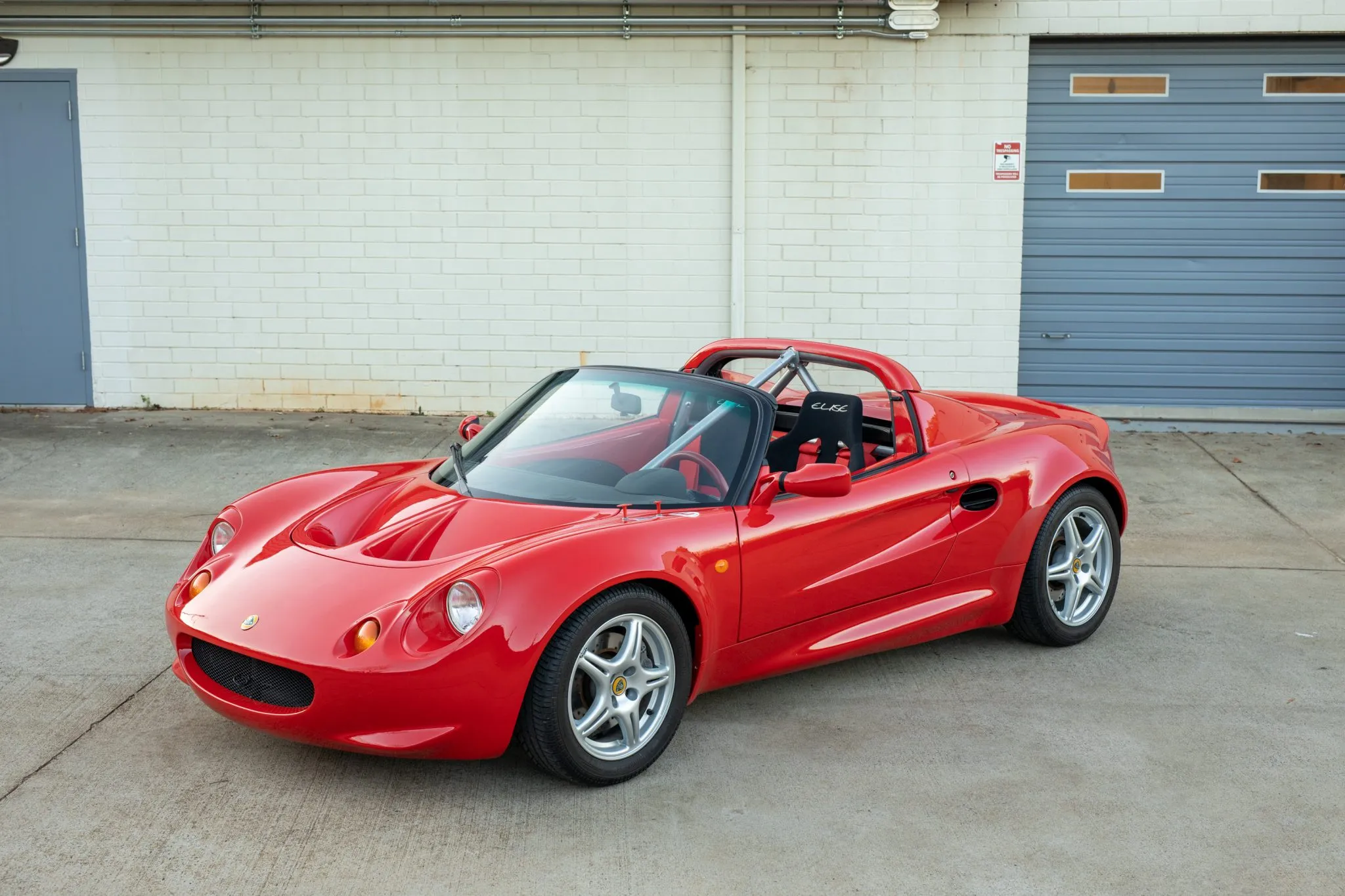
Lotus built exactly 59 Sport 190 examples between February 1998 and early 2000, with most built during 1998 and 1999. Each car was hand-assembled at Lotus’s Hethel facility with meticulous attention to detail. Demand far exceeded supply, with customers from Europe, North America, and other markets securing cars. The UK received approximately seven examples, while North America received approximately twenty-one cars, particularly in the United States where the Elise was more widely known among enthusiasts.
The Sport 190 proved that modern sports cars could deliver extraordinary performance through lightweight construction and precision engineering rather than brute displacement. It established principles that influenced Lotus development for decades, demonstrating that sub-700-kilogram cars with naturally aspirated four-cylinder engines could provide supercar-equivalent performance on circuits.
Today, Sport 190 examples are extraordinarily valuable and collectible. The combination of extreme rarity, authentic track-focused engineering, and Lotus heritage has created legendary status among serious enthusiasts. Clean examples command premium prices reflecting their significance as the ultimate expression of the Series 1 Elise.
The Lotus Elise S1 Sport 190 represented Lotus at its most uncompromising, proving that weight reduction mattered as much as horsepower. It remains one of Lotus’s finest achievements, a naturally aspirated masterpiece celebrating the company’s philosophy that simplicity and lightness created the perfect formula for driving engagement.