
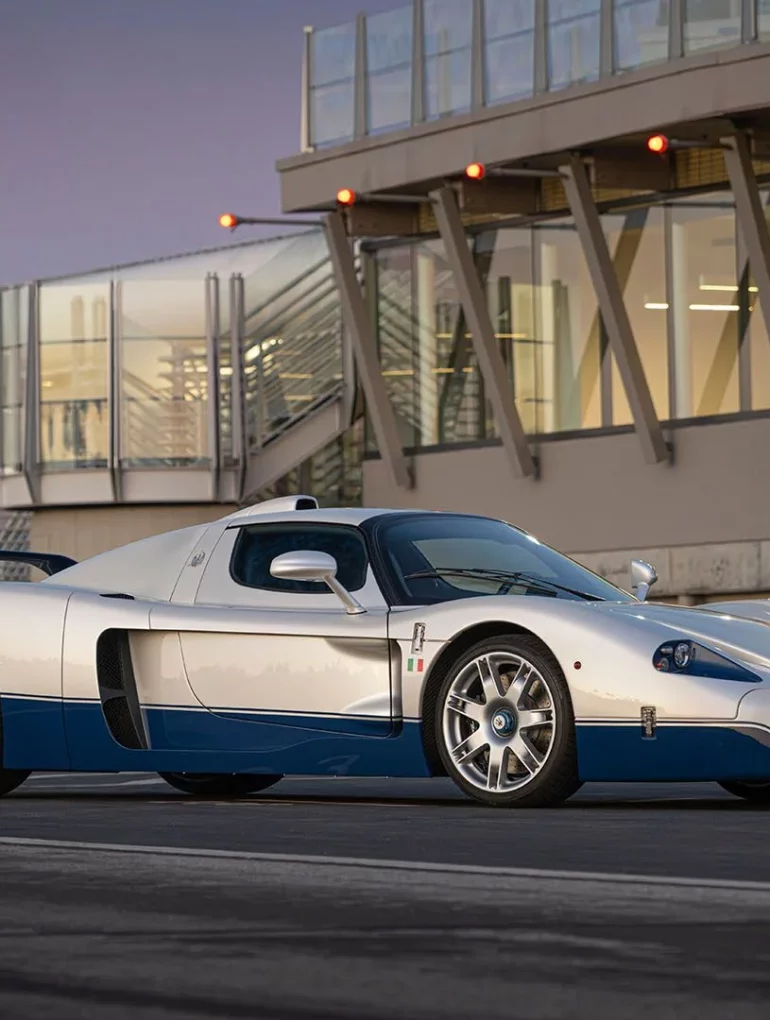

Geneva Motor Show, March 2004. Maserati unveiled the MC12, a mid-engine supercar representing the brand’s triumphant return to international motorsport after thirty-seven years of racing absence. The designation stood for Maserati Corse with twelve cylinders, signaling the car’s dual purpose as both road-legal homologation special and FIA GT racing competitor. Based on the Ferrari Enzo platform but substantially larger in every dimension, the MC12 featured a naturally aspirated 6.0-liter V12 producing 632 horsepower and 652 N·m of torque. The targa-top two-seater achieved 330 km/h capability while maintaining the elegant proportions that defined Maserati’s design heritage. This was Maserati’s statement that Italian racing tradition remained vital, that engineering excellence and competitive spirit could create something genuinely extraordinary. Production was deliberately limited to just fifty examples across 2004 and 2005, with only 25 units built each year, establishing the MC12 as one of the rarest supercars ever produced. The car wore exclusively white bodywork with distinctive blue racing stripes, celebrating Maserati’s heritage while signaling its return to competition.
Background and Origins
Maserati’s development of the MC12 began while the legendary Italian marque remained under Ferrari ownership, a relationship that granted access to Ferrari’s technological resources and engineering expertise. The brief was revolutionary: create a homologation special capable of competing successfully in FIA GT racing while establishing Maserati’s credentials as a genuine supercar manufacturer. Rather than developing a completely original platform, Maserati leveraged the Ferrari Enzo’s carbon-fiber monocoque chassis and naturally aspirated V12 engine architecture, adapting these proven components for Maserati’s specific requirements.
The MC12 differed substantially from its Enzo foundation despite sharing mechanical fundamentals. The wheelbase was extended, the overall dimensions increased dramatically, and the aerodynamic profile was completely reconceived. Renowned designer Giorgetto Giugiaro’s studio conducted extensive wind-tunnel development, creating a longer-tail design emphasizing the car’s racing purpose while maintaining elegant proportions reflecting Maserati’s design philosophy. The result was a car distinctly Maserati despite leveraging Ferrari’s engineering—a transformation that proved Maserati’s design independence even while utilizing corporate resources.
The engine remained fundamentally the Ferrari unit but received modifications for Maserati’s specific application. Compression ratios were adjusted, intake and exhaust systems were revised, and the six-speed semi-automatic transmission featured different programming optimized for road driving comfort alongside performance. The road version produced 632 horsepower, marginally detuned compared to the Enzo’s output, reflecting different performance objectives and competitive class requirements.
Design and Engineering
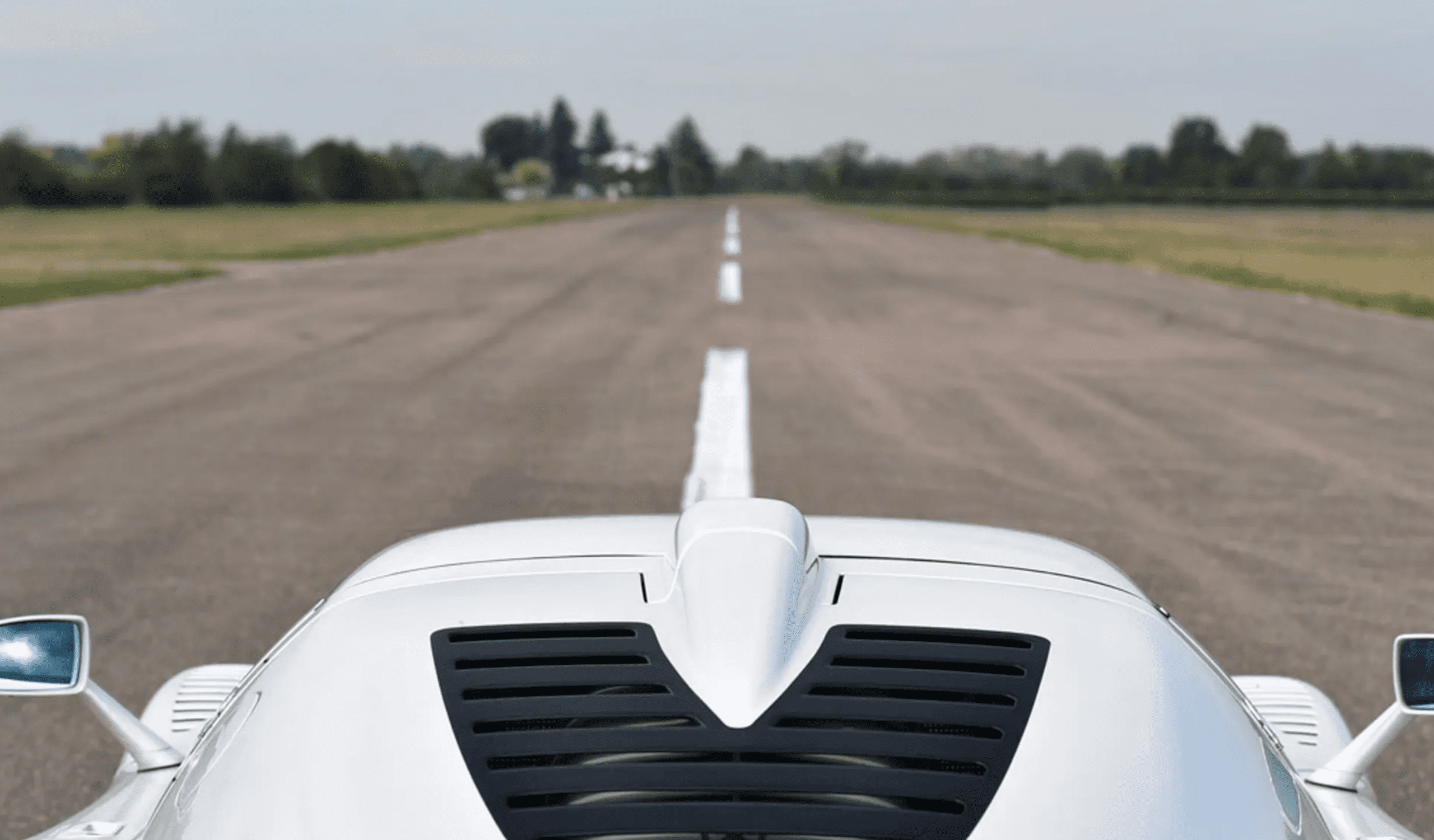
The MC12 utilized a carbon-fiber monocoque chassis with aluminum subframes front and rear, derived directly from the Enzo’s architecture. However, the extended wheelbase of 2,801mm required substantial structural modifications and reinforcement. The chassis was dimensionally larger than the Enzo’s, accommodating the expanded body and providing improved interior space while maintaining lightweight construction essential for performance. The completed chassis weighed 1,335 kilograms dry, approximately 80 kilograms heavier than the Enzo’s foundation, acceptable considering the larger overall dimensions.
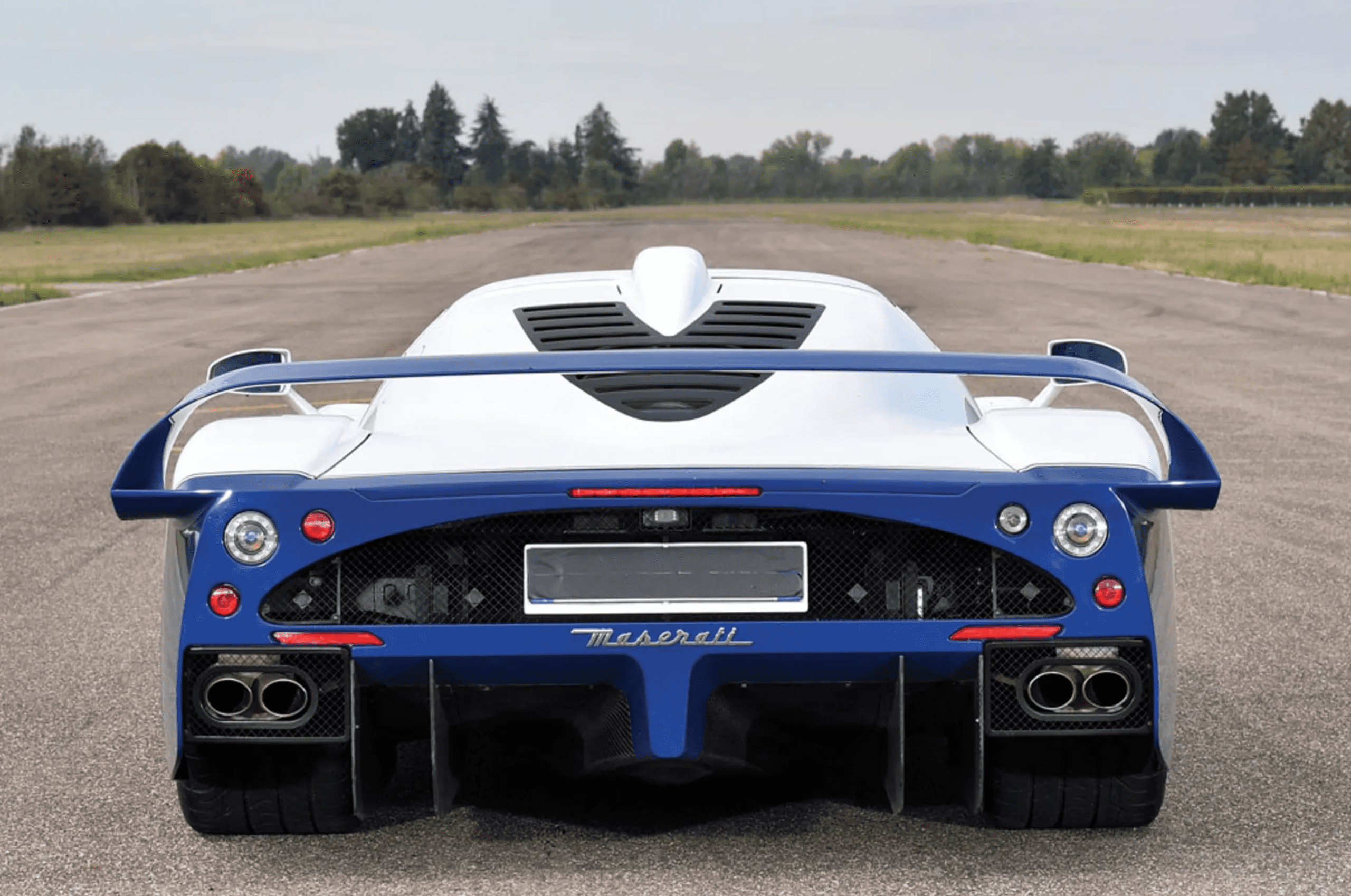
The body was constructed entirely from carbon fiber, utilizing both woven and unidirectional layup patterns optimized for specific stress requirements. The targa-top architecture featured a removable hardtop providing open-air driving characteristics while maintaining structural rigidity through the integrated roll cage. Cooling ducts incorporated throughout the body facilitated airflow to the mid-mounted engine, while the dramatically extended tail provided genuine aerodynamic function rather than purely visual enhancement.
Suspension geometry featured unequal-length double wishbones front and rear with coil springs and adjustable dampers. The mid-engine layout positioned the V12 behind the cockpit, creating weight centralization and ideal weight distribution. The 2.7-liter V12 engine was mounted transversely, a configuration optimizing packaging while creating distinctive handling characteristics. Steel brake discs replaced the Enzo’s carbon-ceramic units, a deliberate choice for road use reliability and cost management, though racing versions employed carbon-ceramic braking systems.
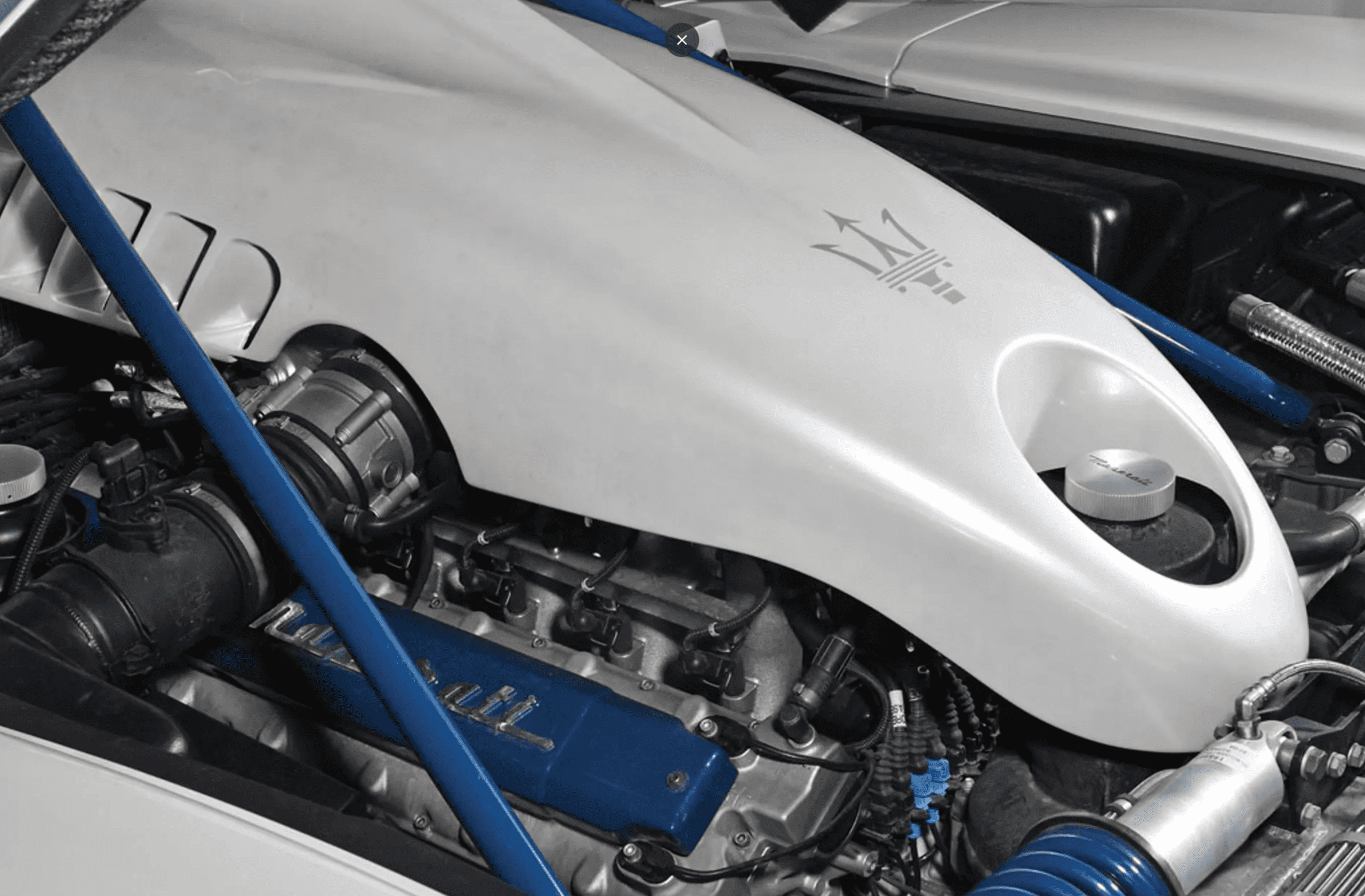
The naturally aspirated V12 displaced 5,999cc with a 89mm bore and 80.6mm stroke. Dual overhead camshafts per bank controlled four valves per cylinder through sophisticated mechanical systems. With an 11.2:1 compression ratio and Bosch fuel injection with electronic management, output was 632 horsepower at 7,500 rpm and 652 N·m of torque at 5,500 rpm. The power delivery emphasized the engine’s naturally aspirated character, with strong mid-range availability and predictable linear progression toward the 7,500 rpm redline. This contrasted deliberately with turbocharged competitors, celebrating mechanical authenticity and the visceral experience of high-revving naturally aspirated performance.
Styling
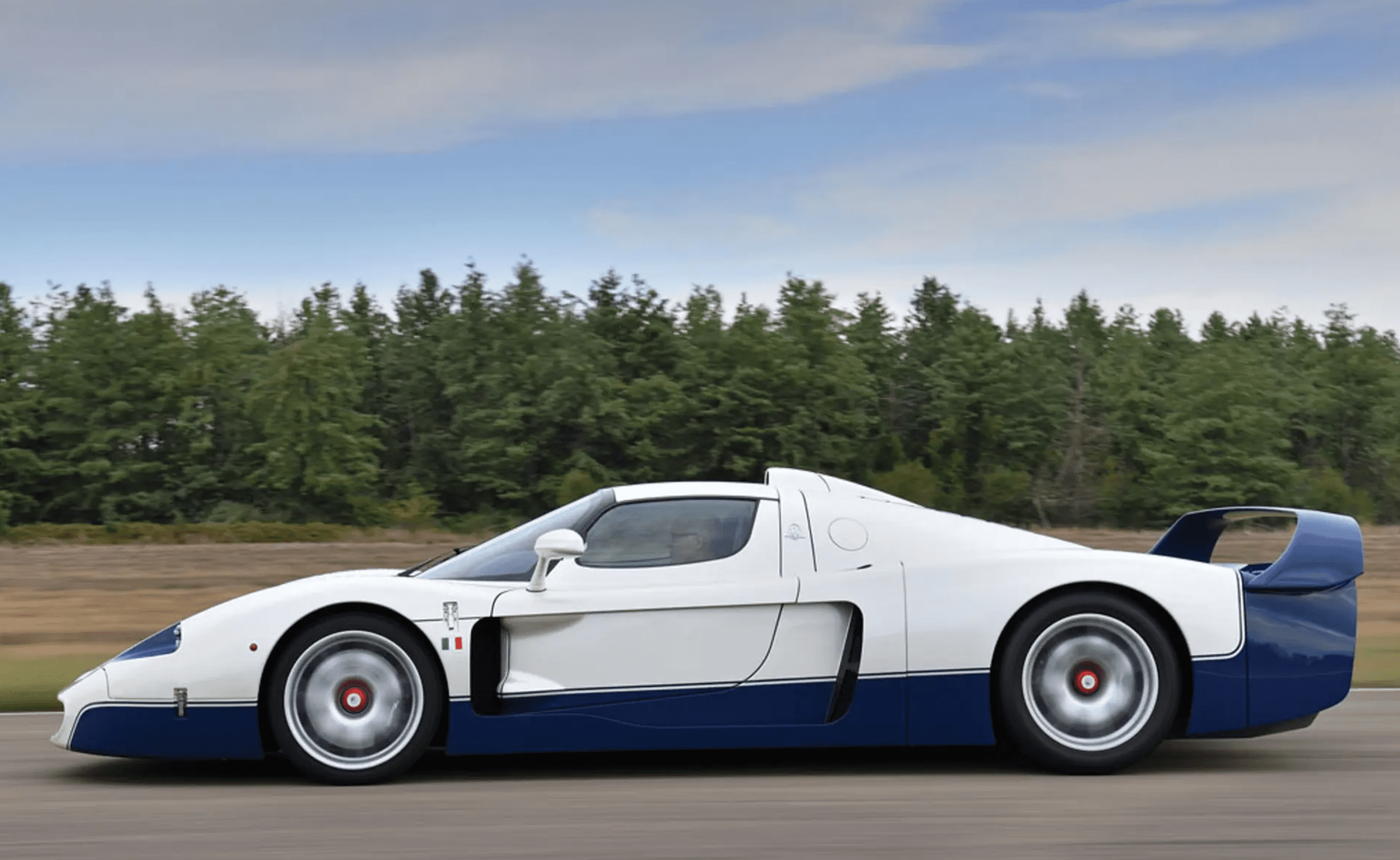
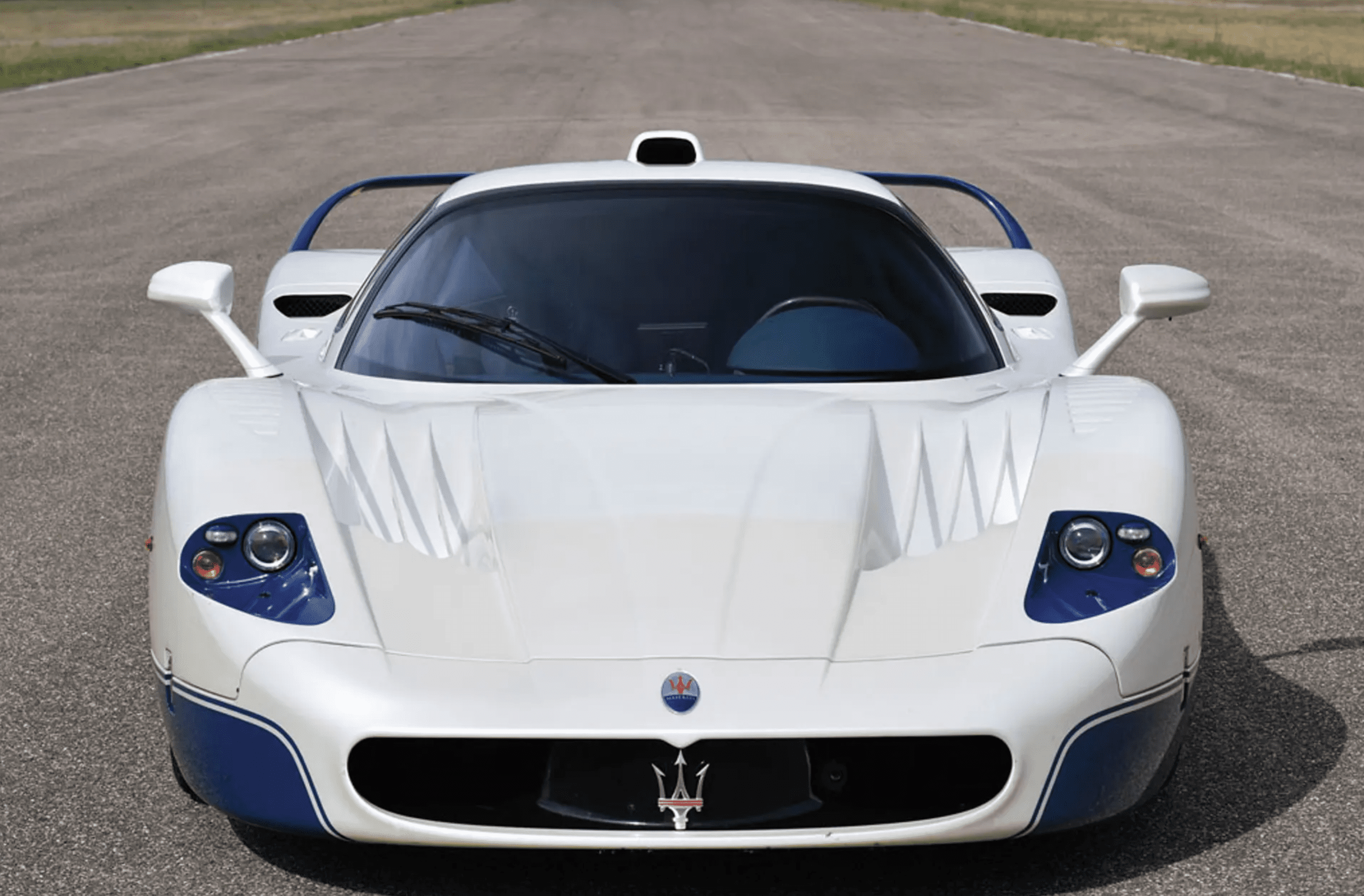
Giugiaro’s design created a distinctly longer proportion than the Enzo, with extended hood and dramatically stretched tail emphasizing the racing mission. The front featured a sharp nose minimized for aerodynamic efficiency, though it exceeded FIA GT width restrictions, requiring subsequent modifications. The side profile showcased pronounced wheel arches accommodating substantial Michelin Pilot Sport tires measuring 265/35 R18 front and 335/30 R18 rear. The targa top’s removable hardtop could be stored externally, a practical compromise enabling open-air motoring without compromising structural integrity.
The livery was singular: exclusively white with distinctive blue racing stripes running the length of the body, a traditional Maserati competition scheme celebrating the brand’s racing heritage. This carefully restricted color specification enhanced exclusivity and brand coherence, establishing instant visual recognition among serious automotive enthusiasts and collectors.
Interior
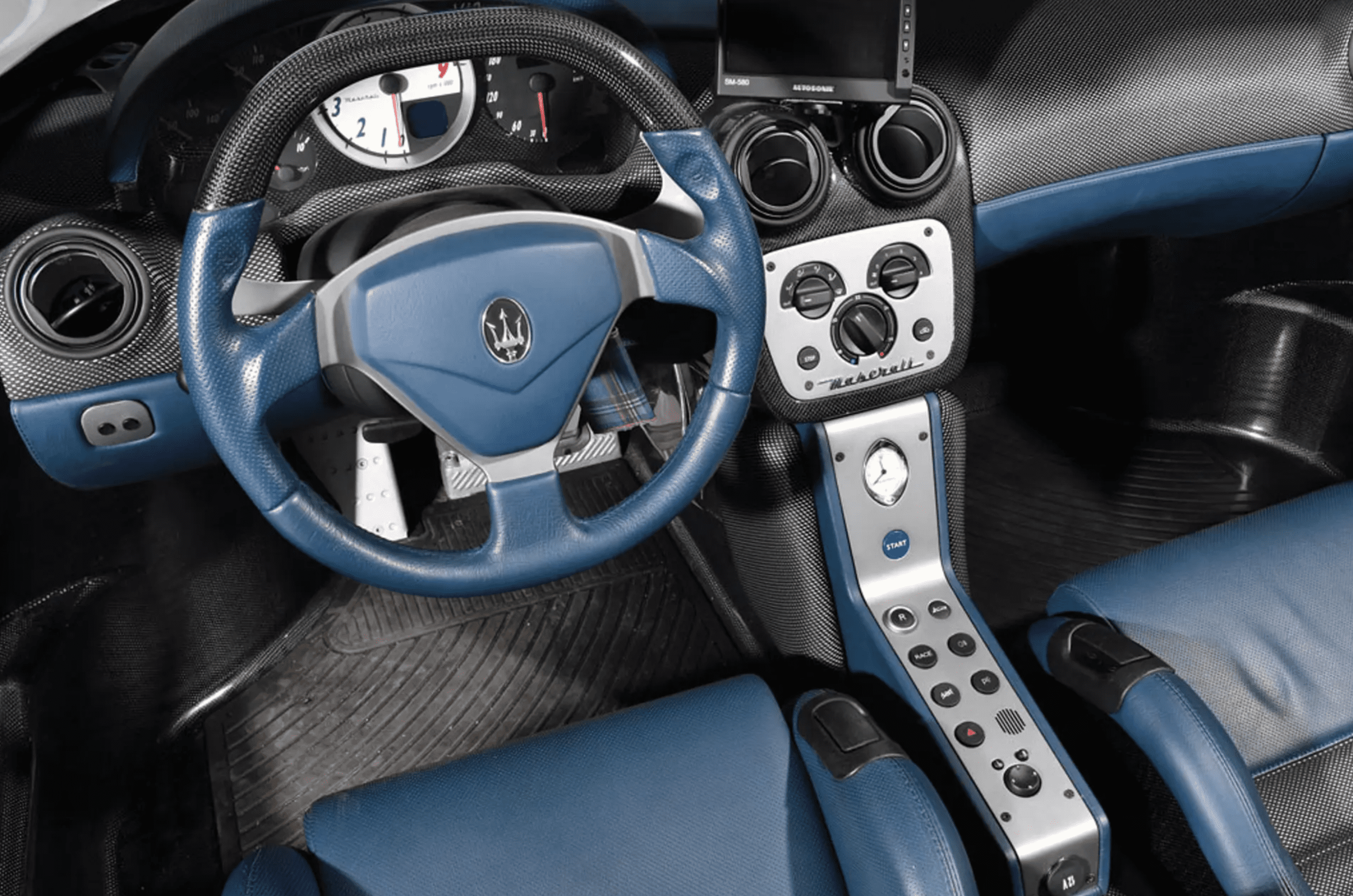
The interior combined luxury elements with functional racing orientation. Gel-coated carbon-fiber dominated, paired with blue leather upholstery and “Brightex,” an expensive synthetic material discovered too costly for fashion applications. The driver-focused cockpit featured a traditional Maserati oval clock and a distinctive blue ignition button, subtle details emphasizing brand identity. Recaro-developed sport seats provided excellent lateral support during spirited driving. Notably, the original specification deliberately excluded a radio or audio system, prioritizing functionality and maintaining focus on the driving experience.
Specifications
- Engine: V12 naturally aspirated, 5,999cc, DOHC per bank, four valves per cylinder
- Power: 632 PS / 624 bhp / 465 kW at 7,500 rpm
- Torque: 652 N·m / 481 lb-ft at 5,500 rpm
- Transmission: Six-speed semi-automatic, rear-wheel drive
- Chassis: Carbon-fiber monocoque, 2,801mm wheelbase
- Suspension: Double wishbones (front and rear), coil springs, adjustable dampers
- Brakes: Steel ventilated discs 370mm (front), 330mm (rear)
- Wheels: 18×10 front, 18×12 rear, Michelin Pilot Sport tires
- Weight: 1,425 kg curb weight / 1,335 kg dry weight
- Performance: 330 km/h / 205 mph top speed, 0-100 km/h in 3.8 seconds
Racing History
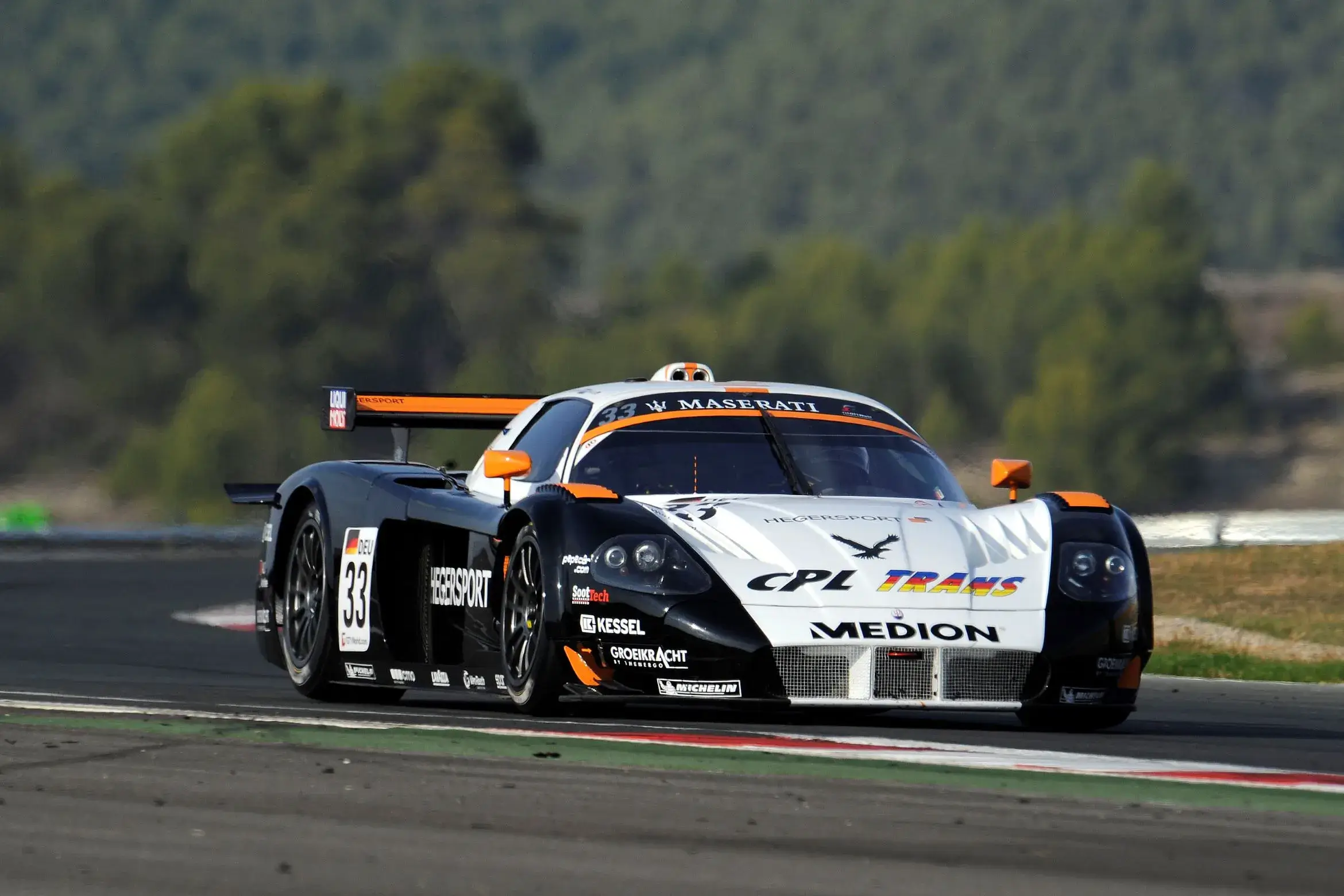
The MC12 was conceived explicitly for FIA GT competition, with the road-going Stradale version fulfilling homologation requirements. Three factory-supported MC12 GT1 race cars debuted during the 2004 season, immediately demonstrating competitiveness. The combination of proven Ferrari engineering, extended wheelbase providing superior stability, and racing-specific tuning proved devastatingly effective. The MC12 claimed its first victory at Oschersleben in 2004, followed by triumph at the Zhuhai International Circuit in China. Throughout 2004 and 2005, the MC12 dominated FIA GT1 competition, establishing itself as the car to beat. The 2005 24 Hours of Spa victory proved particularly significant, demonstrating durability and sustained performance over extended distance. The racing program continued through subsequent seasons, with the MC12 securing the FIA GT1 Manufacturers Cup in 2005 and both Teams and Drivers Championships in subsequent years.
Production and Legacy
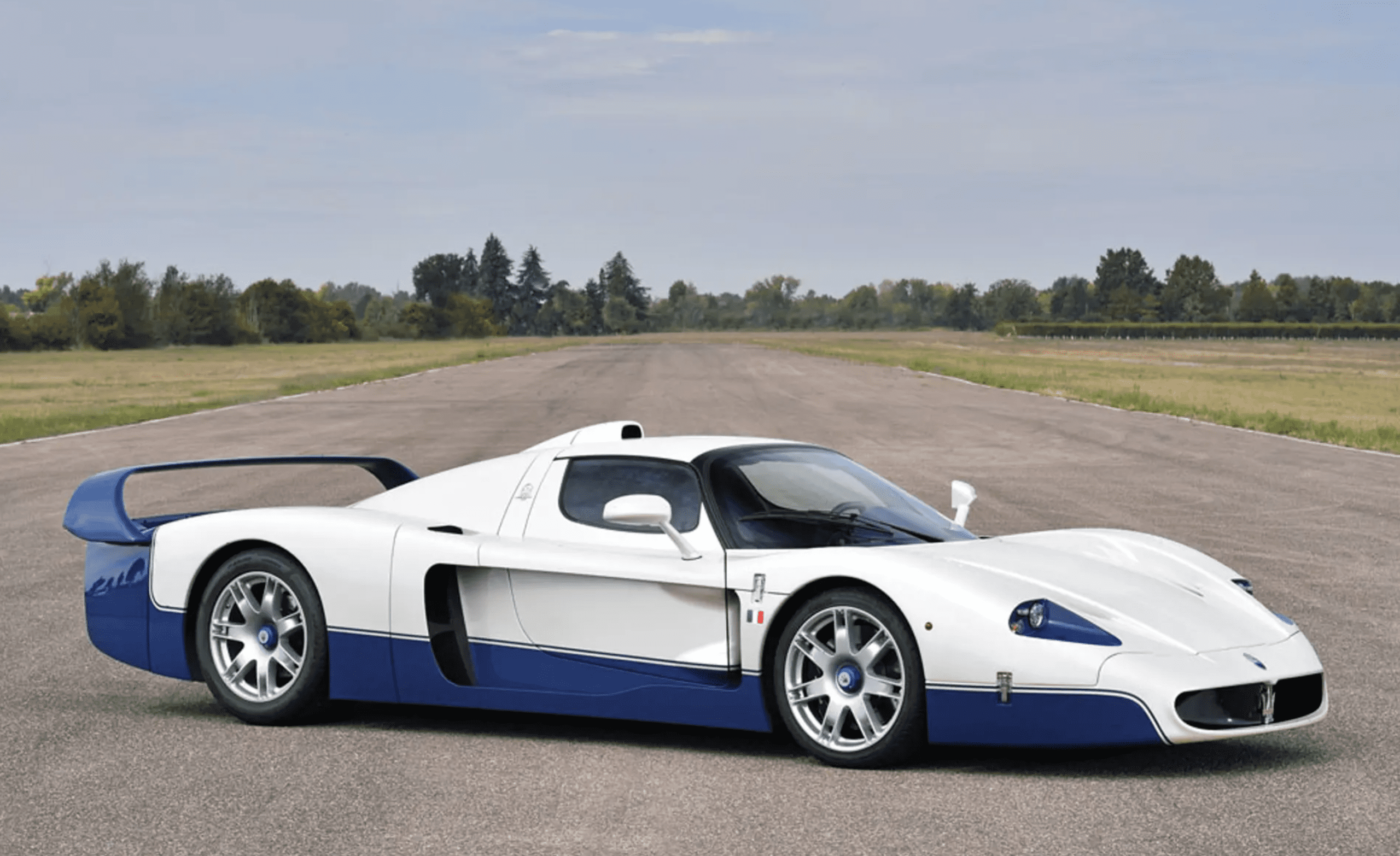
Maserati produced exactly 50 MC12 Stradale examples: 25 in 2004 and 25 in 2005, with each year’s batch featuring subtle modifications addressing FIA regulatory changes. Additionally, twelve ultra-exclusive MC12 Versione Corse variants were produced from 2006, featuring 755 horsepower and extreme track-focused engineering. The combined production run of approximately 62 cars established the MC12 as extraordinarily rare and exclusive among modern supercars.
The MC12 proved that Maserati’s racing heritage remained vital and authentic. It demonstrated that an Italian brand could produce a genuinely competitive supercar competing against established rivals. The car’s success in FIA GT racing established Maserati’s return to motorsport prominence after decades of absence, reinvigorating the brand’s performance credentials.
Today, MC12 examples are extraordinarily valuable and increasingly sought after by collectors recognizing the car’s historical significance and engineering excellence. The Maserati MC12 remains the brand’s fastest road car ever, a naturally aspirated masterpiece celebrating authentic performance and racing heritage. It stands as one of the greatest Italian supercars, proof that tradition and innovation could coexist in creating something genuinely extraordinary.