
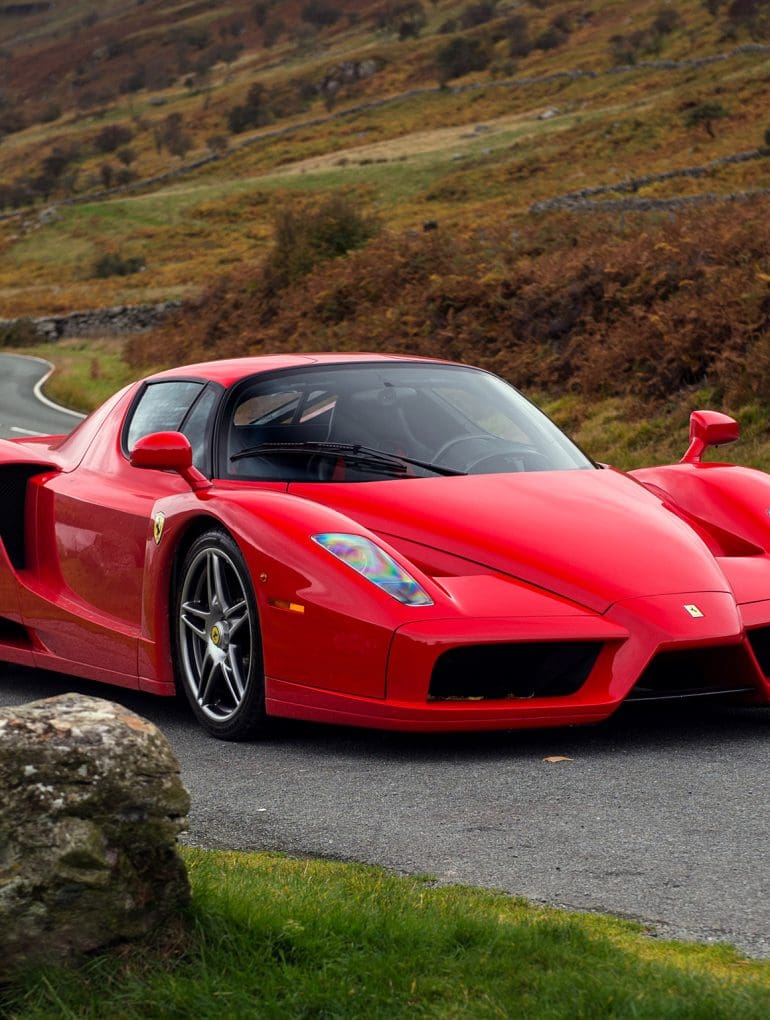

Paris Motor Show, September 2002. Luca Cordero di Montezemolo unveiled the Ferrari Enzo, a revolutionary mid-engine hypercar celebrating the legendary founder whose name it proudly carried. This was Ferrari’s statement that naturally aspirated performance remained viable, that Formula 1 technology could enhance production cars without forced induction compromises. The 6.0-liter naturally aspirated V12 produced 660 horsepower at 7,800 rpm and 485 lb-ft of torque at 5,500 rpm—an extraordinary achievement delivering 110 horsepower per liter through sophisticated engineering and mechanical authenticity.
The Enzo could accelerate from 0 to 60 mph in approximately 3.3 seconds while achieving 218 mph top speed, establishing itself as the fastest Ferrari ever produced at introduction. Limited to just 399 road examples built through 2004, the Enzo represented Maranello at its most ambitious, proving that race-derived technology and natural aspiration could create the ultimate expression of automotive performance. This was Enzo Ferrari’s philosophy made manifest: racing first, road cars second, with the two inextricably linked through shared engineering excellence.
Background and Origins
The decision to create the Enzo emerged from Ferrari’s extraordinary Formula 1 dominance during the early 2000s. With Michael Schumacher and Rubens Barrichello establishing Ferrari as the sport’s most formidable competitor, management recognized an extraordinary opportunity to translate that racing success into a production hypercar succeeding the legendary F50.
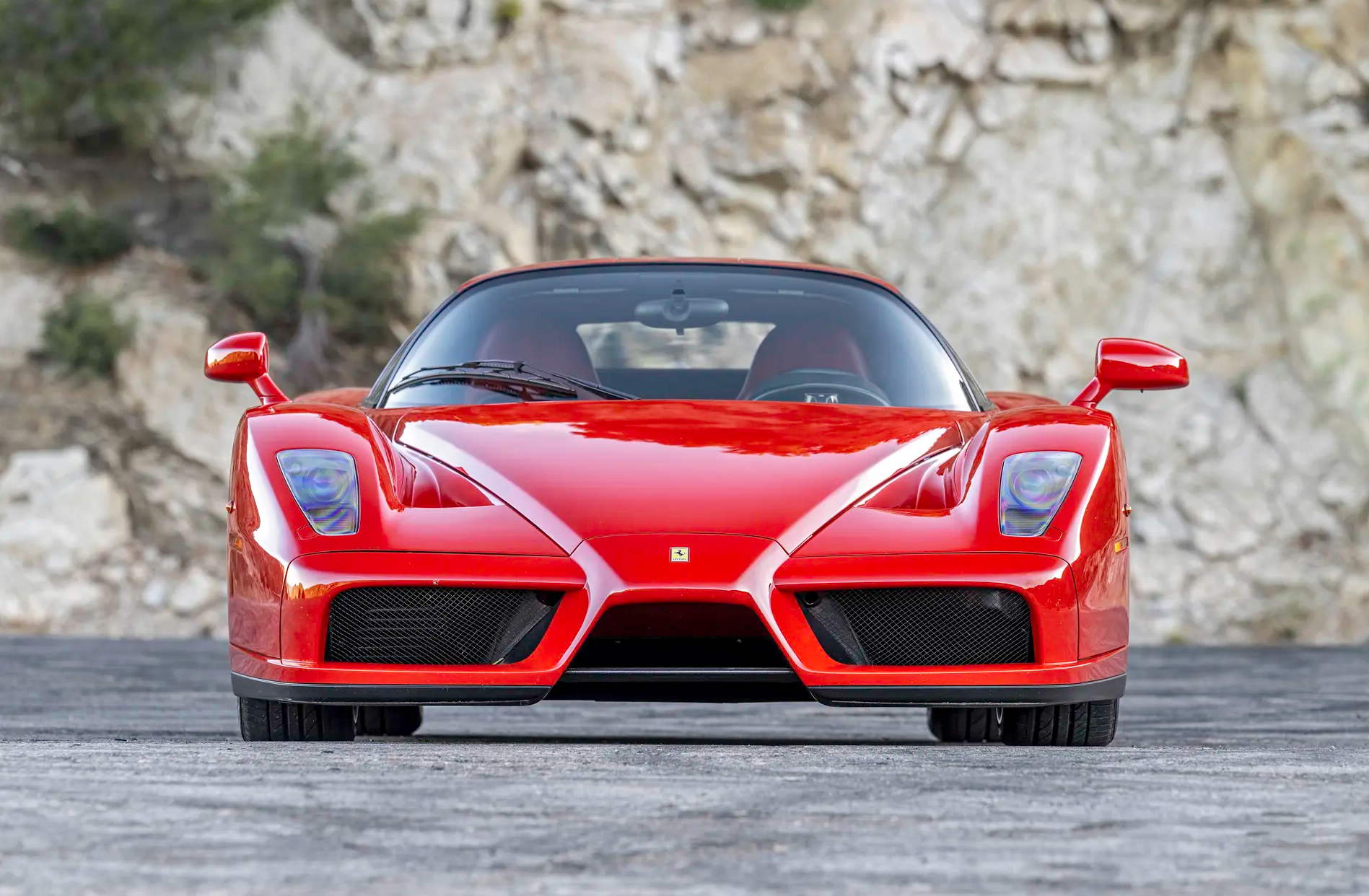
Pininfarina design studio, under legendary head designer Ken Okuyama, received the creative brief with clear parameters: create something revolutionary while celebrating Enzo Ferrari’s legacy. Okuyama’s vision emphasized fighter-jet aesthetics and functional form following performance, deliberately rejecting excessive styling ornamentation in favor of purposeful design. The resulting proportions were distinctly modern yet timeless, with the sharp nose, distinctive pod-flanked fenders, and raised cockpit creating an impression of concentrated performance.
Development of the all-new F140 B V12 engine began with Formula 1 experience as the foundation. Rather than modify existing architecture, Ferrari engineers designed a completely new 6.0-liter powerplant incorporating advanced materials including titanium con-rods and sophisticated multi-valve architecture. The compression ratio was set at 11.2:1, aggressively high by contemporary standards, requiring premium fuel and sophisticated engine management for reliable operation. The result was 660 horsepower, representing the highest specific output Ferrari had achieved in a naturally aspirated road engine.
The chassis architecture represented extraordinary innovation. The complete monocoque was constructed from carbon fiber and aluminum composites, utilizing aerospace-grade manufacturing standards. This advanced construction reduced weight significantly while providing exceptional rigidity, establishing the platform for the extraordinary performance that followed.
Design and Engineering
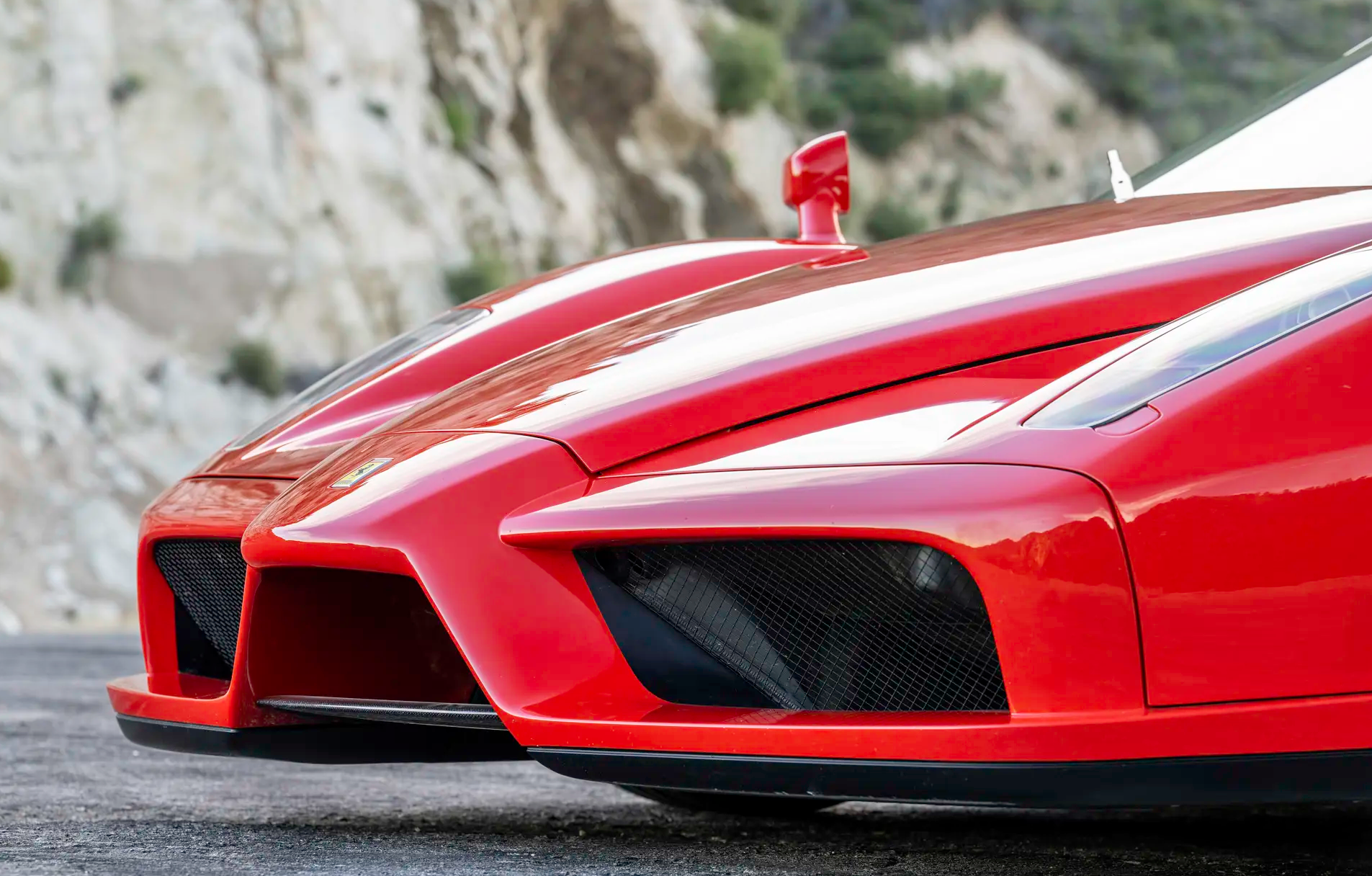
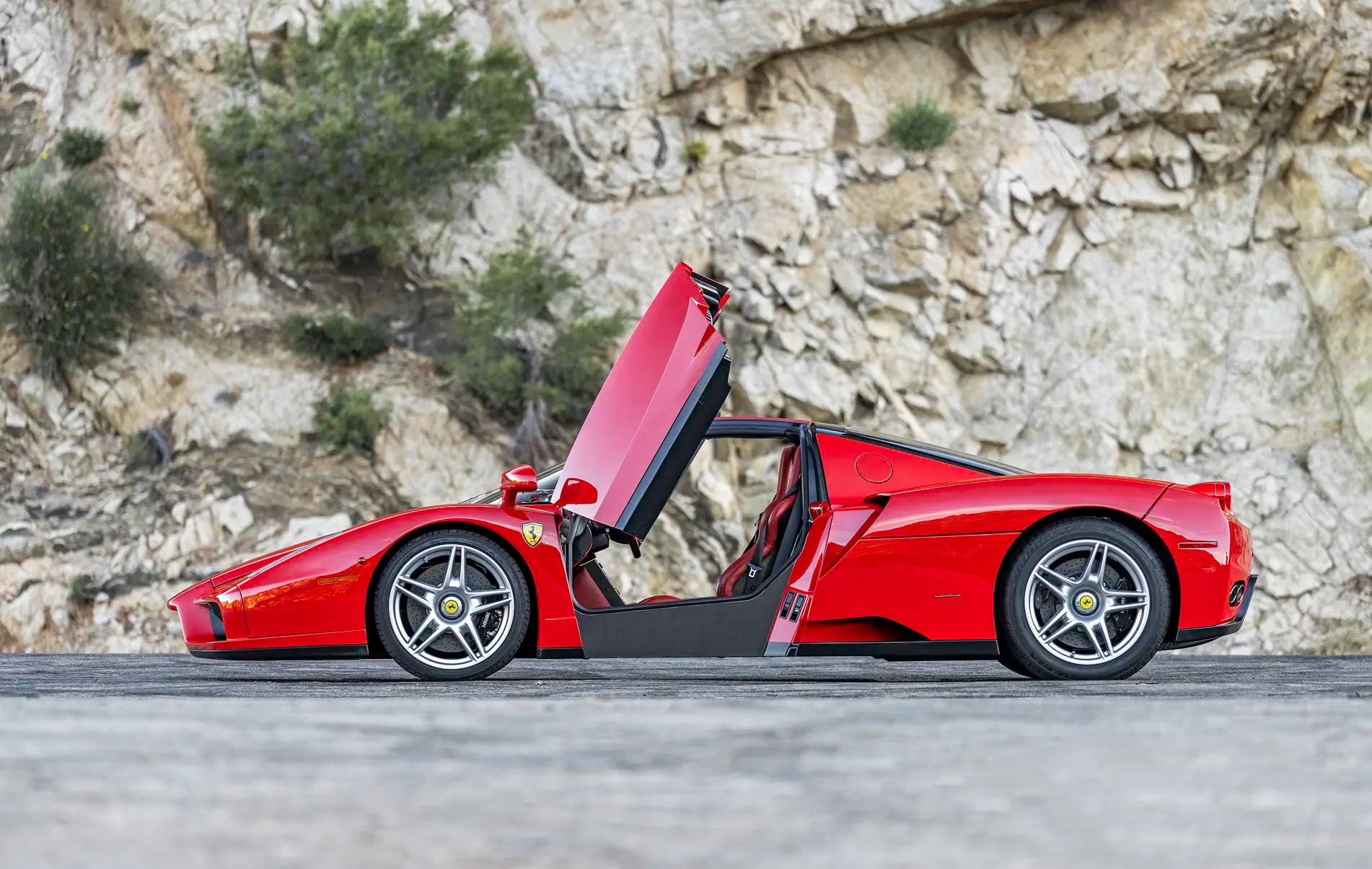
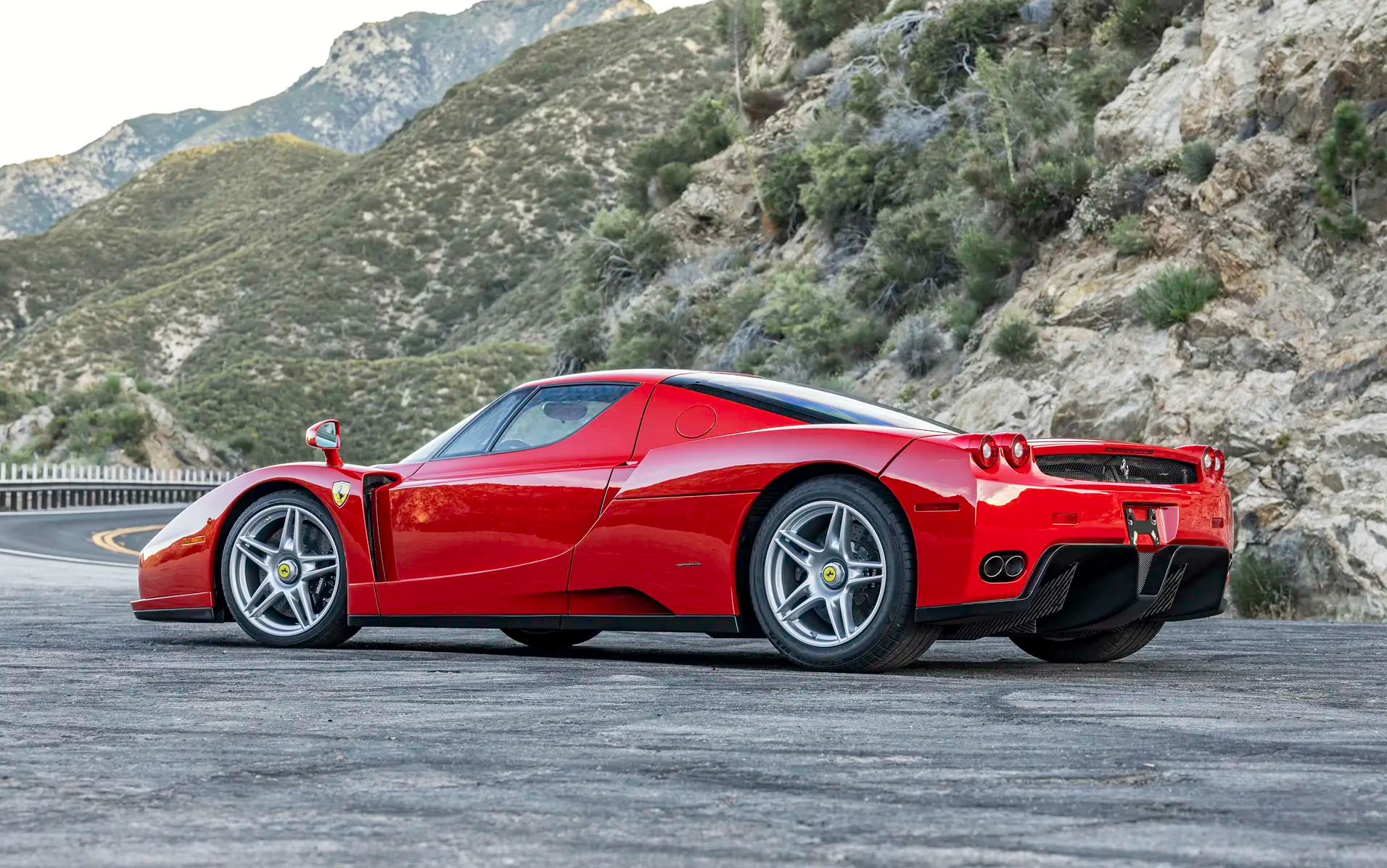
Ken Okuyama’s design emphasized form following function without compromise. The low, pointed nose featured a distinctive V-shaped profile with integrated cooling ducts providing necessary airflow without visual heaviness. The side profile emphasized the mid-engine positioning, with the substantial rear deck accommodating the V12 while housing sophisticated aerodynamic development. The butterfly doors opened upward, creating theatrical entry befitting the Enzo’s supercar status while maintaining practical accessibility.
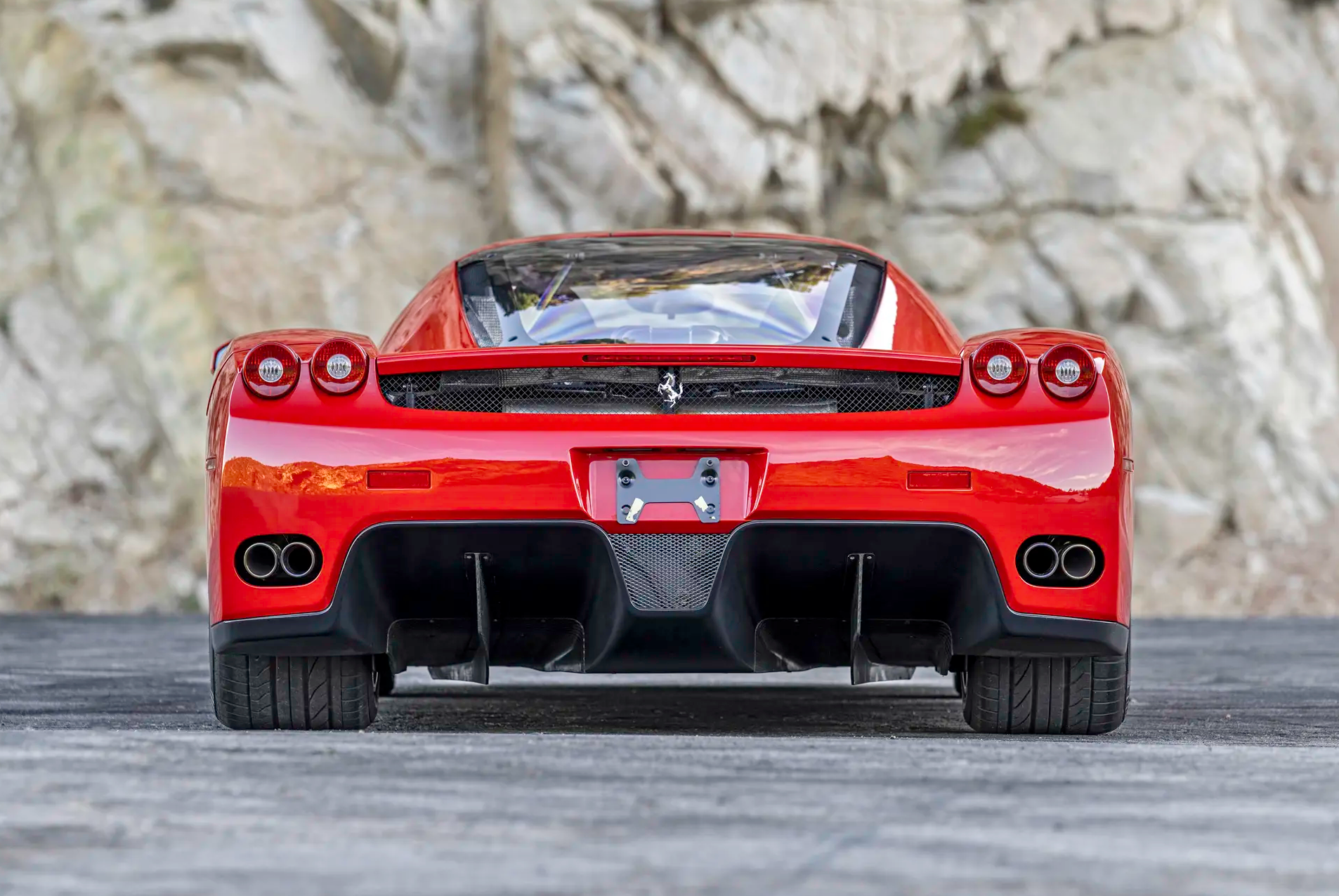
The overall silhouette emphasized purposeful aggression rather than refined elegance. The sharp lines and sculpted surfaces suggested performance through engineering rather than styling drama. At the rear, an integrated diffuser combined with adjustable rear wing elements providing 775 kilograms of downforce at 300 km/h, remarkable aerodynamic achievement demonstrating that Form One technology had genuinely translated to production application.
Suspension featured independent double wishbones front and rear with race-derived pushrod geometry and coil springs. The dampers were electronically adjustable, continuously managing stiffness based on driving conditions and driver input. The geometry was optimized for responsive feedback while accommodating the extraordinary forces generated by the twin carbon-ceramic brake systems.
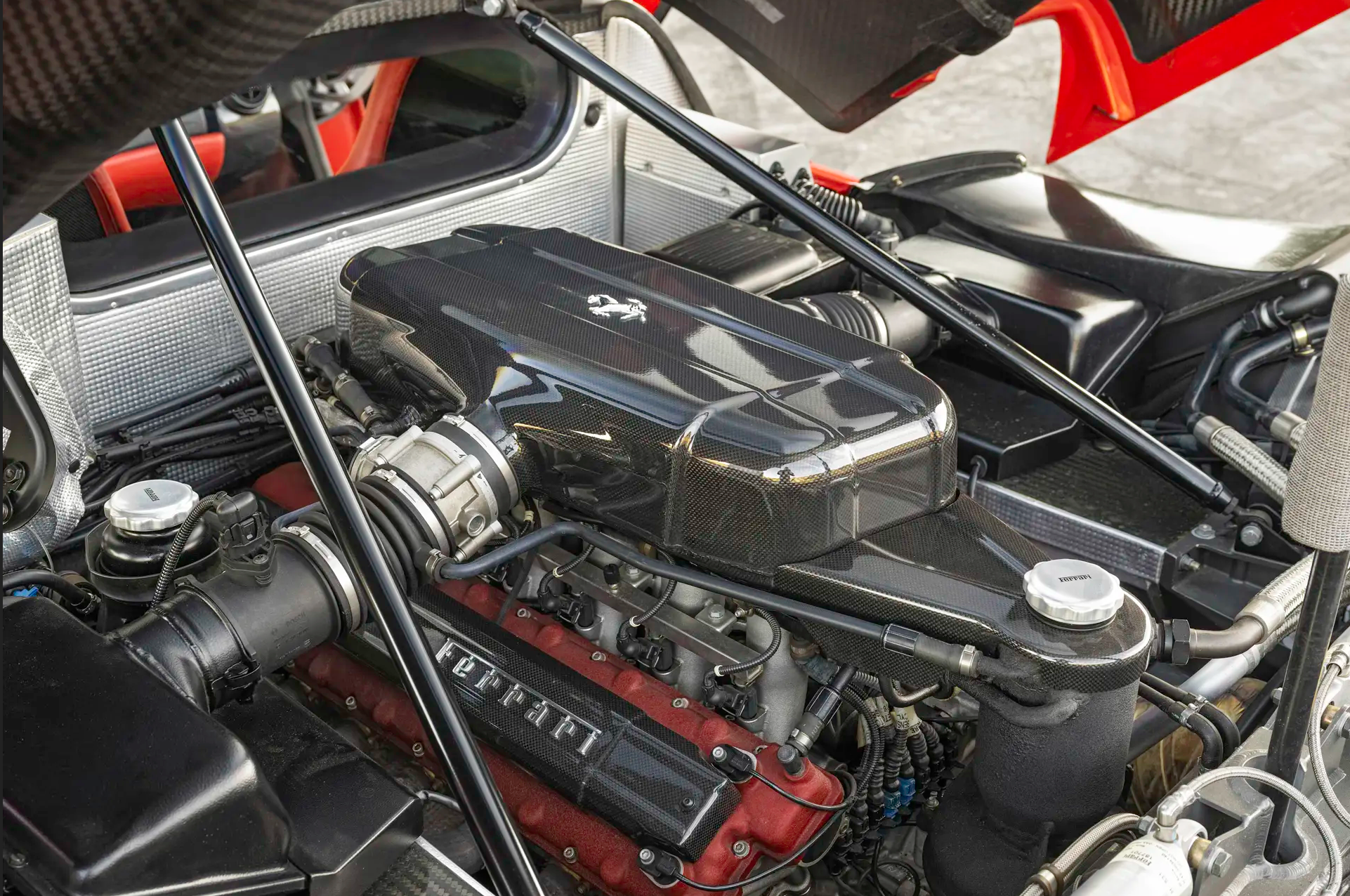
The F140 B V12 was mounted longitudinally in the mid-engine position, a configuration optimizing weight distribution and creating ideal handling balance. The dry-sump lubrication system allowed the engine to sit lower, further improving weight distribution and center-of-gravity positioning. With dual overhead camshafts per bank controlling four valves per cylinder, the engine featured variable valve timing optimizing breathing efficiency across the entire rev range.
The power delivery was linear and progressive, with peak torque arriving at 5,500 rpm and remaining available until approximately 7,000 rpm, providing accessible acceleration without requiring extreme rev-range exploration. The engine revved freely to 7,800 rpm with mechanical sophistication that rewarded aggressive driving through the gears.
Transmission was a six-speed F1-derived paddle-shift system with 150-millisecond gear changes, featuring electrohydraulic actuation allowing automated or driver-controlled operation. The system incorporated Sport programming enabling extended engine rev ranges before automatic upshifts, providing genuine engagement for enthusiasts unwilling to accept automatic decision-making.
Styling
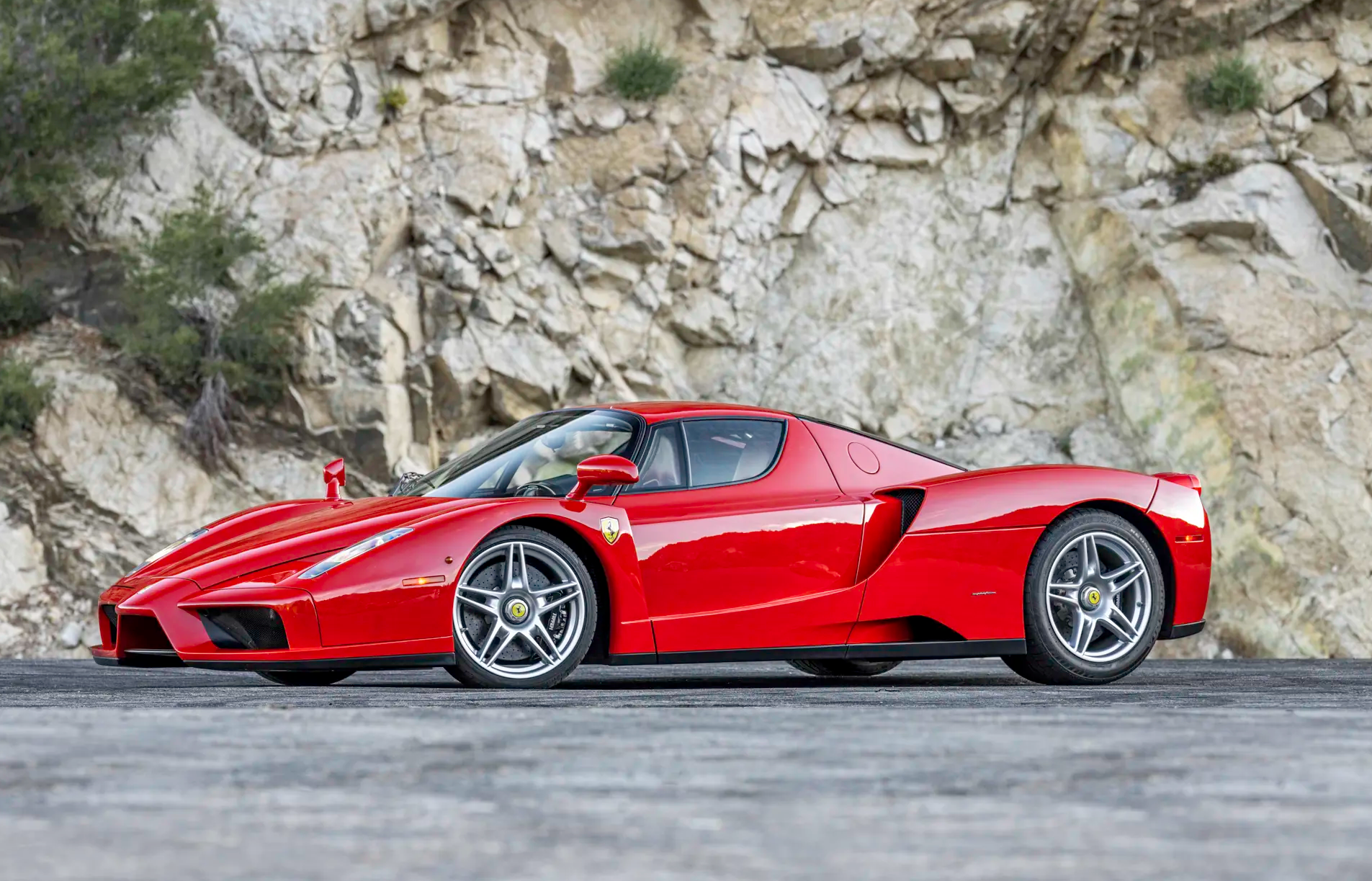
Ken Okuyama’s design established a striking visual language emphasizing racing authenticity. The fighter-jet inspired cockpit featured a forward-positioned cabin with excellent all-around visibility and minimal bodywork obscuring driver engagement. The sculpted surfaces flowed organically without excessive graphic ornamentation, allowing functional design elements to dominate the visual composition.
The distinctive four round taillights, deliberately referencing classic Ferrari design from the founder’s era, created visual continuity linking the Enzo to Maranello’s racing heritage. This subtle nod acknowledged that despite revolutionary contemporary technology, the Enzo remained fundamentally connected to Ferrari’s fundamental design philosophy.
Most Enzo examples were finished in Rosso Corsa red, the traditional Italian racing color celebrating Maranello’s competition heritage, though alternative colors including yellow, black, and white were available for select customers.
Interior
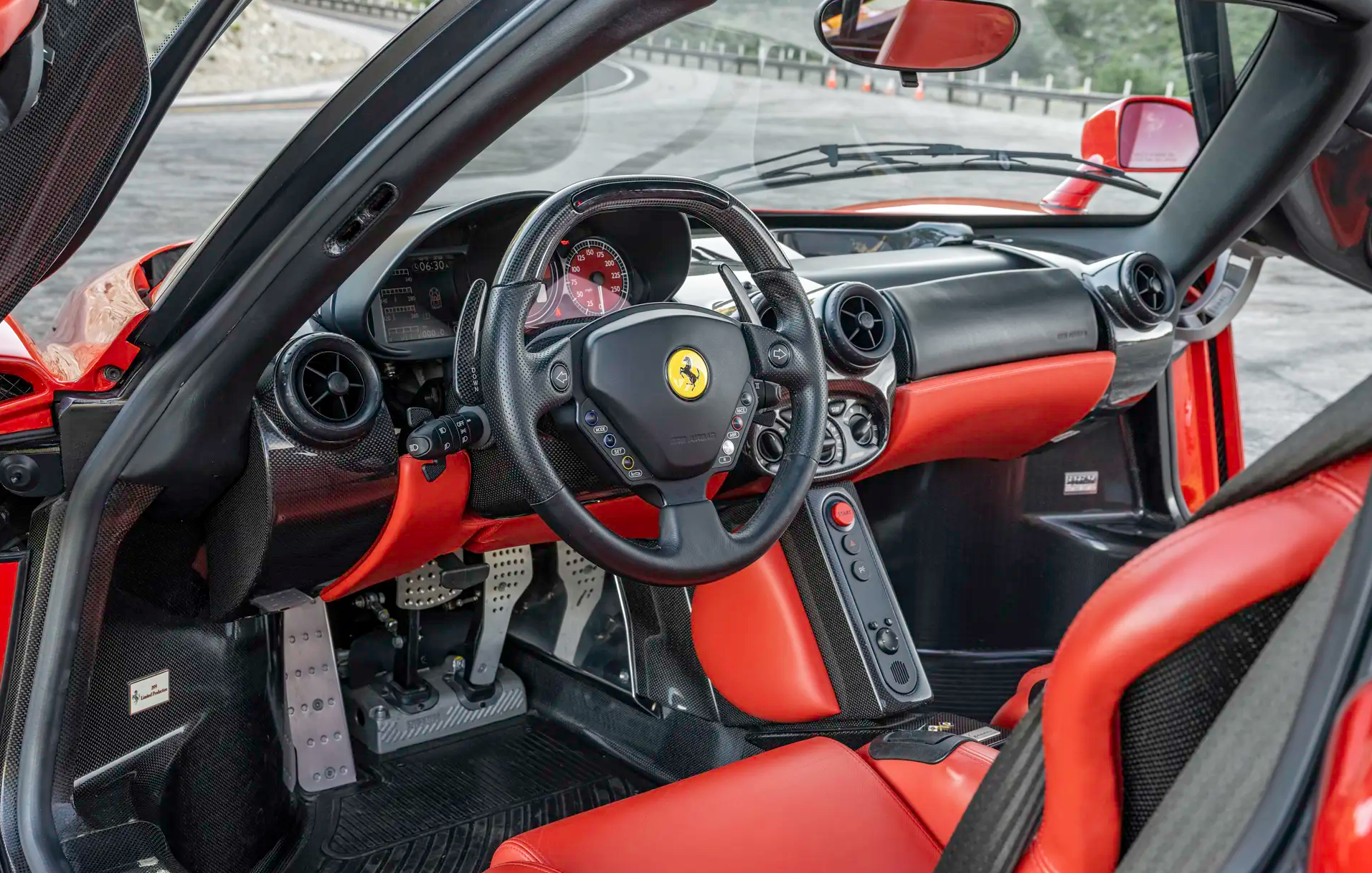
The cabin embodied extreme minimalism reflecting the Enzo’s race-first philosophy. Carbon-fiber extensively covered the dashboard, door panels, and surrounding surfaces, with exposed aluminum elements emphasizing mechanical authenticity. The two Alcantara-covered sport seats provided excellent lateral support during aggressive driving while maintaining adequate comfort for extended road journeys.
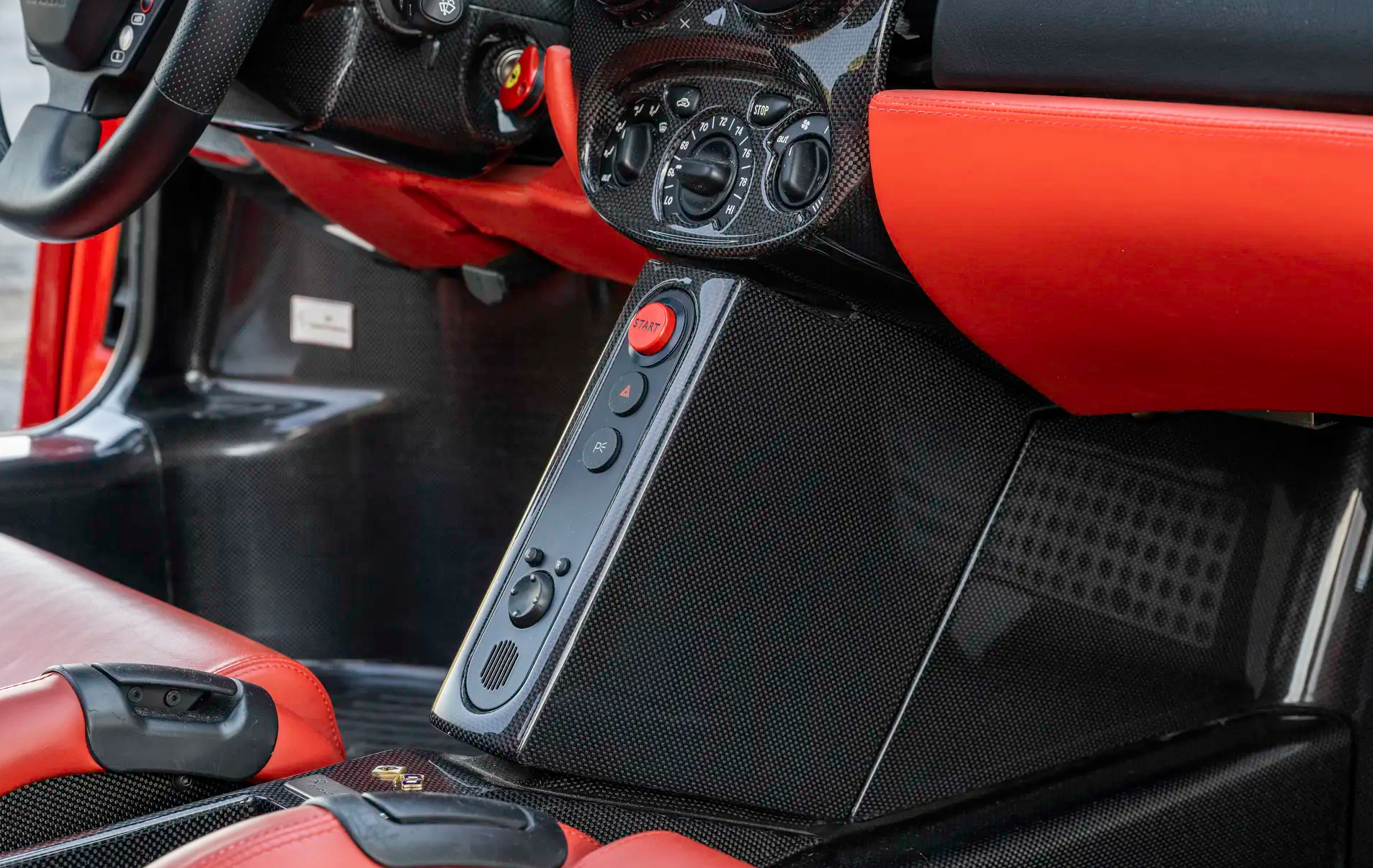
Remarkably, the Enzo initially shipped without floormats, sound deadening, or any unnecessary trim—pure engineering focus without luxury appointments. A steering wheel featuring multiple buttons allowed drivers to adjust suspension stiffness, traction control settings, and transmission programming without exiting the driving position. The overall atmosphere celebrated mechanical purity and driver engagement above all other considerations.
Specifications
- Engine: F140 B V12 naturally aspirated, 5,999cc, DOHC per bank, four valves per cylinder
- Power: 660 PS / 651 hp at 7,800 rpm
- Torque: 485 lb-ft / 657 N·m at 5,500 rpm
- Transmission: Six-speed F1-style paddle-shift semi-automatic, rear-wheel drive
- Chassis: Carbon-fiber and aluminum composite monocoque
- Suspension: Independent double wishbones (front and rear), pushrod-actuated coil springs, adaptive dampers
- Brakes: Carbon-ceramic discs 370mm (front), 330mm (rear), with large calipers
- Wheels: 19-inch center-lock alloy, Bridgestone performance tires
- Weight: 1,255 kg dry / 1,365 kg curb weight
- Performance: 218 mph / 350 km/h top speed, 0-60 mph in 3.3 seconds, 0-100 km/h in 3.65 seconds
Production and Legacy
Ferrari built exactly 399 Enzo examples between 2002 and 2004 at Maranello, hand-assembled with meticulous attention reflecting Ferrari’s manufacturing standards. The limited production reflected deliberate exclusivity strategy, ensuring the Enzo remained genuinely elite and extraordinarily rare. Each car required extensive hand-finishing and customer personalization reflecting Ferrari’s bespoke manufacturing philosophy.
The Enzo proved that naturally aspirated performance remained compelling and viable during the early 2000s. It established that Formula 1 technology could enhance production cars through legitimate engineering integration rather than marketing fiction, demonstrating that Ferrari’s racing philosophy genuinely informed road car development.
The Enzo inspired the Ferrari FXX track-only program, where 29 examples were built for selected customers, combining Enzo engineering with track-focused enhancements including 789 horsepower, increased downforce, and race-derived suspension—demonstrating that the road Enzo’s engineering foundation was sufficiently robust for extreme performance development.
Today, Enzo examples command extraordinary prices, with pristine cars fetching $3-5 million USD at auction, establishing the Enzo as one of the most valuable production cars ever built. The combination of rarity, naturally aspirated V12 heritage, and authentic Formula 1 integration ensures legendary status among serious collectors.
The Ferrari Enzo represented Maranello at its most ambitious and accomplished, celebrating naturally aspirated performance and mechanical purity. It remains one of the greatest hypercars ever created, a masterpiece proving that race-derived technology and intelligent engineering could create something genuinely transcendent.