
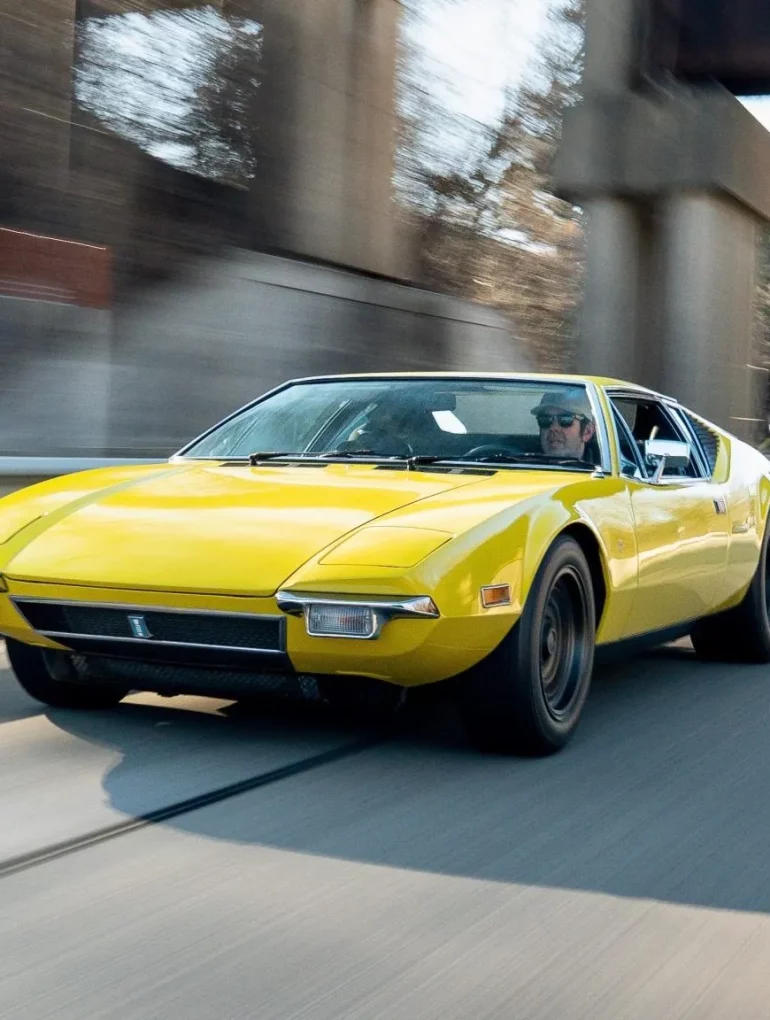

Turin Motor Show, October 1970. De Tomaso unveiled the Pantera, an audacious mid-engine supercar representing a revolutionary approach to performance vehicle accessibility. The Italian manufacturer’s vision was unprecedented: a genuine supercar featuring genuine mid-engine handling balance and sophisticated engineering at a price point significantly undercutting Ferrari and Lamborghini.
The 5.8-liter Ford Cleveland V8 produced 330 horsepower at 6,000 rpm and 345 lb-ft of torque, delivering impressive acceleration and 159 mph top speed while maintaining the practicality required for daily driving. This was Alejandro de Tomaso’s audacious statement that performance and accessibility weren’t mutually exclusive, that American V8 power combined with Italian design and engineering could create something genuinely extraordinary.
Remarkably, Ford’s Lincoln-Mercury dealer network marketed the Pantera in North America from 1971 through 1975, establishing the unusual distribution through which more than half of all Panteras were sold. Production continued through 1992, with approximately 7,200 examples built, establishing the Pantera as one of the most successful mid-engine sports cars ever produced.
Background and Origins
Alejandro de Tomaso’s vision emerged from practical recognition that Ferrari and Lamborghini’s exclusive distribution and premium pricing limited market accessibility. The Argentine industrialist and former racing driver founded De Tomaso Automobili in 1959 in Modena, establishing the company as a prototype and race-car builder. Throughout the 1960s, the company produced the Vallelunga and Mangusta, mid-engine sports cars establishing Modena’s credentials in performance vehicle development.
The Pantera project began with recognition that American automotive suppliers could provide accessible, reliable engines at costs Ferrari and Lamborghini found prohibitive. Rather than develop original V12 architecture, de Tomaso collaborated with Ford, selecting the newly-introduced 5.8-liter Cleveland V8 as the ideal powerplant. This American engine provided genuine performance alongside reliability and cost-effectiveness, establishing the Pantera’s fundamental value proposition.
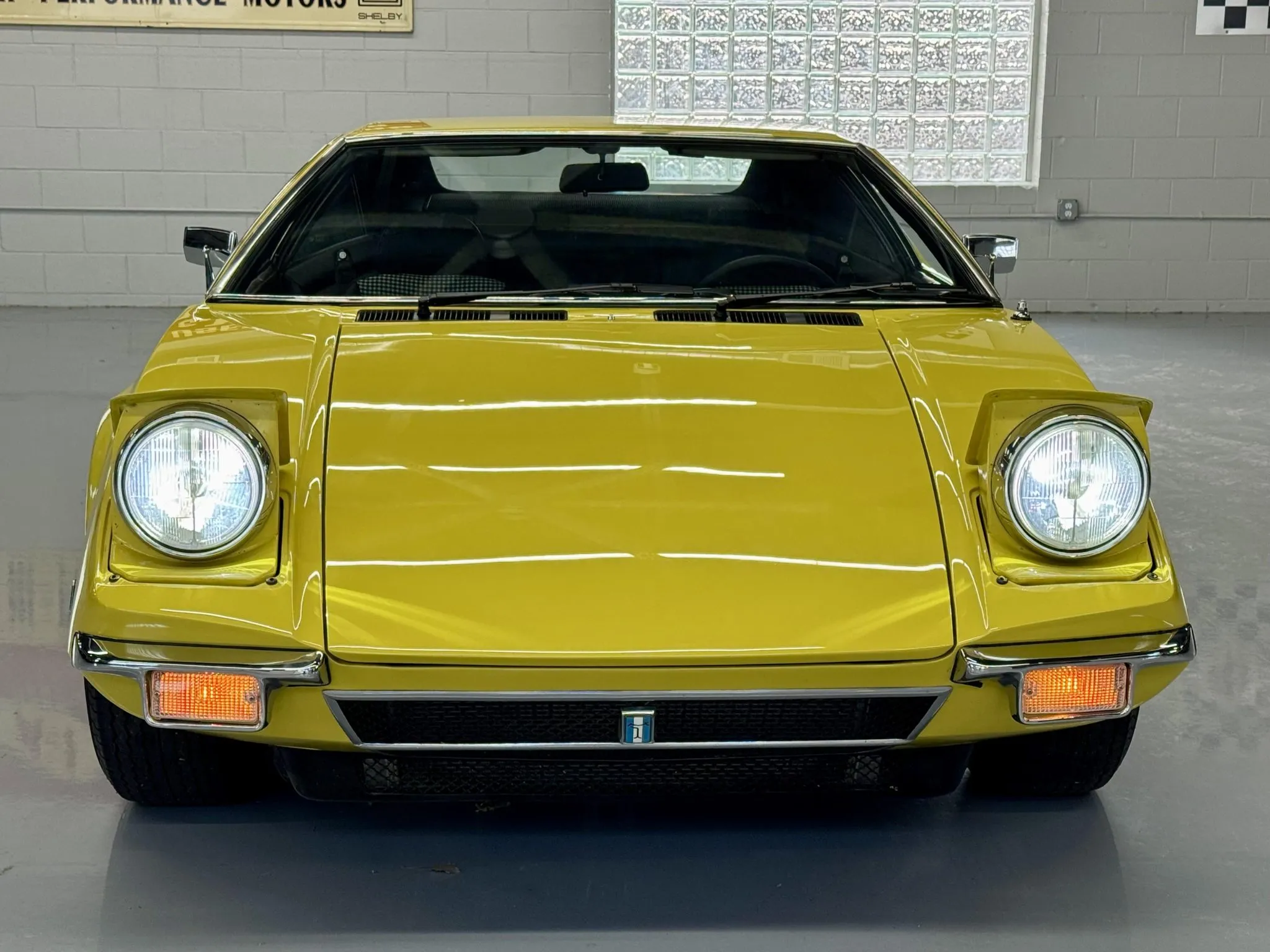
Designer Tom Tjaarda, an American working at Carrozzeria Ghia in Turin, received the brief to create appealing proportions around the American V8. Tjaarda’s vision emphasized elegant simplicity and functional form, creating a low-slung profile emphasizing the mid-engine positioning while maintaining the aggressive stance appropriate for a performance vehicle. The resulting design was remarkably modern for 1970, with proportions that would remain contemporary for decades.
The distribution partnership with Lincoln-Mercury was extraordinary and unprecedented. Ford executives recognized the Pantera’s potential in expanding their performance portfolio, establishing dealer network distribution that made the Pantera genuinely accessible to American customers unwilling or unable to import European exotica. This partnership proved remarkably successful, with nearly 4,000 Panteras sold through Lincoln-Mercury dealers during the initial 1971-1975 agreement.
Design and Engineering
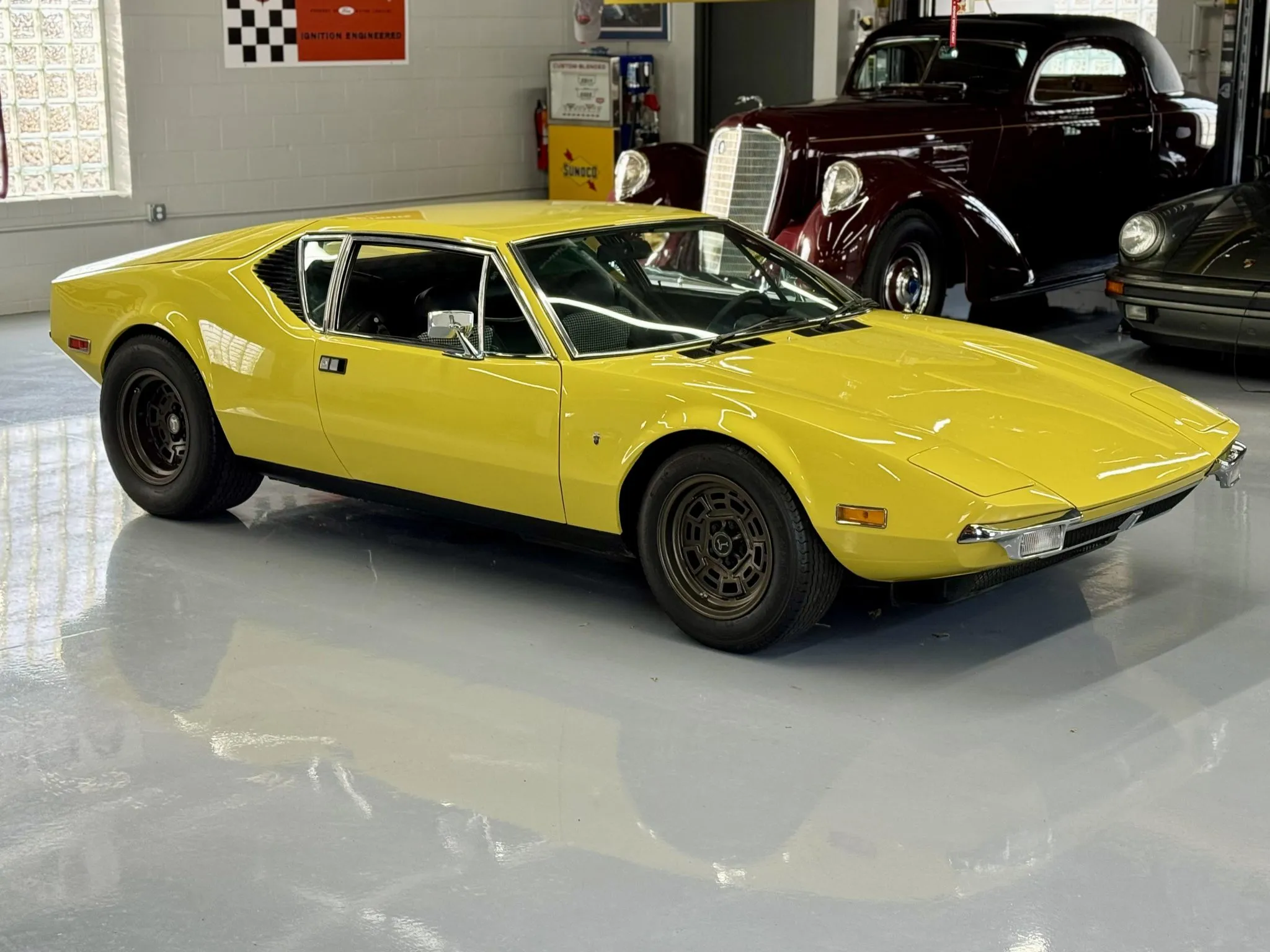
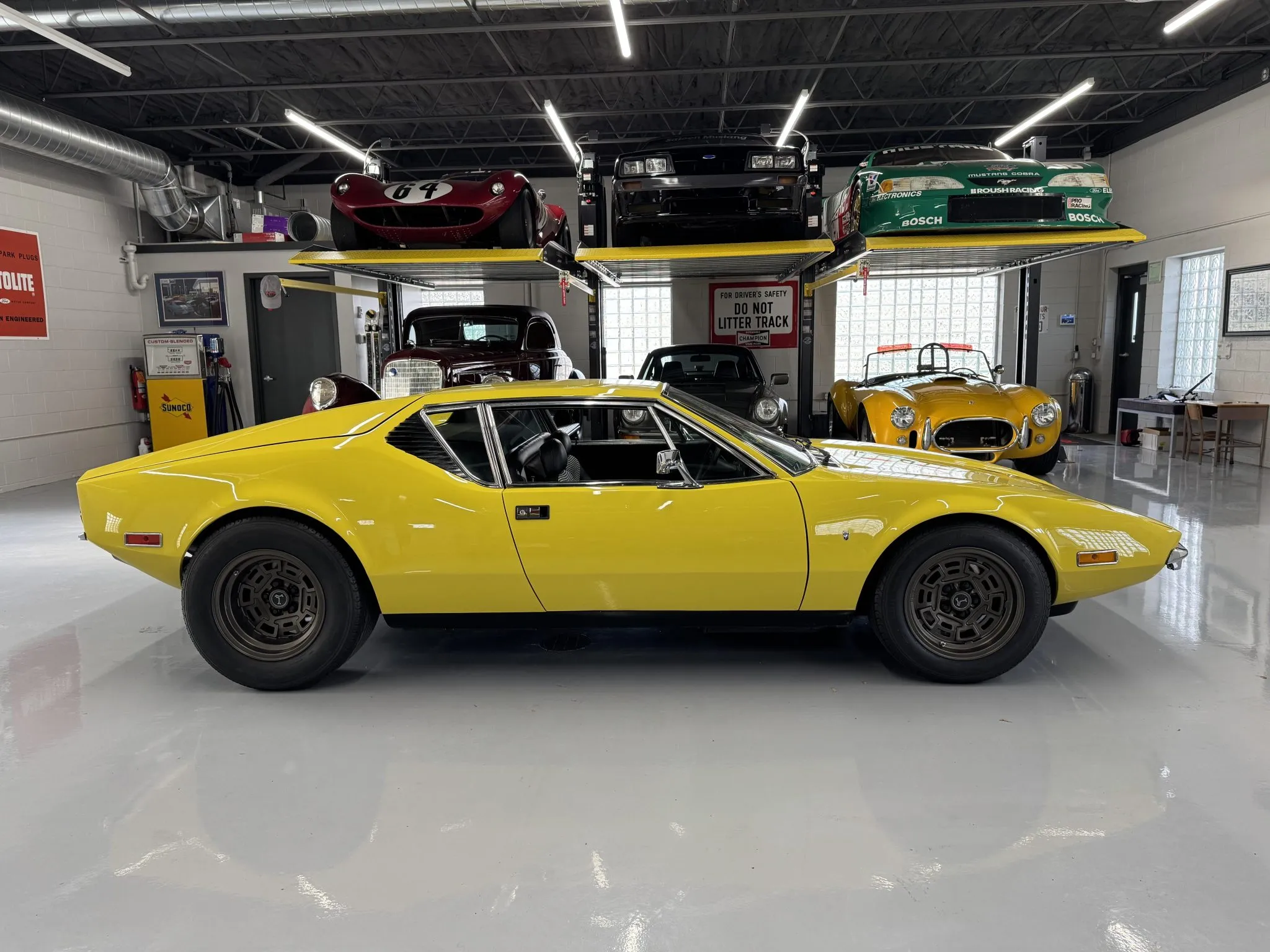
Tom Tjaarda’s design created a distinctly Italian interpretation of mid-engine proportions. The long hood accommodated the transversely-mounted Cleveland V8 while establishing classical sports car proportions. The low roofline and windshield were swept backward, emphasizing speed and performance through design while maintaining practical visibility. The profile was clean and uncluttered, with side scoops providing functional cooling while defining the car’s muscularity without excessive ornamentation.
The chassis utilized a steel monocoque construction with aluminum subframes front and rear, establishing an exceptionally rigid structure supporting mid-engine performance requirements. The wheelbase of 2,500 millimeters provided balanced proportions, with weight distribution optimized through the mid-mounted engine position. The overall construction methodology emphasized practical manufacturing while maintaining structural integrity adequate for the Pantera’s performance envelope.
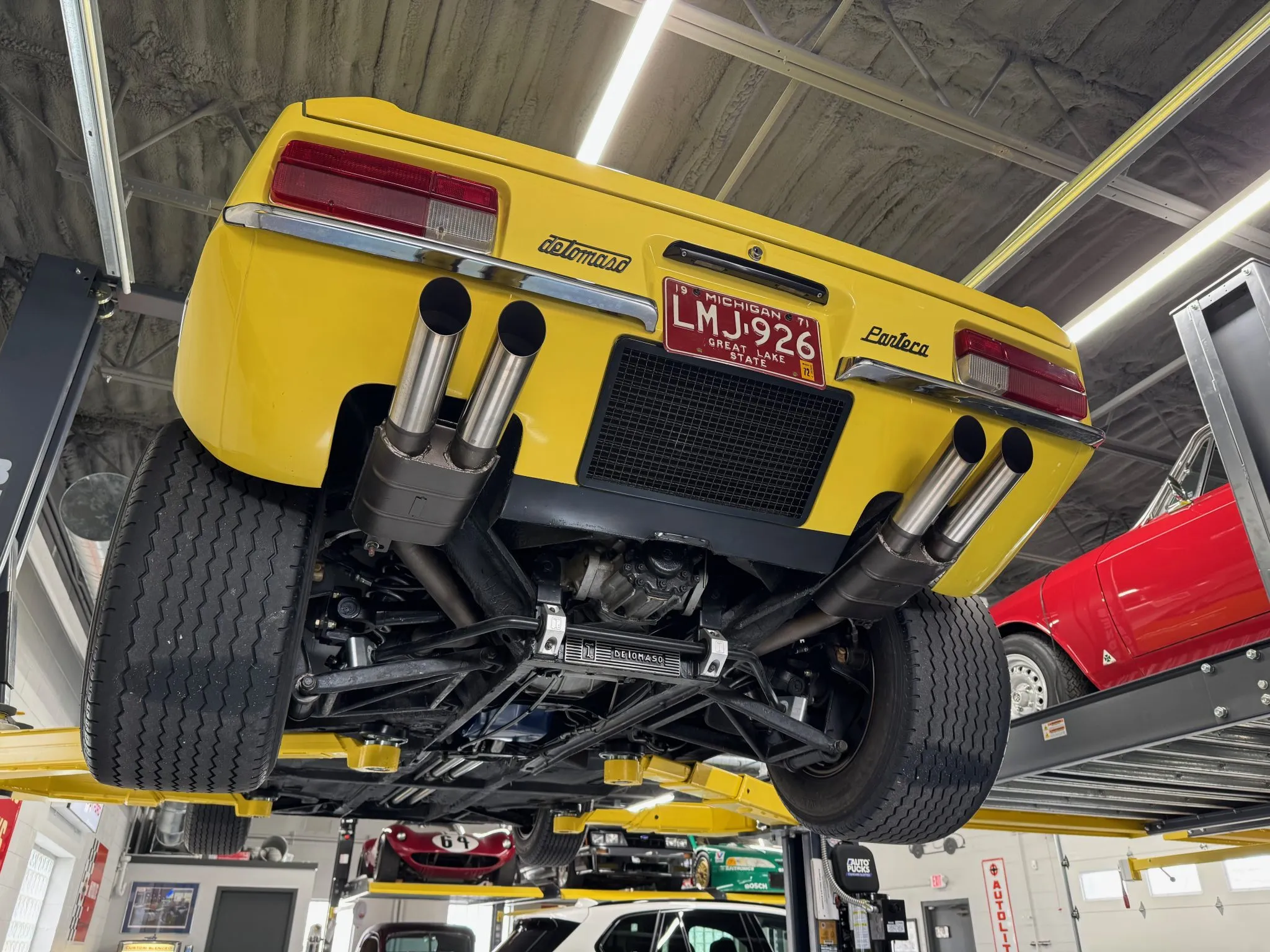
Suspension featured independent double wishbones front and rear with coil springs and telescopic dampers. The geometry was tuned for responsive handling while maintaining the ride comfort expected from a practical daily-driver sports car, a demanding compromise requiring meticulous engineering. Anti-roll bars provided cornering control without excessive harshness, creating balanced behavior suitable for both road and track use.
Braking was by four-wheel ventilated discs with four-piston calipers front and two-piston rear, providing powerful stopping power adequate for the Pantera’s moderate acceleration. Power-assisted steering ensured accessibility for everyday driving while maintaining adequate feedback during spirited operation.
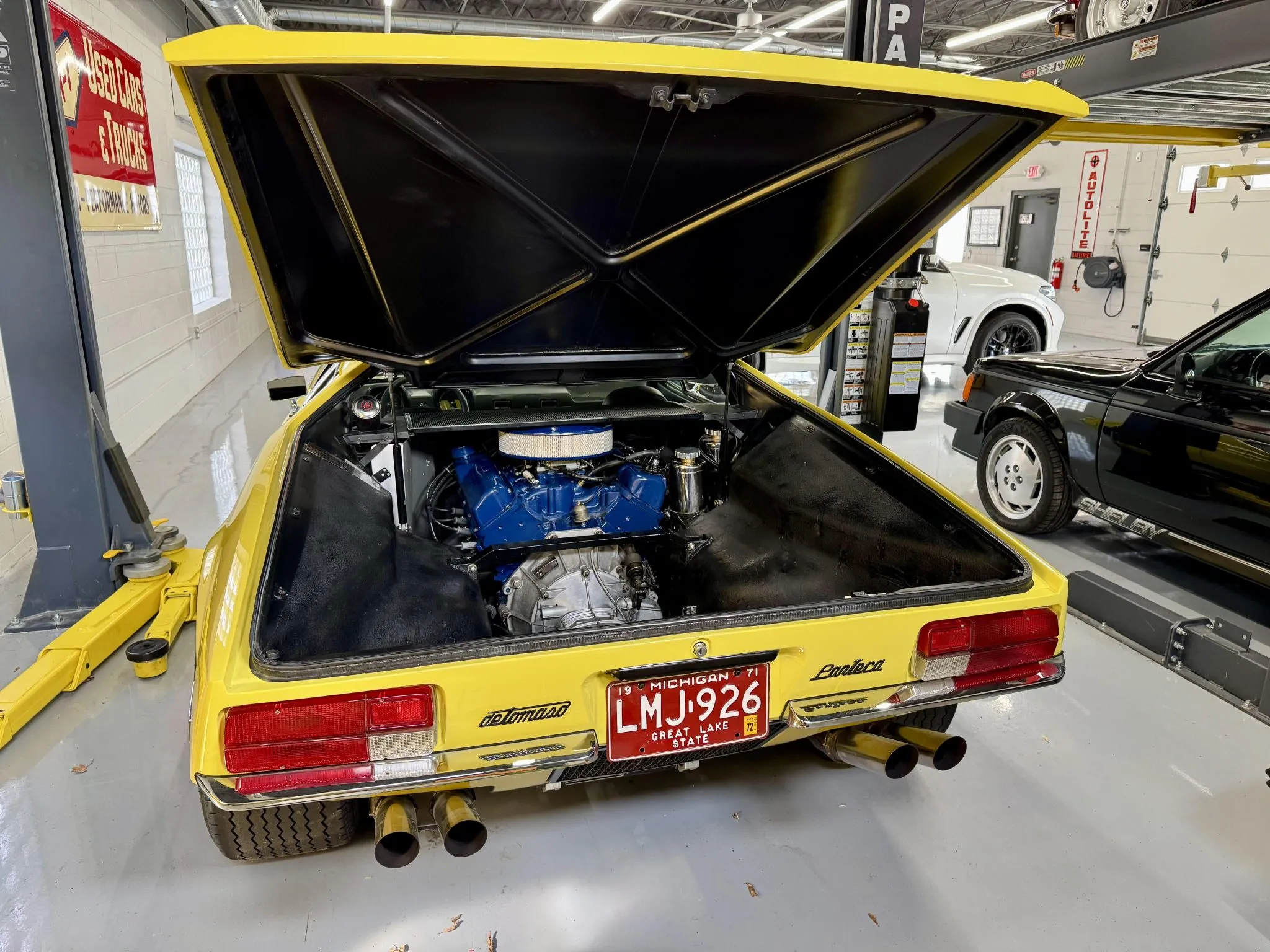
The 5.8-liter Cleveland V8 was mounted longitudinally in the mid-rear position, optimizing weight distribution and creating inherent handling balance. The naturally aspirated configuration delivered 330 horsepower at 6,000 rpm and 345 lb-ft of torque at 3,500 rpm, linear power delivery reflecting Ford’s proven engineering. The four-barrel carburetor and cast-iron block provided robust durability alongside the mechanical simplicity ensuring reliability for owners unwilling to accept the temperamental nature of Ferrari or Lamborghini contemporaries.
The ZF five-speed manual transmission was mounted in unit with the final drive, a transaxle configuration optimizing weight distribution. The mechanical precision of the ZF system established transmission quality rivaling Italian manufacturers while providing genuine reliability and serviceability appropriate for practical ownership.
Styling
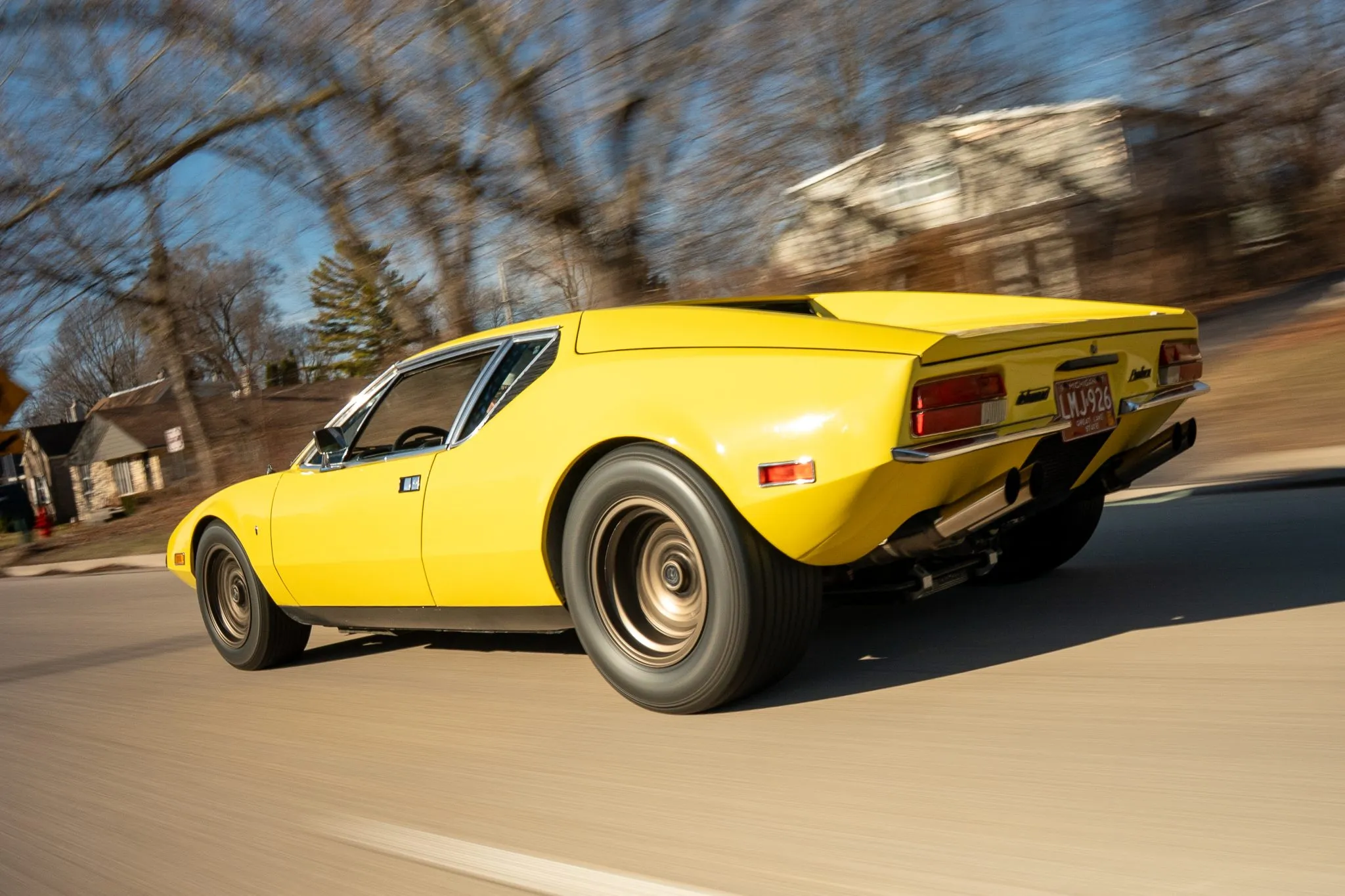
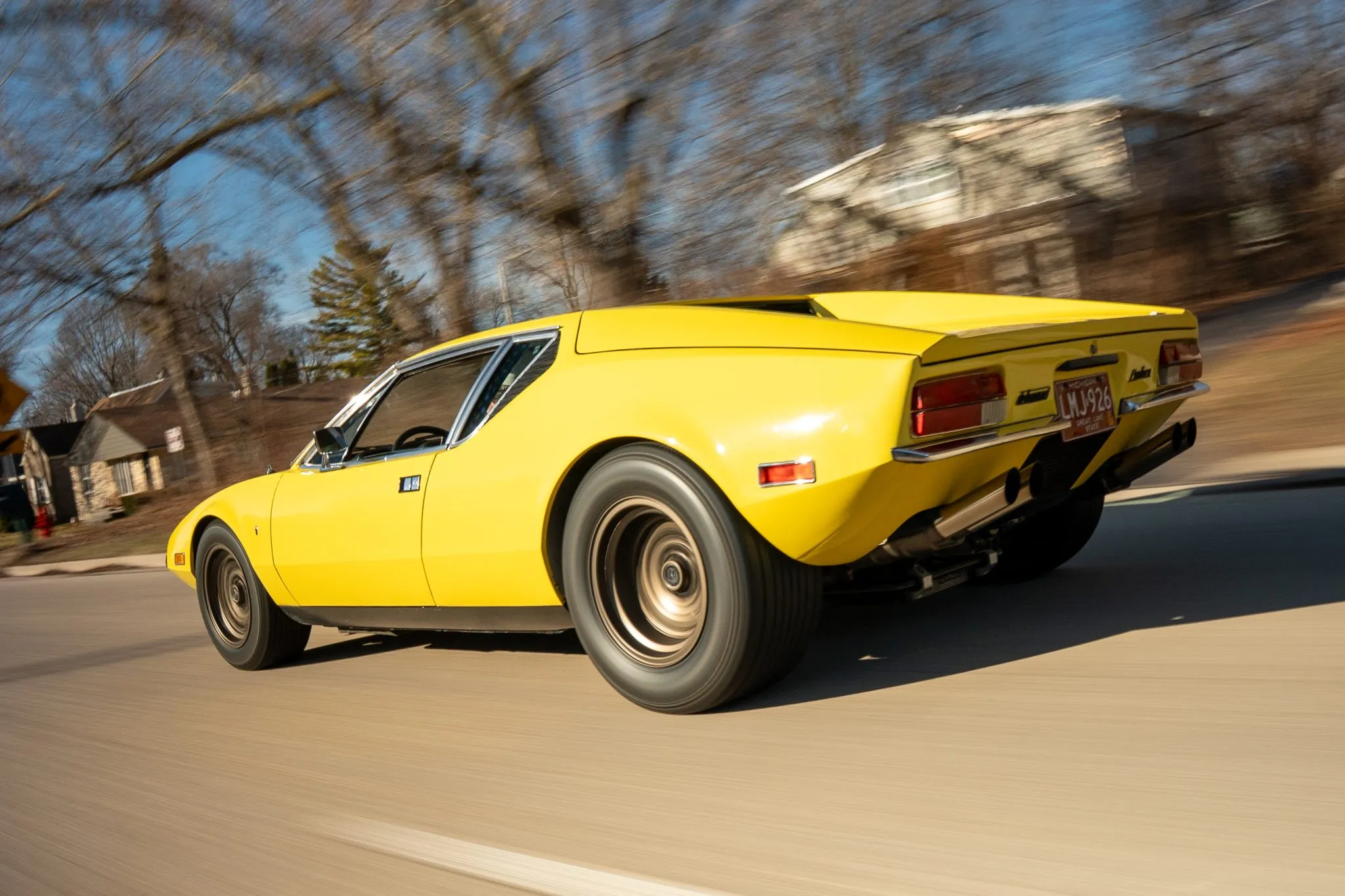
Tom Tjaarda’s design emphasized elegant simplicity and functional integration. The front end featured a distinctive nose tapering to a point, with integrated air ducts feeding cooling systems while defining the car’s identity. The side profile showcased sculpted surfaces flowing organically without excessive graphic ornamentation, allowing fundamental proportions to dominate the visual composition.
The distinctive side scoops provided genuine cooling function while creating muscular character without theatrical aggression. The rear quarters featured integrated cooling ducts complementing the front-end design philosophy. The overall appearance suggested that genuine performance didn’t require excessive styling drama—refined engineering and meticulous proportion defined the Pantera character.
Most early Panteras were finished in traditional metallic colors reflecting contemporary sports car preferences: metallic silver, deep blue, or black finishes celebrating the car’s Italian heritage while acknowledging American market expectations.
Interior
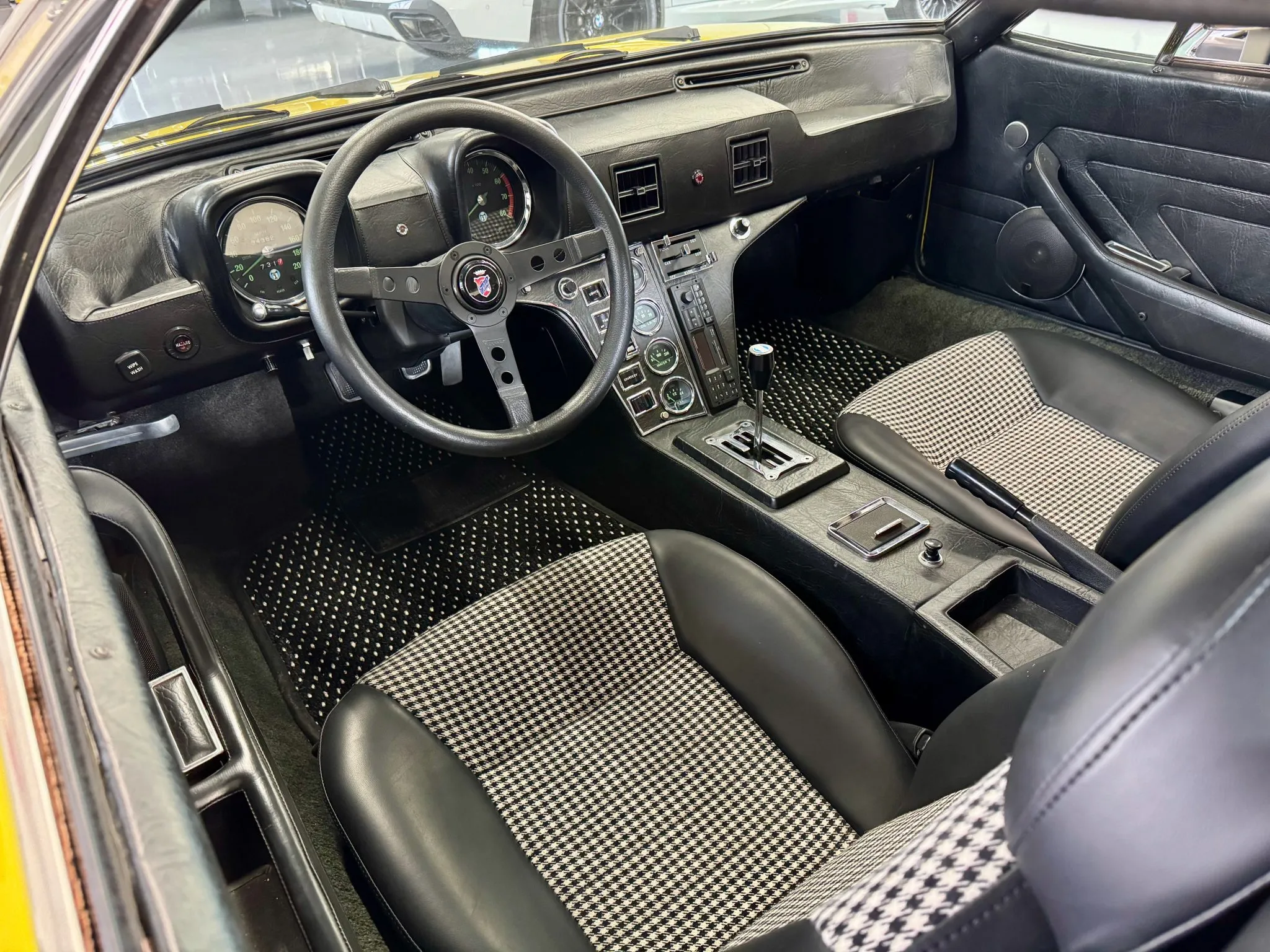
The cabin emphasized functional comfort alongside driver engagement. High-bolstered sport seats covered in leather provided excellent lateral support during spirited driving while maintaining comfort for extended road journeys. The driving position was commanding and forward-positioned, offering excellent visibility and ergonomic control placement. The instrument binnacle featured comprehensive gauges displaying engine parameters and essential driving information.
Standard equipment included power steering, power brakes, and climate control—luxury appointments reflecting the Pantera’s positioning between raw race cars and contemporary luxury offerings. The overall atmosphere balanced racing-derived functionality with genuine comfort appropriate for practical daily driving.
Specifications
- Engine: Ford Cleveland V8, 5,768cc, overhead valve, two valves per cylinder
- Power: 330 hp / 335 PS at 6,000 rpm
- Torque: 345 lb-ft / 468 N·m at 3,500 rpm
- Transmission: Five-speed ZF manual transaxle, rear-wheel drive
- Chassis: Steel monocoque with aluminum subframes
- Suspension: Independent double wishbones (front and rear), coil springs
- Brakes: Ventilated discs all round, four-piston calipers (front), two-piston (rear)
- Wheels: 15-inch alloy, performance tires
- Weight: 1,420-1,474 kg / 3,131-3,250 lbs
- Performance: 159 mph / 256 km/h top speed, 0-60 mph in 5.5 seconds
Production and Legacy
De Tomaso built approximately 7,200 Pantera examples between 1971 and 1992 at Modena, with over three-quarters sold through Lincoln-Mercury dealers during the initial partnership. The extended production run reflected sustained customer demand despite evolving competition from Porsche and other manufacturers. Various special editions emerged throughout production, including the GTS variant featuring increased power and track-focused engineering.
The Pantera proved that genuine mid-engine performance could be accessible through practical American power and Italian design sophistication. It established that affordability and performance weren’t mutually exclusive, that mid-engine handling could benefit drivers at all experience levels.
Today, early Pantera examples command respect among enthusiasts recognizing the car’s historical significance and engineering genuineness. The combination of mid-engine purity, accessible American V8 reliability, and Ghia design excellence established lasting appeal.
The De Tomaso Pantera represented Modena at its most democratic, proving that performance excellence could achieve broad accessibility. It remains one of the most significant mid-engine supercars, a masterpiece establishing the Pantera as genuinely exceptional within automotive history.