
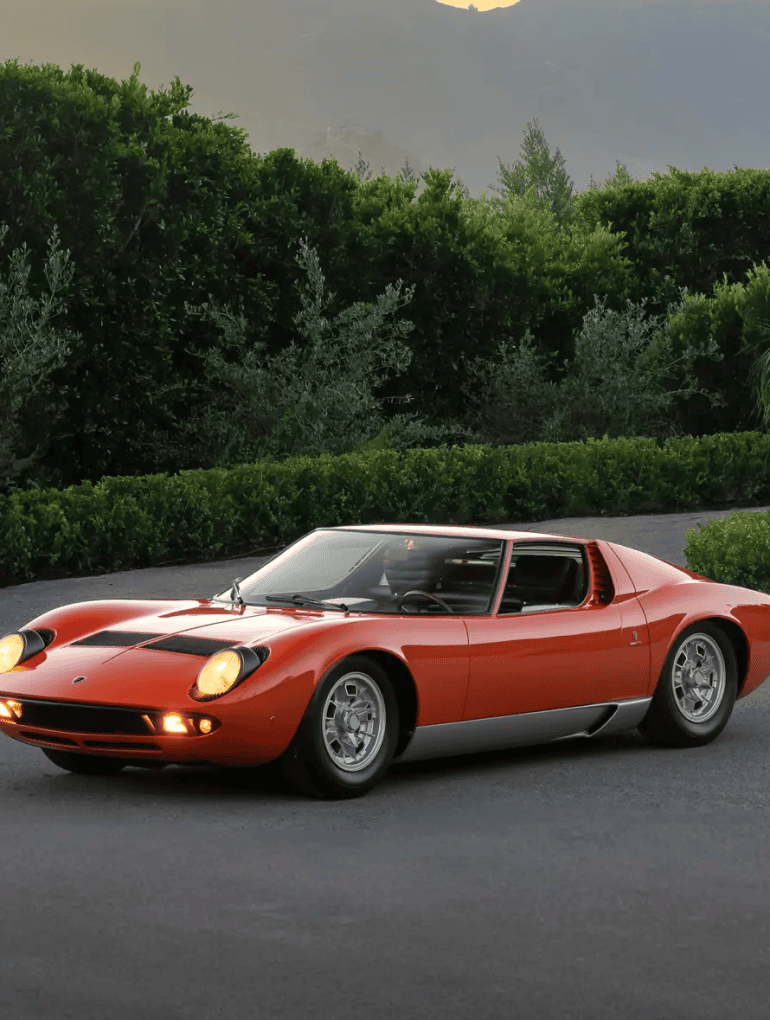

eneva Motor Show, March 1966. Lamborghini unveiled the Miura P400, a revolutionary mid-engine coupe that established the template for every modern supercar that followed. The designation “P400″ referenced the engine positioning—”Posteriore” for rear—and displacement at 4.0 liters. The transversely-mounted 3.9-liter V12 produced 350 horsepower at 7,000 rpm and 279 lb-ft of torque, delivering 172 mph capability while establishing itself as the world’s fastest production car at introduction.
This was Ferruccio Lamborghini’s team’s audacious statement that mid-engine layout and Italian design could create something unprecedented: a production car combining exotic performance with genuine practicality. Designed by Marcello Gandini at Carrozzeria Bertone and engineered by Gian Paolo Dallara, Paolo Stanzani, and Bob Wallace, the Miura pioneered rear mid-engine configuration that would become the industry standard. Production ran from 1966 through 1969, with exactly 275 P400 examples built, establishing the Miura as one of the most influential automobiles ever created and the car that defined “supercar” for generations.
Background and Origins
The Miura’s conception emerged from circumstances beyond official company approval. Rather than receiving management authorization, Lamborghini’s young engineering team designed the car in spare time, working in secret to develop something revolutionary. When they presented the concept to Ferruccio Lamborghini himself, the founder was immediately captivated. Lamborghini’s preference had historically favored powerful yet refined grand tourers over race-car-derived machines, but the Miura’s engineering sophistication and audacious vision transcended those preferences.
The project represented a fundamental rethinking of performance car architecture. While mid-engine layouts existed previously—primarily in racing machines—the Miura was the first production car designed exclusively for the road with its engine mounted between the driver and rear wheels. This arrangement optimized weight distribution and created handling characteristics previously reserved for competition machinery translated into street-legal form.
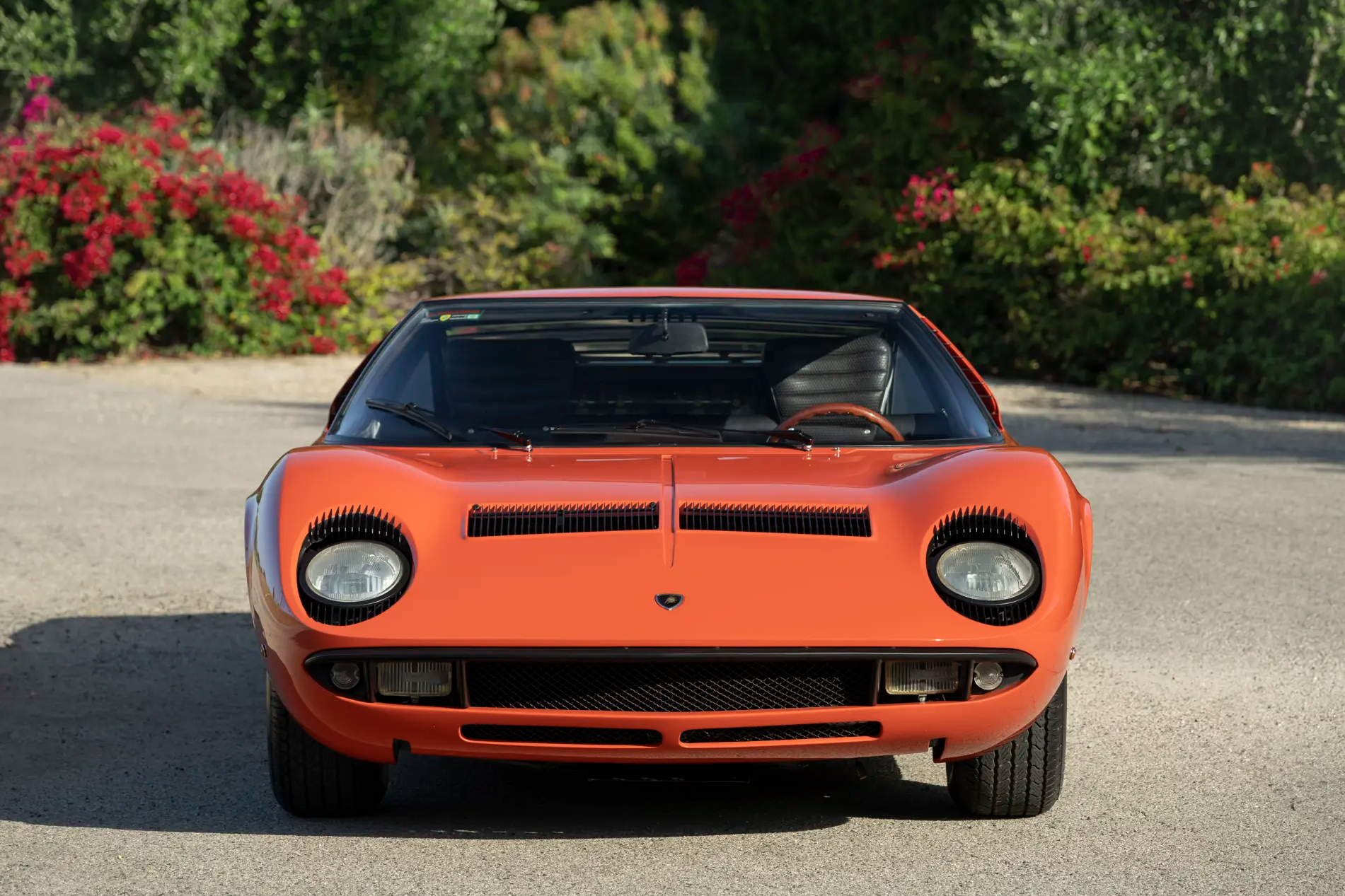
Marcello Gandini’s design at Carrozzeria Bertone became the visual embodiment of the engineering achievement. Rather than create something aggressively theatrical, Gandini emphasized elegant proportions and organic flowing lines. The resulting silhouette immediately captured imaginations worldwide, with automotive journalists coining the term “supercar” to describe this unprecedented machine. The design was so timeless that, more than 60 years later, it remains visually contemporary and universally recognized as beautiful.
The transverse-mounted V12 engine created unique engineering challenges, particularly regarding the gearbox integration. Rather than utilize separate transmission systems like earlier Lamborghinis, engineers created a unified engine-gearbox casting with shared lubrication, a sophisticated solution maximizing interior space while maintaining structural integrity. The Bizzarrini-designed quad-cam V12 derived from Lamborghini’s 400 GT, comprehensively revised for the Miura’s specific requirements, established the foundation for genuine performance delivered through mechanical authenticity.
Design and Engineering
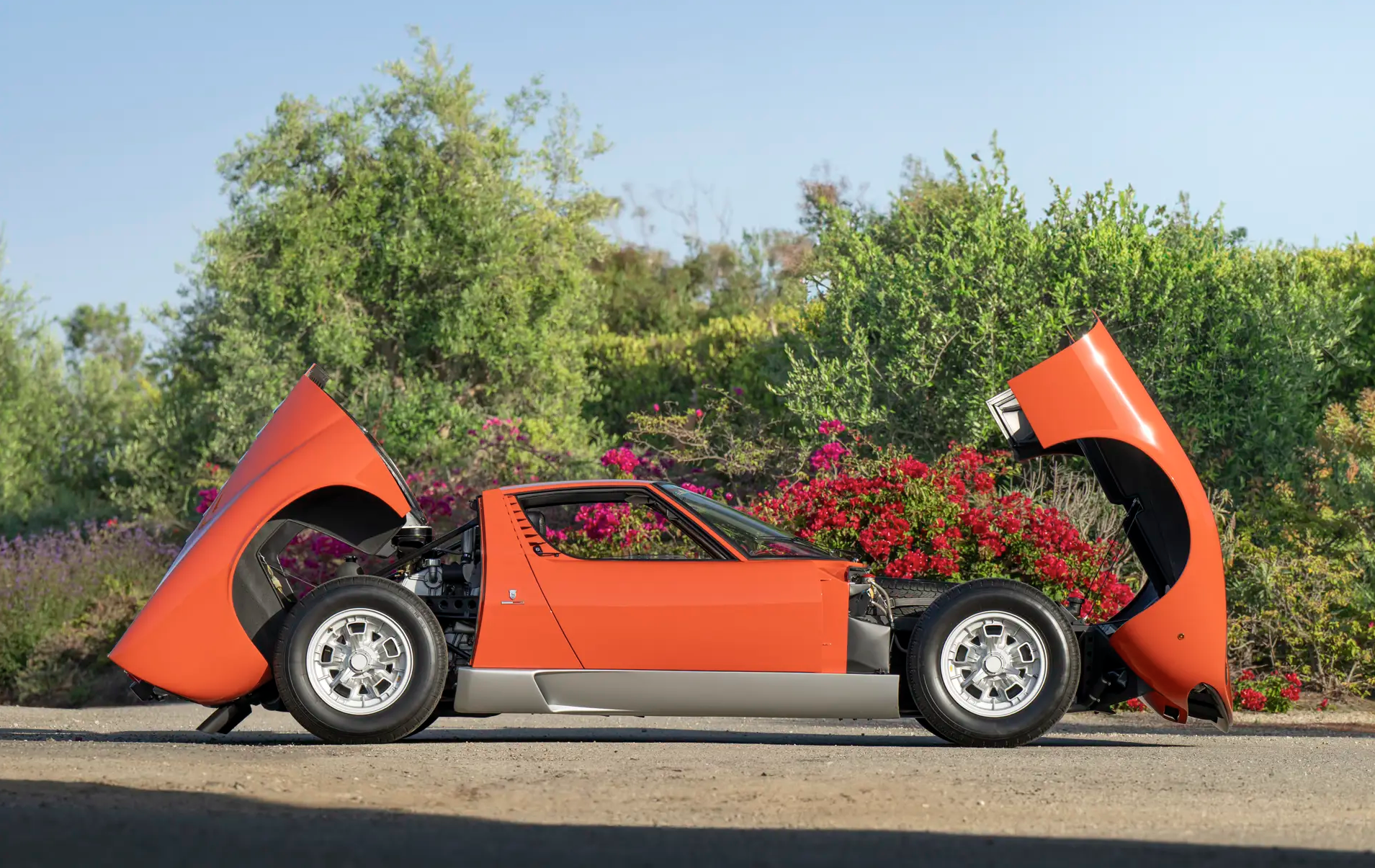
The Miura utilized a chassis constructed by Marchesi of Modena, the renowned specialist better known for competition machinery. The platform featured a steel monocoque with aluminum front and rear subframes, a construction approach reflecting the car’s race-car heritage while meeting road-use requirements. The wheelbase of 2,500 millimeters established perfectly balanced proportions, with the engine positioned to achieve ideal weight distribution.
Suspension featured independent double wishbones front and rear with coil springs and telescopic dampers. The geometry was meticulously tuned for responsive feedback while maintaining the ride comfort expected from a practical grand tourer. Girling disc brakes provided powerful stopping power adequate for the Miura’s extraordinary acceleration, with the system delivering consistent performance without fade during extended driving.
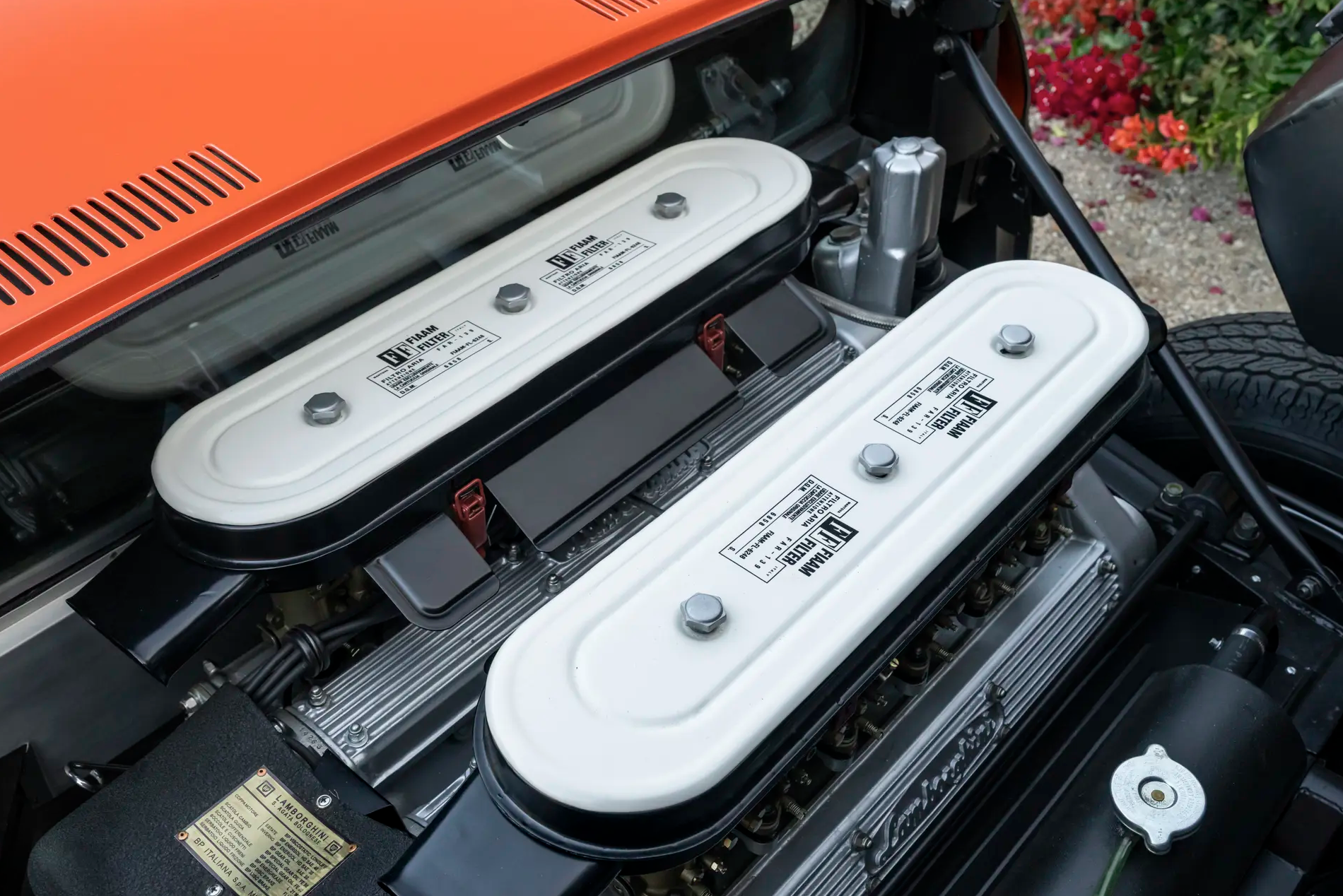
The transversely-mounted V12 displaced 3,929cc with a 60-degree angle configuration optimizing packaging within the compact chassis. Dual overhead camshafts per bank controlled two valves per cylinder, establishing the sophisticated breathing architecture that defined high-performance engines of the era. The naturally aspirated character meant consistent, linear power delivery without turbo-lag considerations, allowing skilled drivers to exploit the engine’s capabilities through disciplined throttle management.
With a 9.5:1 compression ratio (9.8:1 on early examples) and four triple-barrel Weber carburetors—remarkably complex to adjust and maintain—the P400 delivered 350 horsepower at 7,000 rpm and 279 lb-ft of torque at 5,100 rpm. The power delivery was linear and progressive, with peak torque arriving in the mid-range and remaining available through the 7,000 rpm limit. The Weber carburetors, while offering excellent performance, required meticulous tuning and proved notoriously difficult to synchronize, demanding owner dedication for optimal operation. The five-speed manual transmission featured mechanical precision and direct engagement, with synchronized gears ensuring smooth gear changes.
Styling
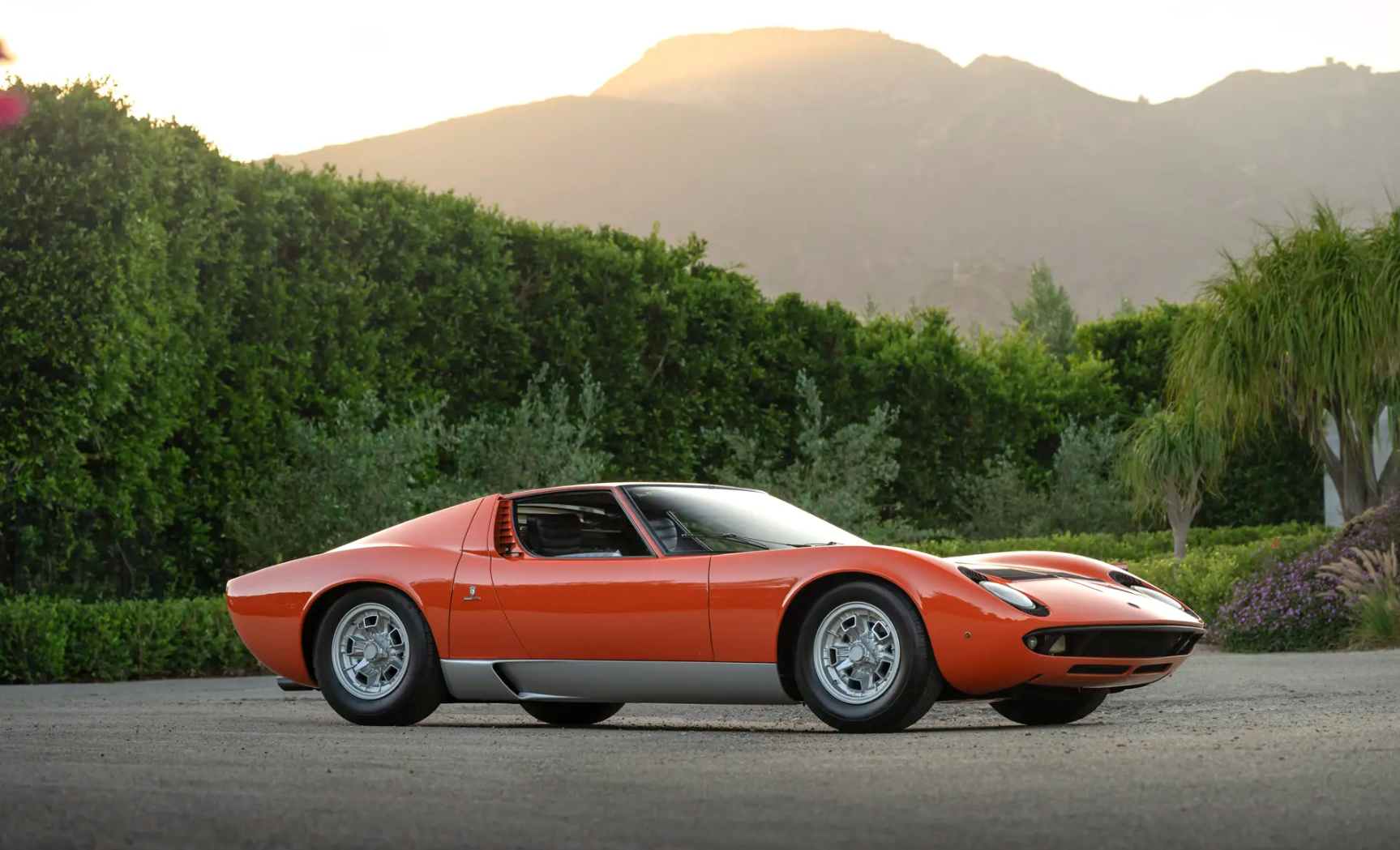
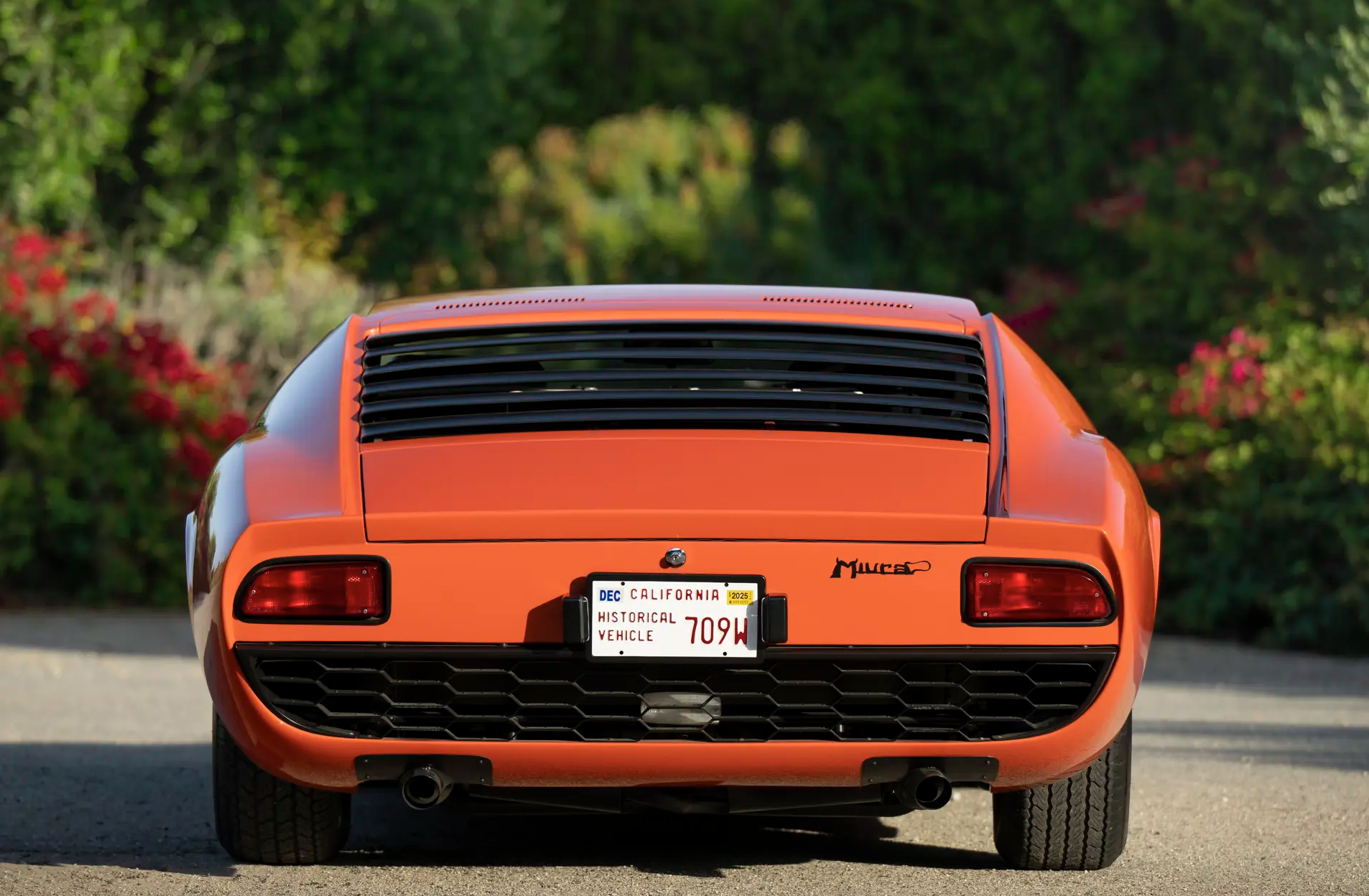
Marcello Gandini’s proportions established a visual identity that has defined performance cars for generations. The extremely low nose featured distinctive wedge profile, with integrated air intakes providing cooling without visual heaviness. The side profile emphasized the mid-engine positioning through sculpted surfaces and pronounced wheel arches, creating muscular character while maintaining elegant simplicity.
The low roofline and swept-back windshield suggested performance through refined proportion rather than aggressive ornamentation. The rear deck accommodated the mid-mounted engine while providing genuine aerodynamic development area, with the overall silhouette creating an impression of concentrated performance. The design’s timeless proportions have proven remarkably resilient—the Miura remains visually contemporary despite being unveiled nearly six decades ago.
Interior
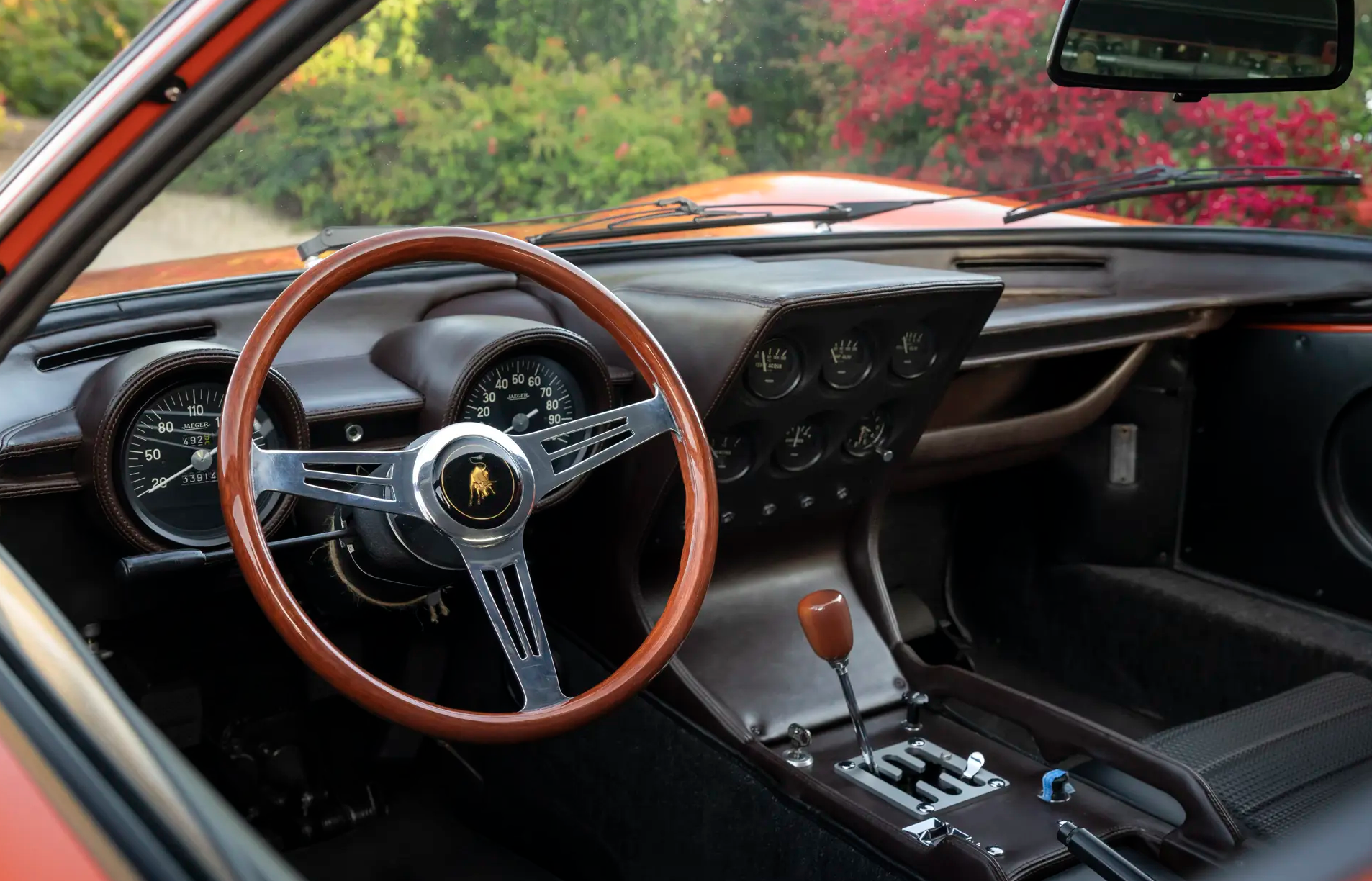
The cabin emphasized driver engagement combined with surprising luxury. Comfortable high-bolstered seats provided excellent lateral support during spirited driving while maintaining comfort for extended road journeys. The driving position was commanding and forward-positioned, offering excellent visibility and ergonomic control placement. Leather upholstery and wood trim throughout reflected Lamborghini’s commitment to quality craftsmanship.
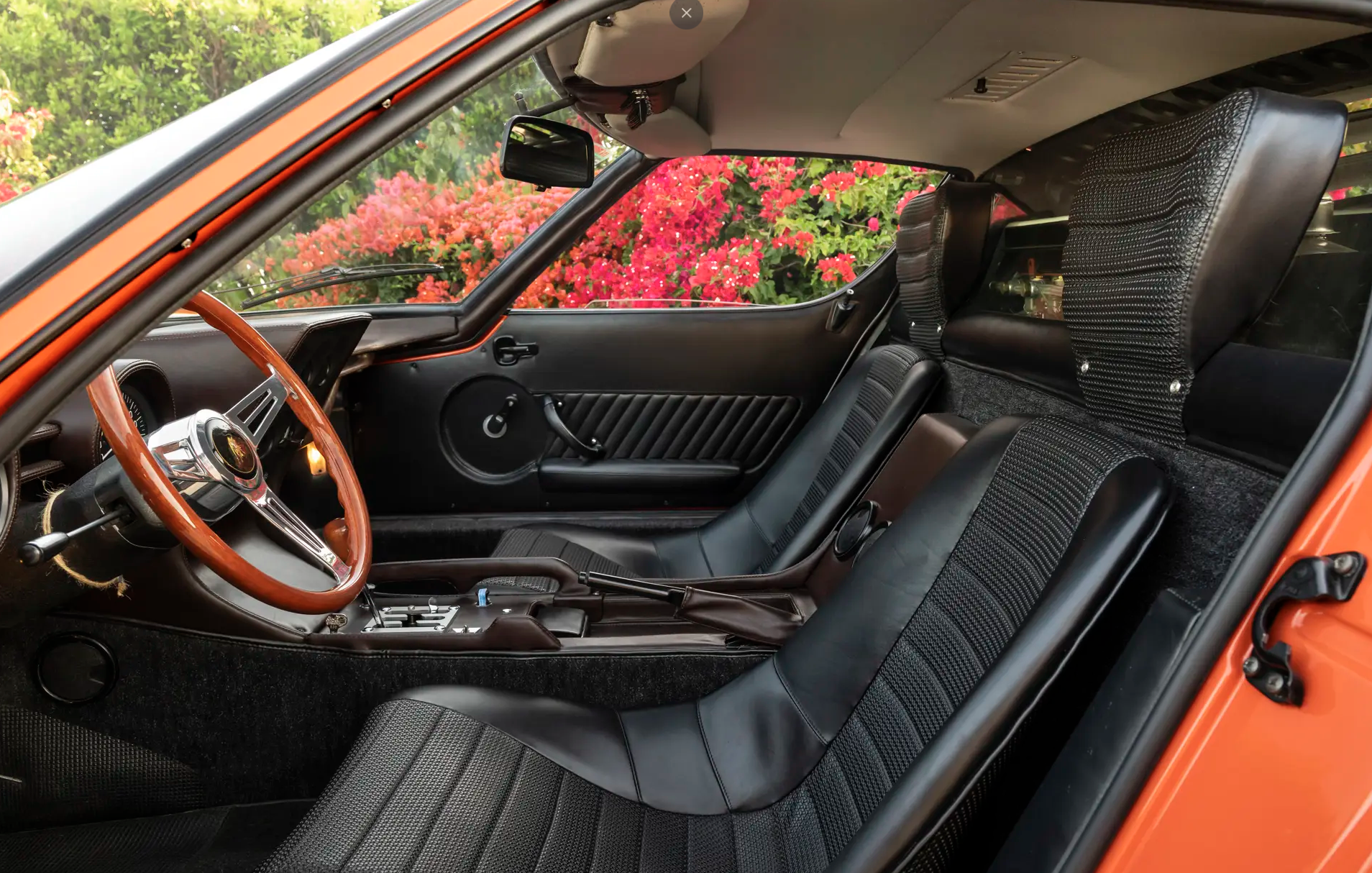
Standard equipment included practical storage reflecting the Miura’s positioning as a genuine grand tourer suitable for European journeys. Climate control was not offered on the P400, though it became available as a costly option on the later P400 S variant. The overall atmosphere balanced racing-derived functionality with genuine comfort appropriate for practical daily ownership by wealthy enthusiasts.
Specifications
- Engine: V12 naturally aspirated, 3,929cc, DOHC per bank, four valves per cylinder
- Power: 350 PS / 345 hp at 7,000 rpm
- Torque: 279 lb-ft / 378 N·m at 5,100 rpm
- Transmission: Five-speed manual, rear-wheel drive
- Chassis: Steel monocoque with aluminum subframes
- Suspension: Independent double wishbones (front and rear), coil springs
- Brakes: Girling disc brakes all round, power-assisted
- Wheels: 15-inch Borrani wire wheels, Pirelli Cinturato tires
- Weight: 1,292 kg / 2,848 lbs
- Performance: 172 mph / 277 km/h top speed, 0-60 mph in 6.3 seconds
Racing History
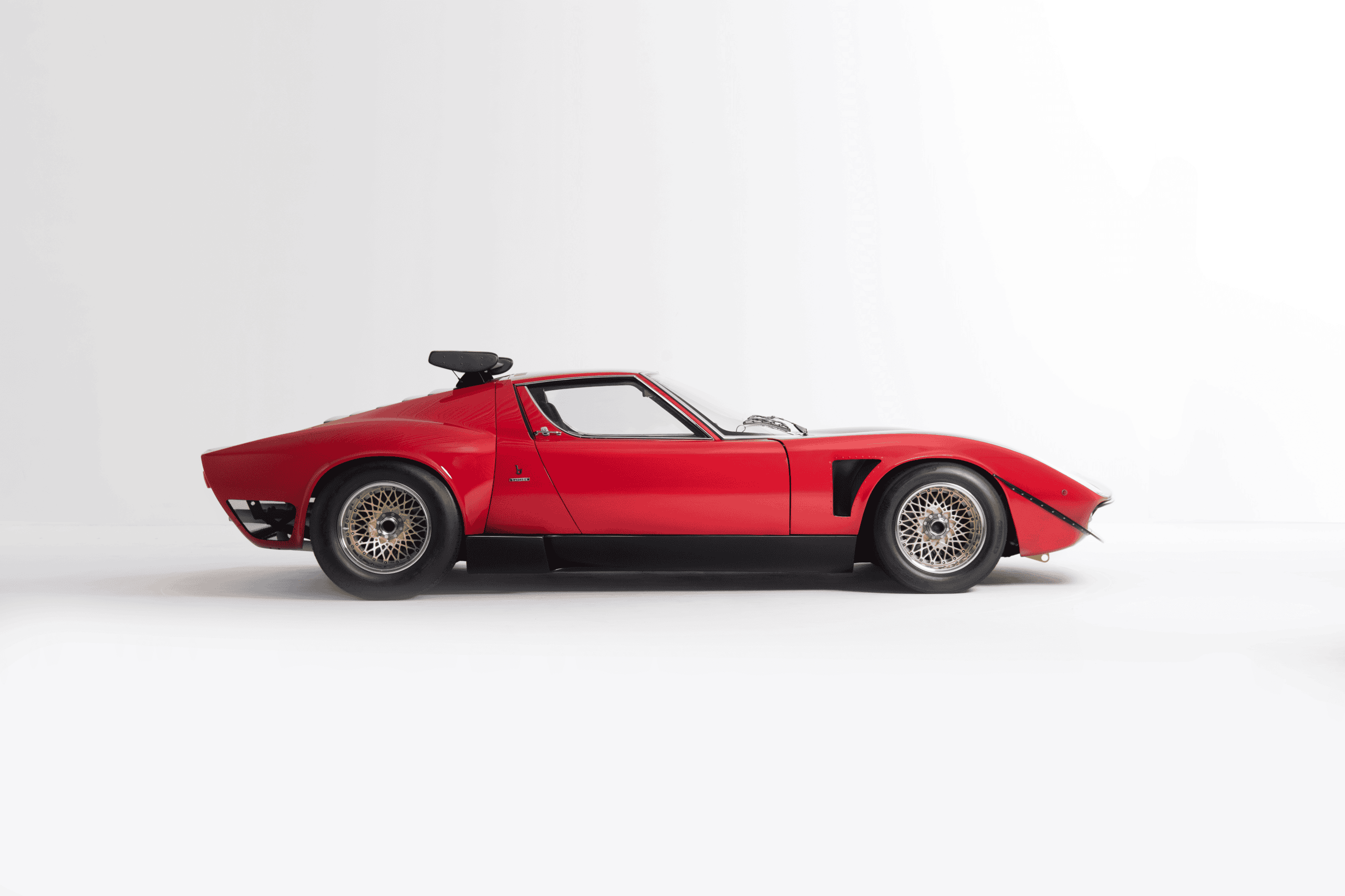
Despite Ferruccio Lamborghini’s strict policy against factory-backed motorsport, the Miura was engineered with undeniable track-worthy potential. While built strictly as a high-performance road car, its true mechanical limits were revealed through the experimental Jota—a one-off internal test bed developed to meet FIA Appendix J regulations with an upgraded dry-sump V12, lightweight materials, and refined aerodynamics.
Although the Jota was never fielded in official competition, its performance capability inspired a handful of factory-built SVJ variants for select clients, including former racing driver Hubert Hahne. Ultimately, while the Miura forged its legacy on the street rather than the racetrack, these engineering exercises proved that its revolutionary transverse V12 layout possessed the foundation of a true competition machine.
Production and Legacy
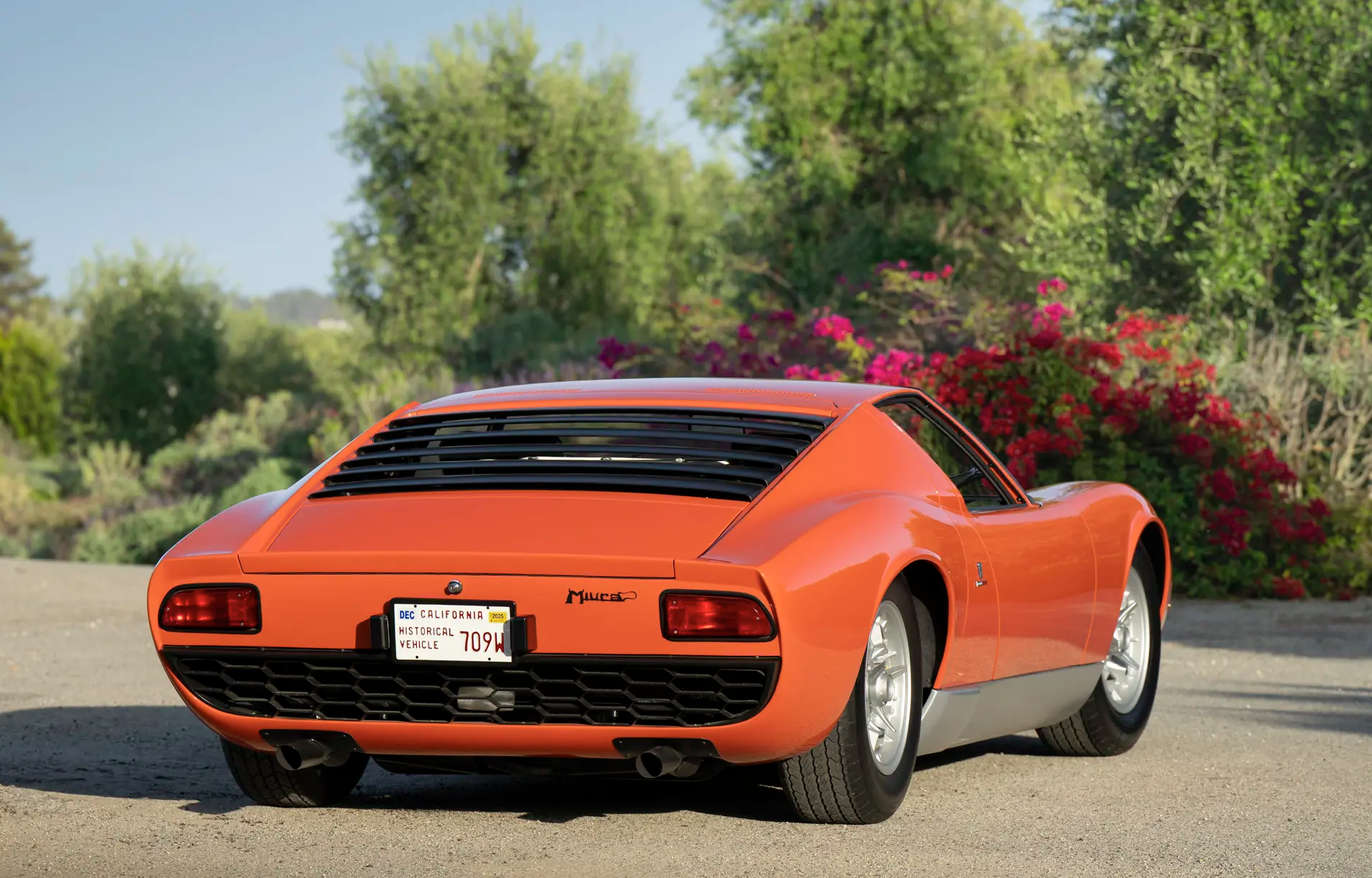
Lamborghini hand-assembled exactly 275 P400 examples at Sant’Agata Bolognese between 1966 and 1969. The overwhelming customer response surprised even Ferruccio Lamborghini and Nuccio Bertone, establishing the Miura’s extraordinary significance within automotive history. Each car required meticulous assembly reflecting Italian craftsmanship standards while incorporating customer personalization reflecting Lamborghini’s bespoke manufacturing philosophy.
The Miura proved that mid-engine configuration could benefit production cars beyond racing applications. It established the template for generations of supercars, from the Countach and Diablo through contemporary hypercars, demonstrating that intelligent engineering could create something genuinely transcendent.
Today, Miura examples command substantial collector prices reflecting their legendary status and historical significance. The combination of pioneering mid-engine layout, naturally aspirated V12 heritage, and timeless Gandini design has established immortal appeal.
The Lamborghini Miura P400 represented Sant’Agata at its most visionary, proving that revolutionary engineering and beautiful design could create something genuinely extraordinary. It remains the car that defined “supercar” for all that followed, a masterpiece establishing Lamborghini as a legend for generations.