
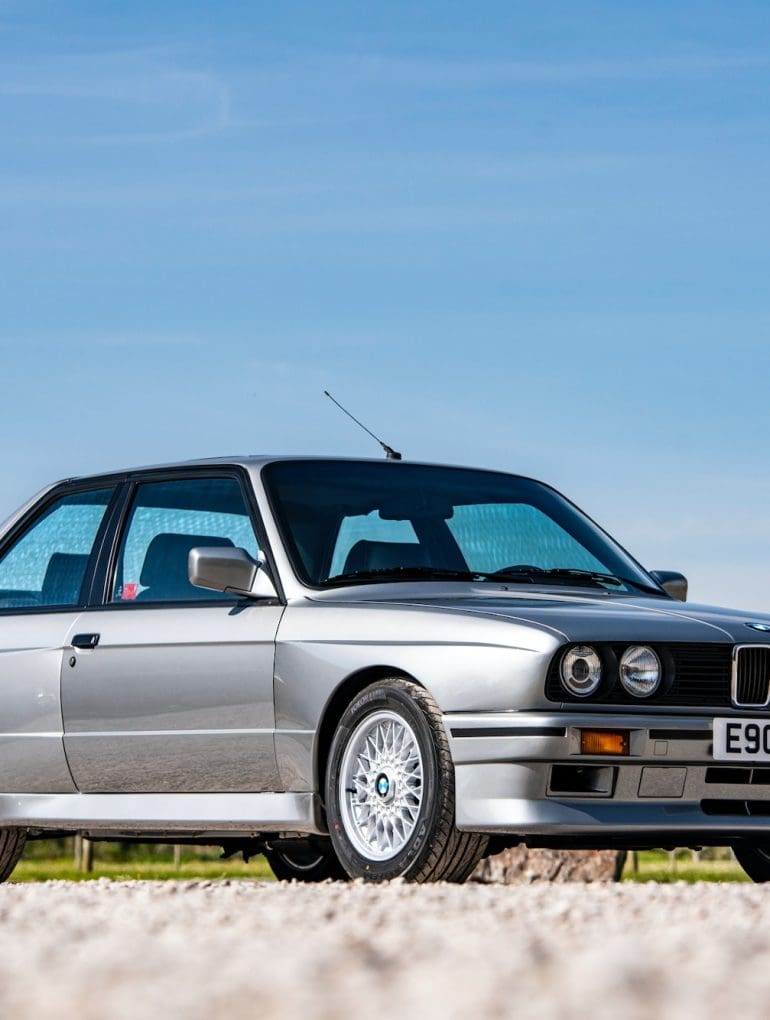

Frankfurt Motor Show, September 1985. BMW Motorsport unveiled the M3, a revolutionary homologation special establishing that naturally aspirated engineering could deliver supercar-competitive performance from compact displacement. Production commenced in mid-1986, with the Evolution I variant arriving in early 1987. The 2.3-liter naturally aspirated S14 inline-four produced 200 PS (195 horsepower with catalytic converter) at 6,750 rpm and 230 N·m of torque, delivering 146 mph capability from a chassis weighing just over 1,200 kilograms.
This was Munich celebrating that mechanical sophistication and lightweight engineering could establish genuine performance credentials without requiring displacement excess or forced induction: the E30 M3 accelerated from 0-60 mph in approximately 6.7 seconds, outperforming contemporary rivals through intelligent design and racing-derived technology. Production ran from 1986 through 1991, with 17,184 examples built, establishing the E30 M3 as one of the most successful performance cars ever created and the foundation for BMW M’s legendary heritage.
Background and Origins
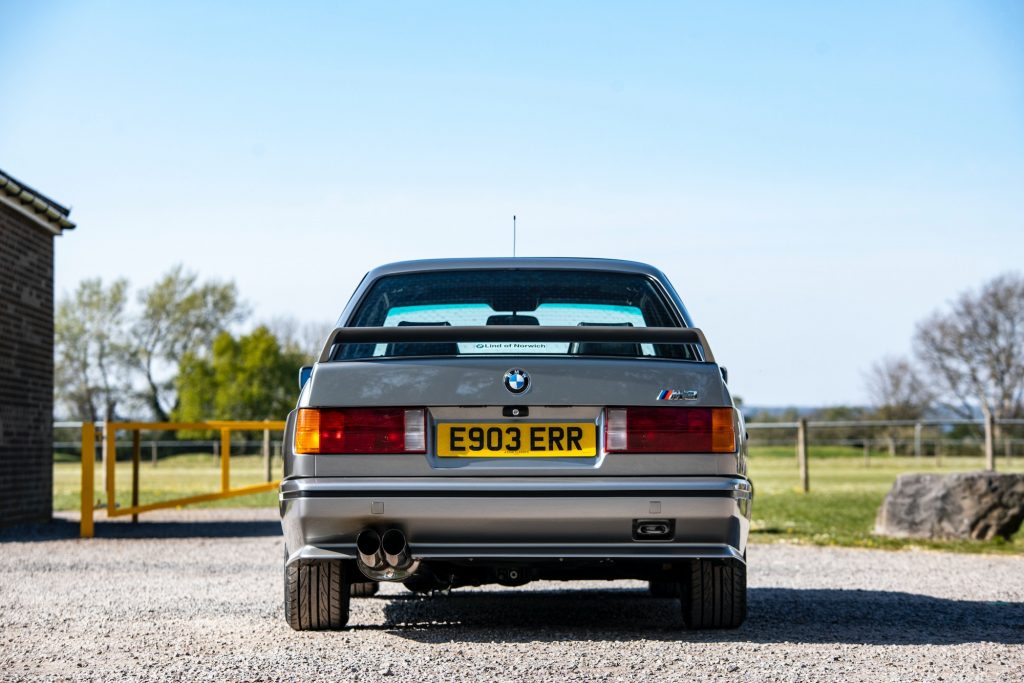
The M3 emerged from BMW Motorsport’s determination to create a homologation special meeting Group A touring car racing requirements. Regulations mandated at least 5,000 road-legal units sold within twelve months for eligibility, establishing a business case requiring genuine performance credentials extending beyond competition specifications. Technical director Paul Rosche led the engineering team, envisioning that a lightweight platform combined with naturally aspirated technology could deliver authentic performance without compromise.
Rather than pursue turbocharged or six-cylinder configurations, BMW management committed to radical lightweight philosophy. Engineers adapted the M10 cylinder block with the dual-overhead-camshaft 16-valve head derived from the M88 six-cylinder engine architecture. The result was a 2.3-liter engine producing 200 PS in unregulated form and 195 PS with emissions equipment—extraordinary naturally aspirated output reflecting meticulous engineering optimization.
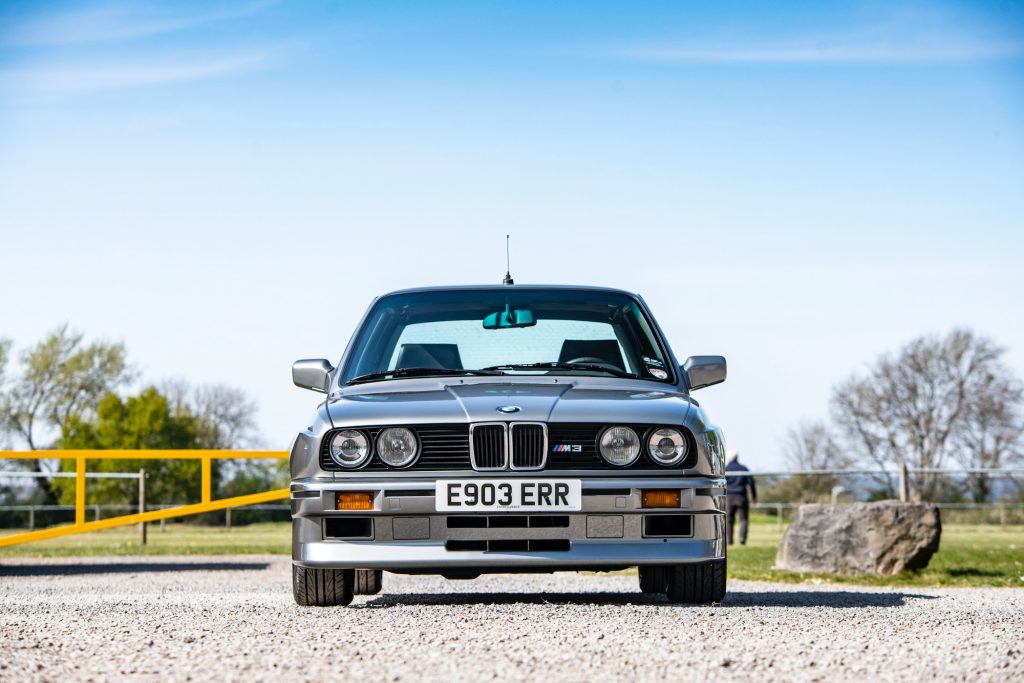
The Evolution I variant, introduced in early 1987, represented engineering refinement focused on engine internals. A revised S14 cylinder head casting, identified by an “E” mark under the intake port, provided improved breathing efficiency. Visually and aerodynamically, the Evolution I retained the exact same bodywork and suspension geometry as the standard M3, maintaining the minimalist design philosophy while pursuing incremental mechanical improvements through development and racing feedback.
Design and Engineering
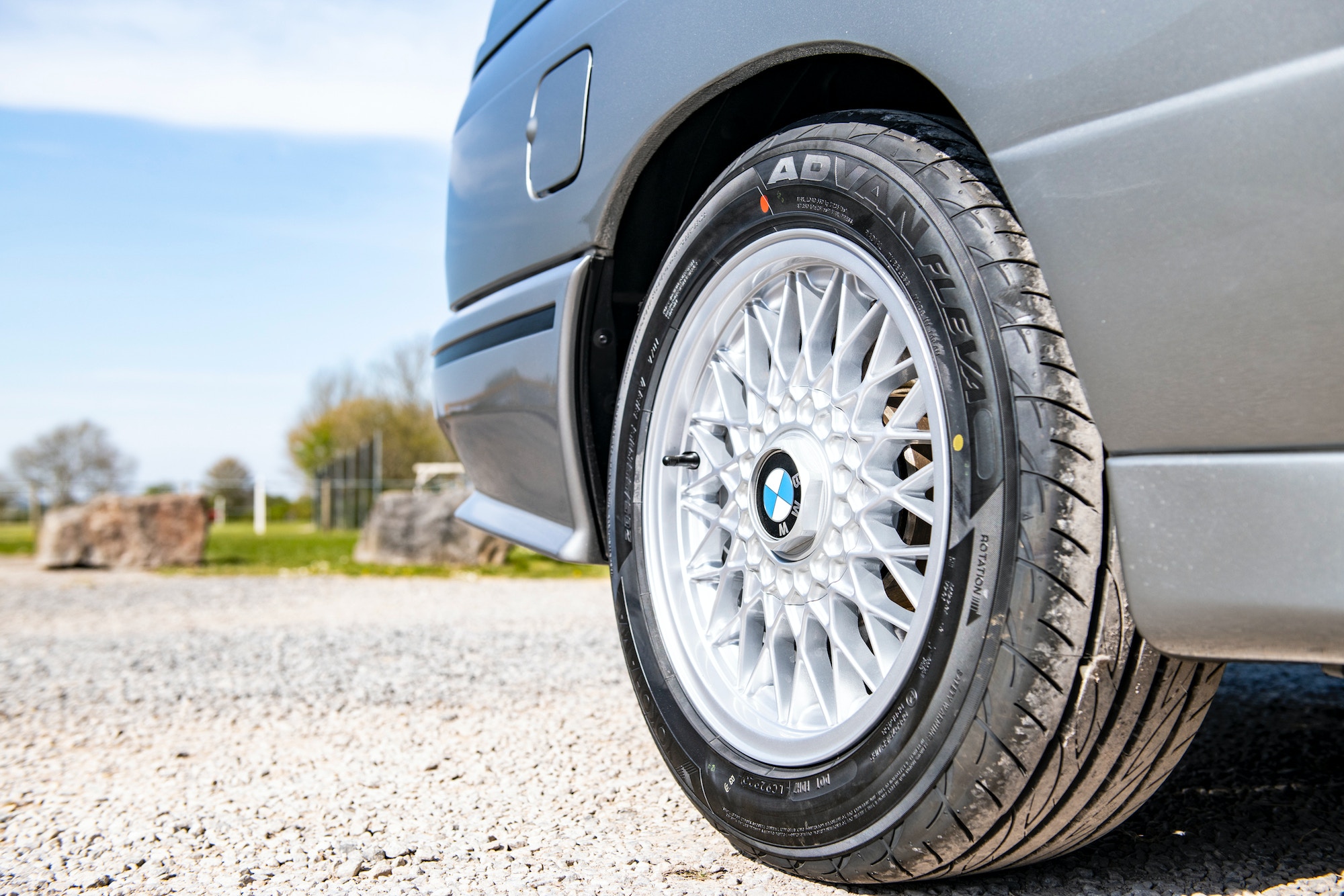
The E30 M3 retained only doors and roof from the standard BMW 3-Series, with every other component reconceived for performance. The chassis employed MacPherson struts at the front and semi-trailing arms at the rear with coil springs and sophisticated dampers, the geometry optimized for responsive handling while maintaining refined ride quality appropriate for practical daily driving. Anti-roll bars provided effective cornering control. Braking was by ventilated discs gripping 280mm front rotors, equipped with single-piston floating calipers manufactured by ATE, providing powerful stopping power adequate for the engine’s acceleration.
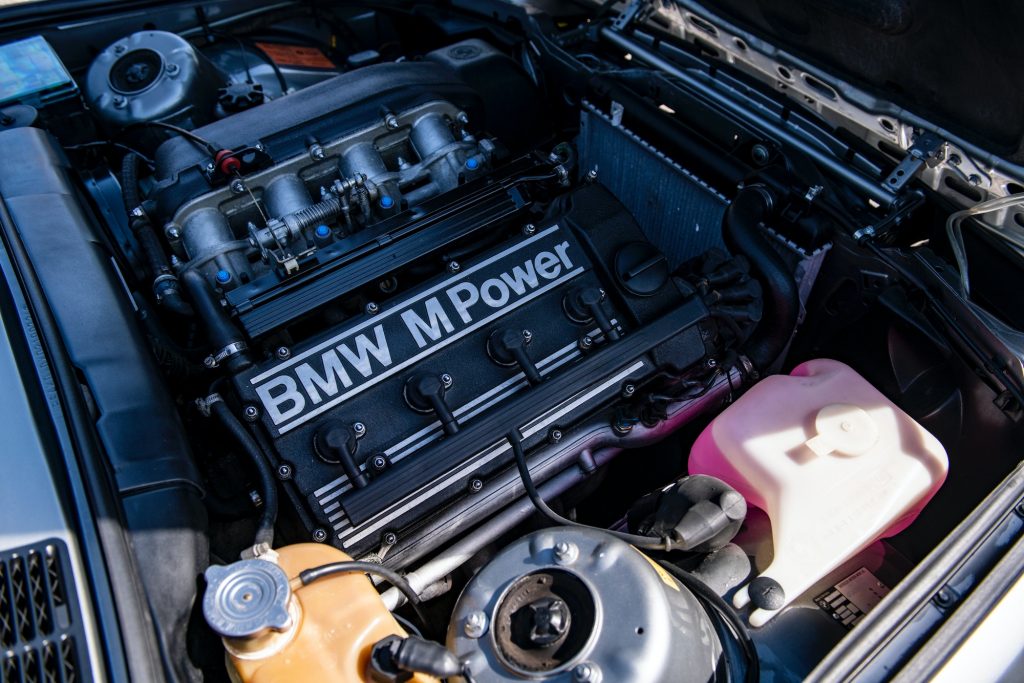
The S14 naturally aspirated inline-four displaced 2,302 cubic centimeters with dual overhead camshafts controlling 16 valves—four per cylinder. This configuration, derived from six-cylinder racing experience, established exceptional breathing efficiency. With 10.5:1 compression ratio, the engine produced 200 PS (195 PS with catalytic converter) at 6,750 rpm and 230 N·m (170 lb-ft) of torque at 4,750 rpm. The narrow, high-revving power delivery demanded driver engagement, requiring disciplined gearbox work through the five-speed manual transmission to exploit full performance potential.
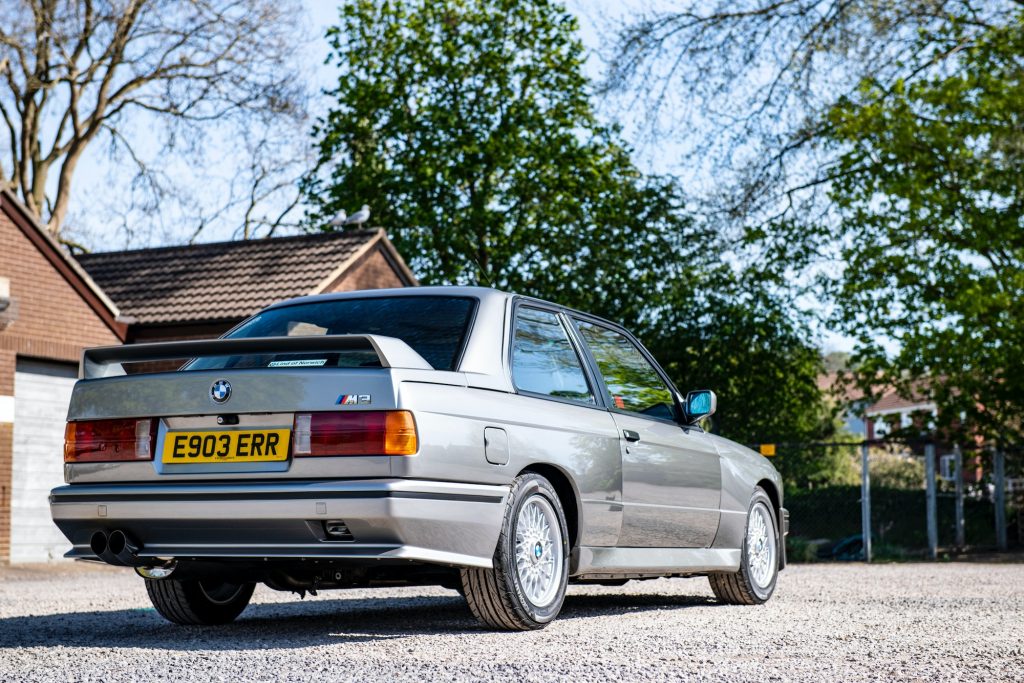
European-specification models equipped the Getrag 265 transmission with a distinctive dogleg shift pattern, positioning first gear down and to the left for authentic racing character. North American models utilized a conventional H-pattern with first gear at top-left, reflecting regulatory and market preferences. Weight management proved crucial: the E30 M3 achieved approximately 1,200 kilograms dry weight through aluminum and composite materials, establishing an extraordinary power-to-weight ratio of approximately 6.15 kilograms per horsepower. This remarkable efficiency enabled 0-60 mph acceleration in 6.7 seconds and top speed of 146 mph.
The limited-slip differential provided effective traction during acceleration and cornering. The Evolution I variant benefited from the revised cylinder head casting improving breathing characteristics, representing engineering validation rather than fundamental redesign.
Styling
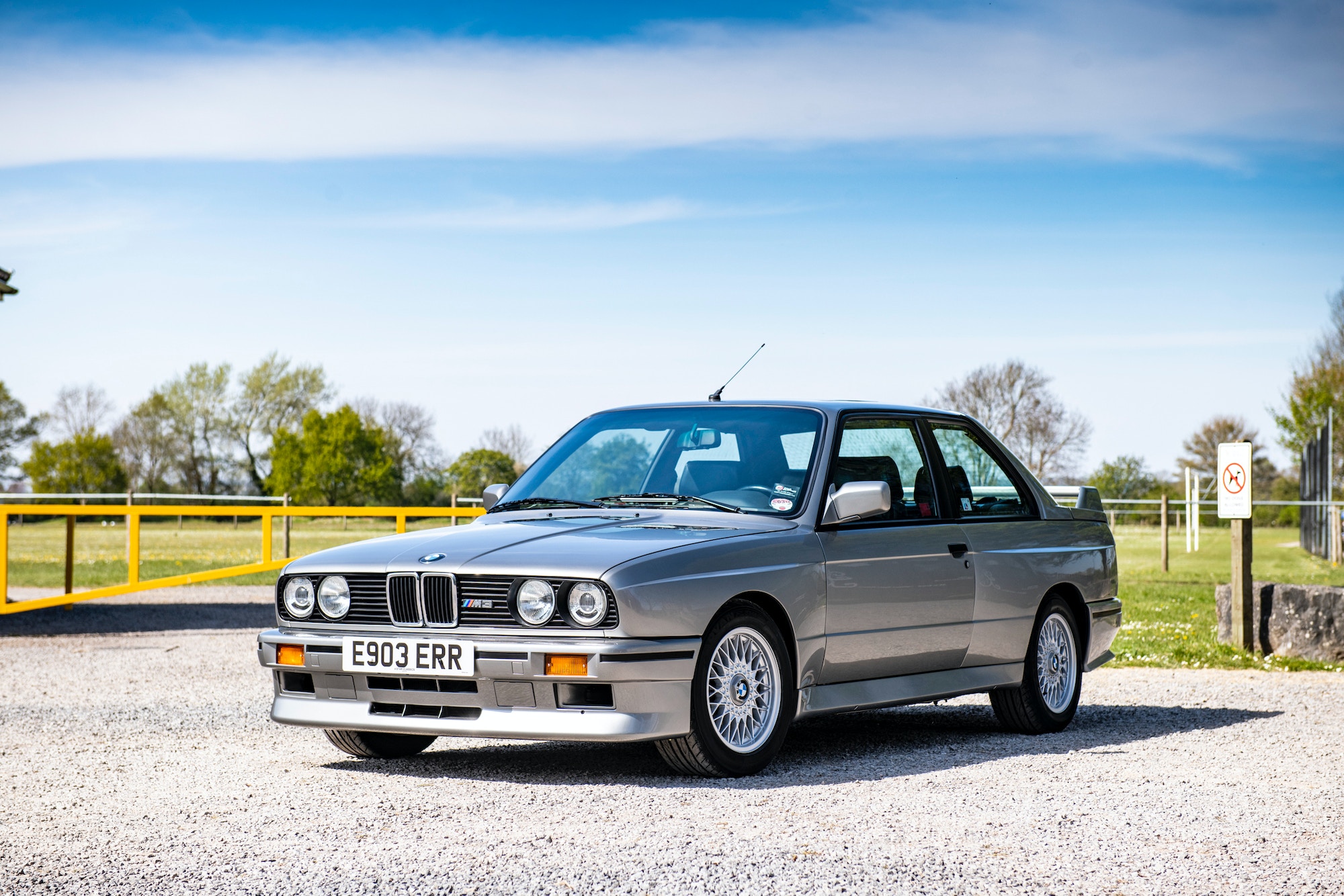
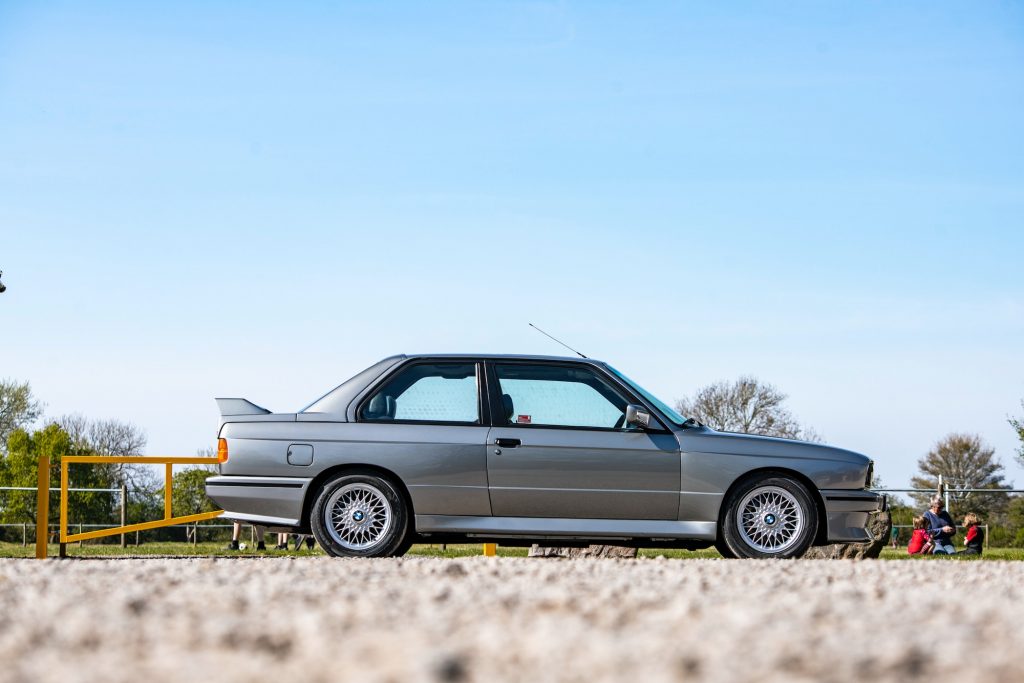
The M3’s iconic proportions emphasized functional purpose rather than theatrical styling drama. Enlarged air intakes provided genuine cooling necessity, while integrated driving lights and minimal aerodynamic elements suggested performance through mechanical substance. The low roofline and compact proportions conveyed athletic character. Designer Claus Luthe created proportions that remain visually contemporary despite their 1980s introduction, a testament to the timeless design philosophy emphasizing elegant proportion over transient styling trends.
Most examples were finished in traditional German racing colors: Alpine White, Diamond Black Metallic (Diamantschwarz), Henna Red, or Cinnabar Red, celebrating BMW’s motorsport heritage through understated elegance. The straightforward design language emphasized that genuine performance required no theatrical visual embellishment.
Interior
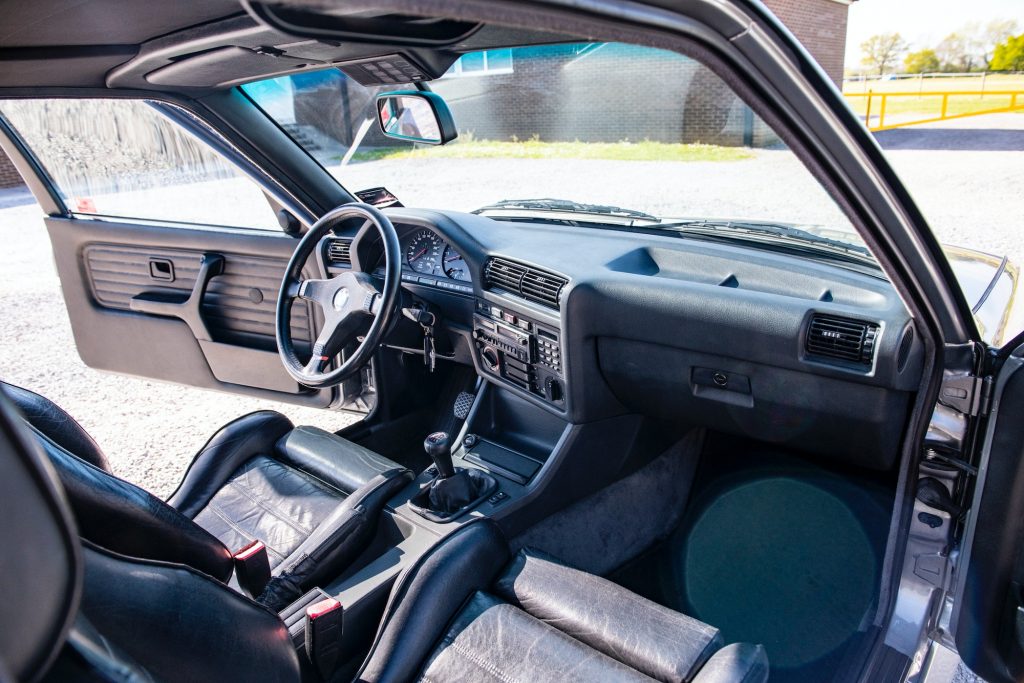
The cabin emphasized driver engagement combined with practical quality reflecting BMW’s standards. High-bolstered sport seats provided excellent lateral support during aggressive driving while maintaining comfort for extended journeys. The driving position was commanding and ergonomically balanced, with all controls falling naturally to hand. European-specification models featured the characteristic dogleg transmission gate, connecting drivers to motorsport tradition through authentic shift pattern authenticity.
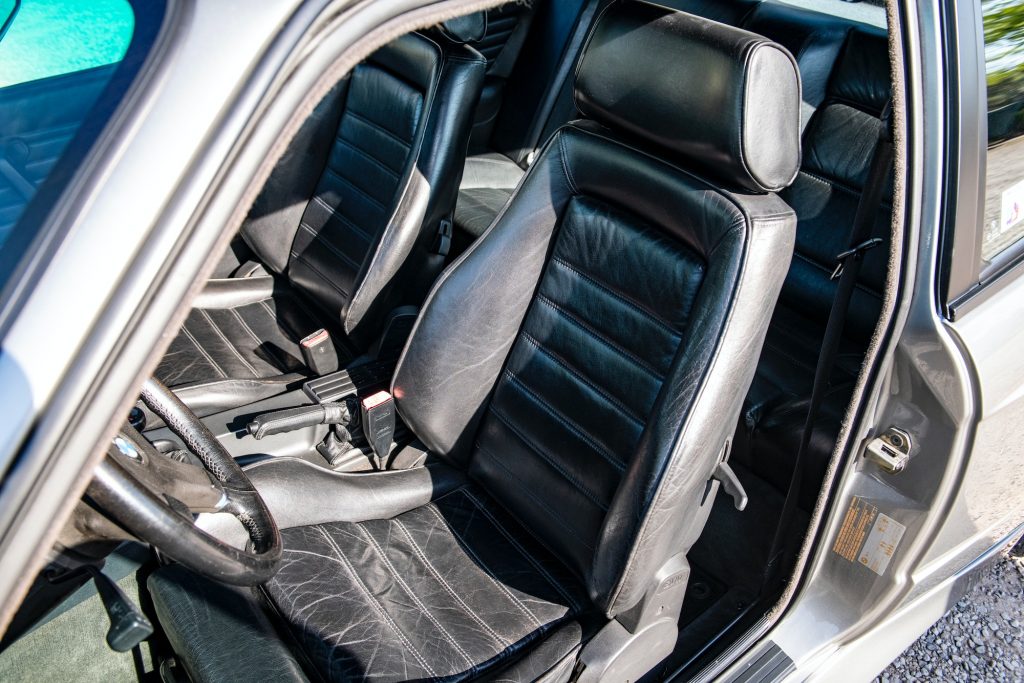
The instrument cluster featured a tachometer and oil temperature gauge—a distinctive performance-focused specification replacing the standard E30’s fuel economy gauge (Ecometer). This substitution reflected the M3’s emphasis on engine monitoring and performance awareness. Standard equipment included functional climate control and quality audio systems reflecting contemporary BMW luxury standards. The overall atmosphere balanced racing-derived functionality with genuine automotive refinement appropriate for customers pursuing authentic performance.
Specifications
- Engine: BMW S14 naturally aspirated inline-four, 2,302cc, DOHC, 16 valves (four per cylinder)
- Power: 200 PS / 195 hp (with catalytic converter) at 6,750 rpm
- Torque: 170 lb-ft / 230 N·m at 4,750 rpm
- Transmission: Five-speed manual Getrag 265 (European) with dogleg pattern, or standard H-pattern (US spec), rear-wheel drive
- Chassis: Steel monocoque derived from BMW E30, 2,570mm wheelbase
- Suspension: MacPherson struts (front), semi-trailing arms (rear), coil springs
- Brakes: Ventilated discs 280mm (front), single-piston floating calipers, solid rear discs
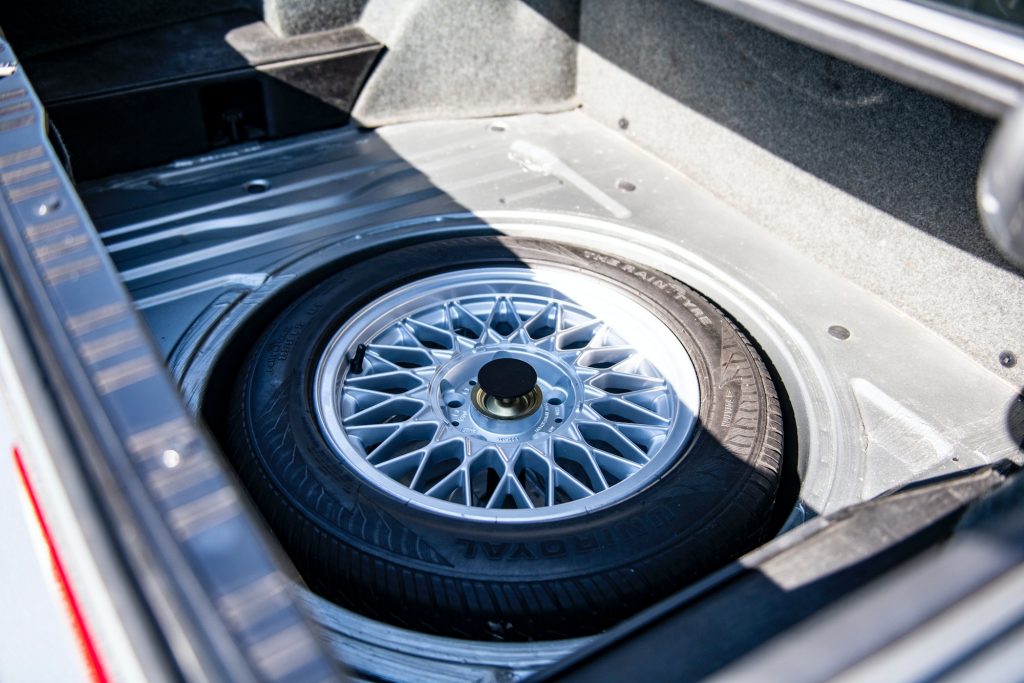
- Wheels: 15-inch alloy initially, 16-inch BBS wheels optional
- Weight: Approximately 1,200 kg / 2,645 lbs dry weight
- Performance: 146 mph / 235 km/h top speed, 0-60 mph in 6.7 seconds
Production and Legacy
BMW produced 17,184 E30 M3 examples across all variants from 1986 through 1991, manufactured on mass-production assembly lines at the Milbertshofen (Munich) plant. Initial prototypes and development vehicles underwent hand-assembly at BMW Motorsport’s Garching facility, but full production cars followed conventional manufacturing processes reflecting BMW’s commitment to accessibility and volume production. The extended production run reflected sustained customer demand despite introduction of coupe and convertible variants, demonstrating the platform’s versatility while maintaining consistent engineering excellence.
The E30 M3 proved that naturally aspirated engineering combined with lightweight construction could establish genuine performance credentials rivaling turbocharged competitors. The combination of high-revving character, mechanical authenticity, and practical daily usability established lasting appeal extending far beyond conventional performance car enthusiasts. Today, E30 M3 examples command strong collector appreciation reflecting their legendary status and motorsport dominance. The naturally aspirated character, mechanical purity, and authentic driving engagement ensure lasting appeal. The BMW M3 E30 represented Munich at its most accomplished, proving that lightweight engineering and mechanical refinement could create something genuinely transcendent. It remains one of the greatest sports cars ever created, establishing BMW M as an automotive legend.