
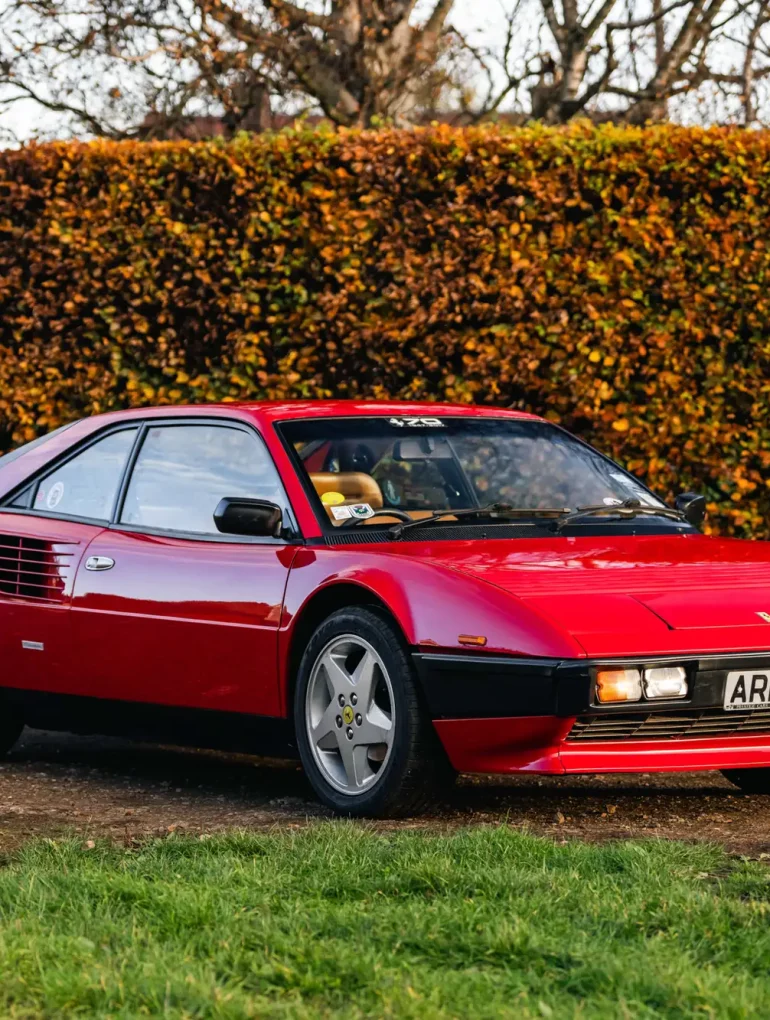

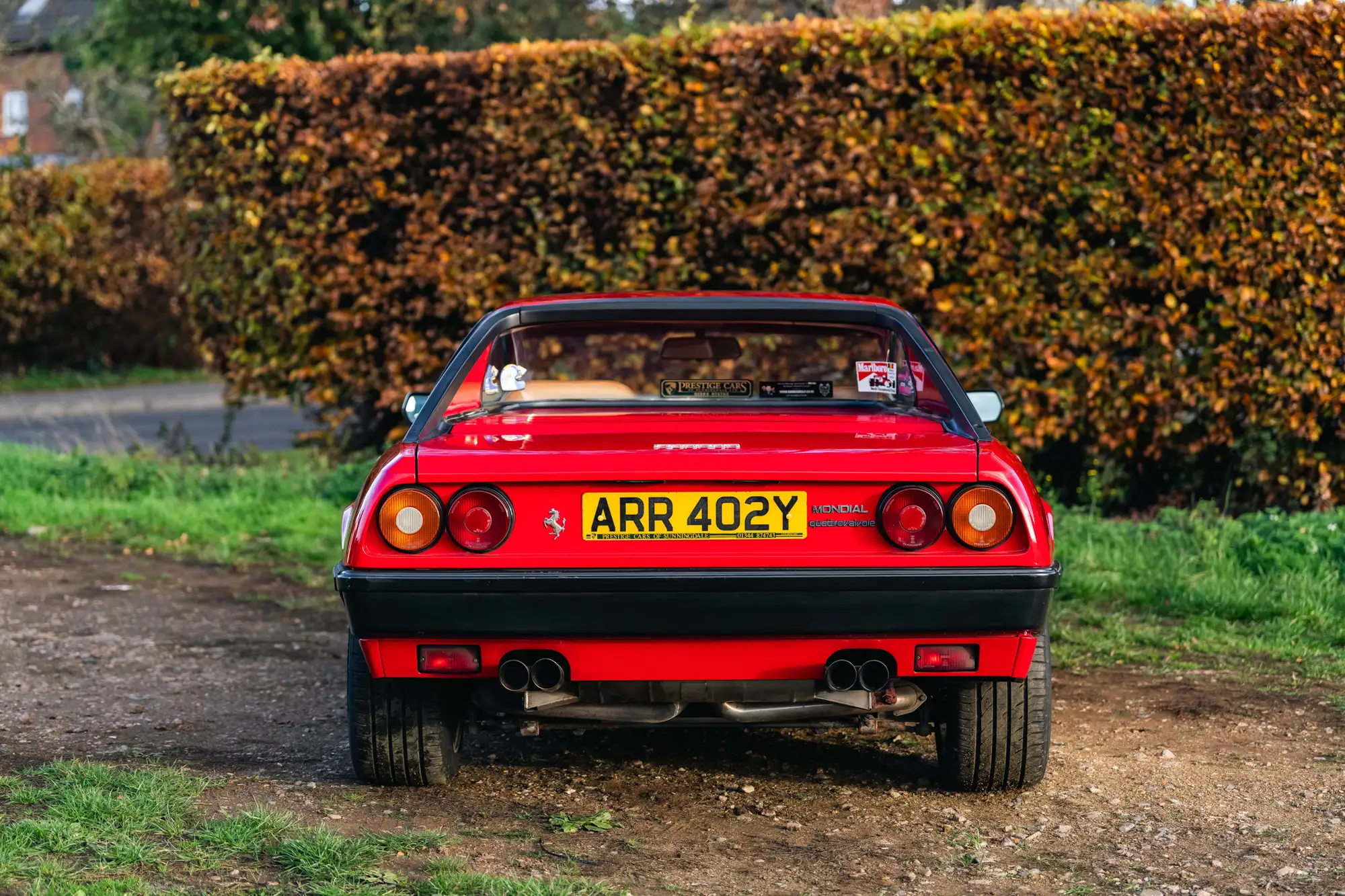
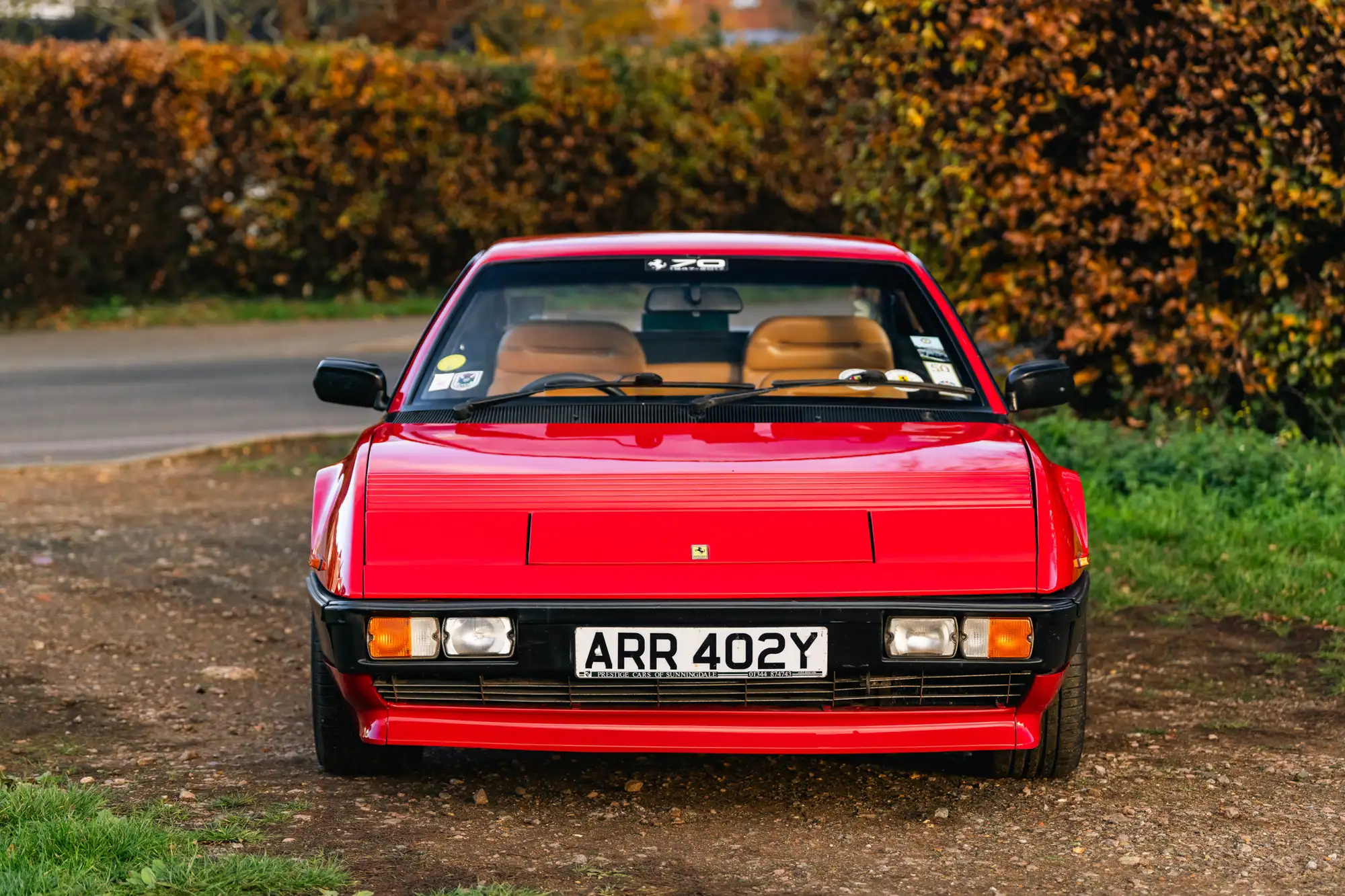
Maranello, 1982. Ferrari introduced the Mondial Quattrovalvole, a major update to the 2+2 that had succeeded the 308 GT4 in 1980. The original Mondial 8 had been criticized for lacking performance, so Ferrari gave its V8 new four-valve cylinder heads, an upgrade also introduced on the 308 GTB and GTS. In European specification, the transversely mounted 2.9-liter V8 produced 240 PS (237 hp) at 7,000 rpm and 260 Nm (192 lb-ft) of torque at 5,000 rpm, and Ferrari quoted a top speed of 240 km/h (149 mph). The Mondial QV was styled by Pininfarina, with bodies built by Carrozzeria Scaglietti, and it combined mid-engine performance with seating for four, a combination few rivals could offer. Ferrari built 1,145 coupes between 1982 and 1985, and the Cabriolet, which joined the range in 1983, was Ferrari’s first regular-production convertible since the 365 GTS/4 Daytona Spider.
Background and Origins
The Mondial was developed to replace the 308 GT4, Ferrari’s first V8 2+2 and the only Ferrari production car of its era designed by Bertone. For its successor, Ferrari returned to Pininfarina, which developed a larger, more practical car with more interior space and a longer wheelbase than the GT4. The name came from Ferrari’s racing history, honoring the 500 Mondial sports racing car of the 1950s, while the “8” in the original model’s name referred to its eight cylinders.
The Mondial 8 debuted at the Geneva Motor Show in March 1980. It shared its 2.9-liter V8 with the 308, but emissions equipment limited output to 214 PS (211 hp) at 6,600 rpm, and the heavier 2+2 struggled to deliver the performance buyers expected from a Ferrari. Only 703 Mondial 8s were built. Ferrari’s solution was a four-valve-per-cylinder version of the V8, introduced in 1982 across both the 308 and the Mondial. With the new engine, the car was renamed the Mondial Quattrovalvole.
Design and Engineering
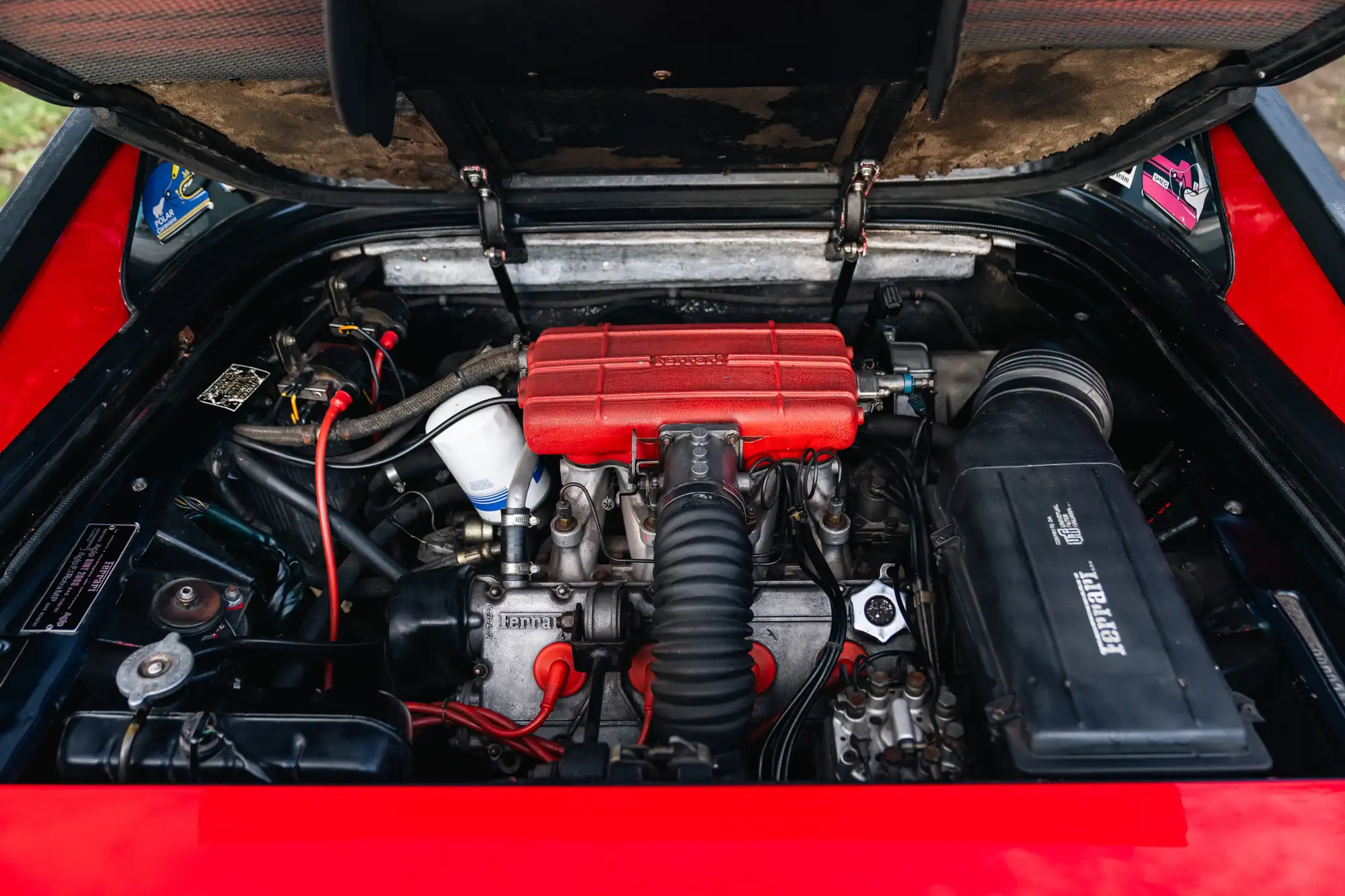
The Mondial QV used Ferrari’s 2,927-cubic-centimeter 90-degree V8, mounted transversely behind the rear seats. It had an 81-millimeter bore and 71-millimeter stroke, a 9.2:1 compression ratio, double overhead camshafts per bank and Bosch K-Jetronic fuel injection. The new 32-valve cylinder heads raised output to 240 PS at 7,000 rpm and 260 Nm at 5,000 rpm, restoring the performance the Mondial 8 had lacked. US-market cars, with additional emissions equipment, produced about 230 bhp. The Quattrovalvole engine was easy to identify by its red crackle-finish intake casting bearing the script “Ferrari Quattrovalvole.” Power went to the rear wheels through a five-speed manual gearbox with Ferrari’s traditional gated shifter.
The chassis used a steel space frame, with independent double-wishbone suspension at all four corners and ventilated disc brakes. Its 2,650-millimeter wheelbase was about 100 millimeters longer than the 308 GT4’s, providing more room for passengers. The engine and gearbox were mounted on a rear subframe that could be lowered from the car for major service, an unusual arrangement that simplified some maintenance tasks. Ferrari quoted a dry weight of 1,430 kilograms for the coupe. That made the Mondial heavier than the two-seat 308, but its longer wheelbase improved stability and passenger accommodation.
Styling
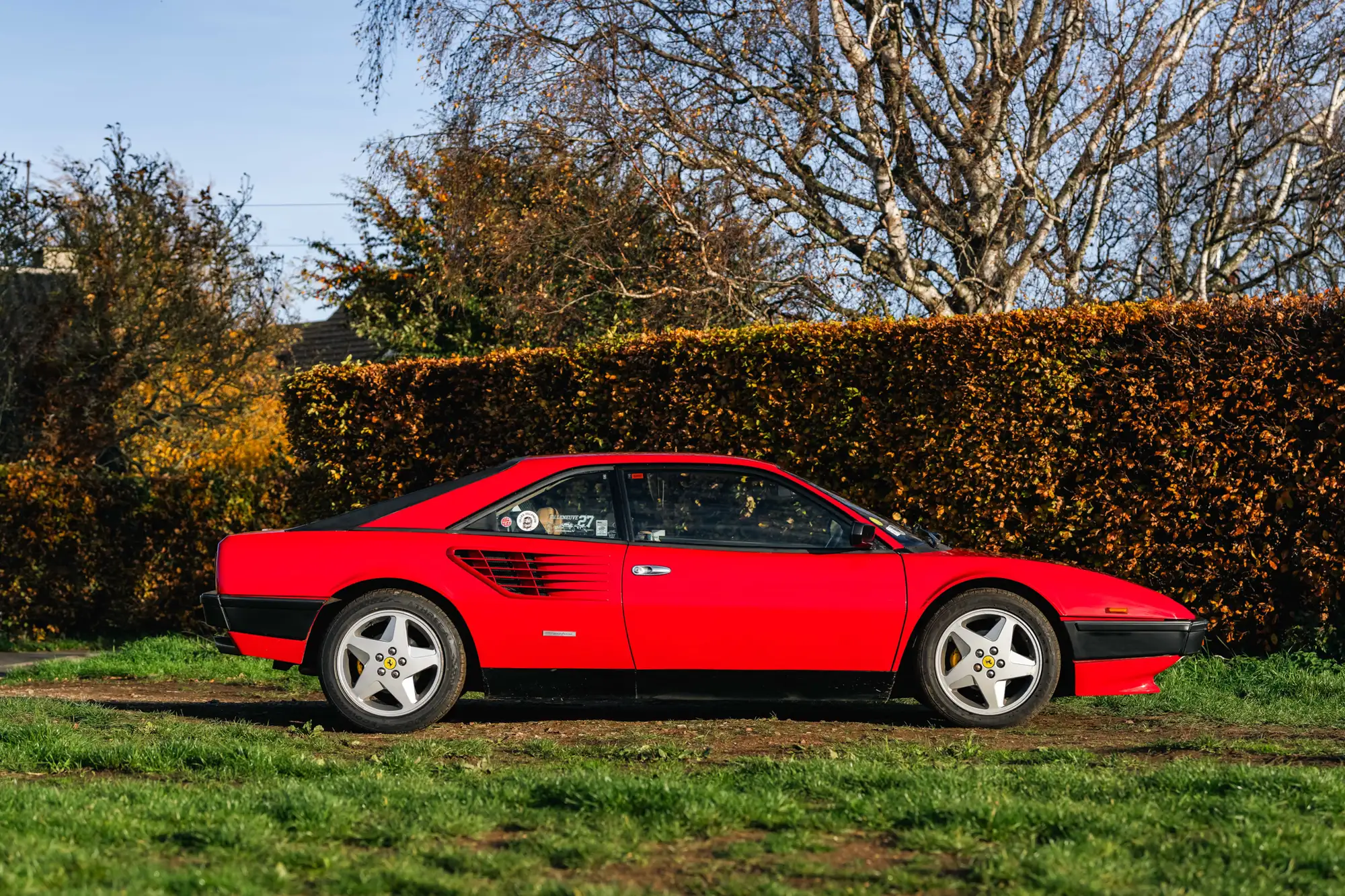
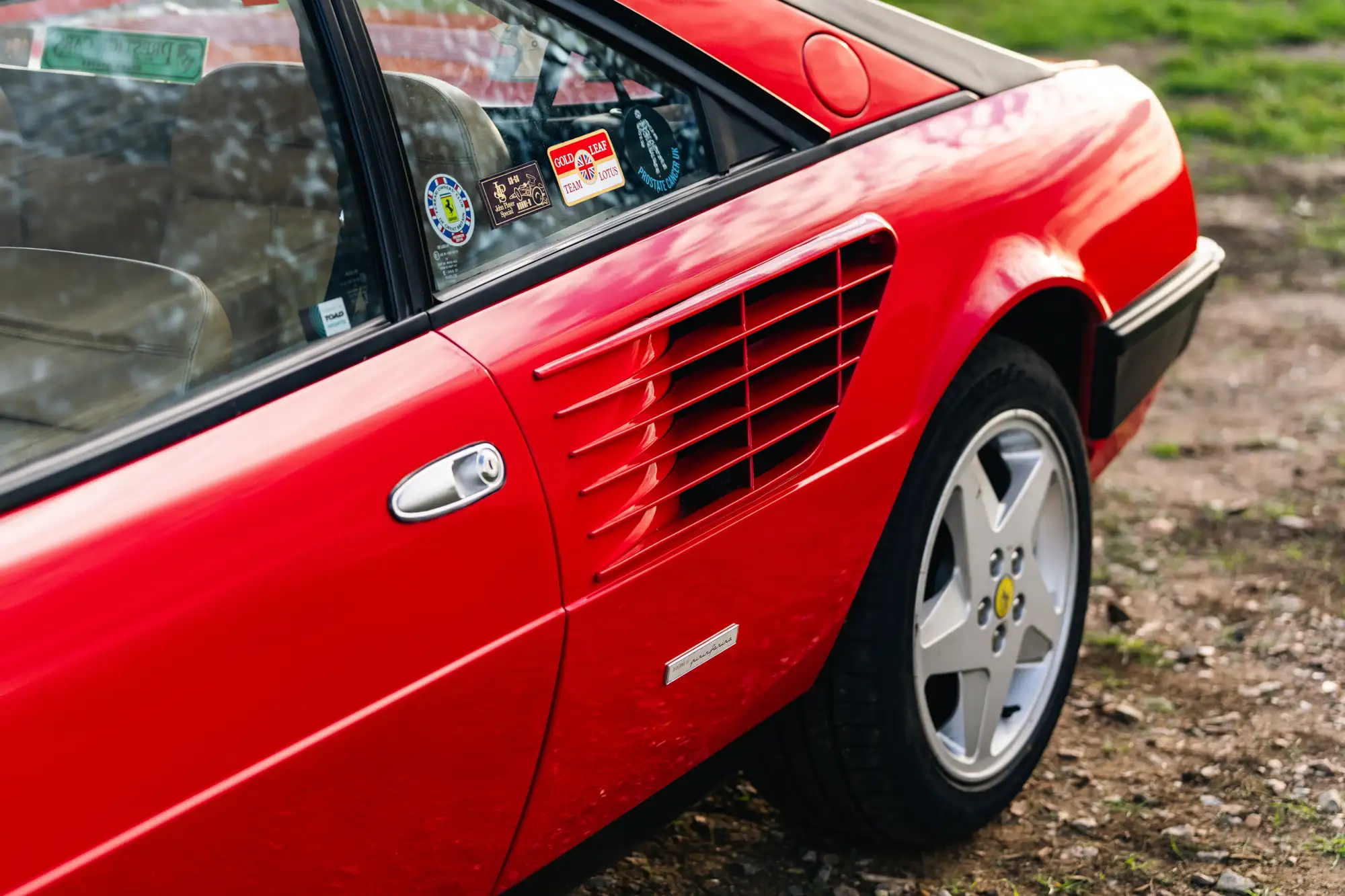
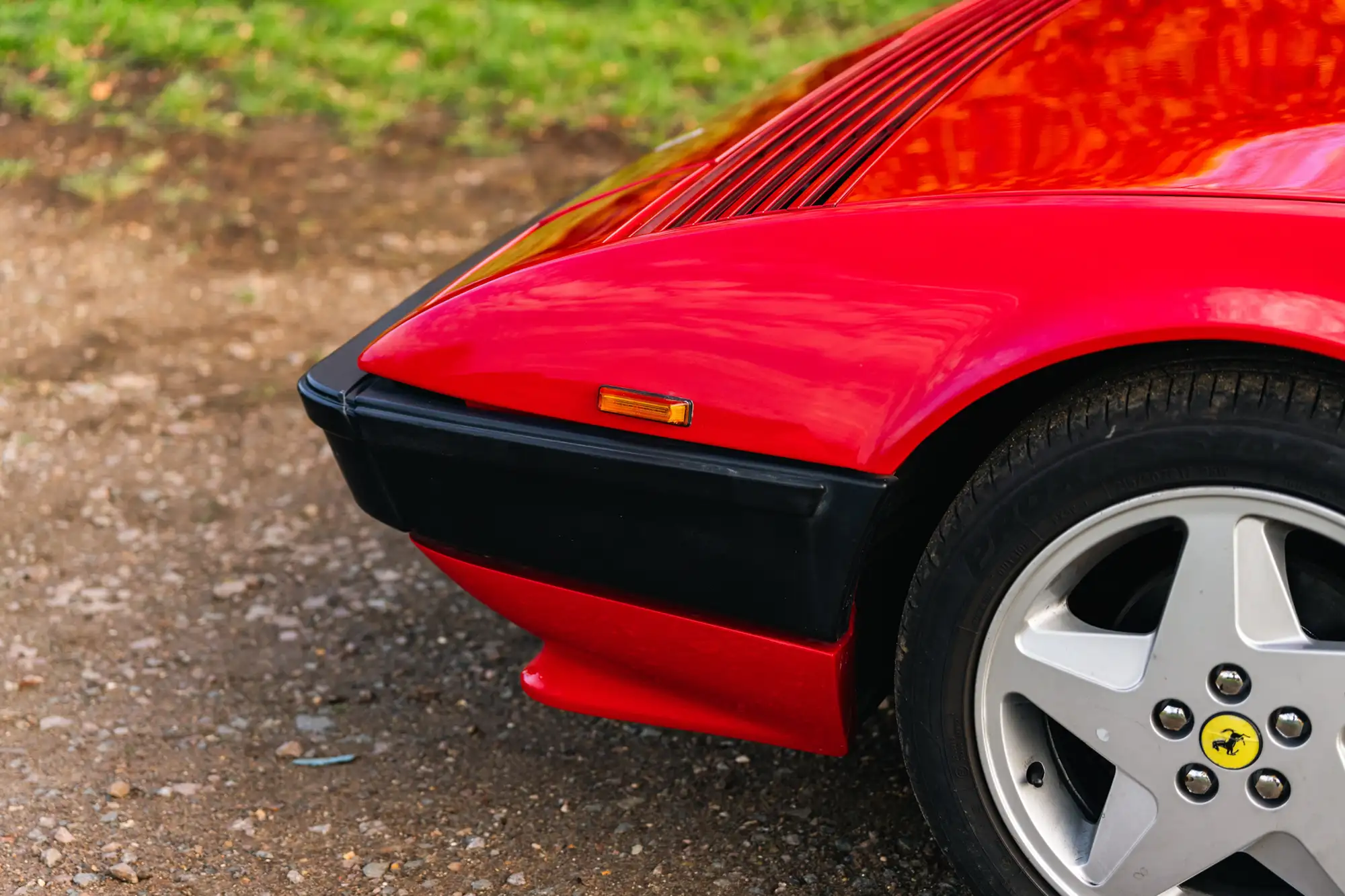
Pininfarina’s design emphasized balance and practicality rather than drama. The Mondial QV had a wedge-shaped profile, pop-up headlights with twin round lamps on each side, a long glasshouse and large side intakes behind the doors that fed air to the engine. The radiator grille sat below the front bumper. Most of the body was steel, with an aluminum front lid and engine cover. The Cabriolet, introduced in 1983, kept the 2+2 layout, although its folding-roof mechanism made the rear seats narrower than in the coupe. Pininfarina gave the canvas roof a profile similar to the coupe’s, so the Cabriolet remained clearly recognizable as a Mondial. As Ferrari’s first regular-production convertible since the Daytona Spider, it broadened the Mondial’s appeal, particularly in the United States.
Interior
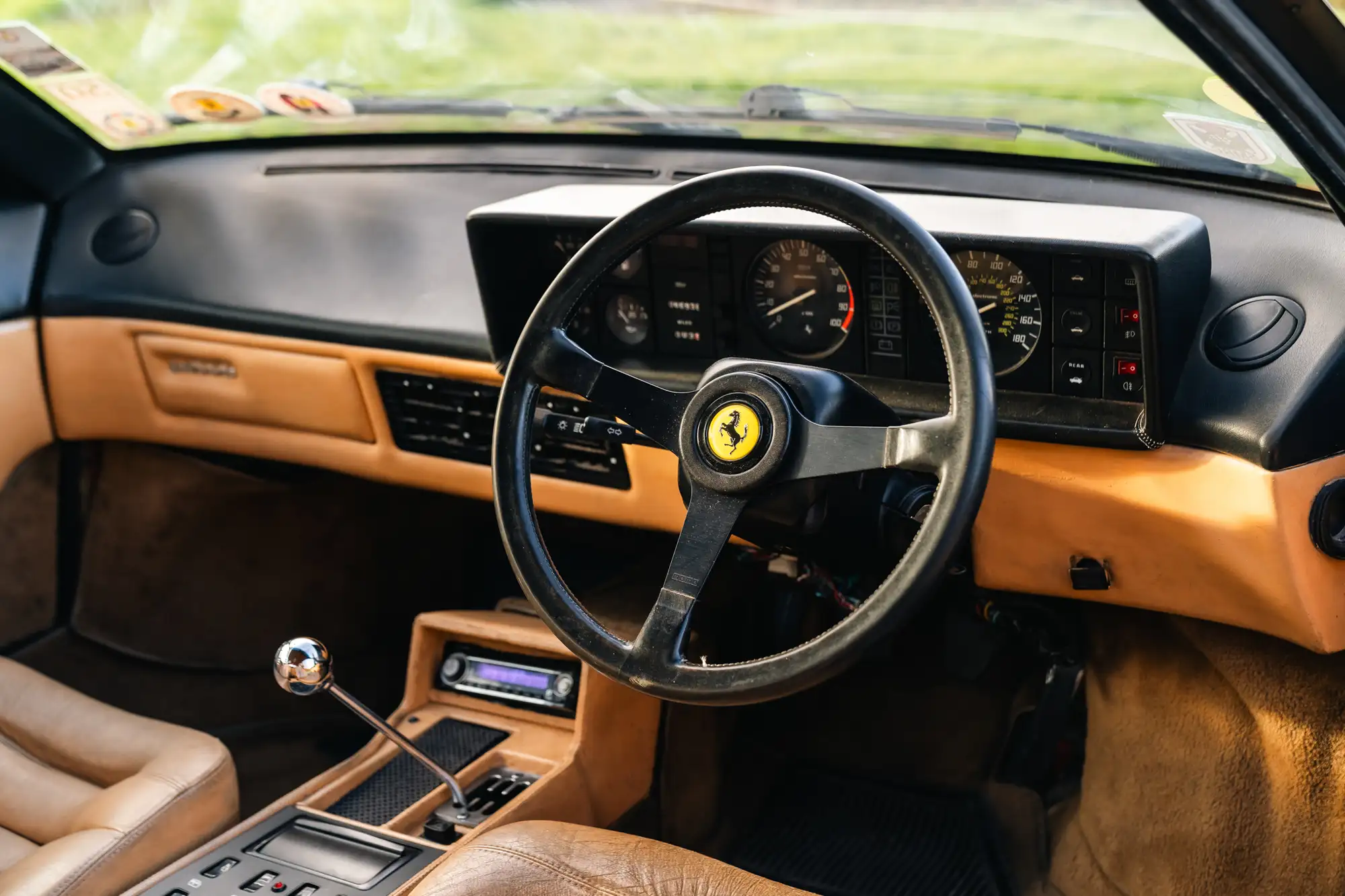
Interior space was the Mondial’s main selling point. The coupe offered genuine room for two adults in the front and two children or smaller adults in the rear, along with more luggage space than Ferrari’s two-seat models. The cabin was trimmed in leather, and the Mondial had more electronic equipment than earlier Ferraris, including an electronic check panel that monitored key systems. Air conditioning was available, although equipment varied by market and individual car.
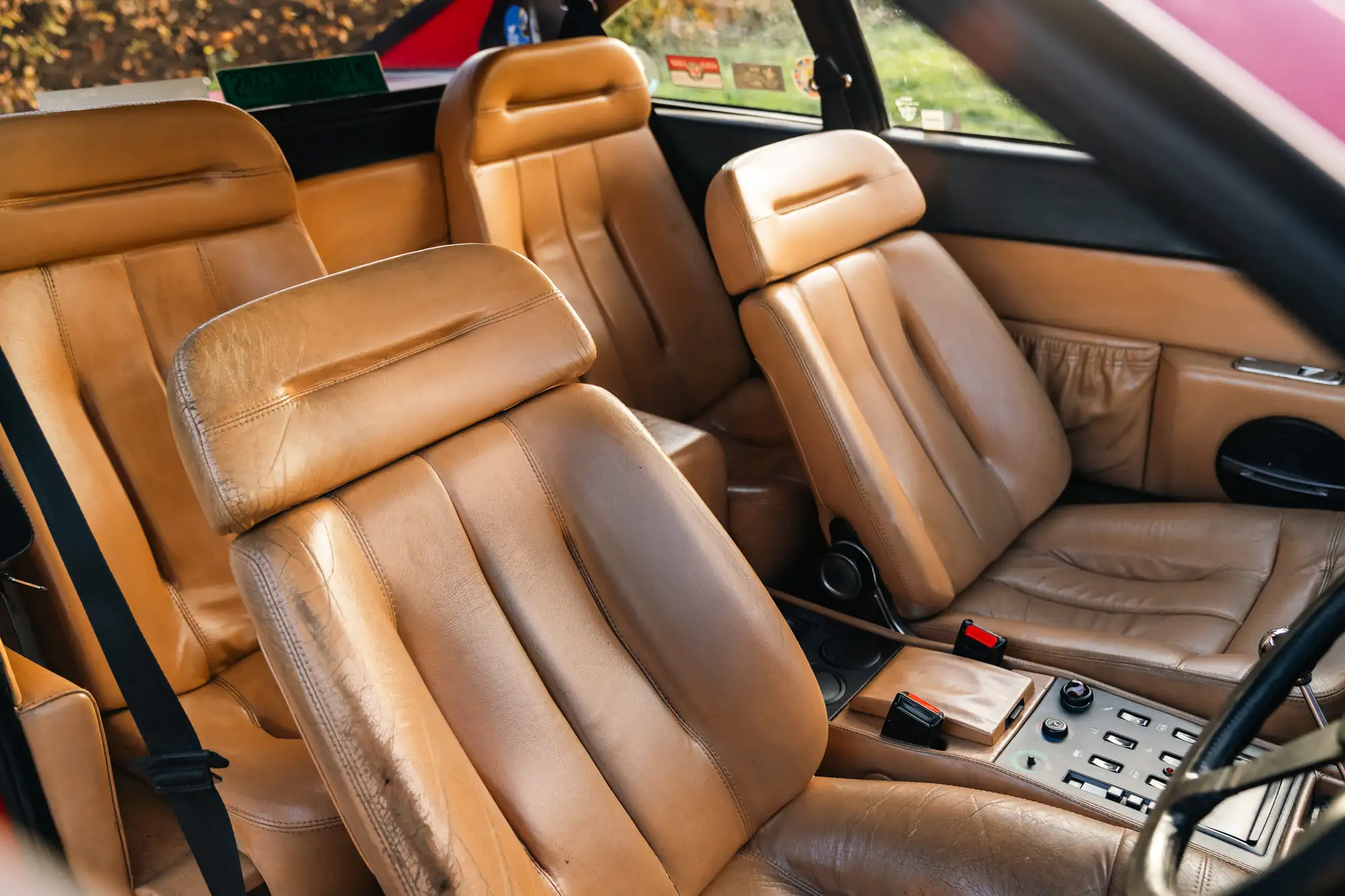
The driving position was more upright than the 308’s, and the car was designed to be easier to use every day while keeping the gated shifter and the sound of a mid-mounted Ferrari V8.
Specifications
- Engine: Ferrari 90-degree V8, transversely mid-mounted, 2,927cc, DOHC per bank, 32 valves, Bosch K-Jetronic injection
- Power: 240 PS (237 hp) at 7,000 rpm (Europe); approximately 230 bhp (US)
- Torque: 260 Nm (192 lb-ft) at 5,000 rpm
- Transmission: Five-speed manual, rear-wheel drive
- Chassis: Steel space frame with removable rear subframe
- Body: Steel, with aluminum front lid and engine cover
- Suspension: Independent double wishbones front and rear
- Brakes: Ventilated discs front and rear
- Wheelbase: 2,650 mm
- Weight: 1,430 kg / 3,153 lbs (coupe, dry)
- Performance: 240 km/h / 149 mph top speed
Production and Legacy
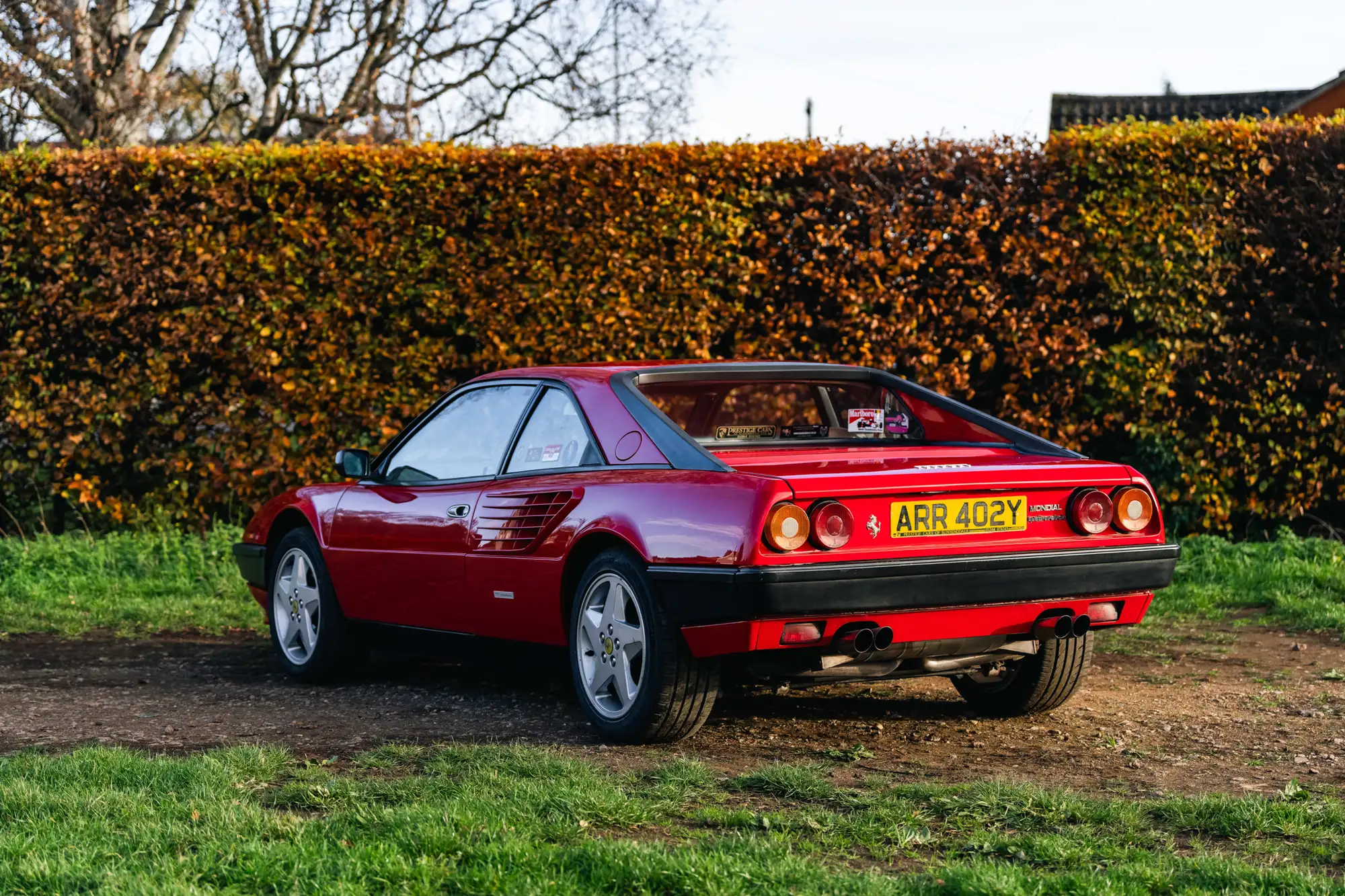
Ferrari built 1,145 Mondial QV coupes between 1982 and 1985, and 629 Cabriolets between 1983 and 1985. Of those, 152 coupes and 24 Cabriolets were built with right-hand drive. In 1985, the QV was replaced by the Mondial 3.2, which had a larger 3.2-liter V8 producing 270 PS, along with revised styling and interior updates. The Mondial line then continued with the 3.4-liter Mondial t, which arrived in 1989 and remained in production until 1993. In total, Ferrari built 6,149 Mondials across all versions, a significant volume for a mid-engine Ferrari of the period.
The Mondial has often been overlooked in Ferrari history. Its practical 2+2 layout, understated styling and modest performance compared with Ferrari’s two-seaters led many enthusiasts to dismiss it, and for years it was one of the least expensive ways to own a classic Ferrari. The Quattrovalvole was nevertheless an important step for the model. It gave the Mondial the performance it had been missing, while the Cabriolet brought a regular-production open Ferrari back to the range. Today, the Mondial QV is increasingly valued for its unusual combination of a mid-mounted Ferrari V8, four seats and everyday usability.