

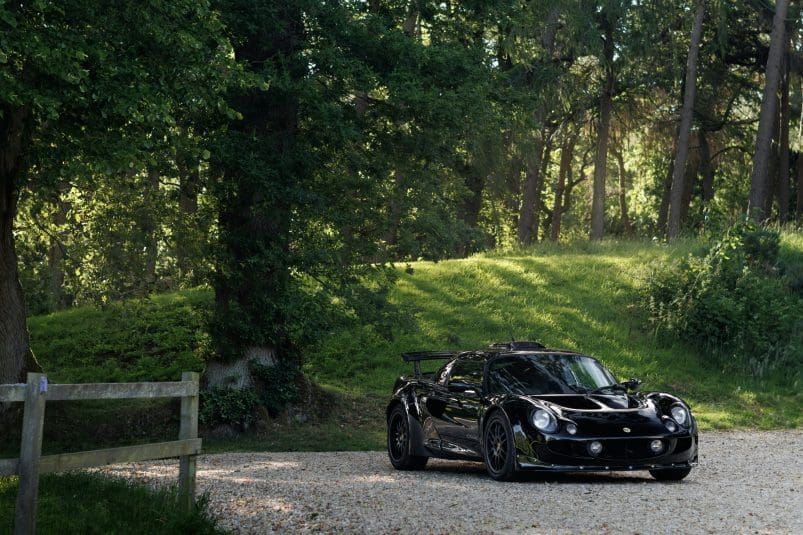
Brands Hatch, April 2000. Lotus unveiled the Exige before the opening round of the new Autobytel Lotus Championship, a one-make race series for factory-prepared Elise race cars. The timing was no accident. The Exige was developed as a road-going counterpart to the Motorsport Elise that raced that day, with a fixed roof, a large rear wing and a front splitter that made it look like nothing else on the road. Behind the seats sat a 1.8-liter Rover K-series engine in VHPD (Very High Performance Derivative) tune, producing 177 hp at 7,800 rpm. With a weight of around 780 kilograms, the Exige could reach 60 mph in 4.7 seconds. Its name came from the French “exiger,” meaning to demand, a fitting choice for a car that asked a lot of its driver and gave plenty back. Lotus built about 600 Exige S1s, which makes it one of the rarest and most sought-after modern Lotuses.
Background and Origins
The Exige grew out of Lotus’s return to racing. By the late 1990s, Lotus hadn’t been involved in motorsport for several years, but the Elise, launched in 1996, had proved itself to be one of the best-handling cars of its era. With the British Touring Car Championship growing in popularity, Lotus Sport saw an opportunity. In 2000 and 2001, it ran the Autobytel Lotus Championship, a one-make series that supported the BTCC and several European FIA Sportscar events. Lotus supplied, maintained, set up and transported the cars, with grids of more than 20 per round.
The car built for the series was the Motorsport Elise, the most extreme version of the Type 111 Elise yet. It had a 205 hp version of the VHPD K-series engine, a race-tuned chassis and a coupe body covered in spoilers. From that competition program, Lotus developed a road-legal version with the changes needed for everyday use, including a less extreme engine, road suspension settings, road tires and a polycarbonate tailgate. That car was the Exige, and its debut alongside the Motorsport Elise’s first race underlined how closely the two were related. It was also one of the most significant derivatives of the original Series 1 Elise platform.
Design and Engineering
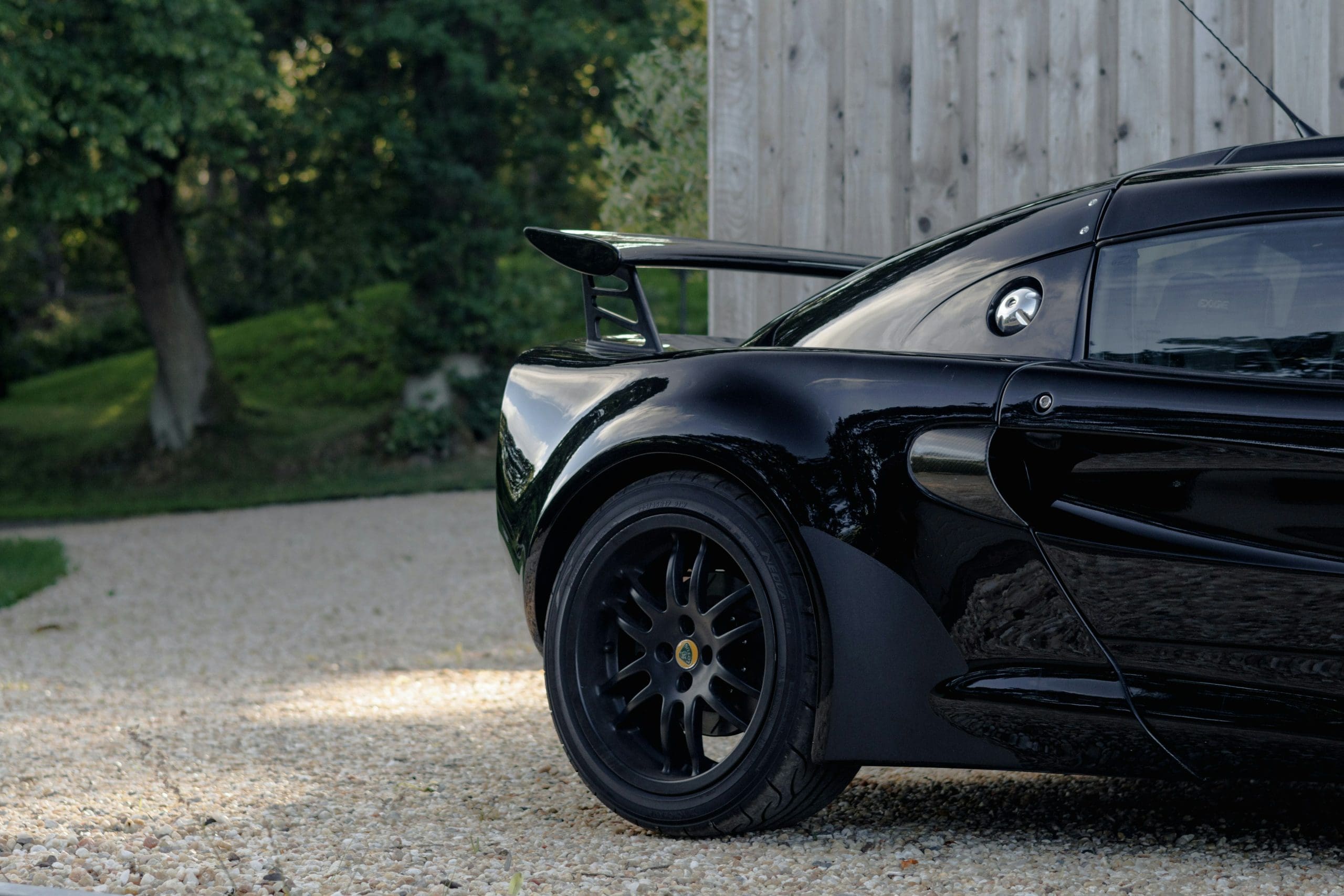
The Exige used the Elise’s bonded extruded aluminum chassis tub, which was light and very stiff, with a composite body on top. The mid-mounted engine was a 1,796cc Rover K-series inline-four with a DOHC 16-valve head and VHPD tuning. Compared with the Elise’s standard engine, it had a big-valve cylinder head, reprofiled inlet and exhaust camshafts, individual throttle bodies, a large intake airbox, a 4-2-1 exhaust manifold, a lightweight flywheel and an 11.0:1 compression ratio. Lotus rated it at 177 hp at 7,800 rpm and 127 lb-ft at 6,750 rpm, so it needed to be revved hard to deliver its best. A close-ratio five-speed manual gearbox drove the rear wheels.
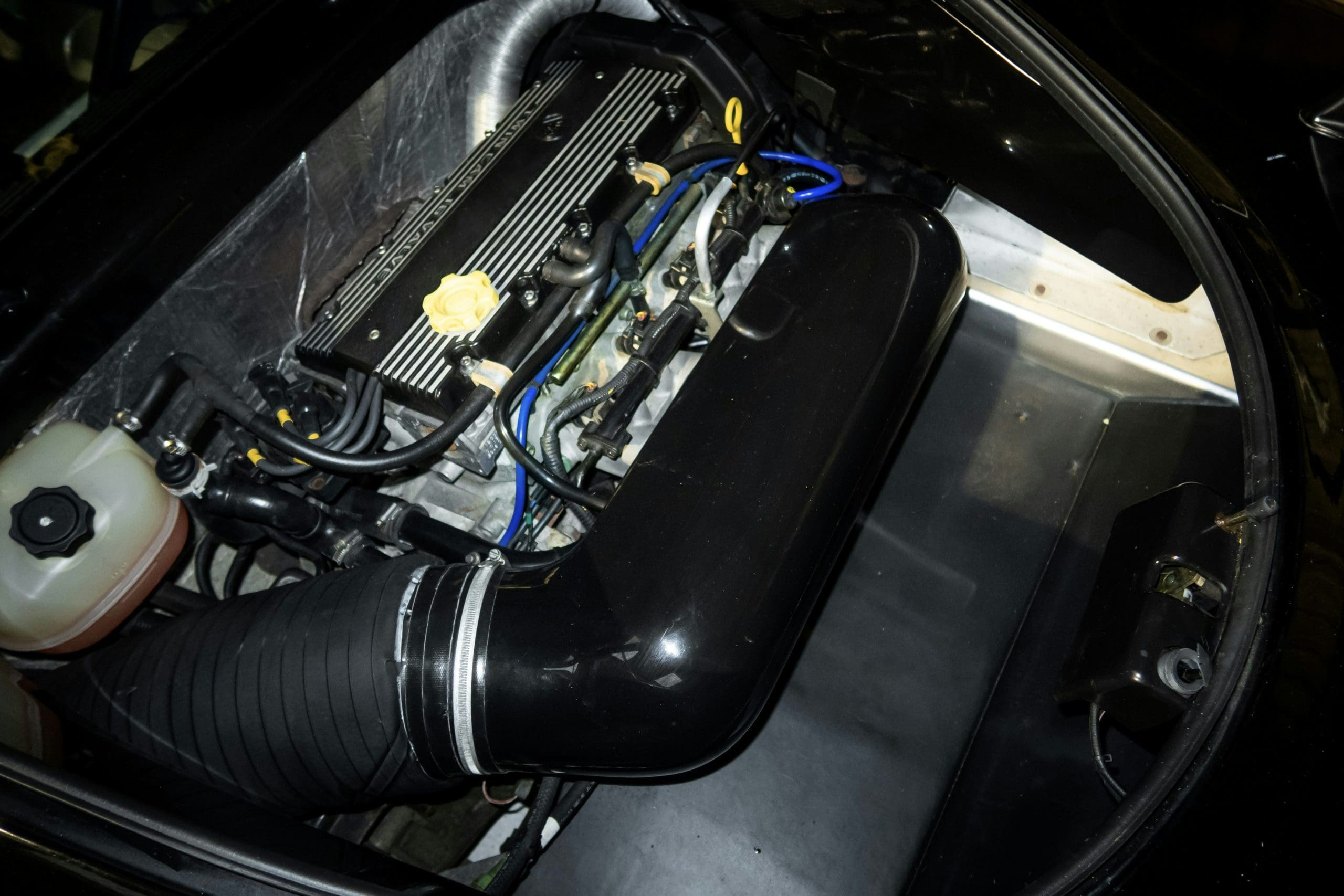
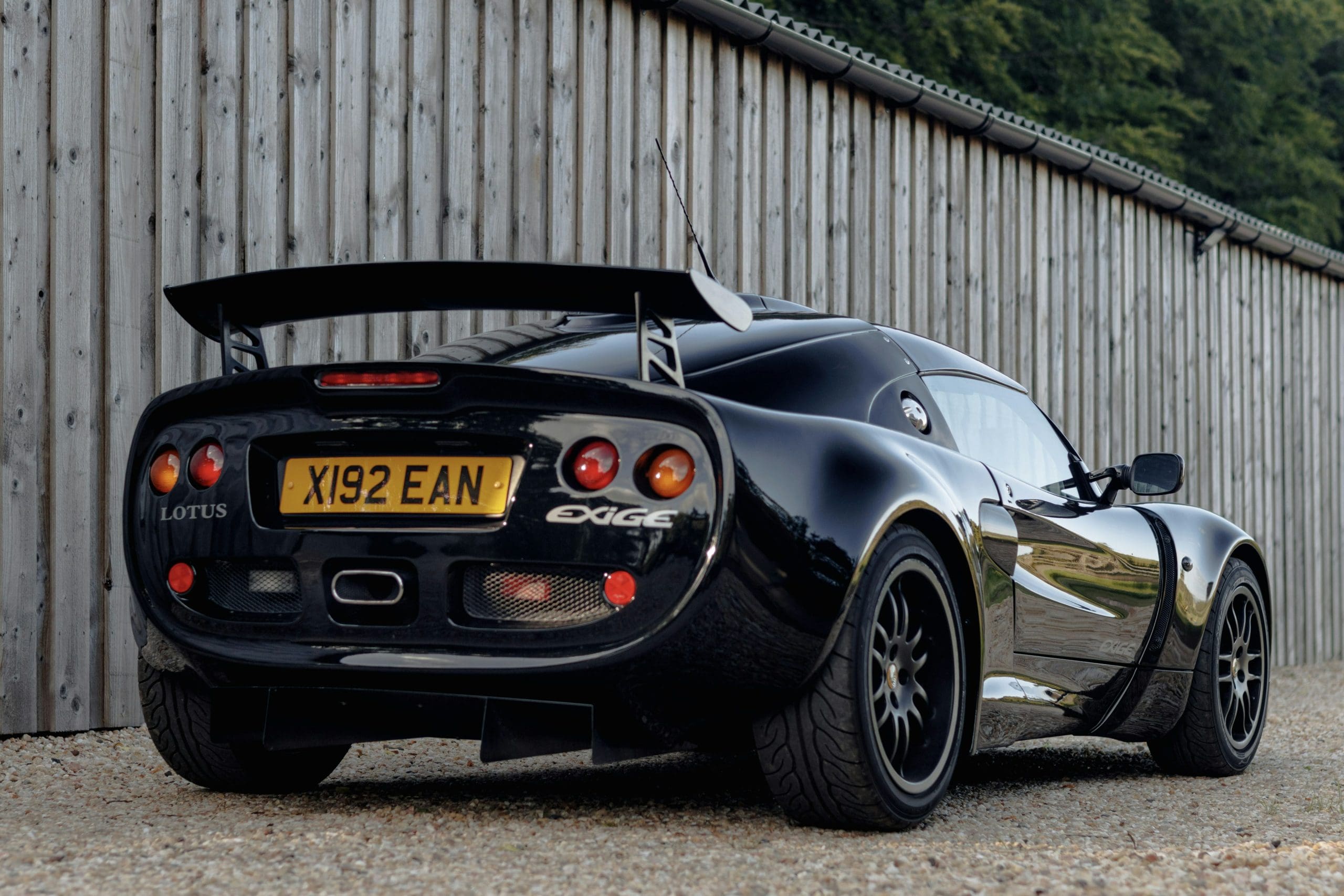
The suspension used independent double wishbones front and rear, based on the Elise Sport package, with Exige-specific springs, adjustable Koni dampers and anti-roll bars at both ends. The track was wider than the Elise’s, at 1,457 millimeters front and 1,476 millimeters rear, for higher cornering limits. Steering was unassisted rack and pinion, and the Exige rode on 16-inch front and 17-inch rear wheels fitted with Yokohama A039 tires, 195/50 R16 at the front and 225/45 R17 at the rear. The front splitter and rear wing generated real downforce, which was rare on road cars of the time. The Exige could sprint from 0 to 60 mph in 4.7 seconds and reach 136 mph. An optional 190 hp engine upgrade was offered for track use, but the standard car’s 177 hp was more than enough to make it feel like a road-legal racer.
Styling
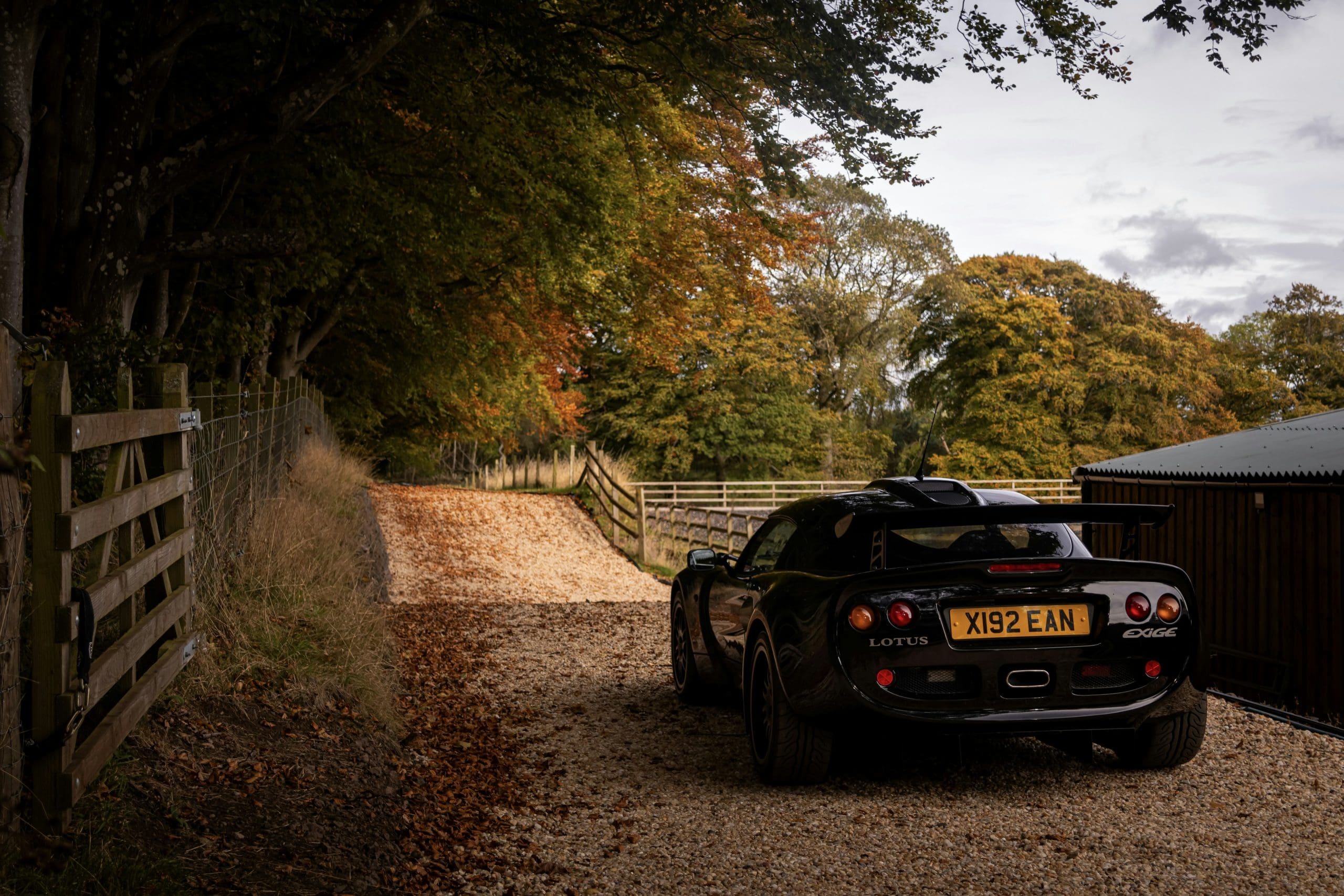
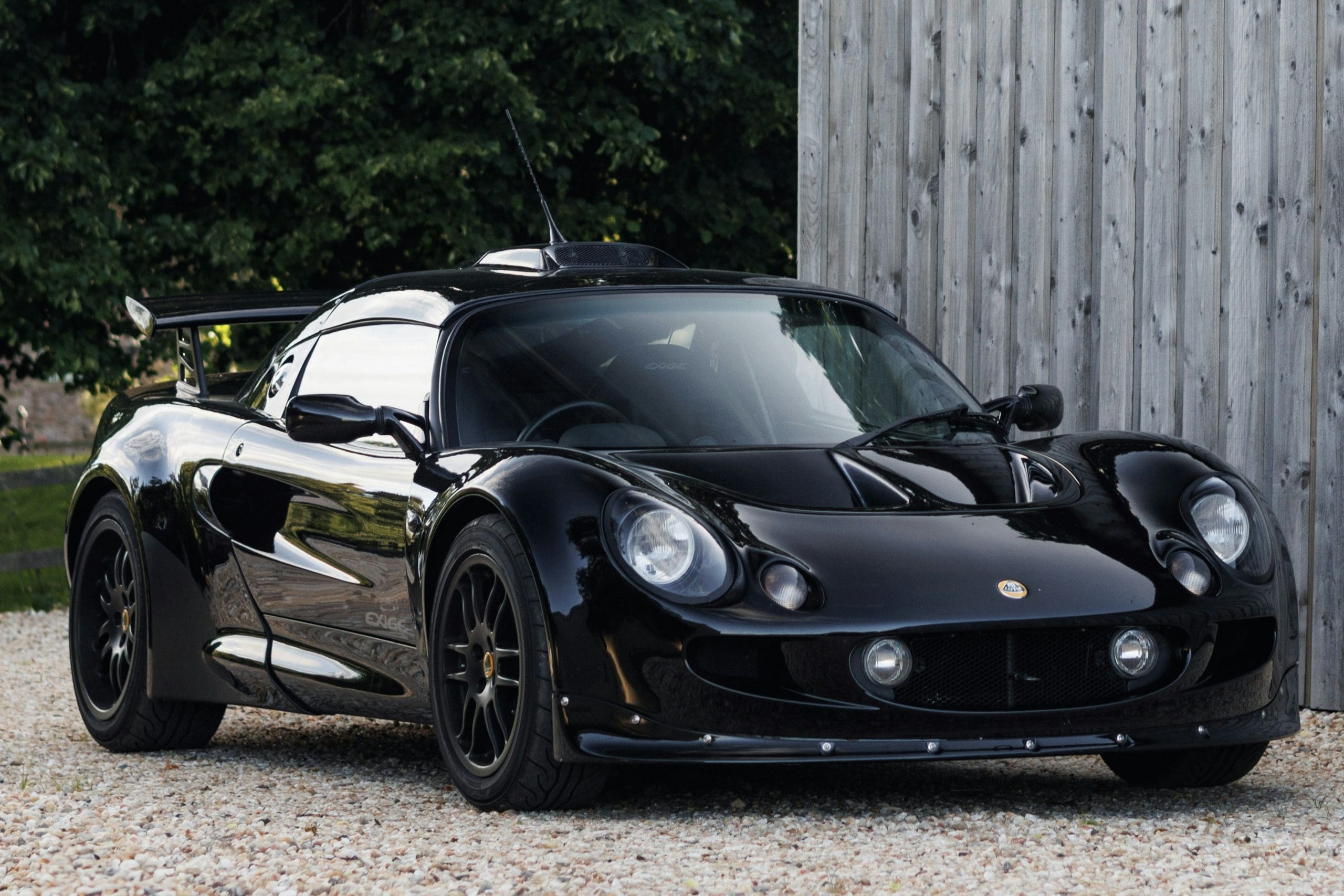
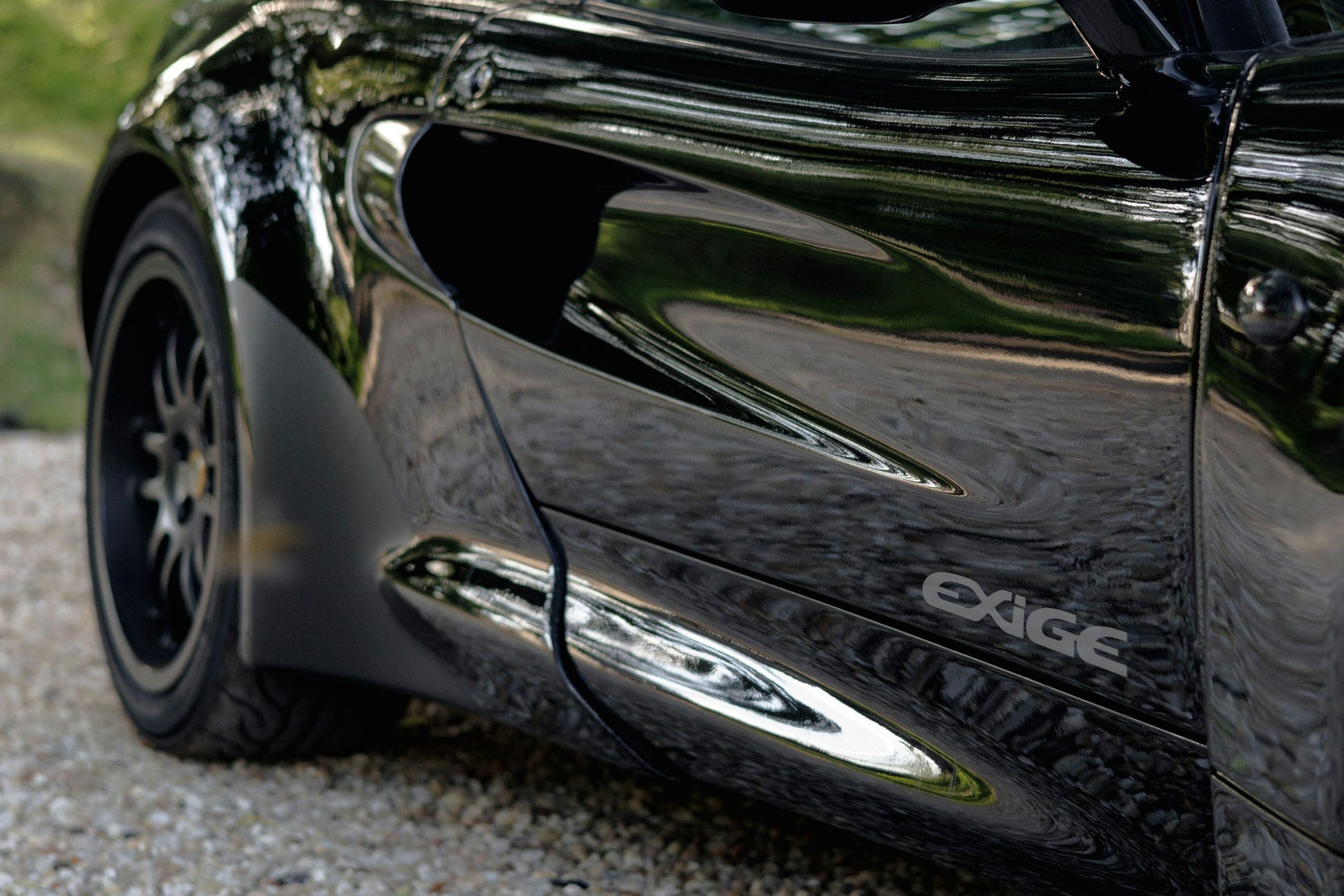
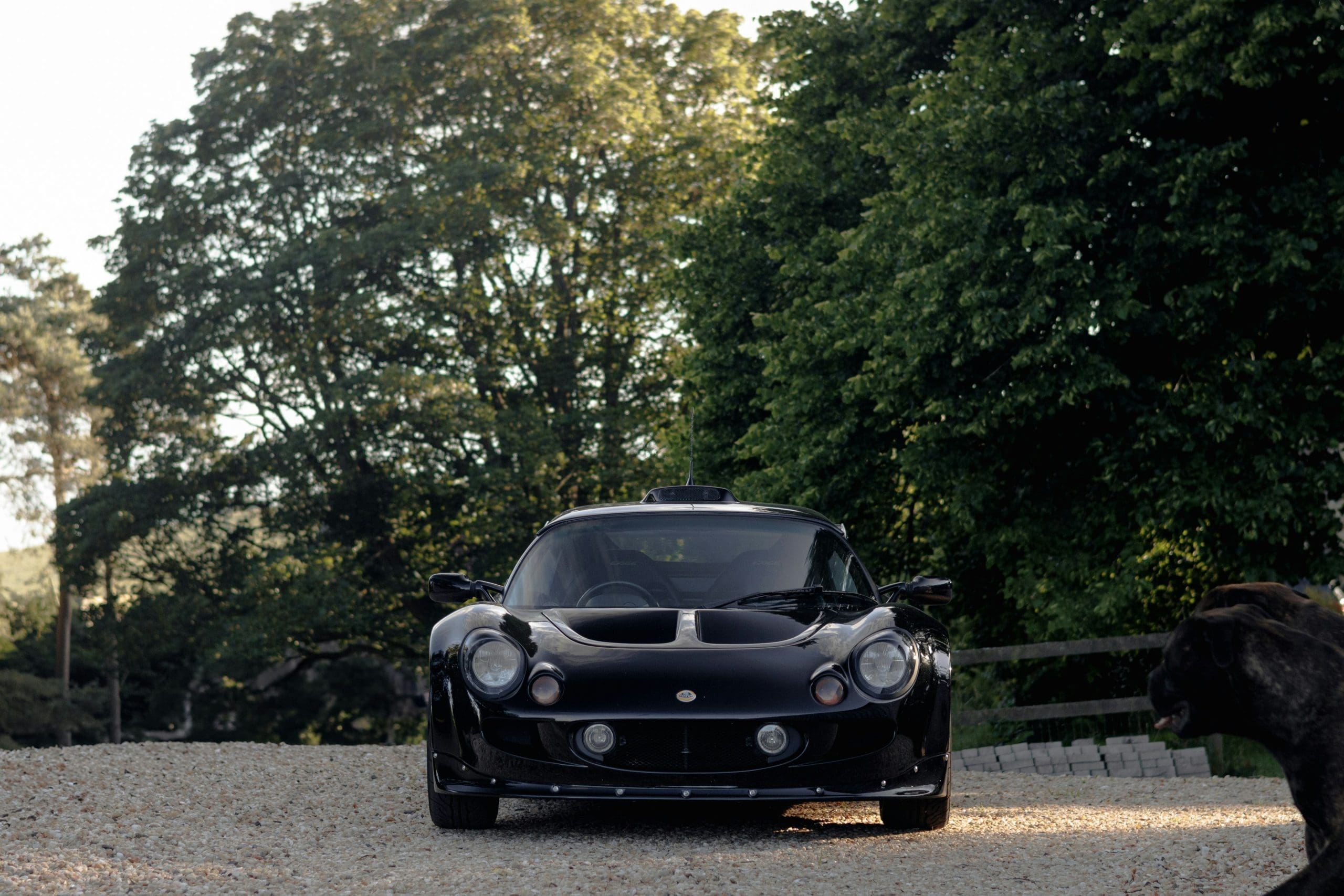
The Exige looked like a race car for the road. It kept the Elise’s basic shape but added a fixed composite roof with an air scoop feeding the engine, a large front splitter, flared wheel arches and a tall rear wing. The rear deck was redesigned around a polycarbonate tailgate, and the wider tracks filled the arches with fat tires. The design was developed under the leadership of Russell Carr, and the result was much more aggressive than the softer, rounder Elise.
Interior
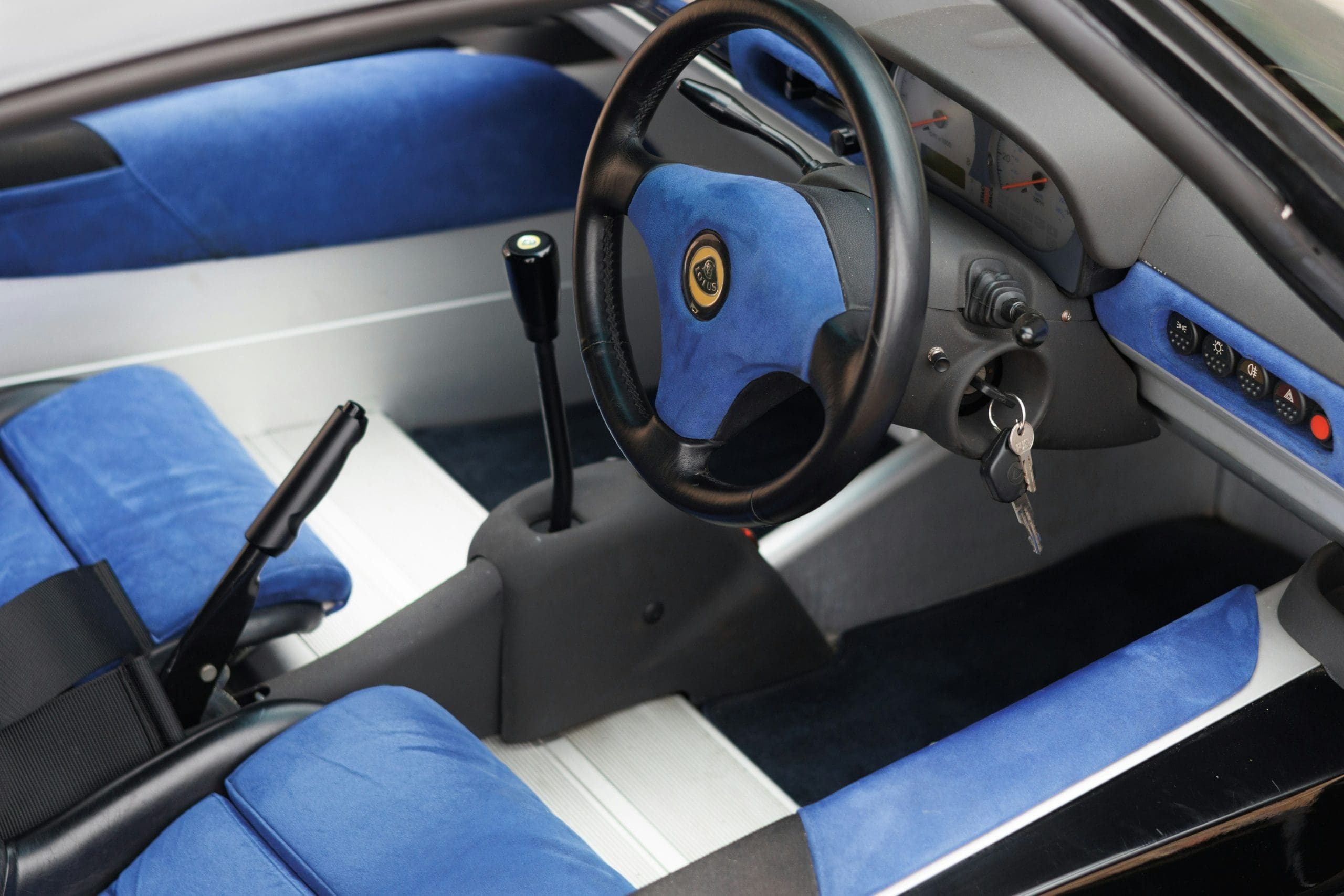
Inside, the Exige was as minimal as the Elise and, thanks to its low roof, even more cramped. Getting in meant climbing over wide sills and ducking under the roofline, and taller drivers struggled to fit. The cabin had visible aluminum chassis sections, thinly padded seats, a small steering wheel and simple instruments.
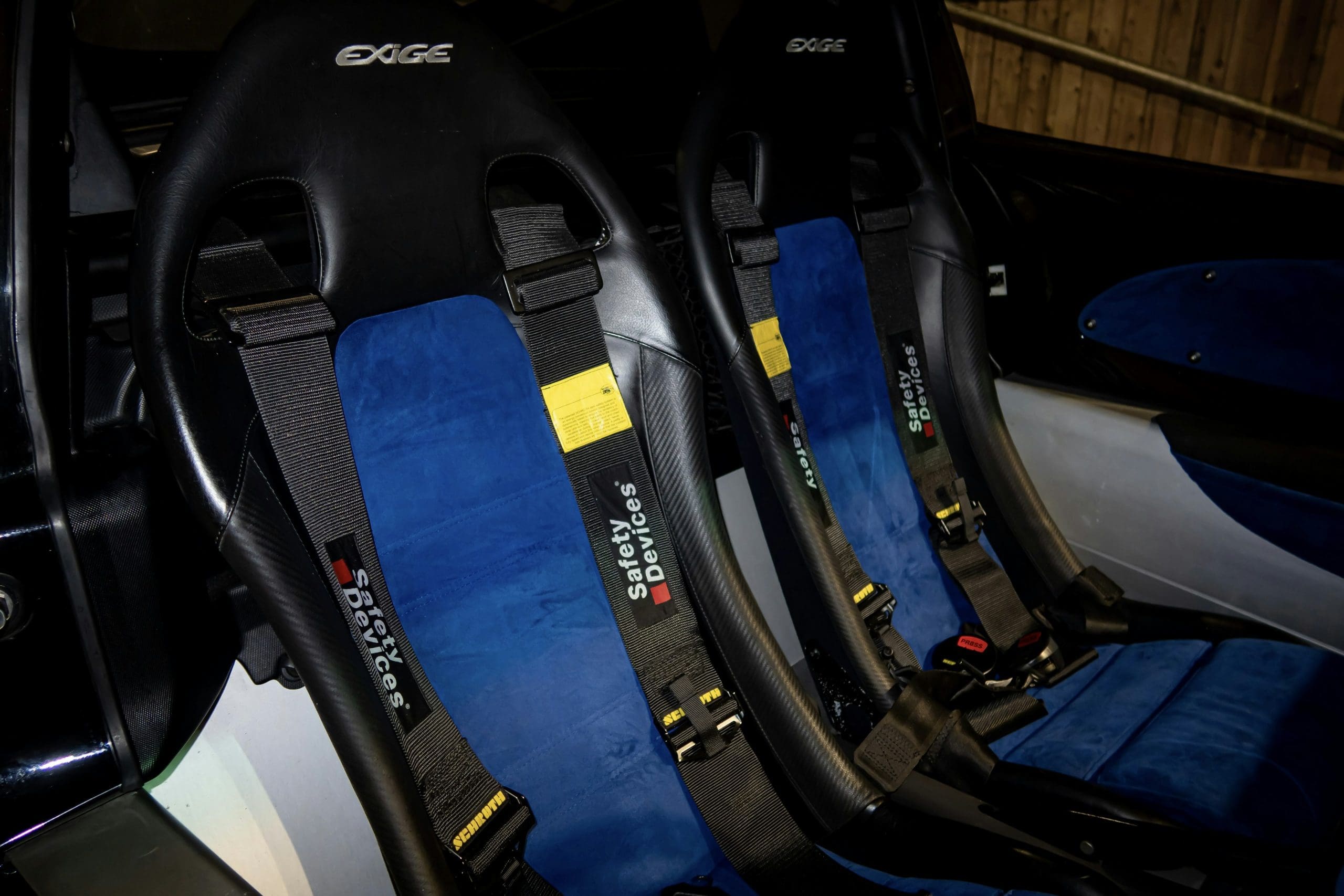
There was no power steering, little in the way of entertainment equipment and very limited luggage space, accessed through the rear tailgate. Air conditioning, initially optional, became standard in October 2000, a rare concession to comfort. Options included sports seats and Alcantara trim packs, but the Exige was always built for drivers who cared more about the experience than about comfort.
Specifications
- Engine: Rover K-series VHPD inline-four, 1,796cc, DOHC, 16 valves, individual throttle bodies, 11.0:1 compression
- Power: 177 hp at 7,800 rpm
- Torque: 127 lb-ft at 6,750 rpm
- Transmission: Five-speed close-ratio manual, rear-wheel drive
- Chassis: Bonded extruded aluminum tub
- Body: Composite, fixed roof, polycarbonate tailgate
- Suspension: Double wishbones front and rear, adjustable Koni dampers, anti-roll bars
- Steering: Unassisted rack and pinion
- Wheels and tires: 16 x 7 in front, 17 x 8.5 in rear; Yokohama A039, 195/50 R16 front, 225/45 R17 rear
- Track: 1,457 mm front, 1,476 mm rear
- Weight: About 780 kg / 1,720 lbs
- Performance: 0-60 mph in 4.7 seconds, top speed of 136 mph
Production and Legacy
Exige production began at Hethel in June 2000 and continued into the following year, though Lotus’s historical records list the Series 1 through 2002. Most accounts put production at 604 cars, about two-thirds with right-hand drive, while Lotus’s own heritage records list 601. The Exige S1 was never officially offered in the US, although some examples have since been privately imported. Lotus replaced it in 2004 with the Exige S2, which debuted at the Geneva Motor Show. It was based on the second-generation Elise and powered by a 1.8-liter Toyota engine, offering more power and comfort at the cost of some of the S1’s raw character.
The Exige S1 was short-lived, but it established a new formula for Lotus. It proved there was demand for a road-legal car that felt like a racer, and the Exige name went on to become one of Lotus’s most successful, staying in production through several generations until 2021. Today, the S1 is prized by collectors and track-day enthusiasts as the original and most uncompromising Exige.